Head over to https://www.doola.com/varun or use the promo code VARUN at checkout.
With all these models coming out lately, AI is getting better and better by each passing day. And people are now worried that it’s coming for their jobs. Writing, coding, design, even diagnosis… all of it is being commoditised, and the price of these models becomes the only differentiator.
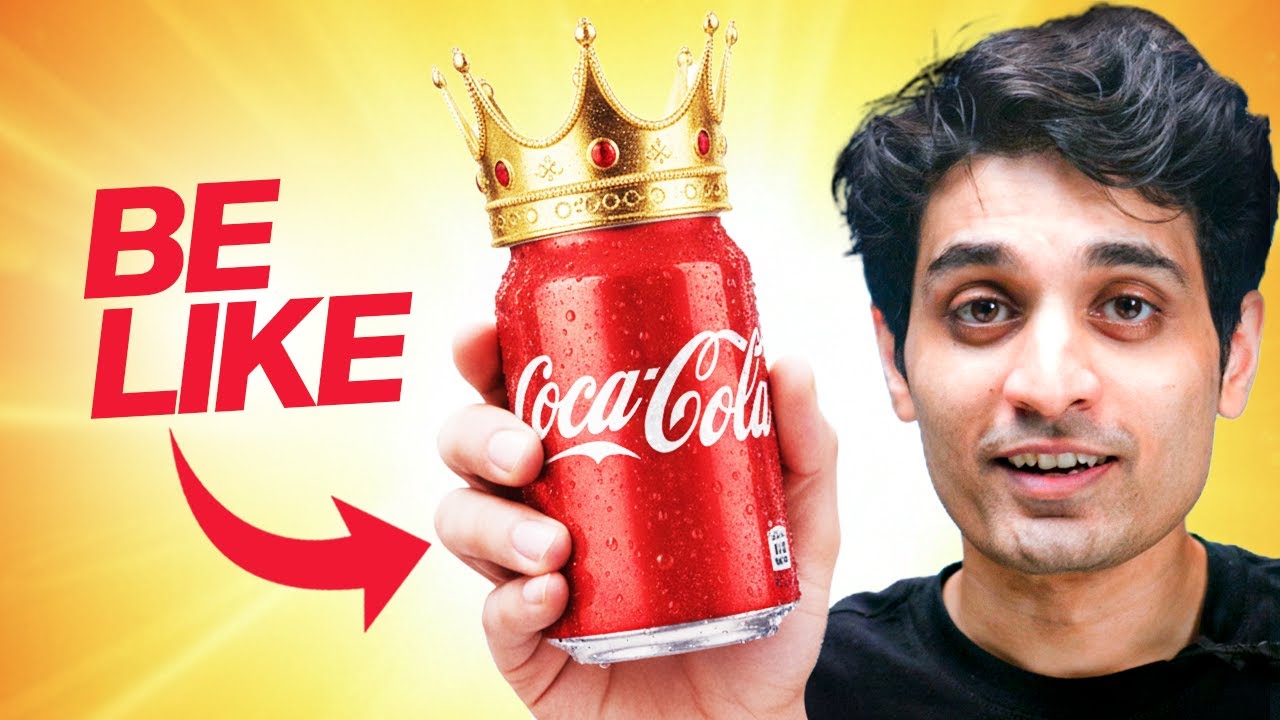
But amidst all this uncertainty and chaos, there is something very important to learn from Coca-Cola. A company selling nothing more than sugar water. And that’s what we’re doing in the video: what Coca-Cola can teach us about surviving in a world where everything looks replaceable.
Watch this video if you’re worried about AI taking your job. Or share with someone who is.
00:00 - AI and job replacement
02:04 - Coca-Cola's brand value
03:54 - Importance of Managers in Organizations
05:20 - Sponsor message (Do0la)
06:39 - Manager's role in large companies
08:11 - The Need for Managers in Coordination
12:04 - Differentiating in commoditization
I'm hiring a writer to work with me!
You'll write in depth YouTube video essays, short form content and brainstorm ideas that will reach millions.
You'll be a good fit if you:
- Write fast and work fast.
- Once started a tech company, but just want to write now.
- Have created content on the Internet.
- Majored in Engineering at a top-10 university. (If you are not it's totally fine too we don't really look at degrees)
https://forms.gle/PWL6FvbonrpRFZrG7
Оглавление (7 сегментов)
AI and job replacement
Okay, so the problem that people have been facing online which is this AI thing is getting better and a lot of people believe that well AI is going to come for my job that if a machine can write or code or design or diagnose then the human value goes to zero and the main challenge that they are facing which they're not able to explain is something called commoditization is the process where any sort of goods or services or products in the beginning they are different. So in the beginning, everyone has their own unique skill sets. They're all different. There's a flavor of this design. engineer. All of them can solve slightly different types of problems. And they're all expensive in their own ways because they're masters of their niche. And over time, they become largely indistinguishable from one another, at least in the eyes of the consumer. This has already happened on freelance platform. If you go to Fiverr, for example, at $5, you say, "I want a logo. " And there'll be a ton of people coming. And lots of them are using AI to make those logos. And the price of $5 means pretty much everyone you pick will end up creating the same thing or using the same tools to create the same thing. So because everything is the same and you don't know which of the two freelancers to pick, you are starting to compete as a freelancer on price based competition. And that is what commoditization is. And the problem here competing with AI versus competing with other humans is when all humans are the same, when you know India overproduced software engineers, right? when we had so many of those it still didn't hurt as much because they all had their unique traits and when you're competing with humans it's still okay because there's a flow price below which humans will not go unless you're competing with different countries right if US there are lots of people in US doing a certain role and suddenly those roles got outsourced to India then there's huge price competition and then people have to reduce their prices right like if they're undifferiated but if you're competing with a $20 tool how do you compete with the $20 a month salary it's just so low not only are you being commoditized the base price is $20 or $50 or $200, whatever the price of that subscription is for that AI tool. But ladies and gentlemen, not all hope is lost. What do we do then? Are there any examples of things that got completely commoditized, hit the price of almost zero, and still survived? Well, yes. I'm
Coca-Cola's brand value
going to tell you about product that costs almost zero to make. You can make it at home. And honestly, the price to make it is like less than a rupee or two rupees. But yet this company for decades has gotten away with charging a lot of money for this and you still buy it again and again. And that company, ladies and gentlemen, is Coca-Cola. Yeah, Coca-Cola. Coca-Cola is just sugar, water. Objectively, it's really cheap to make. There's no rare ingredients in this and you can clone this in your house. You can make a glass of sugared water at home with flavoring for we did the math. It's about less than 2 rupees. And yet this company has a market cap of over $250 billion dollar ad spends and is practically unshakable despite a very obvious margin to disrupt. Why? Why does this cost 30 or 40 rupees and we keep buying it? What is the secret behind this totally commoditized product that still maintains a premium? That story of sugar water commanding a premium is the perfect analogy for what humanity faces in the age of AI and what it should do. A lot of people think we are entering the era of rampant commoditization. But what AI can't do yet is build a brand without being directed to do it by somebody, some team, some company that owns that brand. And no, a brand is not just images or billboards. It's something in the minds of the consumer. And yes, humans can build brands, too. But just like a cheaper Coca-Cola cannot dethrone Coca-Cola, a cheaper tool might not replace you if you learn the secrets behind Coca-Cola. And no, Coca-Cola is not sponsoring this video. But in this video, I'm going to teach you how to become Coca-Cola. So, let's study its secrets. Before I tell you this, I want
Importance of Managers in Organizations
to tell you what I think the human will be doing on a day-to-day basis with all these tools. You might think well if a person is only using third party tools to create outcomes to create things right to create images or write code or whatever then what is there for humans to do? I can tell you a job role that is very high paid and we have lots of this job role in the world that doesn't actually do anything themselves. Their skill is not to be skilled at anyone specific task. Their skill is to get things done from other things or other human beings and that role is manager. We've always had this role like think about it a person who's very skilled at design or some skill. A manager is on top of that person, gets paid more, but doesn't do the design themselves. Don't you find that strange? When I was young, I used to think managers are so stupid. Why should people be managed? The skilled person should be managing everything. And then I realized people are hell to work with. You know, think of almost every video you've seen or every movie or every anything you've seen on television or media about startups. What's it like? It's all about coordination. There's a person who will be like, "Hey, you know, I did this. " And the other person will be like, "Yeah, I did this. " And the third person will be like, "I did this. " and they both they all put their hands together and they clap and they're like they're doing Think about every media or TV or movie instance of a big company. What is it? It's people fighting. It's someone saying, "I'm going to sue you. " And the other guy is saying, "But I'm going to counter sue you because of this reason. " Like remember suits or whatever, right? Or it's like office politics. Why? Why are all startup stories so different and large company stories so different? It's because humans hate coordinating and also incentives matter. All right, I want to
Sponsor message (Do0la)
stop for a bit and talk about today's sponsor. So, you got a business idea and you also know how to build the product maybe thanks to AI. But what you might not know is that the difficult part is not building, it's all the other stuff like we spoke about, right? It's paperwork. It's the legal headaches that come with starting a business. And I know this firsthand. If you're filing for a private limited, figuring out taxes, managing payrolls, expenses, you're responsible for the outcome. And if you're navigating regulations as part of that, it simply gets overwhelming, especially as a founder. So, what is the solution? Well, it's something called doula because it manages your entire back end for you from LLC formation, filing taxes, bookkeeping, analytics, almost everything. So, let's say you're raising money from US investors and need a US bank account. Now, if you're anywhere outside the US, it's almost impossible without physically flying there because banks will usually ask you for proof of residence, a US social security number, and in some cases even an inerson interview. But with Doula, you can form a US LLC within minutes. Not just that, you'll even set up a US bank account for you through their partners, which means that you can operate as a US-based company without even stepping inside the US. It's really impressive to see a company understand what founders go through and understand that we are now in the business of outcomes and creating an outcome requires a lot of things to be in place. So, if you want to try it yourself, head over to doula. com. And of course, thank you for doula for partnering with us on today's video. Anyway, back to Coke.
Manager's role in large companies
When you run your own company as a startup, you own a piece of the outcome, right? So if you go and end up building like a really large thing, you'll make some of that money. The risk is also yours, but the outcome matters to you. You're working hard that results into something meaningful. There's some incentive for you. That's why sales reps also do a good job because they're incentivized. But at a large company, that incentive disappears. You're a cog in the wheel. So you do 9 to5 work and you go back. That's supposed to be the myth of how large companies work. Not all teams in large companies work like this. But let's say this happens. You're not really going to care about the outcome. If you're one part of a team that's of a paper mill, you're just going to do your job at the factory and go back and you're going to hope that everyone doing in their task in concert ends up creating that outcome of creating paper. But what corporate world realized is you can actually solve this problem. You can solve this problem of incentives as well without giving incentives. The way to do it is to create a new role called manager who only continues to stay in the company if they continue to get things done. And their job is here are the resources you have. Each of these resources will do a task and your only KPI what you are responsible for is to do to make sure that this amount of paper comes out of the paper mill. That's your responsibility and it's a great idea. It works. Managers in my opinion are the only thing that prevents the collapse of most of corporate world, right? Because otherwise people just drift. They're just like I don't care about this and they're going to come do their job. It's not going to be synced with the next person. It's very hard to get people to coordinate cuz ego and politics and you know some person purposely sabotaging something that happens all the time in large companies. So you need managers and leaders who will say I will lead. I will make sure we get to the destination. I'll make sure all these people work and do things together. That's important. And my opinion is that
The Need for Managers in Coordination
in the future and if you watch my podcast with Imad on OP who used to run stable diffusion at that time, he says that the future is going to be mostly managers. It's people who are managing but they're not only managing human beings. The managing is this combination of humans and agents. Maybe you get design done from an agent, but then you're coordinating with an actual human to go out and do the printing of the design and then that's how you run a posters company. And if agents or AI does most of the job, the skill, there's still need for managers and they're already very well paid in the world and there are lots of managers in the world. So all that happens is you get promoted to manager. That might probably be what would happen after the eye. And the reason I brought up the entire thesis of Coca-Cola is that Coca-Cola is a synthesis company, which means they don't make water. The secret sauce of Coca-Cola, which is their taste, a lot of people can replicate it or come close. And I don't think that's the thing that's differentiating them so much from everybody else. They have a recognizable taste because they have built a brand. You have had Coca-Cola in the past. You trust what will happen. And Coca-Cola has coordinated a lot of different things. It's not just the brand that they've built. It's also the fact that Coca-Cola has somehow built this logistic network where they're everywhere. You know, they don't even send the entire can across the world. sugar water across the world. It'll be too heavy to send. They only send the syrup. They work with bottlers all over the world and they tell them, "This is how I want Coca-Cola bottled, and here's the logo I want on top. " In every country, they have slightly different can specifications. They manage all of that through local bottlers. They have that distribution network. Managers have connects. One of the first things you need to have as a manager is the ability to pick up the phone and hire people. And for that, you need connections. You need to know people that you can potentially hire, right? You need to make sure you have your own network. Managers require a lot more soft skills than hard skills. Then you need to have brand because think about how managers are hired. How do you hire a role that is so hard to test for? It's not a real skill, right? How do you know if this person is capable of creating an outcomes in paper mills when he's coming from a different company? Maybe he's coming from a, you know, a gym company, but people are saying he's a good manager. And believe it or not, 99% of manager are hired because people are saying he's a good manager or he got done in the previous company. Even though totally different things that they're doing, but this person got things done. And the person moving from a, you know, gym company to a paper mill company doesn't know much about paper mills. But with managers, you see cross transfers between companies which have nothing to do with each other happen all the time. All they have to do is pick up 70% or 80% of the job. Managers never pick up 100% of the job. They're like that my skilled designer or my skilled developer will do for me. I'll pick up 70 80% be competent enough. That's what good managers do. And you have to think about this. Okay, in the world of AI, it's kind of the same. Do you need to be 100% designer now? But you don't have enough of that design sense. You have enough of the taste. You don't have the agency that comes from inside to get things done. But the AI will do the actual end process for you. And believe it, managers are hired mostly on vibes. Do they have a brand? Have they been tweeting a lot? Uh has have people given good references? Oh, he comes from a good company. Last company he worked at was Flipkart. Everybody knows Flipkart. Okay, fine. He'll have some experience doing this. He has 10 years of startup experience. Oh, this woman in her last company, she led a team of 100. Took the company from $1 million to $5 million revenue. That's all brand. That's trust. What do you think Coca-Cola is built on? It's built on brand and trust. So, you know, because of all the trust of other people drinking Coke that if you drink this, you're not going to die. So, the point is that trust matters. In hiring managers, you have no information apart from trust and what they've done in the past. And it's the same with anything you put in your body, right? Like any type of food or drink. You just need to have enough trust. And sometimes the first time you're eating something and you get a stomach ache, you're like, "It's because of that thing I ate the other day. " But you know, Coke, it's a big brand. You've seen ads around. So, you know that the case will cost them a lot if it comes out that Coke has done something to somebody. So, the margin for Coke comes in the brand, it comes in the trust, network and the distribution that they have, not just online distribution, but also offline distribution. And it's the same with potential managers in the future.
Differentiating in commoditization
So in my opinion, I'm kind of making this short. I think that in a world of commoditization, especially skill commoditization, management still matters. Who cares? In the old days, if potatoes got commoditized, everyone could sell fruits. But you know, in the market, there'll be one guy sitting in front. He'll have that trust. He'll have best logo. You already have it with grocery stores. You have something like a nature's basket come out. They'll put like fancy logos and they'll double the price of everything. Imagine they branded fruits and vegetables. I think that matters because you know if I eat this, I'm not going to get some problem tomorrow, right? So they're building that brand, they're building that reputation and ultimately they're selling a commoditized product. Sometimes I see people on Twitter fighting about their jobs and LP and it's to me it's just like everyone's selling the same thing. There's no differentiation and they're all sitting on the line selling next to each other. There's some tweet I made about front end engineers, right? And people got a little offended and there was a person there which was a fake account. The person said I'm hiring a React engineer and there like some 20 comments on that saying me me. That's the thing like you need differentiation. You need to be different from other people. Otherwise, it becomes a you get lucky as the person buying a fruit goes looks at it and says, "Oh, maybe not this one, this one. " No, you need a brand. And you know what? The best software engineers with a brand are killing it. They're making more money than you can think of. But the problem when you're undifferiated is it's very hard then for the employer to choose you. The employer is just going to walk like that AIB video about mass recruitment and says, "You may think it's a joke, but it's exactly what's happening today. " It's a lot of random luck involved. But the minute you are differentiated, the minute you built a project and your project is good and people can see it, I'm like this is awesome. Now I'm not betting on whether this is good or not. I've seen that this person has built something in the past, there's quality in this. So as long as you are responsible for creating outcomes, can also create a brand, it doesn't matter whether you do the skill or you manage the skill. And in fact, I would say best time to be alive because you no longer need to hire humans to build your startup. You have these tools as long as you take the responsibility and say I'm now responsible for the outcomes. And it doesn't mean you end up going and building the entire business yourself. It's just if somebody hires you for marketing, say I will handle the entire thing. Somebody hires you to build product, I'll do the entire thing. Whether with humans, maybe you'll have a budget. So you might hire two humans, three humans. Or you might say, well, I'll do this with some agents, some humans. And over time, that number will shift between humans and AI. That's okay. But if you're responsible to the outcome, no one's taking your job. And once you do one outcome in the world, just one, you build so much trust that then that story carries again and again. Just like Coca-Cola, right? So this is a totally commoditized product. You could make it in your house for absolutely nothing and you still pay 30 or 40 rupees for this. And they have multiple versions of this. Slightly different branded flavors, still sugar, water. It still cost the same amount and yet you continue to pay. So it doesn't matter whether we get commoditized. You just have to be Coca-Cola. Anyway, that's it for me. Bye. Don't forget to check out Doula link in the description.