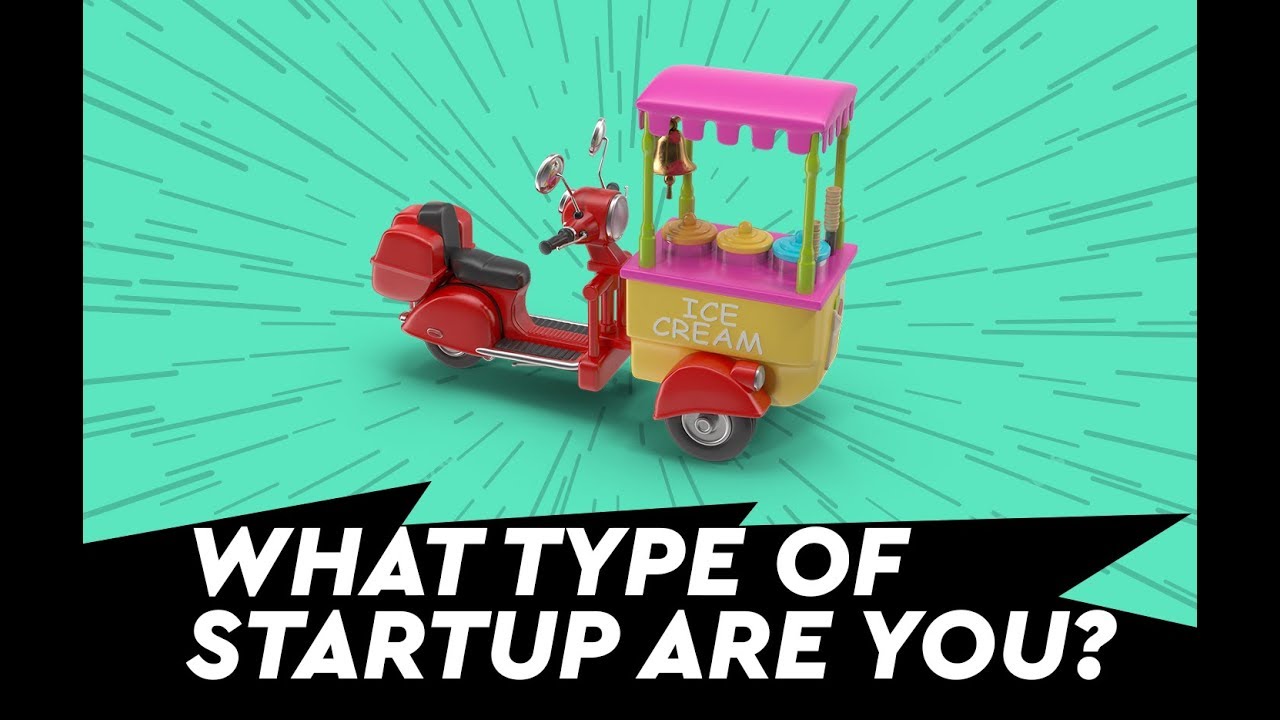
WHAT TYPE OF STARTUP ARE YOU? | METASTARTUP #16
10:58

WHAT TYPE OF STARTUP ARE YOU? | METASTARTUP #16

Varun Mayya 21.12.2018 6 447 просмотров 251 лайков

Machine-readable: Markdown · JSON API · Site index

Поделиться Telegram VK Бот
Транскрипт Скачать .md
Анализ с AI
Описание видео
Download the slide deck in the Facebook group below: https://www.facebook.com/groups/361737054599889/ Follow me on Instagram: http://instagram.com/thevarunmayya In this video we talk products vs services, and hybrid startups!

Оглавление (6 сегментов)

<Untitled Chapter 1>

welcome back to another episode of meta startup guys one problem that's been plaguing me for a while is the fact that I just don't have enough time and what I've started doing over the last few days is waking up super early and I'm talking about 3 a. m. 4 a. m. in the morning putting on my clothes it's freezing cold in Bangalore right now but I put on my clothes and get started on doing the episodes a couple of things we're gonna start doing a little differently from now I'm gonna start taking or shooting these episodes straight for my room that saves me a lot of time going upstairs to my amphitheatre and doing the videos and then taking it down instead I'm gonna feed the audio directly in the computer so it saves me on editing time secondly for some of the more informative topics I'm going to be using a slide deck I'm gonna be making these slide decks and of course as always these slide decks are available on the meta startup Facebook group so if you ever need to download them you can find them there but I've been making these slide decks in my free time which are then right over these videos these slide decks are super informative they're all based on my experiences based on actual statistics and they will come in handy and as always they are 100% free in this video I'm gonna explore these different types

Types of Startups

of startups and by types of startups I don't mean you know the difference between the mom-and-pop store and a venture still startup I'm talking about the ways a regular startup can be split into so that you can figure out where on the map you are as a star so we are much further ado let's get to the slides in this video we're going to talk about the types of startups the type of a startup is primarily based on what it's selling and how it sells it there are two broad classifications to this the first is a services startup and the other one is a product start regardless of what startups start as eventually and what I mean by eventually is that four or five or even ten years into the future whether you started as a services company or a product company you eventually become a hybrid and we're gonna talk about hybrids towards the end of this episode so now that we know that

Product Startups

there are product startups and services startups let's quickly compare them I'll do a longer comparison in the next couple of videos but generally products are high risk right you're probably selling something in probably selling software or a t-shirt or something there is a particular product you are selling there's a longer incubation time obviously it takes you longer to make the right product but the cool thing is that your headcount doesn't scale linearly which means that if you're selling 100 t-shirts today and you have 100 employees it does not mean that you will go to a thousand employees when you have to sell a thousand t-shirts instead your headcount will scale by a small number while your sales scale exponentially as long as the market is buying your product and shows a need on the other hand services are low-risk which means that you can start it anytime you can even start on the site do some consulting I like to see that you know in the general spectrum of things you should start as a freelancer then start doing services and then eventually move to a product company that is the path that I took and that's the path that a lot of successful entrepreneurs took as well they're low risk which means that you don't need too much capital to start them as long as you have one or two people in your team who have the skills and these skills are sellable you don't need too much money except to pay them salaries the incubation and the launch is very quick which means that you could have a services company registered and up and running within you know a few weeks but the headcount scales linearly typically when there's a client and they're paying you a certain amount for services there is a fixed number of hours that somebody in your team has to devote to that client per day or per week right regardless of how big you get as a start-up or how many tools that you use that makes things a little faster you will still need to scale headcount linearly which means that if you're working with 100 clients and it takes a hundred man-hours today if you're working with a thousand clients it will roughly take you a thousand dollars to deliver right even with a few tools you might be shaving off a few hours here and there but in general headcount scales linearly you need to spend more manners so TCS a new Sigma that they're examples of - quite famous services companies they were easy launch they perform some work for cash and their main value is in the talent that they hire and eventually once they become big it's the brand and the network that they bring as well now when we talk about protocol breeze there are two separate classifications of product companies hardware and physical products or software products now all of these classifications that I'm talking about they're loose classifications which means that a product company can have some services elements and a services company can pitch you know a tool or two in their services but what we're talking about is what a start-up does primarily is it primarily a product you sell or primarily a service you sell depending on that we're categorizing this but these are Lou's categorizations there are no set borders it just helps us understand startups better if we set these borders so talking about hardware product startups it does not necessarily have to be an iPhone that is called a hardware product right it could even be medimix soap which means there's some proprietary technology that goes into building or manufacturing the product and if a product market fit is found which means that if the market is willing to pay for the product then there is significant defensibility and revenue potential the word defensibility means that the product has long term value and will be on the market for a lot longer than just a service because it is not easy for a competitor to come and build the same product and claim that there are Medi mix because they're not many mix has already built a brand and some they have some proprietary technology behind them the value is mainly in the technology or the product itself the formula of say Colgate or Coke that is the value right in this case I'm calling it technology but you know in the case of say coca-cola the technology is the formula or the recipe itself they have some loyal customers and of course as time goes on these companies become brands but one drawback is that these are the most expensive to launch their capital-intensive because in order to get the formula right or the technology right you need to spend more money so far we've been talking about hardware products jobs but there are some software products I'm sorry you're familiar with as well it's less expensive to run a software product startup but it's more expensive than services software technology is not as defensible as it was in the 2000s unless you're building some incredible technologies that nobody's seen before the reason for this is that if you build a simple technology tool say menu scanning app right a lot of people across the world can easily build that technology as well as now is there a computer scientist and they've learned a little bit of engineering or if they've got coding ability they can easily replicate what you already have so it's not as defensible as before but today the value isn't the data base that these companies build the brand and the audience right and companies like Facebook again you know their many aspects to Facebook but the better companies to look at are companies like Intuit which specifically sells software to manage your accounts or Zoho which sells an entire suite of software all the way from accounts to invoicing or light chat or whatever now software startups can be broken down to pieces as well the first one that you're probably most familiar with is the e-commerce hybrid right we're going to approach this last but marketplaces and software is a service are the two distinct classifications of software startups a marketplace basically connects a buyer and a seller right they don't own any assets of their own right and freelancer. com and eBay are two examples of this they simply take a cut that's the business model right whenever a bio makes a purchase from a seller on the platform they take a small transaction fee the value is in the audience data the loyal customers and the brand then there's another type of software startup

Software as a Service

which is called software as a service this is typically subscription cloud software in the past it you know at least for enterprises you'd pay a lump sum and have a yearly contract and have people come and install software in your office but today it's subscription cloud software which means you can access the software from any browser or it could be downloadable in the case of something like Photoshop the value is in the technology the audience data the loyal customers and the brand defense ability in software as service startups is starting to lose ground which means that they were pretty defensible a few years ago but as it becomes cheaper and easier to build software these guys are starting to lose their defense ability finally there's ecommerce now ecommerce

Ecommerce

is actually a hybrid in the case of Amazon they provide a full stack service to sellers which means that they have everything from logistics packing so on and so forth available to the merchants in the form of both software as well as an offline Ecosystem sometimes amazon Flipkart also have their own retailers in eBay's case they don't right they're just it's just a crowd-sourced marketplace whereas Amazon case they've got cloud tail which makes it easier for them to sell their own products to customers Amazon for instance has things like the Amazon echo or you know Amazon fire stick which are products that Amazon makes by itself and sells on its own platform the value is in the brand the database and the loyal audience now so far all the starters we spoke about either fall clearly into products or services but there is a new type of startup called a hybrid that combines products and services right because we live in an age where software is easy to build every product today is seeing a software first approach so talking about the hybrids you can have all sorts of permutations and combinations sweetie for example and I'm sure a lot of you are familiar with swiggy they're a marketplace which means that they have several different restaurants that are available on the platform but they also own their own fleet in eBay or Amazon skates they will outsource the fleet to somebody else although you know now Amazon is making place to get its own fleet but in general Swilly owns its own fleet and that is a service that they're giving to the customers who buy food and at the same time they own a marketplace Zara makes clothes which are obviously physical products but they also have their own e-commerce store which is a software product this is all combined value the value of a hybrid is the value of the services component plus its product component and again I made out all of these examples to be very linear I'm talking about companies like Intuit Facebook freelancer eBay Amazon they're all hybrids right which is the point I was getting to when you start is a small company you start doing one very particular thing but as you get bigger and bigger you diversify and eventually add-on services on top because let's face it who doesn't want to make more money so that's at the end of this episode in the next episode we're going to talk about the three

Three Reasons You Should Start a Services Company

reasons you should start a services company

Другие видео автора — Varun Mayya

Ctrl+V

Экстракт Знаний в Telegram

Экстракты и дистилляты из лучших YouTube-каналов — сразу после публикации.

Подписаться

Дайджест Экстрактов

Лучшие методички за неделю — каждый понедельник