Get the best price at B&H: https://bhpho.to/4s4yPo2
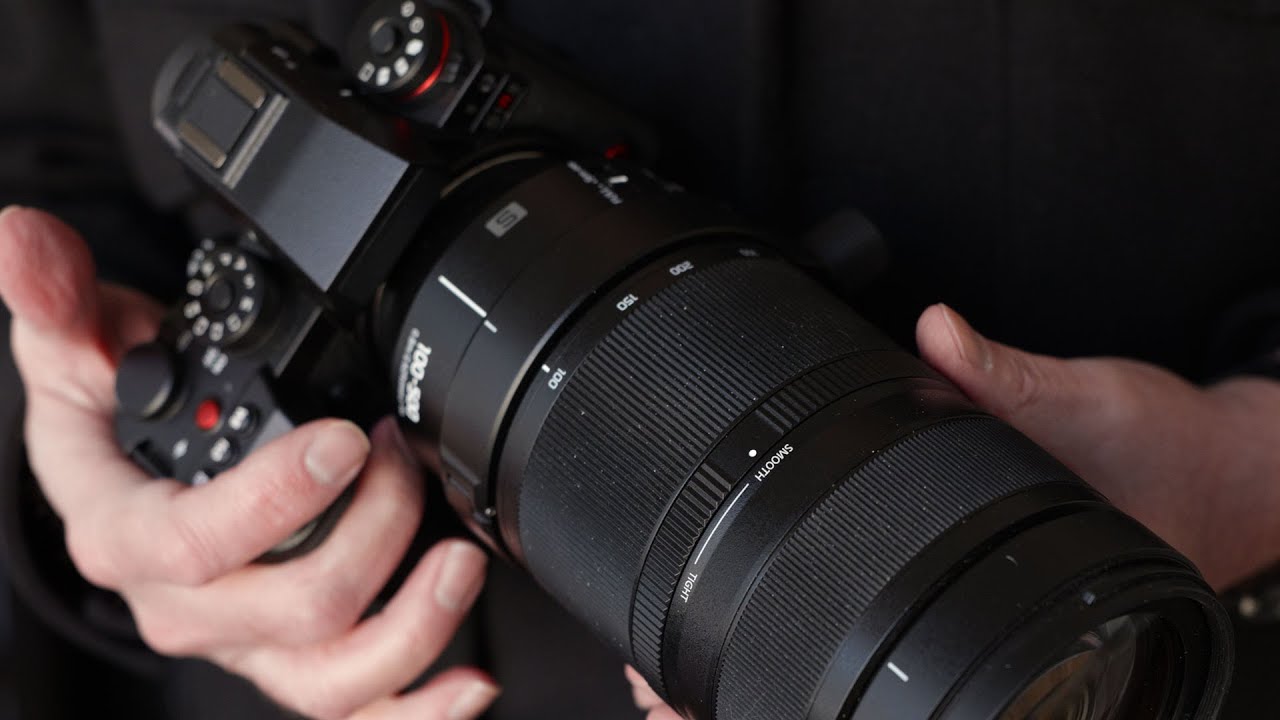
The Zeiss Otus ML 35mm f/1.4 is an extremely unique manual focus lens. A first for the Otus series, this lens features a compact, modern design and the image quality is absolutely stunning. I've been lucky enough to have used some amazing high end lenses in my career, but this one I feel is something really special. There's really not much to compare this to if you want a state-of-the-art 35mm focal length lens. It is in many ways unmatched.
Sign up to the mailing list for weekly updates https://theartofphotography.tv/list
My Adobe Lightroom and Capture One Presets https://theartofphotography.tv/presets/
AoP T-Shirts https://aop.threadless.com/
Need a website? http://squarespace.com/aop
On my channel you will find videos about photography, cinematography, post processing tutorials for Capture One, Lightroom and Photoshop, photo assignments that YOU can participate in, the Artist Series and more. The Artist Series is an ongoing set of videos I produce as documentaries on living photographers. I am extremely passionate about photography and video and my goal in making these videos is to share my passion and enthusiasm with you! Don’t forget to subscribe and make sure to hit the like button and share this video if you enjoyed it!
Ted Forbes
The Art of Photography
2830 S. Hulen, Studio 133
Fort Worth, TX 76109
US of A
Оглавление (3 сегментов)
Segment 1 (00:00 - 05:00)
Welcome back everyone. In this video, we're going to do a little hands-on first impressions with a lens that was released today. This is new from Zeiss. This is the Zeiss Otus ML 35mm F1. 4. I want to preface this a little bit to say that I've had about a week with this lens, so it's not been real extensive testing. I'd also want to say this is someone who has had experience with a lot of lenses. I own way too many lenses. And having said that, this might be the best 35mm lens that I have ever used. And that's saying something. Now, another interesting thing about this focal length. So, the original Zeiss lenses were designed for DSLRs. There were only four of them. We had a 28 mm, a 55mm, an 85mm, and a 100 millimeter. There was no 35mm. So, now that Zeiss are in the midst of doing their mirrorless lineup, so that's the Zeiss Otus ML series. This is the first 35mm that we've had. So, there is no DSLR version to compare this to. And the other thing that excites me about this is I always wish there was a 35 mm on the DSLR side and so it's really awesome to have this now. Now, as I mentioned, I've had about a week with this lens and I really don't have any details. So, this is not a technical review. I don't have a spec sheet. We don't know how many elements and how many groups there are. I guarantee you there's a lot. This is a modern lens design. So, the opinions that I'm expressing in this video are simply based on my own real world experience with this lens as well as the results and image quality that I am getting. Now, another thing that I want to get out of the way is this is a manual focusonly lens. This will be a point of contention for some because it does come in at a high price point. However, I do want to defend that just a little bit. So, the idea behind the original Zeiss Otus lenses that were designed for DSLR now 13 years ago at the time I'm filming this still holds true today is this is a lens that has no holds barred in terms of image quality. All money will be spent on the finest glass materials that are available, on the best manufacturing processes that are available. So, while you don't have the autofocus motors, you do have an exceptionally performing lens that has a lot of high-quality components in it, and that does come at a cost. And unfortunately, that will be off the table for some. So, if you're the type that has trouble turning a tube and you want that to be automated, there are some great options for that obviously out there. But for those of us like myself who prefer a manual focus lens, they really don't get much better than this. In terms of size, the Otus ML 35mm comes in at a just about the same size, diameter, and weight as the 50mm ML. And just as a point of comparison, when you compare those to the size of the old DSLR Otus lenses, it is considerably much more compact and much more usable, much lighter. I really love what they've done with the newer design. Of course, we have 13 years of technology between the original series and now, and they've done an outstanding job at making these much smaller and much more manageable. And just like the other two Otus ML lenses, this will be available in three mounts. It is available for Sony FE as well as Nikon Z. I'm using the Canon RF version in this video. And another thing that I want to add, this is an early impression, is this just might be the most versatile Zotus lens in the lineup. And a lot of that has to do with the way the distortion is managed in here as well as the close focusing distance. I'm going to talk about that in just a second, but I think it is best to start let's look at some image quality and see what kind of results I'm getting on this lens. I want to show you a few examples and we're going to start here. And I'm sorry these images aren't lined up, but I want to show you how good this lens is wide open. So, I've got two images here. The one on the left is shot wide open at f1. 4. The one on the right over here is shot at f11. We would expect the 11 to be sharp, but how sharp is it at f1. 4? Well, I'm going to go in here and zoom. I'm sorry these aren't lined up exactly, but you can see the sharpness is really good at f1. 4. In fact, there really isn't a whole lot of difference when you're shooting at long focal distances like this. Uh it is very impressive. In fact, really the only thing you're going to notice is there's a little more vignetting uh on the one that's wide open. And that is really impressive because that's something that's very difficult to do with lens design. And even with modern lens design, often times you will find that an F4 1. 4 lens really is going to perform best if you pull it down to about f2 or so. Of course, that's about where the vignetting goes away. And I do want to make a comment about that because this lens does vignette and that's to be expected with a design like this. It's built fairly compact. They're not overcompensating for anything. And to be honest with you, I don't see it as that big of an issue because vignetting can be corrected very easily in post. And I've done that on some of these images and it's not a big deal. Uh you're basically just going to brighten up your corners, but you still have all the resolution and microcontrast and all that good stuff. Another thing I want to show you, speaking of microcontrast, and we're going to talk about bokeh here also, is an image like this. Now, okay, this is Texas in the winter and I hate getting lenses in February because everything tends to be a little on the brown side and it is very bright outside. The sun is not very high up in the sky. It just kind of beams right at you. But anyway, I considered using a circular polarizer with this lens and I thought, "No, I don't want to cheat on it because we're reviewing the lens. I want to see what the optical design is. " The contrast is so well controlled on these that these high contrast images really aren't that bad. You can see on this image, the bokeh is incredible. It is absolutely fabulous. Nothing ever gets nervous or busy. It is extremely well controlled. It's as good as the other two Zeiss Otus ML lenses. The
Segment 2 (05:00 - 10:00)
other thing I want to notice is this is in the sun and I was afraid these images were going to be washed out and just not very good. But you can go in, you can see like look at all the texture here in the brass here. The microcontrast on these lenses is exceptional. And that is part of what constitutes what we refer to as the Zeiss look. I think it comes down to microcontrast detail as well as the ability to separate subject and isolate things in the image. I've got an example I will show you here. So, in an image like this one, we've got this crane here. I'm going to go ahead and zoom this into 200% so we can really see how this works here. We've got great subject isolation in here. The fall-off is wonderful. And again, look at all the detail and the microcontrast that we have in the feathers. Now, I will say in terms of subject isolation that if that is really your thing and what you want Zeiss lens to do, I think the 50 and the 85 probably do that slightly better at medium to long range distances. A lot of it has to do with their focal length. This one still does it pretty well. And I'll give you an example here. So, for instance, in this image here, my focus point is actually on this wood post right here. So, if we zoom in, you can see, okay, we have nice separation, especially as it goes further towards the background. Now, when we go out to uh full 100% here, you're going to notice that it does not isolate quite as much at a distance like that at a medium distance as you would get for the 50 or the 85, but it's still pretty good. Where this lens does excel, and this is where I am the most impressed with this is at close focusing distances. So, the minimum focus distance on this lens is under a foot. And this means if you don't mind getting close to your subjects, um, this is my cat, Georgia. And, uh, I'm going to zoom in here, and you can look at the focus on her eye. It is just stunning. And the way that it separates all the hair in here, we're at 200%. I'm just going to go to 100%. So, at the pixel level, uh, it really holds together quite nicely. Uh, this is an exceptional lens. And the other thing that I want to point out is the way that distortion is controlled on here. So, this is a pre-released copy of this lens. So, I don't have a lens profile in Lightroom to turn on. I have not corrected any distortion in any of these images. And this is actually really cool for a 35mm. A lot of lens companies now will kind of flake out in that aspect because like for instance, the Sony 35mm G Master, it's a great lens. It's wonderful, but it does have a little bit of distortion in there that has to be corrected in post. This varies from manufacturer to manufacturer, but you'll commonly see that these days. The reason they're thinking is that you're not going to lose any sharpness, so let's just save the design and actually be able to do that in post-production. But I love the fact that Zeiss had not taken that shortcut. And it is absolutely fantastic. An image like this, if you didn't tell me the focal length, I would have guessed 50 mm just cuz it's so clean and all the lines are straight. It looks so good. And this is something that's a little harder to achieve with a 35 mm, especially close up like this, especially with vintage lenses. You would have never been able to do that. They were sort of designed for infinity. Another image I want to show you. Uh let's look at these flowers here because this is amazing too. When you come in and nail that focus, oh my god, it is amazing. And again, all the microcontrast and everything that holds together. This is almost at minimum focusing distance is what I'm trying to show you here. I think it maybe about an inch off, but it's pretty close to the minimum. And of course, you've got that beautiful falloff. I don't typically shoot at wide open all that much. I did it for all the lens reviews I've done on the Zeiss because that's what they're designed to do is perform well wide open. I prefer a little bit more depth of field, but man, these lenses perform exceptionally well. One other thing that I want to point out if you're into using this lens for astrophotography, we have to deal with a correction that we refer to as coma correction. Now, coma happens with bright sources of light, so like stars, and it's typically pronounced in the corner of a lens. And there are a lot of really good lenses that don't have good coma correction. I was pleasantly surprised. If I zoom into the corner over here, you can see that these little stars are just little points of light. It is exceptional. I think the reigning champ in my book has been the Sony FE 24 millimeter 1. 4G Master. It was really good. This is even better. And I know this isn't great Astro. This was taken in my yard, but it was a clear night. And you can really do some really cool stuff if you're into astro with a lens like this. Now, as I mentioned earlier, this is a manual focus lens design. And I want to talk about the build quality because if you're into manual focus, this is what makes this extra special. So, this is an all- metal construction. Everything feels solid. It's very tight. It doesn't feel assembled. It feels engineered. One thing that I want to point out about the way this is designed and constructed for manual focus. I realize that a lot of people could make the argument that, yeah, sure, Ted, why don't you just grab any mirrorless lens, put it in manual focus mode, and you can focus away. And while that is true, it's not that simple because mirrorless lenses typically have autofocus motors that are linear. And so, the design is such that we have what we call focus by wire. This means we have a focus ring that just turns in infinitely and it triggers electronic signals to tell the camera where to put the focus. And so it is not the same. And what I love about these all the Zeiss lenses for this matter is that they all have this great resistance to them. They are not too tight. loose. And it really makes it so you can accurately dial in the exact focus point that you want to choose in the frame. I really cannot give enough praise into the thought and engineering that went into the design on these lenses. As I pointed out, the aperture assembly on here is simply one of the best I've ever seen. This is not engineered very cheaply at all. It is
Segment 3 (10:00 - 14:00)
very well constructed. There are 10 aperture blades in a circular configuration. What's special about this is when you do stop down and you still have the spherical highlights in your bokeh, they will remain spherical and circular as you stop down. You don't get any of those little hexagon shapes. It's really well done. As a point [clears throat] of reference, if you've ever handled the original Otus lenses for DSLRs, these were extremely wellb built as well. They're also very big and heavy. We have a more compact design that's much more lightweight with these. And I want to talk about one of the things that makes this possible to get in terms I think are actually higher image quality than what we had on the DSLR lenses and where those improvements are made possible. In the early days of 35mm film photography, rangefinders were very popular because of their small compact size until the 1960s when we all of a sudden had the SLR design. Now SLRs were awesome. They used a mirror and you could now look through the viewfinder and pretty much what you see is what you're going to get in terms of depth of field, cropping, framing, the whole thing. So, one step forward there, but one step back because you had to accommodate for the box that held that mirror. This meant that the last element in the lens had to be so far from the shutter curtain as to accommodate for that mirror box. So, it's sort of one step forward, one step back until now when we have mirrorless designs, it allows us to now shorten that distance once again. So, it allows for a much more compact design. You can do way more optically. It's easier to correct things and it's only natural that the Otus lenses have gotten so much better as a result. Okay, so I want to mention some things that I love about this lens, and I'll also mention a few cons that may be issues for some people. So, first of all, what I love, image quality is outstanding. Microcontrast and tonal depth are exceptional with this lens. It really is beautiful. The color rendition, everything is just top tier. As I mentioned before, the two things that make this lens the most versatile for me are the fact that it's got an extremely low close focus distance. It's under a foot, and the distortion correction is so good in this lens. As I mentioned, this could easily swap out for a 50 millimeter if you don't mind getting up close to your subjects. I think in terms of the three lenses that have come out in the Otus ML lineup, the 85, the 50, and now the 35, if you're only going to go for one, I think is going to give you the most versatility. And another thing that I love, not just about the 35, but also the 50 and 85, is all three of these lenses are well matched optically. They're going to have the same color rendition. kind of bokeh performance. They really match well. I'm sure this is something that Zeiss has learned from all the cinema lenses that they've done. And this is actually very important for those that are looking to put together a set of images and they want that consistency across the board. It really is impressive. Also special to this lens is that when you consider a 35mm f1. 4 with this high an optical output and this kind of performance, I mean sure there's other things you can compare it to, but this really is top tier and the results that I'm getting. The only thing that I would kind of philosophically consider comparing it to would be something like the Leica Apposumacron, which is an incredible 35 millimeter lens, one of the best they've made. It's an F2 lens. It's outstanding. It's also a lot more expensive than a lens like this. This comes in at any fraction of that price point. Of course, that lens does have autofocus as well. So, if you want a pure manual focus experience with no focus by wire, this really is kind of special and unique. Now, if we're going to nitpick, there are a few cons as well. First of all, it is manual focus. And I know this is going to be a big deal for some. It also, as a result, is going to be a little bit slower to use, especially if you're going from infinity down to the close focus. It takes a couple turns to get there. So, if speed is what you need with focusing, this lens is probably not for you. However, if you're more like me, you're used to this and you tend to shoot a little bit slower anyway, it really doesn't get much better. And probably the biggest con is kind of an elephant in the room actually, that there is no version for LMount for this. Now, I realize that the Elmount Alliance is a system. It's a group and it probably is paytoplay. And I'm just going to guess. I don't know. It may be that Zeiss are trying to gauge the popularity of these before they commit to something like that. But I really, really would love to see this set of lenses adapted over to that format. In fact, I would also say this for a lot of the lenses that Zeiss have done for Sony over the years. When you consider the Battis lineup as well as the Lockxia lineup, those are incredible lenses as well, and it really would be cool to see them adapt to more camera systems. A lot of those were Sony only. We have everything covered now but LMount and I really wish Zeiss would have these for LMount. For me, there really is a lot to love about this lens. First of all, we did not have 35 with the original DSLR lineup. Even if we did, when you consider the size of these and how much more compact and smaller and actually the price point on these is cheaper than the original DSLR lenses as well. I actually own the 50 mm and this one is just going to be a must have for me as well. I'm thinking about just building a little system just around these Zeiss lenses. if you don't mind slowing down and if it's the type of lens that matches with your photography, I think you'd be really happy with this. It's pretty amazing. So, I would love to know what you guys think. Feel free to drop me a comment below. I will see you in the next video. Until then, later.