Join me in April for my Dancer as Motif workshop in NYC! https://www.tedforbes.com/dancer-2026
The Panasonic Lumix S 100-500mm f/5-7.1 OIS is a compact telephoto lens that actually changed how I feel about long telephoto lenses. The optical quality and performance are both outstanding. Yes it comes at the tradeoff of a slower aperture, but its the telephoto lens that you'll use a lot. Its lightweight and portable. And a tremendous value for the price tag.
Get yours at B&H https://bhpho.to/3NRbDel
Sign up to the mailing list for weekly updates https://theartofphotography.tv/list
My Adobe Lightroom and Capture One Presets https://theartofphotography.tv/presets/
AoP T-Shirts https://aop.threadless.com/
Need a website? http://squarespace.com/aop
On my channel you will find videos about photography, cinematography, post processing tutorials for Capture One, Lightroom and Photoshop, photo assignments that YOU can participate in, the Artist Series and more. The Artist Series is an ongoing set of videos I produce as documentaries on living photographers. I am extremely passionate about photography and video and my goal in making these videos is to share my passion and enthusiasm with you! Don’t forget to subscribe and make sure to hit the like button and share this video if you enjoyed it!
Ted Forbes
The Art of Photography
2830 S. Hulen, Studio 133
Fort Worth, TX 76109
US of A
Оглавление (2 сегментов)
Segment 1 (00:00 - 05:00)
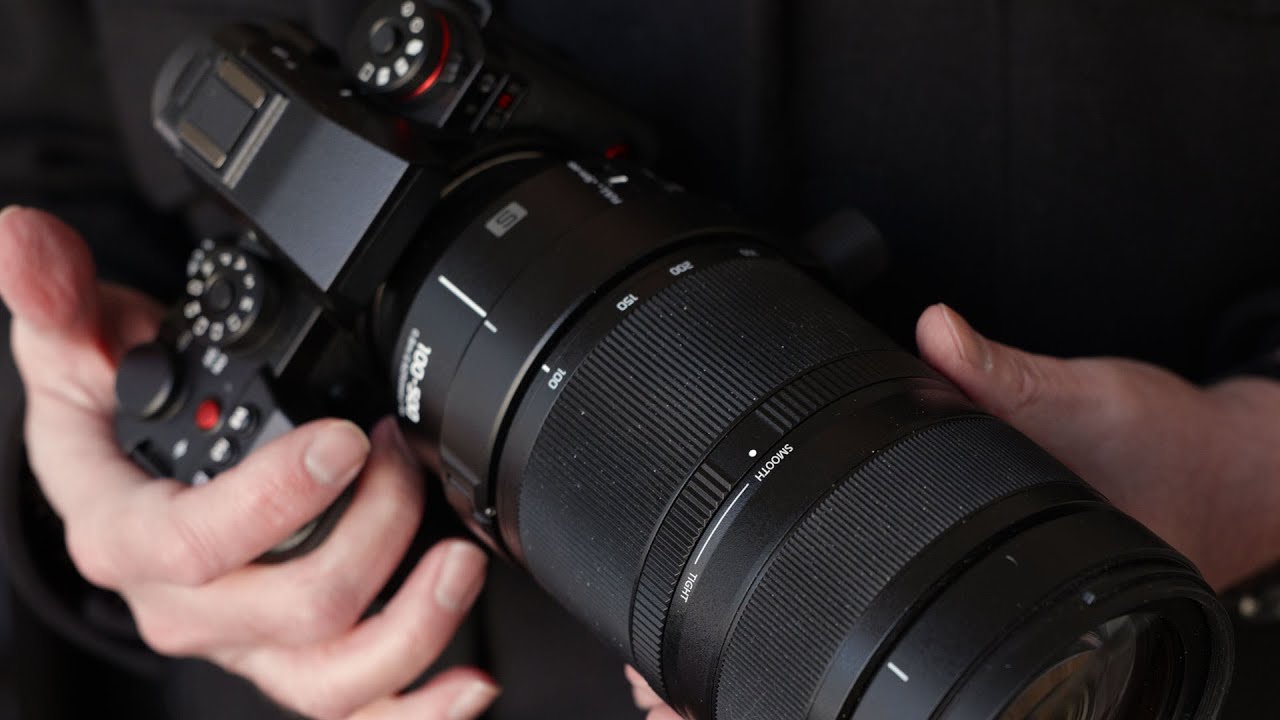
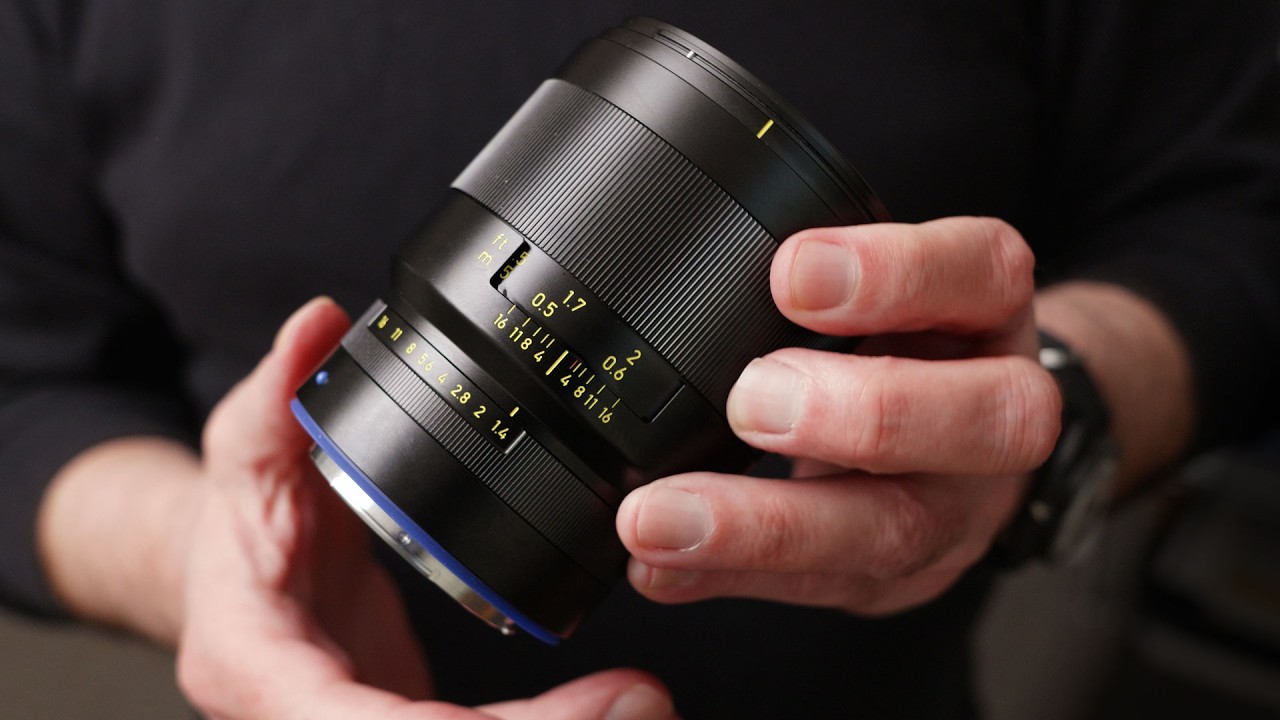
Welcome back everyone. In this video, I've got a lens that I want to share with you. This is the Panasonic Lumix S 100 to 500 millimeter F5 to 7. 1 OIS telephoto zoom lens. I've had this lens for a few months now. And I've been trying to find a way to get this into my own workflow. As most of you guys probably know, I'm not a wildlife guy. I'm definitely not a sports photographer. And if I want to share this with you, I want to have really good images to share. And I want to find a way to fit it into my workflow. I live more on the art side of things. And so, if you've followed my channel for a while, you know that I shoot a lot of ballet and dance images. And it just so happened that a friend of mine who's a choreographer uh called me up and she had a piece that she was performing at the Modern Art Museum where a lot of the images that you've already seen have been shot. And I thought at the last minute, this might be an interesting opportunity to bring this lens and try it out. Now, I did have some concerns, and we're going to talk about the design on this lens in a minute, and who Panasonic is actually targeting this towards, but this more or less is going to be a zoom lens that is very lightweight, relatively speaking, for a 100 to 500 mm. It's going to be compact, and the trade-off there to get that size and that compactness is going to be the variable aperture. So, it's an F5 to 7. 1. Now, like the other images that you've seen, this space is well lit, but it is indoors. And so the problem that I'm going to have with a lens like this, especially when you're shooting out at longer telephoto lengths, is as good as the inbody image stabilization, the dual is, all that stuff is, Panasonic really is best in class with that. As good as it is, I still need to use fast shutter speeds because the subject is moving. So I want to show you some images and just how impressed I am with this lens and really with the S1 R2 because it's a great system. I think Panasonic have done an amazing job with this. But let's look at some images here. Okay. So, I want to start with this image here so you'll get an idea of what I'm talking about. So, one of the concerns that I had is when you're shooting a subject that's in motion, sometimes I needed to go with higher shutter speeds and that meant higher ISOs because we don't have the brightest aperture in the world on here. But, I want to show you something. When you zoom in on this, and typically noise hides in the shadows down here, uh, this is at ISO 6400. And I realize you're looking at the black and white conversion, but if I go back to the original RAW just as it comes in, you can see there is some noise, but the S1R2 handles this extremely well for ISO 6400. I'm very pleased with the results that I'm getting out of here. And uh really when you're zooming in that much, that's when you're really going to see it. But for print application, something like that, you could go big with this. And there's not a lot of noise in here. And you can see the hands are tack sharp. Um I'm really impressed with the performance that I'm getting out of this combination. I think that it's incredible. I'll show you another image here. This is one where the subject is moving. And you can see that this particular shot was at ISO 3200. This is 500 mm of focal length and my shutter speed is 1640th of a second. And I am freezing motion in this and it looks incredible. The detail is good. Uh this lens is excellent. You get a lot of fine details in here and it's uh it's really impressive from an optical standpoint as well. Now, another thing that I want to address with this lens is bokeh performance because this is something, you know, obviously you can shoot a 400 millimeter fixed prime lens and at 400 millimeters you say it's an f2. 8 lens, you can get really melted out backgrounds. That's not going to be the case with this lens, but it does perform really well as you can see. And as I mentioned, I have audience in the back here and it blends it out so it's just not distracting and it really does have a nice look to it. Uh, I was really happy with the way this performed. The other thing that I really liked, and this is just more of a personal note for me because I'm using this in an application that's not sports necessarily. It's definitely not wildlife, although you could argue that it probably has elements of those two things in it. But there is an audience in this performance. And being able to use the compression on these longer focal lengths really does make a huge difference. And it gives me a really interesting look and vantage point that I just can't get when I'm using wider lenses like a 50 mm. There's no way you'd be able to blend that out like that and get that kind of isolation and separation. So, this lens is really impressive, I have to say. So, another thing that I want to mention is last year I taught a workshop in New York City called Dancer as Motif. It was a ballet dance workshop and I'm going to be doing that again this year and I'm really excited about it. It's going to be in April. And the way it works is you can come up to New York City, spend a weekend in a loft photographing ballet dancers. I co-e this with my friend Alexander Light who is the choreographer that did all the pieces that you're seeing in this video. And it's a lot of fun. We bring three dancers to this. It's a great way to understand motion to understand a lot of the complexities and the components of ballet and what it is that you're looking at. So, if you are interested, I do recommend you get on it fairly soon because this class does fill up. It filled up last year. I will put the link in the show description below and you can check that out. But that is Dancers Motif. It's going to be in April of 2026 this year. So, just a couple months away. But back to the lens. Now, I realize this is not the most technical review, but it was important for me to show my experience with this in a real world application. Now, typically when I photograph dance, uh, you're looking at a performance and so getting full body and multiple dancers in the frame is usually pretty important. So, I will stick with prime lenses. Sometimes I'll use a 35. Typically, I'm between 50 mm and 90 mm and maybe sometimes a 135, but I typically am not in the range of 100
Segment 2 (05:00 - 08:00)
to 500, especially that 500 in. But what this did for me is it really opened my eyes into this whole new viewpoint that I could get into the work that I was already doing. And so rather than capturing full body or multiple dancers at a time, you can focus in and just do something like a gesture or an expression. You don't have to include the full body all the time. The other thing that I really loved about this is there's some problematic things about that space that per those performances are in. One of the things is that as beautiful as the architecture is over there, it's a Tadoando building. Uh but it's got a lot of hard vertical lines and a lot of windows in the back and that's something that can really destroy a shot sometimes. The other thing is it is open to the public and you get people who show up looking very comfortable and they come as they are. And so sometimes the audience can be distracting too because I really want to just show dance. And so this is a different way of being able to isolate the subject but also the compression that you have when you're shooting this long. It really adds an interesting element because it puts the dancers kind of in context with an audience sometimes. And especially when I go black and white with these, I feel it's a look that actually works really well. Now, there are other options for telephoto lenses that you can get with wider apertures or consistent apertures. And while the bokeh isn't necessarily completely melted away, I think it is very strong. And the image quality and the optics on here are very, very good. So, Panasonic's design does feature 19 elements in 12 groups. The lens uses 11 aperture blades. There is a removable tripod collar, which also rotates for both portrait and landscape orientation. You can take it off. That's what I did. All the shots that you're seeing here were handheld because I got to be able to move around and get different angles. And I like the fact that the weight doesn't make you dependent on a monopod or tripod, but it does come with a collar, so that option is still in play. Filter threading is 82 mm on the front element. And the weight comes in at 1. 3 kg, so it is a big lens, but compared to other telephotos, it is manageable for handheld use. Like I was saying, the lens does feature optical image stabilization. So using dual is you're going to get seven stops of stabilization and it's on par with everything else on this system. Panasonic has really done an excellent job with inbody image stabilization. Now as I mentioned in the images here I did have to go with faster shutter speeds because I was shooting moving subjects but if you're not dependent on that necessarily you're really going to be impressed with the image stabilization that Panasonic give you. I really do think it's probably the best on any system out there. Panasonic designed this lens with dualphase linear motors for the autofocus system. So, the drive is extremely fast and it's very accurate. The design is somewhat conventional for what you would expect on a zoom lens. You basically have two control rings, one operating the zoom, the other for manual focus. And there also is a tension ring as well. On the side of the lens, you've got a switch controlling the range of focus. You have the autofocus, manual focus selection switch, and then you also have three positions of OIS. You can turn the optical image stabilization into mode one, mode two, or you can turn it off completely. And interestingly enough, on the bottom side of the lens, there is a little switch here, which is going to be a zoom limiter. And what it does is when you actually zoom this out, once I engage this, it's going to limit it to 150 on the wide end. And of course, if you want to go back down to 100, you can turn that off. There's also a custom function button, which comes in really handy if you want to do things like autofocus lock. It is fully customizable. So, if you just go into the menu, you can set it up however you like. So, I'm obviously very impressed with this lens. It allows me to do things that I couldn't do before. And a lot of that has to do with its size, its weight, its portability, and then also when you combine those things with the compatibility with the S1R2 and the fact that you're getting really high ISO performance. This as good as you're getting out of here. I think this is a really compelling system. There's some other nice things about it, too, that I didn't get into. I don't have any of the teleconverters, but this is compatible with Panasonic's teleconverters. So, if you want to extend the length even more, you can do that. I think it's a really compelling package when you consider this comes in at just over $2,000 US. you're going to spend a lot more with fixed aperture or even wider aperture zoom lenses. But uh I would love to know what you guys think as well. So drop me a note in the comments and I will see you guys in the next video. But until then