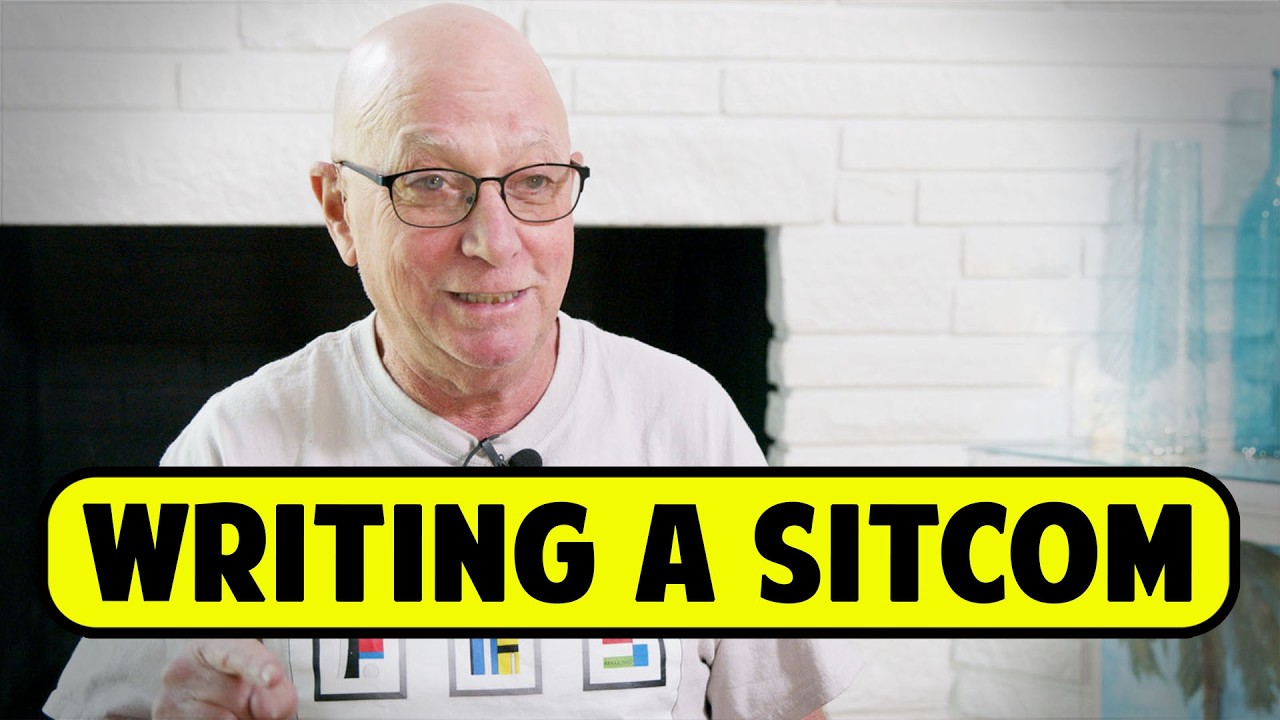
5 Steps To Writing A Sitcom - John Vorhaus
16:17

5 Steps To Writing A Sitcom - John Vorhaus

Film Courage 16.03.2026 1 626 просмотров 121 лайков

Machine-readable: Markdown · JSON API · Site index

Поделиться Telegram VK Бот
Транскрипт Скачать .md
Анализ с AI
Описание видео
Our new book... STORY QUESTIONS: How To Unlock Your Story One Question At A Time https://payhip.com/b/ZTvq9 John Vorhaus is best known for his comedy-writing classic, The Comic Toolbox: How to be Funny Even if You’re Not. He has taught and trained writers in 37 countries on five continents at last count, and created TV shows of his own in Nicaragua, Romania and elsewhere. His writing credits include dozens of teleplays and screenplays, plus seven novels and some two dozen works of non-fiction. His latest book is the little book of STANDUP. Vorhaus is a graduate of Carnegie Mellon University and a member of the Writers Guild of America. He lives in Southern California and secretly controls the world from www.johnvorhaus.com. BUY THE BOOK - THE COMIC TOOLBOX: How to be Funny Even if You're Not https://amzn.to/3RovsY6 BUY THE BOOK - THE COMEDY WRITER'S COMPANION - https://amzn.to/4ukA7gG BUY THE BOOK - the little book of SITCOM - https://amzn.to/3Du9VHL MORE VIDEOS WITH JOHN VORHAUS https://bit.ly/3WSZnJ5 CONNECT WITH JOHN VORHAUS https://johnvorhaus.com https://www.imdb.com/name/nm0903449 https://www.facebook.com/jvbyjv VIEWERS ALSO WATCHED Unbelievable Secret Behind 99% Of All Comedy - https://youtu.be/0FEmuUpeHrc What TV Sitcom Writers Should Know About Structure - https://youtu.be/EVDSXCI2KT4 Seinfeld Is Possibly The Greatest Sitcom Ever - https://youtu.be/Lxk0T5Wq0ds Hidden Tools For Writing A Comedy Screenplay - https://youtu.be/X5G0INWwQe4 Classic Characters Of Sitcom Television - https://youtu.be/X0lawQCzKSU CONNECT WITH FILM COURAGE http://www.FilmCourage.com http://twitter.com/#!/FilmCourage https://www.facebook.com/filmcourage https://www.instagram.com/filmcourage http://filmcourage.tumblr.com http://pinterest.com/filmcourage SUBSCRIBE TO THE FILM COURAGE YOUTUBE CHANNEL http://bit.ly/18DPN37 PERSONALLY SPONSOR FILM COURAGE https://ko-fi.com/filmcourage SUPPORT FILM COURAGE BY BECOMING A MEMBER https://www.youtube.com/channel/UCs8o1mdWAfefJkdBg632_tg/join SUPPORT FILM COURAGE BY BECOMING A PATRON https://www.patreon.com/filmcourage LISTEN TO THE FILM COURAGE PODCAST https://soundcloud.com/filmcourage-com (Affiliates) ►BOOKS WE RECOMMEND: THE NUTSHELL TECHNIQUE: Crack the Secret of Successful Screenwriting https://amzn.to/2X3Vx5F THE STORY SOLUTION: 23 Actions All Great Heroes Must Take http://amzn.to/2gYsuMf SAVE THE CAT! The Last Book on Screenwriting You'll Ever Need https://amzn.to/3dNg2HQ THE ANATOMY OF STORY: 22 Steps To Becoming A Master Storyteller http://amzn.to/2h6W3va THE ART OF DRAMATIC WRITING - Lajos Egri https://amzn.to/3jh3b5f ON WRITING: A Memoir of the Craft https://amzn.to/3XgPtCN THE WAR OF ART: Break Through the Blocks and Win Your Inner Creative Battles http://amzn.to/1KeW9ob ►FILMMAKER STARTER KIT BLACKMAGIC Design Pocket Cinema Camera 4K - https://amzn.to/4gDU0s9 ZOOM H4essential 4-Track Handy Recorder - https://amzn.to/3TIon6X SENNHEISER Professional Shotgun Microphone - https://amzn.to/3TEnLiE NEEWER CB300B 320W LED Video Light - https://amzn.to/3XEMK6F NEEWER 160 LED CN-160 Dimmable Ultra High Power - https://amzn.to/3XX57VK ►WE USE THIS CAMERA (B&H) – https://buff.ly/3rWqrra ►WE USE THIS SOUND RECORDER (AMAZON) – http://amzn.to/2tbFlM9 ►Stuff we use: LENS - Most people ask us what camera we use, no one ever asks about the lens which filmmakers always tell us is more important. This lens was a big investment for us and one we wish we could have made sooner. Started using this lens at the end of 2013 - http://amzn.to/2tbtmOq AUDIO Rode VideoMic Pro - The Rode mic helps us capture our backup audio. It also helps us sync up our audio in post https://amzn.to/425k5rG Audio Recorder - If we had to do it all over again, this is probably the first item we would have bought - https://amzn.to/3WEuz0k LIGHTS - Although we like to use as much natural light as we can, we often enhance the lighting with this small portable light. We have two of them and they have saved us a number of times - http://amzn.to/2u5UnHv *Disclaimer: This video and description contains affiliate links, which means that if you click on one of the product links, we’ll receive a small commission. This helps support the channel and allows us to continue to make videos like this. Thank you for your support! #sitcom #writing #screenwriting
Оглавление (4 сегментов)

Segment 1 (00:00 - 05:00)

John, why do you say that writing a sitcom isn't really that hard? — Because a lot of the pieces of the puzzle are handed to you. In a typical sitcom, you know you're going to occupy constrained physical space. To take Friends as an example, two apartments and a coffee shop. Basically, all the action takes place on those three sets. So, you never need to think about where am I going to stage this. You have to stage it within the confines of the production reality of the sitcom you've created. You know that the stories will have a constrained beginning, middle, and end. And that the journey will be an emotional journey rather than a physical journey. Again, because you're constrained by space and time. You got to tell a story that only lasts 20 minutes told by people who can't move around in space. So that means that your story choices are quite I don't say the word limited, I say constrained. They occupy a narrow space. As Elvis Presley once told me in a dream some 40 years ago, the rules don't confine, they define. True genius works within form. Sitcom constrains your space, constrains your decision making. And so it makes it much easier to operate. Plus, it's just short. You know, it's maybe 30 pages versus a screenplay that's 120 pages. That's why I call sitcom a gateway drug to screenplays because you can knock them out pretty quickly once you have the knack of them because so many choices are already made. To take it a step further, if you find yourself on staff of a show that you didn't create, almost all the choices have already been made. Character names, characteristics, how they're funny, what they do, what their goals are, what they feel, where they live, where they work, where they occupy space and time. You don't need to think about any of that. All you need to think about is what happens and how does it feel for the particular situation you're exploring. So it gives you the opportunity to go down a narrow path without worrying about whatever is on the outside. — You have five steps to help writers develop a sitcom and I'm hoping we can go through all five. — Sure. — Okay. So understood is just follow these steps. So number one would be create a comic character and assign a comic filter. — Okay. We're talking about a type of story called center and eccentrics. What we're imagining is that there's going to be a central character surrounded by funny people. So, this is the structure of the sitcom. There are other kinds of structures you can use, comic opposites, um, ensemble, etc. But for now, we're looking at center and eccentrics. So, we have a central character who has a point of view. We start by making an arbitrary choice. We have a character named Deerra. Okay? And Deardra's comic filter is I can do it. We already know what she's going to do and how she's going to be funny because from her point of view, there's no problem that she can't solve. Okay. So now we have a central character in a center and eccentric situation. We have a central character and now we're going to populate her world with people who are designed strategically to give her the worst possible time. So as a class exercise, we can ask what sort of attitudes conflict with I can do it. And we come up with things like you can't do it. And now we have another character. Now I won't bother giving them all names, but just we have a character who says, "No, you can't do it. " And we can immediately see there's a line of conflict between a character who says, "I can do anything. " And a character who says, "You can't do nothing. " And we know they're going to fight. Now, we have another character who says, "I can do it better. " And again, we can see there's going to be a nice clean line of conflict, competition. Who gets to do it? it best? Who gets to be the one to win the doing of it? All right. So, we got two characters. We can add a few more. We can have a character who says it's not worth doing. And this undercuts and conflicts with Deerra in a whole different way because her whole attitude is I can do it. It's implied that whatever she can do is worth doing. Now, a character comes along and says, why are you even bothering to do that? It's not worth doing. Again, we can see a strong easy line of conflict at another character uh character says uh you shouldn't do it. You're not allowed to do it. which is different from you can't do it, you don't have the capacity to do it, you're forbidden from doing it. I mean, obviously that's going to be a fight because if you tell Deerra she can't do it, she's not allowed to do it and she thinks she can do it. She's got to break that rule, right? And then we have another character, and this is just my favorite kind of character, is the one who says, "What is it? I don't even know what it is. " This kind of character is called a fool. He's so clueless or she's so clueless, they don't even know what it is. which is its own kind of problem because Dearra is going to have to carry that character, explain to the character what it is that needs to be done and why it's important for it to be done. Now, we have a central character, if you can imagine, a bunch of characters aiming arrows at her. She's standing in the middle and everybody has a line of attack on her. Now, we have a situation that is exploitable in situation comedy because we have a central character who is the audience's emotional window on the world. She's the one we care about.

Segment 2 (05:00 - 10:00)

She's our hero. And she's surrounded by comic enemies. And each comic enemy is strategically designed to give her the worst possible time. Now, all we need is to create a situation in which all these characters must stay together. They could be classmates. They could be housemates. They could be co-workers. I like co-workers because there's a lot of story and offices, but it can be anything at all. They could be trapped together on a space station. Absolutely nothing could happen. They're just constrained. They have to stay together. And then we make them fight. And we can make them fight about anything because no matter what you bring into the world, no matter what, no matter what happens you introduce, everybody's going to have a point of view. And every single one of those point of views points of view is going to trigger a feeling. What happens and how people feel. Let's say that it's a newspaper. This is staff of a newspaper. And there's a an interview that's a get. You know what I mean by a get. It's like uh wow if you can get an interview with that superstar that celebrity that music Britney Spears not Britney Spear Taylor Swift. If you can get the celebrity interview you're really hot stuff. Okay. So we know that Dearra's attitude is I can do it. I can get that interview. Somebody's going to say you can't do it. There's no way. I'll bet you $100 you can't do it. Now we have stakes. Now we got something to play for and we have emotional stakes too because dear I can do it is being challenged. And so her sense of I can do it is being elevated. And meanwhile the person who says you can't do it now they have stakes in the game cuz they want her to lose. They want to defeat her from I'm going to keep you from doing it. Now, we learned something about that character we didn't know, which is the point of telling stories to learn things about the characters you didn't know. The one who says you can't do it will actually sabotage Dearra didn't know that. This is discovery in situational comedy. Go around the wheel. Who's next? Uh, I can do it better. You're not going to get that interview. I'm going to get I'm reaching for the phone right now. I know the person who can get me that interview. You're never going to get there again. the pressure it puts on the character, it increases because now she's not only fighting somebody who's sabotaging her, she's fighting somebody who's competing against her. The story is starting to take shape. We are making a bad situation worse for our hero, which is always the goal of situation comedy. Take a bad situation and make it much worse. Who is next on around the line? Um, why bother doing it? nihilistic Nelly says, "I I wouldn't even want to read that interview. Oh, that person's old news. " Or, "You'll never get that interview, and you shouldn't bother trying. You're just going to disappoint yourself. " Oh, that's the one that hurts. This is the way I operate. I try a couple of different points of view, and I listen for the one that hurts. If I hear that person say to Deardra, you're just going to disappoint yourself. In my heart, I go, "Poor Deardra. " And whenever I hear myself [snorts] saying of a character, oh that poor person, I know I'm in the right spot because the character is suffering and the audience is having fun. I want to see Deardra feel that disappointment. And now I know sometime later in the story, she's going to think she's lost and she's really going to feel that disappointment. And now I know this story is going to be good cuz she's going to suffer in a fun way. Probably going to win in the end cuz you know she's the hero. But the emotional stakes, let's review. Someone is sabotaging. Someone is competing. Someone is undercutting. Now she's under assault from three different directions. What's the next one? You're forbidden. Let's say this is the editor. This is not this kind of paper. That story has no place in our newspaper. You must not do it. Now, I've refined that character's point of view. I said before, you shouldn't do it or you can't do it. But now it's you must not do it. It's not to be done. Does that put pressure on Deardra? Absolutely. Why? Because her controlling idea is I can do it. And part of I can do it means I won't take no for an answer. I won't even take the boss telling me specifically not to do it for an answer. Because if I were willing to give up at this point, I wouldn't be an interesting character. If I will were willing to hear the boss say, "Don't do it. " And I said, "Okay, [clears throat] I won't do it. " The story stops right there. There's no point in pursuing it. Nobody's interested in hearing Deerra give up. They want to see Deerra achieve against overwhelming odds. The odds are stacking up. She's being sabotaged. She's being competed against. She's being emotionally undercut. And she's being forbidden. She's banned from the task. And now all we have left is the fool who says, "I'll do it with you. " What is it? Now she's got a a millstone around her neck. She's got a burden she has to carry with her. And maybe the boss. Well, now I'm problem solving, but

Segment 3 (10:00 - 15:00)

somebody says, "Yeah, that's a good idea. You can do it. You can go for the story, but you have to take the fool with you. " Let's look what we've got. Sabotage, competition, emotional undercutting, uh, overbearing, forbidden, and, uh, and a burden to carry, a burden of idiocy to carry. I want to see that character carry all those weights and deal with all those conflicts through the story. And now I can do it just by asking what happens and how does Deerra feel step by step from get to the from the beginning to the end. Presumably she's going to try. She's going to fail. She's going to try again. She's going to be sabotaged. out competed. She's going to keep coming back cuz she can do it. And we want her to know in the end she's going to do it. And then they just fight until we get an outcome. Next week it's uh dear to wants love and she's going to go on a dating site for the first time. We can go right around the wheel again. One character says, "That's a stupid idea. You shouldn't do that. " One character says, "I'm going to outdate you. " Another character says, "You'll only be disappointed. " Another character says, "Keep your eye on your job. Don't worry about your social life. " Another character says, "What's a date? and we're off and running. When you create a structure like this that is structurally sound, you can feed stories into it like a machine and you can always find stories because the conflicts are the things that drive the story. Period. The end. — What was your favorite sitcom? — Uh, Coupling. Coupling is a British sitcom from around 2000. It was created by Steven Moffett who has done I think Young Sherlock or Sherlock Holmes the later did Sherlock Holmes also did Doctor Who. He's a brilliant writer. Coupling uh it's just so wonderful. It's it's smart. It's sexy. It's funny. It's structurally inventive. If people are looking for a good binge, I cannot recommend it highly enough. And I know that it holds up over time because I've watched it over and over again since then. Then like every couple of years I'll sit down and watch the whole season. — So you're attracted to the British sort of humor, the Benny Hill. — Well, Benny Hill is pretty far removed from coupling. Benny Hill is a cartoon. What makes it a cartoon is Benny Hill never experiences emotional risk. We're only watch we're basically watching a road runner run into things. And that's the definition of a cartoon. A cartoon is a story without emotional risk. A James Bond movie can be thought of as an emotional as cartoon not the later ones but all the earlier ones because it was Bond fighting bad guys. He never thought am I okay? Am I a good James Bond? Am I doing the right thing? There was no self-doubt. Without self-doubt, that's where you get something that we can call a cartoon. Benny Hill, no self-doubt. Coupling, nothing but self-doubt. The British quality of sitcom is there's a real tension between what people want and what they're willing to admit they want. And coupling uh explores that tension brilliantly. Interestingly, coupling was bought by NBC and reformatted and put on the air for American television and it bombed completely. — Interesting. — It was a giant dud for two reasons. one, they cast it with pretty people, like beautiful, gorgeous Hollywood actors. It seemed like a good choice, but the characters are so flawed that you could never really figure out why these beautiful people were having these problems. But more importantly, I said a moment ago, coupling speaks to a particularly British idea that there's tension between what you want and what you're willing to go for. We in America, we don't experience that tension. Our cultural idiom is if you want something, you go for it. That's the American way. — Yeah. — And so the show really didn't work because even though the scripts were the exact same scripts, the audience couldn't identify with it. That it didn't resonate with them on an emotional level because it was a set of problems they didn't consider realistic for them. One grace note on this story. It was also adapted in Romania and I was there while it was being a big failure and it was a big failure because in coupling in the British version it's a lot of people sitting around in bars talking about sex and the Romanian audience said we don't have the time or money to sit around in bars and we're sure as heck not talking about sex. — Interesting. — So it just okay — didn't work for the audience. You know what works for everybody everywhere? married with children. — Al Bundy. — You had said that before. — Yeah. — Because And sorry for stealing your line, but because you said everyone can relate to that character. — And why? Why is it? And can wives relate to that character, too?

Segment 4 (15:00 - 16:00)

— Yeah. Because husbands and wives deal with each other's crap inversely. You know, if my problem is you're nagging me to clean the garage, your problem is I wouldn't do a load of laundry to save my life. And we both have the same problem, which is I love this person, but boy, I have to put up with a lot. And in the sense that that's fundamental to any authentic human relationship. That's why that show travels so well. But the way it's expressed to me is people say that Al Bundy, he's just like us here over and over, everywhere, everywhere I go in the world, it's just an archetype. I can tell you that the people who created the show were just trying to deal with their own bitterness about their own divorces. And the whole show was uh an expression of the creator's anger and wrath, — which takes us back to when you're facing the question, what happens and how people feel? You got to ask yourself, how would I feel if I were in that situation? And be honest with your own feelings because that's the only way this whole thing works. — Thank you for watching the video all the way to the end. Here is a complimentary question from our book, Story Questions.

Другие видео автора — Film Courage

Ctrl+V

Экстракт Знаний в Telegram

Экстракты и дистилляты из лучших YouTube-каналов — сразу после публикации.

Подписаться

Дайджест Экстрактов

Лучшие методички за неделю — каждый понедельник