Patreon: https://www.patreon.com/Thoisoi
Attention! This video shows dangerous experiments! Do not repeat the experiments shown in this video!
Hello everyone! In this video, I will tell you about how to obtain gaseous metals and explore their unique properties. Through detailed experiments with zinc, sodium, rubidium, cesium, lithium, and others, you’ll gain insight into the fascinating behaviors of these elements in their gaseous states. Join me as we dive into the world of gaseous metals and their remarkable characteristics.
Welcome to my channel! It's dedicated to experiments in inorganic and organic chemistry! Here you can find a lot of chemical experiments, each of which contains explanations that will be understandable even to people who are not into chemistry. In my video experiments, I also indicate chemical equations that will help you understand the essence of chemical reactions and transformations. If you have problems with the perception of difficult chemical reactions and chemical equations in school, then you can use some of my videos as a self-help guide in chemistry. Also, some experiments from my videos can be repeated at home, of course, in compliance with all safety rules. Many of the experiments that are shown in my videos are shown to children and used as classic demonstration experiments for schoolchildren or students. Each experiment will be explained as clearly as possible. Chemistry is easy for everyone, even for beginners!
#Thoisoi2 #metal #gaseous metal
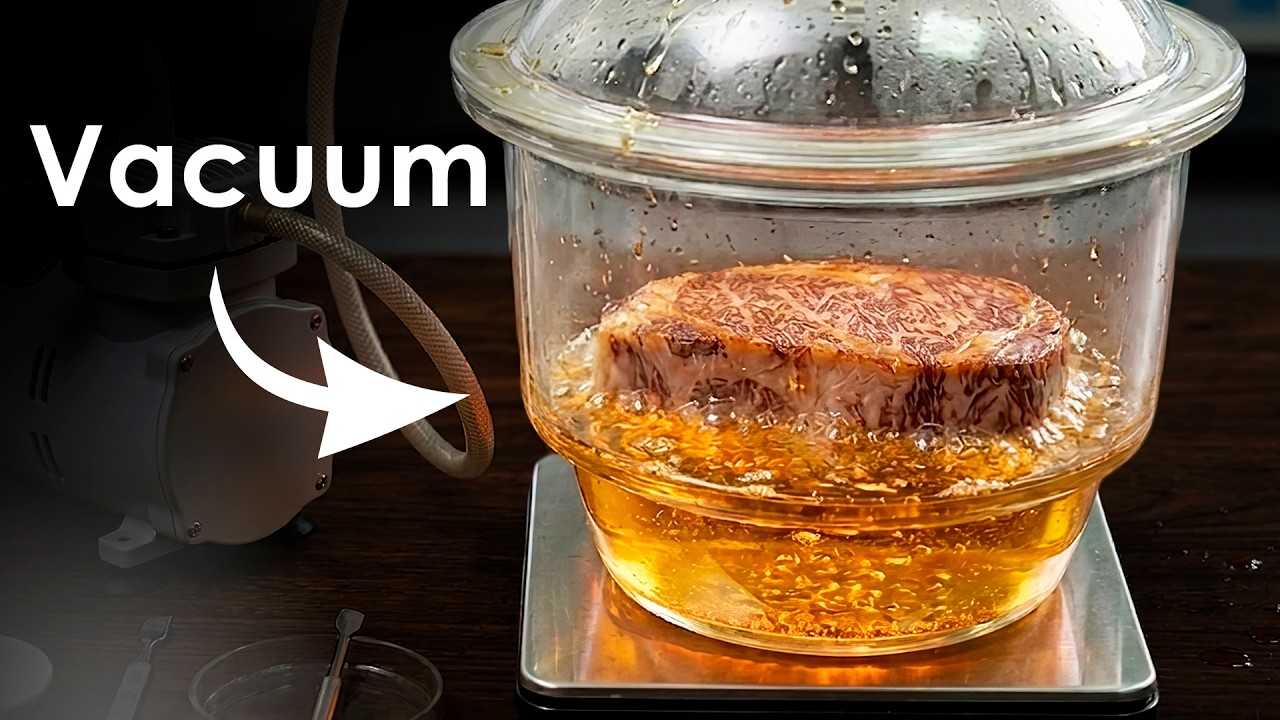
Hello everyone. A couple of years ago, I made a video about the unusual properties of solid air. And yes, I actually managed to get air in a solid state there. Some viewers, by the way, were surprised in the comments and asked, "Is it possible to make a gaseous metal? " H well, let's figure it out together. I think you know that all substances on our planet can exist in five states. Solid, liquid, gas as well as ordinary plasma and quarkloan plasma. However, sometimes even reaching the gaseous state of a substance is already a difficult task. This is especially true for many metals. If you look at this table, the temperature required to turn some metals into gas exceeds 4,000° C, which no apparatus can withstand, as it would simply start to melt itself. Although at the top of that same table, there are some other metals whose boiling points are already relatively low. For example, take Zincit's boiling point is only 960° C. But the catch is that because this metal is very reactive at such a high temperature in air, it simply ignites. Like in this video, for instance, where I made brass by melting zinc and copper together. I think that in order for zinc to evaporate without catching fire, you need to somehow remove oxygen from the equation or really any other gas. Perhaps by creating a vacuum, I'll be able to vaporize this metal. To create a vacuum, I decided to use an old Soviet vacuum chamber. By the way, thanks to my subscriber Ivan for sending me this device. First, I immediately replaced the old vacuum rubber in this chamber with a new one so it would hold pressure better. I'll be evacuating the air with this diaphragm pump from Prime Lab, which is also chemically resistant, so it'll come in handy for some other experiments as well. During the first test, I managed to create a fairly low pressure. It's a pity the monometer here is a bit off, so it even went off the scale. But overall, I think this level of vacuum should be quite sufficient for zinc evaporation to turn zinc into vapor. It needs to be heated, which I'll do using electricity. It's good that my chamber has built-in electrodes through which I can supply current, for example, to an IC chrome strip like this one. And after some experiments, I managed to heat such a strip to about 900° C with a current of 10 amps, which I think will be enough to evaporate zinc at reduced pressure. After making more convenient electrodes, I connect the nikrome strip with a small indentation to them where I will place a piece of the metal to be evaporated. By the way, as a source of zinc, I use this kind of barrel nut from furniture. You could also use a hanger or a door handle since all of these are cast from Zamak alloy which contains about 93% zinc. Underneath the nikrome strip, I placed high temperature quartz wool just in case to avoid accidentally burning through the plastic body of the vacuum chamber to somehow capture the vaporized zinc. I also placed a microscope glass slide on top which in theory should become coated with a thin layer of the evaporated metal. Once all the preparations are done, we can try to turn this small piece of metal into vapor. To do this, I first turn on the vacuum pump, which removes most air from the vacuum chamber. Then I supply current to the nikrome wire, which gradually heats up. You can see the zinc melts quickly in the process. Interestingly, at reduced pressure, the evaporation temperature of many substances also decreases, including metals. So, I think here the zinc will start to boil at a lower temperature than 900° C. It turned out that the boiling started very abruptly, causing the molten piece of zinc to even fly off the heating strip. I had to stop the experiment and put this runaway piece of metal back in place. After reheating the metal a second time, all that was left was to wait for it to boil. Did you see that? Exactly the moment when zinc boiling vapor to settle on the glass. And there it goes a second time. Yeah, definitely didn't look the way I expected. And the metal vapor itself was almost invisible here, except for the metal that settled on the glass surface. Still, I managed to collect a primitive metal filler, often used to coat various high melting point surfaces with different metals. Unlike my device, commercial metal vapor deposition instruments use a much deeper vacuum as well as special tungsten boats in which the metal to be evaporated is placed. But still, I'm glad that I was at least able to somehow evaporate zinc and coat
Segment 2 (05:00 - 10:00)
the glass with a small amount of this metal. Yeah, but somehow this experiment didn't really satisfy me. I want to see what a gazous metal actually looks like. Maybe in the form of some kind of metallic cloud or something similar. I think I need to use a metal with a lower boiling point and try again. If you look at the table after zinc, the next metal by boiling point is sodium, which is an active alkaline metal. Well, I'll try to evaporate that one, too. However, since I've had it stored for quite a while in a jar with kerosene, it's already developed a thick layer of oxide and peroxide, which should be removed. I'm doing this not just for appearanc's sake, but also to make sure that when heated, the metallic sodium doesn't react with its own peroxide, which could cause the experiment to go off track. After I've cleaned the sodium, I carefully cut off a small piece of the metal and place it on my improvised evaporation boat, after which I start evacuating the air from the system. Once I believe a reasonably deep vacuum has been achieved in the chamber, I turn on the electricity and heat the piece of sodium to its boiling point. I didn't have to wait long and the sodium boiled fairly quickly. However, for some reason, it caught fire immediately. Apparently, even with the vacuum pump running, there was still oxygen left in the chamber or it was seeping in through tiny cracks since the vacuum chamber itself is over 50 years old. Even repeated experiments with two pumps didn't fix the situation and the sodium kept catching fire. I think I need to come up with something else. Perhaps a simpler system for this. I took a regular flat bottom flask with thick walls so it could withstand low pressure during heating. I will connect it to the vacuum pump using this kind of ground glass adapter which I also coat with silicone grease for a better seal. Now I place a piece of sodium into the flask and to make sure there's absolutely no oxygen left in the flask. This time I'll start by simply flushing it out with so-called compressed air used for cleaning computers. To be more precise, this can actually contains various fluoroalkanes which are heavier than air and therefore settle at the bottom of the flask displacing the air itself. Now I start evacuating all the remaining gases from the flask using two vacuum pumps connected in series. This way, the pressure drops faster and reaches a lower level than with one pump. After evacuating the air, I slowly heat the flask with a gas burner so that the sodium melts and begins to boil since at low pressure it boils at around 3 to 400° C. By the way, this happened quite suddenly and the piece of sodium turned into a shiny droplet resembling mercury. At that moment, the flask was instantly filled with metallic sodium vapor which immediately condensed on the cooler wall of the flask starting to form something like a sodium mirror. Yes, it looks quite interesting because I finally managed to create a gaseous metal. Essentially, at the moment when the sodium started to boil, we were observing that very metallic vapor which had a slightly brownish color. By the way, while I was conducting experiments with sodium at low pressure, I remembered that it's possible this metal could form plasma when exposed to electromagnetic radiation. Some other metals behave similarly at low pressure, for example, mercury, like in this little flask. To try to create plasma from sodium vapor, I decided to boil it in a vacuum once again and at the same time observe its vapor against the light background. And so the sodium started boiling and began to evaporate. After the metal evaporated, the walls of the flask were coated with a thin sodium mirror which make it difficult to see the plasma inside. That's why I additionally heat the front wall of the flask to drive away the excess sodium and create something like a window through which the sodium plasma can be observed. As soon as everything is ready and while the flask is still hot, I bring a powered Tesla coil close to it. After which the contents of the flask begin to glow with a bright yellow light due to the formation of sodium plasma. Yes, I have now managed to make a real low pressure sodium lamp. By the way, such lamps were popular in the first half of the 20th century until they were replaced by more efficient high-pressure sodium lamps that produce a more powerful light output. Nevertheless, over time, the flask of my homemade lamp cooled, causing the sodium vapor to condense and the glow changed to almost white. Apparently, at low pressure, it is those fluoroalkanes found in compressed air for computers that glow with this color. After I turned off the vacuum pump, it was time to somehow remove the remaining sodium from the flask. To start, I let air into
Segment 3 (10:00 - 15:00)
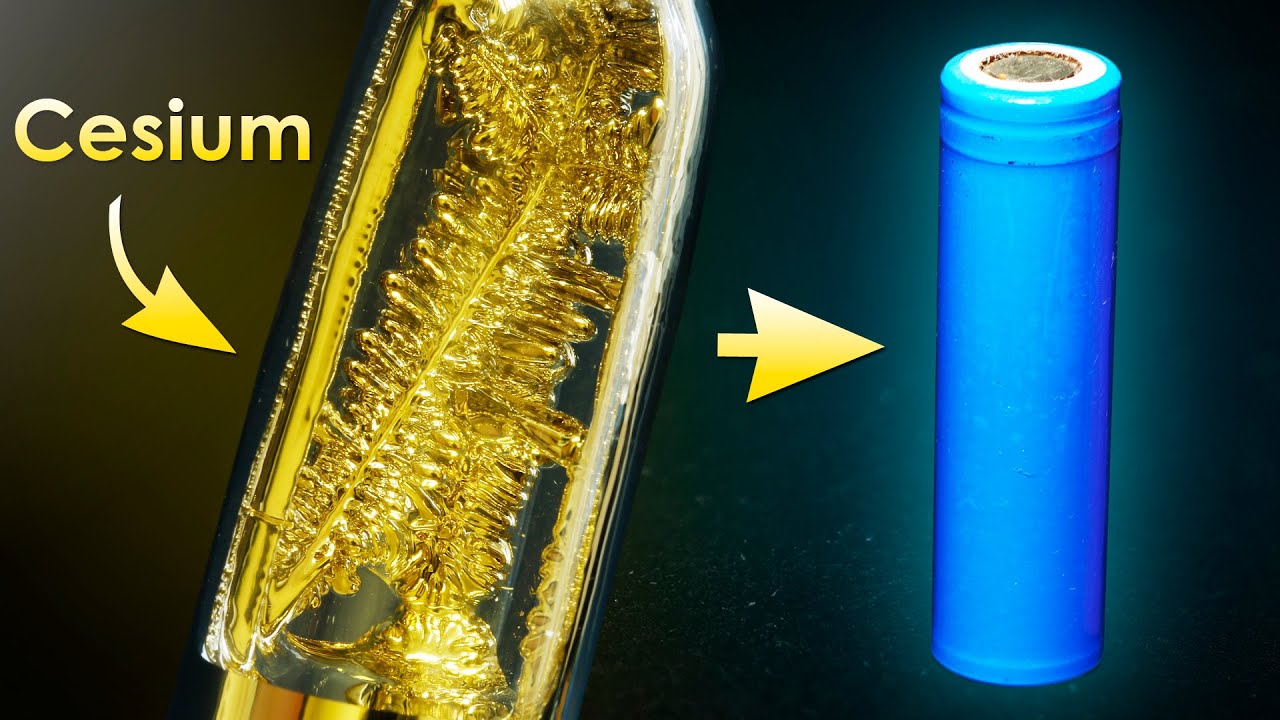
it, which quickly oxidized part of the sodium mirror. Since sodium is a reactive metal, and adding water to the flask might react poorly, I decided to carefully dissolve the remaining sodium in ethyl alcohol. After successful experiments with sodium, I became interested in evaporating other low boiling metals and observing color of plasma. To do this, I bought these amples with the purest metallic potassium. I think just a couple of grams of this metal will be enough to obtain potassium vapor. So, I broke one ampool and placed the pieces of potassium into the flask along with the glass fragments. I don't think they'll interfere with the experiment much. Next, as usual, I pumped the air out of the flask and then gradually heated with a gas burner. In this case, potassium evaporated more slowly than sodium, and it filled the flask with a beautiful metal vapor of a blue violet color, unlike the brown vapor of sodium. These vapors immediately settled on the glass, forming a shiny potassium mirror. Without wasting any time, I started heating the front part of the flask, creating a window in this mirror. After that, I turned on the Tesla coil and brought it close to the flask. Yes. Now this is truly beautiful. The resulting potassium plasma has such a beautiful white violet color. Interestingly, as the FL cooled, the color shifted slightly blue. And when the Tesla coil was removed, it became more pink. It's also interesting that when the flask cooled and I tried to remove the potassium with alcohol, this metal reacted much more actively with ethanol. So, you need to be very careful when conducting experiments with reactive metals. After seeing a beautiful effect with potassium, I decided to evaporate rubidium. Fortunately, a friend of mine recently gave me a real rarity at trophy rubidium brought from Germany about 80 years ago. It's amazing how it hasn't oxidized after all this time. Maybe it was somehow cleaned or stored in very dry and highquality mineral oil. That oil can interfere with the experiment. That's why I wash off the oil in very cold kerosene. Then quickly remove kerosene with a napkin before the rubidium starts to melt from oxidation. I made it in time and the rubidium pellet was successfully placed into the flask for evaporation. Let's see what color the vapor will be this time. After heating, rubidium boils at an even lower temperature than potassium, gradually forming bluish rubidium vapor which settled on the upper cooler parts of the flask. After bringing the Tesla coil, the rubidium vapor starts to glow a blue violet color. Interestingly, the light from the metal plasma and its vapor is somewhat similar. For example, I didn't know that before. And finally, I decided to boil the most reactive metal, cesium. Since such a reactive metal oxidizes even in the best mineral oil, I purchased it sealed in a glass ample under an argon atmosphere. The problem with seesium is that it is extremely reactive and also melts at just 28°. And as soon as I break the imple, it will most likely melt from oxidation in the air and leak out. By the way, this actually happened to me a few years ago, and I would rather not repeat that incident. That's why I initially decided to cool the ampour with seesium in the freezer and then break it inside a bag to contain the flying glass shots along with any remaining seesium. However, I was a bit too optimistic here. At the very first contact of the frozen seesium with air, it immediately melted, and my clumsy attempts to remove the remains of the ampool from the bag only made things worse. But it seems I got lucky because an air season burns up very quickly and doesn't have time to ignite everything around. So, under no circumstances should you try to repeat what you've seen. With great difficulty, I saved a few drops of cesium, which I placed into a flask that had been flushed with fluorocarbons. Let's see what the vapor of the most reactive metal looks like under reduced pressure. Yes, it looks pretty good almost like with rubidium. But here the caesium mirror has a subtly golden tint. After heating the flask, I once again create plasma inside it, but this time from cesium. By the way, the color of the plasma here turned out to be quite unusual because near the Tesla coil, the cesium vapor glowed pink. And as soon as I moved the coil away, the glow became slightly orange. I think this happened because cesium atoms are larger making them respond differently to electromagnetic radiation of varying
Segment 4 (15:00 - 20:00)
intensities. Yes, it was beautiful and interesting. But is it possible to see metal vapors at normal or maybe even elevated pressure? I think it's worth a try. To do this, I decided to heat different alkali metals one by one in a test tube under an argon atmosphere so that the metal vapors wouldn't oxidize and could be seen to some extent. First, I decided to heat metallic lithium. According to chemists, shouldn't be heated in glass. I took the risk. After being heated, the lithium began to melt and started to react with the glass, which contains silicon dioxide. As a result of this reaction, pure silicon produced. If you rewatch this moment, you can see at the start of the reaction a small dark blue cloud formed. Perhaps these were vapors of metallic lithium which managed to boil off at the start of the reaction with the glass. Even in an argon atmosphere, these vapors still managed to oxidize. It's possible that some oxygen seeped into the test tube. I wonder if I'll be able to produce sodium vapors. For this, I placed a piece of this metal into a fresh test tube and flushed with argon. After heating at normal atmospheric pressure, the sodium first melts and then it seems to slowly start evaporating. But unfortunately, due to its very high boiling point, its vapors immediately begin to react with the glass, just like in the case of lithium. H maybe I should use the alkaly metal with the lowest boiling point of them all. For example, seesium. To do this, I took a few drops of seesium and placed them in a test tube filled with argon. Since cesium vapors are expected to be the most reactive to prevent their oxidation as much as possible, I started blowing fresh argan through the test tube. All that was left was to heat this reactive metal and see what would happen at normal atmospheric pressure. With gentle heating, small amount of golden vapor began to appear in the test tube, which is unusual. With further heating, at 670° C, seesium began to slowly boil, producing vapors of unusual black color. This is quite strange since in a vacuum, the vapor's color was blue. Still, unlike experiments in a vacuum, the black color may indicate some traces of oxygen got into the test tube and oxidized the evaporating seesium. H. So, how can you vaporize a metal in such a way as to avoid its oxidation and also prevent it from reacting with the glass? Perhaps it's possible to produce the metal right on spot, lowering its boiling point. Think there is one way. For example, instead of heating the metal, you could heat its aside. If you didn't know, when alkali metal aides are heated, they decompose into nitrogen and pure metal, which exists briefly as a metallic vapor. For example, in these frames, you can see the decomposition of sodium aid also used in airbags. Here, evaporation of metal occurs more easily since decomposition of aides releases heat which helps to convert metal into gaseous state. However, to produce more metal vapor and prevent reaction with the glass, I decided to use potassium aid instead of sodium aid. This way the boiling point of the resulting potassium will be lower which also means the likelihood of it reacting with the glass will be lower. For another experiment as before I first created an inert atmosphere in the test tube by introducing argon. After that just like with cesium I connected an argon flow to the test tube to prevent any entry of oxygen. I began heating the potassium aside which quickly started to melt and decompose into nitrogen and pure metallic potassium. The resulting metal vapors were green. Some of the vapors escaped from the test tube and burned bright violet sparks. To be sure that the potassium vapors are green, I heated the test tube again with the remaining aside and the freshly obtained potassium. Interestingly, in this case, the potassium evaporated quite easily and without reacting with the glass, resulting in the test tube filling with beautiful emerald colored potassium vapors. Well, I finally managed to obtain a gaseous metal at atmospheric pressure and also prevent its oxidation. In addition to the argon flow, the freshly produced nitrogen from the decomposition of potassium aid played a role since it hardly reacts with potassium or its vapors. With further heating, the green color of the potassium vapor took on a bluish tint. And when cooled, the vapor seemed to become slightly yellowish, which surprised me. I think this strange color change of metallic vapor can be linked to electron energy, which changes with temperature. Because of this, at different temperatures, metallic vapor atoms absorb different spectra of light. But maybe some of you know a better explanation. Write about it in the
Segment 5 (20:00 - 20:00)
comments. Well, at the end of this video, I'm glad that I managed to obtain a gaseous metal. But if you enjoyed this video, as always, don't forget to like it and subscribe to the channel to learn many more new and interesting things.
Другие видео автора — Thoisoi2 - Chemical Experiments!