Metal Foam – The Most Challenging Material to Make!
19:16

Metal Foam – The Most Challenging Material to Make!

Thoisoi2 - Chemical Experiments! 15.03.2025 157 645 просмотров 8 810 лайков

Machine-readable: Markdown · JSON API · Site index

Поделиться Telegram VK Бот
Транскрипт Скачать .md
Анализ с AI
Описание видео
Patreon: https://www.patreon.com/Thoisoi Attention! This video shows dangerous experiments! Do not repeat the experiments shown in this video! Hello everyone! In this video, I'll delve into the concept of metal foams and show an experiment on making aluminum foam, which is lighter and has unique properties, including being an excellent conductor and a strong, lightweight material. I'll also talk about some practical applications of metal foam and the challenges of producing it on a small scale. Welcome to my channel! It's dedicated to experiments in inorganic and organic chemistry! Here you can find a lot of chemical experiments, each of which contains explanations that will be understandable even to people who are not into chemistry. In my video experiments, I also indicate equations that will help you understand the essence of chemical reactions and transformations. If you have problems with the perception of difficult chemical reactions and equations in school, then you can use some of my videos as a self-help guide in chemistry. Also, some experiments from my videos can be repeated at home, of course, in compliance with all safety rules. Many of the experiments that are shown in my videos are shown to children and used as classic demonstration experiments for schoolchildren or students. Each experiment will be explained as clearly as possible. Chemistry is easy for everyone, even for beginners! #Thoisoi #Chemistry
Оглавление (4 сегментов)

Segment 1 (00:00 - 05:00)

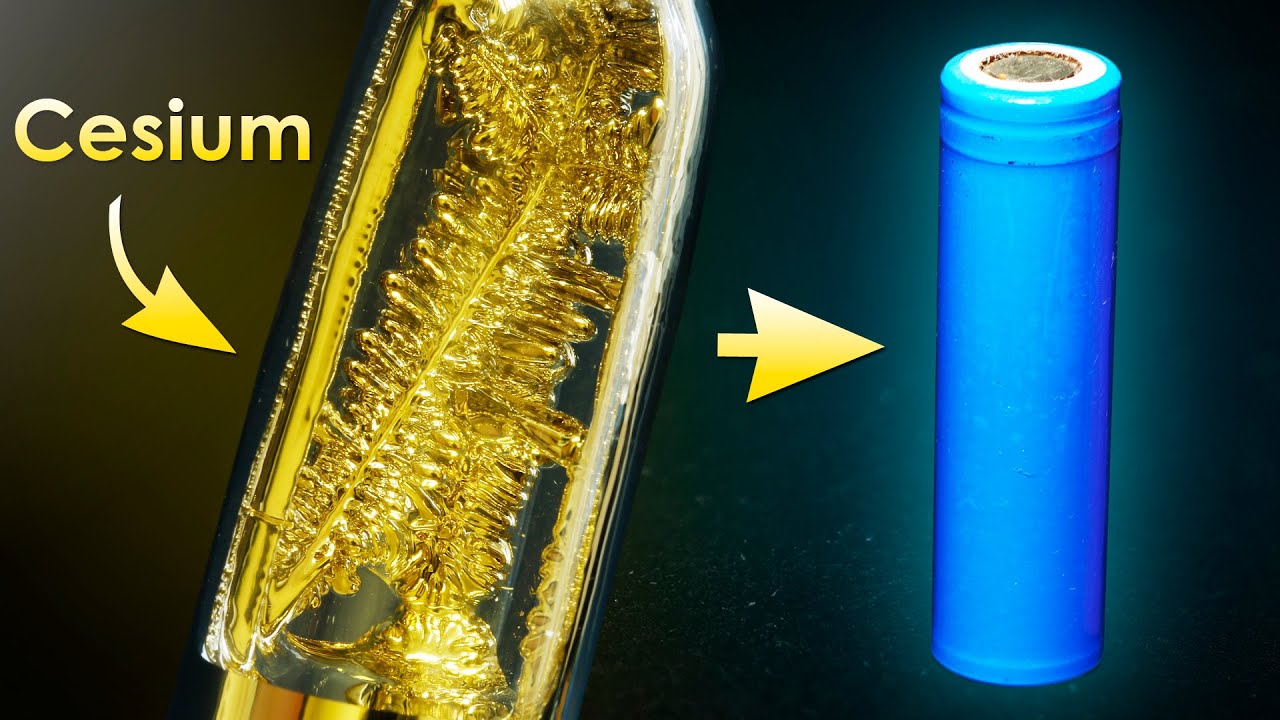
hello everyone I think you know that in some button batteries lithium foil is used as a source of electrons seriously if you crack open a battery like this you can find this kind of lithium foil which is also incredibly light since lithium is the lightest of All Metals I wonder if there is a metal or some alloy that is lighter than lithium well let's figure it out to start let's take a look at different metals and evaluate how their chemical and physical properties differ as their density decreases for example if we look at reference data the densest metal on Earth is osmium moreover it is important to note that it is the only one among all metals that has a characteristic bluish tint like its Platinum Group counterparts osmium is a chemically very stable metal it doesn't dissolve in nitric acid even in powder form it also has a very high melting point of 33° C so you can't melt it with a regular torch osmium compounds are very toxic like for example its tetroxide which is in this vial the peculiarity of this substance is that being a metal oxide it easily transitions into a liquid state and can even evaporate in the air I think for an ordinary person such properties seem really strange because often metal oxides such as rust for example do not melt at all and even more so do not evaporate anywhere Over time however if you break a vial of osmium tetroxide the oxide that evaporates from it can cause quite a bit of trouble as it is several times more toxic than potassium cyanide according to the stories this substance has the smell of garlic and if you smell it then you have already caused significant damage to your health in general the substance is indeed very dangerous besides osmium if you look at this table the first four rows of the densest metals also include idium platinum and rium which are extremely expensive and like osmium are inert and refractory Metals these Metals don't react much with anything for example iridium and platinum which don't really tarnish even when heated in the air you can only melt the same Platinum with an oxygen torch as its melting point is 768 de C interestingly rium which differs in density by just a gr per cubic cm is already impossible to melt even with an oxygen torch as its melting point is nearly 3200 de Celsius although from a chemical standpoint arenium is already more active than platinum as this metal tarnishes when heated in the air forming a rather volatile arenium oxide as you can see with the decrease in the density of metals their properties also differ drastically but let's take not adjacent elements but some with an average density like lead which is almost twice as light as osmium significantly differing in density from the Platinum Group Metals lead should in theory have completely different chemical and physical properties and that's actually true lead melts quite easily at just 327° C and it's also a very soft metal in the air it is quite resistant to oxidation although at very high temperatures it can catch fire forming a yellowish lead oxide however along with this like many metals with a density above 5 G per cubic cm lead is classified as a heavy metal but not all of them have toxic properties in general if it weren't for the extremely high toxicity of lead it would be just perfect for everyday use it's easy to extract easy to smell it is quite chemically stable and its compounds have very useful physical or chemical properties but here's the cetch our body from a chemical standpoint easily confuses lid with zinc which leads to a whole Cascade of disruptions in various biochemical reactions this is the main downside of lead its high toxicity interestingly the next densest metal after lead is silver which is only a gram lighter per cubic centimeter but at the same time it already differs drastically in its physical and chemical properties for example its melt in point is already 640 de higher than that of lead and at the same time its chemical stability is also greater as even at high temperatures a silver coin doesn't oxidize in the air while melting and remains shiny in addition silver is noticeably harder than land at the same time silver itself as well as its components is not as toxic to humans as compounds like lead this is because when they enter the body even water soluble silver compounds often

Segment 2 (05:00 - 10:00)

form insoluble silver chloride which can no longer participate in biochemical reactions or somehow interfere with them making it easy to eliminate along with the other food residues well besides the average weights of metals let's also look at lighter and more familiar Metals For example manganese and Tin standing next to each other manganese itself is a metal with a quite high melting point however here when heated in the air you can clearly see how the metal it oxidizes quite quickly forming a layer of Manganese dioxide this metal also reacts quite vigorously with sulfuric acid forming manganese sulfate and hydrogen in comparison tin which is only 1 G per cubic cm lighter than manganese already has slightly different properties for example it melts at a temperature of just 231° C like and it indeed only reacts with sulfuric acid when heated it's interesting but so far with the decrease in the density of metals you can still notice some correlation specifically an increase in their chemical activity yes of course not directly from Elemental element but rather like a growth chart the price of Bitcoin sometimes up sometimes down with a clearly upward Trend there are a couple of other somewhat strange examples aluminum not inst strontium for example the density of aluminum is already three times less than the density of tin which should in theory change its chemical properties yes at first glance that's true aluminum reacts much more vigorously with sulfuric acid than tin does but that's about it melts at a temperature of 60° C Which is higher than that of tin so aluminum here seems to be not as active three times more active than tin however if we take the next metal in terms of density strontium everything immediately falls into place this metal is already much more active than aluminum so it can react not just with acid but even with plain water displacing hydrogen from it when trying to melt this metal in the air it actually catches fire here's what I understand an increase in activity with a decrease in density yes it turns out that in nature not everything is so straight forward and therefore it is subject to some exceptions that's exactly why the Periodic Table of chemical elements was created to sort metals and non-metals not just by their density or melting point but by atomic mass as well as chemical properties but still I think there's a small pattern it's also noticeable with metals that as density decreases this trend is observed specifically the lower the density the higher the activity you don't have to look far for examples as the most active metals namely the alkaline metals are found in the first group of the Periodic Table of chemical elements and yes they turn out to be the lightest of all metal to be more precise potassium and lithium are the leaders in terms of their low density if we look at pottassium its density is already lower than that of water G per cubic cm this metal is very soft and can be easily cut with a knife in terms of hardness it resembles oil from the refrigerator this metal has quite a high activity when reacting with water pottassium ignites instantly and with larger pieces an explosion can even occur the lightest of these Metals turns out to be lithium with a density of just G per cubic cm cubic holding this piece of lithium in my hand it's hard to believe that it's a metal it feels just like a piece of Lightwood unlike potassium lithium is much harder which makes it difficult to cut with a knife because of its high chemical activity and small size of the atom lithium and the only metal that can react with nitrogen at room temperature quoting with a black layer of lithium nitride the density of this metal is so low that it even floats in organic solvents like kerosene but if you compare for example the lightest and the heaviest metal the difference is truly impressive lithium is about 40 times lighter than osmium lithium is used today in the production of glass Ceramics Metallurgy and construction it's used for making tires lubricants agrochemicals and many other applications as you understand no matter how light lithium is it's simply impossible to make any structures from it due to its high chemical reactivity there might be some other metal or even an alloy that is just as light as lithium but for example less chemically active and stable in the air to figure this out I started looking for information online and after some time I found out that there are already so-called foam

Segment 3 (10:00 - 15:00)

metals they can even be lighter than lithium in terms of density while still maintaining sufficient strength and chemical stability in one of the documents there was a rough guide on how to make such a foam metal so I thought why not give it a try and create this unusual material to start you need to take some lightweight and strong metal that will be used to make the Foam metal I chose aluminum because it melts easily and isn't too expensive in the document I found there was a rough guide on how to obtain foam metal using various methods one of them was the method of foaming aluminum using hydrogen I decided to try it specifically because it seemed the most interesting for my experiment I weighed out 40 G of aluminum in a crucible and then I added a bit of metallic calcium powder to it that's the whole thing I put it to melt in the furnace at a temperature of 76° C stirring it from time to help the calcium blend better with the aluminum if you don't know it's calcium this is an active alkaline earth metal that reacts very actively with water releasing hydrogen and forming calcium hydroxide which is lime recently I snagged half a kilo of this metal for a bargain initially by the way the package was under vacuum it's possible that any moisture left in the package reacted with the calcium inflating the package with gaseous hydrogen to be safe and prevent the small calcium granules from oxidizing even more in the air I decided to transfer them to another container which I had previously flushed with argon to create an inert environment inside this way the calcium particles will last longer and won't start burning since there was actually real calcium dust left at the bottom of that package who knows maybe it's perforated by the way this calcium dust reacts with water much more actively than the chunks and if you actually set all of this on fire that mixture will ignite with a very bright flame dry metallic calcium itself doesn't burn much in the air actively due to the high melting temperature according to the instructions adding about the calcium impurities will improve its viscosity which will make the further foaming process go better I think it will take about 20 minutes in the furnace at a temperature of 760 de C it will be enough for the aluminum and calcium to melt together while everything is melting there it's time to weigh out another reagent that will foam the alloy namely titanium hydride these yellowish granules are a compound of titanium with hydrogen which some scientists today suggest using for hydrogen storage the thing is when this substance is heated it releases pure hydrogen which can be used for various purposes for example as fuel unlike sodium hydde which can spontaneously ignite on a wet surface titanium hydride is more stable and can be stored for a very long time without decomposing nevertheless after in my opinion the aluminum has melted with the calcium I take The Crucible out of the furnace and quickly while the alloy is still hot add the titanium hydride to it as you can see it started to instantly decompose into titanium oxide and hydrogen so using a quartz tube I'm trying to quickly mix it into the molten aluminum so that it Foams the metal with the high hydrogen that's being released according to the instructions I need to keep stirring the alloy until the metal is saturated with hydrogen and solidifies which is what I'm trying to do even though the volume of the alloy doesn't seem to be increasing at all maybe we need to heat the alloy a bit more so that it can dissolve more hydrogen and yes you heard that right at high temperatures in some metals particularly aluminum a small amount of hydrogen can dissolve and if you don't digas such an alloy or metal then during solidification it may form shells or bubbles that resemble that very metallic foam however after Heating and Cooling the foam didn't really turn out well the first time yes and you can clearly see that the viscosity of the metal is the same as that of pure aluminum apparently I need to try doing everything a bit differently to start with I weighed out 60 G of aluminum into The Crucible after which I melted it without adding any metallic calcium beforehand only after the aluminum has melted thoroughly do I remove the oxide layer and then add the calcium granules here you can already notice the calcium has started to slowly melt with the aluminum as the surface of the latter has changed a bit and it seems to be wetting the walls of The Crucible this didn't happen before now I'm heating the metal in the furnace again to a temperature of 70° C after which I add the titanium hydde to foam the metal I think everything is going much better now aluminum really starts to foam up from the hydrogen released by The decomposition of titanium hydride

Segment 4 (15:00 - 19:00)

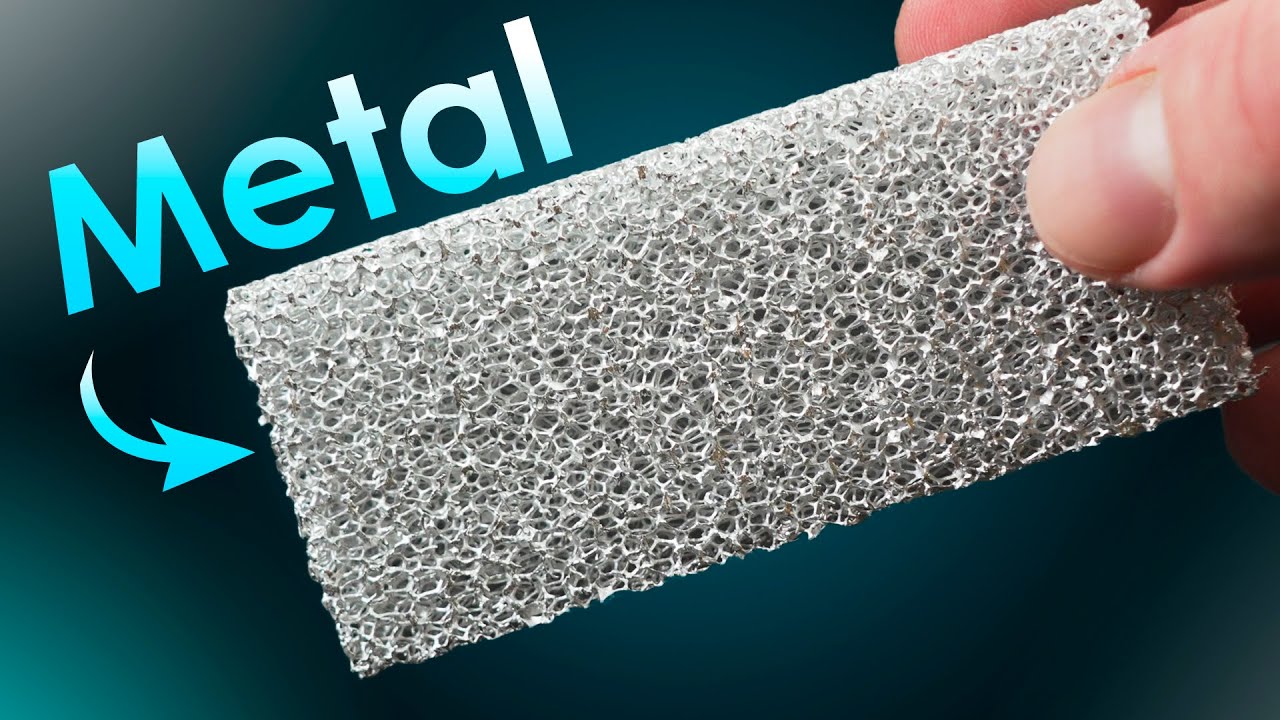
according to the instructions the foamed aluminum needs to be constantly stirred although in my opinion it just ends up bursting the hydrogen bubbles inside the metal are making the volume decrease after a while the metal solidified but its volume in my opinion didn't increase much compared to the non- foamed metal I think uh I need to try a third time so I repeated all the same steps as before the only thing I did this time was lower the temperature of the aluminum to 700° before adding the titanium hydride so maybe it will solidify faster and the hydrogen bubbles inside won't have time to pop basically that's how it all turned out this time I might have actually created real metallic foam all that's left is to wait for this metallic bun to set and see its internal structure after the aluminum set in my three attempts I take my blanks out of The Crucible and cut them with a saber saw so that the metal doesn't stick together and I can better see the internal structure my first attempt was unsuccessful I just ended up with a block of aluminum the second attempt was already better the top part of the Ingot was already full hydrogen bubbles but the best metallic foam I got was from the third attempt yes of course the bubbles here turned out to be non-uniform but still the volume increased several times so about three times so it's more accurate to call it metallic bread because of the similarity in the morphology of the gas bubbles but to avoid disappointing you alongside the experiments I got myself some real samples of aluminum foam metal to check out its properties by the way it doesn't come cheap each of these blocks cost about $20 it's all because of the quite complex technology involved in making such metallic foam which makes it incredi difficult to replicate the same quality in semi-handmade conditions however if you calculate the density of such samples they come out even lighter lithium after all most of the volume of this metal is just air today foam metal is used as a very lightweight and strong construction material for example some car bumpers are made from it and that's not without reason because such a block of foam metal easily withstands the 12 kg dumbbell placed on it yes of course you can see a slight deformation but the beauty of it is that this metal can be easily straightened if you apply the same Force but from the other side besides its structural properties this aluminum foam is also a very good conductor of heat which makes it suitable for use in efficient heat exchanges for example for heating or cooling air on the thermal imager you can clearly see how quickly the glass placed on such metal foam heats up this is a especially noticeable when you compare the heating of the same piece of glass just placed on a piece of aluminum due to its low weight and the presence of pores foam metal also cools down easily with fast air flows besides aluminum foam can also be made from other metals like copper or iron these foam materials are now also used as excellent catalysts effectively speeding up chemical reactions in addition to that for example talum foam metal is used today for Prosthetics so that bones Bond better with the implant the only problem right now is the high cost of these foam materials due to the complex manufacturing technology but I think that in the future we will encounter foam Metals more and more in our daily lives well I think after watching this video you learned how to make metallic foam and why it's practically impossible to do it in homemade conditions well if you enjoyed this video as always don't forget to give it a thumbs up and subscribe to the channel to learn even more new and interesting things

Другие видео автора — Thoisoi2 - Chemical Experiments!

Ctrl+V

Экстракт Знаний в Telegram

Экстракты и дистилляты из лучших YouTube-каналов — сразу после публикации.

Подписаться

Дайджест Экстрактов

Лучшие методички за неделю — каждый понедельник