Most movement problems start at the ground level.
If your foot pressure is off, everything above it has to compensate.
In this episode, Dr. Kelly Starrett breaks down one of the most overlooked performance variables in strength training: how you distribute pressure between the ball of the foot and the heel.
This is about improving force production, coordination, and resilience, especially if you deal with low back irritation during squats or deadlifts.
Оглавление (3 сегментов)
Segment 1 (00:00 - 05:00)
We have talked about why it's vital to try to maintain a an ankle that's in a little bit more mid-range, not in, not too far out, because it allows us to have more movement options. It gives us access to our available physiologic range of our ankles. It doesn't sort of shut down uh movement solutions and it maintains range of motion. Very simple. And the goal is to try to bring some awareness to that because it allows me to generate more force. And then I want to be sure that I'm practicing in my formal movement training so that I can apply that and end up in sort of better shapes with better organization of the geometry of the body. The second aspect to that which we hinted at a little bit in the sort of reference foot position idea of being balanced between the ball and the foot and the heel is this idea of foot pressure. Now in a chaotic world, I cannot modulate my foot pressure. It means I'm going to be on my toes. heels. I'm going to be landing and adjusting. But in the formal movement language of strength conditioning, it is a great place to be able to think and slow down and try to teach ourselves how to be a little bit more aware of what's going on between the front of the foot and the back of the foot. Now, for a generation, we hinted at, hey, let's get our heels down. And what we saw was we were seeing people squatting and they were coming up under their toes and they had no heel. In classical ballet, they would talk about the big toe being the toe foot. And then the rest of the toes, so we call this the big toe. The rest of the toes and the heel is called the heel foot. And that big toe knuckle really does end up correlating well to making sure that the quads are on, that we have a lot of quad activation, and then the rest, the heel, is really about hamstrings. So, it's important that we are trying to balance the foot if we're trying to think about putting the most force into the ground, generating the most force, um, sort of maintaining vectors of trying to go straight up, etc., etc. And one of the things that happens then is that when we tell people, hey, who are squatting forward and they're ending up on their toes, deeply on that toe foot, and especially in that knee in position, is that we're we've been queuing, hey, you have no weight on your heels. Let's move back. And subsequently what we saw was sort of a generation of athletes or 10 years of athletes initiating their squats, initiating their swings, initiating these movements by shifting their weight backwards onto their heels, which definitely helped us feel our hamstrings again, which is great. But now we're in a place where we're seeing that we have a lot of athletes who are becoming more extension sensitive. It means that they're less tolerant of these gigantic extension loads and we're missing out on the potential of using our quads to better effect. And we can simply try to get athletes into a better balance between ball and foot of heel by saying, "Hey, this is part of what we're trying to do when we're squatting. " And look, jump underneath a big heavy clean. You might get stapled forward. That's the point is that we're trying to use movement to challenge the robustness of our positions. So in this situation, what we're really thinking about is let's bring some awareness to what's going on between the ball of the foot and the heel. And let's see if we can begin to spot when athletes are moving forward and backwards in that situation. So in this situation, I'm going to take my shoes off so you can see what I'm talking about. But if I'm performing an air squat, just a simple body weight squat. My ankles in the middle of my feet. Again, I'm balanced between the ball of the foot and the toe and the heel. That reference position, organization shouldn't have to change for me to perform a simple air squat. That as I push down or lower down or jump down, that should be pretty constant. And I shouldn't have to see a ton of variability happening that I'm not chasing on my toes or chasing on my heels. And certainly, as a beginner squatter, we're going to see that because we're working on coordination. We're working on coordinating the different components to that. And oftentimes we have to go slow and we have to make sure that we can generate the feel and again that I'm balanced between the ball of the foot and the heel whether my feet are turned in or turned straight and I'm pushing through that whole foot on the way out. Now, the goal here is not to always just limit my capacity, my ability to generate or expose myself to large loads or large speeds in service of worrying about being chased ball and foot to heel. Right? So, I saw someone make a post once who said, "Hey, I tried to squat perfectly with the perfect bar path and the feet and I ended up having to take a 100 kilos off my squat. " Well, that's ridiculous. What we're always trying to do is say, "Hey, look, here's the central tenant of what's going on, but let's chase good body organization. " And we can do that by sort of bringing awareness. And ideally if it if I see a fundamental my athletes know for example that we're trying to chase this
Segment 2 (05:00 - 10:00)
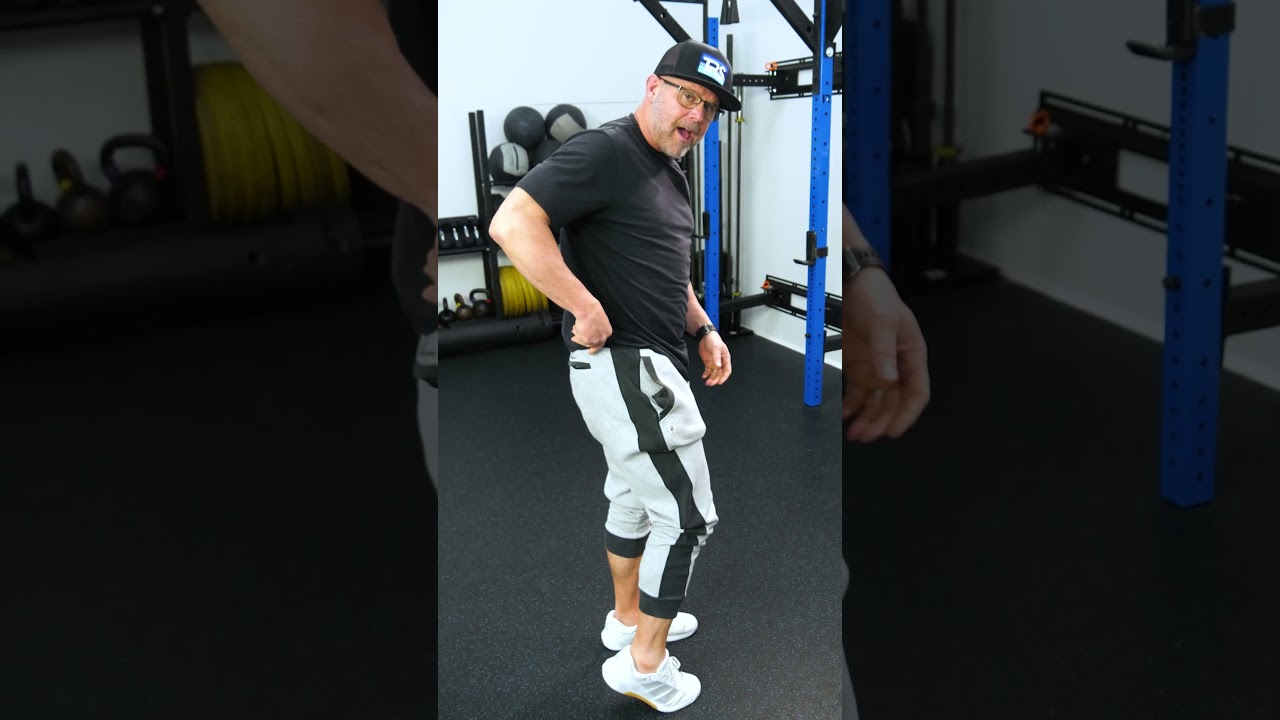
good foot position this reference balance between the front and the back and all of a sudden we add a bunch of weight and the wholesale change in my technique happens where I'm being buried on my toes then it may be that I have to decide what's the point here to keep loading it up or that I've seen a fundamental change in the organization and technique of my movement solutions that's no longer commensurate with the rest of my patterning. Maybe that's too much. So, a lot of my coaching now is really relegated to looking at someone's foot position. How do they jump and land? And we put a lot of pauses in there. Whether we're cleaning, being able to push through the whole foot, receive that and pause, we can tell a lot about what's going on. And if an athlete is landing on their toes, they will not pause in that position. They'll stand up. So we drop in a lot of kind of pause isometrics to help us understand and feel what's happening. One of the reasons I'm such a fan of this foot ideal ideology is it allows us to transfer skills. So suddenly if I have a bar on my back and I'm back squatting that foot pressure is the same. If it's on the front and I'm more upright foot pressure is the same. If I'm swinging a kettle bell the kettle bell is dragging me front and back. I'm trying to manage and and sort of compensate for that dynamic load that's changing. I'm constantly chasing that front to back, but I shouldn't see that change have to happen. I should try to see if I can get myself closer to being balanced between the ball of the foot and the heel. Now, where this particularly makes a big deal is when we have athletes, as I mentioned before, who end up a little bit more extension sensitive. And one of the patterns that happens, which is a long sort of setup for this, is that we see that athletes who experience a little low back pain deadlifting, low back pain, squatting, are really comfortable initiating creating tension in the hamstrings. And look what's happened to my feet. I have no weight on the ball of my toe. My quads really aren't engaged. It's hard to flex my quads. And we'll see that there's this initiation or a shift into the heels to feel like I'm going to use this posterior chain, but I don't have any push or pressure through the front. And what ends up happening is you can feel this is if you manage that balance between the ball and foot and heel and perform a good morning, you're going to have to bend your knees at some point. If I arbitrarily tell you to stiffen your legs, at some point you won't be able to balance anymore. And to solve that problem, you shift your weight back. And so that introduces a lot of potential extension force into the back. And that may be a mechanism of sensitization or simply a position that doesn't transfer or handle the same amount of loading that my body does or could handle if I shift that weight back forward. So as I'm doing good mornings, let's get people off of heels. Let's get people on to maintaining that balance. And I may have to bend my knees a little bit to be in that position. That's okay. When I'm back squatting, when I'm box squatting, if you're seeing someone initiate by pushing the hips back and losing the weight on the toes, we know that that's going to be less effective. A lot of the cues around deadlifting, for example, we're starting to see our athletes really talk about trying to get the quads on the bottom. Our strongest deadlifterss, uh, Brian Shaw, etc., are really doing a good job of their setups and their foot pressure is really amazing. What you'll even though they're taking a wider stance, it looks a little bit more squatty, that foot pressure is really, really constant. And again, what we're going to see is that in these slow motions, I can get away with a lot. But when as I try to translate my power, my foot position, my organization to sports, we see that skiing or uh let's say even stand up paddle boarding or skateboarding, I'm going to have to be a lot more cognizant of where my foot pressure is. And ideally, I've practiced that in a ton more sort of environments and solutions where my foot is always aware that I'm using the environment and the load to push me forward, to push me backwards. I'm using it to challenge my position, but whenever I can in these very formal, static, slow, low power, controlled environments, I'm trying to stay balanced to keep my quads engaged, to keep my hamstrings engaged, and to go too far forward or too far back sort of starts to truncate some of that force production on either side by mitigating my body's ability to recruit musculature and be efficient. Again, we're looking at taking almost a westside style, saying, "Hey, let's challenge this fundamental squat with a different bar, with a different stance, with a different width, with a different depth.
Segment 3 (10:00 - 10:00)
Can we fundamentally, you look at the root position? How do I push through the ground, interact with the ground? What's the best way to do that? How do I recruit the most musculature and the most coordination? " It turns out with a balance foot.