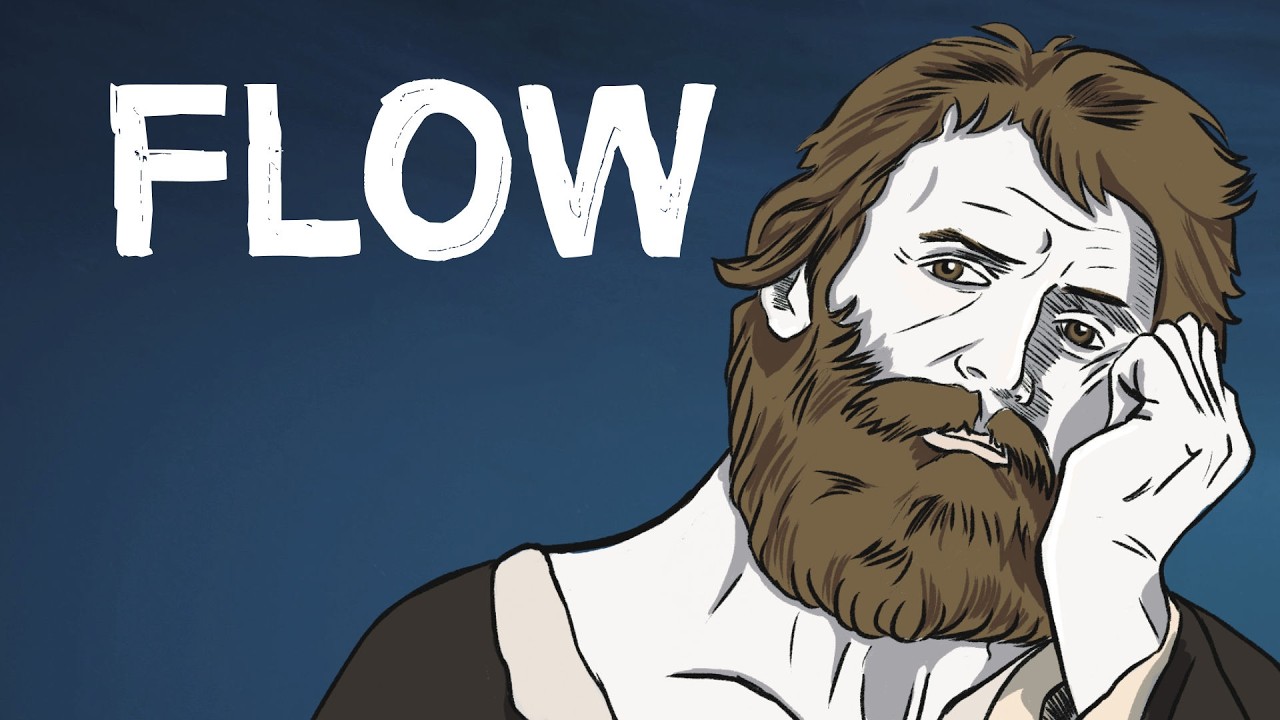
“You never step in the same river twice. ” These words are attributed to Heraclitus, who claimed that everything is in constant flux. The river changes continuously. What appears to be the same watercourse from one day to the next is, in reality, a different river altogether. And can’t we also say that about the world around us, our lives, and even ourselves? Aren’t we also in a constant process of becoming, never the same from birth to death, only for our remains to turn into something else? Everything is changing all the time, according to Heraclitus, a pre-Socratic philosopher who, when looking at the cosmos, saw this ongoing interplay of forces, elements, and matter. The changing nature of everything seems obvious to most of us, but, for some reason, we still tend to fall into the illusion that some things are unchanging. We often take the presence of certain people in our lives for granted, we believe that our success in career and business never ends, and many people in the West don’t give much thought to the fact that peace and stability don’t come naturally. Recently, I made a podcast episode about Heraclitus’s philosophy, including his idea of “panta rhei,” or “everything flows. ” And it surprised me how his seemingly basic ideas on change made me see life differently. This video won’t be an in-depth exploration of Heraclitus and his philosophy (if you’re interested in that, I’d suggest you listen to the podcast episode, linked below). Instead, it’s an effort to expand upon his main ideas of change and flux and their implications for our lives. My name is Stefan. This is not an AI voice, I’m a real person. Subscribe to my newsletter on Substack to stay updated on all my content. You can also support my work on Patreon and find my books on Amazon. Thank you. And I hope you’ll enjoy this video. It doesn’t matter how hard we try to hold on to something; there will be a time when the fires of change transform it into something else. Heraclitus believed that fire was the fundamental principle of change, though we don’t know whether he meant literal fire or fire as a metaphor. What is clear is that he saw fire as a transformative force, constantly changing what it touches, like a blacksmith using its power to shape raw metal into tools. At the same time, Heraclitus is famous for using a metaphor that’s pretty much the opposite of fire: the ever-changing river. The river always flows; its content is never the same. And so, you never step into the same river twice. The river that was a minute ago isn’t the same one anymore at this very moment. Although we can’t be entirely sure, from what I’ve learned, many interpreters understand the river as a metaphor for reality, understood as process and continual becoming. It’s the world around us, people, relationships; everything is always changing; all is constantly flowing. Or how Plato summarized Heraclitus’s ideas on change: “panta rhei,” meaning, “everything flows”. The notion that our total reality is always changing, thus that there’s no fixed, unchanging aspect to it, has huge implications. And in many ways, this ‘ontological reality’ (i. e., how things really are) clashes with our perceptions of it. We may see things as unchanging; things may look solid in the human eye, but in reality, nothing is solid. There was a philosopher who contested this idea of flux, though. His name was Parmenides, and he challenged Heraclitus with a truly mind-numbing philosophy, arguing that all change is an illusion. I’m currently studying his philosophy and hope to explore it in a future video. But for now, let’s follow Heraclitus and his idea that everything is in flux, a view that, in many ways, aligns with our current understanding of reality. Yet in the face of this constant change, we observe a curious human tendency: we project stability onto what is actually changing. Whether driven by a desire for certainty or a fear of change, this is where things become difficult for many, myself included. An example of this projection I’ve struggled with myself is the illusion of ongoing youth. Growing up, going from child to adolescent to adult, we slowly begin to
Segment 2 (05:00 - 10:00)
realize that we don’t have all the time in the world, even though it may seem so at times. The old people stumbling on the streets, seniors sitting on park benches, my grandparents: when I was young, I saw these people just as a bunch of, well, old people. I didn’t see myself in these older people, as if they were another species. Old age, for me, was a reality I couldn’t identify with. It was alien, almost unreal. But today I can actually identify with older people because I realize I’m becoming one, and they are the same as me, just at a different stage of being human. For many, the reality of aging can be difficult to accept at times, yet it’s such a natural part of the human condition, a process of birth, aging, and death. But if nothing is fixed and everything is constantly changing, what does this mean for who we are? What becomes of our identity? If nothing remains the same, can there truly be such a thing as a stable self? When we look at ourselves, what do we see? Do we see an unchanging person, with fixed characteristics, or rather, a process, always in motion? And does our changing nature make us, as individuals, difficult to grasp and hard to identify, or is it the very core of who and what we are? From Heraclitus’s view, everything is a process, even though it may not seem so. Marriage is a process. A mountain building is a process. All these things are always in flux. Just consider a major landmark, such as the Autograph Tower in Jakarta (which I happen to have a nice shot of on my hard drive). This immense skyscraper may seem solid, but it’s also “flowing”. It’s subject to decay, always changing from the inside and outside, and will eventually disappear. Now, the fact that even a massive building is always in flux… doesn’t that undermine the identity of things? Like, if someone or something is always changing, can we even speak of an identity? Isn’t identity something fixed? Isn’t it a firm set of criteria, a set of facts of what something or someone is? For example, I identify as a human being, which means I have certain traits: an ability to speak, body hair, muscle mass, and so forth. These traits make me human, right? Heraclitus probably wouldn’t disagree. But he’d remind us that, on an ontological level, the object or being we set apart from other phenomena (a human in this case) is not a fixed entity but a process. And here it comes: this ever-changing process is the very reason why a human is a human. We, as humans, are born, grow up, learn, adapt, develop inwardly and outwardly, grow old, fall ill, and eventually die. These changes define a human. Without change, we wouldn’t even exist. Our identity is based on change. The same goes for something like marriage. A marriage seems something fixed, and in a way it is: it’s meant to be a permanent commitment. But the content of the marriage is always in flux. A marriage is full of highs and lows, moving house, switching jobs, changing social circles, getting children, beautiful moments, and crises. Heraclitus would argue that this continual change is what makes marriage marriage; it grants it its identity. Going back to the river metaphor, we see that change is the ontological basis of a river. If the river didn’t flow as it does, it would be a lake or a pond. But it’s a river because it flows from one point to another. So, identity exists through change, not despite it. So far, we’ve explored the ever-flowing river as a metaphor for external reality and the implications of panta rhei for our lives. We looked at forms of change we see in our daily lives and how change lies at the basis of identity. But the notion of all-encompassing change becomes even more interesting when we consider that our perceptions and experiences of reality are also always in flux. You can never step into the same river twice, not just because the river is changing
Segment 3 (10:00 - 15:00)
but the people who step in it change as well. Even if the river were exactly the same, the you stepping into it now is not the you who stepped into it before. We’ve already discussed the changes in the body. Whether the body is something external to us or part of who we are remains a subject of philosophical debate. The Stoics, for example, regarded the body as largely beyond our control, while the mind was seen as the only thing truly within our power, and thus the only thing we can truly call our own. Yet body and mind are deeply connected. What happens in the body often influences the mind, and vice versa. For most people, the condition of their bodies plays a major role in how they perceive the world. Heraclitus pointed out the effect of bodily changes on our perceptions by saying (and I quote): “It is sickness that makes health pleasant and good; hunger, plenty; weariness, rest. ” As Heraclitus mentioned, when we’re sick, health suddenly becomes something very precious and desirable. But when we’re healthy, we’re often not that appreciative of it or longing for it. The same goes for hunger. When we’re hungry, all we think of is food, and we tend to reduce the world to a potential source of nutrition. But when we’re satisfied, we see our surroundings in a different light. So, going back to Heraclitus’s metaphor, our internal states change how we see the river. Even if the river itself were unchanging, we would not step into the same river twice, for we ourselves are in constant flux. By the second attempt, we have already become someone else, and the person we are in that moment can step into the river only then. For me, the idea that my moods and, therefore, my perceptions constantly change prompted a shift in awareness. Even though the occurrence of internal changes is pretty obvious, and I intellectually grasped it, after exploring Heraclitus, I couldn’t help but see things differently. I began to notice these internal changes more and saw how even slight shifts in mood could influence my desires and aversions, as well as my judgments and estimations. Moreover, I observed that more profound mood swings could change me ‘existentially’; they could influence how I see meaning and purpose, and make me doubt my life choices, leading me to make decisions I’d otherwise not make. And, as Heraclitus pointed out, bodily states such as fatigue, hunger, and illness correspond with my mood and perception. When I’m very tired, for example, I tend to become more pessimistic. After a bad night’s sleep, the world becomes more gloomy, and my anxiety goes up. When the weather is very hot, I tend to be more irritable. Given these changing states, I’m suspicious of my perceptions during the day. Especially when I’m in a pessimistic state of mind, I question my perceptions, recognizing that things may not be as they seem, or at least not as they would appear in a more rested and optimistic state. Also, when I feel dissatisfied with my situation, I often notice that the circumstances haven’t changed much; it’s mainly my mood, perception, and attitude toward them that have changed. I may have been overthinking, fatigued, sick, or, as an introvert, overwhelmed by too much social interaction. And so, my perceptions of reality shift constantly. Or to return to the metaphor: the river not only flows continually; our perception of this ever-changing stream is also always in flux. And it’s not just our moods that change; our personalities evolve over time as well. Our thinking matures as we age (though some people seem exempt from that). Life goals that we considered important in the past may become insignificant in the future, food we enjoyed as children may no longer appeal to us as adults, and a spouse we were once attracted to may no longer attract us later on. And that’s not so much because the external things in question have changed, but because we have changed internally. It’s literally that platitude often used to explain a wish to break up: “It’s not you, it’s me”. To conclude this video, I’d like to explore what Heraclitus had to say about a form of change that is often painful and uncomfortable, “strife,” and why we shouldn’t always avoid it. The ancient Greek poet Homer once wished that ‘strife’ would perish among gods and men. And let’s face it: wouldn’t it be much better if all these pointless wars and other conflicts
Segment 4 (15:00 - 18:00)
just vanished so we can all live in peace? In the Homeric epics, you’ll find a lot of friction. There’s war, betrayal, wrath. We see these things generally as undesirable, and so did Homer. But Heraclitus scolded Homer for his view. He wasn’t necessarily a warmonger, but he considered phenomena like war an inevitable feature of a world in constant flux. Heraclitus saw existence as an ongoing interplay of opposites; a paradoxical harmony based on tension, friction, and conflict. And war, as controversial as this may sound, is just an expression of it. Still, acknowledging strife as fundamental does not mean glorifying violence. We can and should try to prevent devastating wars, at least, in my opinion. A world without war, however, would not be a world without strife. As long as we’re here, there will always be tension, opposition, and friction. Profound human conflict can exist without a single moment of violence. And let’s not forget the strife between the many organisms on our planet, or natural phenomena like volcanic eruptions and earthquakes. Even the very continents we live on, as solid as they may seem, are involved in continual strife. So what we could take from this for our own lives is that we shouldn’t always try to avoid conflict, difficult challenges, or moments of intense friction. Existentially speaking, we can see these as the fires in which we forge the ‘essence’ of our lives, not merely as discomfort to be avoided. Failure can build character, often more so than success ever could. Painful feedback can propel us into meaningful improvement. Physical strain can strengthen the body. And a good argument between spouses can save a marriage. Change can be terrifying and uncomfortable. But it’s unavoidable. And often, we try to fight against it by clinging to what must pass or resisting what cannot be stopped. But why? Why long for the past and resist the present? Why resist ideas that clearly are more accurate than the ones we have? Why cling to a friendship that no longer works? Why hold on to something that no longer exists? Heraclitus didn’t leave us a complete philosophical system for dealing with a world in flux. At least, not that we know of. He wrote in riddles, and much of his work has been lost. But if there is one lesson we can take from him, it is this: the truly wise learn to have change on their side. Thank you for watching.