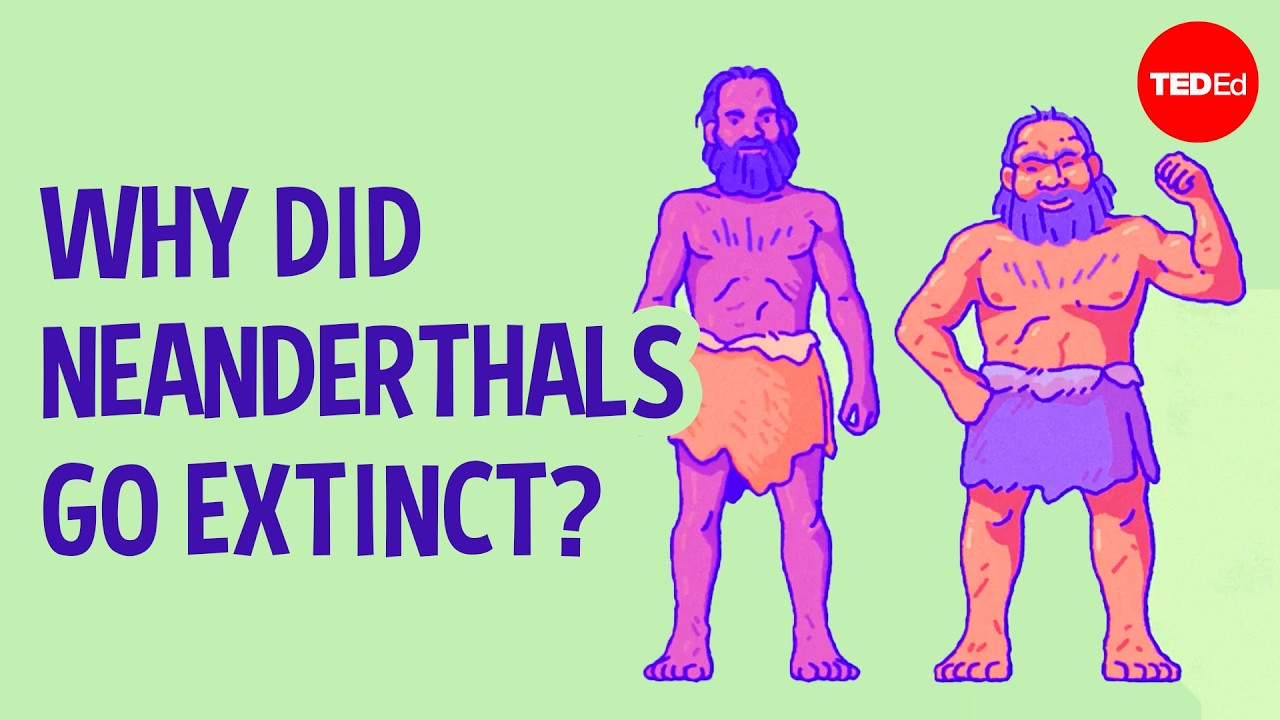
In 1856, quarriers working a cave in Germany’s Neander Valley discovered several mysterious fossils. The remains changed hands until being identified as the skullcap and femur bones of something ancient and human, but not quite us. It soon became clear they belonged to an extinct human species— the first ever known to science: Homo neanderthalensis, or simply, Neanderthals. Not long before the discovery, many believed the world was only about 6,000 years old. However, by the mid-1800s, naturalists were more comfortable with geological timelines and evolutionary theory. The idea that ancient remains could belong to another human species was finally becoming conceivable. But misconceptions persisted, and much “Neander slander” ensued. Early on, Neanderthals were depicted as dim-witted oafs who died out because of their inferiority to modern humans, aka Homo sapiens. One popular illustration suggested that, in addition to being hairy and club-carrying, Neanderthals stooped and had ape-like opposable toes, even though this wasn’t reflected in skeletal findings. Over the next century, however, archaeologists discovered more hominin species, as well as the remains of over 300 Neanderthal individuals. Compared to modern humans, Neanderthals had larger, deeper-set eyes; were shorter and more muscular, had higher caloric needs with slightly bigger bodies, including their hearts and brains. For over 350,000 years, they lived across Europe and Western Asia. For at least their final 10,000 years, they spatially overlapped with Homo sapiens. And archaeological finds have suggested that they led much more complex lives than initially suspected. In the 1950s, scientists unearthed the remains of a Neanderthal in a cave in northern Iraq who had a severed right arm, injured leg, and was likely partially blind and deaf. Yet, he survived long after these injuries, suggesting his community provided him extensive, daily support. And another skeleton from a French cave belonged to an older Neanderthal who probably had trouble walking and had lost so many teeth he may have needed his food ground up. Both excavation sites also showed signs of burial, all suggesting that Neanderthals went beyond immediate, practical concerns for survival and cared for their ailing and dead. Teeth analyses also indicate that Neanderthals might have used anti-inflammatory and antibiotic plants medicinally. For a while, researchers assumed that Neanderthals hunted big game with unsophisticated, brute force ambush attacks. But cut marks on rabbit bones and tools with apparent traces of scales and feathers suggest Neanderthals were capable of the skill required to capture small game, perhaps utilizing snares and fast-moving projectiles. In fact, we know they fashioned and wielded many types of tools, sometimes affixing them with glue they made from heated birch bark. They also shaped hardwood digging sticks with fire and created reinforced, 3-ply string using bark fibers. Other findings have also raised questions about whether Neanderthals thought symbolically, seeing beyond direct utility, into realms like art and language, long considered a hallmark of Homo sapiens. Potentially for personal adornment, there’s evidence of Neanderthals selectively removing bird’s flight feathers, painting and perforating shells, and wrapping eagle talons in what seems to have been another kind of animal tissue. They likewise made markings on a giant elk’s toe bone and created three cave paintings in Spain
Segment 2 (05:00 - 06:00)
if the original 65,000-year-old dating estimate holds. Meanwhile, broken, rearranged, and burned stalagmites deep within a French cave left scientists wondering if the mysterious structures held spiritual or ceremonial significance to Neanderthals. Clearly, they weren’t as different as originally believed. And following the first fully sequenced Neanderthal genome in 2010, researchers realized our species interbred. All modern humans retain some Neanderthal DNA— up to about 4%— the result of hundreds of discrete interbreeding events. So, what happened to Neanderthals? Theories from rampant cannibalism, to disease and climate change, to aggressive Homo sapiens have been floated. But another idea is that, because Neanderthals lived in smaller groups, as they interbred with larger populations of Homo sapiens, they just sort of got gradually absorbed. Overall, consensus has begun shifting away from representing human evolution as tree-like and more towards a kind of braided stream, with different hominin groups separating and rejoining at various junctures. As we continue to learn more about our evolutionary cousins, each discovery raises questions about just how much we share.