How to Raise $2,500,000 as a Student
1:02:19

How to Raise $2,500,000 as a Student

Ray Amjad 30.03.2025 787 просмотров 39 лайков обн. 18.02.2026
Поделиться Telegram VK Бот
Транскрипт Скачать .md
Анализ с AI
Описание видео
Join AI Startup School & learn to vibe code and get paying customers for your apps ⤵️ https://www.skool.com/ai-startup-school 📲 Stay up to date on AI with my app Tensor AI - on iOS: https://apps.apple.com/us/app/ai-news-tensor-ai/id6746403746 - on Android: https://play.google.com/store/apps/details?id=app.tensorai.tensorai CONNECT WITH ME 📸 Instagram: https://www.instagram.com/theramjad/ 👨‍💻 LinkedIn: https://www.linkedin.com/in/rayamjad/ 🌍 My website/blog: https://www.rayamjad.com/ ————— Links: 1. VC Sheet: https://www.vcsheet.com/funds 2. YCombinator Channel: https://www.youtube.com/@ycombinator 3. Hustle Fund Channel: https://www.youtube.com/@HustleFund

Оглавление (13 сегментов)

  1. 0:00 Segment 1 (00:00 - 05:00) 1081 сл.
  2. 5:00 Segment 2 (05:00 - 10:00) 1046 сл.
  3. 10:00 Segment 3 (10:00 - 15:00) 1002 сл.
  4. 15:00 Segment 4 (15:00 - 20:00) 1032 сл.
  5. 20:00 Segment 5 (20:00 - 25:00) 1087 сл.
  6. 25:00 Segment 6 (25:00 - 30:00) 1038 сл.
  7. 30:00 Segment 7 (30:00 - 35:00) 1030 сл.
  8. 35:00 Segment 8 (35:00 - 40:00) 1051 сл.
  9. 40:00 Segment 9 (40:00 - 45:00) 1025 сл.
  10. 45:00 Segment 10 (45:00 - 50:00) 1012 сл.
  11. 50:00 Segment 11 (50:00 - 55:00) 988 сл.
  12. 55:00 Segment 12 (55:00 - 60:00) 982 сл.
  13. 1:00:00 Segment 13 (60:00 - 62:00) 482 сл.
0:00

Segment 1 (00:00 - 05:00)

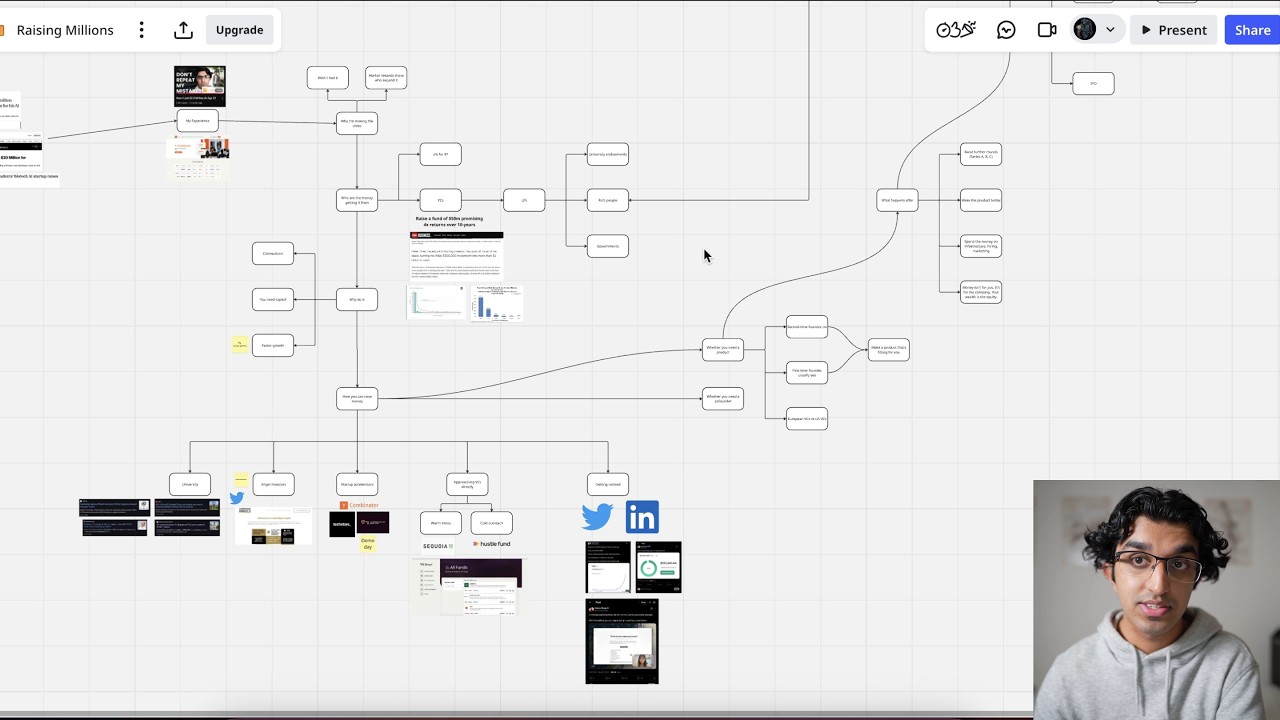
okay so I'm going to be explaining to you how some teenager students and new graduates seem to be able to raise millions of dollars for their own companies whil are still studying and how you can do the same and this is going to be like a 20 30 minute long video and if you can't pay attention the entire time then there's basically no hope for you and you should go back to watching Tik Tok or whatever but for those of you who will stay like you can see over here there are a bunch of like examples of like London boy wins like $1 million in Silicon Valley investment this was literally last month at the time of posting uh Columbia students rais like $4 million for their biotech startup uh 16-year-old raises FY $3. 5 million for his carbon removal startup and yeah like you see these new stories coming out literally every single month for years and you might be wondering like how on Earth are they doing this like how can I be doing the same and like what can I take from him but anyway like why should you listen to me I made a previous video where I talks about how I raised $2. 5 million and like did this like pretty famous accelerated and stuff and then things went to [ __ ] with my like co-founder who was for that company but that's besides the like the point is like how do you get the money to begin with which we did and basically like this is the video that I wish I had when I was in college and like a university because basically like this information is all out there on the internet it's not organized into one place and like no one will put it all together and explain it neatly for you so that's why I'm making the video and also for a slightly selfish reason because the market expands or like the market rewards whoever seems to expand the market so for example you're watching this video on YouTube and YouTube like expanded the market of content creators like there are millions of content creators on YouTube the people who made YouTube got a lot of money doing it the content creators and many of the viewers got a lot of value from the videos it's like a positiv s game for everyone benefits so by making like some kind of information or some advice uh basically free for everyone that benefits me but it also benefits you and it's pretty unclear how it will benefit me but we'll see you later but yeah basically like who are these people getting the money from like who is giving them millions of dollars and they're getting money from usually Venture capitalists and the money does not go to them it goes to the company and they basically start a company for one particular product or idea that they have they give away some fraction of the company known as Equity so they might give away 5% for like $100,000 or 10% or whatever um basically they don't explain how much of the company they gave away in these stories but they gave away usually like 10 20% of their company in the early stages at least and they're getting the money from Venture capitalists and Venture capitalists are basically people who are actively looking for in companies to invest in and this can be at different stages some Venture capitalists like to invest in very early stage companies that are like literally just an idea or a prototype some vure capss like to invest in late stage companies that have been going on for a couple years and basically they raise something called a fund so some Venture capitalists they don't have the money themselves like they will go and raise the money from somewhere else just like how your company is raising the money some of them might be rich and they might put out some of their own money in to the fund but basically what they do is they go to a bunch of LPS or limited partners and raise a fund of like $50 million or whatever and this could be like an AI fund or a biotech fund or like a consumer mobile app fund or robotics fund they basically raise a fund which is a pool of money for a certain topic and they say to you like their limited partners of we will give you like Forex returns over the next 10 years if you give us like this amount of money so for example one venture capitalist fund would go and raise like $50 million for a bunch of LPS limited partners rich people and they would say to all of them like we will give you like 4X returns 3x returns over the next 10 years and that's a pretty good stable deal and especially if the venture capist has a track record of they've done this previously and they're raising an even bigger fund then they will usually get their money quite easily and these LPS are literally just either governments in some cases for example like many states like funds like Singapore or like Qatar they invest in Venture funds and they also invest in companies in their own country as well it's rich people who are kind of like they have a lot of money already because they've made it previously and they're looking for places to invest it which is particularly interesting for them Rob event just investing in the stock market and also University endowments so when you look at universities like Princeton Harvard Yale uh even some UK universities they have like billions of dollars in endowments I think Harvard have like $40 billion in like endowment and they put some of that money into venture capitalist or like Venture funds like seoa Capital which is a pretty famous Venture fund they give some money to them and then they invest that money and then they promised like more money back in the future so like Harvard University has like $40 billion it's unclear where all that money is but some hundreds of millions of it goes to venture backed startups and also it comes from other places like Pension funds and just other investment opportunities but yeah these are the
5:00

Segment 2 (05:00 - 10:00)

main sources so what LPS do is they give that money to vure capitalists who then go out and find companies to invest in particular areas or domains and then they will sell or like buy some portion of the company and they will sell that once the company is more valuable in the future and then give the returns back to the LPS and you can see this happening in this particular case like Peter teal who was the first big investor in Facebook he initially invested $500,000 in Facebook back in like 200 or whatever this article is from 2012 oh I think it was 2004 uh when Facebook started he invested $500,000 and when he cashed out in 2012 it became $1 billion of a cash and that's like a$ 2,000% return on his investment and this is like what is known as like the power law especially inure Capital where you will have or you will invest in a lot of different companies and some companies will become absolutely massive like Facebook did and your return for investing in that company or like the amount of your value shares of the company's now worth is like a huge amount and these kind of Ally returns is what leads to ADV capitalists finding companies to invest in so yeah you can see it over here this is a VC parallel where 97% of exit profits are generated by less than 0. 1% of startups so you basically like as a VC you go and find companies that are potential winners can be absolutely huge in the future and then you invest in them and then they may be huge and then you make a lot of money as a result and your limited partners also make money so venture capitalist whil they don't have the money themselves they usually put in some of their own money into the fund because they also won returns and they also charge like an administration fee for the fund that they raised so they would also be paid by the LPS for doing the work um but yeah you can see over here that there's a right skew distribution of use uh us Venture returns yeah so 64% of companies don't break even at all uh 25% do 1 to 5 XT returns 5. 9 do 5 to 10 Xtra returns 2. 5 and then you have like a huge outlier which is like 0. 4% doing 50 extra returns so if you have a $50 million fund and you invest in 100 different companies at $500,000 each then if one of those companies ends up being like Facebook and all the other companies failed which can be quite rare but like if 99 companies failed and one company that you invested in became the next Facebook then you would still have a 40 extra return on your investment in this case for getting $1 billion um but yeah that's basically like why they do it and why would you do it as well like why would you ask them for money and it's usually because you want like faster growth for whatever idea you have uh you need Capital to make an idea possible or like have a prototype and you want to bring it to Market or you just also want to build connections as well because when you're when you receive EC funding and you do particularly well then you end up making a lot of connections and the startup ecosystem and like the Venture financing ecosystem such that even if your company did fail or it didn't wasn't as successful in the sense like it made a 1 to 5x return instead you can still get a job and you can still like become a venture capitalist do other things as well um but the faster go growth it but the faster growth part is pretty important in the sense like for example like if you had a app or a software or something and it was charging a monthly subscription and you were growing uh you were making like $10,000 a month and you're growing steadily like uh I don't know like 30% month a month or something which is pretty good it will take you quite a while to be able to afford an office make your first hire and so forth so you will have to wait like six months to make your first hire and you basically want the cash sooner or you want cash sooner to be able to make like hires and like office space and equipment and everything so you would go to venture collaps list and you would ask them for money and then they would give you a lot of money up front and then you can use that money to make the higher and then potentially you can grow faster in the future so that's basically why most people raise Aventure Capal and now it becomes a question of like how you can do because it's pretty clear like they won't give you the money directly it comes to you in the form of company like you have to set up a company and you have to be working on that idea which seems promising and could potentially return a lot of money in the future and then they will give you the money and this is like the key part here like it has to be an idea that can return a lot of money in the future if you set up a say restaurant business like you're not going to have many investors in a restaurant business because a restaurant business isn't going to give like a 200,000 return potentially in the future I don't think that's ever happened but for technology companies usually it does happen because at least for software like your software could become an overnight success in many cases such as Facebook was where like you go from having a couple hundreds or a couple thousands of users to literally having millions of users that's why they usually like to invest in technology and it doesn't necessarily have to be software either it can be Hardware as
10:00

Segment 3 (10:00 - 15:00)

well for example Nvidia received Venture Capital funding Apple did Microsoft did basically every big company that you can think of as some point they receive Venture funding and yeah then the Venture capitalists were happy the company gave a big return to them they sold that fraction or they kept their fraction of the company and now they're looking for more opportunities because that's their job so now it's a question of like how can you raise Venture Capital funding yourself especially as a student or like a 16-year-old or if you're in college and there are a couple ways of doing this the most common path or the path that I took was being part of a startup accelerator and a startup accelerator basically is like uh they have an application form you go on a website you apply and they accept like 200 people 300 people it depends on how big it is every cycle so they might have one cycle being 8 weeks uh 3 months 6 months or something and they basically accept a bunch of people and examples are like y combinator has two to 300 companies a batch they four batches a year now Tech Stars as well entrepreneur first and they give you some money as part of like getting accepted so for example why commentator if you get accepted you get $500,000 which me and my co-founder for the company that got accepted did and then like things went to like [ __ ] uh but you can watch a video on that separately um and then basically during the accelerator you like work on your idea you work on your product that they help you because they have a lot of guidance and experience and they give you a lot of advice of helping you make a better product and then you like pitch venture capitalist or they have like a final day which is a demo day and then you pitch your idea to like investors and investors who like your idea will then reach out to you and then you raise around of like you get accepted you work on your idea it shows some PR promise you get some traction you get some customers in a short period of time it's growing quite steadily and then you pit your idea on a demo dat and then investors get access to like a portal um so I invested in a few y combinated companies myself as well and we get access to a portal where you can view everyone's pitch you can see what the company does then you can reach out to the founder or the people running the company like the usually two or three co-founders and then you can discuss terms with them and if you're interested in the technology the idea then you're like hey I want to invest like $50,000 at these terms or you say like I want to invest like $300,000 at these terms for this percentage or and then as a company founder you get like 10 of these 20 of these you get a bunch of interested investors and you basically raise around and ALT together you may end up raising like a million $2 million in some cases like $4 million or $30 million basically depends on how promising your idea can seem and how much traction you already have um and you can go on y combinator's website and you can see like a bunch of companies that previously raised a lot of money rounds and you can also apply yourself so I think so yeah especially if you're a student it's worth applying to some of these accelerators there are many more that you can find list of online and some specialize in certain things for example some may specialize in biotech or like healthcare but others seem to be more broad some of them you need a co-founder and you need an idea for example like y combinator usually everyone has an idea when applying and a co-founder you don't necessarily need a product it depends on the accelerator and for things like entrepreneur first you don't even need a co-funder and an idea they basically help you find a co-founder and an idea during the program so yeah a accelerator is a pretty good way of getting your foot in the door the next thing is Angel Investors so basically Angel Investors are rich people who have like millions or tens of millions or even hundreds of millions and they're just kind of bored and they're old and they like want to give money forward so they want to invest in something interesting and often these can be people in your local city so for example like I went to the University of Cambridge there was a group called Cambridge angels and they are an angel Network mostly based around Cambridge but around the UK as well and basically like they invested 42 million or about like 5560 million in 2024 into individual and corporate members and yeah basically like you would apply to them you would reach out find individual Angels or you can find Angel networks by searching online even your city or in a particular field or domain like healthcare biotech AI startups Etc and you would reach out to them and then present your idea and you can also find angels on like um Twitter as well because a lot of people on Twitter are rich and they looking for places to invest their money which seem particularly interesting for them you can also get introductions to them as well um for like friends or family and you can also ask friends or family for like investment money but usually many people don't have rich friends or family um but they might know like their Uncle who is connected to such and such and they would ask for an introduction and then
15:00

Segment 4 (15:00 - 20:00)

pitch that idea and yeah Angel Investors usually invest anywhere between like a few thousands of dollars to like a few hundreds of thousands of dollars it depends on how much the angel investor is I've also invested in a few companies in YC which is usually within the thousands of dollars range and basically like they do it because it's kind of boring to have your money sitting around doing nothing like many of these people have millions or tens of millions of dollars and they find it boring to just have it setting in the stock market or setting in like treasury bonds or whatever else and also they want to feel like they are having a positive impact on the world through investing especially in things that they're interested in so if you're reaching out to Angel Investors and you're like doing a Quantum startup or whatever and making quantum computers then if you reach out to one who has no experience in quantum computers they're likely to say no because they don't understand your idea they don't understand if it's good or feasible or anything so you may want to find people who are related to whatever domain you're currently in or what you're focusing on if they've invested in previous companies like that then it's usually good and they're also investing because it gives them cloud like they just get like good reputation or they just like are good if they invest in the right companies so for example like some people who invested in Uber very early on so they I think there's one guy who invested like $50,000 into Uber and it became like hundreds of millions of dollars once Uber ipoed and he gets Clouts by writing on Twitter or introducing himself as like one of the First Investors in Uber and that gives them more opportunities which is why that also doing it as well now the next option may even be your own University like your University may have a fund which invests in companies that are like based or were started by students of that University or are currently students so you can see over here that like UK University spin out startup funding grows 38% year on year 98% of UK's like uh Russell group universities have University Affiliated Venture funds for spin outs and then these are examples of companies that spun out of a university and they raised the money but in the case of like University startups or us University companies they usually a few things happen like they take equity in your startup as well so for example like Oxford or Cambridge if there is a particular bit of research or intellectual property that was developed within the university Laboratories that is now becoming startup uh for example in the biotech space then whatever IP was like being used the university sees it as being theirs because they provided their facilities and labs uh so they will take some portion of the company so they may take 10% 20% of the company as part of you spitting out and starting a company so if you're a researcher right now or you're a PhD student and you find like a particularly promising thing and it could be a business idea startup idea then the university may give you some funding they will take some equity and they may even help you acquire more funding from like external sources that they're affiliated with and then you would like continue like growing the company your own equity in the company would be worth more because like of course you as a founder of the company would be getting Equity except you would be giving away some Equity bit by bit to raise money to make the company more valuable so your own Equity is worth more and yeah like there are literally hundreds of thousands or like thousands of examples of this online you hear many cases of this you want to consult with your University and see what they have an offer the next uh thing is approaching Venture capsules directly so usually you can approach many of these VCS or VC funds that you hear about directly um some of them you can't really approach directly if you're nobody or like you don't have any connections because some of them require what's known as warm intros in the sense you need someone who already knows someone who works there to introduce you and that can take many forms because it can just be an email where like someone who knows both of you ends up connecting you to someone who works there or it can be like over a dinner or just anything else and then there's also cold reach where you can reach out to VC funds such as like hustle fund directly like seoa capital is a very established fund and they like usually require warm intros to be able to like uh like be reached out to basically whereas hustle fund you can just go on their website and you can fill out a form with an idea that you have or like a product that you're developing or some Revenue thing that you have and they will like and they will basically reply to you and if they're interested they will like schedule a meeting and so forth and there's a huge website called VC sheets. com I think I'll put it in the description down below and there are 930 funds on there which invest at different stages so like seed and preed is probably what you're looking for you're not looking for series a and series B Because those are later more established companies and you can go on their website or you can just like contact someone who works there directly chances are if they don't respond to your message then uh basically you would require a warm intro to be able to get in contact with them and I think SEO Capal is one of the oldest and most established or like well branded capsul funds because they were
20:00

Segment 5 (20:00 - 25:00)

like one of the First Investors in apple they invested in like a bunch of other big companies I think like Amazon Google Invidia so forth and they have huge amounts of assets and they have like huge amounts that they get from the LPS so like H University part of their endowment they give to S capital so they can get returns from it and they basically have so much money that uh they have to refuse like money from like limited partners because so many people want to give money to Capital to then invest into companies um and the final way is just getting noticed like you can just get noticed online because that's a power of the internet either on Twitter or LinkedIn and this can take a couple different forms like it would usually require you to have some kind of product or prototype or launch or whatever so for example like David Park on Twitter he just shared his like MMR graph he was like we got our first 100K Angel Tech check exactly 3 years ago today we reached 500k MMR which is a monthly work revenue and we can now make the equivalent of the Angel check every 6 days so when he posts a picture like this gets like thousands of likes many veng capitalists because they hang out on Twitter a lot or they talk and write they will see this and they'll be like wow these guys are growing and then reach out to David Park to be like hey I want to invest and they don't really need any more investment anymore because you don't want too much investment otherwise you will dilute your share of the company too much so often they just say no and then that leaves like VC's eager queuing up to invest there's another case where like this guy he just shares his open AI Bill and then a venge capitalist would see this and be like wow these guys are really taking off or like they're making a lot of money or like they have a lot of users or something like this kind of mysterious aspect here and then like they would reach out and be like hey like can we hear more can we invest in your company or something um and trust me like VC spend hours every day on Twitter because this is like the place to be for that and then there are other cases where like someone just launches a product I saw this literally earlier today and this person hel Zang introduced pocket flow which is like automating lead generation she gives like a demo of it got a bunch of like likes and bookmarks and probably a bunch of VCH capsul noticed this they thought it was a cool product and then they like dm'd her or they contacted her being like Hey we're interested in investing and you can also post on LinkedIn as well but when you're getting noticed you usually need to have some kind of product because like how else are you going to get noticed you're not for an idea you're having a product even if that's a prototype and having traction and then like casually like bragging or humble bragging or whatever on Twitter and then you'll have VCS reaching out to you in like no time and you don't even need that many followers like some of these people only have a couple hundred followers but they manage to get close to 1,000 likes and you only need to be seen or get likes or bookmarks by the right people like you don't need hundreds of likes or followers or views on your Tweet to be able to get their attention or VCS and also since the VC Community is pretty small like if you get introduced to one or one reaches out to you then they will have many friends who have VCS as well you work at different funds and they can also help you to get investment money and even in many of these cases like you may have the company set up under your own name or like you don't even have a company set up but you still have a prototype and you're sharing about it online they can often just help you set up a company like do the legal work paper registration because when you're raising money for venture capital or like you're raising like venture capital funding then you usually require or need to have like a specific legal structure or entity structure that protects the investors against like a many different conditions so for example like there's a Delaware C most of the Fortune 500 companies that you see in the world are delare C Corps because a Delaware C cor is quite easy to set up and it also offers investors a bunch of protections as well that they quite like there are other cases where like if you apply for y combinator and you get accepted and you don't have a company then you are required to even set up a Cayman Islands company a Singaporean company or a Delaware C cop and you don't have to be like registered or a citizen of any of those countries to be able to set up a company over there um or if you already have a company then they would require you to flip over into that style of company so it really depends on your investors but I think usually most investors they'll be very happy to invest in a dyc cup and sometimes they might refuse an investment or refuse to invest because your company is not like the right structure for them and then this leads me on to like two more questions of whether you need a co-founder and product as well because in these cases of like getting noticed all of these people have products like usually when you're applying for some of these accelerators they also ask you for your product and the confusion or misconception that a lot of people have is that they're like oh I need Venture Capital funding and then I can stop building the product and like how can I have a product without funding and in many of these cases you will not get funding the people who are getting the funding or without a product are usually second time Founders like
25:00

Segment 6 (25:00 - 30:00)

they started a company previously it was successful they sold a company the vure Caps got a lot of money they and then they like went to beach they like drank martinis or whatever all day then they got bored and then they're like man I'm going to start another company and then after starting another company like they don't yet have a product but from their previous Company Success they have VCH capist connections and they have a lot of faith in them already that they can make this a big company as well so whenever you see people who say like oh you don't need a product or you don't need like a prototype or anything it's usually like people who are using examples of second time Founders where they already have the connection reputation and they already have the faith for example like I think one of the open AI co-founders previously left like a couple months ago I think it's Ilia or whatever and he raised like a billion dollars because he has a track record he has connections so he can raise money without a product but like chances are if you're watching this video You're a second time founder you would be a first time founder and you would usually require some kind of product or prototype and it may not end up being whatever you end up working on exactly so for example like many people apply to why Community with an idea and it's kind of clear that they can build that idea so for example like they did computer science previously at University or they worked for an app Studio or they made their own mobile app or website or something like they B basically have some experience that shows that they can make a product that is what they're saying they want to make so for example like if they're applying to Y combinator with an idea for an application like a mobile app and they studied computer science and they did an internship at like meta or Google or like somewhere else then it's pretty clear that they can build it but if they're playing with an idea for a mobile app and from their like experience or record they like did like humanities there's like no clear indication they even know like anything about apps or like how technology works or like how computer works like if there's no evidence then you're much less likely to get funding without the actual product or like prototype and in many cases like people apply with a product or prototype and then during the accelerator or like after speaking to V capsul they would prefer them to work on something slightly different or slightly like else instead for example like they might make a mobile app for like I don't know like helping restaurants manage their ordering systems or whatever and they've already made it and it's like live on the App Store and like they appli to yator with the idea but why Comm also say on their form like if you have any other ideas then like fill out this part of the form and let us know and then usually people fill out that form of ideas as well and even though white Comin don't like the fact that I don't know it's a restaurant booking app or whatever the fact that they were able to make it from scratch and like make it live on the app store or something gives confidence that hey if they work on something else and they can usually build the other thing and this is basically a way for the VCS to slightly do risk themselves because they have plenty of people like reaching out to them with ideas for products that they have and it's pretty unclear whether they can actually build the product itself so for example like if you and your friends are starting a company and you've all studied like history or English literature or something and you have an idea that you're going to build like a mini nuclear fusion reactor that will help power your laptop or whatever in dead then they're going to be very skeptical that you can actually go ahead with the thing like whilst they think that is it is a good idea uh they will just not invest because they don't think you can actually make it like that is the whole point and some people think like oh we're going to raise the money and then we're going to hire people to make it for us and it almost never really works because like VCS have seen that it doesn't work you usually need someone on the founding team to be able to make or do the thing that you're saying you can do and it usually requires people to have experience in that particular domain and that's part of having a product as well or having an idea like it's pretty it doesn't really make sense to work on a product that you don't know you can make good or you don't have experience in so for example like if I'm making software for like I don't know Oiler rigs or like people who work on oil rigs they need software to manage like all the oil they're getting out the ground and like where to ship it and everything like that if I've never worked on an oil rig before in my life like I can try making software by potentially speaking to people who have but I wouldn't know what good software for oil rig looks like because I've never worked at one so usually whatever idea or product you have it depends on like your own experience so you could have done an internship at like a law firm or whatever or you could have done like a or your parents could have worked on like Finance or like at your areal like stuff or something and they like taught you a lot about that growing up and they have a good sense of what a good product for like actuaries is like
30:00

Segment 7 (30:00 - 35:00)

and then they can help you in that so you want to make sure whatever product idea you have it like fits you and like your own experience because people will be pretty skeptical if you're working on idea that doesn't fit you and in many cases you may apply to like y combinator or like another accelerator and they invest you but they want you to work on a different idea so I know there was one case that I heard about where like free physics PhD students like with friends they apply together to YC a y combinator and then and the idea was like a dating app and I don't know how it was differentiating itself from other dating apps but yeah they basically had a dating app idea then they were accepted but the like Partners or the V like YC people who run it were saying to them like why would you work on a dating app like you three have physics phds which is like pretty rare right so you should work on something related to physics and like start a company or like um work an idea which is basically physics related and solves problem in that domain and that could be like superconductors or like I don't know basically some kind of physics related thing because you want to make sure you're using your experience and skill set and if you don't have experience or skill set then you should go out and get some and that can involve like doing some internships at different companies getting a sense of what kind of problems those companies face and then being able to think about a product or a solution to those companies problems and then like you can apply with that product and you can also make the product and then you can also sell back to the people you worked for or basically getting a sense of the market and seeing like a new thing has happened that makes a product now possible in the sense uh this is like a common why now question that many Venture capss may ask you where there are many ideas that people have that they could have done 5 years ago or someone else 10 years ago a pretty common example is like a app idea that a lot of college students have is I'm going to make an app to help me meet up with my friends like me and my six friends it's so hard to organize a time where that we all free so I'm going to make an app that helps us do that and this is an idea that literally hundreds of thousands or like tens of thousands of college students have had and there is no like new thing that now makes it possible like this idea would have been possible 5 years ago 10 years ago and the fact that there isn't an app that is widespread or like has taken off is usually signed that the idea is a bad idea like think about it other people have made it the same app before and you're not using the app it's because it's a bad idea usually or like the app just doesn't spread people prefer organizing times over group chats so if you apply with an idea that doesn't really have a clear why now or you pitch avenge capsul an idea that doesn't have a why now then they're pretty skeptical of like why does it make sense for you to be working on this whenever people potentially may have tried this before you and failed and common y now may be something like a new piece of legislation has come into action in your state or country or something that makes something Nar quiet or possible so for example like I think in the US there was some kind of legislation that came into action which requires like employers uh to do something with health insurance for the employees I don't know too much about the specifics but that prompted the surge in companies who were then like came up to help employers do exactly that and they managed to get a lot of sales because they came just in time so that's like a good why now or like let's say you live in Brazil or like another country and now the government wants like some specific thing happening for payments where like payments have to be verified by some kind of like third party measures or whatever like I'm trying it's I'm pretty bad at making up these examples but basically like if a new piece of law or legislation comes into action that requires something that is often a good time or a good why now another thing is like technology in the sense like there are a lot more drone companies now because drones have gotten to a point where by like the weight to like first ratio of the Drone now makes many drones possible like drones what kind of existed like uh in the early 2000s and 1990s but they weren't widespread like consumer drones are and then some bit of technological development happened where it might have been a research paper or something or it might have been like a specific commoda was now possible and widespread and cheap enough that they're now everywhere like anyone can go and buy consumer drone for like $20 $30 and a pretty common why now that you see with a lot of companies is AI like large language models we have had AI for a while of like we could recognize numbers in like the '90s to like pretty good accuracy but now we've got into pretty good point with AI where it can do like a lot of tasks pretty well where it can generate images it can like run its own commands it can like help you write code basically within the last few years AI has gotten really good and it led to a new generation or a new spawn of companies another generation or spawn
35:00

Segment 8 (35:00 - 40:00)

was like when mobile apps first became like a big thing of like the iPhone came out there was an app store you could make iPhone apps for the App Store and back in like 2008 and early uh 2010s everyone was making mobile apps now everyone seems to be working on AI stuff because it's like what is now possible if you make a mobile app now that was possible 10 years ago then many VCS may be like why are you making this now like what a special about it now if incorporates AI in some way then they can see why and another pretty important aspect of this is like whether you need a co-founder in many cases like you will see people start companies by themselves or you will see like a headline where they started by themselves and it's because they often have an of experience doing a company previously by themselves that like the vent capitalists or the people investing in them have conviction that they can make it possible that by themselves for example they may have previously started and scaled a company to like 5 million 10 million or whatever and they basically like Venture caps have conviction they can do it again whereas like for the average newf founder or the average student or someone who hasn't previously started a company before you almost always need a co-founder in the sense like BCS want to do risk themselves like starting a company is very hard making a good product is very hard getting customers is very hard and the way they see is like if you invest in one individual by themselves to like do everything themselves then they're going to have a really hard time and if they're feeling down one day because like their product doesn't work as well as they hoped it should and stuff like that there is no one to cheer them up and there's no one to like really help them uh do better or get back on track whereas if you have two co-founders then one person can kind of LIF to the other person up when things are going bad or like going down and generally in the case of V capitalists like they notice companies are more successful when they're multiple Founders so you see a lot of companies with like two co-founders like one person is like the technical guy or like CTO one person is a CEO who manages all the like other things which isn't technical or you have fre co-founders where one person is like CEO in charge of sales and like marketing and everything like that and then you have two technical people and rarely you have companies with four co-founders after Co for co-founders it gets a bit tricky of like H like are they really going to all get along to the same degree are they going to be communication issues uh so generally two co-founders three co-founders sometimes four co-founders is like a good point but if you starting a company for the first time you'll rarely get accepted or you'll rarely get funding as one co-founder like on your own or one founder yourself because uh like VCS have like a bunch of historical patterns or trends that they noticed over time and they noticed that companies who are started by people Here solo uh don't tend to last and there are some cases like Dropbox when it first started I think it was the fand himself but then he brought on another co-founder later like a couple months or like a year into starting the company one more thing to mention with whether you need a product like sometimes a product may not be possible itself because it's like very complicated it's very hard to make but you have a prototype of a much simpler version of if you were starting a drone company like you would not go out and try to make a consumer graded drone or like the DJI mavic free or whatever you would not try to make that you would make a very rough prototype to show that as possible for like cheap parts and then raise money based on that and in some cases like if you just can't raise money because they require so much funding or like it requires so much initial like Capital to get the product of the ground it may be worth considering a different idea that is easier or like doesn't require funding as much in the S like many ideas which are like software you can just make software like coding away at your computer for very cheap and once you have the software then you can raise money based on that you can like grow the company you can then make a lot of money from the company and then you can exit or solell a consider working on something which is more technical so for examp example like Elon Musk he initially started zip to which was like a Google Maps a Yelp like uh mapping Software System which helps you find like places in your city and I think he sold that for like $30 million or something and then he focused on SpaceX because now he had a bunch of money or he had Millions from doing software which was much cheaper to make and produce that he could work on something much more expensive like rockets and then also get money and funding for Rockets as well so yeah if you have an idea and you're struggling to get funding then it's potentially worth working on an easier idea and then working on the harder more difficult idea in the future and there's a bit of a difference or Trend that you notice especially if you spend a lot of time inside the Venture Capital communities or reaching out to VCS where there's a difference between European VCS and US VCS so us VCS generally invest more money and they are generally more risk like uh like they do take on more risks a European VC is are usually more risk adverse where a US VC might invest in you just having a prototype or
40:00

Segment 9 (40:00 - 45:00)

just having the product and they're really convinced that it's good and they understand why it's good as well whereas European VCS usually spend less money and they're usually less convinced by products on their own they want to see revenue and traction like if you have money flowing in and if you have like monthly growth even users or like um I don't know development on your product or like um maybe like the amount of Revenue you're making then they're more willing to invest and they might even require you to be making like $10,000 a month or something in terms of Revenue coming into your product or uh company for them to invest so generally us VCS give more money they're more like risk-taking European VCS are more risk worth averse and their timelines are usually longer in the sense it takes them longer to get back to you and in some cases if you're not able to get Revenue immediately for your product because your sales Cycles are much longer then letters of intent usually work pretty well in the sense like if you're making a mobile app or a consumer product consumer facing product usually consumers will just look at something and then they might decide to buy in the moment or not because it's like $20 or $30 per person but if you're making like businesso business ENT enterprise software or something then you're charging like $5,000 $10,000 a month to other businesses to use your software then usually you selling to other businesses or reaching out to them and like pitching your software to them and getting them to use your product and paying for it those sales Cycles are usually much longer because much more people are involved in the decision- making process but having a lead or having like a letter of intent of like hey once this product is like fully finished or like fully ready then we're going to use it that's a pretty good indication for VCS as well that hey these guys have traction or they're making traction on their product so if you're selling to law firms like you're not going to be selling a $20 subscription to a la fir because you can charge much more for that so you can be charging them like5 a month to use your software but those sales cycl may be longer and it might be like one or two months before they're fully committed because they have to discuss it internally with the team they need to make sure it meets like privacy regulations like gdpr or have like you have some kind of compliance as well the way you're handling the data so they require all this information um but they would still be interested in using a product and that's a good way to like get money because you can show that interest to VCS and this kind of relates back to getting notices as well like you can get noticed in a bunch of different ways um because getting noticed leads to interest so if you post about your product online and you say like oh we just signed on like 20 new clients this month or whatever then you will have people reaching out to you as well venture capitalist you want to invest and it can be things that can go viral as well in the sense like for example there is no good AI video editor right now in the sense like I can't take the raw footage for my videos for my camera put it into website and say Hey I want it edited in the style of like Ali abdal or Iman godzi or whatever right so if there ends up being one and you make one then you record a demo of like you doing this where you get raw footage you say I wanted edited and sell Mr Beast and then AI automatically edits a whole video for you and you post about it online then you're going to get like I don't know like hundreds or even thousands of likes you're going to get tons of venture capitalists reaching out to you because they already realize how big of a market that potentially is in many cases they may not realize how big of a market you're tackling because they don't understand the problem well enough and this is where coming reaching out to correct or right VCS is important in the sense like if there is a venture capitalist fund that usually invests in like travel companies or travel apps or whatever and you're reaching out with a biotech idea like they're not going to invest in you or if you're doing the opposite where you re you have a travel app and it's growing steadily and you're like getting a lot of users and you're making money and you reach out to a VC fund that usually invests in like hard tech or like deep Tech uh like nuclear reactors or like Fusion technology or superconductors or whatever right if you reach out to them they're not going to invest in you because each VC has its own speciality it has its own expertise they don't know if your product as possible in house if they don't have speciality in it so if you're making like a device that takes an air from the surrounding environment like compresses that air turns it into power and then Powers your laptop and you have a prototype they might be convinced by the Prototype and they might invest based in that but if you only have a IDE or you have like the mathematical Theory written out of why this should be possible they're not going to understand that so they're not going to invest because of that um so it definitely helps to reach out to the correct kinds of VCS and angel investors who you think will be familiar with what you're working on given that their background or previous expertise in investing and part of the strategy of getting noticed
45:00

Segment 10 (45:00 - 50:00)

on Twitter is like a constant cycle of like you don't want to post it once you want to like post it continuously where you would post like new updates like new features that you released new Milestones that you hit or like you hit like 10,000 users or like a new hires that you made basically posting Milestones online and getting likes will end up attracting a lot of VCS who spend a lot of time on Twitter and some of these VCS actually want you to reach out to them as well because they're also writing articles or do it going on podcasts and basically getting their own name known because sometimes when you're a really successful company and you have so many investors reaching out to you get to pick and choose an investor and usually the best companies have so many investors reaching out to them that they pick and choose investors based on who they like rather than accepting money from everyone so many VCS what they do is they go on Twitter and Linkedin they write like posts um which are educational informative to kind of like build a brand image or name around the name such that when they reach out to you with like uh saying I want to invest in your company you'd be much more willing to say yes because you have heard of their name before and this aspect also leads to some kind of mematic behavior amongst VCS in the sense like if you look online you can search this online where you can see Airbnb were rejected by like the first seven eight investors that they reached out to and they posted these rejection letters online cuz they weren't really convinced by the idea sometimes some of the most cant to ative ideas can have the most success or most like uh like traction and end up like taking the World by storm because um it was just like so far removed from what people usually think is like fine or good uh or like so counterintuitive in the sense like uber is worth tens of billions of dollars it's now public on the stock market when they were first pitching the idea people would be like why would you need an Uber call a like use an app to get a car on your phone which is some random stranger coming to you and picking you up when you can just like pick up the phone call a taxi and they might take roughly the same time so Venture capitalists even though they frame themselves as having like some kind of massive falite or they're like experts in their domain and they usually don't like they miss ideas because some of the best ideas are really counterintuitive for example in airbnb's case it's like why would I stay in Airbnb when I can just go to a hotel in that City instead but like Airbnb is worth tens of billions and people book on Airbnb I booked on Airbnb like 10 plus times and in hindsight it's very obvious that Airbnb would have been successful and Uber but at the time because of how novel it was and because of how new it was not like they struggled to get funding at the beginning and Airbnb would have died if they didn't get like the check from White combinator that they did and the same thing even happened with SpaceX as well where like many people in NASA were saying like oh reusable Rockets aren't useful or like why would we need reusable Rockets or whatever and now SpaceX is worth tens of billions of dollars and also like for NVIDIA is I think second or most valuable company in the world as of recording and basically like in the early '90s when they were making the first graphics cards and Graphics processing units people were like why would you use this like uh many experts as well in the domains and if few and venture capitalist would say that or why would you need this when you can just like we have the CPU and now Nvidia like it's gen very good for gaming it's very good for like mining Bitcoin or like just doing a lot of concurrent operations at once because of its parallel processing power and now in the recent AI wave or AI Trend um it's grown massively because Nvidia gpus are really good for AI but that was not seen 30 years ago at the time when they were first getting funding for NVIDIA so ultimately the point is like many venge capsul or many angel investors like to frame themselves as being like world-class experts in whatever domain or field but when you ask them oh like you probably shouldn't ask them but when you look at the Investments that they missed out on because they were skeptical or because they didn't have the foresight that the founders did of the company that reached out to them when you look at that then you realize that oh they just kind of like write stuff online and some of them do have expertise are special um but the vast majority of them aren't really so like don't take a personally if some inv is end up saying no to you I think it just means that you should get more product like you should get your product done you should get more traction and then eventually the traction speaks for itself and this is on to a related point where like when you reach out to venture capitalist or like any um of these like Angel Investors or whatever usually they won't say no directly to you um they'll usually give a convoluted answer or they'll be like ah maybe perhaps or like reach out to us again when you h a milestone or whatever um basically they're trying to like be very friendly or very nice because they don't want to
50:00

Segment 11 (50:00 - 55:00)

be like hey your product [ __ ] sucks like you should make a better product like no one's going to use this [ __ ] or whatever like they're not going to say that because they don't want to like burn Bridges they don't want to ruin a potential relationship with you because if they're nice to you and your product does have traction and it does take off in the future then they can still invest in you in the future because they haven't ruined that relationship whereas if they told you your product sucks um then it took off and they were wrong then you would not let them invest in your products because you would hold a grudge against them so basically VCS will like kind of say no in a nicer way if they don't want to invest so yeah that's a pretty important thing that not a lot of people tell you even like the founder of canver there's like an interview or like video of her where she was talking about how she approached hundreds of venture capitalists with her idea for canva and some many of them didn't reply many of them said no uh but in a nice way um and yeah now canva is worth like tens of billions of dollars and the people he previously said no but in a nice way were still able to invest in canva and still able to get returns because they didn't tell her product sucks um and basically the only thing you can do to prove them wrong if they say no to you is to like make the product and then get traction make it happen and then prove them wrong and then you will still get funding like conly the biggest indication of whever you will get funding is how much traction or progress or how much development has been made in your product like if you're growing without the venture capitalist funding then they see opportunity and they're like wow if we give them money then they will grow even faster than before which is what excites them with uh about growth that people have without any vage Capital funding but anyway uh now it's like uh what happens after you get funding usually you use the money to make the product better so for example like you raise some money now you have money to hire Engineers uh like bring on more Talent you can bring on graphic designers if you're making like a software uh you can bring on like mechanical engineers if you're making some kind of Hardware you basically use it to make the product better and then you can also spend that money on like infrastructure hiring marketing and like your own salary as well because the thing with VCH capital is like even if you raise $4 million uh like some of the stories people have that $4 million is not your money it belongs to a company and you can't take all the money out pay yourself and then just disappear because you would likely be arrested or venture capitalist would file a lawsuit against you or something dangerous like that so you can't just take the money out of the company the whole point in startups is that you win and they win if your company is worth a lot so most of your wealth is in the equity of the company so many Founders whil they might have raised $4 million $5 million they're only paying themselves a salary of like $100,000 a year $200,000 a year basically enough to cover all the essentials and to give them some peace in mind and comfort um so that they can like focus on the company and give the company all the attention so they can grow as quickly and like as big as possible uh so a Founder pays himself salary for their own money but they have equity in their company so for example You and Your Friends start a company um you would have 50% they would have 50% assuming everything is equal and you're putting equal amount of effort and work into a company and then you in V Capital say they take 10% of the company for $100,000 then you would be left with 45% your co-founder and then the Venture cap already have 10% but now you have $100,000 and then you can pay yourself some salary you can also hire Engineers you can make your product better you can keep growing the product and then the revenue that you're making from the product you would also be reinvesting that back into company as well you're not taking out dividends or money from the company like extra money besides a salary because you become rich or you become a billionaire because doing a startup is like the most like Shire way of becoming a billionaire almost everyone who has become a billionaire has owned their own company or like done a startup many of the world's richest people became billionaires free startups um you only become that by having equity in the company and your company becoming very valuable so for example like you give away you now have 45% your c-under now has 45% and then you grow the company you realize you need to raise more money so you then raise like $10 million and you give away like 15% or 20% of your company now so far you've given away 30% so your co-founder has 35% of the company you have and you would carry on giving away percentage of the company until either you're profitable on its own in the sense you don't need to raise any more money anymore or you get acquired uh which is the next section you exit that's known as exit you get acquired by
55:00

Segment 12 (55:00 - 60:00)

a bigger company so for example Loom is a pretty big software it was qu acquired by I think it was at Allison or something they pretty big like software company uh YouTube was acquired by Google Instagram was acquired by Facebook WhatsApp for like $1 19 billion dollars and basically you get Acquired and then that's your exit so let's say you have 35% of the company another company acquir your company for $1 billion you will get $350 million of that money and then after tax that might end up being like2 250 million or something depending on which country you're in but yeah basically you get Acquired and the portion of the company that you owned at the time of being acquired ends up being like your liquid cash and you would not get $350 million through like paying yourself a really high salary like most of the world's richest people got a free Equity so you would pay yourself a pretty low salary or a pretty standard salary for a founder and then you would get most of your riches in the future free getting Acquired and there's also something known as an aqua hire where like you get acquired but you now have to work at the company who acquired you for like 2 years minimum and your money the money that you get given is actually in the form of like stock of the company that acquired you because often may be like a public company that can be traded on markets so your $350 million may actually be in like Microsoft stock if Microsoft acquires you and another way of exiting usually exits happen like 7 10 years later after starting and another way of exiting is through secondaries where basically a simple way of putting it is uh you get to very late stage rans of funding where a lot of the funding is basically uh like people just buying and selling equity on private markets so like uh the stock market is a public market you can download an app you can TR trade on public markets you can buy shares of Google Amazon Facebook and so forth there also private markets where uh EV of capitalist firms endowments rich people are buying and selling shares of company companies amongst themselves and stripe isn't a pretty common example of this like stripe so stripe and the co-founders and some of the early employees who got equity in the company they sold some of the equity through secondaries where rich endowments and like Pension funds and so forth would buy shares of stripe on private markets so you and I can't buy them ordinarily you would have to like be very influential or like big to be able to buy them and yes since someone bued a bit of your Equity you now have a lot of money and the final part is like IPOs so IPOs is basically your company goes public on public markets for anyone to trade and you like once your company goes public you will have some number of shares of the company that the investment bankers decide so if you own 35 uh per of the company they decides to give your company like uh I don't know 1 billion shares each share is valued or like at $1 or something or like $10 there are 1 billion shares you would own 35% of the shares at the time of going public and then you can sell your shares on public markets and someone else will buy them and then you exit that way and many people what they do is they like sell some of their shares they Equity they don't sell all of it because if they did and they are still working for the company or like still like uh the CEO or whatever then people will be pre skeptical because they're like this person doesn't have skin in the game anymore like they don't own any part of that company anymore so they can just like drive it instant ground if they wanted to and then they basically wouldn't care if they drive it instant ground so what happens is like you might sell like 10% or 5% of your like shares that you have and that can still be for millions or tens or hundreds or even some cases billions of dollars depending on how big your company gets and you can hold onto shares for even longer time so you can like leave the company uh have other people take over the company carries on growing um like in the case of Microsoft and Bill Gates and you would still own a lot of shares of that company and that becomes more valuable over time and you can continue to sell those shares and yeah once you exit you have like Millions hundreds of millions or billions of dollars and then you can even continue working on the company because you it like it's your baby it's your product like you worked on it for so long that you can't imagine doing anything else or you can leave the company and have other people like hide instead for the role of a CEO and so forth and you would still own a lot of equity in the company and then you can sell at any time provided the company continues to do well and then you can live on a beach or whatever and in many cases people do this like they don't do any more work they just relax and retire or enjoy the rest of their life and especially at a young age because they made a lot of money for startups at a young age or you would get bored of life and now you have $50 million and
1:00:00

Segment 13 (60:00 - 62:00)

you're like I'm going to start another company so that's what a lot of people do and then for their second company they have a much easier time raising money because they started a previous company that was successful and the Venture capitalists who invested in that previous company were happy and now they're willing to invest in them again and like back the founder again so in that case like even though the person does not have a product they can get a lot of money quite easily for that new company or new idea or in some cases you might even like start another company or invest your riches back into ecosystem whereby you feel gratitude that your like people invested in you quite early on so you become an angel investor yourself because you now have like a bunch of money lying around doing nothing and you basically bought everything that you wanted to buy so then you put it back and you invest in the next generation of Founders you feel like you want to give back to the system or you become a LP in a venture capital fund and yeah so this part finally connects back over here so you become one of the rich people who give back to LPS uh I mean become an LP you give back to VCS and then the VC invest in the next generation of companies so yeah that's basically that's entire cycle and that's how everything works and ties together and if you have any more questions like message me on Instagram or something I'd be happy to answer some of the questions if I know the answer or if I can direct you to like a good place to find answer there are also many channels as well that you can go on as well there is the Y combinated official YouTube channel that covers a lot of topics like this it's quite interesting quite useful and they have a lot of videos I would recommend watching them I still enjoy watching the videos too and yeah there's also a good Channel called hustle fund as well where like these are actual Venture capitalists and they actually talk at length in some uh videos about how to raise money how to pitch how to make a pitch and so forth so I would recommend checking out these as well but don't spend all your time actually just watching videos and just reading about Venture caps oil it's good to understand how it works at a high level which I explained now you should go and like start making a product or you should start like finding men capitalist to back your product that you're making and yeah that's basically the video so if you have questions message me on Instagram and I'll see you next time bye

Ещё от Ray Amjad

Ctrl+V

Экстракт Знаний в Telegram

Транскрипты, идеи, методички — всё самое полезное из лучших YouTube-каналов.

Подписаться