How I Got an A* in Further Maths A-level (Cambridge Student)
12:56

How I Got an A* in Further Maths A-level (Cambridge Student)

Ray Amjad 02.10.2021 47 938 просмотров 1 528 лайков обн. 18.02.2026
Поделиться Telegram VK Бот
Транскрипт Скачать .md
Анализ с AI
Описание видео
📷 Follow Me on Instagram: https://www.instagram.com/theramjad/ Watch my series on studying effectively ➔ https://youtube.com/playlist?list=PLTiA09lKvQngUUDDDO-IEsCoNXF_eWVkz === Links === - Physics and Maths Tutor: https://www.physicsandmathstutor.com/a-level-maths-papers/ - Exam Solutions: https://www.examsolutions.net/ - Anki: https://apps.ankiweb.net/ - Integral Maths: https://integralmaths.org/ - AQA's Teaching Guidance with Extra Questions: Unfortunately, they seem to have now locked it only for exam centres on the following link (https://allaboutmaths.aqa.org.uk/furthermathsteachingguidance), I have uploaded an older version of the teaching guidance, which used to the public, here (https://mega.nz/#F!0uAXTa4C!jVGCryIWRVZb70F0C4fyeg), if you want the latest then you may have to ask your teachers. - Download My Flashcards (see description): https://youtu.be/yoUW5qjw9yI === Timestamps === 00:00 - Introduction 00:29 - Staying Motivated 01:19 - My A-level Workflow 04:29 - TLMaths 05:16 - Exam Solutions 05:52 - Integral Maths 06:24 - Past Papers & Specimen Papers 06:41 - Being Intentional 07:57 - Using Geometreic Interpretations 09:42 - Teaching and Asking Questions 10:23 - Look At STEP Questions 11:00 - Advice for Discrete 11:31 - Advice for Further Maths 11:52 - Conclusion
Оглавление (14 сегментов)

  1. 0:00 Introduction 136 сл.
  2. 0:29 Staying Motivated 217 сл.
  3. 1:19 My A-level Workflow 790 сл.
  4. 4:29 TLMaths 193 сл.
  5. 5:16 Exam Solutions 130 сл.
  6. 5:52 Integral Maths 140 сл.
  7. 6:24 Past Papers & Specimen Papers 71 сл.
  8. 6:41 Being Intentional 288 сл.
  9. 7:57 Using Geometreic Interpretations 393 сл.
  10. 9:42 Teaching and Asking Questions 182 сл.
  11. 10:23 Look At STEP Questions 159 сл.
  12. 11:00 Advice for Discrete 120 сл.
  13. 11:31 Advice for Further Maths 77 сл.
  14. 11:52 Conclusion 265 сл.
0:00

Introduction

hey everyone and welcome to the channel if you're new here my name is ray and i just finished doing my second year of physics here at cambridge and in the summer of 2019 i achieved an a star in a level for mass now the example that i did was a qa and we did further statistics and decision also known as discrete maps as our applied modules so if you did that that's fantastic but if not you should still find a lot of the information in this video valuable but yeah anyways i will go through my workflow the resources i used in any tips i have and there will be timestamps and links to like anything i mentioned in the description down below so do check that out during the video but
0:29

Staying Motivated

before i get started i want to mention something about like staying motivated for a level maps so i think in my first topic test for maps it was on complex numbers and i ended up getting a d in that topic test and i thought because this is like the first bit of a level five maps that i just could not like i was just terrible and i couldn't do like a level of mess at all because it was supposedly meant to be like the easiest topic so don't be disheartened if you like do bad initially or on like the first few topic tests and i just kind of stuck to it and i kept like trying to improve and being intentional about improving and like making sure like i was understanding the material and getting better and despite people are doing better than me in the first topic test and getting like higher than my d in complex numbers i stuck to it and i ended up being the only person my skill is going to be starting a level for the mass despite people like doing better than me in the first few topic tests so don't be disheartened and just like keep to it and stick to it so i
1:19

My A-level Workflow

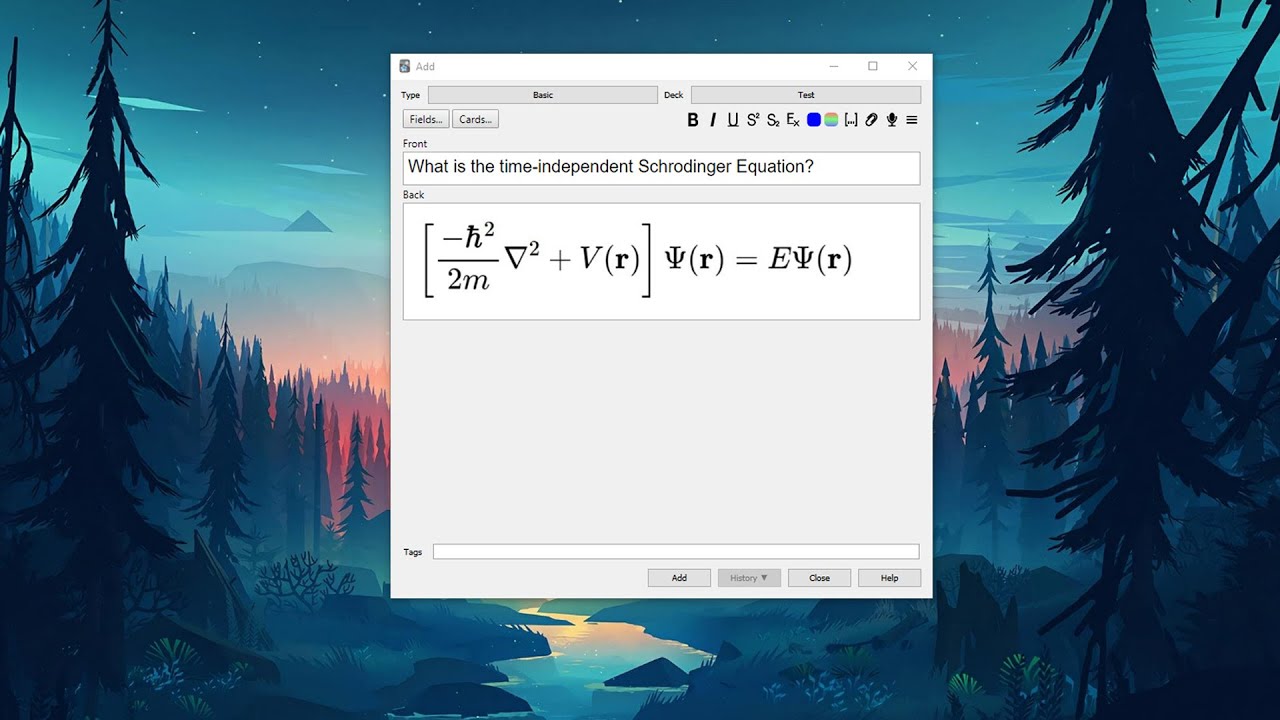
will quickly outline my a level workflow but i have explained this in more detail in my a level workflow video which should be linked above somewhere right now so it'll start off with the specification so i got the specification from the exam board website for me that was aqa and i kept it on google drive because on google drive i could highlight and annotate the spec without having to print it out so i just use a spec to make sure like i was covering all the points that we had to in lessons and i kind of knew where the lessons were heading because generally the teachers teach in order of the specification so going to lesson i would kind of know what we were going to be learning that lesson and i would sit down and make an effort to understand and learn the material ask questions during lesson and make any notes now on the weekends when we finished any large topic i would turn these notes into flashcards and supplement them with like any online a level five nurse material and what i could send into flashcards i did turn into flashcards and what i couldn't i just did more practice questions for now i put all my flashcards into a digital flashcard app called anki and if you don't know how to use that key i have a video about that as well which should be linked up right now but generally the kind of flashcards i had was like methods so defining the determinants of a 3x3 matrix uh which was just a method we had to memorize or like hyperbolic substitutions for some integrals or even the complementary functions for like some second order differential equations there are a bunch of things in five mass that you can make flashcards for especially for the applied modules like further statistics and decision for me and if you want to see how i made my flashcards then there will be a link in the description down below to a place where you can download my flashcards for your level firmness and then just get a sense of how i made them and don't be too strict to making flashcards for like pure maps because you won't be able to many in many other cases and you will sort of have to do more practice questions so now further maps required the most amount of practice for me as all my subjects and i would consistently be doing practice questions throughout the year even for homework we were being given or for refining topic tests or like practice questions on websites like physics and math tutor which i will talk about later in the video so i would do these throughout the year and consistently and i'll just make sure i'm like keeping this information taking over especially for a lot of the pure content which i may not be able to make flashcards on too easily and then about two to three months before my exam i started doing every new specification past paper so i did a few other spec pass papers here and there but generally the old spec papers weren't too useful and i just did like a lot of the new spec papers and the specimen papers and i also used the aqa teaching guidance which had a bunch of practice questions as well which didn't have solutions but was still really valuable and attempting as well so some of the questions were really quite difficult and i have a video on how i tackle difficult questions which should be linked above someone right now but for these questions if i didn't understand the mark scheme when i got around to marking it then i'd usually go to teachers and have them explain the question to me or potentially ask friends who i think could do the question then i would add anything i learned from doing these questions or past papers on some mistakes documents and go over this mistakes document like kind of consistently throughout the year so i'd find myself making some mistakes out of habits so i tried to develop the habits of finding these mistakes as well by like adding them onto a document and then noticing trends in the mistakes i make and then like turning that into a bullet point on this document and then reading through this document like before doing any practice paper or before doing my marks or something and that would remind me of what mistakes to be looking out for what and which mistakes i am making most often when doing these like papers so that
4:29

TLMaths

basically summarizes my workflow i suppose some resources which i found to be really useful and the first was jack brown or tl maps as he's known by now so if you go on youtube and search tlmas and you can find his channel here and if you go to like videos uh then you should see a bunch of his videos for a level mass infertile maps um but if you go to tlmaths. com uh which is his website if you click right here then if you go to a level five maps and then like pure or something then you should find in order of specification so if i go to like matrices then i can find all his videos on matrices so like determinants and then i can just sort of see this and i can see the spec points on the top as well so this was particularly good for learning some material maps if my teacher didn't explain it too well and in this case um i didn't watch every single video he made i watched a few videos which were out at the time but i
5:16

Exam Solutions

also watched videos by exam solutions as well we had some really great videos for a level four maps too so if i go to exam solutions and go to a level then i can also find uh further maths if i scroll down so if i go to aqa and then i can find five maps over here so like furthest statistics if i go to tutorials then i can find a bunch of videos on like some stuff in statistics and click on this and then just watch the video once and then even attempt some of the questions to do with it so this was also really great resources i used it's much fuller now or the website has a lot more resources now than when i
5:52

Integral Maths

started the a-levels two years ago so i'd really recommend checking out my school also signed up for resource integral maps which had a really good set of practice questions for a level five maps uh so if your school doesn't use it then i would recommend like asking your teachers to check it out because it can be a really good resource and have some like a great set of questions for photomaths so i found those to be really useful because the solutions were quite comprehensive and often when i didn't get a question this literature will make a whole lot of sense and it was just a useful place for additional questions which were never released by any examples and they were just written by the folks over integral maps and then finally i would do past
6:24

Past Papers & Specimen Papers

papers which i talked about a bit before as well and that was usually the specimen papers which they had written for the new spec for a level five maps all like papers from other boards as well because there is quite a big overlap between the content in like aqa for me and then at excel or like ocr mei um and stuff like that so now i have a
6:41

Being Intentional

few tips for five maps and the first is be intentional and this requires you to like notice these feelings of confusion within yourself like say drawing a lesson and then be intentional about how you're going to tackle it or improve now some people end up saying like oh i'm going to do every single textbook question and that would include like textbook questions for topics which they're really comfortable with or like say they're doing every single past paper or like question or everything on like this set of websites and whilst that can be good you want to consider what you want to improve the most on and this requires noticing any feelings of confusion say during the lesson and i regret not doing this soon in the year because when i started like being intentional and being proactive and trying to improve and like thinking about which topic i have to improve on the most rather than just generally saying like oh i just need to improve in like five maps generally once i started thinking more specifically i found my like knowledge to feel less superficial and i had a much better understanding of everything that was going on so basically notice these feelings of confusion when like you're saying doing a question or when you're learning content in class and then trying to tackle those feelings as soon as possible because it may like tackling these feelings of confusion just feels really nice as well and finally understanding the material which can make feather maps enjoyable for you and it actually helps you like be able to answer the questions which is also great because you can get more marks so my
7:57

Using Geometreic Interpretations

next recommendation is looking for geometric interpretations or trying to understand the material as best as possible so when you do like matrices you see like error rotation matrix and you're like why the hell is a rotation matrix defined like that and that's because you sort of have to like know the essence of matrices to be able to understand why and there is a really good youtube video called uh well series called essence of linear algebra by free blue one brands if i said essence of the new algebra freebie one brown i can find the playlist over here and uh like whilst the whole playlist is not useful for a level five master matrices i would still recommend watching like a good chunk of it like to do the determinant or matrix multiplication and stuff like that because you find that matrices is actually a really beautiful idea and has some like fantastic geometric interpretations and once you understand it to that level it just makes the process of learning it so much easier because you understand the bigger picture in this case and you also like can tackle the questions so much more quickly as well and basically when i watched a series matrices became my favorite topic and they felt so much more natural to me i intuitive because i understood what was going on behind the scenes and i didn't think oh a rotation matrix is just a 0 1 0 for like rotating by 90 degrees and this can also apply to like finding the shortest distance between like two vector equations of a line um and just understanding the geometric interpretation of that just makes the problem so much simpler and that when it comes to like doing this problem you don't have to like memorize a method for finding the distance between like the shortest distance or something you actually like have an understanding of what why this is being done because you understand like you have to dot products with one line you have to do products with another line and stuff like that because right angles and the perpendicular distance is shorter stuff like that so understanding the geometric interpretation it just makes some of the problems so much simpler so when possible do try to do that so next thing
9:42

Teaching and Asking Questions

i wish i did more was teaching and asking friends so remember when we were learning about second order differential equations there were just some things which i just didn't understand and i felt too uncomfortable asking like friends in lessons to teach it to me or something but when they did it just made so much more sense than when the teacher was explaining it so i recommend doing that or even teaching information which you sort of think you can send to others because teaching is a really good way of making sure you understand the concepts and i mean in reality if you're helping like one or two other people in your lesson you're not really making much of a difference to great boundaries anyway so there's no reason to be like selfish and just be like oh i'm not going to help out anyone else because there are literally tens of thousands of people doing fed maps in the country and if you help like one or two other people then you're not making too much of a
10:23

Look At STEP Questions

difference also if you really want to push yourself and really improve your problem solving skills then do check out some step questions and if you aren't sure what step is then i do have a video about it and you can watch like the first bits of the video um but if you're applying for like cambridge maps or like work maps or like imperial or something then you will likely have to say step so getting ahead on that sooner can be quite useful but even if you are not planning on sitting step because of course you're applying for digital requirements then still doing like a few questions here and there can be really useful because it just helps you like engage with these difficult ideas and math much more and then like the a level five maps question just seems so much simpler in comparison to step questions if you've got some like pretty decent
11:00

Advice for Discrete

step questions now so some specific advice for discrete maps i recommend making flash cards on like the algorithms and like any definitions for like say graph theory or something because that can get a bit tedious and if you don't know the precise definition of like things in graph theory then it can make the questions much more difficult to understand so i remember making a bunch of flashcards for discrete but do check out my flashcards in the description in case you want to and i would also recommend doing the old spec questions for discrete because i found to be quite similar for the new spec questions for the discrete especially for aqa and also flash cards
11:31

Advice for Further Maths

do work well for statistics too and i would also recommend getting quick at using distributions on your calculator so like the exponential distribution or like uh being able to do chi-squared tests on your calculator or if you have a graphing calculator that is or being able to like use a possible distribution normal distribution binomial everything just being able to do that quickly and well in the exam can save you a bunch of time
11:52

Conclusion

too so anyways i hope some of that information was useful and gives you a better understanding of how you should be studying for forever maps for me i find feather maps to be the most conceptually difficult subject to understand but i also find it to be the most enjoyable and most rewarding because like when i understood these difficult ideas finally for the first time or just clicked in my head or like i was getting some difficult questions right then i really enjoy that feeling and i just like i just really liked the master day level so i would recommend like be intentional and make small consistent improvements throughout the year don't worry too much like if your first few topic tests end up going badly as long as you're being intentional and finding like the ways that you have to improve between tests and then practicing and being proactive and everything like that you should do pretty well i'd also recommend watching my a level maths video on how we're going to start at a level maths because i do give some advice there as well which i haven't given in this video which is still related to maps and if you want to like learn more uh about how i studied for my a-levels i also have a playlist on how i studied it effectively for gcses and a-levels which should be linked above someone right now as well so do check that stuff out and hopefully you found the video useful and i'll see you next time bye

Ещё от Ray Amjad

Ctrl+V

Экстракт Знаний в Telegram

Транскрипты, идеи, методички — всё самое полезное из лучших YouTube-каналов.

Подписаться