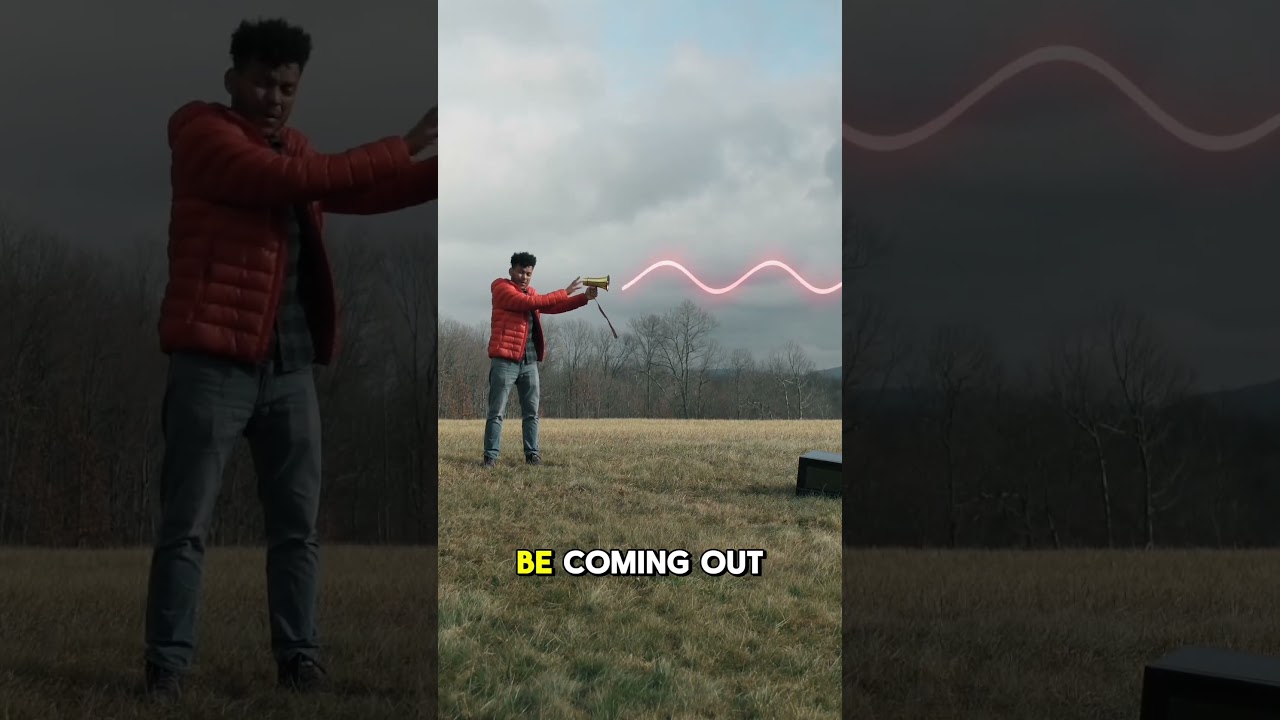
That data center behind me is dead. It's just sitting there idle even though it has every single Nvidia chip it needs cuz it's missing that. Wait, but America exports electricity. Don't you guys have power to spare? And yet data centers are sitting idle. Electricity costs are rising for everyone. Dominion, the company that powers this town, Data Center Alley in Virginia, says that there's a wait time of up to 7 years to connect a new data center to the grid. I've spent the last few weeks visiting power stations and data centers all over the world and discovered that America made a simple but catastrophic mistake in the way it powers the country. A mistake that average Americans are already paying for in their power bill and that could cost the country the AI arms race. Now see that? That is the three-mile island nuclear power plant. Kind of America's Chernobyl. — A nuclear exit. — One of the atomic reactors was damaged. — You might have heard that it's getting reactivated. Now, the reason these plants are getting built and reactivated all over the US is because of the power demands of all these data centers. And that's a challenge of its own, but it's not the reason why these AI data centers are built and just sitting there idle. It's not so much about producing electricity, but getting it there. And part of it is that thing that is a substation, kind of like the one you had next to the data center. Every power station in the world has one nearby. And that is the first piece of our puzzle and the part where America screwed up. But we first have to understand why you need them. Now, as a nuclear reactor does its thing, you know, uranium is going to heat the water. That's going to generate steam. It's going to spin a turbine and a generator. And a reactor like this can produce maybe 800 megawatts of power. Now most people will think of power as electricity flowing from one place to the other, right? Like water coming from this hose, but that's not exactly right. And I really need you guys to understand this so you understand the rest of today's video. Now imagine there's this 800 megawatt power plant on the other side of this hose. Now what that power station will do is put pressure and that'll be voltage on the other end so that we can get this stream of water and I can use to power things. For example, a water mill. Now, here's the part that confuses everyone. More water is not the goal. What we care about is the water's ability to move this water mill. And there are two ways that we can generate the same power. We can have the hose like this. wide open, bunch of water flowing. Or instead, we could close the faucet a bit, reduce the amount of water coming out of the hose, but instead increase the pressure. Now, what we have now is less water, but because we have more pressure, we are generating the same amount of power. That's exactly what happens here. The water on the hose represents electrical current, and when you put a lot of current through a cable, that cable heats up. Now, we need really fat cables to be able to transfer a lot of current without the cables heating up because of resistance. And if the cables heat up, we waste electricity in the form of heat. So, we don't want to do that. pay for all these big fat cables all the way from here to the city. So, instead of doing that, instead of relying on more current, we're going to do it through pressure. Kind of like my finger on the hose. That substation is my finger. It raises the pressure. It raises the voltage of this power so that we don't need to send so much current. fat cables anymore. Now let's do some numbers on that. The 800 megawatt coming out of the plant, those might come at a voltage of around 20,000 volts. That means that the current that's coming through the cables is roughly 40,000 amps. Now, this substation might increase the pressure to something like 200,000 volts, meaning that we'll only need a current of 4,000 amps to be able to deliver the same amount of power to the city. And that's what a substation does. For the longest distances, voltage may be stepped up all the way up to 700,000 volts, again, to deliver more power with less current and less cable heating. And as we get close to the cities, the voltage needs to be stepped back down. And that's done with another substation which sits outside the city and ultimately with some good old transformers. Now those things bring voltage down from a few thousand volts to the 120 volts or the 240 volts that we use in our homes. But a data center requires the power equivalent of thousands of homes. So you just can't connect to your usual home transformers grid. They need to hook up to the high voltage grid and you need a substation for that. Okay, so how does that affect your power bill? Well, one of the core components of this substation is the transformer. Similar to those in your neighborhood, the transformers in here step the voltage up or down. And this is the price of transformers. It has almost doubled since 2021. The price for some
Segment 2 (05:00 - 10:00)
components has increased by up to 9 times. And it's not just the price, it's the demand. Some manufacturers are estimating an average of 120 weeks, 2 years for a new transformer delivery. Some types up to four years. Okay. So, well, why can't we make more? Shouldn't this be like this business opportunity to capitalize on? Someone should have noticed. Well, if you want to be the first to learn of these untapped industries, you should be on top of our partner, the Hustle Newsletter. The Hustle sends you a daily insight of fantastic business opportunities that most founders tend to overlook. So, they're not about breaking the story first. It's much more about doing a deep dive into actionable items that can be useful to entrepreneurs. Subscribing to the hustle is completely free. You get it daily in your email. No spam. You can just use this QR code here to subscribe or I'm going to link in the description if that's what you're into. Okay, so why hasn't anybody tapped into this? Well, building a whole supply chain from scratch is not easy. Now, part of the problem is America has over 3,000 distribution utilities across the country and they never sat down to agree on specs. The country may feel uniform coast to coast, but the power grid is anything but. As of 2014, the Department of Energy estimated 79,421 different transformer types around the country. It's basically custom SKUs. A lot of large transformers are effectively customuilt. The US just never set up a standard transformer catalog for the country and basically let each utility define its own specs. But America needs more transformers than ever, replacing agent infrastructure, extreme weather rebuilds, new renewable energy plants, and of course, data centers. They're all pulling from the same supply. Why can't the US make more? Well, the US doesn't make transformers. It outsourced that years ago. As of 2019, about 80% of the transformers needed in the US were all imported from other countries. And this is a problem. It's a growing problem. As data center demand started growing, the Biden administration authorized using the Defense Production Act to boost the domestic production of transformers and a few other grid components. This was so critical that when Trump reversed the Biden mandates on that executive order, like incentives on solar power, it left the transformer incentives intact. So why hasn't it worked? Why hasn't the US caught up to the demand? Well, it's not just manufacturing, it's materials. Part of it is you need this special kind of steel and as of 2023 there was only one manufacturer in the US that could make it and the quality wasn't great. Some companies have started to catch up but demand is still set to almost double over the next 10 years. To make matters worse, foreign steel manufacturers are no longer focused on grain oriented steel. They're shifting their focus towards other types of outputs like the ones that EVs need. Not to mention tariffs. There's also labor shortages like there's not enough skilled labor to build them and facilities are located generally in remote locations and transformers are just one of the shortages. There's also switch gear prices rising. High voltage circuit breakers. They're all needed to build and maintain these substations and some of them have a lead time of up to 5 1/2 years. All while the price of many of these components more than doubled. And another one transportation. These high voltage substations require these huge transformers that can weigh up to 400 tons. and you can't move those with a regular train car. Cars that you need are called Schnabble cars. And the Government Accountability Office reported that as of 2023, the US had just 10 cars servicing the entire electric industry. The correlation is obvious. This is the price of electrical components since 2000. And this is the price of consumer electricity. The price you pay in your bill, we could say it's roughly 50/50. 50% of that is producing the electricity, the coal or the uranium. And the other half is the infrastructure cost, maintaining the grid, distribution, and that's where inflation is hitting your wallet. Electricity costs have outpaced inflation over the last 5 years, even the high inflation that we're dealing with now. And so, what's making this worse? And what does it mean for the AI race? Well, first of all, it's the massive AI demand. Of course, plenty of sources expect the annual investment in new data centers to hit $1 trillion by 2030. I mentioned that we are in data center alley in Virginia. This is a town near Washington DC and about 70% of all the internet traffic [clears throat] flows through here and yet the state of Virginia has an electricity deficit. It needs to buy electricity from other states. This place exists because land was cheap, because power was cheap back in the '90s, but they have gone too far. In the end, people here and all over the US, they're operating out of the same grid as the data centers. Neighborhoods need the same transformer parts as data centers do and this expensive supply chain is leaking to everyone. By the way, I'm not saying that utilities are just offloading the cost of these stations to consumers. It's just that everything got more expensive and therefore everyone is paying the price. It's no secret that there's this round spherical economy as to how much these AI companies are spending to build all
Segment 3 (10:00 - 12:00)
this infrastructure. But let's place Chat GPT in that chart. That price was scaling before Chad GPT released. So what's causing the strain? Whose fault is it? It wasn't just CO, but what CO did was just trigger a dormant problem. Look at the price of steel for example, almost matching the rise in component costs. It's simple. Demand stopped during the heavy lockdown months and then spiked up again very quickly and that put a strain on everything. But the reason that this hit power delivery so hard is that for decades the US treated transformers like a commodity supply chain, not as a strategic capability as it has now become. There wasn't a rush for new infrastructure. There wasn't a race to get more electricity. So this simple device that's such a crucial part of a country's infrastructure became secondary. The market doesn't reward electricians or hand labor. So, why train to make these if you're going to get a salary and risk losing your job to outsourcing anyway? According to the Wall Street Journal, training for this can take three to five years. And again, there is a shortage of labor. And yet, pay for these manufacturing jobs at the factory start at 19 to $24 an hour. Companies have moved to even refurbishing old transformers because of how constrained the market is. Some data centers have started to move closer to the power station so that you skip some of the step up and step down substations that are needed to carry all this power. That's actually not a bad idea, at least not as bad as an alternative which is building turbines inside the data centers to power them and skip the power company altogether. Stargate, an initiative that's co-unded by OpenAI and SoftBank, intends to produce up to 1 gawatt of power using these turbines on their new data center in Texas. I guess so much for clean energy. But it does explain why some old man invested so much of his own money in this company called Boom Supersonic that sells these turbines to open AI. That's a story for another day. But it is ironic, isn't it, that this race to replace humans with AI is being hindered by the very jobs that companies thought were easier to replace, hand labor. It does reveal a bit about AI's true colors. This tip of the iceberg of what's going on. For example, Stargate, this very company, announced this $25 billion data center in Patagonia that was filled with a lot of empty promises. I actually flew down there last month to find out what that story was about. You should check that video out. Thanks a lot for watching.