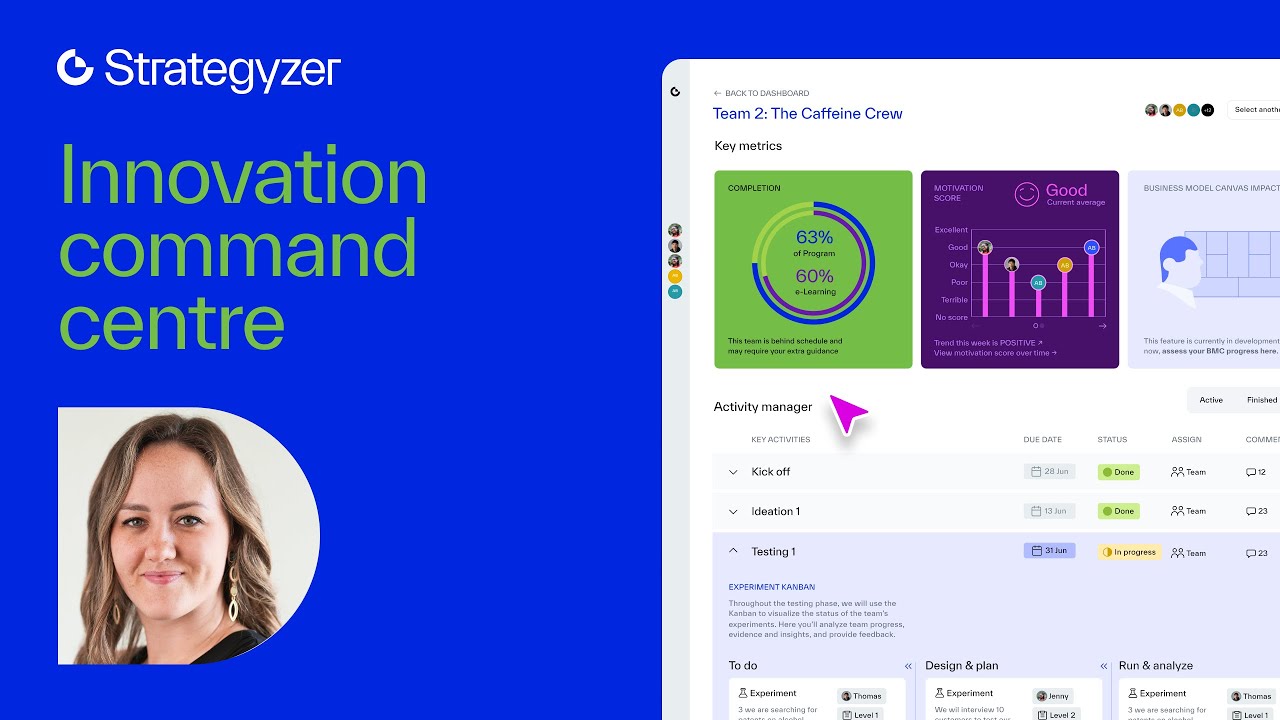
I'd like to welcome you all to um this session that we're running uh today on how a Fortune 100 company prioritizes their growth projects and it's really fascinating. Um sometimes we call it our dinner party trick. Uh we have conversations with your teams and we can always tell exactly where they are in terms of the progress that they're making towards success. So that's what we're going to be talking about today. So, we really would like to welcome you all. And um joining me today are my colleagues um let me just see if I can get this to move. Joining me today are my colleagues Alexer and Carol Hill. Um welcome Alex. Welcome Carol. I hope you're all well wherever you are. We're your host today. — Wonderful. — You guys are good. — Very good. Looking forward to it. — Great. Awesome. So, today I'm playing host, so that's going to be interesting. Uh, it's been a while since I've done something like that. So, let's see if I can actually do it right. But would also like to welcome our guest, Maxwell Johnson from Honeywell, senior product director there. Yeah. How are you, Max? — I'm excellent this morning. Excited. — Great. Thank you. Thank you so much for joining us. Um, so yeah, welcome everyone. We're we're getting started now. And today's webinar is going to have three steps to it. The first one is going to be um Alex talking about what a playbook is, which is something that we've been working on at Strategizer, repeatable process for doing work with great outcomes. And then Carol will talk a little bit about how we make evidence-based decisions because that's then connected to the whole idea of how a Fortune 100 company um makes decisions on its growth projects. And that will be the third part where Alex will share about the Honeywell Growth Symposium and how that works. And Alex will do that in conversation with Max before we move on to the Q&A. And if you have any comments, please uh put them in the use the comments box to say um or ask question. Sorry, use the comments box to make comments. Use the Q&A to ask questions because we always end up bouncing around between those two people asking questions on the comments and comments on the Q&A. So, use the Q&A to ask questions and use the comments to um to make comments. That way, you can guarantee that we can see your questions and that we can actually um answer those questions. So, let's start with our Menty poll for the day. Uh we just want to know who's here today. Uh we're very curious to know where you're from. So you can scan the QR code or you can go to menty. com and type 6315-55619 um to to join the poll and just let us know you know what is your role u within your organization. So because we're curious to kind of always learn who who's joining these conversations with us and what I'll do is if everybody's on the poll I will go back here and start to see who's joining us. Um yeah so business leaders, strategy leaders, product leaders, innovation leaders. Great. It's a wide variety of people joining us, Alex. — Wonderful. Yeah, we have a lot of categories, right? — Yes. — A nice mix. It's a nice mix. — Nice mix. Yeah. Zero sales. — No sales people. — No sales people not showing up today. — Yeah, that's fascinating. Thank you so much for responding to the poll. Um it's always very useful for us for us to know this and this is a really great mix for us to have conversations and uh [clears throat] and um aligned and connect. Okay, cool. So before we move on to um where am I there? what am I doing? — I'm seeing your menty pull again. — Exactly. Yeah, I'm uh confused as you can tell. So, but before we move on, we just want to talk to you quickly about some of the work that we're doing. So, some of the stuff that's coming up at Strategizer. So, we've just launched our applied master class series. And the first one straight out the gate is with Alex Olda uh talking about customer obsession by design. And for this master class, you'll get to learn how to do evidence-based customer understanding. you know, define your ideal customer profile, learn some of our tools like practical use for AI in terms of your customer understanding. But even more fascinating is you're going to get one year access to the our entire playbook library. If you sign up for the for the for this master class, you also have the chance to sign up because the master class is going to be actually be a series of master classes. So we have the customer efficient by design happening in April. And then we also have the value propositions that win in the market happening in May. And then we have how to um out compete through
Segment 2 (05:00 - 10:00)
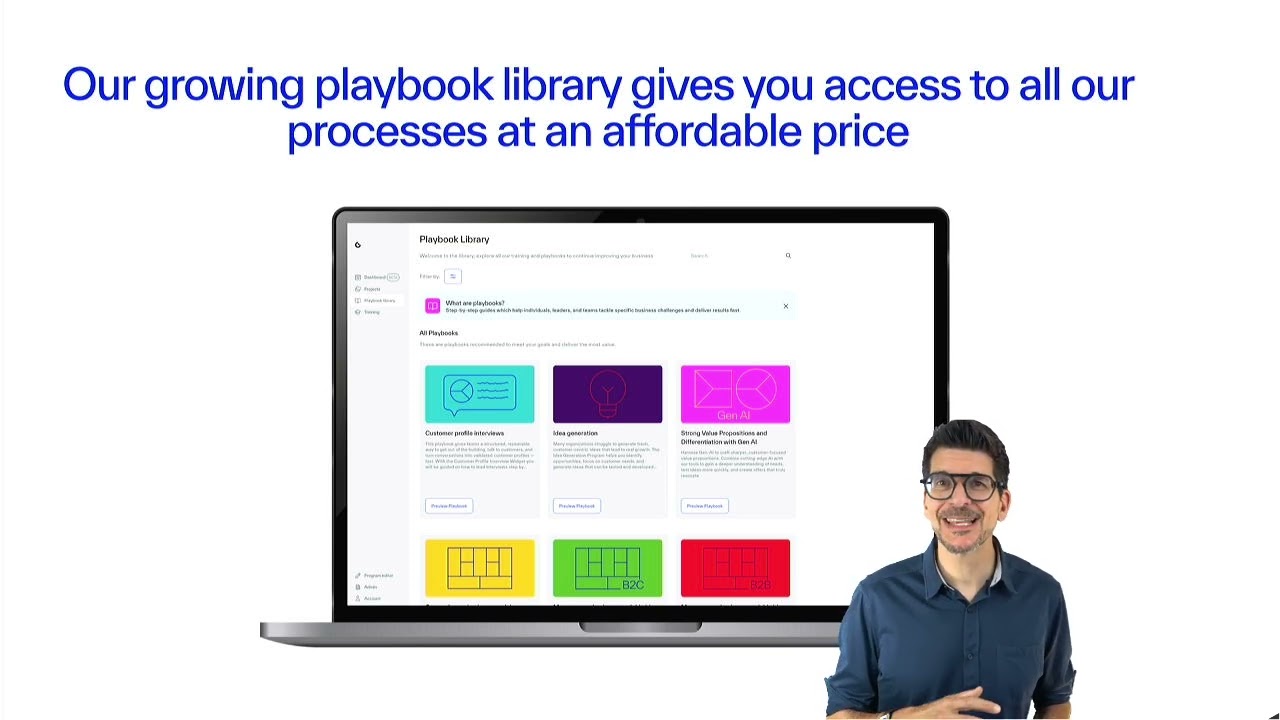
business model advantage happening in June. And then I'm also going to be delivering one on organizational change and momentum and how to create buyin for organizational change but we're yet to decide on the date. So you can either get one of the master classes if you want or you can get the whole bundle. Um but it'll be very interesting again because you you get access to um all our all our playbook library after that. And then lastly if you want to join as a team um also you we have um an opportunity for you to do that. So you can run the masterclass with your team and you can move faster. Um so yeah you can take the master class together as well but for that you can't buy online. you'd have to get in touch with one of our sales folks so we can see how we can help you. So yeah, if that's something that's interesting for you, please respond to the poll um that's now um showing there. By the way, when I said we're running a masterclass series, Siri came on my phone, which is crazy. — AI out of control. — All right, cool. So, um, that's it really on my side. Um, I'd like to then now hand you over to Alex who's going to talk about the definition of what a playbook is. So, if you could spotlight Alex and unspotlight me. — Okay. So, what we're going to talk about before we get to, you know, how Honeywell uh makes evidence-based decisions is like how we did it. So, we're going to show you exactly and uh you know, Max is going to be able to share some of his experiences. We iterated actually through four different growth symposiums till we really settled on one pretty strong format. Now, what is this thing that we call a playbook? And maybe Max, do you remember the first time you know we were talking about playbooks? What was your memories of that? Did you immediately understand or what how did that resonate back then? — Well, I think I thought I understood. I said, "Oh, yeah. You mean the PowerPoint deck of what we use for slides and templates and the way that we present to leadership, right? That's our playbooks so you guys can help us modify those, right? Um totally changed after a few conversations, right? — Exactly. So before we get back to Max and we're going to look at, you know, how we do it, um Carolyn and I are going to show you kind of walk you through this idea of a playbook and walk you through uh the idea of evidence-based decision-making. But the term comes from sports. You know, coaches document their plays that the teams will use to win games. Now, in business, actually, it's a pretty common term. Playbooks document the repeatable actions that lead to a result. And often, you know, kind of it's a maybe a more modern word for the stagegate process. We have these playbooks to get people to go through a process. So, based on everything we learned at Strategizer, we created playbooks as well. But what we really do is actually combine this idea of a stepbystep guidance. Here's what you're going to need to do and visual workspaces to execute those plays if you want and facilitate those activities to deliver business results. Now, how did this whole thing start? I really want to go back because I think it's important to just kind of show this story because it'll lead up to know how this really works in organizations like for example Honeywell. So going really far back when I worked with Eve on a PhD we came up with this thing called the business modeltology which is a framework but then you know after kind of publishing this people starting using it we turned it into a tool and that was back when I was um you know with Stephano Master Jako down here you can see this logo arvetica we had a consulting firm and all we did was draw a couple of lines around the concept that you've seen before the business modeltology and that's how the business model canvas was born and that was the kernel if you want of our first book then we went on to start play around a little bit with software we tested ideas with an iPad app we launched a web app so we went into software and ultimately um oops sorry I don't know why this one went away yep all of these things kind of came together in a whole series of books, tools that we applied and very importantly like we did it in very different formats. We did consulting, we did training, we did workshops, we did events, we did e-learning, we did facilitated e-learning, we did software and from all of these things we really started to learn what is it that we actually do. If you take this whole surface, all these tools, all these ways, these formats of applying them in organizations, we realized it comes back actually to tools
Segment 3 (10:00 - 15:00)
business tools, and I like to call these tools not templates because they're really founded in, you know, deep concepts that we test and iterate the clear steps of how to apply these tools because there's a huge template fatigue out there, which I understand because we force all these templates onto people. What you want is really strong business tools and very clear, simple and practical ways to apply those and expert facilitation to really bring this into an organization. So that's actually what we realized in 2025 just going back a little bit of soularching what strategizer is and we packaged that in a more scalable way. Not all of these formats really taking what we learned from those formats and putting them into what we call playbooks. Pre-structured visual workspaces though not just posters on walls. We really believe in this idea of using visual workspaces digitally but then sharing our practice of applying these tools step by step either you know in a strategy workshop or you're assessing what we're going to do today. evidence of a business project that you want to invest in. And then the last one really this idea of in-person remote or AI facilitation because obviously you know people are expensive. You want to use them when you can but you know there are more and more ways where we can infuse um some sort of coaching without necessarily being physically present. So that's what we started to do and that's what we're going to look at in a very specific case with Honeywell how we created a playbook to run a workshop to prepare a workshop ultimately to invest in the best ideas by looking at evidence not just the ideas. So what does that kind of come together as a playbook and then we're going to look at evidence-based and we're going to bring it together in uh in the Honeywell case um which Max will document or explain. So one is the guidance. What do we need to do first? So for that workshop with starting point with guidance with the playbook for Honeywell. Well, what we did is we started to show people what concepts we're going to apply. They needed to learn these concepts fast. But e-learning, nobody has time for that. We immediately got the teams to work to apply these things. map out a customer, map out a business model, map out, you know, the unknowns and do that of course as a team because that's what you want to do coming into a workshop in a prepared way. And ultimately, if you really want those outcomes at the workshop, the growth symposium that we um um co-f facilitated with Honeywell, you actually need to start preparing certain objects before. So the whole thing really came together after a couple of iterations and we'll talk about that in the last part and it started just by an invitation you know that we want to start to invest in a more customer centric way but also in a more evidence-based way. So what I want to um us to start to look at before we get Max to comment on this uh journey of how we got to the growth symposium. Carol is gonna introduce us to uh to evidence-based decisionmaking, but maybe just a quick comment from uh Max. Um when we say evidence-based decisionm what was probably your biggest insight you know going through this journey together from you know what you already had because you were already pretty customer centric doing voice of customer you know towards what we are going to look at in the last part. Yeah, absolutely. I mean, you know, I've been with Honeywell for five years and have been driving uh VOC. That was where our customer evidence began and end was with what co folks said and we built a lot of our foundational training and how we coach product managers, engineers, etc. to gather that evidences through building VOCC plans and conducting voice of the customer and documenting what their key insights are. uh the real level up was understanding that that's just one type of customer evidence and then you can go a lot deeper to be able to reduce the risk further and it's not always about a massive investment of resources. Uh so that was the big learning is that we're able to you know level up the conversations that you know our product managers and engineers are having with leadership and be able to demonstrate proof of why this offering is going to work in the market better than what we ever could before just by the means of voice of the customer alone. — Cool. Thanks for sharing, Max. And I'll throw it over to Carol to do a little deep dive, 15, 10, 15 or 15, you know
Segment 4 (15:00 - 20:00)
minute deep dive into evidence-based decision-making, and then we'll see how it comes together in this playbook that we uh co-created with Honeywell. Over to you, Carol. — Perfect. Thank you. Great. So, we're going to talk a little bit about evidence-based decision-m and what that looks like. And it was good to hear, Max, from you about the voice of customer. I think a lot of our clients are in the same position as you um or as you were. So if we look at um I'm just sharing my screen here. Uh make sure that you can all see just a thumbs up. Yep. Perfect. — Perfect. So we know that when we want to get from a new opportunity to scalable um revenue, there are different things that we can do. Um starting with designing as if you're right and testing as if you're wrong. And then we need to come to the point where we make a decision um as to whether we're going to move forward or not. So how do we make that decision? And that's what we're going to talk about here. I was speaking to a client um just uh a few weeks ago um asking about this. How do they make decisions? And he said, I want the teams to convince me that their ideas will work. So the question was, well, what is going to convince you? Is it encouraging forecasts, a sponsor who loves the idea? um teams that have a great market understanding, a good strategy. These are all things that actually this particular um client mentioned, but what we really want you to do is really look at the evidence, right? Um and as Mac said, there's lots of people will do VOC. That is one type of evidence, but there's also a difference in the level of evidence. So, no evidence, light evidence, strong evidence, and it's up to the governance board to decide what that looks like. So we have different experiments that we can run um that will help you to understand what level of evidence uh you might be able to get and one example is of a brochure which is probably common to all of you right um a brochure that shows your imagined value proposition. So, if we look at an example of one here um from American Family Insurance, um it's a fake marketing brochure that was shown at a trade show with a call to action. And from that call to action, they were able to see how what percent of people responded, followed up via phone call or email. They were able to see that um it resonated more with one particular customer segment than another. And then they were able to pivot their value proposition and marketing based on that those insights. Um so that was one type um that would get you a certain level of evidence. Another experiment is Wizard of Oz which for those of you who don't know um it's basically an experiment you can run where a request is handled by another person. You may have seen this on a meme with a coffee machine where the customers think that the machine is making the coffee but it's an actual person in the background making something, right? Um so an example of this is from Fireflies. Um many of you probably use a notetaker like this but may not know sort of the origin story of Fireflies. Um I think Alex um mentioned this to us uh recently um which is a great story. So, um the co-founder shared that they charged $100 a month for AI. That was just two guys surviving on pizza. Um they told everyone that AI would join the meeting and in actual fact it was just uh Sam and his co-founder um sitting behind the scenes taking notes um and joining um dialing in um as Fred from Fireflies. Um so the ethics behind this maybe we can set aside for a moment but this is an example of how they gathered some of their evidence. Um and they decided that after they took notes for 100 meetings they felt it was enough evidence to automate the process. They were making enough money to pay for their rent uh which was good enough for them. Um so what are we trying to do here overall when we're trying to get from that idea to a scalable profit? We want to increase the um spending level as we reduce the risk and uncertainty. And if you think about the level of evidence, you're basically trying to increase that level of evidence alongside how much you're spending on creating those tests and gathering that evidence, creating your product throughout. So before we look at those level the level of evidence and how we might um consider that important to keep in mind that what people say and what people do are two different things. So you will see the say and do um referred to in our framework here which I'll show you in a second. So we have an innovation project scorecard um where we frame our level of evidence um according to a number of different areas um and the level of evidence can vary depending on what you are testing and how. So you can see we have 0 to five um here um with Fireflies the example that we had with the Wizard of Oz with two people um typing in the
Segment 5 (20:00 - 25:00)
background joining meetings and doing this manually that could be considered excuse me uh level five evidence um as it was enough for them to automate the process. Um, and if you look at the brochure that American Family Insurance um had, they had a call to action where people shared their email address or um called them. And so they had like call to action um evidence do. Um so let's look at this a little bit more um from zero all the way to five. Now many of our clients will start by saying they've got business plans and spreadsheets and highle market research. Um, but many of these things don't even get to level evidence one because we're not actually hearing from the customers. So when we are actually talking to customers, getting their opinions, hearing what they have to say about something in a low investment lab context type of setting, that is level one. Um, uh, if you want to move all the way to level five, we're looking at um, our customers um, and users doing something. Um, it will be based on fact. uh usually in a high investment situation and a real world context. So let's dig into um an illustration um about all of these different types of evidence from Tesla. Now going back to 2003 when we had two co-founders, one Martin Iberhard um who started by saying you know they wanted to create um a sports car um but he didn't want something that was fuel heavy fuel hungry right so they were looking at e vehicles um that first Tesla Roadstar launched in 2008 um but to get there um there is a bit of a journey and Mark Tarponing um who was the other co-founder back in those days um was the person who is leading the development of this um and what we're going to look at some of the experiments that they ran. So the first experiment that they ran was something that we call a boomerang where they're looking at um competitor products um and getting uh information and insights from those customers. Now this is um level evidence one where they're receiving evidence about other value propositions. So, and really what they learned from this was that their customers were not the same customers um as their competitors. Um it is um similar uh the next step sorry um was level evidence too. Um and that was taking uh different parts of cars and putting it together in a mashup to create a value proposition for the Tesla Roadster that they wanted to create and gathering evidence on that. So that is a level evidence too where they're showing actual artifacts there on their own value proposition. The next uh experiment that they ran was like call to action evidence do and that was a landing page. So, similar to the brochure, it's showing the value proposition and then including a call to action where um potential clients are asked to give their email address um to get more information about the product and to show their interest in purchasing. So, that is call to evidence three. Um and then strong call to action evidence um do um was where uh they looked at a pre-sale. So quite famously for the Roadster, um clients could actually put $100,000 down on a fully refundable deposit um that they could get back up to the day of delivery. Um and it was a limited uh number of reservations uh signature 100 reservations. Um and so that was for um uh early adopters. So not quite irrefutable evidence from the markets yet. Now, to get to um this level five, you need kind of mass market um evidence. And so Tesla Model 3 pre-sale um fits that uh mold quite nicely. Um they ended up with 325,000 reservations with a $1,000 refundable down payment um within the very first week. And that was mass market versus early adopters. So that's an example of level five. Um so hopefully um with this type of evidence you can really be very clear on the type of evidence you need or what you need to convince you of the right level of evidence. So we're going to test you um with a competition using the menty that we're going to put up in a moment um where you are going to assess um the level of evidence on these examples. We'll just share one example here um before we start and while Tendai gets the menty ready. Um, so if we were
Segment 6 (25:00 - 30:00)
to look at an experiment with a customer interview and we've got five people who were interviewed, you could think about what level evidence this would be from one to five. Um, and uh, hopefully you would get a level one first [clears throat] light evidence. The important piece here, um, no matter how many interviews you run, um, even if it's a thousand, if all you're doing is getting evidence, um, from what people are saying, you are without any kinds of artifacts, you will always remain a level one. So, um, let's move Tendai over to the menty and I'll stop sharing my screen. — Yeah, I've got the menty. Alex, you wanted to say something and I noticed. — Yeah, just so we don't because we are going to compete, right? So we don't mislead people. Five is not necessarily mass market, right? Because uh that was the specific example of Tesla where they didn't have the full price, but the number of uh pre-sales um or down payments would justify probably a five. If you take uh what Carol showed, so I'm just going to remind us with Fireflies, that was also a five. That was by far not mass market because it was two people taking notes and sending out the notes, right? So, it's this idea of making people feel it's the real thing in a real situation. And the last thing where people kind of trip up sometimes is they say, well, they didn't test their idea like as a five. Well, they tested one, you know, two aspects if you want some of the desiraability in the viability. They did not test the feasibility. So when you put a five doesn't mean you validated all aspects of an idea. The whole point is that we're validating pieces of an idea. So just want to emphasize this so we can really compete and on fair grounds. — All right, perfect. So this is the Menty poll. Um I don't know if I'm being hotspotted or not. Um there we go. So you can scan the QR code or go to menty. com um and type 6315. So let's all join. I think this is a competition. So fastest most fastest but also most accurate answer wins right it's not sufficient to be fast you also have to be accurate and so I'm going to hide myself and then um start sharing the menty poll so here we go see a lot more people are joining but here we go so here we go experiments run customer survey or customer interview. Um, what level of evidence is that? — Got to click once more, then I have to click once more. — Yeah, there you go. — So, how would you score these? — And this is actually what we do also with senior leaders to train them to make evidence-based — decisions. Right. So, this is not just for teams. — Exactly. So, you do a survey customer interview. What level of evidence is this? And there we go. That's correct. Uh, it's it's level one because all you're doing here is talking to customers. It's literally you're not even showing them an artifact, right? It's just what they say. — I heard some people sometimes say, "But isn't getting people to fill out a survey a call to action? " I think that would be pushing the boundaries a little bit. Yeah. Well, they did invest their time, but it's just Yeah. It's very light, right? Yes, it's also about like the quality of evidence you're getting, right? Not just getting people to do stuff because when you get people to just say stuff, it impacts what we perceive as the quality of the evidence. Okay, next one. Here we go. You did a customer interview and you ran an online ad. What is the level of evidence you reach there? An online. — Click once more. Yeah, it's actually several. It's several experiments. Cool. This one people trip up a bit more, — right? — We didn't show this one, so you have to guess a little bit. — Exactly. An online ad. — Okay, cool. Yeah, that's a it's not level two because you're asking people to do something now. So, you know, it's light call to action evidence because it's an online ad. you're asking them to perform some kind of behavior of. So yeah, people — people get this wrong, right? Because they don't realize what you're not asking them to click on that ad. You know, if think about yourself, how many times did you click on an Instagram ad that you were not interested in? Probably never. Maybe you never did, right? But so getting people to perform a small action like clicking on an ad is a call to action. That's the difference between saying and doing. So, somebody might tell you they're interested in your new whatever fitness app or and
Segment 7 (30:00 - 35:00)
then they just say yes. Well, that's level two if you showed it to them. But level three is actually they did something more skin in the game when you were not in the room. — Exactly. And there's a huge psychological leap between saying you'll do something and actually doing it. All right. So, we move on to the next series of experiments. And this one is you do five customer interviews and 50 online ad. This seems to be repeating, but let's see what people say here now that we've given you the answer. Should get this one right. It's a bit more right. — Yeah, there we go. Somebody said level five. It's not level five. — It is level five. So, Wizard of Oz. So, — right, — we didn't train you deeply, but when Carol said like you got people not just to do something, you got them to actually experience the real thing. People were paying Fireflies the subscription and they were benefiting from the real customer experience of getting summaries though there were human beings behind the room, right? I still think Chachi PT has millions of people somewhere giving us those answers — and they all write in the same language and use the same dashes. — All right, let's move on to see who is in the lead. Here we go. Oh, look at that. John, — good work, John. — We got one more. This is an inter. This is just the halftime report. Is this last time report? Okay. Um, so this one says 30 customer interviews and 300 customer surveys. Is that correct, Alex? — You can't see the rest. Is not the full image. So just click one more. Yeah. — Okay. — Participants can see the full image. — The full image actually. Um, — participants can — on their phones. Okay. Max, are you playing as well? You play this one a couple times. — I'd be cheating at this point. — All right, Alex, maybe you want to talk through this one. It's the correct answer is level three. Why are people scoring level four and level five so much? — So, sometimes what gets people tripped up is they just think, "Oh, they're large numbers, right? " So the numbers don't get you into a different category. Like call to action. You could have a million doing a like call to action and a million people clicking on your ads. It's still just very easy to click on an ad. So then level four is more skin in the game. And talking about B2B, we're going to go talk about this afterwards, right? Um you would have, for example, co-creation workshops with your with your customers, with your clients where they bring in the CEO to work with you. That's level four. And then level five is in a whole other ball game. So people look at the numbers. The numbers is not the right thing only. What you really want to look at is the type of evidence. So super important um to get that right. — All right. Cool. Okay. So moving right along now to see — if John made it. Let's see — huh in this round. Like we'll see. Let's see if he stays in the — overtaken by Andreas. — Andreas has bragging rights to — Exactly. I hope it's not the Andreas we think it is like one of our own — team members. Yeah, — exactly. Congratulations. Thank you everyone for participating. And now I'll hand you back to Alex to now actually talk us through the Honeywell. Um Right. — Okay. Arandreas was saying it was not him. Okay. In the chat. Very good. Okay. So, um what I'm going to quickly, you know, introduce us a little bit to the Honeywell Growth Symposium, but then really, um get Max to share his experience. Also, the whole thing, you know, uh was four big events if you want um over the last year into this year. And it started out with uh Honeywell's CTO and president of connected enterprise SE reaching out to us and uh you know asking like how could we collaborate to bring this idea of evidence-based decisionmaking into the organization. So basically what we started to do is to help teams not just better present in a customer- centric way, value centric way their ideas, but really get them to support their ideas with the evidence that they already had and run more experiments. So that was quite a um a shift or let's say a move forward from the voice of customer I think that Honeywell, you know, from
Segment 8 (35:00 - 40:00)
what I've seen has already does pretty well. Now, here's how we structured the playbook. There were two parts to it. The first part was actually pre-work. So, from the 10, 15, 10 to 15 teams that would come into the growth symposium, present their ideas to leadership, they would come in already prepared with pre-work. Now, um not just slides. We actually banned the slides. And in the first uh gross symposium there was some confusion where because they're so used to presenting slides and I can see Max smiling there. No, we actually got them to prepare I'll use an abstract word business artifacts. So what did they need to do and uh Max actually accompanied together with his colleague Larry accompanied the teams in this phase. So what they needed to bring first is a customer ecosystem map showing who are the end users, who are the decision makers, maybe you know purchasing department, but then also channel partners. Looking at all of those and then picking the most important customer for or stakeholder because it could be the channel partner that would really, you know, help this idea succeed. And they would make a customer profile of that most important customer. Then they would describe how their project, how their idea creates value for that specific customer and we'd use a very simple tool, a storyboard called value scenes. And then they would sketch out the business model for their idea showing how they capture value and make their financial prototype explicit. very simple, not a crazy spreadsheet over 5 years, just three-year projection of how they make money, revenue streams, what's going to cost, and how much investment this requires. And the last prototype or artifact that they would prepare was the known unknowns. So, they were doing that on the strategizer platform, step by step, going through this and uh coming to the growth symposium. Now I'm already going to ask Max, you know, how was that experience of getting the teams to do this? On the one hand, your experience, but on the other hand, you know, how the teams reacted because I think you were a bit uncomfortable at the beginning. You weren't sure how this was going to kind of turn out. — Yeah. Well, as you mentioned before, we had parts or elements of this in what we called a one-pager slide. And so, you know, it was like, hey, you know, don't worry, you don't have to do any pre-work. you just need to bring your one pager, right? So, pivoting to this model where we're very actively giving them pre-work, we were a bit nervous. We said, "Oh, this is going to be a lot of work. " What we found was the teams loved it because there was all this shadow pre-work going into building this slide that they had to then iterate over and over again with different stakeholders throughout the company leading up to the event only to arrive at the event and get hosed. Right? you know, it's very helpful to have this buildup and be able to focus it all on the, you know, the market requirements on the customer requirements and the way that it builds into a model um where they have a platform to discuss evidence uh and what their plan is going forward for the future and how they're going to deliver this. So, it was really at first we were a little apprehensive on what the work would be, but the work is happening. This made it decomposed into manageable bite-sized elements that build on each other that the teams really appreciated. — Yeah. What were some of the things that you heard from the teams? I'm curious, right? Because it's quite a transition, you know, from this mode of working where you prepare slides towards now you need to actually do deep thinking of the projects, right? This actually is almost this is your job, right? you have to map out the customers and the value propositions and rather than going into you know detailed slides you actually focus on the core. Was this uncomfortable for them? — It was initially because you know we're a company that's very rich in technology. Um we're an engineering technology forward company. So you know we're pushing people out of their comfort zone. Uh they naturally go to the technical solution. That's where everything ends up right. So we asked them to bring all of these things in this one pager right that they come together that's you know inclusive of a value proposition and you know market sizing data and things like that but what do they immediately go to talking about their technology that's where it all goes and you know why Honeywell can do this and others can't right this gave them a platform to actually stretch and think about the customer problem that they're solving and I think that really helped them because we asked them to talk about the customer but this gave them the vehicles in order to illustrate it and guide them on their conversation and again in a way that builds so it's not overwhelming. It gave them a step-by-step process that was very digestible. — Yeah. — And when you look at this, right, it looks almost, wow, isn't that too
Segment 9 (40:00 - 45:00)
simplistic, right? Who's the customer? How are we creating value? But it turns out that we kind of get so lost in what we're good at the technology and yeah we probably you know focus on the customer then but we fall into the trap that we focus on maybe the user instead of asking well for this idea to work. Do we need to focus a bit more on the decision maker? Might we have to focus most on the channel partner? Right? So these fundamental business questions are actually magical. And then also when you present and go back to the business fundamentals because the technology they know and they have to be able to answer about you know the feasibility of certain things but turning that almost into you know like an entrepreneurial action where you are presenting to your investment board. So I found that really wonderful to watch how the teams were kind of leaning in. — Absolutely. I think the difference was it does come off very simple on the front end, but it enables a logical conversation between different levels in the organization, right? We're all speaking plain English now. We're not talking about super technical details or really complicated solutions, right? It's just what are the jobs, pains, and gains that your customer is trying to do. How are you going to solve those? commercialize that? How are you going to monetize that? It's it's all very logical and it level sets everyone to be able to have a productive conversation about this rather than getting lost in all the technical details whether it's commercial technical details or you know the more engineering side technical details — and that share language is very powerful because it gets everybody aligned going in one direction and you can have better conversations than about you know um investments but then the evidence right so then the teams come to the growth sympos osium and they're very prepared and I'm just going to show kind of like how this looks like they um come into you know the playbook in here there were all the things that they need to prepare you saw the customer ecosystem map these are the things that they prepared in the platform and Max you actually went through all of those artifacts and left comments right in you what they were working on. — Yes. And what we found before was they had that one pager PowerPoint slide, right? So, we'd send them off. They'd go do all that shadow work, reviews with their leadership, getting alignment and everything. And then we would get it and realize, oh, wow, okay, you missed the mark. You're way off base here. Your segmentation's wrong. And we would just dump loads of feedback on them. And they have to go back and iterate and go through those channels again. Instead, like I said, this decomposed it down into different components and using the platform, we're able to give asynchronous feedback to them that they could then take in a very uh easy to manage way and modify each step along the way rather than, you know, waiting and doing more waterfall approach where we're looking at the end result and saying, "Okay, let's reverse engineer all this to the start. " We're able to do it asynchronously. So it made my job as a facilitator and a coach a lot easier and the teams really appreciated it too because they were getting feedback faster and at the moment of need. — It was impressive how you know you and your colleague Larry like you were you know giving feedback and holding office hours for something like 12 14 teams which is quite a load you'd say over three weeks but it worked pretty well with uh with this uh combo. Then we came into the uh growth symposium here. So you see the growth symposium starts and here I was presenting some things and then again they were going to go into some work sessions. But what I want to show is basically what they needed to present at the end of the day and let me switch back to the presentation here. So what they needed to present at the end of the day to the leaders was from the platform actually from my laptop I was navigating them through and they were first very uncomfortable because they like to have their own PowerPoint slides but it's very simple right they had to 30 seconds what's the big idea who's the customer how are we creating value you know what's the price how are we going to capture value then they wouldn't present the customer profile they'd actually just present for one the most important customer the top jobs pains and gains. And here's where it gets interesting. They would supplement that. This is what we were doing throughout the day. They would present the evidence that they have to show that they understand the customer. And here you can see levels of evidence. So the typical kind of voice of customer would be one or two. But if you know really want to be sure is this gonna work they really have that problem you need to push the boundaries to three four or five and I remember um at the
Segment 10 (45:00 - 50:00)
very first growth symposium already Max you were saying wow kind of the ideas of levels of evidence to support you know what teams know that was quite an eye openener I think for you for you back then — absolutely I mean we had some projects where we felt like they were in an extremely mature state and you know we're ready to rock and roll and invest only to realize like well we've really just stopped or we've ended with what people say right we've done a lot of different interviews but when it comes to like the actual do portion that was not really on our radar so it was a real game changer for us to say okay how do we take this to the next level to really uh reduce our risk further and understand and you know with some of the other things that we've done incorporating this methodology It's led us to actually kill projects where we've had say evidence but once we get to the do suddenly it's a different story and so it's had a positive outcome in that way as well. — So that was the customer they had one minute to talk about the customer jobs pains and gains and another 30 seconds for the evidence. Then they went to the value proposition. How are they creating value? So all they would do is show a value scene. So a storyboard of how they're creating value. key differentiators. And again, then the not just, you know, say evidence, what customers say, but here for the value proposition, they would often um get all the way to a four and sometimes to a five when they had first contracts, but four, what would that be? uh workshops where they co-create with the customer or they just try to figure out you know what are the top jobs pains and gains and what are the key benefits that customers actually care about. So why is that not just a three but a four? Because if you get, you know, the CEO of a client to move and to join a co-creation workshop, that's already quite a commitment. And I think we've seen this from quite a few teams that they really, you know, had an aha moment also and they started to really like this idea of co-creation workshops. — Absolutely. — Okay. So, and the uh third part here was the financials and the business model. Again, keeping it super light and always supporting that with evidence. And then at the end, what they haded to kind of just uh end with is what are the key unknowns that they still have today? because these were all projects that were already in flight but not using this actually this idea this methodology yet but we started to infuse that over just you know one workshop. So it's pretty impressive to see them do that. And then when they presented um this uh at the end they uh immediately could have you know very shared language with the decision makers um who gave feedback on the ideas on the different aspects in particular also the evidence. So, it's really fun to see, you know, leaders were immediately playing that game of not just judging and quote the idea or saying what they like or not, but um really going deep on the evidence. And I remember something you know you said Max uh when you were at the Strategizer boot camp that if you give the leaders want to grill the teams in a positive way, they want to get the best out of them. They want to make sure the teams know what they're talking about, but you need to give them the right tools to grill the team the right way. And I think with the evidence-based, we really hit a great mark with the leaders — 100%. The leadership, they're going to grill the teams uh whether you like it or not. And they just like the teams will downshift into scrutinizing the technical solution if you don't give them a means to have the right discussion. So by giving them this framework, it really enabled it and drove the right behaviors both from participants but also from the leaders. They appreciated it because it gave them a framework with to structure their feedback for the teams. And so it was a great outcome for the participants but also leadership really appreciated as well. — Now we're getting already to the end like it's 10, you know, it's it's 10 to we ran through this. This is amazing. Um I'd really love to hear from you Max kind of what are your key takeaways of working like this you know this idea of a playbook where you have structured approach you have visual workspaces where you kind of you know create before you create in the workshop um and then in particular in this case moving towards evidence-based what are some of your takeaways going through this process we've been collaborating now about for a year so I'm curious how you feel about the different aspects and what you take away from this. — Absolutely. I mean, for one, starting with the playbooks themselves, what I love about it is we have a robust learning program that we do for engineers, for product managers, etc.
Segment 11 (50:00 - 55:00)
But a lot of it was done classroom setting or it's e- modules or it's whatever. The great thing about this is it brings the work to them in the moment of need, right? So, the training, it's short, it's punchy, it says, "Here you go. Here's a 3 to five minute video and then here's what you need to go and do. " and then it builds to the next thing. Rather than taking an entire subject um you know and trying to teach them in a classroom for an hour, we're actually having them do things with projects. They're doing their work while learning. So that's one. Um what used to take weeks in terms of we, you know, schedule a discovery workshop, you know, for two days, spend a lot of time in a room with a lot of hot air discussing technical solutions before we'd ever talk to a customer. Now, we're able to do something, you know, in a matter of a much shorter time frame where people are building these things out with plans on how they're going to go and address their risks and unknowns, getting customer feedback and market data. Uh, it's something that we really took a much longer time and this brought the speed there as well. And then last but not least, I mean, we we've created a foundation for how we can have, like you said, the shared language between leadership and the teams asking the right questions at the right moment. Those technical questions around feasibility, they need to happen, but they need to happen later once we understand that there's a true need in the market. And it's beyond just, oh, we talked to these two customers and they said that this sounds interesting to them. you know, we're decomposing what different types of VOCC are, let alone the other types of evidence. And so for us, it's really been a gamecher around understanding the levels of risk that you have to adopt. You're never going to eliminate all the risk, but you can have a better understanding of the level of risk that you're taking by gathering deeper customer evidence. And the structure that this provides around it, I think, is really the great takeaway. Um so you know we've brought a lot of different functions together as well as leadership around this common model and we're seeing some really great outcomes that have come of this both from the events that we've done with growth symposium but it's the culture overall people are thinking about evidence now and they're thinking about how they can explore ideas in a way before we get to the technical solution which is really eliminating a lot of our R&D waste and also having folks walk away feeling like they have a more meaningful way to demonstrate the great work that they're doing. Whether the project succeeds or not, it's about the journey and about what you learn. Whether it's for this project or for other things throughout their portfolio, there's always something to learn by gathering customer evidence. So, you know, overall, I can't say enough good things about the process. — And I was really impressed how quickly the teams and the leadership really embraced this idea of evidence-based. You know, we say transformation is hard and it's hard. you know, we just started, but it was really lovely to see, you know, how people were jumping on board immediately and wanting to do this because it creates a shared language. So, we might get some more questions um afterwards in the Q&A. I just want to summarize with, you know, my big takeaway was that getting the teams, you know, who are super sophisticated around the technology to go back to, you know, presenting who's the customer, how are we creating value, how are we capturing value was extremely powerful. to then bring in the second part. Okay, now we know what we're talking about. Now let's show the evidence that supports the different aspects of the idea. Evidence for desiraability, evidence for feasibility, evidence for, uh, viability. So, um, wonderful to have you, Max. I'm sure there going to be more questions. We're just going to do a quick kind of, um, mini wrap-up before we get to Q&A. So, um, what are we excited about at Strategizer? So, I'm just going to throw this one back up that you've seen before if I can make the slides move. We do have the master classes, but then we do these kinds of workshops and sprints like uh like you've seen uh with Honeywell. Now, contact us if you want to hear more about these kinds of things. So, that's number one. And um once we've done that and before we go to questions, we also like to get very quick feedback. So we also need our scores. This will be more of a say the the do is that you showed up. So maybe we can launch the Shaun Ellis score and then uh Tendai, you probably been following what kind of questions came up. So we do have then uh five more minutes. We'll leave the Shaun Ellis score up, but we can jump to questions. So, I'll throw this back to you, Tendai. Can't hear you anymore. Sorry. Uh, yeah. Yeah, there's been a lot of questions coming up, a whole bunch of interesting questions that have
Segment 12 (55:00 - 60:00)
have actually shown up. Uh but the one for you and for you and Max I think quickly is um Doug is Douglas is asking how long does one of these symposium usually take? Particularly he wants to understand the time frame for gathering the evidence because by the time you get to the symposium there's actually evidence that needs to be presented. So how long does this typically take? So I'll answer the first part then uh Max you can go a bit further like showing the different things that are going on. So in this case uh the growth symposium was for ongoing projects. So uh they already you know were working on these ideas for more or less time. So they had three weeks not to experiment actually but to kind of bring together the artifacts and the growth symposium this part of the growth symposium there's two parts one is the workshop one is more with customers was one day but this is different from sprints where we start from scratch and I'll throw that over to Max to — yeah absolutely so like you mentioned these are inflight projects so what was great about this was they have some customer evidence of some type and this was a great equalizer because then we bring them to they have them build their artifacts. We make sure that you know their value prop, their customer ecosystem map is all in check and everything. And then we gauged their current level of evidence and then based on what the results were, we talked about like, okay, so what are we going to do now? What's our plan to go get more different types of evidence, right? And what we found was a lot of folks, you know, showed up and they're like, I've got plenty of evidence. Look at all this VOCC I've done. And we're like, okay, that's a two. And they're kind of like, whoa. Taking it back a little bit. So that was a great moment in time to say these very important key projects, a lot of them are flagged by leadership as too big to fail. It's like, wow, we need to do more. So I think that was what the great thing was in that moment, in that workshop, we got real about what level of evidence we're at and then built the plan on how we're going to uh improve it. — Oh, no, that's super cool. Thank you. Thank you very much. We're down to the last two minutes. So I and there's so many questions. I don't even know which one to pick. Um uh so somebody's asking about — somebody's asking about do evidence in the aerospace industry. I always like these questions because they're kind of like gotcha questions, but there's always some kind of example of do evidence that you could do in any industry. I mean so yeah, do evidence is not, you know, having the plane ready and flying, right? It's a there's various other you know qualities of evidence that you can get but Alex how would you respond to that? — So I think you know when we say testing people always think we need to make a smaller version of the final solution but that's completely wrong because you're thinking feasibility. So, you know, you don't need to test the whole idea. If you're testing desiraability, actually getting people to show up to a co-creation workshop or investing in some co-creation, that's skin in the game. That's evidence. So, those are the things that are due. And you know, like light do. So three, level three is when you talk to people about an idea and then maybe a couple of weeks or a month later they come back to you without you prompting them. That actually is do evidence because you didn't ask them. You didn't try to sell later they came back to you. So those are signs. So I think people are confusing building a smaller version and testing everything. Of course we're not going to you know test broken airplanes. So that's — but that's the wrong path. That's thinking about testing the wrong way. — I'm sure you had also experience with this, Max. — Yeah, I was going to say, you know, it's typically not the longer cycle ones that we struggle with gathering evidence because you've got the time. It's the shorter cycle where folks are like, "Oh, I don't have time. " And what's been great about working with Strategizer is there's some very lean methods. There's all the, you know, their experiment library allows you to choose the right method to gather customer evidence that's appropriate for the cycle time of what you're developing. So, if we're designing something that's for the building automation and we have to move very quickly versus the aerospace industry, you have to adapt what experiment you're going to use in order to arrive at the comfortable level of risk you have to proceed. And that's what it's all about. — Yeah. Exactly. And also just what Carol has been explaining there in the chat which is level of evidence applies to all the different types of hypothesis. So understanding your customers you can get to level five on that. Understanding the channel So it's not level five for the whole thing all at once right it's level five for all these different levels of evidence. I think just the other point there is it is for any kind of idea whether it is for you're a part of a huge organization it's a huge innovation it's on the explore side the exploit side it's for a um you know something that you're offering for free which I think someone put in the chat it's for B2B it can be applied to anything you could apply to
Segment 13 (60:00 - 60:00)
your own life in your career right so yeah — cool no thank you everyone for joining us and staying for one extra minute we hope you enjoy enjoyed the webinar and we'll see you at the next one. a master class. You can join one of our series. Thank you so much. — Thanks everyone. Thanks — Max. Well, joining us. Bye bye. Hey.