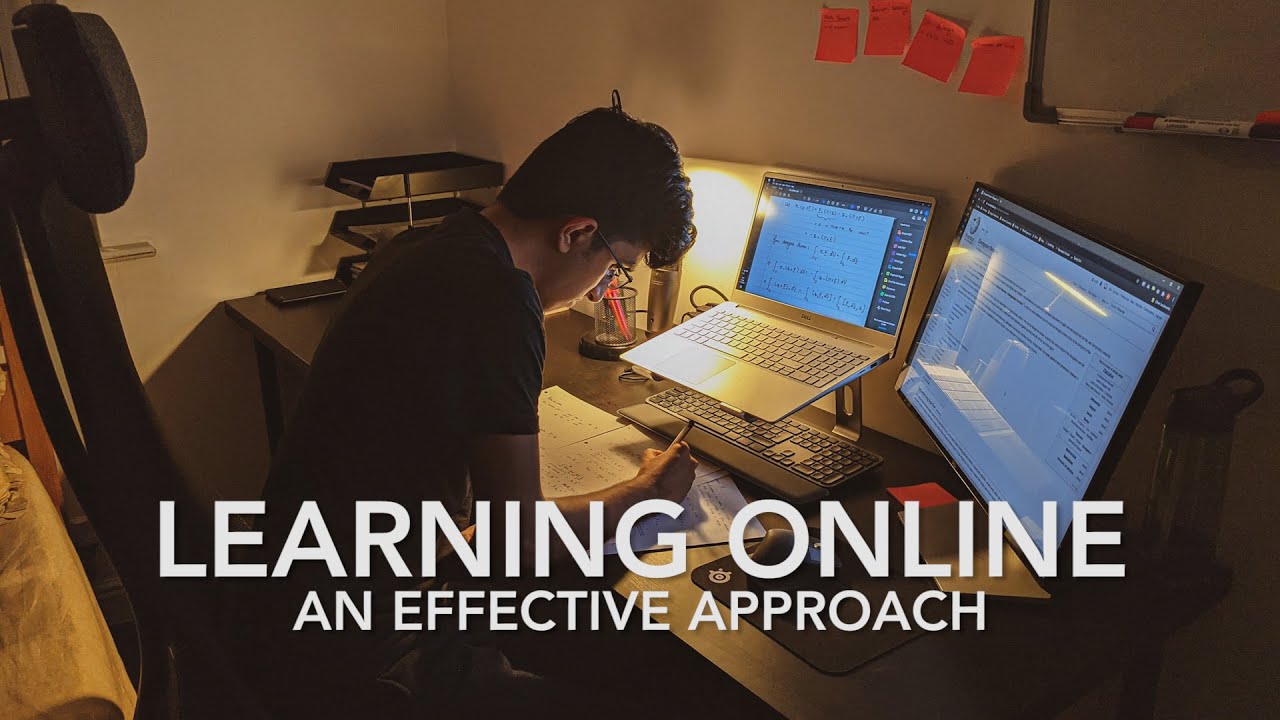
Learning Online Effectively: GCSE's and A-levels
11:35

Learning Online Effectively: GCSE's and A-levels

Ray Amjad 07.01.2021 1 169 просмотров 90 лайков обн. 18.02.2026
Поделиться Telegram VK Бот
Транскрипт Скачать .md
Анализ с AI
Описание видео
📷 Follow Me on Instagram: https://www.instagram.com/theramjad/ === Links === - Organised Planner: https://github.com/RehmanAmjad/a-level-resources/blob/master/Weekly%20Planner%20v2%20(B%26W%2C%20Flip%20over%20Short-Edge).pdf - Focused & Diffused Thinking: https://www.youtube.com/watch?v=WTr12dK2Se0 - Physical Pomodoro Timer: https://amzn.to/2JTBscZ - My A-level Organisation Video: https://www.youtube.com/watch?v=ZqaQDZe-p-g - Article against the idea of motivation: https://www.wisdomination.com/screw-motivation-what-you-need-is-discipline/ - Video on Sticking to Habits: https://www.youtube.com/watch?v=G_WDLZ8pYrQ - Video on the Importance of Sleep: https://www.youtube.com/watch?v=oTlJnyF3REs === Timestamps === 00:00 - Introduction 00:29 - Staying Focused 06:29 - Staying Organised / Setting Tasks 08:33 - Staying Motivated 10:02 - Breaking up the Day 10:45 - Sleeping Well 11:25 - Conclusion === Pomodoro Apps === Whilst there are tons of apps, the only one I really recommend is Forest: - https://apps.apple.com/gb/app/forest-stay-focused/id866450515 (iOS) - https://play.google.com/store/apps/details?id=cc.forestapp (Android) If you want a more minimal interface then Goodtime for Android is also good: https://play.google.com/store/apps/details?id=com.apps.adrcotfas.goodtime Note that some of these links are affiliate links meaning I get a kickback when you buy from the website. But, the product is not any more expensive for you.
Оглавление (7 сегментов)

  1. 0:00 Introduction 115 сл.
  2. 0:29 Staying Focused 1383 сл.
  3. 6:29 Staying Organised / Setting Tasks 508 сл.
  4. 8:33 Staying Motivated 351 сл.
  5. 10:02 Breaking up the Day 163 сл.
  6. 10:45 Sleeping Well 149 сл.
  7. 11:25 Conclusion 50 сл.
0:00

Introduction

hey friends and welcome back to the video if you're new here my name is ray and i'm a cambridge student in my second year studying physics and in this video we'll be learning how to effectively learn online as i know that many of you will have online classes and have to self-study over the coming weeks and potentially months so this video will be based on both my experiences of having study online during my final term of my first year of university and when i had study lead back in year 11 and 13. as always time steps will be in the description down below so let's get straight to the video
0:29

Staying Focused

so the number one problem that we all face when studying at home is trying to stay focused the problem arises from the facts we do plenty of activities besides studying in one environment whether it be watching youtube videos playing games texting friends and everything else we associate our environment with all these activities so studying can prove to be more difficult ideally we should go into another room or the library so we could have one environment associated with just studying but since this may not always be the case we need to reduce the distractions and temptations that lead us to do of activities i will briefly mention the most obvious strategy which is to put your phone on do not disturb and away ideally end of a room or just out of mom's reach from where you work i personally keep mine in the bottom shelf of my closet and only check it maybe a few times a day if you're worried that your family may have to call you in case of an emergency then add them as contact so you can bypass the do not disturb mode and they should still be able to call you anyway you should be able to find that feature on your phone and if you can't then just google it that way you can stay at ease whilst getting stuff done next we should try using the pomodoro technique in case you haven't heard of this technique it involves us deciding on a task to focus on and setting a timer for 25 minutes called a pomodoro session during each session we focus on the task at hand and avoid all of the distractions at the end of the 25 minutes we take a five minute break and then repeat another 25-minute perimeter session on the same task or a different task we repeat this then after every four commodore sessions we take a longer 50-minute break instead now this doesn't have to be a rigid structure it's merely a guideline and we can vary the times to whatever works for us whether it be that we focus for 50 minutes and take a 10 minute break or focus for 90 minutes and take a 20 minute break or anything else in between whatever combination we choose this approach has a few advantages number one it means that we won't get tired of focusing as 25 minutes for most people is long enough to get a good amount of work done but not too long that we begin to find ourselves losing focus however if we find that 25 minutes is too short we may choose to do a longer session instead like 40 minutes number two it allows us to focus on a single task at hand when we sit down it can be tempting to jump between different topics and revising whichever one we feel like but by making a commitment there for the next 25 minutes we're only going to focus on for example one set of practice problems in chemistry can help us stay focused number three it helps us to break down large tasks into smaller sub tasks so they're more manageable for example let's say our goal was to go through the entire topic of the electrolysis and chemistry we may set two 25-minute pomodoros to watch some youtube videos explaining the topic whilst making some brief notes then spend another pomodoro turning these brief notes into flashcards and finally spend two more pomodoros doing some exam questions for practice and to test our understanding breaking down tasks like this makes them seem more manageable and achievable number four most importantly ensures we're taking breaks regularly it's a good idea to step back from our work and allow ourselves to relax as we often come back knowing the solution to an exam question that we've been struggling with or some concept to understand could finally click in our brains when we're on our break this is related to focused and diffused modes of thinking in case you're interested i put a link in the description to something explaining this now there are a number of pomodoro apps that you can use for both phones and computers which i will link down below but i personally avoid using apps because when setting or stopping the pomodoro timer there's a risk of checking instagram or snapchat which is only a few taps away and next thing we know we've spent the last 30 minutes scrolling for it and because of that risk i prefer to use a physical timer which i bought off amazon i will leave a link in the description to the one that i use whilst it is 14 pounds the return on investment for me has been huge i no longer have the risk of getting distracted by apps on my phone because i have a way of keeping track of my pomodoros without relying on any devices also the ringing sound it makes when it reaches zero is loud enough that i can hear it over music but its volume can also be reduced i also keep a post-it note next to the timer to tell you how many pomodoros i have done each day as a way of looking back on both the day and the week another tip i often give is that we should keep a piece of paper next to us on which we write down any distractions that come to mind if we wonder how some random person from some club we used to attend is doing nowadays rather than opening up facebook and searching their names find out we should write down that distraction onto a separate piece of paper after doing that for me it feels like i've already done the task even though i haven't then during the breaks we should check in the piece of paper and in most cases we realized we couldn't care less about what such and such a person was doing and now our brain was just making up excuses to not focus over time the more often we do this will realize that most of the distractions are just pointless and over time hopefully they should come up less frequently during our pomodoro sessions but ultimately remember that we may begin to find ourselves getting distracted if the learning begins to feel uncomfortable it may be because we need to understand a new topic for the first time or do an exam question which is too hard and in that case you should just stick to it during that time distractions like wondering how many likes your last photo on instagram got are likely to come up but it's best that we ignore these distractions perhaps by writing them down as i mentioned before and remembering that a sense of discomfort is a good sign that our studying is effective if we find our studying to be too easy we're probably studying wrong by using passive learning techniques like rereading our notes or highlighting or that we're studying a topic which we find too easy think of it like going to a gym and doing weights if we find the weights are too easy then we're using the wrong weights that said we can't move up to heaviest weights otherwise we'll get nowhere we need to use the weights which are just heavy enough to cause us some discomfort when lifting them as this means we're improving and the same line of thinking applies to studying as well i personally find it helpful to walk around the house get some water do some push-ups read a few pages of a book and generally step back from doing work for a period of time in summary stay focused we should put our phones on do not disturb and out of um's reach use a pomodoro technique and adjust the times to our liking but use 25 minutes work five minutes break as a baseline keep a list and write down any distractions that come to mind on them and remember that some sense of discomfort when studying his banter eyes and not using our phones during the short breaks
6:29

Staying Organised / Setting Tasks

now what about staying organized i talked a lot about this in my video on how i stayed organized for a levels in which i explained how i used my paper-based planner so do check that out for a more detailed explanation but i will provide a short summary here basically i don't like using to-do list apps mainly because after making a to-do list and closing the app i just forget about all the tasks that i have to do that day the app isn't always open to remind me and since we want to minimize how often we check our phones because with each time we check it there is a risk of us scrolling through instagram for the next 30 minutes moving away from a mobile app to a physical to-do list can be beneficial for us for those reasons i prefer to use a paper-based planner and sticking it on the wall in front of my desk so it's always in front of me the planner consists of a grid of nine rows going down for tasks and seven columns going across for days of the week i made a small adjustment from my previous version which i featured in that video in this version i added a column p for the priority of a task i had a bad habit of being too ambitious and setting myself as too many large tasks for each day and getting none of them done but if i sent myself a few large tasks i will get them done i find that i can only manage to do three or four large tasks a day which is why i added four rows labeled one two three four slimming myself to four large tasks each day then the following five rows labeled q of any quick tasks which take less than 30 minutes to do the other side is the homework side which i explained in my video on staying organized a link to download this or the previous version without the priorities column will be in the description below now i also find it useful to label them in pomodoro sessions that i think a task will take if i know that i can only manage to do 12 25-minute pomodoro sessions a day then i will make sure that all the tasks and their pomodoro sessions add up to 12. you can figure out how many pomodoro sessions that you can manage a day just by trying out the pomodoro technique for a few days ultimately we should try to be more intentional about which tasks we plan to do each day and try not to switch between tasks too frequently we should work from the highest priority tasks at the top of the list to lowest priority at the bottom for a series of pomodoro sessions and for any quick tasks we can do them before or after lunch whilst waiting for dinner or whenever we want to take a break from doing a large
8:33

Staying Motivated

task now comes a topic of motivation it's pretty common to be lacking motivation when we have no topic tests or exams coming up but let's ask ourselves what is motivation really it's an assumption that we have to be in a particular mental or emotional state to complete a task it's especially true for any task where you have to experience some short-term discomfort for long-term gains like studying to do well in exams or exercising to stay healthy if we really want to get stuff done then we have to cut the link between feeling like doing something and actually getting the thing done after all former nba player jerry wester once said you can't get much done in life if you only work on the days when you feel good so rather than waiting around for a trigger to do the work we should be cultivating discipline by building good and productive habits i have linked some excellent videos on how to build good habits in the description as well as an article on why you don't always need a motivation now whilst this is all true in an ideal world we are all humans after all and can't always obey this logic and are subject to dozens of logical fallacies so one thing i find to be particularly effective is having an accountability partner basically work with one of your friends from school and every day tell them what you plan on doing that day in terms of school work and they will tell you what they plan on doing as well then at the end of each day you check up on each other over text or by calling each other and reflect on the day some things that you could reflect on is what you achieved that day what you could do better next time and how you plan on doing it ultimately having someone who can hold us accountable to getting what we want to be doing done is a good way to ensure actually getting things done now back at school your day
10:02

Breaking up the Day

was broken up by break time lunch time walking around to and from school but being at home the day can seem like one big fuzzy mess and by the end of it you end up asking yourself where did all that time go now breaking up your day can be done by just going on a walk around your neighborhood after lunch or doing some stretches press-ups or generally like size at home or you can have a change in scenery by working in your living room or at your dining table instead you can even call a friend every day at a certain time to give yourself a chance to step back from work and just socialize basically find some opportunities step back from work and give some instructors to your day it could even be watching 20 or 30 minutes of youtube or a tv show after lunch and dinner every day which is usually what i do and lastly
10:45

Sleeping Well

perhaps the most important thing is to ensure you're getting enough sleep every night i would highly recommend watching this 14 minute video about the science of sleep and how it's good for memory consolidation and information processing one of the key things is also getting a consistent amount of sleep sure having eight hours of sleep at night is good but sleeping from 11 p. m to 7 a. m one night and 2 a. m to 10 a. m the following night is not good either because our sleeping is not consistent and it can interfere with our circadian rhythm which is basically our biological clog personally i try to be asleep by 11 pm and wake up at 7 30 a. m which gives me 80 20 minutes of sleep taking into consideration that it takes me about 10 minutes to fall asleep anyways that's it
11:25

Conclusion

from me if you found the video useful then leave a like if not leave a dislike and please let me know why if you have any questions and leave a comment down below and i'll try to get back to you but for now i'll see you next time

Ещё от Ray Amjad

Ctrl+V

Экстракт Знаний в Telegram

Транскрипты, идеи, методички — всё самое полезное из лучших YouTube-каналов.

Подписаться