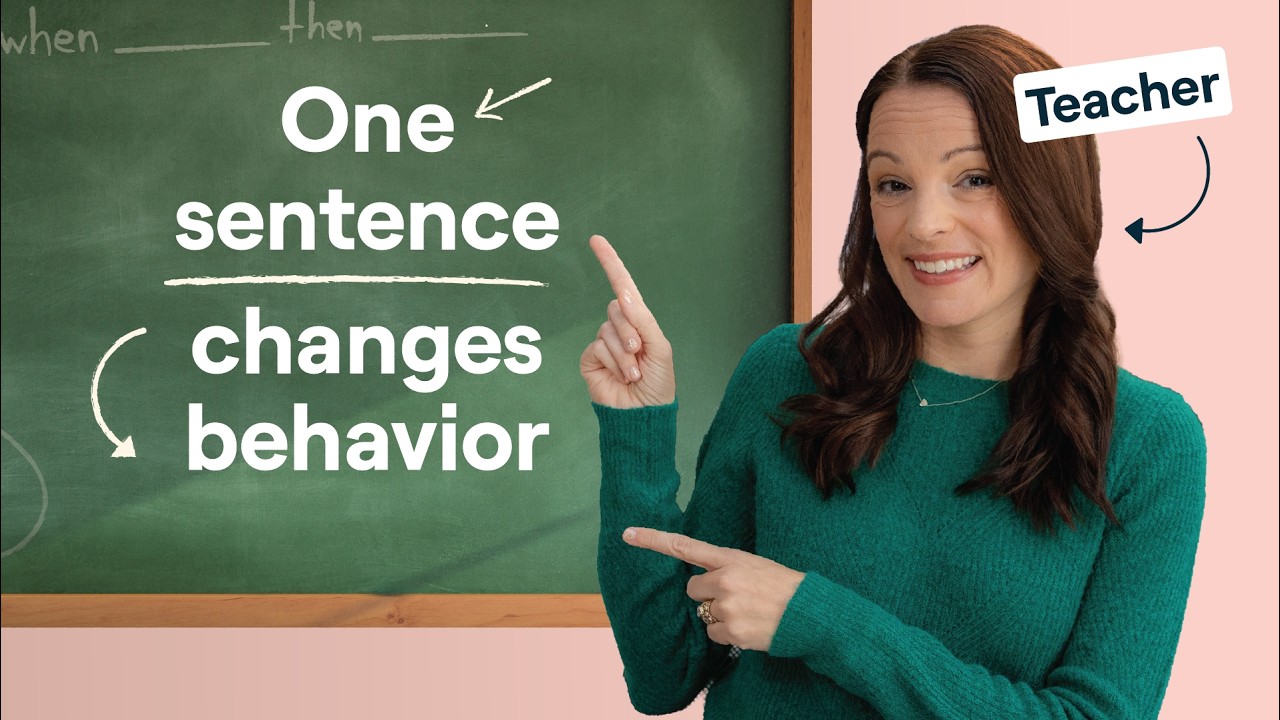
How to give clearer directions in class using when-then sentences

How to give clearer directions in class using when-then sentences

Machine-readable: Markdown · JSON API · Site index
Поделиться Telegram VK Бот
Транскрипт Скачать .md
Анализ с AI

Оглавление (1 сегментов)

Segment 1 (00:00 - 01:00)

Many students, especially those who have trouble with executive function, attention, or regulation, struggle when expectations feel unclear or overwhelming. That's where when then sentences come in. With just one sentence, you can give clear expectations and motivate students to meet those expectations. Here are a few key dos and don'ts. Do talk to your students about when then sentences before using them for the first time. Explain how they work and how they can make a positive classroom environment. Do use when sentences with individual students, too. Use them to address certain expectations, behaviors, or actions, and then co-create the sentences with the student. Do pair the sentences with visual supports. Visuals are a powerful tool that can help all students better understand and remember the information. Don't use when sentences as a threat. They should only be used as a support. Don't phrase when sentences negatively. Instead of when you stop talking, you say when your voices are quiet. Don't stack too many expectations at once. Each sentence should have one thing students are capable of doing. When then sentences create a winwin.

Другие видео автора — Understood

Ctrl+V

Экстракт Знаний в Telegram

Экстракты и дистилляты из лучших YouTube-каналов — сразу после публикации.

Подписаться

Дайджест Экстрактов

Лучшие методички за неделю — каждый понедельник