2-Minute Neuroscience: Subarachnoid Hemorrhage

2-Minute Neuroscience: Subarachnoid Hemorrhage

Machine-readable: Markdown · JSON API · Site index

Поделиться Telegram VK Бот
Транскрипт Скачать .md
Анализ с AI

Оглавление (1 сегментов)

Segment 1 (00:00 - 01:00)

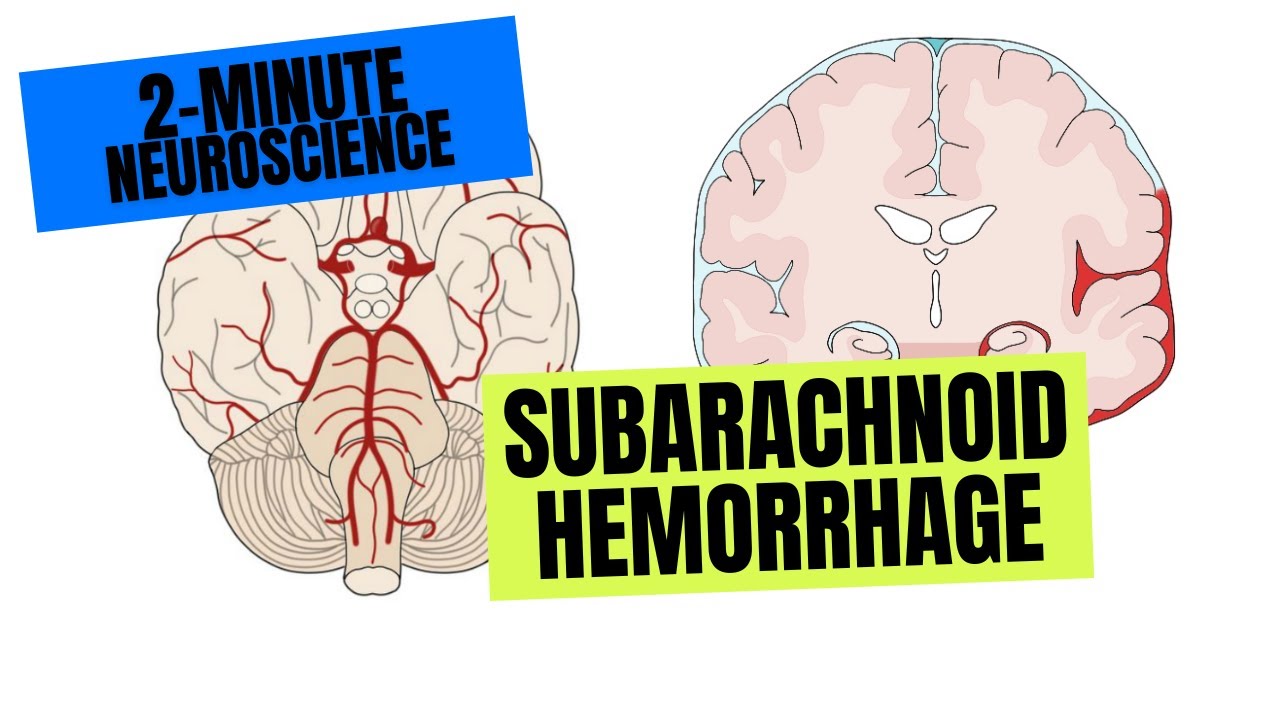
Subarachnoid hemorrhage is bleeding into the subarachnoid space, the thin space between two layers of the meninges: the arachnoid mater and pia mater. The subarachnoid space is normally filled with cerebrospinal fluid. Subarachnoid hemorrhage is a type of stroke, and a medical emergency with a high risk of mortality. This video focuses on non-traumatic, or spontaneous, subarachnoid hemorrhage rather than subarachnoid hemorrhage caused by trauma, which often involves a different clinical course and treatment. Spontaneous subarachnoid hemorrhage can be caused by a variety of conditions, but the most common and severe cases typically result from the rupture of a brain aneurysm. Subarachnoid hemorrhage usually begins suddenly, with a severe headache that develops within seconds, sometimes referred to as a thunderclap headache. Patients often describe the headache as the most severe headache they’ve ever experienced. A variety of other symptoms may also occur, including vomiting, neck pain or stiffness, loss of consciousness, or seizures. Diagnosis typically involves a CT scan to look for blood in the subarachnoid space. If the CT scan is negative but suspicion of subarachnoid hemorrhage remains high, a lumbar puncture can be done to examine the cerebrospinal fluid for red blood cells or xanthochromia, a yellowish discoloration of cerebrospinal fluid caused by the break down of blood cells. Once subarachnoid hemorrhage has been confirmed, vascular imaging can be used to locate the source of the bleeding. Treatment aims first to address the cause of bleeding; if an aneurysm is identified, it is typically treated to prevent blood from entering into the aneurysm. Then, patients are monitored and treated to prevent complications such as rebleeding, brain ischemia, and hydrocephalus.

Другие видео автора — Neuroscientifically Challenged

Ctrl+V

Экстракт Знаний в Telegram

Экстракты и дистилляты из лучших YouTube-каналов — сразу после публикации.

Подписаться

Дайджест Экстрактов

Лучшие методички за неделю — каждый понедельник