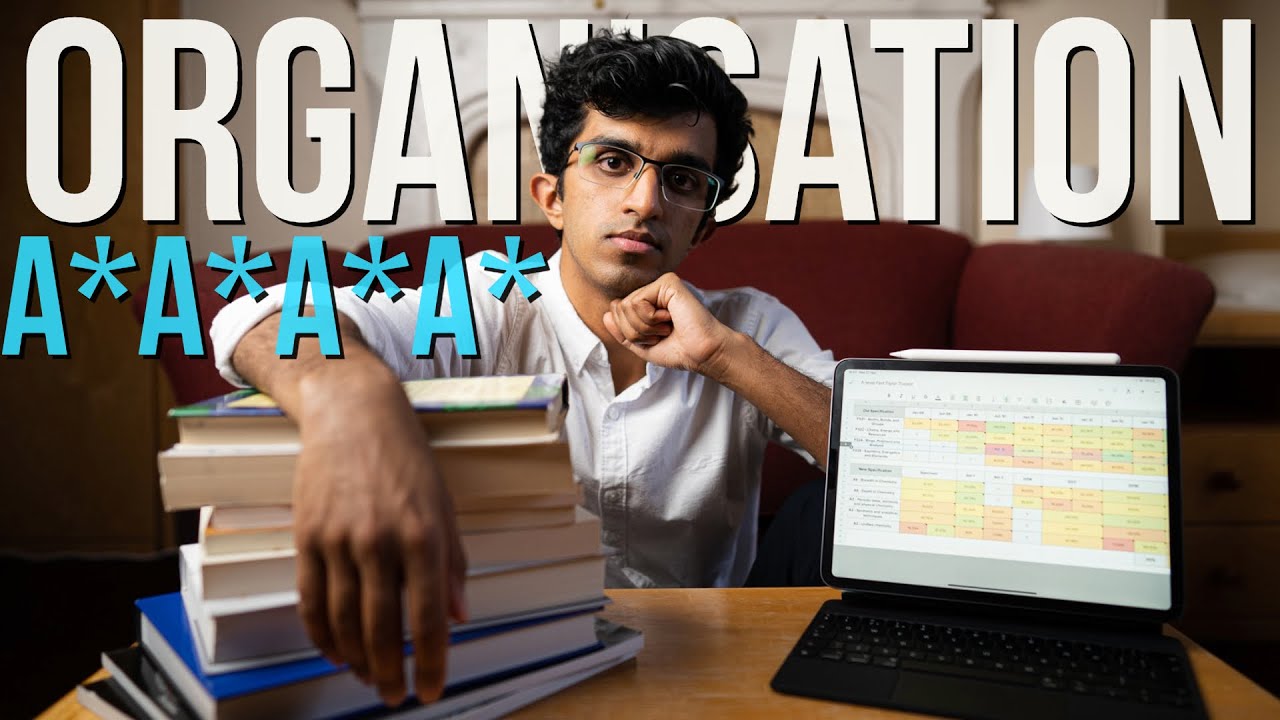
My A*A*A*A* A-level Workflow (Cambridge Student)
11:34

My A*A*A*A* A-level Workflow (Cambridge Student)

Ray Amjad 30.09.2020 8 270 просмотров 455 лайков обн. 18.02.2026
Поделиться Telegram VK Бот
Транскрипт Скачать .md
Анализ с AI
Описание видео
📷 Follow Me on Instagram: https://www.instagram.com/theramjad/ Watch my series on Studying Effectively ➔ https://youtube.com/playlist?list=PLTiA09lKvQngUUDDDO-IEsCoNXF_eWVkz === Timestamps === 00:00 - Introduction 00:40 - Breakdown of my Workflow 01:18 - 1. Using the Specification 02:31 - 2. Learning the Content in Class 04:12 - 3. Adding To Class Notes & Turning into Flashcards 06:48 - 4. Adding Flashcards to Anki 08:27 - 5. Doing Practice Questions 09:10 - 6. Doing Past Papers 11:14 - Conclusion === Links === - Download Anki: https://apps.ankiweb.net/ - Learn to Use Anki: https://youtu.be/Pn9IbAfpwuw - Ali Abdaal's Retrospective TimeTable: https://youtu.be/b7o09a7t4RA

Оглавление (9 сегментов)

  1. 0:00 Introduction 156 сл.
  2. 0:40 Breakdown of my Workflow 119 сл.
  3. 1:18 1. Using the Specification 283 сл.
  4. 2:31 2. Learning the Content in Class 368 сл.
  5. 4:12 3. Adding To Class Notes & Turning into Flashcards 567 сл.
  6. 6:48 4. Adding Flashcards to Anki 356 сл.
  7. 8:27 5. Doing Practice Questions 154 сл.
  8. 9:10 6. Doing Past Papers 434 сл.
  9. 11:14 Conclusion 78 сл.
0:00

Introduction

hey friends and welcome back to another video if you're new here my name is ray and i'm a cambridge student going into my second year to study physics and last year i achieved 40 stars at a level in this video i'll be going over my workflow from first learning piece of content in class to eventually doing past papers weeks before my exam as always timestamps will be in the description down below but before i start remember not to blindly follow my workflow this video is solely to serve some guidance for how you could approach a levels plenty of people have other approaches and do just as well so while you can copy exactly what i did pay attention and realize if some pots aren't working for you and figure out what changes should be made to your workflow to make them work for you so studying for a levels basically boils
0:40

Breakdown of my Workflow

down to three things learning the content remembering the content and applying the content so based on this i created a six step workflow which was number one using the specifications guide my learning number two learning content class number three adding to my class notes and turning them into flashcards number four i'm going through my flashcards using an app called anki throughout the year number five you're doing practice questions and number six doing past papers or weeks and months before my exams the first five steps would be repeated throughout the year for every topic i covered uh whilst the sixth step would happen later on in an academic year so my first step was to
1:18

1. Using the Specification

use specification as a guide for my learning if you don't know what specification is it's basically a document made for subject teachers created by your exam board and it tells them exactly what to teach you despite it being made for teachers many students still use it to guide their learning and you can download yours for each of your subjects from your exam board's website for each subject i use a relevant specification as a guide to stop me from getting lost in class and to help me see how the topic i was learning fits into a wider picture otherwise it's quite easy to lose a forest for the trees and not know which topic your teacher will cover next how much content you've covered and how much you have left to cover it's also useful in checking that your teacher has covered everything in the topic after they finish teaching it because sometimes they can't forget in which case you should politely remind them or learn it for yourself rather than printing out the specification i will download the specification and store it on google drive and use a built-in features to highlight and make comments on the specification as i was going through the course then about two or three months before the exam i would carefully read through it and check that i had covered everything from the course if i didn't understand what a certain bullet point meant then i would ask my teachers during the lesson or email them the specification also gave me a way of organizing my notes and flashcards which i'll talk more about later secondly i would learn the content in
2:31

2. Learning the Content in Class

class because of the specification i knew exactly what the teacher would be teaching as part of the topic in class and i would make rough notes during the class in my class book on my refill plan some students just try and write down almost everything the teacher is saying but i think this does more harm than good because they end up focusing more on the process of transcribing the words rather than the words themselves so my advice is that when you're learning the content for the first time it's better to focus on what is being taught and trying to understand it drop your pen and forget about making notes and just pay attention then try to engage with the material as it's coming into your brain rather than just having information flowing in your brain you should have some information flowing out by that i mean try to relate what you're learning to what you already have learned something you're covering in class may remind you of something from gcse or something you learned two weeks ago if so try and make that connection in your head after the teacher finishes explaining a small segment then jot down a few notes and diagrams usually they take a pause for the class to get anything important down before erasing the board at this point you can usually ask them any questions or ask them when they set the class off on an exercise i found having this mix of focused periods of concentration and shorter periods of taking notes in between was better than actually trying to take notes around the whole lesson this is especially true when you're trying to understand some new difficult concept for the first time so at the end of the week in my class book i would have rough notes and any practice questions that my class attempted from that week remember that these notes are meant to be rough don't bother doing any fancy highlighting or calligraphy or using pretty colors your focus should be on understanding the material itself when you're introduced to it for the first time next i would begin the process of adding
4:12

3. Adding To Class Notes & Turning into Flashcards

to my class notes and turning them into flashcards there's little point in making class notes if you never look back at them and the best and most effective way to look back at them is to use space repetition and active recall if you haven't heard of these two learning techniques i would recommend watching my video how i remembered everything for a level which is linked to my above right now so almost every weekend for whatever topic i finished that week i would type up my rough notes onto a word document that i created for that topic the document would contain a table of two columns with the left smaller than the right the left side of the table would be for any keywords such as boltzmann distribution for chemistry whilst the right side would contain any information from my class notes that i had to do with that small keyword and remember i would know what counts as a topic and where a topic began and finished by looking at the specification here i would then use online resources such as subject specific youtube videos relevant websites or cgp revision guides to add to my bullet points this would help me flush out my notes and fill in any gaps and i would often screenshot any diagrams that i liked and put them in my notes if you have seen my organization video then you may have noticed that on an app called trello i list all the resources i would use to add to those notes looking back sometimes i think i use a bit too many resources so it's useful to find three to five good ones that you can rely upon and trust afterwards i would have read through the bullet points and make sure i understood everything and could explain in my own words if i couldn't then i would do some googling and answer any questions i have after adding all this information to my notes i would then organize the information and begin to turn them into flashcards which i will talk about in the next step i think this approach has three main advantages number one at the end of every week i could look back on topic understand it and fill in any gaps using online resources and change your wording to something else that made more sense to me remember you should try and understand the topic soon after you cover it to do one topic test if you keep putting off understanding a topic then you will have to try and understand dozens of topics for the first time weeks before your exam which will be stressful so it helps to review and understand the rough notes which you make in class by flushing them out with online resources number two having everything on one word document helps me see the topic as a whole and see how everything relates together before i start to make flashcards if you straight away then you may realize two flashcards end up quite similar or that you're missing some information and you spend more time going back and changing their flashcard number three the process of adding to my class notes was a middle step that allowed me to capture the best parts of many different online resources that made the most sense to me
6:48

4. Adding Flashcards to Anki

afterwards i would turn the bullet points from my notes into question answer flash cards and store them digitally in an app called anki if you haven't had a vanquier don't know how to use it i would recommend watching my video which i have linked above right now like i said before there isn't much point in making notes if you're never going to look back at them again and when you do you want to review them at the most optimal time and anki can help with this because it combines the two most important principles in learning space repetition negative recall with space repetition anki effectively decides when you should next review each piece of content based on how comfortably you can answer the question of the flash card you make this involves going through anki almost every day which isn't really as difficult as it sounds i could go for about a hundred flashcards during the hour i spent commuting to and from school but anki often told me to go through between 20 to 80 a day so i had time spent ultimately this meant that i would repeatedly go over anything that i learned in class and understood well thanks to supplementary material i used and the best part is as long as i used anki every day i never had to plan which topics to go over which days depending on how easily i could answer each flashcard and he would decide that for me because of this i didn't have to make a revision timetable which was good news for me because i always struggled to stick to one throughout the year as i covered more and more topics and repeated these steps my iq library would grow but it wouldn't actually take me much longer to go through all the flashcards i had you each day because the flashcards i made earlier would end up coming up less frequently because of space repetition doing this over weeks and months meant that i could remember everything from my a levels even the smallest details with a little effort
8:27

5. Doing Practice Questions

and next i would go into practice questions throughout the year anki is useful for learning the material and ensuring it stays fresh in your mind but it's vital that you still apply the content you're learning as i usually went through the content by using anki during my commute school i mostly reserved my free periods for doing practice questions these were usually questions that my teacher said as homework but in the case that they didn't set any i would often go over questions from websites such as physics and math tutor i didn't have as robust a system here because my teachers did a lot of the hard work and giving us questions to do based on the topics we did early in the year but i would suggest that if your teachers don't do this but you still want a system to follow then watch ali abdullah's retrospective timetable video
9:10

6. Doing Past Papers

finally two to three months before my exams i would begin to do past papers you can see how i kept track of which past papers do which are days and my scores in my organization video so i would start off by doing a past paper for each of my subjects every three to four days and gradually reduces intervals such that i had attempted every past paper that i wanted to do with three to four weeks to spare before the relevant exam then in those final weeks i would redo any past papers that i scored low on and take time to hammer out any small misunderstandings i had generally you get questions wrong in past papers due to either misunderstanding or a mistake and i had a plan to tackle both for misunderstandings the days in between doing each past paper on that subject i would use youtube online resources or helps help from my teacher to clarify any misunderstandings and figure out why i got that question wrong after doing that you can reattempt the same question or a similar question to check that your understanding has actually improved i knew many students who would go straight from one past paper to the next without taking some time in between to pause and reflect and they wouldn't see their scores improve as much even if they did they would have to do much more past papers to achieve the same results as someone who did take some time out between papers to pause and reflect as for tackling mistakes i would keep a mistakes file for each of my subjects and split it up by the main topics and specification after completing a marketing past paper i would then add any mistakes i make to that file and try to learn from them if my understanding was right but i didn't use the right keywords that the markzware wanted then i would change the wording of some of my flashcards to use those keywords and make them bold so the next time i go with the flashcard i know i have to use that word specifically eventually after doing a few past papers i would spot trends in the mistakes i commonly make out of habit and then i would think of steps that i can reduce the chances of making those mistakes i would even remind myself of my common mistakes before doing any practice past paper or my mocs so i can develop the habit of looking out for those mistakes in time for my real exam
11:14

Conclusion

but yeah that's basically it hopefully that gave you a good overview of how i studied for a-levels and gave you some ideas of which you can incorporate into your own workflow i cover a lot more advice in my a-level playlist so do check that out and if you found the video useful leave a like if not leave a dislike and let me know why as always thanks for watching and i'll see you next time

Ещё от Ray Amjad

Ctrl+V

Экстракт Знаний в Telegram

Транскрипты, идеи, методички — всё самое полезное из лучших YouTube-каналов.

Подписаться