9 Tips for Achieving A*'s at A-level (Cambridge Student)
15:34

9 Tips for Achieving A*'s at A-level (Cambridge Student)

Ray Amjad 06.09.2020 5 293 просмотров 352 лайков обн. 18.02.2026
Поделиться Telegram VK Бот
Транскрипт Скачать .md
Анализ с AI
Описание видео
📷 Follow Me on Instagram: https://www.instagram.com/theramjad/ === Timestamps === 00:00 - Introduction 00:39 - 1. Understand as you go along 02:56 - 2. Pay attention in class 04:57 - 3. Be proactive in your learning 07:48 - 4. Realise when things aren't working 09:14 - 5. Ask for help 11:31 - 6. Work consistently throughout the year 12:51 - 7. Make the most of your free's 13:21 - 8. Work with friends wisely 14:06 - 9. Know that it will be hard 15:20 - Conclusion === Links for Motivation Being a Myth === - Wisdomination Article: https://www.wisdomination.com/screw-motivation-what-you-need-is-discipline/ - Ali Abdaal's Video: https://www.youtube.com/watch?v=kzAuvOr-YsM - Jeff Haden's TEDx Talk: https://www.youtube.com/watch?v=dLFqoofiiBg
Оглавление (11 сегментов)

  1. 0:00 Introduction 165 сл.
  2. 0:39 1. Understand as you go along 472 сл.
  3. 2:56 2. Pay attention in class 422 сл.
  4. 4:57 3. Be proactive in your learning 611 сл.
  5. 7:48 4. Realise when things aren't working 281 сл.
  6. 9:14 5. Ask for help 457 сл.
  7. 11:31 6. Work consistently throughout the year 288 сл.
  8. 12:51 7. Make the most of your free's 119 сл.
  9. 13:21 8. Work with friends wisely 159 сл.
  10. 14:06 9. Know that it will be hard 250 сл.
  11. 15:20 Conclusion 56 сл.
0:00

Introduction

hey friends and welcome back to another video if you're new here my name's ray and i'm a cambridge student going into my second year to study physics and last year i achieved 40 stars at a level so in this video i'll be going over the nine lessons i learnt from my two years at sixth form this video will be based on my own experiences but won't focus specifically on any one subject if you want to see my subject specific approaches then i would suggest you watch some videos from my a level playlist which is linked above also i would suggest if you're a new year 12 student then you bookmark this video and watch it again in a few weeks because you'll better be able to relate to some of the things i'm going to talk about but as always timestamps will be in the description so let's go straight to the video so my first and most important tip
0:39

1. Understand as you go along

is to understand the concepts as you go along the whole point in revision and revising is that you're reviewing material that you've already learned and understood before so you can refresh your memory but many students end up using their revision time to learn a concept for the first time because they didn't make an effort to understand it when it was being taught in class whilst it is okay if they don't both make an effort to understand one or two topics because they want to try to understand it later the problem arises when they make this into a bad habit by putting off understanding things over and over again they constantly avoid making an effort to understand concepts so by the time they start revising for their exams they're realizing to understand almost a whole a level course for the first time this means that rather than revising they're learning things for the first time that they could have done most before when they had more time but now they don't have the time to understand all the concepts for the first time for all their subjects because they have a month or two left until the exams so they end up stressed and that just makes things worse you don't want to be in a situation where you have to learn and try and understand everything weeks before the exam you want to understand topics throughout the year so when you're revising then it's much easier because you're refreshing your memory as you would have understood it before so i would recommend asking yourself questions like do i really understand this could i rewrite this in my own words could i explain it to someone else and if you have any doubts in answering any of these questions do some topic tests to try to explain it to someone else in your own words such as a friend or family member if you get questions wrong or find yourself struggling to explain something it means that you have to go back and make an effort to understand it from your teacher and book or youtube videos i would add that it's best to ask these questions when you're exposed to something for the first time because many year 13s think they understand the topic but the reality is they're just familiar with a topic because they've been exposed to enough but they still can't answer questions on the topic by trying to explain it and attempting exam questions they can identify gaps and take the appropriate steps to fix them ultimately remember there's a difference between revising and learning you should be learning and understanding the topics throughout the year so when you're revising you're only refreshing your memory rather than learning it for the first time
2:56

2. Pay attention in class

on that note my second tip is to pay attention in class i know that everyone says this but no one offers advice on how to do it so off my own you need to strike a balance between listening to a teacher and making notes some students make too many notes and end up transcribing what the teacher is saying word for word especially if they're using a keyboard they have their full attention captured by the recording process rather than the understanding process they see the words but they don't understand their meaning whereas other students just pay attention don't make any notes then lie to themselves saying that they'll remember it even though they will forget it in a few days it's about finding the balance between the two which comes with practice as the teacher finishes explaining a small section it's worth writing a few short sentences or bullet points or even drawing a diagram that captures the essence of what the teacher just said if your teacher goes quite fast then you can just make a few bullet points during the lesson and straight after the lesson spend some time flushing them out based on what they said this also helps the information stick as you're trying to recall it soon after the lesson ultimately it's about finding a good middle ground between these two extremes and finding that middle ground comes with practice another thing i found useful is acknowledging that whilst you have information flowing into your brain when your teacher is speaking you need to have information flowing out as well by this i mean one teacher is speaking or explaining a topic try to link it to things you already know as it's being taught for example learning about some event in history may remind you of something else which you could before if so make the link in your head i sort of imagine knowledge as being a huge tangled web each time a new piece of information appears in my head i need to quickly attach it to a web by linking it to other bits of knowledge i know otherwise it'll disappear the more places i can link it to the longer it'll stick around so one example of having information flowing out is that when you're learning something it's useful to build a picture in your head of the concept which captures the essence of the ideas that you can then draw into your notes and this links into
4:57

3. Be proactive in your learning

my third piece of advice which is to be proactive in your learning going forwards into a level and potentially university you can no longer be so passive in your learning while so many students get away with being passive at gcse it's much more difficult to do so at a level and especially university by being passive i mean that if you get a bad mark in a topic test then you carry on doing the same thing over and over and you don't take time to learn from your mistakes or that when you don't understand the topic you just sit quietly in class and never bother to ask a teacher or to google it later all that you expect to be spoon-fed resources to help you revise rather than finding them yourself if you are proactive in your learning rather than saying i don't understand this you would ask yourself why is it that i don't understand this is there something else i need to learn then you go out your way and find videos online that explain the topic or make an effort to meet with your teacher outside of class and have them explain it to you or even ask your friends who understand it to explain it to you it also means that you take some moments to assess your situation and think about what you do know what you don't know and what you can do to improve going forwards this can even be done when traveling home from college rather than staring at your phone just pause and think about what you will do when you get home to make sure you've understood those topics from that day as a proactive student you're willing to find difficult problems to push yourself to a star boundary and if you find yourself struggling with questions then you will find slightly easier ones i find that most learning happens when you work slightly outside your comfort zone doing a lot of questions you're comfortable with isn't going to help you much neither is doing a lot of questions way beyond your comfort zone mostly because of late negative experiences of thinking you can't do the subject or something whereas doing questions just outside your comfort zone increases the size of your comfort zone then you'll be able to find questions which are beyond your comfort zone again and gradually as the size of your comfort zone increases your ability and the subjects will increase too instead i find that many students think that the more questions they do the better they'll get but instead it's about which questions you do as well and most before the exam as a proactive student you would ask yourself if the exam were tomorrow what topic am i most afraid of coming up then going back and relearning the topic testing yourself with questions and then asking yourself that question over and over again i find that doing this helps you improve the most and target the right topics in the final few months also when many students are cramming past papers before exams they don't improve as much as others because they aren't proactive and take some time even five minutes to pause and reflect on their next plan of action after knowing which topics are strong and which ones they're weak at instead they jump straight to the next past paper and never bother to improve their understanding about why they got the questions wrong which i did ultimately they keep getting the same questions wrong and never really improve and being proactive links to my next bit
7:48

4. Realise when things aren't working

of advice which is to realize when things aren't working after studying for a topic test and getting a bad score it's easy to think well i should have studied harder or more instead it's better to ask yourself maybe the way i'm studying isn't working and by being a proactive student you look online and see what other students are doing and compare what you're doing to them you would ask yourself is highlighting a waste of time is it really reading notes and the answer to both questions is yes in most cases i think the difference between those people who get eight stars and those who dream of getting e-stars is that those people who do take some time to assess their situation and realize when something they're doing isn't working and take their appropriate actions to do something about it maybe the way you study at gsse no longer works for a level in which case you'll have to find some other techniques rather than thinking you have to study more you can watch youtube videos like the ones i made or even ask some friends who did well in the topic test about how they studied or even speak to your teachers and tell them how you study and maybe they can offer some advice because they'll know what effective studying for that for their subject looks like ultimately assess your situation and know when something you're doing isn't working don't fall into the habit of using all techniques despite them not working and don't be reluctant to changing something just because you think it's aesthetic or because you've done it for such a long time
9:14

5. Ask for help

and another part of being a proactive student is asking for help i've seen so many friends at six film when they get stuck instead of asking for help they just sit there and struggle in silence and proceed to not understand the next 40 minutes of the lesson you should ask your teachers questions whenever you don't understand something they are explaining because teachers are literally being paid to help you just ask the question because chances are someone else is thinking the same thing but is too afraid to ask it i've asked hundreds of questions from mia level and people always knew me as a person who'd always ask questions every lesson many of them turned out to be quite stupid but many of them also turned out to be quite interesting and really improve my understanding and besides no one really remembers a stupid question you've asked everyone's too worried about what's going on in their own lives to worry about what question you've asked equally you can ask your teachers after the lesson or during some lunchtime revision session or when the class is being set out on some exercise but that all depends on your teacher's availability and i would say that teachers are more willing to help you if you ask them more specific questions for example if your teacher is presenting a work solution rather than saying i don't understand the whole thing ask how would i go from step three to step four being able to pinpoint exactly what you're stuck on means that you can make the most out of your time and the teacher's time and usually teachers are really grateful for this the more specific your questions the better and often the process of just coming up with a specific and well-worded question may lead you to solve the problem on your own and if you're asking something specific about exam question don't fall into the trap of thinking i just need to know the answer you should be thinking i need to know why this is a correct answer this is much more helpful in the long run and if your teacher just tells you the answer to a question you should say well that's all well and good but how can i get to answer on my own that's a million dollar question but of course be a bit more polite when saying it also the added benefit is that if he asks questions your teachers will have good things to write about you in university references in most six films all a level teachers write a little bit about you and then another teacher compiles all the information into a single reference
11:31

6. Work consistently throughout the year

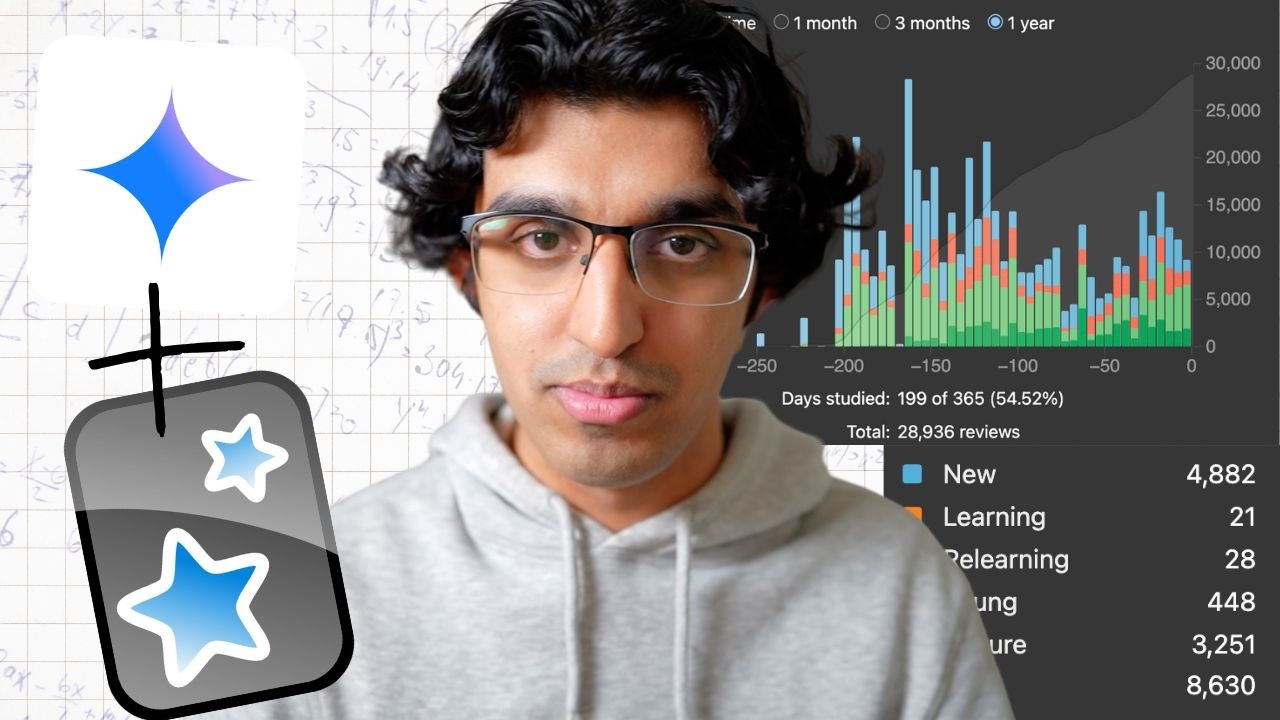
and my next bit of advice is to work consistently throughout the year cramming does not work and you hear everyone say the same thing but let me give some context imagine you're an athlete who skips all their training sessions for most on end and then you spend days before your big game trying to get back in shape or you're a musician and you never practice and then you practice non-stop for days leading up to your exam you won't perform well in both cases doing consistent practice throughout the two years will go a long way it might seem like a lot but it really isn't if you were practicing the rubik's cube for one hour a day seven days a week you would improve much more and perform much better than if you practice for seven hours one day a week despite it being the same amount of time i think that using a flashcard app called anki was incredibly useful for helping me revise consistently throughout the year if you haven't heard of it i would recommend watching my video on it which is linked above right now during my one hour commute per day i went through flash cards and the anki app on my phone and because anki decided which flash cards i had to do on which days i didn't have to put much time into planning my revision ultimately doing preparation over the long term can improve self-confidence and having self-confidence can reduce stress and positively impact your performance on the exam but to avoid being arrogant your confidence has to be based on something real like putting in time and effort over the long term to prepare for
12:51

7. Make the most of your free's

exams and that leads me on to my next bit of advice make the most of your freeze i think it's especially important if you're going to a brand new sixth one with lots of new people you can meet and become friends with it can be easy to get caught up in making friends and putting work aside for the first few months by wasting your freeze chatting to people wasting freeze is a bad habit which is difficult to break especially when you need your freeze closer to exam it's better if you start using them wisely from the beginning because it's a good habit and it shows your friends that you're willing to take your work
13:21

8. Work with friends wisely

seriously and on that note i know people like working with friends on homework problems i think it can be helpful if you do it right and i think the right way to do it is to try as many questions from the homework sheet as you can on your own as it gives you the ability to use your own information and knowledge afterwards work with friends and discuss the problems maybe you could do a question that your friend couldn't and vice versa that way you can help each other most efficiently and save a lot of time you would otherwise spending problems together which you can do individually if you work with others without trying the problems yourself first you won't know if you're using information that you foster yourself or that others have given to you it's very easy to trick yourself into thinking that you know something that you don't actually know and my
14:06

9. Know that it will be hard

final point is that it is going to be a challenge but you have to remember that almost everything worthwhile in life is going to be difficult in some way or another so it's better to reframe your mindset and think of a levels as more of a challenge that you work towards conquering rather than saying it's too difficult and giving up personally whenever i thought oh no i have so much work to do i reframed my attitude to so let's make a start and next thing i know i'll be done i think having a negative attitude about your abilities and your work can have damaging effects on your performance it's better to reframe things to be more positive whenever possible and on that note i have become increasingly convinced that motivation is a myth you don't need motivation to get stuff done and the sooner you realize this the better because you can accomplish so much more in life because robin's sitting around waiting for the right moment when you feel like doing something the reality is that moment is never going to happen so you might as well do it anyway i think the thing that separates the dreamers from the doers are that the doers don't wait around until the right moment they just start doing it there are some links i left in the description which helps to explain why you don't need motivation skill stuff done so i would recommend checking those
15:20

Conclusion

out and that's basically it if you found the video useful then leave a like if not leave a dislike and let me know why otherwise leave a comment down below if you have any questions and i'll try to get back to you but as always thanks for watching and i'll see you next time

Ещё от Ray Amjad

Ctrl+V

Экстракт Знаний в Telegram

Транскрипты, идеи, методички — всё самое полезное из лучших YouTube-каналов.

Подписаться