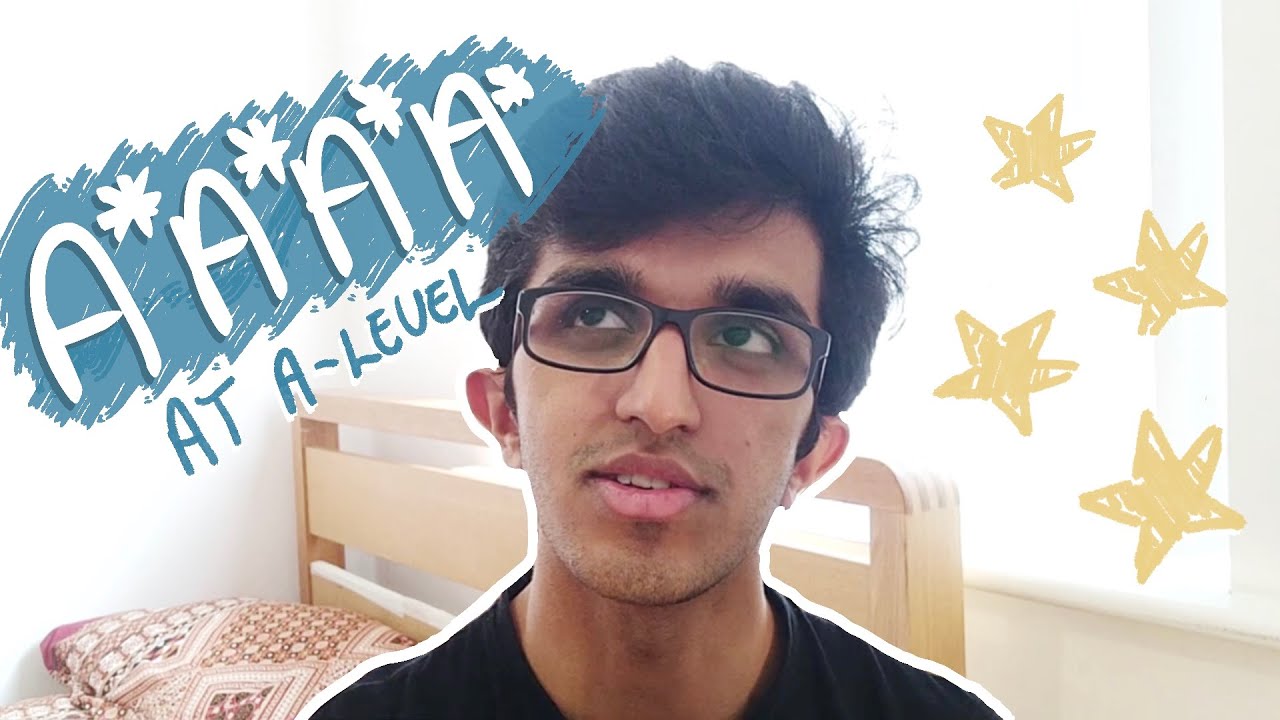
My A-level Exam Technique
13:23

My A-level Exam Technique

Ray Amjad 22.03.2020 3 171 просмотров 160 лайков обн. 18.02.2026
Поделиться Telegram VK Бот
Транскрипт Скачать .md
Анализ с AI
Описание видео
📷 Follow Me on Instagram: https://www.instagram.com/theramjad/ === Timestamps === 0:00 - Introduction 0:39 - How I Read Questions Properly 3:29 - Thinking Before You Write 5:22 - Being Specific in Answering Questions 6:48 - How I Checked My Answers 8:43 - How I Worried Less About Exams and Stopped Panicking 10:31 - How I Dealt with Really Hard Questions 11:34 - Final Bits of Advice 13:06 - Conclusion
Оглавление (9 сегментов)

  1. 0:00 Introduction 129 сл.
  2. 0:39 How I Read Questions Properly 464 сл.
  3. 3:29 Thinking Before You Write 335 сл.
  4. 5:22 Being Specific in Answering Questions 225 сл.
  5. 6:48 How I Checked My Answers 311 сл.
  6. 8:43 How I Worried Less About Exams and Stopped Panicking 265 сл.
  7. 10:31 How I Dealt with Really Hard Questions 187 сл.
  8. 11:34 Final Bits of Advice 246 сл.
  9. 13:06 Conclusion 33 сл.
0:00

Introduction

Hey friends, welcome back to my channel. I'm a  first year Cambridge student and I'll be going   through the exam technique I developed in doing  A levels for two years and having set my exams   nine months ago in maths, Further Maths, physics  and chemistry. I hope you get some ideas about   how you can improve your own exam technique as  this can often make the difference between a B   and an A or an A and an A star. And of course  you won't find all of this advice useful. You   don't have to follow everything I did. I just hope  you can get some ideas and develop your own exam   technique. As always, there will be timestamps in  the description below. So my first point will be
0:39

How I Read Questions Properly

about reading the question and I know people say  you read the question, reread it, read it three,   four, a hundred times before you answer it. But of  course, you can still fall into the habit of only   reading the question once and then just writing  down an answer and moving on. And I always put it   in the perspective that I should read the question  at least twice before answering it. Because while   it can be a bit of a pain to have to read the  question again, even though you think you already   know what it's asking you, you'll be much more  likely to answer what it is actually asking if   you read the question. And it can definitely make  the difference of a few marks if you're completely   sure that you haven't misread the question. But  of course, that doesn't mean that you should spend   the whole exam reading one question over and over  because that's not going to help anyone. Also,   during my mock exams, when I had finished the  paper and I went back to read over my answers,   I noticed myself just sort of passively reading my  answers rather than actively looking for mistakes.    So I thought that if I read the question properly  the first time around, it'd be much better because   I'd be much more likely to get it right and even  make corrections then and there than actually   reading it maybe half an hour, an hour or an hour  and a half later after finishing the paper. And   I also found that putting your pen or finger  and moving it across the page as you read the   question can be quite helpful in making sure  you're actually taking in the information from   the question. I wouldn't underline because I would  just find myself underlining everything. And after   answering the question, I would also reread the  question and make sure I had actually answered   what is required. Sometimes I found it useful  to like tick off some of the command words like   describe, explain and whatnot as I had done those  things within the question. And especially for the   long form questions in physics and chemistry,  which is subjects I did, it can be helpful to   go back to earlier in the question for the long  questions when you want to keep track of what's   happening throughout the question, because a bit  of information in part A may be useful for part D,   but you read that bit of information maybe  10 minutes ago. So it is worth going back   to earlier parts of the question and making sure  you're keeping track of what exactly is happening   in this question. So my next bit of advice is  to do with thinking before you write. It can
3:29

Thinking Before You Write

be useful to think for a few seconds rather than  writing the very first thing that comes to mind,   because I found that if I thought about a question  for a few more seconds, then I would save myself   a lot of time in the future, because when I  wrote the first thing that came to mind after   reading a question, I would sort of dig myself  into some kind of hole or one line of thought,   which I couldn't get out of. And only when I  looked at the mark scheme, I was like, well,   if I thought about this question for a few more  seconds or even, I don't know, 30 seconds or so,   I would have been able to figure this out. But of  course, if you have no idea how to do a question   within 30, 60, or however many seconds you decide,  I often left a star next to the question, and I   would move on and then come back to it later on,  because my aim at the beginning of each exam would   be to gain the most amount of marks I can do in  the least amount of time. And of course, this will   vary from person to person. And with that also  comes understanding when to move on. You shouldn't   do it too soon, otherwise you may not see the  solution that presents itself. And ultimately,   I decided that if I kept finding new approaches  on how to do a question, then I'd carry on until I   found something that worked. And if not, and I was  using the same thing over and over without many   results, and I'd come back to it later if I had  time. And of course, this will vary from person   to person too, but you will get a feel of what to  do by doing more and more questions and more and   more past papers. So my next bit of advice is  to do with being specific. Often I would find
5:22

Being Specific in Answering Questions

myself not being specific enough when it came to  doing some exam questions. So like for chemistry,   if I mentioned that electrons were lost from an  atom, then I didn't write down how many were lost,   even though it would be quite easy to work out.   If I was comparing bond strength, and I knew that   X had stronger bonds than Y, I found myself just  writing that X and Y have different bond strengths   rather than making a comparative statement.   And if a product was formed, and I knew that   product happened to be a white precipitate,  then I wouldn't write that down. Basically,   I went from not including as much detail to  including more detail in my answers. And that   came through making a habit and doing more and  more exam questions. And remembering that this   extra detail takes almost no time to include,  and it may well be a marking point. And the   examiner will see this detail and see that you  clearly know your stuff and won't be hesitant   to give you a mark, especially for the longer  form questions. Ultimately, I found myself,   I found that as long as I explained my reasoning  well and included enough detail, then I would be   hitting the marking points. So my fourth bit of  advice is to do with checking your answers. I
6:48

How I Checked My Answers

would always check my answers at the end of each  question to make sure I had actually answered the   question. And for questions I wasn't too sure on  or felt I could have included some more detail,   or I just wanted to check back later on in case  a new idea came to mind, I would put a little   star next to it. And then after finishing  the paper, I would come back to the starred   questions first and see what I could do about  it. And after doing all those starred questions,   if I found myself still having time, then I would  go back and check the other questions. So I sort   of had like a priority of which questions to check  first. And when checking the questions, I also   found it helpful to kind of reread your answer  under your breath just to make sure it actually   sounds all right. Because in one particular mock  question, I found myself writing proton rather   than photon and I lost a mark because of that. And  of course, you don't want to be doing that. And if   I actually read through my answer under my breath  rather than skimming over it, then I would notice   that I have written proton instead of photon.   But just make sure the examiners don't think   you're talking to someone else or something. And  I also found it useful to check off parts of the   question as I completed it. So if, especially the  command words, if the question said describe and   I had described it, then I would check that  off. If it said explain and I explained it,   then I'd check that off as well. Just to  make sure that like I was properly reading   the question and making sure I had answered it.   So my next bit of advice is to do with worrying
8:43

How I Worried Less About Exams and Stopped Panicking

less. It can be helpful. I found to treat exams  as more of a challenge, which you're looking   forward to and telling yourself any nervous  feelings you have are feelings of excitement,   even though it sounds a bit strange. But it does  help reframing the exams just before you go in   because you don't want to get into a kind of panic  frenzy before the exam because not panicking is a   crucial part of doing the exam. If you panic and  you go crazy jumping from one question to another   question and all sorts of like that, then next  thing you know, the exam's already over and you've   only answered about half of the questions or  something. I found myself doing that a few times,   but I found it useful to sort of reframe exams  often to even stay focused or to calm down if you   found yourself getting too nervous or panicking.   I would practice smooth and rhythmic breathing   because I've heard that it allows for a regular  heart rate and regular blood flow to the brain   and whatnot. And it was all about rhythm. So  it doesn't matter if you did four seconds in,   six seconds out, five seconds in, five seconds  out or any other numbers. It's just about having   like a rhythmic blood flow or something. I don't  know. I haven't really done biology for a while,   but it's all about the rhythm and like smooth  breathing. And that may well be useful in your   case if you find yourself struggling to stay  focused or calming down during an exam. So
10:31

How I Dealt with Really Hard Questions

my next bit of advice is to do with letting your  mind wander around a bit, especially when you're   doing a harder question, because if you become so  fixated on one solution that you can see no other   solution, even though you know there is one, it's  useful to relax a bit and sort of let your mind   wander around if you do have the time to do so.   And use this thing called diffuse thinking. In   case you don't know what that is, I would suggest  Googling it or searching on YouTube. Maybe look   around the room for a bit, let your mind wander  and just generally take a maybe 30 second, one   minute break. And next thing you know, you look  back at the question and you realize you find your   mistake in the answer which you've written, or you  even realize that this is what I need to be doing   with this question. But and it's quite useful  for the harder questions, helping you figure   them out. So then my final few bits of advice is  having more confidence in some of your answers,
11:34

Final Bits of Advice

because I got to a stage where I spent too much  time checking my answers and maybe rereading the   same answer many, many times and just generally  wasting my time because of that. It's good to   have a bit of confidence in the answers so you can  just sort of focus on more on which questions are   important rather than spending ages rereading over  the same answers a few times. As well as that,   I would suggest sleeping well beforehand, getting  a good sleeping routine during exam time rather   than staying up late at night cramming. So I used  to always go to bed about 10pm, 10. 30 and wake up   at about 6. 30, 7 in the morning. But of course,  you know what's best for you. And I also bought   a small cheap watch, which I would have on the  table of my exam. So I would set a timer on it   so I can see exactly how much time was left rather  than looking around the hall and seeing wherever   the clocks are left. But of course, it depends on  your exam hall and whatnot. But it's good to just   have something in the corner of your eye just so  you can keep track of the time. But of course,   don't look at it too frequently. Otherwise, you  will find yourself panicking. So that's all the   advice I have. And that was basically my exam  technique, which helped me get four A stars.
13:06

Conclusion

Thanks for watching. Leave a like, comment  and subscribe if you found this video useful.    Leave a comment if you have any other video  recommendations. And I'll see you in the next one.

Ещё от Ray Amjad

Ctrl+V

Экстракт Знаний в Telegram

Транскрипты, идеи, методички — всё самое полезное из лучших YouTube-каналов.

Подписаться