How I Got an A* in A-Level Further Maths (Cambridge Student)
10:07

How I Got an A* in A-Level Further Maths (Cambridge Student)

Ray Amjad 03.10.2019 26 360 просмотров 670 лайков обн. 18.02.2026
Поделиться Telegram VK Бот
Транскрипт Скачать .md
Анализ с AI
Описание видео
Watch the updated version here ➔ https://youtu.be/PXZyVHOMhyA

Оглавление (7 сегментов)

  1. 0:00 Intro 49 сл.
  2. 0:12 Specification 347 сл.
  3. 2:02 Resources 122 сл.
  4. 2:44 Pure Content 203 сл.
  5. 3:59 Decision Maps 425 сл.
  6. 6:38 Statistics 330 сл.
  7. 8:36 Outro 242 сл.
0:00

Intro

Hey everyone, welcome back to my channel, my  name is Ray and I'm studying physical and natural   sciences at Cambridge. So as you can expect  from the title, I got an A star in A-level   further maths this year and I'll be  going through how. So just for context,
0:12

Specification

I did AQA further maths and I did pure, statistics  and decision slash discrete whatever your exam   board calls it. This might be different from  your exam board but I hope the advice I give   will be useful nonetheless. Links to any of the  websites or resources I mentioned will be in the   description down below. So my first bit of advice  is to download your specification. There's a lot   of new content in A-level further maths, some  of the things you'll never have seen before or   anything similar to it before. So the best way  to make sure you know everything that you need   to is to download and use a specification.   So I'd suggest going through it every month   or so as you're learning your content in class  and just making sure everything your teacher's   covering has been covered and that you know  it. If there's anything you're unsure on,   just go ask your teacher because they know the  spec inside out. You can either print it out or   get it on somewhere like OneNote or Google Drive  so you can annotate it on there instead. I went   through my specs several times throughout the  year just to make sure I was covering everything   and towards closer to exam time I went through  it more frequently until I was completely 100%   sure I had all the content down. So I'm going  to be talking about how I revised for Pure,   Discrete and Statistics separately. So for  Pure, aside from learning all the content in   class with the teacher and having class notes, if  you go on Physics and Maths Tutor there should be   some really good notes from the old spec. But just  bear in mind that they won't cover everything.    So while you might find old FP2 and FP3 notes,  whatever old spec equivalent your exam board did,   they might not cover everything and there might  be some new content which you have to learn to.    So for Further Maths you have to make sure you  have a really good understanding of the material.
2:02

Resources

The textbook can be a good resource but you can  find some pretty solid YouTube videos out there as   well. Be sure to search any topics that you don't  understand on YouTube. You don't have to watch a   video by someone who makes A-level videos. You can  watch like a video by Khan Academy on eigenvectors   and eigenvalues to make sure that you know it  completely. And eigenvectors and eigenvalues are   a topic under matrices for AQA Further Maths. The  website Exam Solutions has some really good videos   on some topics which don't have many videos on.   So like second order differential equations and   simple harmonic motion and stuff like that. I made  a few flashcards as well which helped me revise
2:44

Pure Content

for the pure content in Further Maths. Especially  on stuff like finding the determinant of a 3x3   matrix by hand. Which is just a method you have  to memorize. Or the hyperbolic substitutions   for integrals and solutions to second order  differential equations. Basically stuff like   that. It's better to just memorize it rather than  trying to understand why it is the way it is. At   least at this stage. Pure Further Maths requires  a lot of practice compared to other modules. And   I got most of my practice questions from the  textbook. And from a website called Integral   Maths which my school had a subscription to. I  would suggest asking your teachers if they can   get a subscription as well. Because it has some  really good questions on there. And of course   whichever practice set and past papers your exam  board have released. While at this stage there   might be very few. I would suggest rinsing them  as much as possible so you can get as much out   of them. Make sure you've covered all the content  before you do it. Because you don't want to waste   such limited papers. So moving on to decision  maths now. Aside from the practice using integral
3:59

Decision Maps

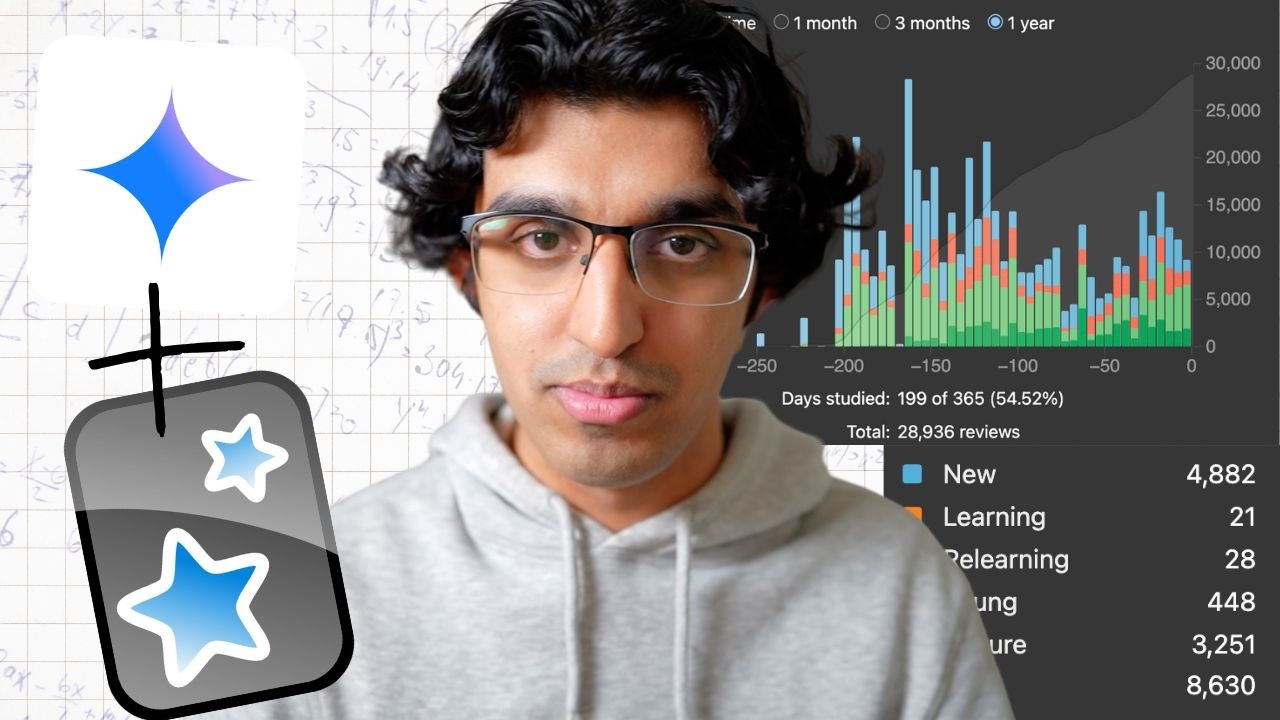
maths and the YouTube videos I mentioned before.   Here's some more advice. So I think flashcards are   definitely a must for decision maths. Because  of the amount of content you have to learn. So   you have to memorize some algorithms. You have  to learn some definitions for graph theory. You   have to learn the properties of groups for group  theory. I would suggest making flashcards on it   all. And using Anki to make those flashcards so  you can go through it regularly. I would suggest   googling what Anki is if you've never heard of  it. Or watching some videos and learning how to   use it. You can get it on both your computer  and your phone. And I should have a series   up at some point on how to use it. It should  be a link somewhere here. But using that to   make your flashcards like I've made over here is  definitely helpful. Also if you do have a graphing   calculator. I would suggest learning how to do  stuff like row operations on your calculator.    And other small techniques. So one example of a  trick you can use on a graphing calculator if you   have one. Is to make the simplex algorithm easier  to do. If you don't know what simplex is then you   can ignore this. But if you do then go to matrix.   And then choose a matrix. I don't know 3 by 8. So   now we have 3 rows and 8 columns. And if I just  start filling this in with a few numbers. It's   quite difficult to do it one handed. And then  I choose a few more numbers over here. And of   course these will be the actual numbers you have  from your simplex table. If you go to row up. Then   you can choose this button to times a row by a  number. So I could times all of row 2 by 5. And   now everything on row 2 is 5 times bigger. I can  choose to add a multiple of one row to another.    So I can choose half of row 2 to be added to row  1. Or I could swap two rows. So I can swap row   1 and row 2. Or I could add one row onto another.   So I could add row 2 onto row 1. And that just   makes doing simplex a whole lot easier. Because  you don't have to do each column separately. You   can have it do whole rows for you at a time. But  ultimately just keep practicing questions. But
6:38

Statistics

remember if you do any old spec questions for the  algorithms like traveling salesperson and whatnot.    The questions may not be as routine as they are  on the old spec when it comes down to your exam.    So moving on to Statistics now. Once again,  aside from doing questions on integral maths   and watching YouTube videos and exam solutions.   Everything I've mentioned before. Here's some more   advice. Flashcards can be useful for some areas  like remembering Yates' continuity correction   or exponential distribution. And some derivations  you have to do and stuff like that. And once again   I'd practice using the calculator. Especially  when it comes to the amount of distributions   you have to know. So the Poisson, binomial,  exponential, normal distribution. Try and get   quick at using these on your calculator. And  if you're doing chi-square tests and you have   a graphing calculator. I would suggest learning  how to use a calculator to do it. You can just   find any old video online from anyone on how  to use it. Ultimately just practice, practice   and practice. Try and get as many questions  as you can. Practice them. Any topics you're   struggling with. Ask teachers for help. Ask them  for more questions. They should be able to find   it for you. Especially if they've been teaching  further maths for quite a while. You can find   some questions from the textbooks which are really  useful. I would suggest doing as many as you can.    But obviously it's unrealistic to set yourself  the target of doing all the questions. So just   do a few questions from each topic. And if you're  confident with that topic then move on. Like some   of the harder questions. If you're confident move  on to the next. If you're struggling on the harder   questions for some of the topics. Then try doing  the easier ones. Or trying to revise the content   first. Also if you are on AQA then there's a  teaching guidance. Full of questions for pure,
8:36

Outro

discrete mechanics, statistics, everything.   I'll have that linked down in the description   below. While these questions do not have  mark schemes. They're still really good   practice. And as you're going through all these  questions. I would suggest making a mistakes   file. Split all the common mistakes you make by  topic. And just before exams or topic tests and   stuff. Just go through these mistakes. And remind  yourself of them. So during the exam you can look   out for these mistakes. This is something that's  helped me massively. And avoided a lot of silly   mistakes. And make sure I get as many marks as I  can. Ultimately further maths requires the most   perseverance. Perhaps of any A level. Do as much  practice as you can. It can be very hard. But it   can be very rewarding as well. I've linked to  all my other how I got an A star videos down   in the description below. So if you want to watch  it for maths, physics or chemistry. Then feel free   to check it out. Otherwise if you found this video  useful. Leave a thumbs up and subscribe. If there   are any questions you may have about the video. Or  any more advice you need. Or suggestions you have   for any videos. Like avoiding silly mistakes.   And stuff like that. Then leave a comment down   below. And let me know. As always thanks for  watching. And I'll see you in the next one.

Ещё от Ray Amjad

Ctrl+V

Экстракт Знаний в Telegram

Транскрипты, идеи, методички — всё самое полезное из лучших YouTube-каналов.

Подписаться