How I Got an A* in A-Level Chemistry (Cambridge Student)
12:26

How I Got an A* in A-Level Chemistry (Cambridge Student)

Ray Amjad 17.09.2019 19 432 просмотров 778 лайков обн. 18.02.2026
Поделиться Telegram VK Бот
Транскрипт Скачать .md
Анализ с AI
Описание видео
Watch the updated version here ➔ https://youtu.be/LV10FJXOf_s

Оглавление (7 сегментов)

  1. 0:00 <Untitled Chapter 1> 260 сл.
  2. 1:26 Use Flashcards 622 сл.
  3. 5:27 Chem Guide 70 сл.
  4. 5:53 Chem Revised 87 сл.
  5. 6:26 Youtube 418 сл.
  6. 8:59 Doing Past Papers 218 сл.
  7. 10:25 Past Papers 330 сл.
0:00

<Untitled Chapter 1>

Hey everyone, welcome back to my channel. My  name is Ray and I'll be studying physical natural   sciences at the University of Cambridge from  next month. And as you can expect from the title,   I got an A-star in A-level chemistry, so I'll be  going through how. So this advice is applicable to   all other exam boards, but just for context,  I did OCR A-chemistry. I'll be going through   all the resources I used and how I used them  one by one, whilst giving any examples where   necessary. A link to any other websites I  used will be in the description. So firstly,   download your specification and then either  print it out or upload it to somewhere like   OneNote so you can annotate it as you're going  along. I made sure that I ticked off anything   that I covered and highlighted anything that  I thought I hadn't covered. And then either   went to a textbook or some other online resource  and made sure I knew that because you don't want   to be in the exam situation and realize you  don't know something because you hadn't made   sure using the specification. I would recommend  if you don't understand any of the wording, go to   your teachers and ask them for any clarification  because they're the ones whose job it is to know   inside out. So they should be able to help you  there. So secondly, the most important thing I did   was use flashcards. So I made my flashcards on a  computer on a Word document that had a table with
1:26

Use Flashcards

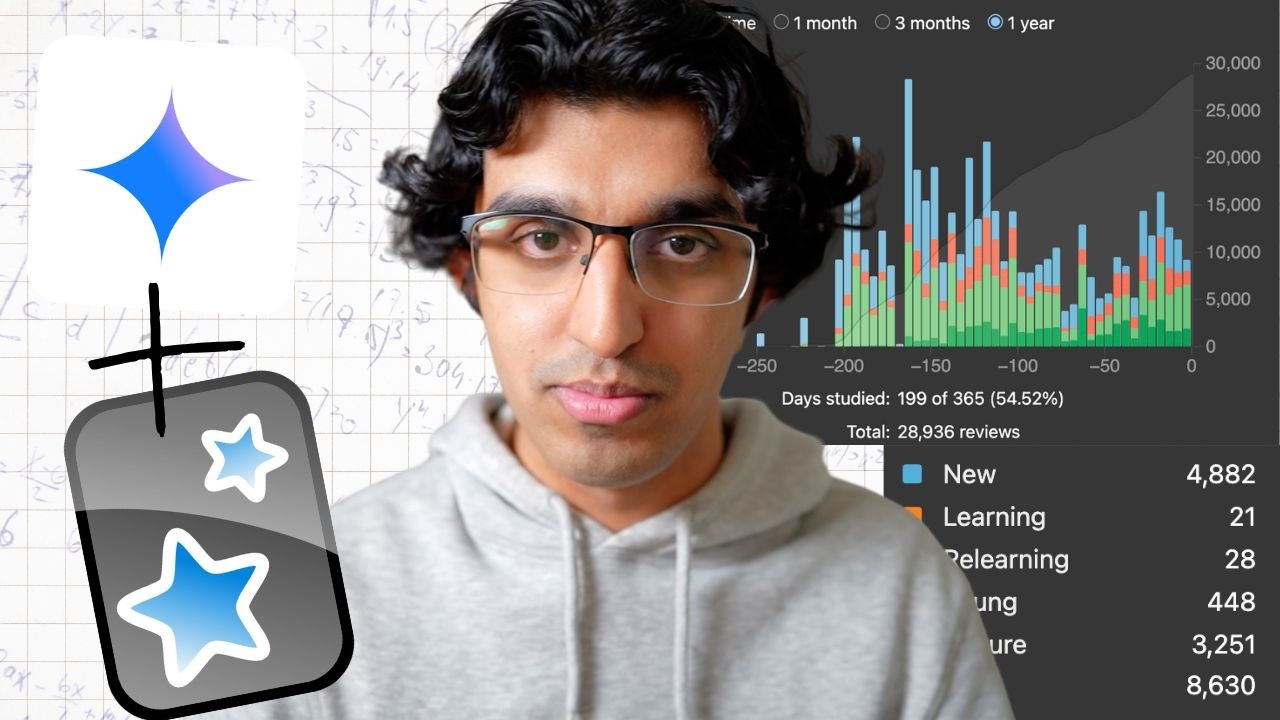
two columns, the first being for the questions  and the second being for the answers. The reason   I use a computer was because it makes everything  so much easier. So you can just Google and find   images of mechanisms and reactions and equations  which you need. And if you find a mistake,   you can just easily edit it and you don't feel  the temptation to make your flashcards look nice.    So you'll spend more time learning than actually  making the flashcards look neat and everything.    So after making the flashcards, I transferred them  over to an app called Anki by copying and pasting   the question and the answer separately for each  of the cards. So when you're doing each flashcard,   then you can either decide if the answer was easy  for you to remember or if it was harder for you to   remember. So then based on that, it decides when  you will see the flashcard again. So the easy   flashcards will come up less frequently and the  harder ones will come up more frequently. So it   kind of decides your revision for you. You spend  more time revising the things you find harder and   less easier over  time. And then just before topic tests or exams,   I would go through all the flashcards in that  particular topic. If you don't know how to use   Anki, I'd highly suggest finding some videos  online on how to use it because a small amount   of time you spend in learning how to use it will  pay off massively in the long run. Since I've been   using it for the last three years or so, I'll get  around to making a guide, like a complete guide on   how to use Anki. And it should either be linked up  somewhere if it's out by now. I'd highly suggest   making your own flashcards because at least 50%  of the learning comes from making them and the   other percentage comes from going through them. So  the best part about using Anki is that you can be   as strict as you want. So for definitions, you can  say, if I don't get this definition word for word,   then I'm going to mark it as wrong. And for  concepts, you can give yourself some leeway   with the wording. So it's really versatile and  for you to decide. But I would suggest when   you're going through the flashcards, you verbalize  your answers. So when you come across a question,   you quietly speak the answer to yourself because  it'll stop you from tricking yourself into   thinking you knew the answer if you're saying  it in your head. But the most important thing   to remember when doing the flashcards is the  more effort you put into remembering the answer,   the easier it'll get over time. So while initially  it can be quite hard and you feel tempted to   flip over to the other side and pretend as though  you've got it right. The more effort you put into   remembering, the stronger your synapse connections  will be. So now I'll move on to what I used to   help me actually make the flashcards because  that's also very important. So the first thing   I used to help me make my flashcards were my class  notes. Every weekend, what I'd do is go through   all my class notes for that week and turn them  into flashcards. And they were like the backbone,   barebone flashcards on which I'd add to using  other resources just to make sure they're as good   as possible before I start learning them. So the  second resource I used to help me make them was   ChemGuide. I personally thought ChemGuide went a  bit too into detail and I only used it for about
5:27

Chem Guide

a few dozen topics just to make sure I really  understood what was going on in those topics.    And I could write it into my own words onto the  flashcards. But I wouldn't suggest going on every   page for the whole syllabus because you're only  going to find small areas of ChemGuide useful.    So then I used a website called Chemrevise. And  Chemrevise has really good notes for OCR, AQA,
5:53

Chem Revised

Edexcel. I think they have every exam board for  chemistry. And I used those notes to make sure   my class notes were detailed and comprehensive  enough. And then I used them to add on to the   flashcards. And any mechanisms or diagrams  or equations which I thought were good,   I just copied them over or took a screenshot and  get them over onto my flashcards just to make   them a bit more detailed. So the next resource I  used was YouTube. And the YouTubers you'd use for
6:26

Youtube

chemistry really depends on the exam board  you're doing. But you have some YouTubers   like Allery Chemistry who've made playlists for  Edexcel, AQA, OCR. But for me, I used a YouTuber   called MaChemGuy and Allery Chemistry. I thought  MaChemGuy was better because it's more tailored   towards OCR chemistry. When using them, I watched  all their videos on each of the topics and made   sure I had a clear understanding of what was going  on. And then I explained the ideas in my own words   and added them all onto the flashcards. So this  really helped me understand more and it made my   flashcards a lot better than just actually using  written documents because I don't know about you,   but I learned best using videos. Just quickly  Googling should help you find any other   YouTubers which are for your exam boards. I  know there are some for AQA and Edexcel out   there as well. It is quite clear at this point my  flashcards essentially became my class notes. So   the next resource is Physics and Maths Tutor.   While I think the website is a bit overrated,   it does have a good collection of questions for  each topic. So any topics you're struggling with,   you can just find old specification questions on  there to help with your learning for year 12 and   year 13. It also has a good collection of past  papers, the old spec ones which are harder to   find at other places. But you can also find them  for OCR at least on a website called Past Paper   Panda. I'll be moving on to how I used past papers  later on. So the next really important thing for   my chemistry revision was organic pathways. This  becomes so much more important towards the end of   year 13 because by then you will have covered a  lot of reactions. And I would suggest finding a   template for the organic pathways which you  need to know. And then doing them every day.    So learning it and then trying to write in as much  from memory every day for about two months before   the exam. Or three months if you want to start  sooner. And just keep doing it every day and   eventually go in. And if you're doing past papers  alongside that you can easily identify which ones   you need to work on the most. Which reactions you  And finally perhaps the   most important thing on this list is doing past  papers. I don't think anyone's gotten a good grade
8:59

Doing Past Papers

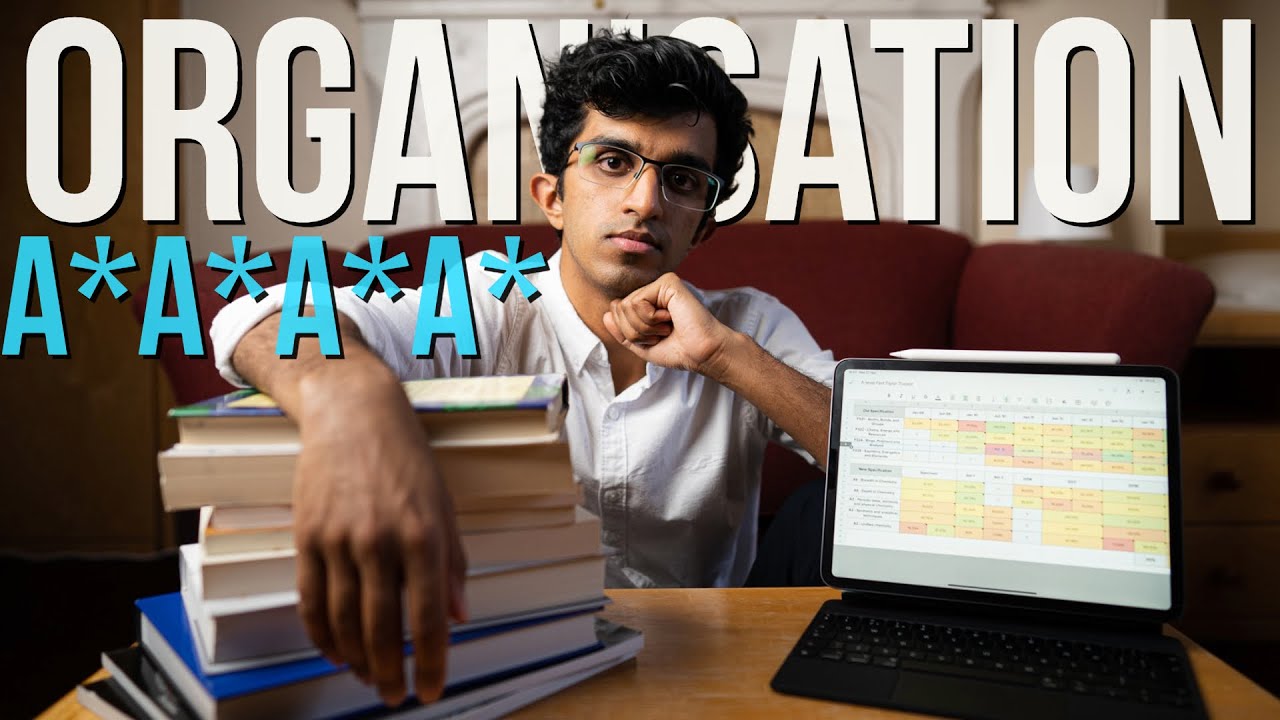
in chemistry without doing at least some past  papers. As for me I did every single one and I   kept track of them on Excel. And as you can see  here I had green, amber and red. Green for being   above 90%. Amber for being about 80%. And red for  being 70% or less. I would suggest when doing the   papers be strict on timing. Because you don't want  to give yourself the illusion of you'll have more   time than you actually do. Because that will  come back and bite you during the exam. There's   also no point in doing the past papers if you're  not going to actually learn from your mistakes.    Because you'll just end up repeating them over  and over. I would suggest after each paper you   add to a word document of your mistake and how  it can be corrected or how it can be avoided in   some way. And read this document several times  a week closer to your exams just to make sure   you really know what mistakes to look out for.   It's really helpful if you have a whole list of   common mistakes which you make in chemistry. It  will vary from person to person. But the document   will become very useful. I would suggest  doing past papers consistently. Especially doing
10:25

Past Papers

more as you get closer to exam time. So rather  than doing three on a Saturday. You can do three   throughout the week. But when you do so make sure  that you mark it then and there. Because you don't   want past papers piling up. And when you sit down  and mark a past paper you did a few days earlier.    Mark an answer wrong and not being sure why you  thought that during the time. And also pay close   attention to any keywords from the mark schemes  when you're marking your papers. And then change   your flashcards on that bit of the specification  accordingly. So you end up learning the keywords   as part of your revision. If you get confused with  any of the questions. Either search the paper on   YouTube and you can watch a teacher going through  it and explaining each question one by one. Or go   to your actual teacher and have them explain it.   And make sure you absolutely understand where   you went wrong and how you went wrong. Because  otherwise you're just going to keep making the   same mistakes. And of course you can add to  your document after speaking to your teacher   and watching a video. So I hope this video was  useful. And good luck with any exams you have in   chemistry. It can be a hard subject. But as long  as you're willing to put in the time and effort.    It can also be very rewarding. So I made some  other How to Get an A Star videos for physics   and maths and further maths. And if you want to  check them out they should be linked down below   or at the end of this video. If you have any  suggestions for any videos I should make. Like   exam technique and avoiding silly mistakes and  stuff like that. Then leave a comment down below.    And leave a like and subscribe to my channel  for any more videos of studying and university.

Ещё от Ray Amjad

Ctrl+V

Экстракт Знаний в Telegram

Транскрипты, идеи, методички — всё самое полезное из лучших YouTube-каналов.

Подписаться