What Is the World According to Sri Ramana?

What Is the World According to Sri Ramana?

Machine-readable: Markdown · JSON API · Site index

Поделиться Telegram VK Бот
Транскрипт Скачать .md
Анализ с AI

Оглавление (7 сегментов)

Segment 1 (00:00 - 05:00)

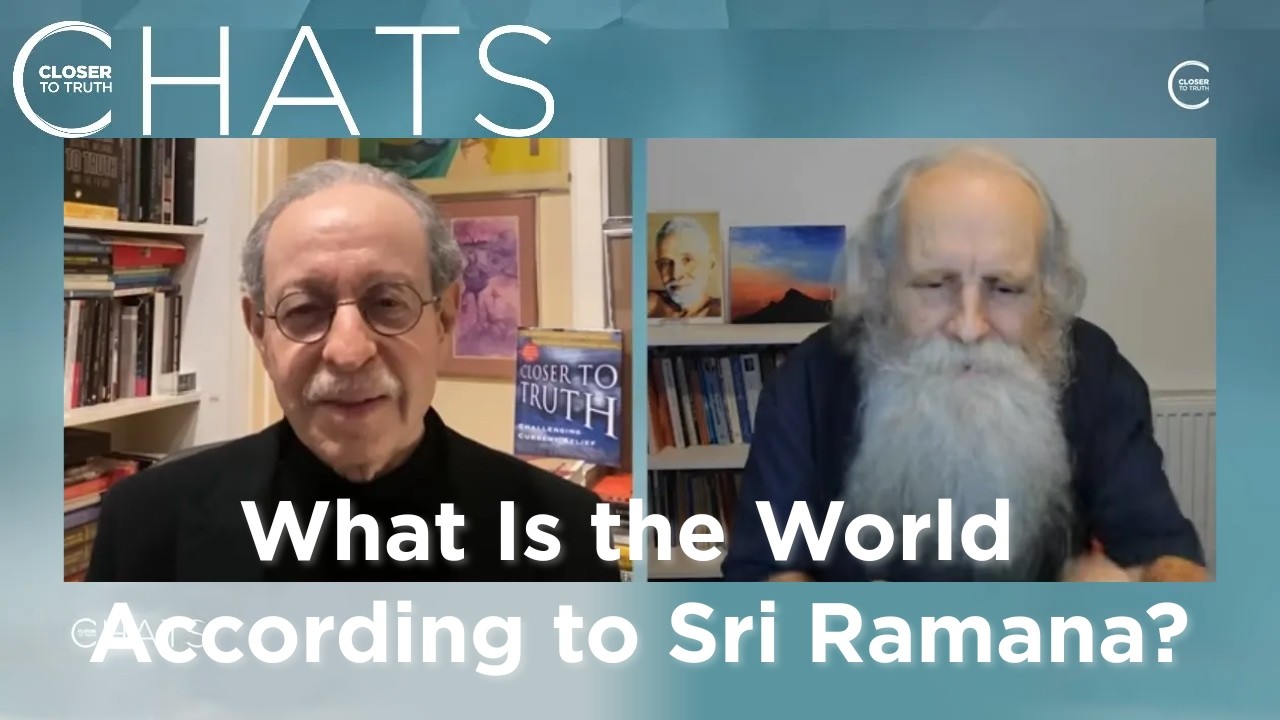
So if I want to know ultimate reality, but I'm not willing to give up my own individuality. There's no hope for me. — Hope because now you don't want to give up your individuality. — No. — Nor do I. That's why I'm here. If I But I want at least I want to give up my individuality because I recognize that my individuality is the source of all problems. Welcome to Closer to Truth. I'm speaking with Michael James, a scholar and translator who has dedicated nearly 50 years to studying, practicing, and promoting the teachings of the Indian sage Shri Ramana Maharshi. Michael, it's great to meet. I've enjoyed working with you on your entry on Shri Ramana in the landscape of consciousness. I recommend that to everyone. Uh and it's great to meet a real person. — Okay. Thank you. It's good to meet you too. — Great. Well, let's start with a couple of uh kind of uh um introductory questions just to get a sense. Uh what would you say is Shri Ramana's most teaching? If by counterintuitive you mean against common sense, I would say all his teachings are counterintuitive because he his teachings challenge us to question not just our beliefs and assumptions but our very experience. Now for example, we experience ourself as if we were this body. That is the f the first and most important thing that we are challenged on. We also take this world to be real. It but it seems to be a mind independent world that also we are challenged to question. So the very fundamentals of our experience and how we interpret our experience are called into question. Okay, those are big uh certainly very big ideas and we will explore them maybe a little bit critically to see how we come to that but that's uh that's very good. what first motivated you personally uh to focus on Shri Ramana? Um when I first heard about him I was curious. At that time I was traveling around India visiting many places and so I came to Ramanasham where he lived for many about 30 years and after coming there I read an English translation of a Tamil work called who am I? And when I read that, I recognized this is what I've been looking for because it seemed obvious to me as soon as I read it that before we can know the truth or reality of anything that we know, we first need to know the truth or reality of ourself, the knower. So knowing what we actually are is the most fundamental and most important thing to know. And only when we know that we can judge other whatever other knowledge we have whatever knowledge we have about other things we can judge it in perspective. — Okay. Well when we discuss this uh we'll try to understand why how you can know yourself without knowing the world. There are a lot of questions that we can ask and this is why we're going to have some fun. But what I'd like to do now is uh is to give a proper uh bio uh of you uh so that everyone can know some of your background. So Michael James was born in England and spent 20 years in India dedicated to the practice of self-investigation and he was living at the foot of Arunaala that's the holy mountain where Shri Ramana lived for his entire adult life often living in caves for eight years Michael studied under Shri Sadhu Om a direct disciple of Shri Ramana with whom he translated Shri Ramana's original Tamil writings Michael is the author of Amna Vidday, the science of knowing oneself and is regarded as a leading authority on the primary sources and experiential practice of Shri Ramman's path. Okay, Michael, let's get into some real depth. And I want to start with a big overview of Shri Ramana's life and the core of his philosophical thinking relating to what is the world, what is reality, what is value, you know, the big questions to get a whole overview of his thinking because what we'll do subsequently is going into detail on a

Segment 2 (05:00 - 10:00)

lot of specifics. But let's start with the big overview. — Okay. Well, our present experience of ourself is that we are a person. We are a body, a bundle, a body, a mind. That is what we experience ourself to be. But if this body were what we actually are, we couldn't be aware of ourself without being aware of this body. But we know from our own experience that this is not the case. In now, we're aware of ourself as this body. But in dream we are aware of ourself as another body. We are not aware of this body at all. Since we are aware of ourself in dream without being aware of this body, this body cannot be what we actually are. And likewise the dream are because we're now aware of ourself without being aware of whatever bodies we experience as ourself in a dream. So then does that mean that we have a mind? Because it's the same mind that is experiencing waking and experiencing dream. Even we cannot even be this mind because though we're aware of ourself as this mind in both waking and dream in sleep we're aware of ourself without being aware of anything else. When I say aware of ourself we're aware of our being. This is something that is it's something that a lot of people have difficulty in recognizing. But if we think about it, we experience three states. We experience waking, we experience dream and we experience a third state we call sleep. In sleep generally people think of sleep as a state of unconsciousness. But the fact that we are aware of having been in a state in which we were not aware of anything means we were aware of being in that state. That is what we are aware of in sleep is only our own being. We're aware I am throughout the three states of waking, dream and sleep. It's the same eye that is now awake but is sometimes asleep and that is sometimes dreaming. So, so let me understand this uh in terms of this grand overview which is the foundation of understanding that um a critical factor in uh creating this way of thinking and confirming it is the dream state. A lot seems to depend on the fact that we have dreams. So that's number one. And number two seems to be the concept of a kind of pure awareness within the sleep stage of the three stages. But um sleep is the only way we know we are I am during sleep is after you wake up. You don't know that when you're sleeping, right? — Well, that is that is the point. We now we have a recollection of having been in a state in which we were not aware of anything. — Correct? — So the fact that we have a recollection of having been in that state means there must have been awareness in that state because supposing sleep were a total a state of total non-awareness no consciousness whatsoever. What would our experience would be a an uninterrupted stream of alternating states of waking and dream? We would not be aware of any gap between these uh two states. But we are aware but sometimes there are gaps. Sometimes there we're in a state where we're not aware of anything. So in order to be aware but we were in a state in which we were not aware of anything we must have been aware. — We only know that retro uh in hindsight. — Well how do we know it in hindsight? If we if you consider um a movie uh film, you've got different separate frames because they're moving very rapidly. We don't we're not aware of the gaps between them. It appears as a continuous stream. — Yeah. [snorts] — But in the case of sleep, we are aware of the gap. We're not aware of just a continuous stream of alternating states of waking and dream. We're all clearly aware there is a third state a state in which we are not aware of anything. So

Segment 3 (10:00 - 15:00)

in order if the reason we're not aware of the separate screen frames of a cinema because of the speed we we're not aware of the gap it be it's going faster than grasping power of our eye. But in the case of our awareness of sleep, we are clearly aware that there is a third state, a state in which we're not aware of anything. And here I'm drawing a distinction between not being aware of anything and not being aware. We weren't aware of anything in the sense that in sleep we're not aware of any phenomena. We're not aware of time. We're not aware of space. We're not aware of anything. But we are aware I am. We're aware of our being. We're now we clearly remember having been in a state in which we were not aware of anything. So in order to remember having been in that state, we must have been aware in that state or we couldn't have any recollection of it. So, as I say, if sleep were actually a state of non-awareness, we would all we would be aware of would be a a con that is a a unbroken stream of alternating states of waking and dream. But we are aware of gaps between these states. That gap is what we call sleep. That is a state in which we're not aware of anything but we are aware of being in that state. — Okay, look that's a very interesting kind of an analysis and we could go into that more but let's move on and give that and give that assumption. — So the fact that we are aware of ourself in sleep when we're not aware of anything else means that no phenomenon is what we actually are. Because if any phenomenon whether the body or the mind or anything were what we actually are we wouldn't be aware of ourself when we're not aware of whatever that phenomena but we are. So that the fact that we are aware of ourself in absence of all phenomena means that we are not any phenomenon at all. — Okay. Well, there seems to be a number of steps I I've tried to understand. If we if if I give you that uh the sleep state which I only know retroactively uh is a time when I wasn't aware that means that I had a kind of a pure awareness but not aware of anything any content uh but because I know there was a gap that means I know that there was um that I was present or I was an I am during that sleep. — Okay. Um but now what are the precise steps you go from that if I give you that uh to the fact that uh the real I am is not what I think I am. How does that what is the logical steps there? — Okay. If two things are numerically identical, in other words, not two things but actually one thing, — yeah, — whatever is true of one is true of the other. — Yeah. — The fact that we are aware of ourself, aware of our being in sleep without being aware of anything else means nothing else can our being is something distinct from all phenomena. Okay. I mean that is the step and again I could ask a lot of questions about that but I want to move on to understand — yes — given that then what follows. — Well that means that our present experience of ourself is fundamentally flawed. Now we are aware of ourself self as something but we are not. Now we're aware of ourself as a person. I use the word person to refer to the bundle of body, mind, intellect, will all these uh phenomena that we now take ourself to be. The fact that if the fact that we now experience ourself of these things means our present awareness of ourself is a mistaken awareness. We are aware of ourself is something that we is not what we actually are. So because our awareness of ourself is our present awareness of ourself is flawed. Whatever knowledge we have of anything else is based upon this flawed awareness that we have of ourself. So this calls

Segment 4 (15:00 - 20:00)

into question everything that we know. I if that's the case, that sounds like an ultimate skepticism about everything and you can't make any progress beyond that. — Oh, you can because the one thing — the one thing we cannot doubt is our own being, our own existence. — Okay. So that is the the fundamental thing that is the one thing about which the only thing we can be sure everything else that we experience could be an illusion but the one thing that cannot be an illusion is our own being our own existence because we must exist in order to experience an illusion. Okay, that that I I agree with that for sure. — And our being is is a now [clears throat] we're aware of our being. We're aware I am the awareness of our being cannot be other than our being because if then we would be two things we' be a being and awareness that is no it cannot be. So awareness is our very being. Awareness is what we actually are. But the awareness that we actually are is not the awareness that is knowing all these phenomena. But it's the pure awareness that underlies the awareness that knows phenomena. phenomena is what we call the mind or ego that appears in waking and dream. It disappears in sleep. We exist and well in the terms of ad philosophy we say we exist and shine in the absence of all other things. Shine means we're aware of our existence. — So we are the one selfshining being — and then h how do you go from that to what is the world we experience? Well, — so what is the external world, — right? Okay, we have to question the um as David Hume said, a wise man aortions his belief according to the evidence. [sighs] That's a good principle. But we if we are going to follow that principle, we have to be very critical of what we take to be evidence. — Now it seems evident to is an external world. That's how it seems to us. — But is it actually do we actually have evidence of the existence of any external world? When we are dreaming it, we also seem to be a person in a world. The world seems to be external to ourel. It seems to exist independent of ourel so long as we're dreaming. But as soon as we wake up, we immediately recognize, no, that wasn't an external world. It was a mind created world. What brings about that change? But what seemed to be a very real external world a moment before is suddenly recognized to be a mind created world. So long as we are dreaming, we experience a dream body as ourself. Since we are real, this dream body seems to us to be real. And that therefore since a dream body is a part of the dream world, the whole dream world seems to us to be real. — But as soon as we wake up from sleep, our identification with that dream body is severed. We no longer experience that dream body as I. As soon as we dissociate ourself, disidentify oursel with that dream body, we recognize that but the world was just a mental fabrication. — Okay. So then to go to the next step, you need to then have a transition, a phase transition if you will, as if from dream to the waking state, from the waking state to some other state to recognize that the world was part of this kind of mental construction. — Well, is there anything that we experience now but we could not experience in dream? — Is there anything we could experience now that not in dream? we couldn't experience in dream. — It's a hard question to answer because it would seem no. But um but there could be some elements in which we we experience today that are not in dreams. That's a complicated

Segment 5 (20:00 - 25:00)

question. — There are things we experience in dream but we cannot experience in waking. For example, sometimes in dream we may experience oursel flying — right — defying the laws of gravity, — right? But we know we can't do that in the waking state, — right? — But is it whatever we experience in the waking state, we can equally well experience in dream. So we have no evidence that our present state is anything but a dream. — Okay? I mean we can get into the neurohysiology or neuroanatomy of how dreams work and versus the real world different parts of the brain turned on turned off which gives uh some different kind of analysis but I I want to go further. So, so can are we saying then that the external world is a um the relationship between the external world and what we are today in a in an awake state is similar or uh to the relationship between the dream state and the awake state that there's something that reflects on the reality of the of the physical world. — [sighs] — Yes. That is in dream we experience a dream body as I and consequently the dream world seems to be real. — Yes. — Now we experience this body as I and we consequently experience this world as real. — Okay. So now you and I are both doing that. We're both dreaming. We're both in awake. We both have this external world. Is your external world the same as my external world? — It seems to be so. — Now why would that be? If we were having this discussion in a — we never have the same you and I dreams. I hope uh as crazy as they are. — If we were having this if you were to ask me this question in a dream — Yeah. — I would have to say yes. We seem to be experiencing the same world. — Yes. — But once I wake up — Yes. — I don't come to you and say, "Oh, wasn't it a nice dream we had last night? " Right. So, so the fact that that is one of the ways in which we try to attribute more reality to the waking state than the dream state. We say it's a shared reality. — Okay. — But dream while we're dreaming, a dream seems to be a shared reality, — right? But then when we wake up, we realize they're not shared. — Yes. — So, so in reality, your dream and my dream are not shared. They're not shared. But that that calls into question whether our present state is also a shared state. It certainly seems to be — right — because each one of us is aware of ourself as a body. We it seems to us that every other living uh waking body is sentient just like us. — Correct. All but all we can say is it seems to be so but is it actually so? — Yeah, that's my question. Because we know actually so we don't share the same dream. Actually we have we do not share the same dream. So actually do we do you and I share the same world? — That's what I say. We all we can say is it seem we seem to be sharing the same world just as in dream when we're having this conversation in a dream we seem to be sharing the same world. M uh — so this is as I say the teachings of adua particularly as expressed in the teachings of by one ram is calling into question everything making us question the evidence of everything — so it seems to us evident that there's an external world — that where this world was there — millions of billions of years before I was born. I was born some few years ahead and few years before and few years hence I'm going to be gone finished. — But all we can say is it seems to be so we can we have no evidence that it is actually so. — Okay. By the way, I want to say when you're saying Bhagavad, you're — one sorry I'm referring to Sri Ramana. — Yeah. And why and what does that term mean? [sighs and gasps] Um it's a uh it's a term that is used to refer to what is a person who is believed to be God in human form like Bhagavan Krishna. The Bhagavad Gita — is the song of Bhagavan. — Ah I see. — So like Krishna is referred to as Bhagavan. We also refer to Bhagavan as I mean to Sri Ramla as Bhagavan.

Segment 6 (25:00 - 30:00)

— And Bavan can be applied to multiple um creatures or individ name and form but God can appear in name and form. Mhm. — So that's why in Hinduism there seem to be many different gods — which are interpreted differently by different people from but from the — advatic the nondual point of view they're all different names and forms of the one God. But to understand the justification for this, we need to understand much more about a dwa philosophy. But we don't normally it normally seems a a very tall claim to claim that a person is God in human form. — Like Jesus generally Christians believe Jesus Christ is God in human form. — Some people believe it's not. Some people don't believe in God at all. Some people don't they believe in God but they believe God cannot appear in human form. So there is so many different beliefs but there's a philosophical basis for this but that would require a lot of explanation. — Okay. Well, we're going to get into that in future discussions. — One more thing about the term bhagavan. It's a very um it's a very intimate and loving term. — It's feel it's God but not God as a different God. God as the inddwelling spirit in each and every one of us. — Um what I hear you're saying it sound and again I'm my knowledge of uh Hindu philosophy and the vases is somewhat limited but what you're telling me sounds fairly familiar to what I know. So just my question is what are the contributions that Shri Ramana has made that are uh distinguished from the traditional advant philosophy. — Okay. His teachings are essentially a dwa vanta but he has brought he has expressed the dw of vanta firstly in a very simple and very practical manner and also he has um he has brought a lot of clarity he's clarified it in many very significant ways not only significant not only because of the clarity they provide but also because of the practical implications. For example, one thing Bhagavan has clarified is the nature of ego. Ego is the eye that it is now aware of itself as I am Robert or I am Michael or I am whoever that is identified with a person. But ego is not the person. It is the eye that isident that identifies itself as a person. — [sighs] — What Bhagavan has clarified about the nature of ego is ego in itself is formless. It has no form of its own. It's just it's mere awareness. But it has a separate existence only when it identifies itself with a form with a person. And so we cannot rise or stand as ego experiencing ourel without being aware of ourself as I am this person whatever the person may be um and because we're aware of oursel as I am this body we're consequently aware of the appearance of other things so the nature of ego is to be always aware of things other than itself [sighs and gasps] so long as we're aware of other things we seem to be a separate eye. But if we turn our attention away from other things, back towards ourself, back towards the eye that is aware of all those other things, that eye begins to subside and dissolve. And if we pursue this um this inward look, this inward turn of our attention, inward means back towards ourself. If we pursue this far enough, we will sub we as ego will subside completely and dissolve back into our source into the pure being awareness that we actually are. So this is of great practical significance. It and it's it doesn't in any way conflict with the um with the classical advator but it clarifies it greatly and

Segment 7 (30:00 - 34:00)

the the nature of the practice that — when you say it we can through this process this practical process of yes finding out who we really are to get back to the pure awareness that sounds like the state of sleep um is that's not my ultimate goal to be in a permanent state of sleep. — Well, and a further clarification is needed about sleep. — Now, now we remember having been in a state in which we were not aware of anything. — Yeah. — But we who are aware of that are ego. But I is identified as I am Robert or I am Michael. The ivory is aware of itself as if it were a person. Being aware of ourself as a person is a fundamental ignorance. What we were actually aware of in sleep was our self as we actually are. But because we are not now aware of ourself as we actually are, the same ignorance, the same false awareness we now experience that is covering our awareness of ourself as we actually are. That is so long as we're aware of oursel as I am this person, we are not aware of ourself as the pure being awareness that we actually are. So we're now in a state of ignorance. We from the perspective of a waking or dream state, we are viewing sleep. We are viewing our experience in sleep through the filter of this false awareness of ourself. So our rec though we what we can recall about sleep we can recall that we were in a state in which we are not aware of anything. In sleep we were not even aware. I am not aware of anything. In see what we were aware of, we were aware just of our being I am. — But that same awareness I am is shining now but mixed and conflated with adjuncts as I am Robert or I am Michael. So because we are not now aware of ourself as we actually are, our recollection of sleep is thereby is therefore obscured. So essentially the state of self-nowledge is no different to sleep. The difference is sleep is a temporary state. But sleep appears to be temporary only from the perspective of the mind in waking and dream because we come out of sleep because we go into sleep and come out of it. It seems to be temporary. But when we know ourself as we actually are, we will experience oursel as infinite and immutable being awareness. So there's no coming and going. — Okay. Well, we're going to get into a lot of this in in future segments. There's a lot to uncover. It's fascinating. It's a different way of thinking, Michael. I really appreciate it. Very profound. uh and uh I look forward to uh looking at each particular part in some depth in future segments. Uh viewers can watch over 1500 videos on philosophy of religion and philosophical theology and over 1500 videos as well on consciousness all infused with critical thinking and more critical thinking is coming up in Michael's future segments. Uh so everybody can watch other videos on the closer to truth website or closer to truth YouTube channel. Thanks everyone Thank you for watching. If you like this video, please like and comment below. You can support Closer to Truth by subscribing. Closer to Truth is now accepting your taxexempt donations. Please come to closerto. com/donate. Thank you very much for supporting us and thanks for watching.

Другие видео автора — Closer To Truth

Ctrl+V

Экстракт Знаний в Telegram

Экстракты и дистилляты из лучших YouTube-каналов — сразу после публикации.

Подписаться

Дайджест Экстрактов

Лучшие методички за неделю — каждый понедельник