How Serbia Survived World War I

How Serbia Survived World War I

Machine-readable: Markdown · JSON API · Site index

Поделиться Telegram VK Бот
Транскрипт Скачать .md
Анализ с AI

Оглавление (3 сегментов)

Segment 1 (00:00 - 05:00)

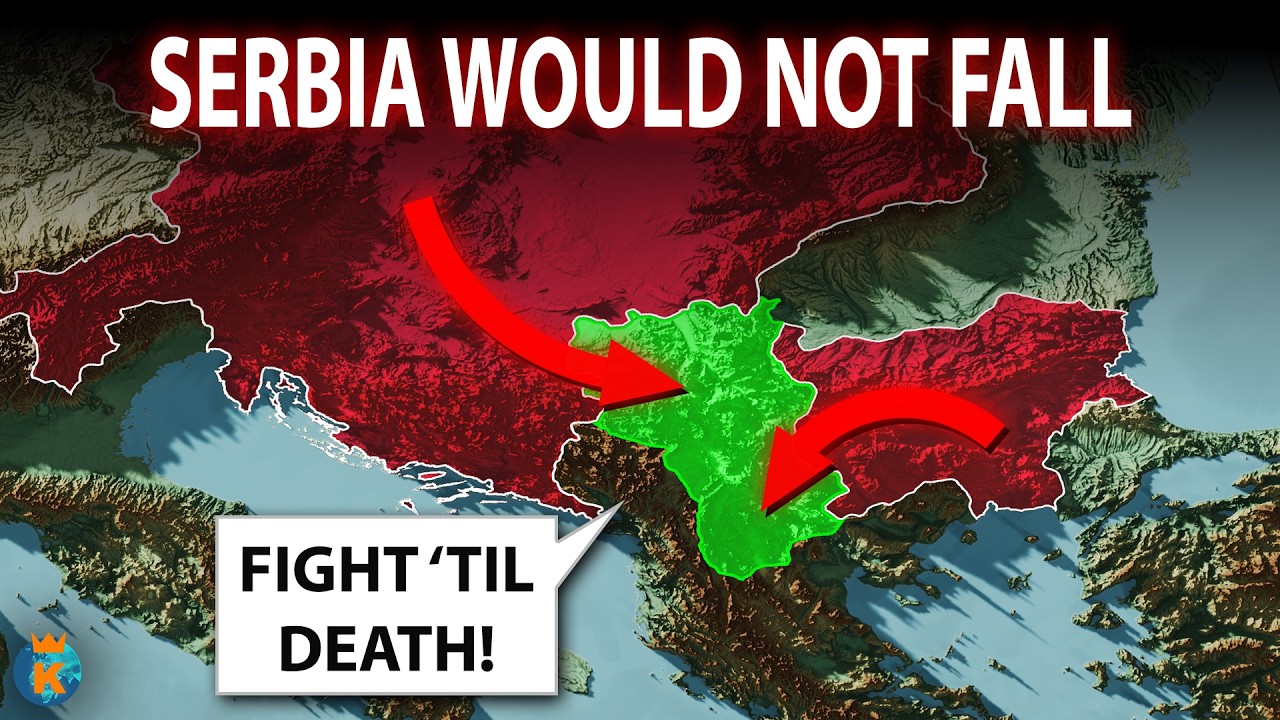
Serbia, a landlocked country in Southeast Europe, which played a fascinating and often overlooked role in the First World War. an important contributor to the Allied war effort, who resisted no less than three concerted invasion attempts by the Austrohungarian Empire. Though ultimately falling to combined German, Austrohungarian, and Bulgarian forces, a prolific exodus across the Albanian Alps ensured the army could fight another day. This would eventually help secure a Serbian victory. To examine the Serbian experience of World War I, it is helpful to explore the context in the years leading up to the conflict. Serbia sat in a tinderbox region which had been experienced a shifting of powers for decades. The once mighty Ottoman Empire was on the decline and Balkan states were hungry for more territory and full independence starting in the 19th century. This included Greece, Serbia, Bulgaria, and Montenegro, who formed the Balkan League in 1912 to confront the Ottomans. In the first Balkan War of 1912, which followed, the alliance managed to push back the Ottoman Empire from most of its European holdings, expanding the territories of the Balkan nations considerably. While Serbia itself acquired territories of today's Kosovo, North Macedonia and a region bordering Montenegro and in the second Balkan War, Bulgaria was the one defeated by a new alliance. With the gain of territory and power, the wars also came at a significant cost with around 80,000 Serbian casualties and deaths between the two conflicts. This would have a detrimental impact on the readiness of its military at the outset of new hostilities. Alongside this jostling for power with the Ottoman Empire in the pre-war period, Serbia's rivalry with the Austrohungarian Empire had also been mounting. This was a longunning feud with the most recent flare up occurring over Austrohungarian's annexation of Bosnia in 1908 and its success in establishing the Albanian nation in 1912 to help deprive Serbia access to the Adriatic Sea. Both were considered extremely provocative moves by Serbia and would lead directly to the outbreak of the First World War with the man who assassinated Archduke France Ferdinand in fact doing so in opposition to the recent annexation. With the bloody removal of their heir to the throne, Austrohungary had the necessary pretext and declared war on Serbia on the 28th of July 1914. This marked the beginning of the global conflict which would wreak havoc for the next four years. For many in Serbia, AustriaHungary was seen as an aggressor, an empire formed around Austria and Hungary that was composed of so many ethnicities, including the southern Slavs. Serbia's armed forces, though depleted following years of Balkan conflict, were by no means written off. Embarking in a period of rapid mobilization from July 26th, 1914, they managed to recruit a total of over 400,000 men. This was one of the highest conscription rates of all European forces. Weaponry and ammunition was in lower supply, though, with Serbia left dependent on imports from France and Russia. In an allimportant category of field guns, for example, Serbia was outgunned nearly 2 to one by her enemy. The better equipped Austrohungarian force mounted its first invasion attempt on August 12th, attacking with a well-prepared force from the west and north. The Serbian defenders, though, had a superior knowledge of the rough terrain, which gave them the upper hand in fighting. The first campaign culminated at the battle of Chur. Here the Serbians met the Austrohungarian force at scale around these mountain villages. It involved nearly 400,000 combined troops and resulted in a decisive Serb victory. The Austrohungarian forces retreated in disorder with many drowning attempting to cross the Dina River. The battle was the first allied victory of the war and significantly also witnessed some of the first aircraft use of the conflict. Respite for Serbia following their victory at Chur would be brief though. Austrohungarian troops regrouped and in September a new invasion attempt began. This time into the west of Serbia over the river Drina. Initial skirmishes led

Segment 2 (05:00 - 10:00)

to a period of stalemate and trench warfare similar to that on the western front. Losses were heavy at between 30 to 40,000 for each army. And while Serbia had managed to put a stop to the Austrohungarian advance, the enemy now had a foothold in Serbian territory. This would lead directly into the third invasion attempt in October 1914, which proved more successful for the invading forces. They pushed deep into Serbian territory and captured Belgrade in early December. However, the Serbian forces mounted a strong counteroffensive and once again were able to force the Austrohungarian army from the territory. This marked three failed invasion attempts and a remarkable period of Serbian resistance even in the face of inferior arms and supplies. German high command however was not ready to give up on its ambition of removing the Serbian threat and in doing so also gaining a pathway of allied territories towards Constantinople and its Ottoman ally there. though. In October 1915, a combined German and Austrohungarian invasion force began incursions from the north and west. Bulgaria also joins the fry against Serbia on October 11th, which made the Serbian position even more difficult with forces now split across multiple fronts. Finally, in late November, the decision was made by Serbian high command to withdraw all forces southwest over the Albanian Alps and towards the Adriatic coast. This was a tactical retreat and seen as a way to provide future resistance by preserving remaining manpower rather than surrendering. The march was brutal, though, involving hundreds of thousands of Serb soldiers as well as civilians. They were plagued by sub-zero winter conditions, disease, lack of food, as well as aerial bombardment. Nearly 80,000 soldiers and 160,000 civilians would die during the crossing attempt, which became known as the Great Retreat. Despite the death march, nearly 120,000 Serbian troops managed to reach the Albanian coast, securing Allied passage onto Corfu. Up to 110,000 battle ready Serbian troops were eventually gathered here in Greece to be sent on to the Macedonian front, where the Allies had taken positions in an attempt to push back into the Balkan region. The Serbian elements would be critical here in the eventual breaking of the long stalemate at the pivotal battle of Dro Pole. Here in September 1918, Serbian, French, and Greek troops smashed through Bulgarian lines, which had remained static since 1915. This allowed for the breakout of Allied forces from their position in Macedonia and laid the groundwork for the surrender of Bulgaria as well as the eventual liberation of Serbia. It crucially also tied up the Central P's troops on this Balkan front which otherwise could have been directed towards Allied defenses on the Western Front. So undoubtedly, action in the Balkans helped smooth the path of the final British, French, and American advance. Serbia suffered devastating losses through the war. The highest in fact of any participant in the conflict, over 1. 2 million military and civilian dead, or 28% of its population. This was a demographic shock which would take generations to recover from. However, its alliance with the Antant and valuable contributions on the Balkan front meant it stood to gain through the peace treaties ending the conflict. This would include territory at the expense of the defeated Austrohungarian Empire which provided Serbia with the increased regional power. soon to follow the end of the war in December 1918 and the Kingdom of Serbs, Croatates and Sloines was created. This united all these territories and was the panslavic territory Serb nationalists had been longing for since the 19th century. This new kingdom would soon become Yugoslavia and remain as such through a few different variants over the next 60 plus years. A greater Slavic kingdom now existed. It possessed a significant land area, good access to the Adriatic Sea, and the previously persistent threats from the

Segment 3 (10:00 - 10:00)

Austrohungarians and Ottomans had been removed. So while the era of regional upheaval before and including the first world war left Serbia with heavy losses, it nevertheless set the stage for a period of post-war regional power that would last for decades. The maps in our videos, those are the light versions. For our shop, we take the same research and go allin. finer line work, higher resolution, extra texture, geographic details that would get lost in a video. These are built for people who want the real thing. Something you can reference, hang up, or just own because it's the version we actually wanted to make. The kind of map you don't scroll past, you keep. Check your favorite on our website at knowledia. co or by clicking the link in the description.

Другие видео автора — Knowledgia

Ctrl+V

Экстракт Знаний в Telegram

Экстракты и дистилляты из лучших YouTube-каналов — сразу после публикации.

Подписаться

Дайджест Экстрактов

Лучшие методички за неделю — каждый понедельник