Royals who Died from Tuberculosis

Royals who Died from Tuberculosis

Machine-readable: Markdown · JSON API · Site index

Поделиться Telegram VK Бот
Транскрипт Скачать .md
Анализ с AI

Оглавление (7 сегментов)

Segment 1 (00:00 - 05:00)

Royals who died from tuberculosis. You know that old trope in historical dramas when everything is lovely and then a beloved character coughs blood into a handkerchief and you know everything is about to get sad. Well, that was mostly tuberculosis. While reading John Green's engrossing book, Everything Is Tuberculosis, I got to thinking about how many royals have succumbed to this dreadful disease. And there have been a lot. I had to skip over several dozen unfortunate minor royals to keep the list manageable for one episode. And there are some big names on this ill- fated roster, including five emperors, five kings, six queens, and five heirs who never got to rule thanks to microscopic bacteria. Let's meet 30 royals who died from tuberculosis, and take a closer look at how the most deadly infectious disease ever known has changed the course of history. First, the science. Tuberculosis or TB is a disease caused by microacterium. It is spread person to person through the air via droplets from coughing, spitting, sneezing, or speaking. Most infected people show no symptoms called latent TB, but they can still spread infection. A small portion of infections progress to active disease. TB primarily affects the lungs causing chronic coughing often with blood as well as fever, night sweats, weight loss, and frailty. But in some cases, it can spread and devastate other parts of the body. Tuberculosis has been stalking humanity for at least 10,000 years. Paleopathologists have found it in human remains dating to the Neolithic era. The bacteria spread with humanity from Africa to every corner of the globe. The Egyptian Ebur papyrus from 1550 B. CE describes it. The Hebrew scriptures say it resulted from turning away from God. Ancient Greek father of medicine. Hypocrates thought it was hereditary. Medieval people called it the king's evil. Royals routinely laid their divine hands on the afflicted waiting outside churches. But this was not very effective. The Georgians called it consumption because the disease literally ate the body from within. Victorians romanticized thin dying patients in ways that still affect unhealthy beauty standards. TB was the cause of 25% of all deaths in Europe in the 19th century. In the 20th century, improvements in sanitation and the discovery of antibiotics significantly reduced TB's devastation. However, since the 1980s, cases of antibioticresistant TB have been on the rise. In 2023, there were 10 million infections and over a million deaths. I will be donating profits from this video to Doctors Without Borders. To join me in helping modern victims of tuberculosis around the world, please click the fundraising link below this video. Now, let's meet the royals that prove tuberculosis really is everything. Nefertiti was born around 1370 B. CE. She married Egyptian Pharaoh Akenatan, who may have been her brother. The couple ruled during Egypt's wealthiest era. They began a religious revolution and built a new capital city. When Akahhatan died, Nefertiti took his place as Pharaoh. She had six daughters, but no sons. When she died at 40, probably of tuberculosis, her stepson, Tun Camun, became Pharaoh. Nefertiti's most famous image, a pristine bust unearthed in 1912, is one of the most copied works of art in history. Leo IVth, Byzantine Emperor, selected his bride, Irene of Athens, during a bride show. She might have been hot, but the couple were on the opposite sides of the big religious debate of the 8th century. Were icons or visual representations of saints okay? Leo thought they weren't and killed hundreds who disagreed. When he found two icons under Irene's pillow, he flew into a rage and refused to sleep with her again. He didn't have much time to ice her out. He died of tuberculosis at 30, but there were rumors that his frustrated wife had poisoned him. Their

Segment 2 (05:00 - 10:00)

9-year-old son became Emperor Constantine V 6th, but Irene was his powerful regent. She didn't want to share power, so she ordered her son to be executed by having his eyes gouged out. Jquelyn of Bavaria was the only child of the Count of Holland, Hano, and Zealand. At 14, she wed Jean Vawwa, son of Charles V 6th of France. When she was 16, her father and husband both died, leaving her alone in the world. She claimed her father's land but was opposed by her uncle John of Burgundy. So she married her cousin John of Brabant and together they went to war for her inheritance. Jquelyn was winning but her husband betrayed her by selling Holland and Zealand to her enemy. Disgusted, she demanded an anulment. She decided to marry Henry V of England's brother Humphrey in the hopes that he would help her, but he was too focused on English matters and abandoned her. Her cousin Philip of Burgundy captured and imprisoned her, but she disguised herself as a man and made a daring escape. With no more support, Jacqueline was forced to sign everything over to Philillip. She married a fourth husband, one she actually liked, Francis of Ovant. They were happy for 2 years, but Jquelyn fell ill and died of tuberculosis at 35. Isabella of Borbon married Philip of Burgundy's son, Charles the Bold. They were in love, but shortly after their first child, Mary was born. Isabella died of TB at 30. Heartbroken Charles's next marriage to Margaret of York was fruitless. So he and Isabella's daughter, Mary the rich, inherited all of his land. In order to protect it, she married future Holy Roman Emperor Maximleian I. And it is through their children that the Hapsburgs claimed the Netherlands for 300 years. Anne Neville was born to the Earl of Warick, the kingmaker who put Edward IVth on the English throne. She and her sister Isabelle grew up with Edward's younger brothers, George and Richard, and marriages were planned. The older pair wed, but before the younger pair got down the aisle, Anne's father rebelled and married her to rival King Henry V 6th only son, Edward, Prince of Wales. He was promptly killed in battle along with Anne's father. Isabel and Anne inherited his vast estate. Prince George wanted to keep it all for himself. So, he hid teenage Anne in a London cook shop disguised as a servant. But Prince Richard was so keen to wet her that he forfeited her fortune to learn where she was and rescue her. The devoted couple had one child, Edward, but he died at 10. When King Edward IV died, Richard seized the throne from his nephew Edward V. He and Anne were crowned in a spectacular ceremony. But months later, Queen Anne died of tuberculosis. She was buried in Westminster Abbey and Richard wept at her funeral. Henry VIIIth defeated Richard III in battle and became King of England. He then married Elizabeth of York, uniting the houses of Lancaster and York and ending the Wars of the Roses. Henry was heartbroken by the deaths of his son Arthur from the sweating sickness and his beloved Elizabeth from childbed fever. Sadness and greed took over Henry's heart and tuberculosis took over his lungs. He stopped eating but lived in agony for several more months before dying at 52. He was buried in Westminster Abbey next to his wife. Henry Fitzroy was given the Angloorman name meaning son of the king. He was the first boy born to Henry VIII. Though he was illegitimate, the child of a lady in waiting, Bessie Blount, his birth confirmed that the king was able to father healthy sons. Thus, all the infertility was blamed on his wife, Katherine of Aragon. As Henry's revolving door of wives failed to give him a legitimate baby boy, he heaped more honors on Fitzroy. He created him Duke of Richmond and Somerset. It was even floated that he should marry his own halfsister Mary so that they could rule together. Instead, he was wed to wealthy ays, Lady Mary Howard. King Henry considered his only son an

Segment 3 (10:00 - 15:00)

emergency heir and might have even made it official. But the teenager fell ill with tuberculosis. His only surviving portrait captures his pale skin, thin frame, and shadows under his eyes and mouth. He is wearing a night cap and shmese, typical bedclo of the time. Henry died at 17. His disappointed father did not attend the funeral. One year later, the king finally got a legitimate son, Edward V 6th, born to third wife Jane Seymour, who died of childbed fever. Edward inherited the throne at nine. He was staunchly Protestant and did much to shape the Church of England. But at 14, he contracted measles. He recovered, but his immune system was vulnerable when tuberculosis came to call. The young king hacked up greenish fleg tinged with blood. His exhausted body burned with fever and swollen ulcers. But his mind was sharp. He signed a succession device disinheriting his Catholic sister Mary and naming his cousin Lady Jane Gray as queen. Edward died at 15 while a servant cradled him. He was buried in his grandfather Henry VIIIth's Chapel in Westminster Abbey. Meline of Valwis was the daughter of King Francois I of France. Her health was frail from birth and she was raised in the mild climate of the Lir Valley away from dirty Paris. By 16, she had contracted tuberculosis. King James V of Scotland came to France to ask for her hand, but her father was loathed to send her to the frigid north. He offered another princess, but James was unimpressed. So, he went to call on sickly Meline and flattered and intrigued her. She was eager to have a life outside of her sick bed, and she begged her father to allow the marriage. He would do anything to make his baby happy and he threw her a luxurious wedding at Notradam. The newlyweds sailed back to Scotland and Meline wrote to her father of her excitement about the grand adventure, but the stormy crossing was hard on her health. She died 2 months later in her husband's arms. James immediately wrote to France requesting a replacement bride. Louis I 13th inherited the French throne at nine after his father Henri IV was assassinated. His mother Marie Demedi was a controlling regent. When Louis was 17, he exiled his mama and had her Italian supporters executed. Louis marriage to Anne of Austria got off to a traumatic start. The teenagers were forced to consummate their union in front of the entire court. After that, the couple avoided each other. It is also likely that Louis was gay. They were childless for 23 years. But they got stuck together during a storm and 9 months later, a miraculous dolphon emerged. A spare phipe followed. By 41, Louie was too sick with TB even to go hunting. He coughed constantly and was unable to digest food. The enemas and bleeding his doctors administered didn't help. He expired and passed the throne to his four-year-old son, Louis the 14th. Maria Louisa of Seavoi was 13 when she wed Louis the 14th's grandson Phipe. He was the French contender to rule Spain following the death of hyper inbred Carlos II. The Hapsburgs disagreed and the two powers dug in to the War of Spanish succession. Though young, Queen Maria Louisa proved a skilled and hard-working regent while her husband was fighting for his throne. She had four sons who were also devastatingly inbred. Two died in infancy. The other two, Louis I Ferdinand V 6th, followed their father on the throne, but both suffered mental illness and died young. Maria Louisa died of tuberculosis at 25, freeing King Phipe up to marry a non relative, Elizabeth Fernese. She had seven healthy children, including Carlos III, who continued the dynasty. He married Maria Amalia of Saxony. They had a happy mistress-free marriage and she gave birth to 13 children. The Polish queen looked down on the Spanish court as ignorant and superstitious. She planned numerous cultural reforms but died of TB at 35 before implementing

Segment 4 (15:00 - 20:00)

them. Sha Jan I was the 12th Mughal emperor. He was not nearly as powerful as his ancestor Sha Jahan I. By this time the emperor was merely a puppet for the powerful Sahed brothers. It was believed that the brothers were poisoning the emperor to keep him docile. But that was not necessary as Sha Jan was weak with tuberculosis. He died at 23 after 3 months on the throne. He was succeeded by Muhammad Sha who managed to overthrow the Sed brothers and rule for 29 years. Yong Xi, Prince Rong, was one of the many sons of Emperor Cuian Long of China, but every morning he was the first to arrive at lessons. He studied hard and became fluent in multiple languages and grasped astronomy, geography, mathematics, poetry, painting, and calligraphy. He was a nerd and an athlete. He was skilled on horseback and in archery. If all this wasn't enough to gain his father's attention, in 1763, a fire broke out in the palace, and the prince rescued the old emperor, carrying him to safety on his back. His father granted him the title Prince Rangi, meaning honor, and he was favored to be the next emperor. But TB had already spread to his bones. He suffered for several months, then died at 25 and was buried in the Crown Prince tomb. Louie Duan of France was the only surviving son of Louis X 15th. He resented his father's serial philanderie and was determined to be a faithful husband. At 15, he married his 18-year-old cousin, Maria Terresa Raphaela of Spain. The newlyweds soon overcame their nervousness and formed a close bond. Maria died in childbirth and Louie had to be physically dragged away from her deathbed. Next, he was sent down the aisle with Maria Yosfa of Saxony. They had 16 children. Their eldest son, Louisie Joseph Xavier, Duke of Burgundy, was eight when he developed an abscess on his leg. He underwent painful surgery, but his health deteriorated quickly. Tuberculosis had spread to his bones. He was quickly baptized and given a name. Before this, he was known only as Burgundy. Louie was bound to his bed and unable to move his legs. His younger brother, the future King Louis V 16th, was his companion in his last months. The wouldbe king died at 9. His father, Letoon, had also contracted the disease. He had been building a faction of religious men at court at odds with his father who hoped to gain power. But Louie died at 36 and never became king. His wife Maria Yosfa died 2 years later. also of tuberculosis. Sophie was the fourth child of Louis V 16th and Marian Twinette. The queen adored her children, but royal protocol demanded that they be raised by governnesses. She sat for a portrait with her four children, but little Sophie was later painted out. At 11 months, she suffered from convulsions for 6 days and then died. When a cordier tried to console the grieving mother, she whimpered, "Don't forget she would have been my friend. " Louie Joseph Duon of France was Marie's second child and first son. The nation rejoiced at his birth. He was praised for his intelligence, but suffered frequent fevers from the age of three. He was taken to the country in hopes that fresh air would improve his health. At 5, he had trouble walking at a royal ceremony. He had to wear a metal corset to correct a curvature of the spine when his fatal illness was finally diagnosed as tuberculosis. His wet nurse was blamed for transmitting it to him. Louie Joseph died at 7. His younger brother, Louie Charles, thus became heir. By this time, the people were furious with the monarchy over vast inequality. Many slandered the queen by claiming that the new heir had been fathered by her lover, Count Axel vonfen, but he was probably the king's. In 1789, the Bastile prison was stormed and the revolution began. The king, queen, and their two surviving children were imprisoned. When Louis V 16th was guillotined, royalists considered his

Segment 5 (20:00 - 25:00)

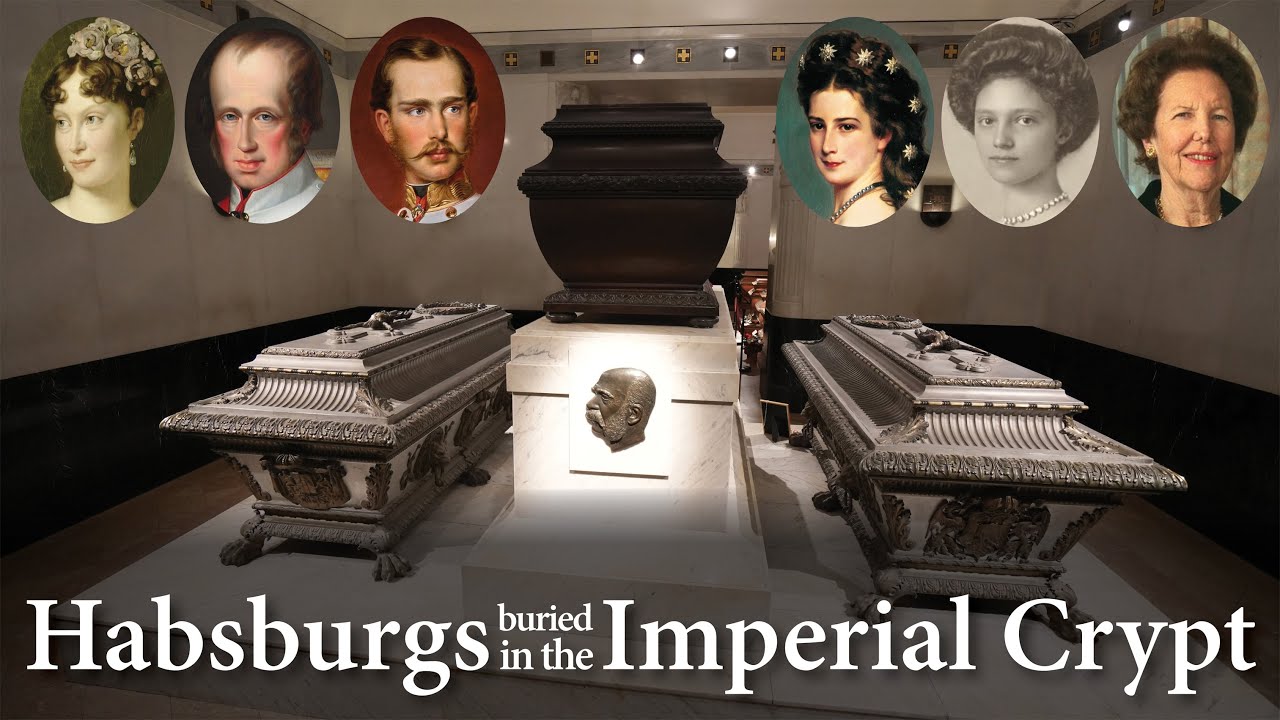
son, King Louis V 17th. He was taken from his mother and placed in a dark, dang cell. His jailers beat and abused him and he was forced to testify against his own mother. Louie Charles died at 10 in the arms of one of his jailers. His official cause of death was tuberculosis, but the abuse and neglect he suffered undoubtedly contributed. The boy who would have been king was buried in a popper's grave. His heart was smuggled out during his autopsy and in 2004 it was placed in the crypt of the Basilica of Sanden with his parents and siblings. Princess Amelia was the 15th and youngest child of George III and Queen Charlotte. She was doted on by her parents and siblings. As a baby, she would often put her tiny hand out to be kissed. At 15, she developed a pain in her knee and spent time at a seaside resort to recover. It was probably there that she contracted tuberculosis. She returned again and again to the sea to ease her ailments. Her overprotective parents were unaware that she had a love affair with a 40-year-old man at the resort. After decades of illness, Amelia died by the sea at 27. Her death exacerbated her father's mental decline. He often had imagined conversations with Amelia and shouted her name. Maria Ludvika of Austria Estee was 21 when she became the third wife of her first cousin Francis the first emperor of Austria. She was a kind stepmother to his eight children. Maria Ludovvika encouraged her husband to continue the fight against Napoleon. She was thrilled by Waterlue and hosted the 1815 Congress of Vienna where crowned heads divvied up all of France's stolen land. But she didn't get to gloat for long after retreating to her Italian villa. She died at 28. She was buried in the imperial crypt with her husband and his three other wives. Napoleon II was the only legitimate son of Emperor Napoleon Bonapart and his second wife Marie Louise of Austria. At birth, he was named King of Rome. He was just four when his father was defeated and imprisoned on the island of St. Helena. Thus, little Napoleon II became emperor of France. His reign lasted just 16 days when Louis V 16th's brother Louis V 18th was offered the throne instead. The deposed child emperor escaped with his mother to Vienna. Young Napoleon showed talent and enthusiasm for the military which made European royals nervous. But if he would have followed in his father's footsteps and reclaimed his throne was never known. He died of TB at 21. Pedro I was the oldest surviving child of Kingo V 6th of Portugal in 1807. Lisbon was invaded by Napoleon and the Banana royal family escaped to their largest colony, Brazil. By 1820, Napoleon was gone and Kingo returned to Europe. But he left Pedro to rule Brazil in his place. When Portugal threatened to revoke Brazil's political autonomy, Pedro sided with the Brazilians and rebelled against his father. He defeated Portuguese troops and declared Brazil independent in 1822 with himself as its emperor. When his father died, he briefly became king of Portugal as well, but he abdicated in favor of his eldest daughter, Maria II. She ran into trouble in the shape of her uncle, Prince Miguel, who wanted Portugal for himself. Pedro was overwhelmed dealing with drama on both sides of the Atlantic and his adultery had tarnished his reputation in Brazil. So he left his throne to his son Peter II and invaded Portugal. He managed to win the country back for his daughter, but during the war he contracted TB. He died at 35. He is remembered fondly in Brazil and Portugal for allowing both nations to evolve from absolutism to a representative government. His youngest daughter, Maria Amalia, was an intelligent, kind, and beautiful princess with striking blue eyes. Austrian Archduke Maximleian was enthralled with her and they agreed to marry. But her health was failing and her mother took her to the warm island of MadiRaa. She fell in love with the tropics and was full of optimism, but

Segment 6 (25:00 - 30:00)

her health worsened and she died there at 21. Maximleian was heartbroken. He instead married Charlotte of Belgium, but he left her for months to tour MadiRaa and Brazil and pay homage to his lost love. He brought his bride back a souvenir, venerial disease, which rendered her infertile. Maxmillian was later elected emperor of Mexico. But unlike Pedro, his rule in the Americas was a failure. Revolution broke out and he was executed by firing squad. Luna Lilo, king of Hawaii, was the grand nephew of the first king, Kameha I. He was educated at the royal school by American missionaries. He composed Hawaii's first national anthem. Luna Lilo was in love with his cousin, Princess Victoria Kamalu, and the pair wanted to marry, but her brothers would not allow it. He wrote a song of unrequited love. Luna Lilo never married, but he had a long-term relationship with an American colonist, Eliza Meeks. When Kamehameha V died without an heir, Luna Lilo was elected king of Hawaii in 1873, he was popularly called the people's king, but he reigned for just 13 months before succumbing to tuberculosis at 39. He left his fortune to start a foundation which houses poor elderly Hawaiians. Maria Victoria Dalportso, inherited her father's princely title at 17. She married Prince Amado of Seavoi, second son of King Victor Emmanuel II of Italy. Several disasters befell their wedding, including the sudden death of the station master while the bridal party was disembarking their train. Urban legend claimed that the couple were cursed, but they got along well enough and had three children. In 1870, unpopular Queen Isabella II of Spain was pushed off the throne and Prince Amado was elected to replace her. His reign was fraught with rebellion. After three agonizing years, he abdicated and the first Spanish Republic was declared. The family returned to Italy, but Maria Victoria's health had been damaged by the stress of sovereignty and tuberculosis. She died at 29. Alfonso I 12th was the only surviving son of Queen Isabella II of Spain as she hated her husband Francisco and he was gay. The prince was probably fathered by one of her many lovers. After his mother was ousted and Amado of Seavoi left, the dashing 17-year-old prince had enough support in Spain to restore the Borbon dynasty. He ended political instability and launched prosperity in both Spain and its American colonies. His first bride, Princess Maria de lasas Mercedes, died of typhoid fever just months after the wedding. Next, he wed his double third cousin, Arch Duchess Maria Christina of Austria. She gave birth to two daughters. At 27, King Alfonso was struck with the double whammies of TB and dysentery. As he lay dying, he advised his pregnant wife to Guarda Elono or guard her lady parts. Everyone waited to see if the Daajger queen would give birth to another princess or a king. Her baby was declared Alfonso I 13th the moment the doctors saw what was between his tiny legs. George Alexandravich, Grand Duke of Russia, was the third son of Emperor Alexander III and Empress Maria. He outshone his elder brother Nikolai. He was taller, better looking, more intelligent, and sociable. George had a promising naval career ahead of him until he fell ill with tuberculosis at 19. He packed a lot of living into the next few years. He, his brother, and their cousin George of Greece went on a voyage to Asia. But George fell ill and had to return home before they got tattoos in Japan. When Nikolai became emperor, his brother was too ill to attend the coronation. 28-year-old George was out for a motorcycle ride when a local woman found him collapsed on the side of the road, bleeding from the mouth and struggling to breathe. She held him as he died. Yasuito, Prince of Japan, was the second son of Emperor Yoshihito and the younger brother of Emperor Hirohito. He attended

Segment 7 (30:00 - 32:00)

Oxford University in the UK and was inducted into the Royal Victorian Order by King George V. Back in Japan, he became an army officer. He fell in love with Satsuko Matsua, daughter of the ambassador to the US and UK. The couple toured Europe, attended the coronation of King George V 6th, and met Adolf Hitler whom they distrusted. They tried to maintain friendly relations with the UK and US despite the buildup to World War II. By the time the war broke out, Yasuhito was ill and had retired to his villa at the base of Mount Fuji. He died in 1953, age 50. Kaiding was the 12th emperor of the Nuen dynasty in Vietnam. His ancestors had been pushed out by the French and his father Dong Hang had been selected as emperor because he was willing to collaborate with the colonizers. Haying came to the throne at 30 and chose his regal name meaning augur of peace and stability but he was hated by his people for living in luxury while they were exploited by colonists and taxed to pay for his elaborate tomb. His visit to France in 1922 was indignantly protested. Per tradition, he had several wives and concubines, but he fathered only one son. He preferred to spend his time with the palace guards, if you know what I mean. He suffered from poor health for years, and his addiction to opium did not help. He died from tuberculosis at 40 and was succeeded by his only son Baoai who was the last emperor of Vietnam before being ousted in 1945. I will be donating profits from this video to Doctors Without Borders. To join me in helping modern victims of tuberculosis around the world, please click the fundraising link below this video. If you enjoyed this video, please like, subscribe, comment your thoughts, and check out my other history videos. You can also support my work. Get early access to all my multi-part series and other perks by becoming a channel member or joining my Patreon. Thank you for watching.

Другие видео автора — History Tea Time with Lindsay Holiday

Ctrl+V

Экстракт Знаний в Telegram

Экстракты и дистилляты из лучших YouTube-каналов — сразу после публикации.

Подписаться

Дайджест Экстрактов

Лучшие методички за неделю — каждый понедельник