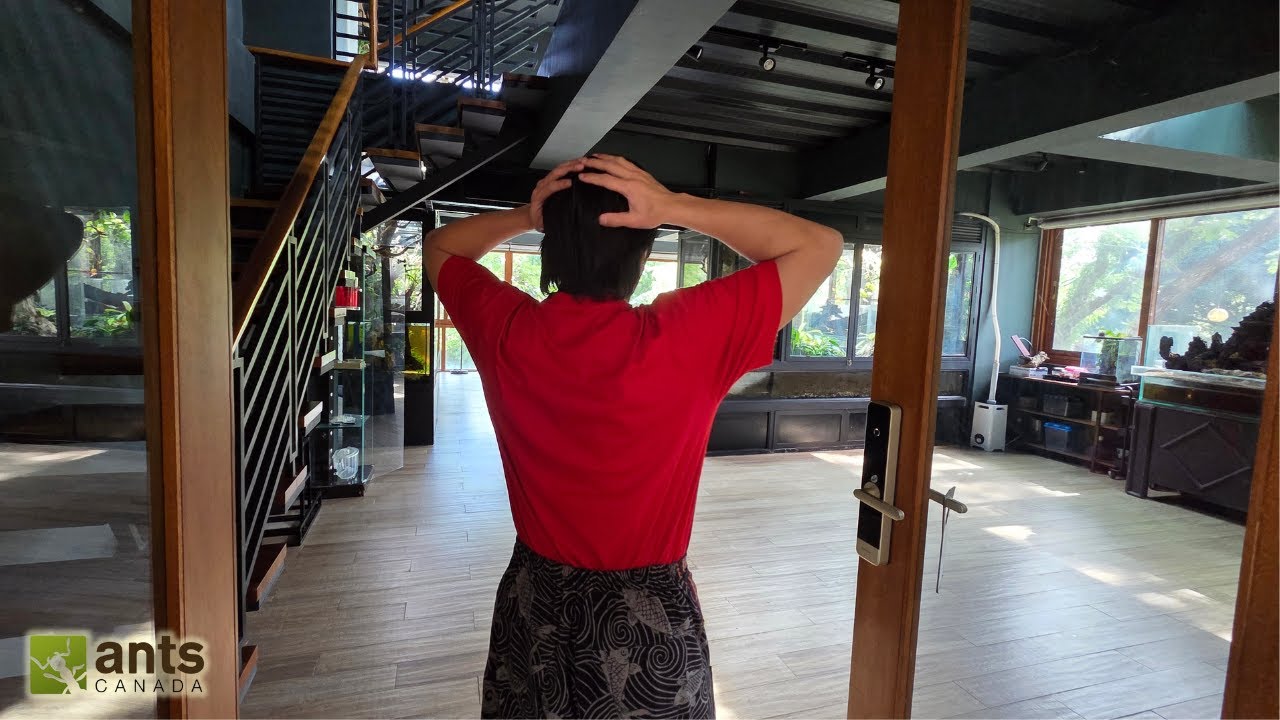
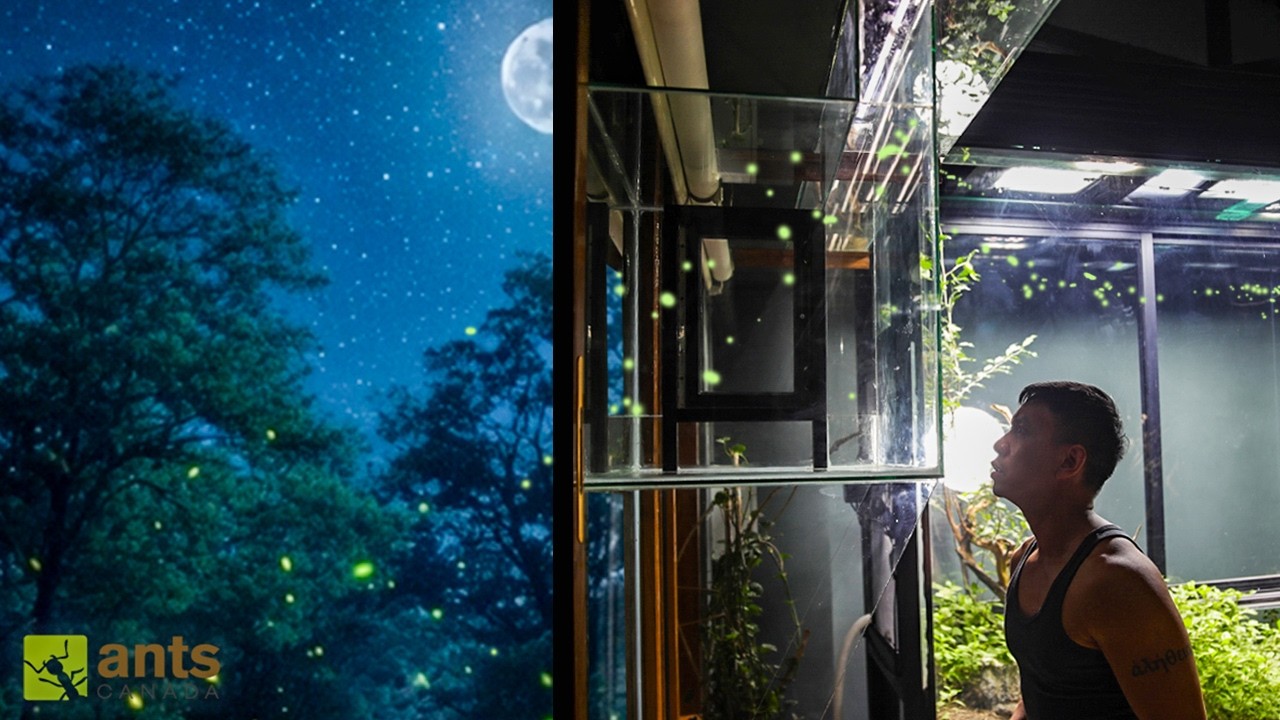
I’ve been waiting for this moment for so long, and finally, the time has come for Verdantia, my giant Grasslands Vivarium, a massive bio-replica of a grasslands ecosystem, complete with a developing world of grassland plants, fungi, and creatures, the latest installment of my personal biological studies of the ecosystems of the world’s biomes, to finally welcome some select creatures, I’ve chosen for this stage in the grassland’s lifecycle, that would truly change the grasslands forever! When Verdantia was first built, several of you felt this open area in the vivarium, above the grass, was a blatant waste of space, but in response, I assured you guys, it was all part of a master plan and that in time you would all see what the space was for. Well, today that master plan is revealed with the addition of some crucial animals, I’ve been caring for years, that I was certain would take our grasslands to the next level. This is the story of what happened when I introduced birds into my Giant Grasslands Vivarium, and how their integration into the vivarium was an adventure I’d never forget. Welcome to Verdantia’s Age of the Birds, here on the AntsCanada Ant Channel. Fly free! Please SUBSCRIBE to the channel and hit the BELL ICON! Welcome to the AC Family! Enjoy! Keeping birds as pets can be a controversial topic. On one hand, some feel birds should be free, soaring the skies, and not kept in cages, large or small. Others argue that birds born and raised in captivity cannot be released into the wild as they lack the skills to survive, and that some bird species that are rare in the wild, still exist on the planet in abundance, thanks to the pet industry. As a long time bird nerd and caregiver of rescues, adoptees, and captive-bred bird species, I’ve had years to think about the ethics of bird-keeping, and this week, observing what happened when I introduced a small flock of flighted birds into one of my Giant Ecosystem Vivariums, helped show me where I stand on the issue. But before all that, it was time to welcome some old friends back to the channel. I placed Sonny and Cher into Verdantia, and they instantly darted for the grass. For those new to the channel, Sonny and Cher were a coupled pair of King Quails that spent a great deal of time in my Rainforest Floor Vivarium Pantdora, before I released them into my Giant Home Aviary, which by the way, we’ll be visiting next. I was happy to bring these two quails back to the Ant Room and introduce them to the grasslands, because this field-type habitat with all its lush ground plants and grasses, was a habitat much more suited to their species. I couldn’t wait to see how they’d settle in, but right now it seemed they were hiding somewhere in the shadows of the grass. I waited for them to come out. Any moment now… OK… Umm… Guess not. They’re shy. No worries. They’ll come out when they’re ready, I guess. I hope… Meanwhile, on to a very special place in my home, because this is where I’ll be collecting our next flock to enter Verdantia. This is my Giant Home Aviary, a three story aviary built in the center of my home, complete with a plethora of plant life, trees, and vines, housing various species of birds and creatures, most of which were rescued, adopted, or given to me as gifts. I guess you can say, birds have been my obsession since I was child, almost as long as my obsession with ants. From finches, to mini dove species, canaries, to quails, this aviary was a space of serene bird songs and colours, the perfect spiritual palette cleanser to any stressful day. But earlier this year, there was a problem in the aviary, a plot twist I completely didn’t anticipate, that seemed right out of a Hollywood movie. So I’ve been extremely selective with what birds
Segment 2 (05:00 - 10:00)
I allowed into this aviary, because I didn’t want the birds in the aviary to be breeding uncontrollably, particularly the finches which can quickly breed like mice if left unchecked, so my tactic has been to eliminate any breeding altogether by only keeping male birds in this aviary. In this way, it ensured there was no unauthorized breeding in my Jurassic Park. Now over the past almost three years that I’ve been keeping this Gay-viary, and have been accepting more and more adoptees, I always ensured from the former owners that the birds given to me were all male. Now strangely, one thing I learned is that in a single-sex environment, the males will still pair up. They’ll court each other, perform mating rituals, even attempt to mate, build nests together, and essentially act as if it was a mixed male and female flock. But low and behold, AC Family, I looked into one of the nests this week, and was shocked to spot this: babies and eggs! Like right out of the movies, life found a way! There was a female somewhere in the aviary and this changed everything! The former owner must have not known one or more of the birds given to me was female. Now this set of young here is actually the third round of babies I found in the nests this year. The eggs laid before this were all removed by hand and fed to my fire ants. Sad, I know, but it had to be done. I knew this was only a temporary bandaid, though, and that at some point I had to find and remove the female finches from the aviary. I was pretty certain the culprit female or females were society finches, a cute white and brown species known to breed well, to live in social flocks, and to be great parents, because every night, I would see them sitting inside the nest! So, when I began planning for the construction of Verdantia earlier this year, I knew this was my chance to rehome the breeding society finches, at least temporarily until I could found someone to adopt them. My other option was to keep them in a holding cage. Of course, Verdantia was the best option in my mind because it offered the birds a naturalistic setting and ample flight room. To show you what I mean, let me show you how big Verdantia truly is, as I feel my wide angle lenses don’t do the size of the tank justice. This is the recommended minimum cage size required for a pair of finches, according to online sources. It is 18 inches tall, by 18 inches deep, by 30 inches long. This is what those parameters look like in Verdantia. 18 inches by 30 inches. The suggested minimum cage size is a total space of 33 US Gallons. Verdantia is just over 2,000 US gallons, which translates to 60 times the space required for a pair of finches. 60! This means that excluding the space taken up by decor and soil, perhaps around 80-100 finches can be housed in Verdantia. Verdantia is also a long space, which I felt would give the birds the ability to use their wing muscles and fly, the benefits of which I see with my parrots living in their long outdoor aviary, which allows the birds to fly laps back and forth, utilizing their wing muscles. Sadly, finches and other such song birds are commonly kept in the tiniest of cages in the pet trade, much like how bettas are kept in tiny bowls. It’s become a norm, and there’s a whole industry for small birds in little cages, where the cage and the birds are more decorative in purpose or serve as an auspicious good luck charm in some cultures. However, in a small cage the birds don’t get to use their wing muscles as much as they should, and thus lose the ability to fly, due to atrophy, which for some owners is ethically acceptable, but for me is an absolute and hard no. For me, birds must fly, and I felt Verdantia was definitely flight friendly. And it was now time for them to move in. I snuck into the aviary at night, when all birds in the aviary sleep, and with a net, I captured the society finches inside the
Segment 3 (10:00 - 15:00)
nest. To my surprise there were four finches in the nest. I had no choice but to capture all four of these birds including the nest, because one or more of them had to be female, and some of the babies might also turn out to be female! I carried them all up into the Ant Room and placed the birds at the foot of Verdantia. They seemed rattled, which was understandable because they were just about getting ready to go to sleep, before being abducted. But these birds had no idea, they were in for quite a home. Now before adding the finches in, a few modifications needed to be made to the vivarium in order to make the space more bird-safe. One of the challenges with my giant home aviary was the presence of glass, and many told me it wouldn’t be possible, as the birds would smash into the glass and kill themselves. Well AC Family, I’ve learned a secret. It is possible! Check this out. I began to stick the anti-bird collision UV decals onto the glass. These temporary stickers are made for wild birds, and naturally reflect ultraviolet light which birds can see, so they don’t go smashing into glass windows. I use them on the windows around my home, and use them in my aviary when glass training new birds. Alright done! Next, is a brilliant technique a zookeeper in the US taught me, and has also been awesome at glass training my birds in the past. With a bar of soap, I began to draw swirls onto the glass. These soap swirls will help clearly establish where the glass is. To the birds they look like spider webs or nets, which they instinctually will go out of their way to not to fly into. Over time the swirls can be gradually washed away as the birds learn where the glass is. In my aviary, I left the soap swirls up for about 6 months but the finches we’ll be adding in here, they are already glass-trained so I won’t have to keep them up for that long for them to get the concept. After adding a water bowl and a spread of various seeds, all was set in Verdantia to welcome the first flighted birds to ever enter any of my vivariums. I was excited and a bit nervous, but let’s do this! I placed the holding cage into Verdantia and carefully opened the top. The birds instantly flew off, and there they were at the other end. Crazy! I couldn’t believe they were in. I attached the nest to the great tree. Done! The nest actually looked quite great there. I watched as the birds settled into their new home. They began to preen their feathers. Another began to scrape its beak against the branch on which it was perched, a branch I had secretly planned to be a bird perch since the beginning, but now my main concern was the nest. Would they remember that they had an entire nest with babies needing their care? One bird flew over to the other side, and I encouraged the others to follow. Go on! Back into the nest! One bird remained there, while the others sat at the edge of the tree. The birds returning to the nest was critical because the babies needed their parents’ warmth at this stage and also needed them for food, but my fear was that the new nest position and relocation would cause the finches to abandon all parenting duties altogether. If this did happen, I would need to go in and remove the birds to hand-feed them myself, as well as provide incubation warmth. The finches didn’t want to seem to move, as long as I was around. So, I decided to step away and hope the birds would eventually hop right back into the nest for the night, but little did I know, this would all play out in a way I did not expect. Night fell in Verdantia, and two shadowy figures
Segment 4 (15:00 - 20:00)
were whipping through the grass. Sonny and Cher were like Velociraptors moving through the foliage. I caught them picking away at the wild basil, which I was happy about seeing as this wild basil was an invasive plant in the grasslands. I also caught Sonny consuming an isopod he had captured. I knew these birds were better off here in Verdantia than the aviary because here they had much more ground to scrape around, more insects to hunt, plants to hide in and nibble on, and places to hopefully finally create a nest at some point come breeding season. Sonny emerged, but as soon as I approached the tank to get a better shot of him, he disappeared into the foliage. Awww come on, man! Why so shy? Looking up into the tree, I was shocked to see that the finches were all perched in the tree’s branches. This was sad. They decided to not return to the nest. It was time to take action and save the babies. The next morning, I checked up on the finches, and they were up, chirping loudly and starting their day, but I knew they had not returned to the nest all night. I went in and pulled out the nest, and placed all the babies and eggs into a glass bowl lined with paper towel. There they were. Three babies and some eggs. I always have baby bird formula on hand just in case I need to rescue baby birds around my home. Finches are “altricial” meaning they need to be fed by their parents for the first few weeks until they are old enough to feed on their own. When they were done feeding, their crops were completely full. See the bulges? I then proceeded to place the glass nest into my incubator where I incubate my chicken eggs, to warm up after a cold night. As much as I would have preferred the real parents to raise these baby birds, I had no choice but to raise them into adulthood myself, at least that, is what I thought. I placed the nest back into the tree, but to my surprise something unexpected happened. One of the finches suddenly took notice of the nest. Perhaps now that I had placed it in a more visible spot, the birds began to remember that they had babies to care for. I then spotted one of them entering the nest! Oh man! The bird was looking for the young! I quickly went in and added all eggs and baby birds back into the nest, and watched wide eyed to see if they would return to parenting them. One was curious. Then all finches showed interest in the nest. One was looking inside and for sure could see the babies. She looked through the straw roof at the babies and eggs inside but didn’t enter. Another came looking in, and to my delight, she hopped inside. Yes! They remembered! Oh, and that looks like her partner. Now I don’t actually know which of these is the male and which is the female but let’s just call this one the male for now. Mom seemed so happy to see the babies again, as dad looked on, and it looked like the mom was regurgitating food for the young. The other two finches came around to form a support group. It seemed as though these two, with the
Segment 5 (20:00 - 25:00)
brown eye bands were a bonded pair (possibly parents to the unhatched eggs), and these two at the nest were a bonded pair. What should we name these birds, AC Family? Let me know in the comments! I loved watching the dad look through the nest window at his wife and kids. Eventually, he too hopped in, and they both proceeded to fix the nest which I had apparently messed up, but this whole sight truly warmed my heart! The birds had finally made themselves at home. Later that day, I caught dad feeding on seeds and drinking from the water bowl. He later returned to the Great Tree where the other masked couple were hanging out, before hopping back into the nest where I assume he regurgitated food to feed the young and join his wife, before flying back out to repeat the process. I also noticed that the other two birds were like his posse following him around. Over the next few days, I watched as the birds completely adopted Verdantia as their new home, flying down to the watering hole to drink which was always so cute to watch. I noticed that sometimes the birds would have squabbles, but overall this was a flock, all socially bonded. I even caught the birds socially preening each other, even between non-partners, a clear sign of bonding,. While the birds were out and about, there was always one bird staying at home keeping the young warm, with at least one friend constantly coming back to check up on them. I also noticed that the birds shared parental duties. See that banded finch hopping in to feed? They also all huddled into the nest to sleep together as a flock at night. Eventually, I wiped away the swirls and removed the stickers. The birds had long learned the parameters of their home, and it was just amazing watching them live out their lives just as their ancestors would have in the wild, as they fed on seeds together as a flock, even joined by mom. I also knew they were bathing in their water bowl when I wasn’t looking, because I could see the dried up splashes against the glass! Now what I found the most cool about all of this was how their presence in the grasslands benefited the entire ecosystem! Looking into their seed plate, I noticed a tonne of marauder ants, the Reapers, picking away at seeds, as well as native red ants. Both these species are granivores, seeing as they evolved to inhabit grasslands, which was a great thing because the pesky invasive black crazy ants, the Sagittarius Army, which were more generalist in nature, did not have the mouthparts to crack into the hard shells of seeds, giving these native ants a nutritional advantage. This could eventually tip the scale in the native ants’ favour and eliminate the Sagittarius Army once and for all! Also, the birds’ droppings which were concentrated mostly under the main perches would go on to provide valuable nutrients to the plants. Some seeds which end up passing through the finches digestive tract undigested would go on to germinate and form new plants. When the mists blew through, I spotted the quails emerging. Aha! This was my chance to try and get close. I inched closer, and closer, and closer until yes, the birds allowed me to get right in. I guess the mist helped at obscuring me coming so close. Eventually, they disappeared into the grass again, which I was ok with. In time, they’ll learn to feel safe around me approaching. But perhaps the most amazing thing to watch was the finches flying through the skies of Verdantia. They were so happy flying back and forth all day chirping at the top of their lungs. What was great was that Verdantia’s winds turn on at various intervals and directions randomly, which forced the birds to truly keep on top of their flying game, constantly working out their wing muscles, in order to adapt to the changing winds within the space. They were even agile enough to catch flying insects, like the katydids. I eventually moved the position of the nest sideways to reduce stress. I just wanted to provide the most comfortable environment possible for them to rear the babies to adulthood, whom I couldn’t wait to see emerge from the nest in the coming weeks
Segment 6 (25:00 - 27:00)
assuming I don’t manage to find them a forever home before then. I always felt birds were like Mother Nature’s living angels on the planet. Animals with access to the heavens, performing divine work on Earth. Even the birds that can’t fly seem to make my heart flutter every time I see them. I am and always will be a bird fan. Though I do wish all birds could be free, sadly I realise that isn’t the reality. Society Finches have been bred in captivity for thousands of years, and don’t even have a wild counterpart anymore. King quails, though still having wild counterparts, are also thousands of years domesticated, and I do agree, that if I were to release these birds or any of the birds under my care into the wild, they’d surely die, due to lacking survival skills which wild birds naturally have. I feel the best option we have now as bird owners is to house our birds in the best conditions we possibly can, and as I watched the finches gregariously hanging out in the sun, chirping in the Verdantian breeze, and the quails foraging the lush field for insects and edibles, I finally understood that what I was looking at, was the difference between keeping birds in a cage, and gifting them with a home, fit for angels. Now on the topic of connectedness, I’ve been mulling over a certain issue for months and I still haven’t come to a decision, so I’ll need your help with this. As you know Pantgea is made up of our last three giant ecosystem vivariums, Pandora, Orchadia, and Hydromeda, three different biomes, all brimming with life, connected, and exchanging creatures. The goal was to also eventually connect Verdantia, the largest vivarium of all vivariums, to Pantgea to create one massive superbiome vivarial quad. But the problem was how? AC Family, let’s talk about the great connection event of Verdantia to Pantgea, shall we? Vote in my Community Tab to affect this story!