Cutting mirrors with Diamonds

Cutting mirrors with Diamonds

Machine-readable: Markdown · JSON API · Site index

Поделиться Telegram VK Бот
Транскрипт Скачать .md
Анализ с AI

Оглавление (4 сегментов)

Segment 1 (00:00 - 05:00)

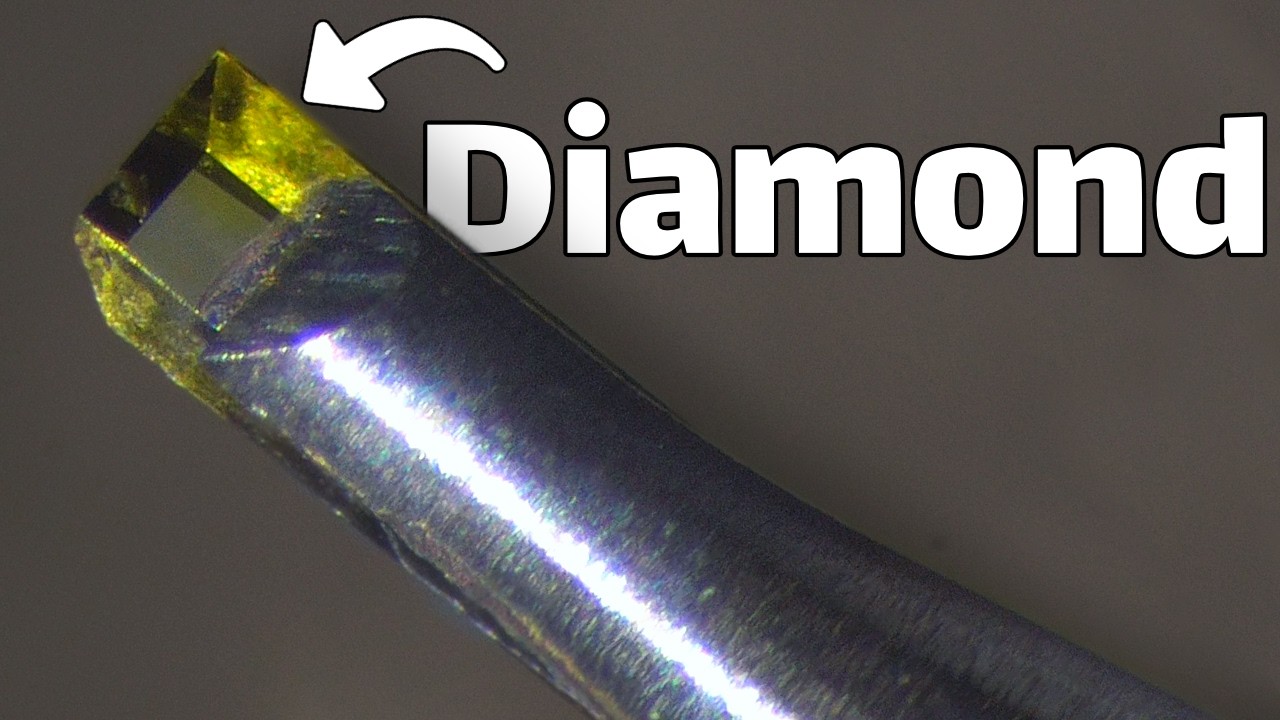
you're watching a monoc crystallin diamond cut High Purity copper in slow motion the little chip that's peeling off right there is only about four microns thick this process is known as diamond scribing and today we're going to create an optical mirror for a Quantum device called a Magneto Optical trap or M for short it uses lasers to super cool a cloud of atoms which can then be used for a number of different experiments Ms work by focusing multiple lasers onto a sing SLE Point inside of a vacuum chamber surrounded by coils which generate a magnetic field all of this works together to cool a cloud of atoms down to near absolute zero at these Ultra cold temperatures atoms can be manipulated and used for experiments like high Precision gravity mapping there are a few ways to configure a m but the traditional approach is three pairs of lasers focused onto a central region unfortunately this is a really bulky configuration and tedious to align all of those lasers instead the GE R of this mirror reflects a single laser beam back onto itself this makes alignment much easier and the device is very compact which makes it easier to integrate into an experiment this specific mirror configuration comes from a paper but the details were pretty light they said it was made from copper because quote a mirror finish surface can be produced by Milling processes alone without subsequent polishing and that's it the paper doesn't specify any other details about how they actually made the mirror but there is one way to get something approaching a true Optical mirror and that's using a Diamond Tool specifically a monoc crystallin diamond this here is a monocrystalline Diamond Tool designed for Milling it's a diamond that has been grown as a single Crystal brazed onto a carbide shank and then polished to a very sharp edge this diamond has a yellow color because of a high nitrogen content which is common in diamonds grown with a high pressure high temperature process more expensive better quality diamonds grown by cvd are usually transparent diamond tools can generate mirror surfaces in metals like aluminum and copper because The Cutting Edge is extremely sharp and because diamond is so much harder than the metals there's basically no wear at all on the tool so a diamond can cut a reflective mirror surface but it'll only be an optical surface if the motion of the CNC machine is smooth enough to generate a flat parallel surface needed for a mirror right so the first test was nothing fancy I just Mill a piece of alum with various feeds and speeds to get a sense for how this Diamond Tool reacts as you can see the Finish isn't that bad it's pretty reflective but there's also obviously a lot of swirl marks which are not great looking at the test sample under the electron microscope is very cool and it gives us a lot of useful information at the top here is the regular endmill finish the tool isn't specifically made for floor finishing so there's a pretty dramatic cross-hatch pattern below that is the diamond finish it's immediate medely obvious how much smoother the floor is compared to the carbide it's just amazing but zooming in we can see those swirl marks a little more closely they're very shallow but they're still present everywhere and keep the Finish from being perfectly smooth we can also see these areas where the material tore out and it looks like it got dragged across the surface they almost always originate from one of these crystallin pockets of material if we look at that with the element detector we can see they're enriched in iron and silicon this aluminum alloy is 7075 which does include iron and silicon and small percentages so I think these are just enriched inclusions of those elements and instead of cutting they get dragged across the soft aluminum surface it's hard to find pure aluminum in any reasonable size so I'm going to switch to copper and this is probably why they use copper in the paper too I reran the tests with similar parameters and the results are pretty encouraging reasonably reflective although we can still see some of the swirl marks but they're not quite as bad as before under the electron microscope we can see a similar pattern as before just better the Diamond Tool leaves a very smooth surface and the periodic swirls are a little less noticeable this time we can also see a pretty distinct line where each pass overlaps the prior cutting pass luckily the material itself is free from inclusions or other contaminants so we don't have that tear out issue like we did in aluminum so a diamond can cut a reflective mirror surface but it'll only be an optical surface if the motion of the CNC machine is smooth enough to generate a flat parallel surface needed for a mirror an optical surface is just very unforgiving mirror surfaces have tolerances measured in nanometers for example a kind of cheap Precision mirror will have a Lambda over 4 specification that means the difference between the highest and the lowest point on the mirror is only one4

Segment 2 (05:00 - 10:00)

the target wavelength so red light for example has a wavelength around 620 NM which means a Lambda over 4 Mirror Has a flatness tolerance of just 155 nanm and that's just the flatness surface roughness is also very important and something around 5 NM is common on just even cheap commodity Optics we can check the surface roughness with a probe stylus tool and see that it clocks in around 20 NM for context a glass slide is around 14 NM so despite those swirl marks we can see that the roughness at least is still pretty good I did check flatness of these samples using my available indicators my tenth indicator just doesn't really move at all and if I pull out my Micron indicator plus or minus one to two microns so you know it's hard to say cuz this is obviously at the resolution limit of this particular indicator but we're probably with within one to two microns of flatness give or take okay so at this point I was feeling fairly optimistic there's obviously a lot of improvement needed but it felt like a doable project I also got some advice from Professionals in the field as to like feeds and speeds and parameters and decided to try out a test mirror all right so this is the setup I've got the component roughed in the Diamond Tool and a Mist coolant system in pretty close proximity so we zoom in you can see that it's basically the final shape uh except it's just not a mirror polish yet the Mist coolant here is basically parallel with the slots that we'll be cutting and the idea is that we want the air pressure and the coolant to be blowing the chips kind of away from the cut and get them away from this diamond any sort of Chip recutting will ruin the surface we're using isopropyl alcohol and just regular air and it's a pretty light mix so it's mostly air with just a little bit of alcohol we only need a small amount of lubrication it's mostly there to get the chips out of the way and the diamond itself is just a square Edge I think it's 3 mm and we'll be taking very small stepovers about 12 microns now we just let it warm up a little bit any changes in De height while it's running due to with thermal effects will ruin the finish so we want to get the spindle up to its operating temperature for this RPM and let it kind of soak for a couple minutes just so that there's no changes in zyp in theory the machine compensates for this but when we're talking about microscopic differences for making a mirror it's uh important not to rely on it okay I mean that's pretty encouraging but we definitely have some work to do here ignore that Ridge in the middle between the two surfaces that was just a messed up offset and some material was left on accident the surface cut by the carbide is nice but shows a pretty clear rainbow defraction pattern under the sem it's obvious the surface has relatively deep grooves if we pop these under the atomic Force microscope we can see those grooves a little better the grooves are 100 to 200 NM deep and the overall average surface roughness is about 50 n M which frankly isn't bad at all that's about a 2 micro in ra for the Imperial folks and is considered a pretty good finish but it's a far cry from the 5 nanometer roughness scene on cheap Optics the diamond side is considerably smoother unlike my initial tests I cut with a very small step over just 25 micron wide on each pass and the depth of cut was also 25 microns combined with alcohol Mist coolant this helped improve the surface there are still light swirl marks but they're much less pronounced from before unfortunately I can't get my probe stylus onto these small mirror faces it just doesn't fit but we can get similar data with an atomic Force microscope just over a relatively small area there's a pretty obvious step between adjacent passes about 50 NM tall the surface roughness in between the steps is only 3 to 4 NM and Global roughness including the steps is about 25 to 30 NM I also managed to collect some of the chips while it was Machining it looks just like copper dust by eye but under the electron microscope we can see that they are in fact tiny little curly chips I don't know it's just kind of neat to know that despite the very small cutting parameters the chips look like well they look like real metal cutting chips just small which is kind of cool okay so this is pretty darn good I have to say the surface is definitely reflective it's mirrorlike finish and the swirl marks are not too pronounced but can we do

Segment 3 (10:00 - 15:00)

better I think we probably can one of the challenges of my current approach is balancing speed and vibration with a 25 micron step over the feed rate is set to just 5 microns per Revolution with a 25,000 RPM spindle speed that takes about an hour to machine one side of these mirrors but lower RPM is technically better because there's less heat generated in the spindle and less overall vibration my machine has a spindle Chiller to keep the spindle at a constant temperature and thermal compensation which is normally enough to manage all these thermal growth issues but it's not really designed to be holding nanometer tolerances so less heat is better unfortunately a slow speed like 5,000 RPM would take 4 hours to make the same cut but even this isn't a guarantee because the longer the process takes the more chance there is for external environmental parameters to change like the temperature in my shop or vibrations from the nearby environment so like all things it's a balance there are also resonances to take into account spindles generate more or less vibrations at different speeds my particular spindle is very smooth at 18,000 RPM and 25,000 RPM so I mostly stuck with those in my testing but what if and hear me out what if we don't spin the spindle okay I know this sounds kind of weird but you don't have to spin a tool to cut you can just push it straight through the metal this is actually one of the early forms of Machining called shaping or sometimes scribing it's not often used anymore because compared to a rotating tool it's just not very productive but in our case we're removing a truly tiny amount of material and we're deeply concerned about vibrations and thermal growth and if the spindle isn't spinning at all there's no thermal growth and no vibrations at least from the spindle so instead of taking many small stepovers we take a single full width cut not only does this reduce vibrations it also ensures that the entire surface is cut at the same Z height or at least the same height within the resolution limit of my encoders I tried a variety of parameters tweaking how fast the tool is feeding how thick the roughing cuts are and the final depth of cut and different types of coolant I eventually settled on roughing Cuts 25 microns deep at about 60 in per minute and four finishing passes at 2. 5 microns isopropyl alcohol seemed to give better results than a light oil and I applied it by hand from a squirt bottle this process brings the time down to just 15 minutes and the results are similar if not better than the rotating tool approach there are two notable art effects that we can see in this new method first there's typically a long scratch or two on some of the faces this is potentially caused by contamination that's being dragged across the surface but I think it's more likely the chip itself I'm using a neutral rake angle on the tool so as the chip cuts it curls up right in front of the tool and it has a chance to scrape against the adjacent face causing a scratch second we can see a sort of like periodic winess that looks a lot like chatter now before you take to the comments yelling about chatter hold up this mirror surface is really deceptive they're actually only on the order of about 100 nmet I'll show you some high-speed footage in a minute which I think will help convince you that it's not chatter so I think what we're seeing is probably the intrinsic motion error of my xaxis probably something like slight differences in the ball bearing diameters or imperfections in the linear rails incidentally this is why people who do this work professionally often have machines with hydrostatic ways because the motion is just a lot smoother than anything mechanical like ball bearan we can see that this a yields a surface roughness on the order of 10 to 15 NM and there's no Ledges from adjacent stepovers because we're cutting everything in one pass there is a new artifact we can see though and it's these regions of material that looks like it was almost torn out the defect is relatively shallow but it does degrade the surface and I'd like to fix it if possible however before we dive too deep down the rabbit hole of optimizations I wanted to send Max a batch of these mirrors so he could start testing them in his setup so I machined three mirrors coated them with 200 NM of aluminum in my sputter coater and sent them off to Max okay so back to the optimization can we do better I think the first thing we can fix is that long scratch issue we can rotate the tool just slightly to cause a positive rake angle this will encourage the chip to roll up towards the outside and not touch anything I'm also going to switch back to mist coolant the air pressure should help encourage chips to leave the area instead of sticking

Segment 4 (15:00 - 19:00)

around like they do in the manual flood coolant squirt bottle approach the waviness and tear out issues I suspect are not entirely fixable assuming it's the error motion of the machine itself but I did realize that my tool path wasn't optimal it would make a cut lift up in Z move back to the start position and then move back down in Z the encoders on my machine are rated for plus or minus 2 Micron accuracy and plus or minus 1 micron repeatability each time we raise or lower the z-axis we're potentially off by four microns and all those Z moves are going to slowly accumulate error over time looking at some chips in the process this seems to be the case there are a lot of chips that are six or even 8 microns thick when we're asking for Just Two Micron depths of cut this change in thickness can lead to a lot of additional force on the tool which could be contributing to the waviness and tear out issues for some context professional Diamond turning and million shops will often use a one micron or smaller finish pass so six or eight microns is a really huge difference and finally I realized the copper that I was using accidentally changed without me noticing the first batch that I milled had a soft temper but the scribing samples were all done on bar stock that's half hard so this harder material could be contributing to tear out issues that we saw so that's easy enough I can switch back to a soft temper copper and adjust the tool path to make fewer Z moves it also hopefully eliminates any mechanical backlash that might not be noticed by the encoders because we're only moving in One Direction putting all this together we get this pretty cool right I love this the chip curls off to one side kind of like a woodworker spill plane it makes a really nice tight curl and then the Air Blast helps keep the chip off the surface and it flies away as soon as it detaches looking at multiple passes under the highspeed footage the chip seems to be very consistent in formation and size thickness and how it reacts which is encouraging looking at the final product we can see that the waviness is now tilted slightly to follow the tool rake angle but otherwise looks unchanged the curled nature of these chips makes it hard to check thickness but it seems much more consistent around 2 to four microns not quite what we were aiming for but no longer the huge 8 Micron thick chips I decided the rank angle was maybe a bit extreme so I dialed it back a little bit and ran a final test and this is definitely the best mirror that I've produced yet it's highly reflective has no scratches and relatively minimal waviness surface roughness is about 13 NM we still see some of that tear out issue but nothing as dramatic as before so I think the softer copper really helps I suspect this is just about as good as we're going to get on my machine with this tool and this material if you enjoy this kind of precision Machining I recommend you check out Silo's garage Cyrus is super smart and knows a ton about Ultra Precision Machining and he's actually been building a diamond turning lathe from scratch Diamond lathes are amazing pieces of equipment that can generate real Optical quality mirrors out of metal as well as fancy shapes like micr lens arrays and weird asymmetric designs it's a really cool Rabbit Hole to fall into cuz it's kind of an intersection between Ultra Precision Machining and Optics anyway that's all I've got for you hope you found this interesting there's no sponsor this week but if you'd like to see what I'm working on from month to month I have a patreon where I post updates I'm trying to slowly increase my frequency on updates but it's a work in progress thanks for watching and I'll see you all next time

Другие видео автора — Breaking Taps

Ctrl+V

Экстракт Знаний в Telegram

Экстракты и дистилляты из лучших YouTube-каналов — сразу после публикации.

Подписаться

Дайджест Экстрактов

Лучшие методички за неделю — каждый понедельник