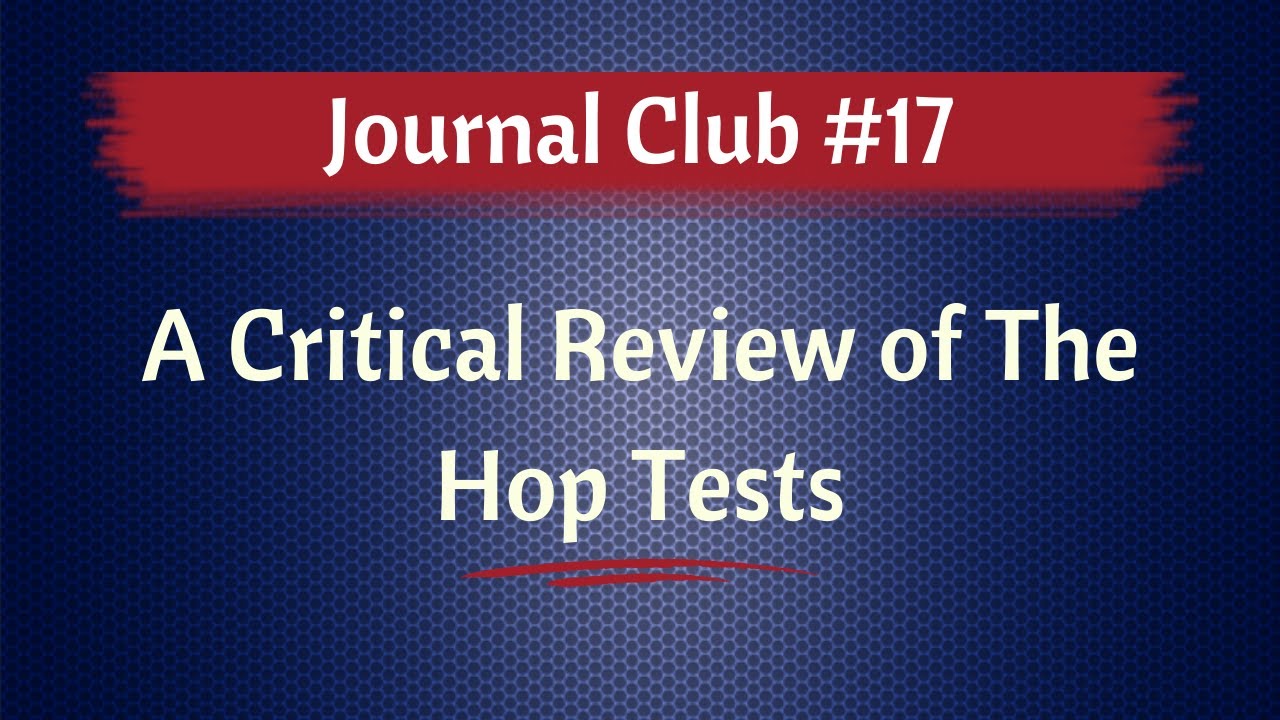
ClinicalAthlete Journal Club #17

ClinicalAthlete Journal Club #17

Machine-readable: Markdown · JSON API · Site index

Поделиться Telegram VK Бот
Транскрипт Скачать .md
Анализ с AI

Оглавление (19 сегментов)

Segment 1 (00:00 - 05:00)

come to the clinical athlete Journal Club number 17 my name is Quinn henyk I'm a proud clinical athlete provider and as always I am joined by Kevin McNamara a physical therapist currently completing a residency at Johns Hopkins if obviously we're all aware of the current crisis and have you've seen any of the day-to-day data that's coming out a lot of it comes from Johns Hopkins and that's where Kevin is right now doing his PT residency and he's a longtime clinical athlete forum member and the one responsible for bringing the journal club to life so thanks for being on as always Kevin of course Clin always happy to be here to it yeah so be a fun one and then I think you're gonna be the point man on a lot of this conversation because I think you're getting a lot more of this on your end as far as what we're gonna actually talk about but if anybody is interested in the impetus of this journal club and the motto that we have we kind of modeled it after a smart guy named Benjamin Franklin who way back in the day started a weekly Club that was called the junto Club and it was a quote unquote Mutual Improvement Club but it was basically just a room of smart people discussing topics and issues of the day kind of like what we're doing here but they had an important policy and that policy was that all discussions would be conducted in the sincere spirit of inquiry after truth without fondness of dispute or desire of victory and so that's become our clinical athlete motto these meetings are conducted in the sincere spirit of inquiry after truth without fondness of dispute or desire victory doesn't mean there's not disagreement and good strong discussion it just means that we're not in it to win it we're not looking to come out as a victor of the discussion we're all on the same team here and we're just trying to be less wrong so the topic of today's a meeting is a critical review of the Hopf tests and I've made a few poll questions I'm gonna launch that just to get a feel for the room so there's three questions that should be popping up in front of you here the first question is who are you clinician student clinician coach trainer or student coach trainer question number two have you rehab trained an athlete with a past ACL reconstruction and question three for the clinicians do you use hop testing as part of return to sport testing for ACL R and you know if your strength conditioning coach and you get athletes who have prior history and you can take them through hot test too so you know feel free to answer that question as well so it looks like the majority of the room our Commission's or student clinicians about 10% coaches trainers and almost 90% have rehab or train an athlete with the past ACL reconstruction it's that doesn't surprise me and then the majority of you 85% use hop testing as part of your return to sport protocol so probably a relevant paper for you guys so this is good and I'll show you in that poll here so you can see those results should pop up so the name of this paper was is it time we better understood the tests we are using for return to sport decision-making following ACL reconstruction a critical review of the hop tests and this paper the kind of the format of the paper was similar to a format that we a paper that we looked at a few meetings ago on stretching where that paper was only one author James News oh this paper has three authors but it's a kind of a review but it's not a systematic review it's not a meta-analysis they it's not a study in and of itself they're not pooling any data or anything like that it's kind of expert opinion on a current topic which you know take that for what it's worth we also had a paper the last meeting on strength and power training in rehab that was a similar format kind of expert review I liked these papers because it puts things into context the practicality is there it's more of a kind of a discussion format that can get you thinking keep in mind that a it's based on expert opinion so the biases of the authors are going to come out with that you know their interpretation if the literature is going to be what is in the paper so you just kind of take that for what it's worth but they I'll just do a quick overview and I'll kind of throw it to you Kevin and see what you thought about and then we'll just get the discussion going so they started with kind of a history of what our hop testing came from starting in the 80s and 90s you know clinicians looking for an a practical low-cost way to assess function and then they kind of

Segment 2 (05:00 - 10:00)

got into the literature of looking into reliability of the Hopf test like is this are these repeatable tests and in general they are we'll dig into some of the nuance there and they talked about the relationship of hop testing outcomes compared to strength outcomes you know is their relationship as somebody improves in hop testing are they also concurrently improving in their strength values and also in their subjective reports of their function and then they get into some of the nitty-gritty of which tests are a little bit more sensitive to change over time do we need all four tests and when I say four tests there are a lot of hop tests the first half of this paper and kind of the most of this paper or the first half of it and kind of the entirety of the paper is based on four common hop tests the single-leg hop for distance the single-leg triple hop the single-leg crossover hop and the single egg six meter timed hop so those are the four tests you can look at figure two if you want to reference those so those are the four main hop tests that they're kind of talking about and then the rest of the conversation branches off of those but then they so they ask the question of do we need all four of these hop tests are some of these tests measuring the same thing and so are you just measuring redundancy at that point from there they talk about other tests so all four of those hop tests that I just listed our horse or a horizontal test so they're you know the jumping forwards but what about vertical jumps what about lateral jumps what about jumps with a rotational element so they kind of dig into some of those and some of the literature which is a little bit more sparse on a lot of those tests and then they get into some interesting conversations which I think I'm interested in towards the end of the paper talking about the issues of comparing the involved side to the contralateral side is that enough is the contralateral side a good reference and we'll talk about why and why not and then also the idea of movement quality being able to pass the hop tests but what strategies are you using you know are those strategy is going to be viable in a chaotic environment on the field so just because you passed the test does that mean that you're truly ready or system the need the system of the knee is ready to withstand forces repeated forces and will dig into all of that stuff but so that was an overview of the paper I like summaries of certain topics like this because what it allows you to do is to dig into references so this is one of those papers that I'll use as a rep as a cross-reference so every time that I want to think about like ask a question about hop testing I'll probably dig into this paper look for the references for that particular question and then dig into those references if I want some of the hard data so you can use papers like this for that but Kevin what was your impression of this piece yeah I mean I share similar feeling the system regards to the general format of papers like this I think especially for something like a journal club it's great because it really fosters discussion they don't get so bogged down into some of the details or the nuances of a specific study or a cohort and it really allows maybe a little bit more practicality and a little bit more clinical implications for broader questions but I really like this paper because I think even sort of builds off of you know the last was it a couple clubs ago where we were talking about more of like a dynamical systems approach to kind of analyzing movement and sports specific and I think it really addresses this sort of issue or concept that we need to remember that a symmetries are gonna be task and quality specific so I don't I think having coming into this paper with the idea or the question in mind that we shouldn't necessarily expect to see the same between limb deficits or differences across multiple tests is really important when we start to talk about intervening or addressing some of those deficits because we need to have something that is sensitive enough to I definitely identify whether a deficit is there but also specific enough to guide us in some of the applications so I think they bring up a lot of great points in getting into some of those details on what is this test measuring what is it telling us how can we use that to guide decision making so I really enjoyed this paper for that for those reasons sensitivity and specificity conversation is an interesting one I think it's important with these things because we're looking

Segment 3 (10:00 - 15:00)

if we want to if we're looking for a sensitive test test that's gonna pull out all of the true positives if we have a hundred people we want to test that of all the of those 100 people for those who have the thing we want to test that's going to identify all of those people all of the true positives so you know beginning screening that's why we want a sensitive test we want to identify all those people that we want to work on and intervene on and then as we're looking to discharge somebody and see if somebody's ready we want to test that then is going to identify all the true negatives you know of those a hundred people for the of all those who are ready those who no longer have an e that's affected the true negatives we want to test that's going to identify all of those people to say okay you pass this test you're ready and they really highlight some of the limitations with individual Hoppe tests some being sensitive some being specific some being you know and and kind of a myriad of the two and if we're using you know hot tess's discharge criteria but yet we have hot tests that are not specific we might be like they mentioned holding somebody back because I didn't pass the hot test and in turn test that's not sensitive enough to pick up on a deficit you know can be can have its own problems on the front end as well because athletes can figure out a way to pass it you know and so we'll talk about that as well but I thought that was an interesting point in the sensitivity specificity can conflit people's brains upside down and it does for me as well but it's important to think about that or what is the test providing you at different time points of your plan of care but Kevin do you guys use for like your general battery of hot testing do you use all four of the basic ones that they like this is something that I've actually kind of got the ball rolling with in terms of changing this a little bit based off of this paper and nstant feathers in particular so we actually recently started to move away from using kind of like the standard University of Delaware you know all for tests and it actually started playing around with like a single leg vertical jump and then a depth hop as well in addition to the single hop for distance in the triple hop for distance so that's relatively new prior to I mean I think at the very least I think if we're performing the baseline battery of looking for you know ninety percent quad index 90 percent hamstring index and performing those four tests a good place to start but we have kind of shifted away from utilizing strictly these four so I don't you so I use the I use a duck a drop jump in a depth drop I use those as separate constructs so I use a for me a drop jump is we're going off of a 30 centimeter height or we can we couldn't go lower at first but it's reduced its minimizing contact time and then I use a depth jump for maximum height now in an ideal world we want minimal contact time maximal height but I separate those two constructs under those particular tests but that's a vertical like you said but before that and before that we do a single leg vertical jump it's not off of a deficit surface because it's just going almost as a progression but yeah and then the single leg hop for distance in this single leg triple hop I don't use the six meter timed hop test I have before and i'll-- and just kind of giving background on where I'm coming from this because I want you're right now getting a ton more experience with I think direct post op and I'm sure there's people listening in right now that are getting a lot more than me but it's been about four years since I was getting post-ops or more than that before I moved to California when I was working in a more traditional out orthopedic clinic when I was getting post-ops coming in directly and I was seeing them through the entire entirety of their plan of care but now I'm seeing people six months or later sometimes even further out so I'm still using the hop tests but they're pretty

Segment 4 (15:00 - 20:00)

high functioning and so that's why I can kind of start with something like a depth drop or a depth jump because we've got time you know away from that but yeah six meter for single leg for distance single leg triple hop and then a couple of those vertical constructs that's where I'm at - so I guess it's kind of like that natural evolution yeah I think I just as I've started to learn more and just kind of recognize some of the issues that they pointed out in this paper I've been utilized or putting not utilizing them less but putting much less kind of stake in the outcomes or the performance on the hop tests just because for some of the limitations that they mentioned in here where you know are we really how do we really gauge that we're getting a max effort on something like a hop test different compensatory strategies and things like that so I think I've gone away it's still something that I think is can be valuable and provide insight in into just general progression throughout the plan of care but I'm placing less importance on them now given some of the things that are highlighted in this piece two questions for you do all of your how often do you test these and do you do all of them every time you test them so one of the benefits with working very interdisciplinary is we've actually started to get or using epic values as much as we can now so if someone comes in let's say they're meeting with the ortho they're planning to have reconstruction done kind of utilizing even this paper and some of the others kind of looking at do we need to perform all four tests what we'll do is they meet with ortho okay come over to the clinic real quick let's run you through single leg vertical horizontal for distance triple hop for distance and then a depth jump on the non-involved and then we'll use that preoperatively to give us a baseline for what we're kind of shooting for and then I would say that probably around like depending on where the person is that progression wise probably five or six months there so start to really look at it and then every four weeks we'll do them along with like isokinetic or isometric testing as well okay so so six months every so six months is about when you really start to look to gather the data yeah just to kind of get a general gauge I mean you could do it beforehand but I'd say around like five or six months they're probably mean they're through a running progression by that point usually we're starting to introduce the more you know stretch sorting cycle type stuff so that was when I was saying people from the beginning before for four months was my was generally when we would clear people to run like sometimes we'd clear him at 12 weeks but 16 weeks was probably more on the average and then that's also the time that we started to gather data on some of these hot tests but like the paper mentions the learning kind of the learning effect and you're not gonna get I mean think about anything that's supposed to be maximal effort you're not going to get a true maximal effort there's gonna be like they're gonna be apprehensive especially in the beginning so we almost use those for those two months of like four from four months to six months we still gathered the data but didn't take to put too much stock in it because you would just see those numbers climb because it was like beginner gains and then from six months all and then you wouldn't see such a steep increase but it would still be steady but we'd say that's probably more of like an accurate gauge of like their improvement like we were trying to get through that repeated bad effect on that learning curve in the beginning now the pre-op testing because I'm jumping ahead on all my notes here but that's good like I have not done that and I have questioned about that because it makes so much sense just on paper because they said one of the issues with comparing symmetry to the contralateral side is that okay let's say you get you got injured you have surgery Terry see oh you have a surgery within six weeks or whatever but you're still not like training that hard so your d training through that period and then there's 8 to 12 weeks after surgery where you're like so that's months now that the contralateral limb has not been trained now you may test strengthen the contralateral limb like a SAP after surgery but as far as these hops you know so that's a long time for your whole body to become D trained and so now you're trying to get your involved leg to be compared to your contralateral leg and create symmetry

Segment 5 (20:00 - 25:00)

but now your contralateral leg is decondition than that is shaped too so you've just brought down the ceiling so you might have symmetry but it's a very low ceiling and it's lower than it needs to be to just sustain the forces in the environment now this the hop testing pre-op makes so much sense now because you've minimized the time that the contralateral a candy train so you test that leg and then you use that as a reference standard but my question is like during single leg testing they have a torn ACL on their other leg and they hop on their good leg is there not like a I'm just trying to think about doing that having a torn ACL is there not a little bit of an e-brake or like fear of what if I lose my balance and have to like put my other leg down how does that work logistically well I mean I'm sure it's definitely there but I think the pros you know outweigh the cons I still think if we're looking purely from just like a performance aspect is you know how much horizontal displacement can you produce I still think it's a better gauge overall even though there might be some sort of you know subconscious you know ebrake or restriction happening I mean you have to remember like if we're not talking about going back to like level one pivoting sports I mean you can operate pretty well on right on an ACL deficient knee so is that it is that that player is that present probably but I still think it's a better baseline number for us or a better goal to shoot for even given there may be some sort of subconscious guarding or you know decrease effort happening that's okay but that's not being like a something that they report to you like they're worried about what if I lose they ask you like what if I lose my balance and have to put my other leg down yeah I mean most of the time I haven't really had run into that issue I suppose that it could be but we like to see people pretty up anyways just to try and get some load through the quad anyways restore range of motion yeah usually you know try and see them two three weeks before surgery if we can so okay cuz that consistently when I worked in the insurance model that we would do that too we just didn't we didn't test hops we would test their quad strength in the contralateral but that's a new I mean it makes it a perfect sense I'm just want to get my head around the logistics of that and Paul on the chest as he spent a lot of time getting pre-op data and finds it helpful as well so and the evidence is speaking to that too so if you know if at all possible something that you guys can do and if you know if you're seeing teams if you have the opportunity to be training different teams or you're doing you have connect you have some type of relationship with teams you could get pre injury data to you know preemptively assuming that some of them are going to get hurt through the season you maybe you run the team's through some hop testing while they're healthy and then you've got good data as their baseline - if they were to get hurt down the line you know that's something you compare - to clarify so Daniel asks will you guys do close to net change strength testing for example single leg squat or retro step-down for height or quad or hamstring dynamometer II to qualify them to begin hopping indoor hop testing so do you have some type of cutoff they're like 80 percent quad index before you let them hop from a strike so if we kind of go on this look you like a criterion based sort of schedule let's take let's use running as like a benchmark right so if we say that I want to see someone kind of go through like a jog walk program prior to start to really start to look at hop testing generally for that I want to see like around like 70 percent quad index probably before we start running like a quiet knee something that's you know that they're not presenting with positive sweep test or you know range of motion is normalized so I would say if they're hitting at least 70 around like for a return to run and we say were another month out or so I would say probably the earliest that I would want to start to implement that would be like at least a 70% quad index but I think that's probably a range as well I don't necessarily have hard and fast data I see it more as okay you hit 70 range of motion looks pretty normalized knees not constantly swelling up or we've gone through a return to running program now we can start to play around with some hopping or jumping progressions so I would say maybe that's more like my gauge in terms of like limb symmetry I don't necessarily say that you need to hit this before we start to implement hops Terry asked a good question do you think testing too early may bias clinicians toward trying to get the patient to pass the test play plays

Segment 6 (25:00 - 30:00)

into the learning curve yeah I mean I think that works both ways I think the more often you test I mean the athletes our athletes are smart whether they do it consciously or not and the paper even touches on this if I remember correctly after reading some of the athletes they were some of the symmetrical athletes their jumps were not as far so their absolute numbers were not as good but they were symmetrical so whether these athletes are learning consciously or subconsciously that symmetry is kind of what we're looking for they can figure that out over time and I would suppose that the more they're exposed to the test the more they figure out what you're looking for and what they need to pass but at the same time trends and data the signal starts to come out the more data points that you have so my thought is the more reliable testing the more repeatable testing data points you can get over the course of care the better I think that outweighs is doing it less frequently so they kind of forget what they're doing and forget what you're looking for but then you're always now you might be always dealing with the learning curve because it's too infrequent and they have to now they're like getting used to the test again and you never get that full output and I could see it working both ways though yeah I see that I think being mindful of this magnitude and direction of asymmetry is probably the biggest thing to kind of guide this so like are you trending in the right direction and in some cases if you take like you know I said kinetic strength testing you're basically testing them to get as good as possible at the test and then they're still having difficulty with it too so I think as long as you're not using it as a standalone I'm not necessarily too concerned about that I think the big thing here that I have always had to tell myself is to quote Erik Mara who we just had on podcast will release his podcast this weekend I'm excited about that but he says the test tests what test tests and hop tests test your ability to hop they don't it's a quad index to test your ability to create torque so you know that doesn't necessarily mean that they're going to take that strength and then use it in a strategy that you think is optimal you know that's the limitation of testing a test is you're designing it the environment you're constraining the environment to hone in on a particular aspect and that's one of the issues with hot testing is that it's not as constrained and there's a lot of things that can that the athlete can do to pass your criteria that you can't necessarily see or measure that then doesn't necessarily transfer so they talk about like the movement quality aspect and I pulled - I don't even know if they reference them but I pulled to a couple studies showing that an athlete can they can pass you're 90 percent criteria for hop testing while using strategies that don't actually load the knee and so the test is testing their ability to hop but the strategy that they're using may not actually show that they can load that knee and absorb load through the system that you're that you want so that's where you want to look at strength testing they can pass hop tests with a quad index that's very low with a court with low quad strength so it comes down to you there's no there's no one construct that you want to be looking at we talked about a battery of tests yeah 100% I mean that's the problem with like the arbitrary cut-offs right because there's no real it doesn't really account for the kinematics especially if we're talking about like the hop test right there I think that's what makes this very difficult is but the closest thing we have maybe to like a best predictor is probably torque production or just generalized kinetic strength testing at this point but I think again you need to take multiple elements and assess multiple performance indicators or use multiple KPIs to kind of gauge where that person is at and just one of the limitations that comes with something like the hop test is the lack of accountability for how they're performing the movement or the kinematic variables of it at which they touch on nicely in this paper David asks he asks in the chest of guys remember to if you have a question about that you want us to touch on use the Q&A box but David asked a good one he says can you speak more about the non knee loading hip strategy how do we identify when that is happening well it's yeah I mean it's a it's an eyeball thing it's

Segment 7 (30:00 - 35:00)

30 degrees or more of knee flexion so if we say that a lot of ACLs happen with 30 degrees of less of knee flexion so a pretty straight knee landing on one leg we're looking for the athlete to then pass that threshold and to be able to absorb that force so what you'll see is Eric Mayer has got some great blogs about this as well but what you'll see is a relatively the athlete will land with a relatively straight knee and forward trunk flexion and what that does is it shifts all the low back into their hip which is a viable strategy to get the job done for that particular task if the task is just jump as far as you can or jump as fast something like that then you know it's just distributing load but the idea thought is they're doing that either because they haven't relearned how to absorb Lowe through that need or they don't have that quality they don't have the ability to resist the external torque that's required to offset the ground reaction force they don't have the internal capability of that quad of that extensor mechanism and so what they do is they lock a knee and they shift all that load back into their hip and what we want to see is a knee that can bend and then I couldn't that conflicts and absorb that load and I'll I pulled a couple papers there's a title for one and I can you know send you the full papers on here but there's a few pieces I just put those into the chat but there's a few pieces that show how one can pass the hop test with the myriad of strategies and so now to your question you might have five different clinicians looking at a person and one saying oh that's a hip strategy big time and the other saying well I don't know how busy knees bending and the other three you know so that's where all you that's where all of this stuff is still very subjective it's easy to conceptualize knee strategy dichotomize into hip strategy but like in real life it's very fluid and there's a lot of room for interpretation there but as in general that's kind of what we're talking about when we differentiate is those things let's see and then Paul had a question here and Kevin maybe you can speak on this as far as clustering these tasks but he said yes do you believe any of these even in cluster are predictive of re-injury as far as I know no I think if you actually utilize the hop test it actually decreases the predictability from what I understand based off some papers of predicting re-injury there's actually reference that in here somewhere but the only thing that was shown a strong association with ACL reinjure II was isokinetic strength and some of these tests are showing some redundancy as well so they showed it was like a triple hop for distance and the single leg hop for distance there's a high correlation there of those two tests in regards to their outcomes in regards to the measurement so what that means is those two tests are potentially measuring the same thing so you might read that and think oh well that's good these tests are correlated or they're that means that repeatable or valid but that's not necessarily what they're saying well if you just did one of those two tests you'd probably be getting what you need out of that information - and so that's what they talk about with should we be testing all four and I did see some discrepancy they talked about the single leg test the single leg hop for distance and the crossover hop showing low correlation meaning potentially those two tests are measuring two different things so potentially you might want to have those two tests in there and what are those things that they're measuring yeah that's these are the questions well they're measuring what they measure the crossover hop is measuring the athletes ability to kind of control you know medial lateral direction over a 15 centimeter deviation yeah I mean I picked up on that too and it was actually interesting and this is where we kind of get back to where we're talking about asymmetry is going to be task and quality specific right there were there was I can't remember what paragraph it was but they were talking about it was essentially an example of someone's you know reaches normative values or shows good LSI and like a single hop for distance and they're maybe they're speculating here okay they have good torque production they have you know good strength but maybe they're scoring lower in like we'll help for distance so is this may be an indication where this person lacks

Segment 8 (35:00 - 40:00)

the ability to absorb and produce force so maybe they're like the reactive strength is kind of lagging can we maybe utilize or gauge how someone's performing on like a triple hop for distance versus a single hop to maybe become more you know accurate or precise in our loading prescriptions based off of how they're performing across these tests if we assume that they are in fact testing different constructs and I think that's one of the real things that I thought was really valuable just to kind of like the narrative and discussion around this paper is how can we ok we're saying that hop testing is not great as a standalone but can we maybe shift the way we look at them in terms of using them as information to guide specific programming considerations or honing in on areas where you know what bio motor abilities do they lack and I think that's something that where I think they still have a lot about you Jared and Jennifer have I think maybe similar questions I'll do Jennifer's firstly I think it's little bit more straightforward do you cue them to perform the qualitatively the way that you want so the for the vertical jump if you're if let's say you're seeing some valgus or for the horizontal jump tests and you're seeing some hip strategy or something like that are you cueing them out of those things are you saying this is the task go I really don't cuz I just kind of want to see what strategy they're utilizing and I feel like I don't want to bias them any one direction so first time through all just kind of explained it you know here it is just single leg jump as high as you can or you know spend as little time as possible on the ground and then just kind of let them have at it and see how they kind of organized around the task because def flows into I think what maybe Jarrod is asking and he says that would you say there's still merit to assessing the qualitative output of the Hopf tests meaning being cognizant of the strategies that they're using to achieve symmetrical quantitative outputs many athletes may employ a hid bias loading and landing strategy as opposed to quad maybe this is not innately wrong but provides more information regarding his or her cycle psychological readiness or low tolerance aversion I think that's sounds spot-on to me and it's not it I think Jarrod can make a good point it's not right or wrong and like this is where the clinician you determine what you feel is going to translate the best and what's gonna what's going to create the greatest likelihood of success and reduce risk as best you can and it's not that a hip strategy is right or wrong because I'll tell you right now planting a lock to knee into the ground is a real high output performance strategy like locking that sucker and just jam like I want you to go everybody should go watch javelin throws after this meeting and I want you to watch the last step of a javelin thrower as they plant their technique is a locked knee and to JIT I mean it looks like they just Jam their hip back into the socket like I have thrower France a couple of the weightlifting coaches at the gym more collegiate throwers and they are tell me like yeah you want to lock that knee as hard as possible like that plant leg that hip feels like at various points of the season because they're hammering it so hard because what it does is it creates all that ground reaction force and it transfers it all to the implement they're basically trying to lock down the system so we're not saying these strategies are good or bad but it's when you don't have another option it's when on the field if you don't have another option for that knee other than to lock it straight and so if we subscribe to a locked knee is a potential mechanism and landing on a lot to me it's a potential mechanism for ACL injury the more exposure that you put into that strategy over and over and over just from exposure alone could be increasing your likelihood that one of those exposures could lead to something if you have the ability to bend your knee and absorb that load it just gives you more variability so that's kind of what we're talking about is like providing the athlete with movement variability and hopefully they choose the strategy that's most viable sometimes that strategy is to lock that sucker down if performance is the goal yeah I think we have to kind of remember context here too though so there's a big difference between like movement

Segment 9 (40:00 - 45:00)

nihilism and like being neurotic about movement right but I think in the context if we're talking about someone this is someone that we're considering okay they've already torn their ACL so we know that this is a mechanism that they may be where it didn't have the availability or the option to get out of or it was already a compromising position for them I think it's a different question when we're talking about someone if we're trying to reduce risk or you know quote-unquote prevent injury I think that's a different conversation in terms of someone that's post up continuing to kind of utilize that strategy I think that's when we're probably more likely to intervene I don't know that I would necessarily do anything to someone that has not had an ACL reconstruction that is kind of utilizing that because like you said in many cases it's a performance solution that they've come up with and likely become very good at utilizing to complete the goal tasks but at some point even the person who had ACL reconstruction is going to utilize strategies that then maximize performance but I but input to your point in a rehab setting like we want to give them more options it shouldn't be their only option and I think to Jarrod's point if that is if you're seeing that consistently as their only option lockni put all of that force into the hip it make Lou you in on they are either not confident or they don't have the bio motor capability at this point to create the torque necessary to absorb that load with the with a bent knee Paul so let's see here we've got a we got a bunch of questions so airy and Paul kind of talk about forceplate data so I don't have a force plate Paul says that they've moved away from ice kinetic testing because it poor validity for return to sport the strength is good but the variability of sport is hard to test Paul is that when you say ice in a testing his poor validity for return to sport are you is that more of a something that you're seeing from a clinical experience over time and if so you can throw that out there you know we talked about I think I remember which meeting it was the quad the test tests for the test tests so if you test quad strength in an isolated way that's what you're testing for but that's in my view and I feel like the body of evidence would support this is that that's kind of a baseline you should check that box off first that doesn't mean that they're gonna use it and maybe that's the point that you're getting at but it but they at least have that an extensor mechanism that can withstand load and there's no better way to test for that very baseline by a motor capability than an isolated open kinetic chain test I don't have a nice connect dynamometer I use a pole dynamometer and we just do isometric so I don't test aiesec kinetically because I don't have that but I test isometrically and we our goal is to tick start ticking that boxed off first because it's part of the beginning of the conversation that we had that somebody can pass hot tests and have a quad index that's much lower than their limb symmetry limbs symmetry index of their hop testing and so we're trying to I'm using open kinetic chain quad testing to try to bridge that gap and it's that it gives me at least that snapshot of what's their underlying capability in that regard so we still use it couple of you guys are asking about forceplates I don't have a force plate but I'll tell you also that Susan sig word had a paper looking at athletes from three to five months post ACL who were doing squats who visually looks symmetrical but are utilizing strategies that offload the quad and I can put that paper up here too but essentially it's very hard and a force plate can kind of pick up on though on the subtle weight shift but essentially the athlete can shift kind of into their forefoot they can do really creative things to not load their knee and I will say just to kind of build off of Paul's point right there so I actually when I was out at USC this fall I talked to Susan cigarette about that and I asked her was that in the presence of you know normalized quad torque and it actually was so they were still finding ways to offload that side even though put them on an isokinetic machine and their force production was no passing standards are relatively good so it was almost like an ingrained learn mechanism that was still present even though we had re-established the ability to produce

Segment 10 (45:00 - 50:00)

torque and absorb force produce force through the extensor mechanism so there's probably something there too that I still think like you said like low-hanging fruit let's make sure that we're hitting peak torque and things like that so I still think it's definitely something that I will continue to utilize and I think should be um the big point there was you asked her and she hadn't but they tested it still yes it wasn't oh it wasn't you didn't ask her and then she said well we didn't test that ya know cuz it surprised me because like I'm gonna get here with the Scotch a question you know and she's like oh no they had established they had normalized on their Court quad reduction or at court production of the quad stone that surprised me because I thought all the participants in that study were like three to five months like pretty early I think there's another paper isn't there when it was like two years out oh that's not the one that I'm talking okay so that would make sense then I'm talking about one where they look at it three or five months out I believe I'll pull that one out though so let's look at your questions here too I want to get to off base but great questions Paul do you recommend excite do not have the equipment for ice tonight testing what you recommend is a supplement to best match other than manual muscle test will not manual muscle test yet I'd recommend getting a crane scale so you can get a 60 to 100 dollar crane scale on Amazon and it's a pole dynamometer that you can hook up to a chain and you can have somebody to do a seated I sue isometric knee extension for max torque and you can get a peak you can get peak torque that way so that would be my recommendation I have a dynamometer that runs about eight hundred dollars it's a mark ten but a crane scale will give you that and I would say that's a minimum there you go manual muscle testing is not good enough if we want somebody to be able to create the a degree of torque that matches their body weight like you're not gonna be able to hold that they're gonna kick they're gonna win so you're not gonna be able to get a peak if you just do a manual muscle test if you do it right so I would recommend a cheap crane scale to get some type of peak torque value Brian asks so by the getting it probably getting away from hop testing but bucket Bryan asks at the end of the day what's the difference between a KPI that you find that works versus a quote-unquote studied test so long as it's repeatable reliable and valid and can measure your actual change improvement well I mean that's a good question so you can make up your own kpi's it's the real it's the reliability in the valid part who determined reliability and valid so at least the hop testing you know it has act as has controlled studies behind it to show reliability so if you pick your own tests you can do your own reliability studies validity is a little tougher because what are you comparing it to as a reference standard you know so those terms are generally we're saving those for data that has been peer reviewed and kind of established but ultimately if you have a repeatable test that's probably like the low the box to tick off first can I repeat the way that I you know administer the test if that answer is yes okay cool and we can move on but yeah I mean I think you guys after reading this paper are probably realizing that there is no one battery of tests that's the gold standard for return to sport and especially when it comes to hop testing Ivan asks what do you think about using video fixation and other methods of motion analysis could they be more accurate for decision making DS them in your practice I used the my jump app almost exclusively we use the my jump for the any test that like they mentioned the six meter time test which I actually don't use but they measured the or they mentioned the reliability of that test is the worst of the four because you're looking at a bunch of different things you have to look at when the heel comes off they cross the finish line the my jump app it's 10 bucks it might be 2 bucks now because they were running a sale but it allows you to slo-mo and to get framed by a frame of when an athlete lands when they take off when they land and so that's the app I use for all of our vertical jump testing and any time I'm really trying to determine really pinpoint moments in time and it's really helped us to be a little bit more reliable with those

Segment 11 (50:00 - 55:00)

things I don't get I don't we don't use wearables and I don't have force plates so I'm not getting into too much of the weeds there what's Kevin what do you guys use for motion analysis do you have anything like that yeah there's so I use I don't have access to like a motion capture like a motion analysis like full lab but we do have like a single force plate and then I used my jump app as well or things like coaches I in terms of ones that are a little bit more I guess practical so I think those are probably your best bet and if we're kind of utilize what we can in terms of for those that don't have access to some of like the higher-end sports science side of stuff yeah so coaches I worked to Jennifer asks would you say that you have varying expectations of limbs symmetry success percentages depending on the activity that the individuals wanting to return to and who the individual is for example young athlete wanted to return to high level rugby you need the limb symmetry to be a higher percentage and an older individual who goes for a three-time three times weekly run I mean yeah it's just it's informed consent right it's the problem is those people who go on a three times weekly run may also go on a ski trip or may also play like pick up whatever every three weeks or something like that it's just a conversation to be had like we want to get you as strong as possible and here's a general cutoff that we want our higher level people to reach and we're gonna strive for that but for you it may not be necessary for most of the activities that you do even boom and you know Kevin mentioned that if somebody has a 70% quad index we can probably just start running you could probably start doing some things you know so see generally to your question yeah the answer is there's discretion there based on their goals and who we're talking about but the process you know doesn't necessarily change it's just kind of informed consent of here you are here are the risks if you're just literally just gonna go on a run three times weekly then yeah that's the ceilings a lot or the floor is higher you know the it's not as the barriers not as high to entry there so there is discretion give any thoughts on that no I think I would probably echo similar things I think this is where if you have I mean you can find normative data for pretty much anything out there so I think that's another thing to just like to consider but I mean you'll test some people and you know not involved side will have you know peak torque of 1. 5 Newton meters per kilogram so I think if we're starting with like something that is that low I would still try to encourage you know maximizing limb symmetry as much as possible so I think taking into consideration like absolute force production is something to consider as well I mean it's a different story if somebody's not above side is 5/6 Newton meters per kilogram and they're involved side is you know one or two I think I would be more concerned with a large asymmetry of that degree versus someone that is overall does not producing luscious Forrest period well and a lot of those studies on relative torque we're done with elderly masters populations and they were still up in the three yeah I mean it was per Newton meter 3. 0 like I is that's like every day person walking around is kind of I forget the lead author on that study but I mean yeah it was like general population like 3. 0 newton meters per kilogram so I think it's something that I think you should probably utilize in terms of a goal that you're shooting for max asks do you guys implement a mid-thigh pull in return to support decision to assess lower extremity strength in addition to quad strength I hadn't Freight for my ACLs again I'm seeing people who have probably who have already been through currently you've already been through a course of care in general and a lot of them are in the barbel sport realm or training with barbell sports we do but it doesn't necessarily inform my decision from the knees perspective it's

Segment 12 (55:00 - 60:00)

more of just like general system strength because there's a lot there's a big difference between isometric what an isometric mid-thigh pull is testing and what a very constrained quad test is because there's a lot of you know the isometric mid-thigh polls using a lot of things and it's a different position we use we're playing around with the unilateral isometric mid-thigh poll we're also playing around with a unilateral squat unilateral partial squat so they're in like a quarter squat position and they're hooked up to a pole dynamometer and they've kind of anchors so they're anchored to the ground and they've got one hand that's just balancing against the wall and then they just push with one leg as hard as they so they can plan around with that too but I mean looking at symmetry in the same way that I would for these tests but those things don't have any other reliability or validity data or not as much behind them some of that's unilateral testing is starting to come out a lot more especially with the groups from the UK which is why we kind of started but I don't see any reason why not but I may be testing something that's not terribly relevant like if it's a soccer player and they can put 400 pounds into an isometric myth dipole what does that tell you and the detector are offloading one side or the other it's hard to see unless you're standing on in a place so kind of just depends on what you what you're trying to get out of the test Paul asks how does time ie neuroplasticity play into testing and return us for decisions so do you guys look at that are you looking at nine months like trying to get to that point or if they if they're objectively meeting all of your return to sport battery at seven months six months are you pushing that are you looking to say okay you know that we can start to talk about it or do you have do you use that time construct as a cut-off as well I mean I think it's gonna be situational specific obviously but in my mind just kind of looking at some of the data where we've seen that athletes that have power deficits and even athletes without strength deficits we're still there's a paper it was one of the references in here and I think it was a Paterno study or a Hewitt study he was in the a jsm both groups were at high risk of reinjure II and I think based off of everything that we've seen where we're getting as much as a 50% reduction in reentry rate for every month delayed up to nine months I don't see any reason outside of very special circumstances that I would ever clear anybody to go back before nine months and a lot I mean that's the nice thing about working with cert there's a couple surgeons here that they say like it is gonna be a nine or ten month process period and that's very nice because I wouldn't because when they come to you and now they already have that set down from the surgeon so to me I would be hard-pressed to find a rationale to discharge someone back to sport outside of unique circumstances before nine months yeah I don't know what the magic is about that number that just happens to C be where things where the data starts to just pile around but there is something to time the problem is when you use only times a criteria and you don't look at any of these other measurements and then if you only look at these and they've got limb symmetry index seized of that all passer criteria there's also something to just letting that tissue normalize for longer than six months longer than seven months it seemed there's something going on there we just don't know what it is now again it's your discretion like if you've got a collegiate athlete who's either got a scholarship on the line or a potential pro contract on the line and this is their last chance to pursue that if you've got a professional athlete so you know whether it's a contraire something like that you know there's always a what about this situation it's a matter of informed consent you're still putting these you're you know you still have these metrics in mind and you're the athlete is informed of where you want to go and is also informed of the risks if you don't get there and so you know so we just keep that in mind jared has a good comment here and he says I think tests allow you to develop a more efficacious intervention by limiting the level of noise at play

Segment 13 (60:00 - 65:00)

within the individual system it improves our stratification of key variables and where our efforts as clinicians need to go so if we don't perform isolated quad testing but perform an integrated test like jumping or hopping we don't see what we think we should how would we discern which variable to manipulate and how to intervene so to that point it's not either/or they're telling you different things and then he goes on to say perhaps looking at it as if you jump poorly and don't have sufficient quad strength then unique quad strength but just because you have quad strength doesn't mean you have the ability to integrate it within an emergent movement like jumping thus warning a different intervention as opposed to simply strengthening yeah and I think we're all copal and we're all kind of getting it the same thing is that nothing as a standalone is gonna get you to the finish line but it's also constantly checking in and that we so I test I have people I see people less frequently and I think a lot of people do I see them about once every four weeks but we do test every time they come in but I want those touch points because one touch point every quarter like it's just not enough to me that's what they were you know a test is how they how you are on that particular day which he'll if you to come in three hours later after a nap and you know a nice meal maybe you test higher even on the same day or there'd be or vice versa so give you know repeated exposures to test and getting some data points looking at where those where the signals starting to come out at and then knowing that each test as a standalone is limited but as a big picture might clue you in with your decision-making and that's really all we're trying to do is make the most informed decisions that we possibly can and they're all we're never gonna have all the information yeah I mean I couldn't agree more in many ways it's kind of a process of elimination in some ways just kind of like well is it this okay they have this so why are they not any yeah I think that's the challenging thing is it's really just trying to build targeting's you know constraints of the individual and then letting things play out as they BAE but you have to test in order to figure out what you're working with and then it's a process of elimination from there Stephen Ness real quick he says do you have any videos if some of those tasks you're playing around with a dynamometer the partial single leg squat yeah I do and you can shoot me an email and I can send you a video and I didn't just make those up so those are pulling those tests from a lot of literature that's coming out with from Chris Bishop and a lot of the crew over in the UK we're looking at asymmetry and unilateral work too so but I'll definitely I can send you a video Steve you just you mean II know Diane asks the paper notes the various reasons why the contralateral limb is not always a great comparison and we kind of talked about that earlier how would you set up preseason hop testing well kind of depends on if you're a coach or clinician and if you have relationships with the programs but you could do I mean do you like a weekend thing where you just spend an entire day running a bunch of athletes through these tests just to get no healthy athletes just to get some baseline data you could do this you could do it each quarter you could have them set up appointments to come into your clinic just as like wellness screens then you could just run people through hot tests at various you know points in the offseason something like that preseason it kind of just depends on your situation it sounds like if they've already been injured and you're looking at pre-op hot testing Kevin as you mentioned earlier you guys just organized that as part of your treatment plan yeah just like go right across the hall and just be like hey so they're here preoperatively send them on over it will be you know 15 minutes or whatever get the data send them on their way trying to see if let's see what else I have here hmm what about site you any other side hopping uh like rotational hops you guys miss her I have not played around with much of the frontal plane stuff I'll be honest or kind of like the transitional hops you know one eighty ninety degrees I think it's interesting I just I haven't exploited it much well and that's maybe the difference now between what you trained and what you test because some of these tests like you can make a test so hard that you're just nobody's gonna pass it and that's

Segment 14 (65:00 - 70:00)

where you like lose out on your true negatives it gets like the rotational test sometimes it just seems like we could test for anything right we could make anything a test like what Brian's point is if we can try to repeat it try to make it reliable but you know we train in the front of plane and we do different rotational jumps you know jump facing one way get the land facing the or yeah and then jumping the other way and you know quarter turns in the air and landing on one leg or something like that but as far as making it a test I haven't messed around with that stuff either what good yeah I mean I would they kind of touch on this in the paper too like this the sensitivity is not necessarily great for some of those from what they were kind of putting it forward in the paper either so again I think it's one of those things where you have to kind of weigh your options a little bit but I haven't dug into the literature enough on them to really feel strongly one way or another I just haven't explored it too much so I can't really say Brian asks I try to ask this earlier I think this question is in similar vein do you think it's worth us as a profession then to advocate for people coming in for wellness screens to get the relevant info well I think that's a question that's bigger question because that's what people are we talking about and what constitutes your wellness screens so specifically when we were answering Diana's question it was teams and we were gonna do testing for very specific things like hop testing or maybe we get a quad index to a hamstring index before think about what we're preemptively trying to test for specifically an ACL and what are the tests that we're probably going to be using if they were tear their ACL maybe we test those before they get hurt so that if they are to get hurt we now have a baseline to really compare off of now to extrapolate that to now should people come in for wellness screens I think it's maybe too broad of a question to give a definitive yes/no on that and we're not necessarily advocating that you even have the teams come in and do the hop testing it's just if you want to you know if your coaches if you know coaches and teams are looking to decrease injury risk who are looking to maximize or optimize their return to play and you've had a lot of people come in post-op from these particular teams and you want to see if the help with overtime with your re injury rates or your you know return to play you implement something like that but it's a very specific cohort with kind of a very specific aim we would just have to talk about what you mean by wellness screens I guess I'm not one of those people that's fiat milling against utilizing our services at various points of the year looking at things at the same time we just have to define what we're talking about let's see here I think that maybe all I had on my end Karen you got anything oh what's that I would kind of just like to open it up for anyone that wants to contribute in the terms of you know what does your sort of return to playtesting battery look like I think that's always good just to kind of see what other people are doing and I'd appreciate you know and welcome input from anyone cuz we're not exactly doing too great out there in terms of yeah re-injury rates etc Paul yeah so like I'd like to know other than or hot testing like we can keep it on task there too but like any you know five ten five testing or like anything that complements these things you guys go out onto the field Kevin and do yes late-stage stuff yeah I'm a 510 5 sometimes like a yo-yo depending on the individual sport it has to be you know somewhat representative of energy system demands but yeah Paul says he's in

Segment 15 (70:00 - 75:00)

various friends based on the sport yeah and still doesn't test all that the sport is so that's yeah just so you guys know there's no consensus on any ACL battery of tests but I'd also say at least you know have something no a lot of these a lot of the evidence that'll say well having tests didn't show any or didn't wasn't predictive doesn't help us in our decision making a lot of times the hetero genie that the heterogeneity of the batteries of tests are so different and if we're not even utilizing the tests we can't say that they don't matter and that's what you know one of the big points is like we should at least be looking at some stuff and then we can kind of have a common ground to have a conversation John has a question here do you think some of these tests are too easy for the athletes such as the crossover hop test only being 15 centimeters wide do you think it would be an official of having the width of the locks on the subjects height now maybe you know it's one of the things where if you make that's too wonky it's less reliable and it just becomes so hard that they that nobody passes it but that could be something you train with but yeah it's interesting question and you start to normalize some of these tests relative to the person instead of just having these very rigid guidelines that everybody gets 15 centimeters because if you're really tall or really short that's a different challenge right or 6 meter 6 meters for 6 meter time top test if you're really short or really tall it's a different challenge yeah I mean I think you know just to kind of echo what Paul is saying here and the chat is you know nothing is gonna replicate the sport the best thing we can do is identify constraints of the person and you know utilize clinic or gym time to target those constraints but you know if you want to replicate the sport the best way to do it is a you know a graded return to play and ultimately return to performance so we can only target constraints of the individual in my opinion so I agree with what you're saying there Paul Jeannot asks to touch on Kevyn Orr he says to touch on Kevin's point I do you think our ability to rehab individuals post ACL is problematic due to basically everything we've talked about and this was basically alluded to you but how much is ours or the athletes fault Dustin grooms who has some research suggesting an ACL tear as a failure of the central nervous system as it was said we can crossed off every single box in terms of jump test quad strength but at the end of the day it seems like if that ACL is going to tear retail it's gonna happen regardless just more of a general statement doesn't have to be said out loud yeah well and I think Paul is getting that some of this some of the neurological stuff too so I'll beat it all be totally transparent that Dustin grooms research flies over my head 99 times out of a hundred not like I've seen him speak a few times at CSM and I'm like oh my god I mean I there's something to this obviously we're real far and so we're pretty far from being able to kind of bottle it up and make it something that's practical in the clinic and like have a battery of neurological tests that tell us something and so right now we've got things that are lower the barrier of entry to it losing some guys right I mean there's a reason that retared way they are you we do these batteries of tests and make all right decisions that's why we can't prevent injury in the first we talk about the wrist so your point is well-taken and Paul's point is well-taken that testing is not the end-all be-all not going to tell us to everything and should happen sometimes but I think it's still to Jarrod's point earlier gives us something to jump off from but we need to improve for sure and the nervous system stuff is definitely a hole to go down it's a deep one we should get dusty on the podcast yeah so Terry kind of follows up with that different reactions to commands while problem-solving change

Segment 16 (75:00 - 80:00)

visual stimulus you could go the Samuel Mark Cora route and start doing some brain fatigue you know to what end I don't know but I'm sure there's something to this I mean like many meetings back I think we talked about fatigue and it's factor for these things and like I was just showing the fatigue doesn't matter but like the ability of that I still got problems with that man we're not even inducing fatigue in those studies anyways yeah so this I come with you guys I think there's something to that so if you're looking for some of that a straining neurological input look into some of Dustin grooms work because he's spearheading a lot of that stuff David says one of my previous TAS at UD named Ryan SARS is key so ziggy is doing a lot of research on the neurological changes around ACL tears using transcranial stimulation to look at Hoffman reflexes on the EMG or something like that over my head since I'm not up to date on it but something to look into Jennifer says HS physio so maybe you're in the UK or you know over there so they have 15 minutes so a battery of tests such as these provides a fountain from which the physio can maybe work with yeah so there you go I mean so now you know the constraints of your involvement to as the clinician and so what's gonna give me a snapshot what's gonna come information to at least make some decisions I get a max I get a peak torque measurement I get a hop test measurement or gives me some information to go off of it's not optimal it's slop them all that satis is to quote scott person and it informs you to some degree so it's got to go but for your contributions Paul we really appreciate it and asks fatigue not really to injury risk so we think I think this but I but the evidence maybe suggest the evidence suggests me it's not but to Kevin's point earlier those fatiguing protocols aren't we don't know how fatiguing they actually are yeah a lot of them just look at it like oh well there's the ACL injury rates are not higher in the fourth quarter compared to the first quarter but what does that tell you what if the player just like they had a good rest they sat out the entire quarter so they weren't fatigued going into the fourth quarter or whatever you know I think it's we've got to look at like we're not actually measuring if they are true fatigued and then the question is well what does fatigue what is fatigue and how are you measuring that is that psychological physiological some combination of two so like that is just not there I can't imagine there's nothing there yeah talks about now time so he says I know we were going towards more criteria but still with time based constructs in terms of tissue healing ACL maturation one study discussed waiting up to two years I think they decided that in the paper to do we need biology to take course yeah Dan we've talked about this a little bit I think earlier in the conversation Kevin men that they try to wait nine month period as kind of that sweet spot that's generally what's in my head as well I think there is something to just letting Mother Nature do something to those tissues just letting bliss letting the more time that the that nice becomes normal part of the system the better you know two years the problem with that with two years is that a lot of us are gonna miss out on things that would affect their future or maybe two years and now you're just out of college or two years and you miss out on that scholarship contract so I've there's a lot of limitations when it comes to that in an ideal world and also just the patient's buy-in like alright this is gonna be a two-year process you're not gonna return your sport we're gonna hold you back but you're on a lease for two years you know in an ideal world if there are no like constants trains as far as contract scholarships and the athlete is go on whatever you want for them yeah probably two years but you're just you're working in within the you know real life constraints but I do think to your question I think to time yeah absolutely I mean the two years I think Tim you it's the one that's kind of spearheaded or first kind of floated that idea out there so if you guys are interested in that I'm sure you'll be able to he's done tons of work in this area as well so I think you know it it's a piece

Segment 17 (80:00 - 85:00)

of it right so we want to be criterion based but we also have to be time-based so you have to respect both sides of it like you said Terry says a tendon needs to start figuring out how to be a ligament there so the thing is so common don't always appreciate how crazy tissue eventually learns how to be new tissue yeah it's that's not surprising it could take two years and so isn't I can't cite this off my head so the in the real IgG iment ligament ation phase Luke immunization phase where that tendon is or whatever the graph if they're using is real is learning how to be an ACL isn't it most vulnerable it but like the twelve to sixteen week mark or it's actually degrade and then it starts to really go men ties and go the other way you're I mean I actually let me pull this actually just had a PowerPoint with this on here looking at when the graph was most vulnerable the tissue healing it looks like a almost like I'm I got like a check mark or like a Nike yeah they're like these soosh you see if I can find an area real quick well that's what David says the arrows strongest initially gets weaker and then gets stronger again while you're going Jarrod says there is some literature that shows we self-regulate our output by a motor capacity during the perception of fatigue in order to limit threat to homeostasis however I'm so biased the accumulation of fatigue may contribute to inability to maintain variability which I equate to health yeah he says I don't know either but I think you're right I mean we'll go back to that will reduce this down to the hip but versus the knee strategy you think about when you're tired really tired like your legs are tired at the end of the game and we render the quarter or end of where you've had like a lot of back and forth say you're on the soccer field and you've had a multiple Sprint's repeated Sprint's and now you're required to jump and land when we talk about like energy efficiency its way it's way easy and a lockni like habit if your legs are already burnt and now you have to bend and absorb like that's just more energy it's why I like you think about again this is anecdotal but like on the free-throw line if you've ever played basketball when your legs are tired and you're on the free-throw line it's real hard to bend your knees and to like you know into that shot use your legs for that shots way easier to just stand there with locked legs and just try to use all the arms and they talked about that like you always say that announcers say well there you know your legs are the first thing to go in your jump shot when you're tired so I think that's - Jared's point you start you're really starts to shrink yeah so here it is right here so tissue necrosis and remodeling loses strength weakest at about six to twelve weeks ACL graft appears like a ligament but is that 50% tensile strength at about 30 weeks out Wow and Brian in the he says that - yeah eight to 12 weeks is most vulnerable so about that you know like we're running it's um in some cases exactly that's what skips hey when I first learned that was oh like that it almost scared me too much but like okay think about somebody that goes back after six months is that what did you say 30 weeks right so there's something to time by biology doesn't move all that fast when it comes to this stuff not everybody's Adrian Peterson 30 Kevin Tommaso asks can you when it loses tensile strength 30 weeks you just talk just repeat yeah so 16 weeks collagen bundles start to appear 26 weeks we have evidence of cellular repair decreasing the graft is at its weakest at roughly 6 to 12 weeks and about 50% strength at 30 sweet there you go well let's see what's the reference for that let me see Laura and Steve want to know and I need to in it all of us give me one second here if it's a blog you can just tell the truth oh I'm not sure what the reference was I

Segment 18 (85:00 - 90:00)

pulled it off a slide here I'll post that in the forum though okay pull it off the slide if anybody else has a reference but it sounds like we were all kind of on the same page yeah I've heard that too yeah it's a twelve week so kind of one of those thigh openers too and who asked about you know Daniel so I always talk about the pendulum swing and we talk about that a lot on these meetings so from time to criterion based how about it how about they're both matter and so that data right there it's kind of an indication that there's still something to time Brian says he also pulled it off a slide with no reference well listen this is heard your this is the heard so like all of us seem to be on the same page that we've either heard or it makes sense and we've all kind of liked that check mark so waits people saying the same thing for it to be false it has to be true let's just we'll just put it right down it's a validated theory I think that's all on the list it's a good one though guys I mean read it again you know it'll give you some avenues to dig into a little bit more sometimes some of the uncertainty helps because if you're just if you're doing something along the lines of what it's talking about then you're probably doing as much as you possibly can based on what we know at least from these we're talking about these particular tests so sometimes the uncertainty can take some pressure off you know but just you know start somewhere you can look at all these tests there's YouTube videos on these things galore Steam says first clinic laughter general club awesome discussion thanks man I'm glad you enjoyed it so we still need we've got a couple topics for the next meeting so this topic literally one by one boat we had a like hundreds of votes and what the other one was not out management of a CEO so that's in the hat too but maybe we saved that so we wanted to AC I was in a row but somebody throughout motor learning in the forum as a potential topic if you guys have other ideas throw them out there we're always willing daniel says thanks so much yeah thank you for coming but otherwise Kevin are you still looking hard for that paper yeah I'll find it no it's not I know there's I try not to say anything without a reference what I mean if it's it it's ultimately it's my fault because I started throwing out the whole isn't this a thing that maybe I read but I can't remember either fake news it's fake news Kalani the I think he just put a yeah paper the ligament ation ligament ization process in anterior cruciate ligament reconstruction what happens to the human graph a systematic review of the literature and he said this is what was referenced in his musculoskeletal ACL extra cool thanks for that so everybody in the chat so that's one and it's a systematic review so maybe all the papers that were thinking in her head or are part of that review and then we can be happy yeah brand you're good okay I'll give people time to copy and paste that reference but otherwise you guys have a great rest of your day we've got we're gonna released Eric Maris podcast it's next part one of two the zinger and then very relevant to our conversation here because we're talking about the knee talking pod ACL very relevant jarred throughout some potential topics motor learning blocked versus random practice I like that I love dichotomies differential learning that would be to go into thanks man and thank you for participating we definitely do your thoughts for sure yeah anytime you can join we would love it if you don't know Jared was on the clinical athlete podcast as well and it was a really good we also did a webinar for us and just money but alright guys that's a

Segment 19 (90:00 - 90:00)

wrap is stay safe all right bye

Другие видео автора — ClinicalAthlete

Ctrl+V

Экстракт Знаний в Telegram

Экстракты и дистилляты из лучших YouTube-каналов — сразу после публикации.

Подписаться

Дайджест Экстрактов

Лучшие методички за неделю — каждый понедельник