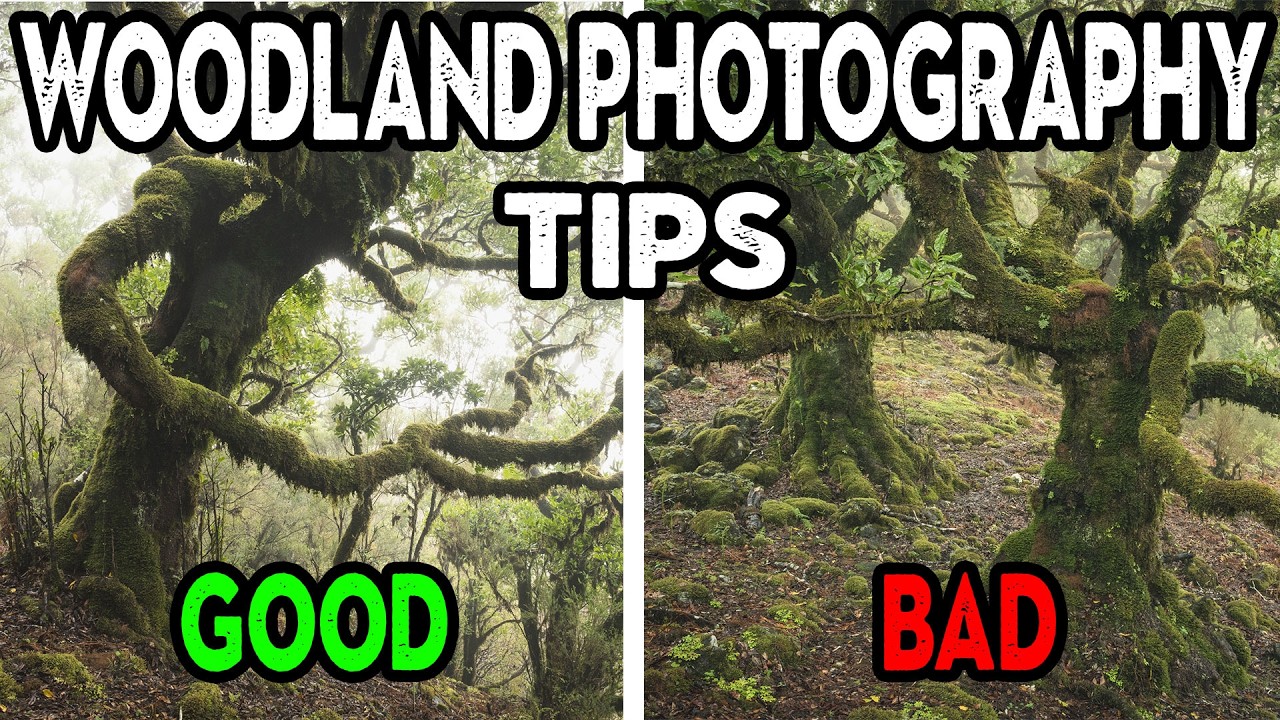
A big thanks to Squarespace for sponsoring this week's episode. Morning everybody. Fantastic to see you all again. So, in this video, I want to talk about focal lengths and how I choose the right focal length for a particular scene. And also, I'll talk a little bit about lenses. And at the end of the video, I'll share my favorite focal length and my favorite lens as well. whether it be something like a super wide angle lens like this, the 14 to 24, or something like this, which is the 100 to 400 or something in between. So, let's move these to the side. And what we're going to do in this first image here, I'm going to talk about ultra wide. So, that's like 14 to sort of 18, maybe 20 mm. I feel like this is first of all the hardest focal length to get right. When I first started photography though, I thought this was what landscape photography was all about. But the problem is like this image here, you can see that it can be quite difficult to decide what the focal point, not focal length, but focal point of the images. And in this image, you know, is it the little sea stack to the left hand side, the grasses, the right hand side of the image, you know, the clouds in the sky. So, you got to be really careful when you're using a wider angle. Again, like this image here, there's a lot of dead space. There's the mountain range in the background, but this bottom left hand side is just sort of dead space. I've not got any focal point as well. And if you think about it, 14 mm, you're you've got a lot of landscape that you're going to include. So, to get the right composition can be really, really difficult. First of all, I'd recommend if you're just starting out in photography, go for something a little bit wider. And I'll get on to that in a minute. The best thing if you're shooting a foreground, and that's what I really like the 14 millimeter lens for, or the 16 millimeter lens, is that you can get really close in on a foreground. So rather than shoot something like this where the rocks are a little bit further away, again, they get a little bit messy, go a little bit closer, like this shot that I took in the Pharaoh Islands. Um, you know, I was quite over the top of this. It was super windy, but I was managed to get over the top of this and get this shot. or like this one in MadiRaa where again I was really close probably about that far away from these rocks. Uh again similar in the Dolommites here where I was taking this image and I got really close to these shots and these mountains were massive and really dominant. So the whole thing sort of gels together really well. So, you've got to be really close to a foreground and you've got to have background that's really quite close to you to sort of make the most of a 14 mm. Otherwise, everything just looks a little bit like it's in the distance and you can have things that included that maybe don't quite work. But when you get it right, you can get shots like this uh and they work really well. It's actually now one of my favorite focal lengths, but is it my favorite? The other thing I do with wide angle is sometimes don't even just use it for super ultra wide angle is don't even use it for the foreground. So in this shot here you can see that I really like the sky. So I wanted to go something wider than something like 24. So this is a 14 mm shot. But by having that river in the bottom of the shot, it's really anchored that bottom part of the scene. And you've got to be careful. uh you've got to make sure that you're filling up the frame with something that's interesting when you're using 14 millimeters. You don't want a lot of supererous I can't say that stuff. So in this case, I've got the really dominant cloud. I've got the mountain range which these three peaks really fill up the scene. Um and I've got the dominant one in the middle and I've got this river. So there's not much to the shot and that worked really well. And this was in Gleno. Okay, so let's get to wide. So this is maybe, you know, around about 24 mm. This is probably a much easier wide angle focal length to use. I would say you can still get quite close on top of things, but you can stand back a little bit further. And by doing that, it's easier to hide the midground. So in this one here, you can see that I've got these grasses. If I was using a 14 mm with this, I'd have to get quite over the top of it and it would be a little bit more difficult to hide the midground because I'd be pointing down a little bit more and you'd see a little bit more of that midground. Whereas I can stand back a little bit with a 24 mm lens and I can hide it a little bit and I can gel the grasses, the bit in front of the grasses and the mountain without any sort of really distortion to the shot either, which works really well. Al also the mountains don't disappear. And again, in this shot here, we're in Gleno again in the winter, the distance mountains just haven't got lost. You can see that I've got this really nice leading line, but if I used a 14 mm, I'd have had a lot more foreground, the mountains would have been a lot smaller and the shot just wouldn't have worked. Sometimes I find a 14 mm works when
Segment 2 (05:00 - 10:00)
you've got really big dominant places. I use it a lot in the pharaohs. I also use a 14 mm, but a 24 sort of brings you into the scene a little bit more. So, in these two shots here, the first one, you can see that it almost looks like a long lens, and that's because the scene is very big. The massive towering sea stacks and um sea cliffs. And I think that a 24 mm was perfect here because if I' had gone wider, I think it would have just lost some of the impact. If I'd have gone closer, I wouldn't have got everything in. So, 24 mm worked well for that. And again, for this shot here with this break-in wave, I didn't really want much to the right hand side because it was a little bit messy. The problem with 24 millimeters is it's not a brilliant focal length if you're shooting woodlands. Um, I feel like that's when you need to start to go a little bit longer. And I'll talk about woodlands in a second. The other problem is that sometimes, especially when you're on top of a mountain, I find that if you're on a ridge line or something like that, I mean, there are exceptions like that one um here in the Doommites, but quite often you find it difficult I found with the 24 mm to bring the background, the mountains in the distance close to you and connect those in the foreground. And that's when, you know, I'll go something from something like this at 24 millimeter and start to move up into a more mid-range. This is mid-range is like 30 to 70 mm. And it starts to compress the image a little bit, but still keeps that sort of vista-like wide angish look. So you can see that I I'm going closer to that rock in the distance. I'm still maintaining a wider look as I go from sort of 24 mm through to 70 mm, which is this final image here. One of the benefits of going a little bit longer um than 24 but not up to like 70 is that you don't have to worry too much about depth of field. So this shot here, I wanted everything in focus from this leading line going through to the cabin in the background. So 30 mm was the perfect um focal length for this. If I'd gone wider, the cabin would have got too small. If gone longer, I wouldn't have had that leading line and I would have had to contend a little bit with depth of field. Maybe in this shot it wouldn't have mattered too much, but in this shot here from Luskantire it really would have mattered. You know, this was shot at 36 millimeters. I think it would have gone much longer than that, then I'd have to really been careful about focal length and maybe gone to like f14, f16, f-22 and I'd get a lot more defraction in the image and a lot softer image. I find that this 40 mm sort of 30 to 40 mm is quite good for bringing you into the scene a little bit more and it's really good when you've got a leading line that's you can stand back from. So this walkway in Patagonia was good and it led me in to the mountains. But what I really like about this mid-range is when I'm shooting woodlands and I'm quite often shooting it with either my 24 to 120 which I find fantastic or my 24 to 70. So these are the two lenses in this mid-range I'm using all the time more often than not probably my 24 to 120. And then you can get shots like this and all my woodland shots pretty much are shot between around about 40 and 70 mm. This shot here, wise, was shot at that range. I think this was around 50 millimeters. This shot here was around about 45 millimeters, this snowy shot. And then I've got a shot here actually, which was shot around, we can't quite see it. You just about see it. So, this was a shot in Padley Gorge in the summer. And again, this was shot around about 30 mm, I think. Just a little bit longer than 24. And that's about as wide as I want to go um when I'm shooting woodlands. Okay, before I get on to the next two focal ranges and the ones that I think are probably easiest to pick up and the things that you can be a little bit more creative with, I just want to tell you about my Black Friday offer. So, at the moment, I've got a Black Friday offer and I've got 60% off my master classes. So, my landscape master classes, my drone masterass with Giron, I've got 50% off and I've also got 50% off all my digital products, my ebooks and my presets. There's a link in the description below to the page that I've done all this with. And I built that page with Squarespace. And it was so easy to do. I actually did this yesterday. It took me probably about 30 minutes to build this. It was really easy. I could just drag and drop it and set it up how I want. But the amazing thing, what I love about Squarespace is you don't have to worry about what it's going to look like on mobile because you can see that straight away with this little button here. You press it, shows you the mobile view. If you want to, you can tweak that a little bit and it, you know, maintains that look in mobile and changes the look, you know, and maintains the look that you've got on the desktop as well. It's so easy
Segment 3 (10:00 - 15:00)
to use. I know I talk about this a lot. You don't have to have any technical skills. So, if you're looking to set up your website, then I definitely recommend that you go and check out Squarespace. You can use my offer code as well. It really helps me out. And that is squarespace. com/nigel. You get 10% off or use offer code Nigel. The final thing I just want to tell you about is that I've got some new cards that I've made, some greeting cards with some of my favorite images on. It shows on the greeting card all the settings that I used on the back of it. I've spent so long trying to get these cards um to look how I wanted using this really nice sort of textured Italian paper. They're available in packs of five. There's a wintry one and a warmer colored one as well called Land and Light and Winter Wonder. Also, finally, if you're interested in one of my books, Seaccapes or Close to Calm, which is my latest book, I've got a few of these left. And for Black Friday, so the next couple of days when this video goes out, I'm giving away a pack of cards as well for free. So, if you're looking to get one of my books as a Christmas present or something else like that, then you get a free pack of cards as well worth £15. Okay, onto my long lens, my well, my mid long range. So this is like 70 to probably around about 120. And this is where, you know, I'm taking this Patagonia shot and zooming in a little bit, getting rid of the path sort of thing. So you're just sort of concentrating a little bit more, but you're still retaining that sort of vister look to it. You've still got a little bit of foreground. You're not just got the mountains in. Again, I use it quite often when I'm shooting waves, this focal length. So where I want to maintain the mountains in the background, I want to see the wave. a little bit of beach potentially. So, he's still connecting the mid and the distance and the foreground together, but it compresses it a little bit more. I find that it's brilliant when I'm picking out things. When I've climbed up a mountain, I'm just trying to pick out something. And again, I want to keep a reasonable amount of the scening. So, this was in a fantastic morning in the Lake District. And yeah, I was I just get so lucky when I go up here. This is um it's called Langdale Fell, Luffig Fell, sorry. and the mist had come in roll in. This is a wider shot, but I just like this zoomed in shot. I've actually got this as the door in my camper van as well. When you get a little bit longer than that, then I feel like where this is where you start to compress things a little bit. So, this is like the 100 to 200. Quite often I'm using my 100 to 400 lens. And more often than not, I'm using around the sort of probably 200 mm, maybe pushing it a little bit longer than that to create these compressed looks where I have a wave and then maybe a sea stack in the background. You've got to be super careful though about focus when you're doing this because you can quite easily get one or two of them out of focus. So, you've got to decide, do I want the wave to be in focus? The background stack in focus. Obviously, in this case, the wave needs to be in focus, but I've done this a couple of times here. Or you can just sack off focus altogether, go to f2 and create something like this, which was done in Iceland on the on one of their black sand beaches there. Absolutely incredible. The same time I did the other wave shot, but I just moved down and changed the aperture at a longer lens. You can be really creative and you can do that in all sorts of scenarios. You've got some sort of wet grass, the sun's coming from the side maybe, and you can get some great effects. When I go a little bit longer than that, then that is probably up to 400 millimeters on this. You know, I'm maybe shooting some wildlife, but you can do some pretty amazing things. This was a shot in Antarctica. And just look at this massive boat here going through this passage in Antarctica. It's called the Langmia Passage, I think. Um, I probably got that wrong. I'll put up the right name here. And you can see just the size of the mountains in the background. I love how it gives this amazing sense of scale using a really long lens. Quite often though, when I'm using a long lens like this, I'm picking out details. So, I'm doing more abstract shots like this waterfall or just doing little details of the mountains, which I think are really interesting. I think it's fantastic to do that. It's way easier to shoot at 400 mm than it is to shoot at 14 mm because you only have to composition becomes so much easier. You can move around a lot. It doesn't make a lot of difference. 14 mm, just moving 5 cm one way or the other can make such a big difference in terms of what's my favorite lens. Okay, so I think my favorite focal length is probably that sort of mid-range. I'd say between sort of 24 and maybe 70 80, but I quite like the 24 to 120 because sometimes in woodland I go a little bit longer than 70. Sometimes I like to just push it a little bit further. And I feel like this 24 to 120 is just one of the best focal ranges that you can get. I'd say I use this probably on 50% of my
Segment 4 (15:00 - 16:00)
photos, this lens. It's definitely the most battered lens I've got and I think it's a fantastic focal range. In terms of the exact focal length, if I could just have a prime lens, what would I go with? Probably something around 40 mm. I think it'd be great just to walk around with. I think you could do amazing landscapes with that. You can still go wider if you want by doing some panos, but it's long enough for woodland. doing some really nice more intimate landscape shots as well. I hope that's been useful. I hope you find it something a little bit nugget of usefulness out of it. And if you have, then please give it a thumbs up. We are a few hundred away from 500,000. I'm going to be giving away a Nikon Z8 when we get to 500,000 to anybody that's subscribed to my channel. But you've also got to be subscribed to my newsletter as well. I want this Nikon Z8 to gone to go to somebody who supported me. Um, so make sure that you are subscribed to the channel and you subscribe to my newsletter. There's a link below as well as a link to Squarespace and my Black Friday offers which are available for the next couple of days. Thanks so much for watching and until next Sunday when we're back doing some more counties in the north of England. Bye.