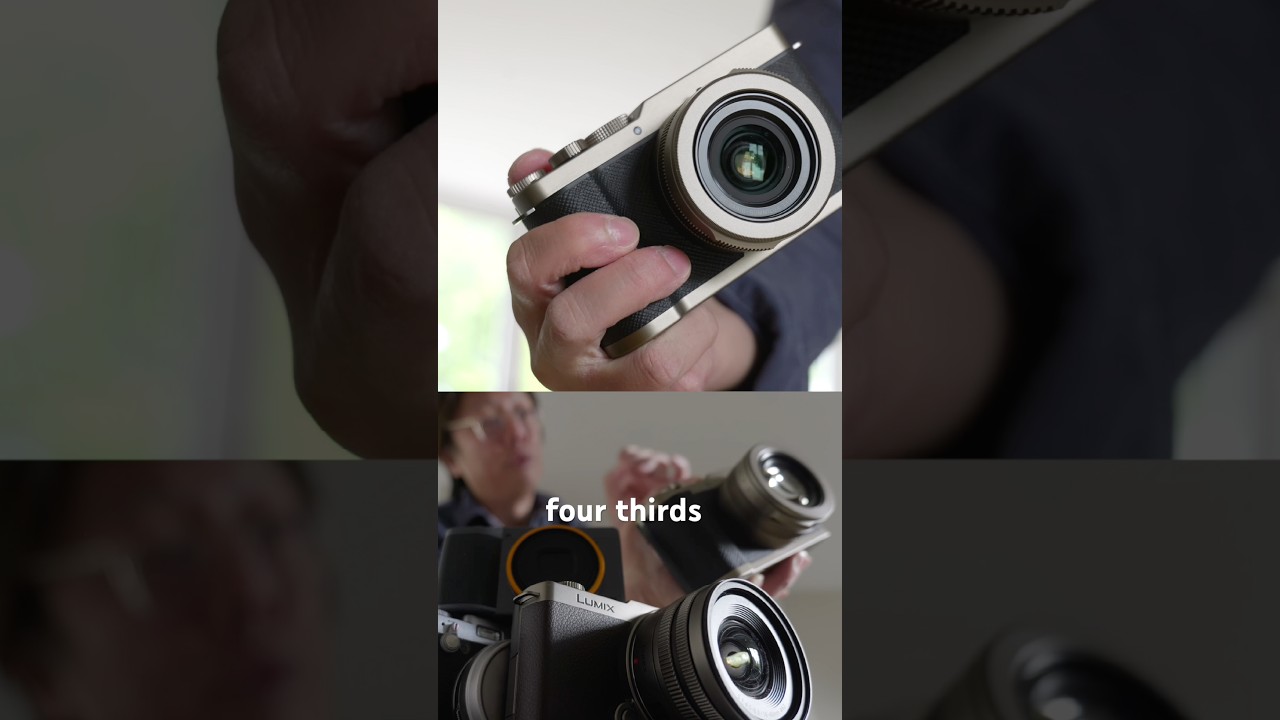
This video is sponsored by Squarespace. Get started with creating your own creative website with a 14-day free trial and 10% off your first order using the code and link down below. I've also been shooting with this lens which is vintage style. I think it's called Omnar Battelli. I mean, we've got brands like Light Lens Lab and then we've got other brand names to revive lenses. And now this is another one. I mean, this is made in UK. It's a small operation. It's a small company based in Scotland formed by two people. Hamish from photo blog 35mmc and Chris from Skyan Opto Mechanics. Just two people really passionate about the nerdy side of photography. And that passion led them to forming Omnar and producing optics like the one you see right here. And when you think made in Scotland and craftsmanship, you probably imagine whiskey distilleries. Well, this time of day, I can only imagine having this type of Scottish berry. But one thing is for sure, there's nothing mass-produced feeling about the Omar Battelli. Naturally, some of the parts are sourced externally, like aperture blades, the mount, screws, obviously, but a lot of the production process is done by hand, if you want to call it that, designed and finished by Chris himself in his workshop. Working to extremely small tolerances, which is important, and we'll get into that later. But first, the finish is sublime, unlike anything that you'll see today. It's kind of cool. It's brass. You can see it. The black paint has kind of faded off a bit. Yeah. I guess the downside of having a small operation and it being made in UK is that the price is £2,000. — Oh, wow. — That's quite a bit of money, isn't it? Actually, it's even more money still because this is priced at £2,750. Yep. That is like a money. And nope, it's not a Leica lens. Obviously, it's not even a Leica optical design and a light lens lab. In fact, it's a Zeiss optical design. Zeiss sonar, no less. It's a modern recreation of the classic 5cm f2 Gen 6 element free group lens from 1934. And it's a revival. That makes sense. After all, trying to find a 90 plus year old sonar in decent condition is a challenge in itself. It's an F2 lens, 50 F2. So, it should have some kind of a vintage character to it. It should be slightly soft wide open. I mean, what does it look like? Well, it looks like this. And obviously, I'm just going to put some shots where I took earlier. So, it's going to look completely different to this. Widow's earlier shots do look particularly low contrast because they were shot through a thick blanket of mist. The dreamy look is very much characteristic of the sonar, but without that moistry shiz in the way, there's a touch more contrast. Contrast is what the Sonar was designed to give that an efficient light transmission even at large apertures. By modern day standards, of course, it's not bitingly sharp nor crazily contrasty, but with slightly muted colors and that dreamy sonar glow, it looks great in monochrome, but also for portraits. Oh, that's quite nice. Okay, try looking up to the light again now. Okay. Oh, I like that. I don't think it does hit sharp. Actually, that's what I'm saying, isn't it? That's the sonar look, isn't it? Spherical aberration and stuff. It's never that sharp wide open. The classic sonar spherical aberration gives it that characteristic dreamy glow wide open, but it also makes it nightmarish to use for some. So, what exactly is spherical aberration and why exactly is it a problem? Well, let me show you. So, if you're taking photos at f5. 6, the rays of light would be coming through the lens kind of like this. and they'll converge at a point which is the most infocus plane. However, when you open up to its maximum aperture, you get rays of light coming in from the edges kind of like this. And with spherical aberration, they won't necessarily converge neatly at the same point that they did at f5. 6. So, the bit where they most converge, where you'll get the best focus, will be kind of like here. Having those differing planes of sharp infocus image is the focus shift, which is annoying if you're using a rangefinder, especially film, because even when you think you've nailed the focus, you really haven't. Focus shift has been a significant issue with sonars, and there have been attempts at fixing it throughout the years. Postwar sonars introduced ninja star-like aperture blades to tackle the focus shift issue. Even Zeiss's own modern classic F1. 5 remake had an unconventional shaped blades, but still showed some focus shift. I had the Zeiss ZM sonar before and that was optimized for focus at f2. So at that aperture setting it should be spoton focus and then from there changing to smaller apertures the increase in depth of field should make the focus shift issue well less of an issue. But the trouble is at f1. 5 it would focus in front of the
Segment 2 (05:00 - 09:00)
subject. The other actual modern remedy was putting freeospherical elements in like with the Sony Zeiss 35mm f2. 8. But when people fancy the sonar look, this is not the look they're after. So the focus shift issue is just something you have to accept if you want to use a sonar. That is until Omnar fixed it. So the lens uses an LB, a floating lens block, which is a bit different to an FO, a floating lens element. An FO is about optimizing performance throughout the focal distance range. Whereas an LB designed by Omnar is about ensuring focusing accuracy throughout the aperture range. When you look through the back of the lens, you can see this black carriage which can move independent to the focusing helicoid. That's the brass thing right there. Now, I say it moves, but it's such a tiny amount. From f2 to f22, it moves in and out about 80 microns. That's about the width of 1 and a half human hairs. The FB lets you have those dreamy larger apertures to quite decent sharpness at medium apertures and in focus, too. — Let's stop it down a little bit. It almost feels like a different lens at f5. 6. — No, that's sharp as nails, right? — You get reasonable sharpness in the middle bits at f5. 6, whereas the corners still stay a little soft, which works well if you're taking photos of people. Perhaps less so if it's more landscapy stuff. However, there's very minimal light falloff. And surprisingly, it actually covers enough for medium format. There you go. Just as long as you're willing to deal with the ridiculous hassleblad rolling shutter and electronic shutter. Should be fine though if you're using mechanical shutter Fujifilm GFX. — So, what is the close focus on this lens? — 70 cm. — It's about that — cuz they've modified it. — And just look out that way. No, sorry. That about there. — So, usually the sonards they they're 1 m. — Look to about there. No, down a bit cuz you got the grid of the soft box. Why did I not notice that? Put your head towards that way a bit. Let me put your head up. Put your head up a sec. Uh, no, that doesn't work. That's not what you say when you take photographs, by the way. Oh, that doesn't work. No, that looks awful. — one way to put a subject at ease. — I do like the falloff with this lens, though. — Surprisingly, the corners aren't too dark on medium format, but I think the vignetting and increased area of corner softness works really well for portraits. Obviously, the focus shift correction for use on rangefinders is great and all, but it's fantastic seeing it work well on a bigger format, but it's got to be said, if your main use for this lens is on a live view camera, you probably don't really need a lens with a fancy LB. — Have you ever thought about being a portrait photographer? — No. Why? — It's cuz you got to talk to people. You look really miserable. That's such a good picture. Whether it be on full frame or medium format, there's plenty of appeal in the sonar look, the glow, the field curvature, and the bokeare. While not super creamy, f2. 8 is a little smoother than f2 can look pretty cool. Despite Omar fixing the inherent problems while keeping the sonar charm with all of the clever FLB stuff and artal manufacturing considered to is not the easiest for me to say why you should get this lens for that price. After all, even if you're not up for the hassle of sourcing an original, you could look for a Russian copy, the Jupyter 8 or the F1. 5 Jupyter 3, then Canon and Nikon had their own sonar clones, too, and just accept you have focus shift. But to borrow the whole whiskey thing, there's no telling why you should spend more for one single mold over another. If it suits your taste, you'll pay the price. Likewise, if you know why you love the Sona and some things that you hate about it, you'll appreciate why this lens was ever made. And well, Omnar's already on their fourth batch of pre-orders, so they're doing something right, right? It is a lens with some quirks, like the visible focusing helicoid and the focusing tab just rotates round and round. But you know what I love about what they've done with this lens is that it was not made just to ride on the hype train of vintage optics. But that appears to be a project born out of passion. Not just reviving something, but making it better than it ever was before. This video is sponsored by Squarespace. If you want to set up your own website, online store, or just your own domain, it's super easy to get started with Squarespace with a slick, easy to use interface filled with a plethora of templates to choose from and with 24/7 customer service to help you out if you need it. Get started with a 14-day free trial and 10% off your first order using the code and link down below.