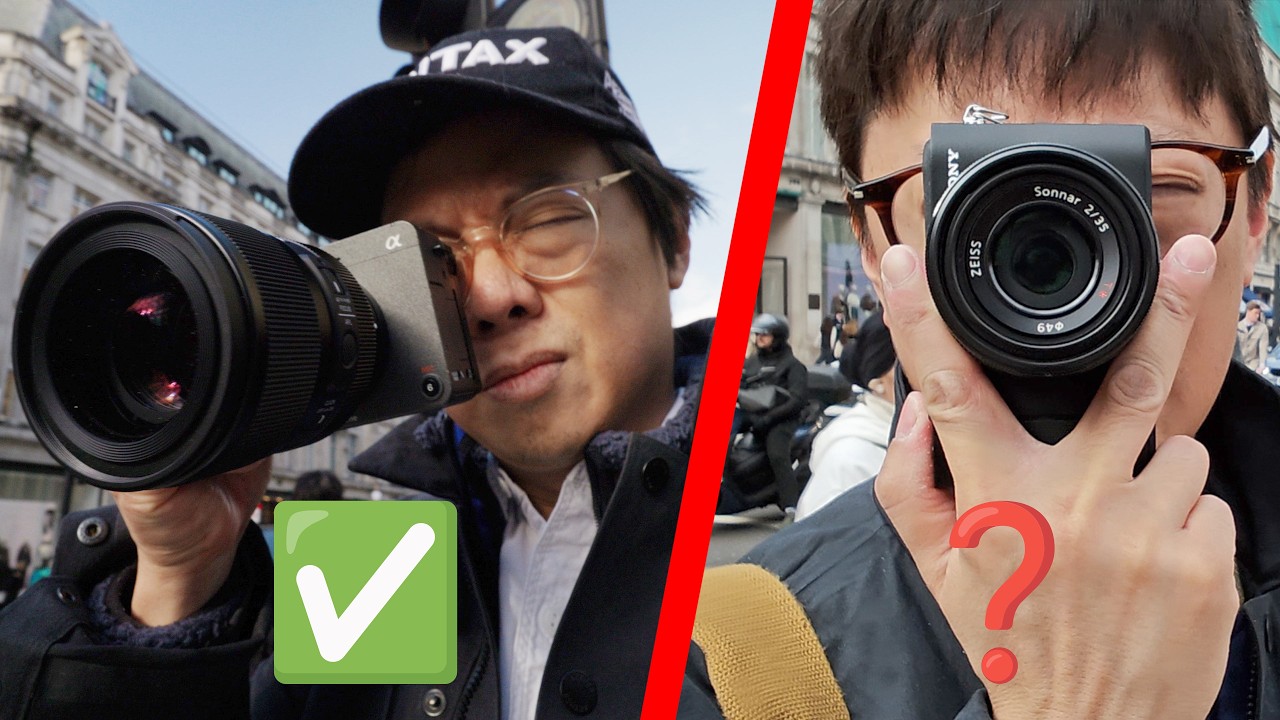
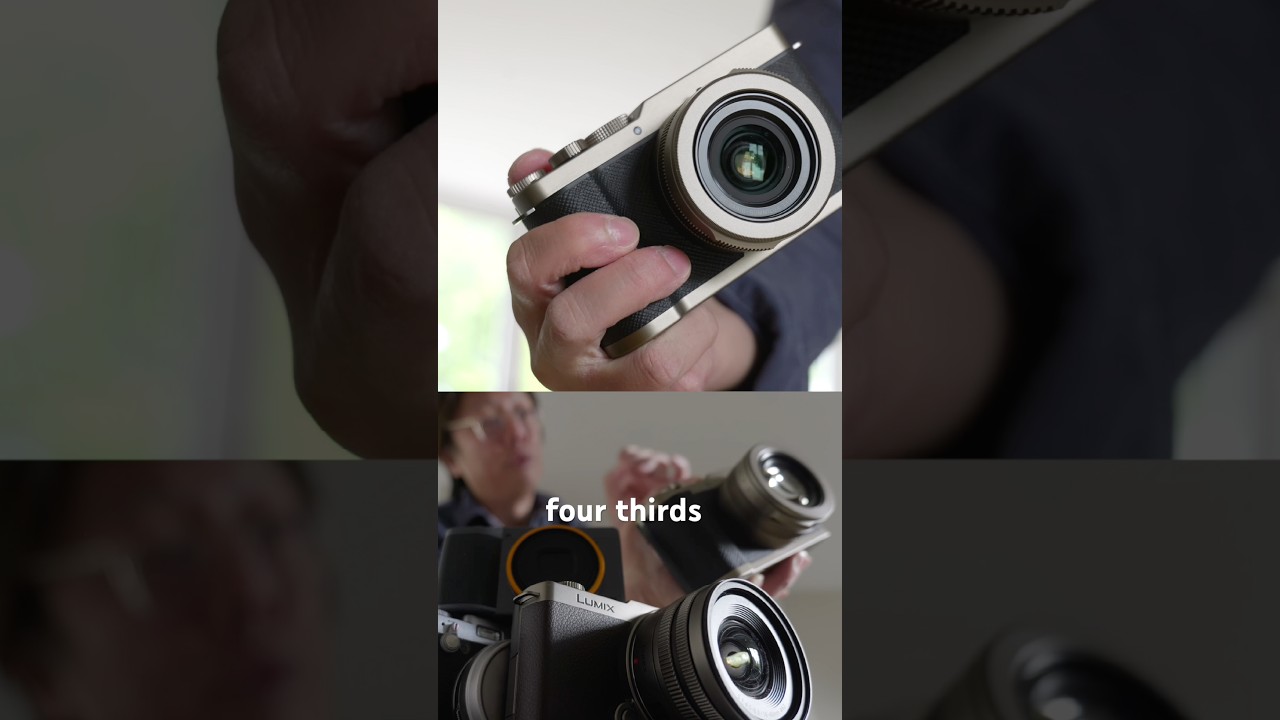
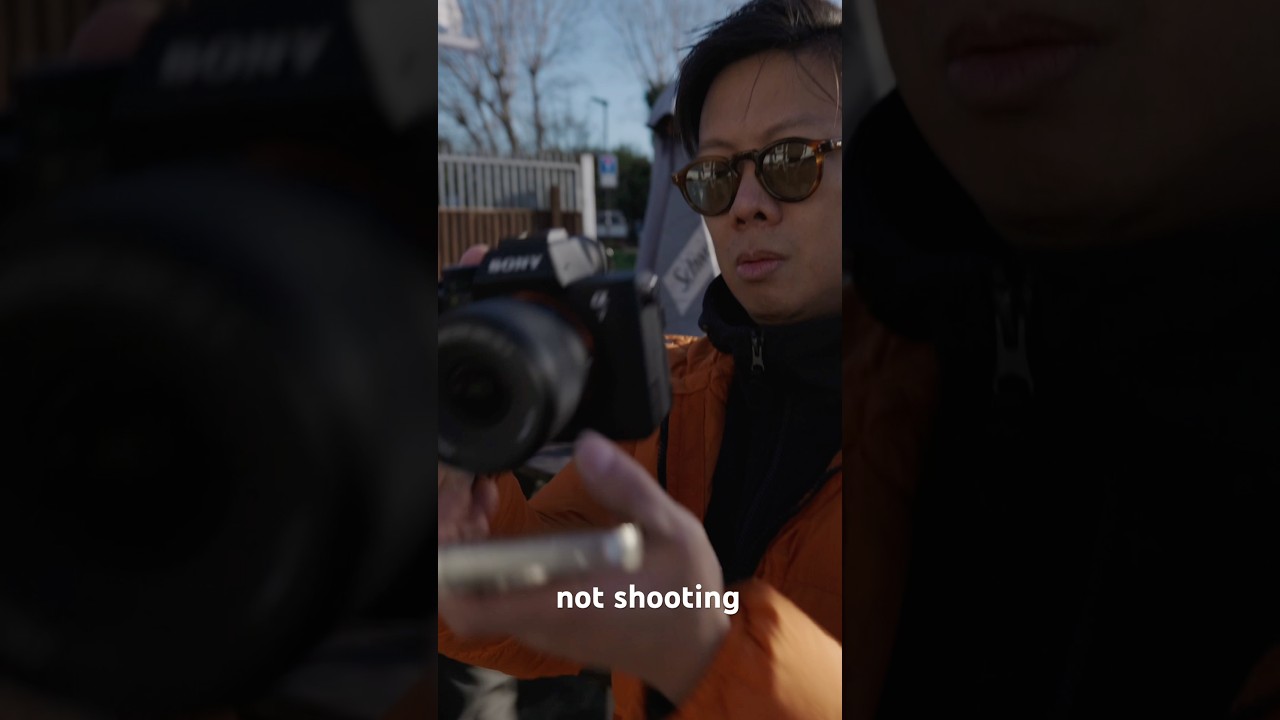
Right, let's talk about this properly. If you saw my last video on the Sony A75, you remember the twist. I tested autofocus third party lenses from LA, Siri, TTRs, and Viltrox, and none of them worked. They wouldn't focus, wouldn't shoot, just a lot of stuttering and refusal to take photos. Sony lenses absolutely fine. Now, that raised a few eyebrows, including mine. So, this video is basically me asking, was that really a lens problem or was it a Sony not even a problem at all? After all, last time was not so conclusive. Now, I did ask Sony what was happening, and the statement was this. We do not guarantee third party compatibility. Who knows? Maybe it's an early firmware problem, but definitely something to keep an eye on. I mean, I'm not judging. It is entirely up to the brands to decide who they open up their system to. This time I want to do more thorough testing and fortunately I'm able to do so. To find out I have asked Sony to lend me another A75 body and they have kindly done so and I've kept same lens firmware, no updates, no tinkering. Even the camera firmware is exactly the same as before confirmed to me by Sony. Just repeat the test and see if the behavior is exactly the same. Now going through this mini journey with me is Dan Chong. If you don't know Dan, he's a former Reuters and Guardian photographer, ex cameraman at CNBC, former editor at Newshooter. com, head of marketing at Atomos previously, and he's even consulted for Tina Cinei. So anyway, rather than just this works, this doesn't, we're also going to talk about what that actually means for reliability, for third party support, and for you as someone buying or already using those lenses. This isn't about drama. It's not brand bashing. It's not sponsored by any of the brands mentioned in this video and it's probably not going to be one of my short banter fililled videos either. This is just what's really going on and what should we take from it. So, let's get into it. Well, we might as well start with Sigma seems that's this is that's yours, isn't it? That's quite compact. — I love this lens. — Yeah. So last time we tested some Chinese autofocusing lenses uh third party obviously and they didn't all of them didn't work but we didn't test out Sigma Tamron Tina Samyang. Uh some other people had luck with Sigma Samyang. Oh. Oh there we are works. Yeah. Well I should hope so because it's Sigma. — Snappy. Yes. Works. — Works well. — Yep. Snappy. Yeah. Let's go for Japanese first. — 17 to 28. the Tamron — face detection working eye face eye recognition etc etc. — Yeah, it's totally fine — back again. Totally fine. — I kind of expected these Japanese lenses to work without issue when compared to say the Chinese ones for reasons I'll get into a little bit later. — Siri. — Yeah. So this Siri is the 40 mm that we tested last time. Anamorphic and it didn't work. So here is it working? Yeah, that works. — Still works. — Yeah, it works fine. — That works. — Yeah. — Interesting. Okay. — It seems we've started off with the lenses that we tried last time. Let's try TTS. — Is it working? — Yes. — How fast is the focus on that? Pretty — Yeah. Snappy. — Pop it into video mode and see what Oh, — okay. Did you put this into manual focus or something? No, — it's not working. — Well, the autofocus. — Yeah, it's not working at all. What is an AFC? — Does it say AFC? — It says AFC there. — Okay. Well, it's not focusing. — Is doing precisely Nardo, right? — No. — What's that? 40. Is that — 42. 5 FE autofocusing? — That works? — Yeah. — It's working really quick, actually. — Yeah. — Good. — Okay. Switch it to video. That seems to work as well. — Yep. Focusing. All right. — And we haven't updated the firmware. Any of these — wanted to test them out exactly as they were last time to see if it's really just does it need firmware. — What's that? — 14 mm — V trucks. — Yeah, V trucks. — It works. — Oh, not yet. — And then video. Yeah, — this is Simon who works in the shop here's 24 mil 2. 8 — with a Metabones. — Yeah, works. — It works. — Does it work video as well? — Invalued with this lens. — Yeah, I don't think that generation ever worked on the adapter with — So, just to confirm, the only lens that doesn't work out of all of these is this one. Right. — It focuses in stills. It's not video. Let me try again. Okay, so we're in video mode. That works. That is kind of odd. I
Segment 2 (05:00 - 10:00)
couldn't get it to misbehave again, too, which kind of suggests there's still a bit of inconsistency going on with the lens camera communication side of things. However, I did finally figure out why all those Chinese third party lenses suddenly behave themselves this time when they absolutely refuse to play ball before. They only actually work properly in AFC and manual focus mode. switch to AFS, AFA, or DMF, and they still won't autofocus or take a shot. And the reason why I'm specifically saying Chinese third party lenses is because the Sigma wasn't affected at all. Works in all modes without a hitch. And series, the lens manufacturer, not the Apple assistant, software engineer, actually confirmed this behavior to me, and they also said this. One of the software engineers has noted that the A75 has a new lens calibration/ lens verification function. Previously, many third-party lenses did not support this feature which initially led to compatibility issues. However, this is not a difficult problem to resolve and at present third party lenses are already able to adapt and function properly with this feature. So, there you go. Just to see what it's like with other camera brands, I tried a Canon. Not really. Nikon. Yeah. But I also want to show you this. Yeah. I went out and a leather bag. No, I bought [ __ ] hell. Trying to get it out now. I bought another Vtrox 40 mm f2. 5 Z mount from Wex. It's brand new. It doesn't work. — This is on photo mode. — Yeah, photo mode. Doesn't matter video mode. You can take you can start the video but no focus. — Oh, and you can't manual focus. — Oh, yeah. — It's stuck like that. — Oh, you can control the aperture. — Oh, interestingly. — Kious. — Yeah. It's funny, isn't it? So, actually, just before filming this, I tried this lens on a ZR that I borrowed from Dan. And this ZR here is one I borrowed from Nikon. But anyway, I kept the same lens mounted onto this ZR body. No settings changed. Nothing changed at all. I literally only took the lens hood off and took it to the workshop. Oh, see. Test it again. What's happening? — This sort of works. It sort of works. Autofocus worked. Bit sluggish, but it worked. Was that not working before? — No, it wasn't working before. — It's the hood. It's taking the hood off that helped. — No, it is. It's all right. It's fine. Don't know what the problem. — Now, the situation with Vtrox on the ZR is a little bit different to the A75. It's not quite so apparent exactly what triggers the incompatibility issue here. Naturally, a newer body coming out might mean a third-party lens might need to update firmware to ensure compatibility, but it seems that certain third-party lenses would be more prone to communication problems with the body. That actually brings us to a really important distinction that often gets overlooked when people say third-p party lenses. Sony is open to third party brands and Sony provides email information that is not all third party brands are considered the same. People are quite quick to perpetuate the whole Sony's open they're open to all third party come one come all but not all third party are treated equal in this whole open system. Yeah, — it's more semiopen for some because there is licensed brands and nonlicensed — on the protocol. — Yeah. — Not on the physical mount. So the physical mount is open. Anybody can make — a a dumb lens in E-mount. You know, there's lots of cine lenses, loads of Chinese cine lenses and actually, you know, German cine lenses with E-mount. — That's accepted. I think from my understanding that's fine as far as Sony's concerned. — Yeah. Like if you look at news release on Sony's website from 2011, uh it's basically just an agreement between brands that they want on board to uh to allow to make lenses for the mountain system. So there were Casino made Voiland and Zeiss Zeiss. Then there's Sigma, the family-owned company, and then there's Tamron, which Sony is a major shareholder of. No, Sony's got about 15% um stake in Tamron. That was 2011. So, Tina wasn't mentioned. But since then, if you look on Kina's website, you can see that it mentions that they make lenses under licensed for the E-mount. Yeah, the licensed brands, they get access to all the protocols, E-mount information. Well, Sigma said, "As a manufacturer, we can confirm that
Segment 3 (10:00 - 15:00)
our E-mount products are developed, manufactured, and sold based on E-mount specifications disclosed by Sony Corporation under our license agreement. " — Yeah. And to be clear, none of the Chinese manufacturers that we know of, yeah, — have that. — Yeah. — And then you've got unlicensed third party E-mount lenses, which includes essentially all of the Chinese autofocusing ones. There's nothing to be found on the websites highlighting that they make licensed E-mount lenses, and it's confirmed by a few of my contacts at those brands. These companies essentially don't get official access to Sony's communication protocols. With these non-licensed brands, they need to look at the camera, have the camera in hand, and then get one of their engineers to reverse engineer it. And of course, that's how they'll make the lens as well in the first place. — Yeah. And to be fair, we don't know what's inside the agreement between Sony and those licensed third parties. Yeah. That is NDA, right? So we will never know I don't think what the actual terms of the agreement and what data is shared but you would think that there is at least um some responsibility on both sides to make sure that those lenses play nice but from what I've gathered from the information that I have got not having access to the communication protocols can present certain challenges for example continuous autofocus although usually decent enough sometimes it does missed the mark. And then there's distortion correction. So instead of the camera fixing it, the lens has to correct more of that itself in lens, which can mean different design choices, sometimes bigger lenses. Take the Viltrox 16 mm for example. It's the size of Alaska, but it's most likely that size because optically it's really quite amazingly low on distortion. Now, lens corrections is quite important for Sony because if you've ever turned off lens corrections off on the Sony wide zoom, you'll know how much Sony relies on in camera processing. Especially, it helps to keep their lenses quite tiny like. So, yeah, before we even talk about reliability or compatibility or anything else, we've already got a pretty big difference depending on whether your lens is licensed or not. You just need to know first party, of course, that's maximum compatibility. Then you've got the license which uh they they've got the information so they should be able to fix things if there's any problems. Then you've got the nonlicens which is this sort of gray area which is almost like — I don't know buy beware. — It is buyware. Absolutely. — You buy that. — So a Sony lens firmware update is rarely if ever about like operation versus not operation. — Oh for sure. Of course it will. It's just about tweaking the performance, — right? Whereas with some of these other brands, it's about whether it works at all. There's one thing actually with LA, the 200 mm we tried on. They said, "Oh, well, we can update. " Have you got Windows PC? — It doesn't have a USBC on the lens, so you have to update via the camera and the USBC and then Windows PC. So, if you've got a Mac, you just spent £2,000 on lens that who knows? I mean, it's working at the minute, but if it does need updating later for it to work properly, — well, and not all of the Chinese lenses, in fact, not just Chinese, not all of the lenses full stop have um USBC ports or USB ports, you know. Some of them either are uh the clip-on — module things — or um a dedicated cable. Firmware updates can be a whole challenge in itself. With the LA 200 millimeter in Sony E-mount though, you actually need to connect a Windows PC to the camera and run LA's Windows updater. On Zmount though, you can just drag and drop the file onto the memory card. TTRAN seems to be Windows only. Vtro gives you more options. Basically, some make firmware updating easy, some make it painful, and some don't even seem to offer firmware updates at all. — Or in the worst case, it's return it back to the manufacturer. — Yeah. And then that comes down to does your manufacturer even have a service facility — in the country that you bought the lens — or do you have to send it abroad you know to China or whatever and you know it might be fine — in the first 12 months — you know when you're under warranty normally or you bought it from Amazon or whatever normally you can get something sorted out right but you know in 10 years time — what happens you know who's to say like — that some of these manufacturers are even there in 20 you know I've crystal ball I don't know how the world's going to go those the business is going to go for those lens manufacturers — it's also true to say some of the Chinese companies are better than others in terms of — well not better but they have more scale more people more resources uh but I don't think well Viltrox
Segment 4 (15:00 - 20:00)
have a like a service and repair facility here in Britain that I'm aware of — I don't think so Yeah. — Um whereas you know I think some of the others have — Sigma's — well Sigma clearly has there's an excellent backup here you know I think Tamron and uh Siri are the same distributor so there's a distributor there to help you and they've been around for a very long time um but you know TT Artisans Zan Artisans you know all these companies I don't think they've got any presence here I don't know about the US Europe I imagine it's back to base or back to Amazon. — Now Siri say they've got a firmware coming uh LA 2 within the next week. The Viltrox are looking into it. TTR Sand's not quite sure yet. And then Sony add more features. They clearly they update the firmwares and then you know it's up to the lens manufacturer then what they do about that and they al you know the whole thing about the 30 frames a second thing comes up. And I don't know what the intention there of Sony is or what third parties who are licensed or unlicensed have access to or not. I just don't know. But there's you know that's just one feature. Imagine if they come out with something new in 10 years time. Now perhaps it's all too easy to say just pay more and get a licensed third party lens or just buy a first party. And I've seen some people online that say you get what you pay for. But although it is true for some lenses, buying an unlicensed third party lens is not just about saving a few extra pennies. — It might also be that the Chinese manufacturers make the specific type of lens that you want and Sony don't like the Siri anamorphics. — You know, they just don't exist as a Sony lens. So, you have to buy if you want that effect, you want that lens, you got to buy a third party. you know, if you wanted like a LA probe lens, um, or in fact even this lens, you know, Sony now have a 16 mil, a fast 16 mil, but when it came out, — they didn't. There was no fast Sony, it's why I bought that Filter 16. There was no Sony 16 1. 8 at that time. You know, you can't fault the Chinese lens manufacturers for innovating, but you know, am I 100% confident that lens is going to work in a decade on a future Sony camera? — How about you? — No. Now it must be noted before somebody else notes it that brands like Siri, Viltrox and Samyang are greenlighted as part of the Lmount Alliance. There are other brands making Elmount lenses just not an alliance and that is essentially like doing it without a license. I mean and that's the point of the Elmount Alliance. talk about, you know, that is the point of it that it gives some certainty as a buyer that if you bought something from one of the alliance members that it should in theory work and I know there's been some exceptions to performance on certain combinations, but the overall likelihood — is higher, right? That whole alliance is not too different to licensed and unlicensed. — It's just it's more clear who's on board, who's got the lenses that can be more compatible with the system. Now, each camera brand handles third party lenses in their own uh special way. Canon's approach is certainly special after all. With Elmount, it's pretty clear who's officially in the club. Uh with Nikon, basically free brands, not massively shouted about by Nikon themselves, but it's on Wikipedia. Sony's got what seems to be five licensed third party brands out, although the last proper official announcement we actually got was way back in 2011, which detailed four. Are they going to update that? Perhaps add some new brands to it. Well, who knows? After all, Sony 2011 was very different to Sony 2025. The ecosystems grown massively. The lens lineups exploded. And honestly, the E-mounts become so dominant that you don't even need a Sony camera anymore to enjoy Sony E-mount. Well, you've got this situation now where you can buy a S a Nikon camera, an E-mount adapter, and a Viltrox lens and basically get full benefit of E-mount — without buying anything from Sony. Clearly, from Sony's business perspective, that isn't — that's the worst case scenario. — Well, I'm not quite so sure that's ideal for Nikon either. It's well documented that camera brands often sell camera bodies at lower margins because the big bucks are made in selling lenses. So understandably, every brand has to draw lines somewhere in how much they open up their system. — In the end, all of these companies, all of them are not there for the benefit, you know, of just us, the user. Yes, they will try and help us wherever possible, but in the end, they're there for the benefit of their shareholders or their owners. — Of course, it's money. It's not some like charity that they're running. — I mean logically at the end of the day for business money going into a third party's pockets is money not going into the first party's pockets is it?
Segment 5 (20:00 - 22:00)
— It's all too easy to look at the past and assume the worst when it comes to first party versus third party relationships. But the reality is a bit more complicated. I mean take Sigma for example. They used to be one of those outsiders reverse engineering lenses. They were also previously sued by Nikon and now they're officially licensed by Nikon. Sure, it's just like free TX lenses, but still. And then we could take a look at Canon. Canon's story isn't quite so straightforward either. It was just 3 years ago that they sent Viltrox a lovely C synthesis for autofocus RF lenses. Fast forward to now and Viltrox is releasing RF mount anamorphics with Canon's approval. manual focus, yes, but still that's pretty major, isn't it? — So potentially, there's always a tiny little bit of hope that non-licensed brands could end up being licensed. But all one can do is hope. So the honest answer is that nobody really knows what's going to happen to these brands long term. Companies will always have to make decisions that make sense for their business first. And while things are the way they are right now, consumers just need to go into this with eyes open, enjoy the innovation, enjoy the value that third party lenses can bring, but also be aware of the potential downsides if you're buying something that isn't officially licensed. Um, yeah, we just wasted 10 minutes of our lives. — 10? That's more like 40, isn't it? — No. — Oh dear. — Go buy some nice lenses. Use them. take some nice pictures. Just buy first party. That's just that's what I'm going to say. — No, don't buy first party. — Buy Sony. — If you buy Sony lenses or licensed third party lenses, you're buying more predictably. If you buy unlicensed third party lenses, you might be going for value or something unique. But with that, you have to expect a bit of uncertainty. Neither is wrong. It just depends what kind of photographer or filmmaker you are, how much risk you're willing to tolerate, and whether reliability is mission critical for you. Don't know why we did this. It's — more confused now. — Good luck. Yeah, it's good that you need it. And if you like this video and if it was of any help to you, please like, subscribe, and do leave your comments below because I'd love to hear about any issues that you've had with third party lenses, Hey.