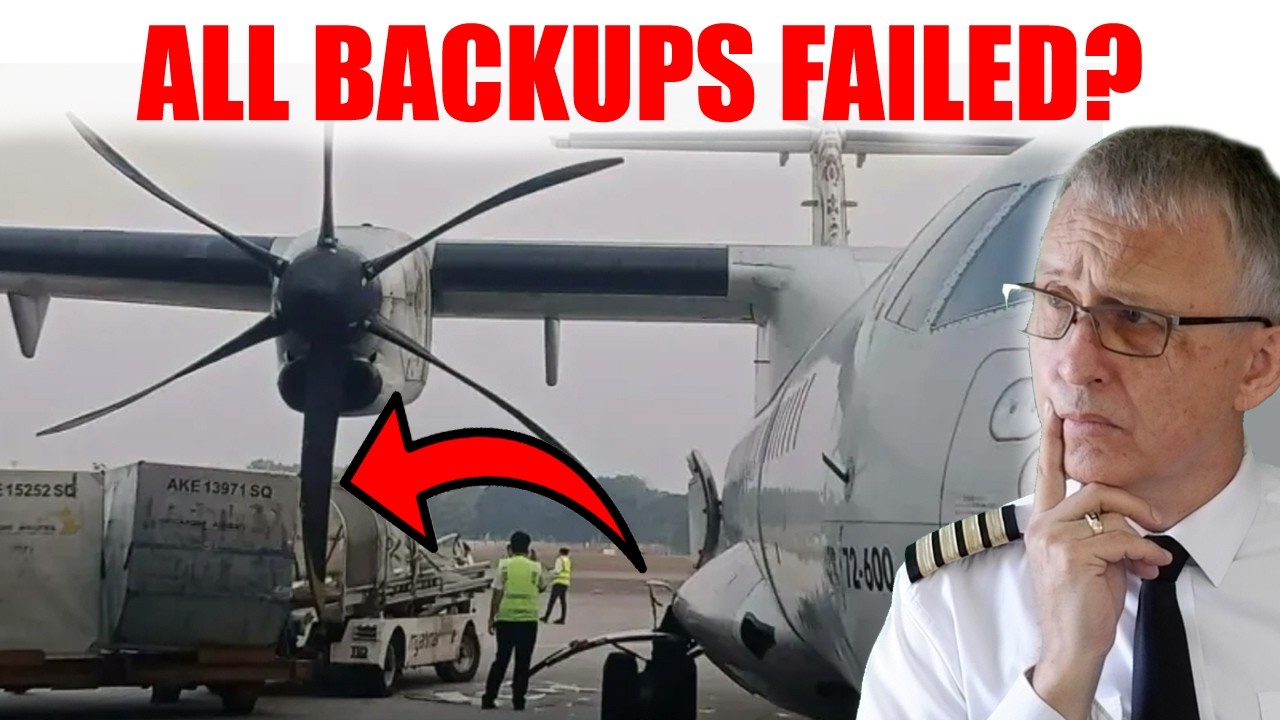
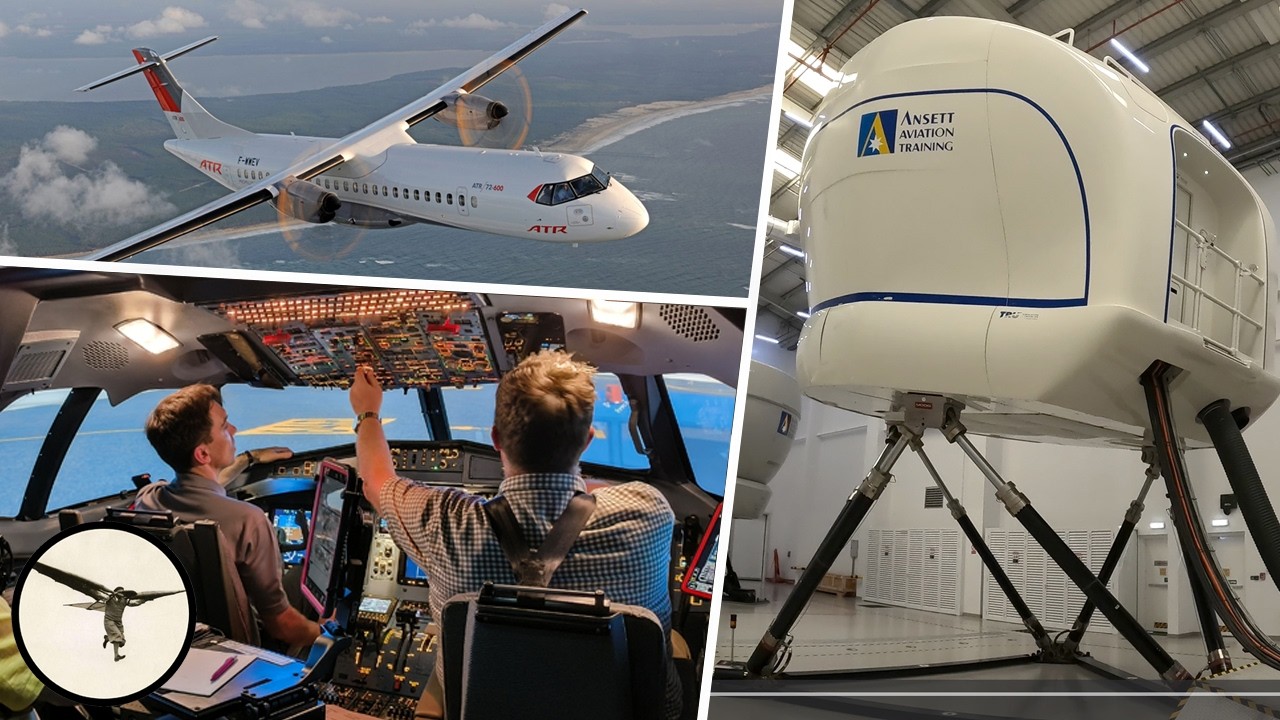
The ATR 600 series is equipped with a modern glass cockpit featuring five Display Units (DUs), replacing the earlier mix of analog instruments and cathode-ray tubes. This new cockpit improves situational awareness, enhances system monitoring, and introduces electronic checklists. In fact, several design elements are from the Airbus A380. At the heart of the New Avionics Suite (NAS) are two Core Avionic Cabinets (CAC). These can be thought of as stationary computers fitted with modular cards, like memory cards, graphics cards, network interphase cards, and sound cards. The CACs provide key functions including the flight-warning system, electronic checklists, autopilot, and maintenance applications. They also collect, process, and distribute aircraft-system data to the cockpit displays. Having two CACs adds redundancy. For instance, CAC 1 controls the autopilot while CAC 2 monitors it. But like all computers, they can fail. And that’s what this video will explore. In this video, we will focus on the indications on two of the display units, DU3, the Engine Warning Display (EWD) and DU4, one of the Multi-Function Displays (MFD). On the EWD, we have the primary engine instruments: Torque, NP (propeller RPM), and ITT (inter-turbine temperature). To the left, we have trim and flap indicators. And below, we have the alert window and procedure window for the checklists. On the MFD, we can choose different modes. In this video, I will use the systems pages. There are four system pages: This is the ACW electrical system, and the hydraulic system. Then, we have the main electrical system, DC and AC constant frequency. Next, we have engine secondary indications, and the fuel system. And finally, we have the cabin page. While a failure in the CAC will cause loss of information on the system pages, most of the information is available on the overhead panel. This is where the pilots on legacy variants of the ATR get most of their information. Therefore, a failure in the CAC will not affect the information in the overhead panel. The display units simply enhance situational awareness by providing additional detail. Here are the procedures for avionics failures in the Quick Reference Handbook. I will demonstrate some of them in an ATR 72-600 simulator with Standard 3. 1 software. It is equipped with the legacy air conditioning and pressurization system. On aircraft with other configurations, the indications may vary. The first one is easy. Single chime, master caution, “Avionics single switch”. No information is lost. And the checklist says, “No crew action required. ” This is the only avionics failure I have experienced over a period of 10 years flying the 600, and it happened after an engine start. The solution was to reset the aircraft. Shut down the engines, battery off. Wait a minute, and then battery on, and start the engines. ATR: Always Try Reset. Next, the IOM 12 card. Single chime, master caution, “Avionics IOM 12”, and “Anti-icing auto” on the alert panel. The latter failure is a consequence of the first failure. The procedure window shows the checklist. To make it easier for you to read, I show the same checklist and associated lost equipment list from the Quick Reference Handbook (QRH). The first line reads “Icing conditions, leave and avoid. ” We have lost propeller anti-icing, and the automatic mode for the ice protection system. “Engine parameters, monitor. ” We have lost the torque pointer for engine 1, but the digital counter is still working. “Lost equipment list check. ” Very few systems are lost. Landing elevation: Set pressure altitude. That
Segment 2 (05:00 - 10:00)
means the cabin pressurization controller cannot read the actual reference pressure from the air data computer. If the QNH at the destination is 1003 (hPa), the pressure is 10 hPa blow standard. 1 hPa equals 30 ft. 10 hPa is 300 ft, so we must set 400 ft. If QNH is 1023 hPa, it is 10 hPa above standard, and we must set -200 ft. And here is a note: On the Display Unit indications, some indications and monitoring are lost on DUs. As local alerts are functional, refer to the overhead panel. ” Let’s check the system pages. We have lost information about the TRU, and the pressure in the green hydraulic system. And this in turn has triggered the message “Use emergency brake”. But the fact is that the green hydraulic system is still functional. There are no alerts on the overhead panel. We just lost the information on the system page. Let’s check out the other system pages: Main electrical: We lost information about DC generator #1, the emergency battery, and the TRU. Engine secondary: We have lost engine #1 oil pressure and fuel temperature indications. Cabin page: Everything is okay. This is the memo panel. And here, we have lost information about the status for the “No device” sign. Next! Avionics IOM 22 loss. It is very similar to the previous failure, but this time, we have lost information about the pressure in the blue hydraulic system. The overhead panel confirms it is working, and we can ignore the alerts about the emergency brake and nose wheel steering. Electrical page: Normal. Engine secondary page: We have lost engine 2 oil temperature. Cabin many indications including pack valves and recirculation fans. Spoiler alert: They are still working. Next. Avionics IOM 13 loss. What’s new, is that we have lost the auto function of the TLU and the pilot must set it to high or low speed based on the indicated airspeed. ACW and hydraulic page: We have lost information about the ACW external power, TRU, hydraulic aux pump and hydraulic cross-feed. Electrical page: External power, DC generator 2, BTC, DC service bus and utility busses, TRU and main battery information are lost. Engine secondary page: Engine 1 oil temperature. Cabin page: Normal. On the memo panel, we have lost two indications. Now, what happens if two of the cards fail at the same time? Let’s check out a few combinations. IOM 13 has already failed, and now we fail IOM 23. Avionics IOM 13 +23 loss. “Land ASAP, land as soon as possible. ” The checklist is a bit longer, and the lost equipment list is very long. We have even lost some electronic checklists. On the EWD, we have lost rudder trim indication, the indication for takeoff config test, the takeoff torque objective, single channel indication, and propeller 2 NP and low pitch indication. Without that information, we must not use reverse on that engine. Cabin page: I have lost information about oxygen, both pack valves, engine 2 bleed, bleed crossfeed, cabin temperature, right cabin temperature controller, and all information about the pressurization system. Hover, the automatic pressurization system is working. ACW and hydraulic page: We have lost all information about the ACW system, except for the ACW busses. And we have lost information about the hydraulic aux pump and crossfeed. Main electric page: We have lost information about DC generator 2, external power, BTC, DC service and utility busses, main battery, TRU and inverter 1.
Segment 3 (10:00 - 15:00)
Engine secondary page: Engine 1 oil temperature, engine 2 NH, oil pressure and fuel temperature. That means we have lost essential information about engine 2, which is a very good reason to land as soon as possible. Avionics IOM 12 + 22 loss. Land ASAP. We have lost aileron trim indication, emergency brake, nose wheel steering, engine 1 fire detection, NP and low pitch. Engine secondary page: Engine 1 oil pressure, fuel temperature and NH indication. Engine 2 oil temperature. Cabin page: A lot of information is lost, including smoke alerts. The cabin pressurization system is working, but the information about the automatic mode is lost, as well as cabin vertical rate. ACW and hydraulics page: TRU, and information about the pressure in both hydraulic systems. But they are working. Electrical page: We have lost information about DC generator 1, emergency battery and the TRU. Avionics IOM 12 + 23 loss. Land ASAP. We have the usual ice protection issues, as well as TLU automatic mode, and the landing elevation must be set to the pressure altitude. The lost equipment list is, as usual, very long. Engine secondary page: We have lost almost all information, except fuel quantity and fuel flow. We have also lost engine 1 and 2 oil pressure, fuel temperature, and engine start indication. Cabin page: We have lost oxygen system information, cabin temperature, information about the cabin temperature control. ACW and hydraulics: TRU, and information about the green hydraulic system. Electrical page: DC generator 1, Emergency battery, TRU and inverter 2. Avionics IOM 13 + 22 loss. Land ASAP. What’s new is that we have lost automatic target speed and must use manual speeds. Minimum and maximum speed protections are lost as well. And we have lost the automatic ice detector. On the EWD we have lost information about the emergency brake, and nose wheel steering. Engine secondary page: Fuel pump 1, fuel crossfeed, and fuel clog. Engine 1 and 2 oil temperature. Cabin page: Information about the extract fan, bleed crossfeed, both pack valves, cockpit temperature control, high flow and recirculation fans. Cabin vertical rate is lost. ACW and hydraulic: ACW external power, and TRU. Blue hydraulic system and hydraulic crossfeed. Electrical page: DC generator 2, external power, BTC, DC service and utility busses, main battery and TRU. And on the memo panel, almost everything is lost. And we will continue to with another failure which will affect the autopilot: CPM 1 loss. The autopilot has lost information and disconnects. I cancel the warning. And in the alert window, we see Avionics CPM 1, Flight Warning System single channel. So now, we have lost redundancy in the Flight Warning System as well as the autopilot. On the system page, we can see we have lost some information for the ACW and also hydraulic. However, this is only information lost to the screen; the system is in fact working perfectly normal, which is confirmed by looking at the overhead panel. Here is the DC electric. Lot of information is lost, but only on the screen. The systems are operating normally when you look at the overhead panel. And the memo panel, also lost some information. Engine: We have lost engine 1 oil temperature and fuel temperature.
Segment 4 (15:00 - 16:00)
Cabin: No information lost. And we are back where we started. CPM 1 and CPM 2 together. That will… Oh… The autopilot is lost. We have lost the Flight Warning System (FWS), so no bells and whistles. And look at this. We have lost a lot. It’s more easy to say what we have left. We have engine Torque (TQ), NP, and ITT. We have fuel used, fuel on board, gross weight, we lost the flight time, we have the temperatures. On engine secondary, we have lost oil temp, fuel temp, lot of fuel information. Cabin: Everything lost … absolut everything. But it’s working, and we have the auto pressure working. And ACW – hydraulic: Everything lost. But you can look at the overhead panel, and everything is there. And this is DC… and… ah… Look at that. And also, the memo panel; all information lost. That’s a bad one. And this failure is called CPM1 plus 2 loss. You don’t want that to happen, would you? Okay, so that is all for this time. A big thank to the supporters of the channel. And to all of you: Thank for watching, have a wonderful day, and happy landing.