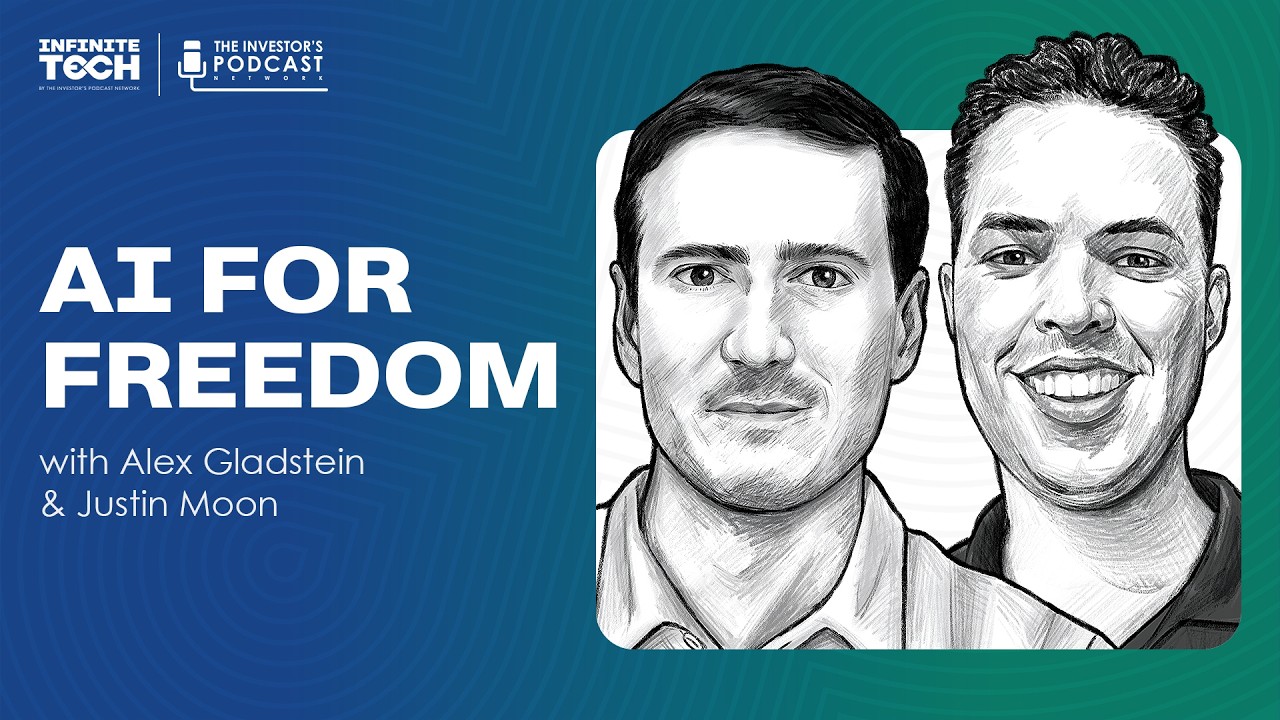
(00:00) One of the uniqueness of asymmetry specific to Bitcoin is that if you don't take an action, no action is an action when it comes to your money that's getting destroyed. If you don't participate, your life will actually get worse off because ultimately your money is going to stop working. (00:20) And what that means is not just that your purchasing power declines, but your standard of living decline. I'm curious just kind of starting off your thoughts on this Clarity Act and just the regulatory landscape that's currently playing out. It's pretty interesting. Yeah, it is. You know, I've been paying attention to the Clarity Act. I wouldn't say necessarily from afar, but I haven't been actively engaged. (00:46) And then two nights ago, I, you know, saw some information coming out about it and it started digging into the things that matter most to Bitcoin. And honestly, it's not to say I'm disappointed. I'm not surprised. I think that it's underwhelming and that for different reasons that Brian Armstrong thinks that it's a bad bill. For Bitcoin, (01:09) I think the language around protection of developers is particularly weak as well as the language around self-custody as well. I think that yeah, in its totality a fairly there's not a lot that comes good from it is what I would say. I think that it puts a lot of hooks in the side of privacy in terms of what's required of entities that would be delivering software that aren't financial institutions. (01:30) And then I think there's some dubious language around the specific language that's trying to quote protect software developers. Yeah, I love those points because those aren't the points that I think the mainstream is really talking about. One of the contra points that I found really interesting from just big banking lobbying and that seems to be where a lot of the things that have been added into this behemoth act. (01:56) This is huge. The amount of information in this and the amount of competing interests that are in this that got their hands into it. I want to read this from somebody online and they're talking about the stable coin yield piece that it seems like the big banks on Wall Street are mostly concerned with in the bill and he wrote 53 banking associations just wrote themselves a $6. 6 trillion protection bill. (02:18) They called it the Clarity Act. and he's getting at the idea that the banks are by law not going to pay any of the interest for what they're securitizing the dollar stable coins with, which is just like you had mentioned. You were talking about something completely different. There's so many different things in this bill that are huge. (02:38) As we saw yesterday, the markup that was supposed to happen at the Senate got delayed because mostly it seems like because Brian Armstrong said he doesn't support it anymore from Coinb Brian Armstrong. uh the CEO and one of the founders there at Coinbase. Yeah. The day before that I actually was talking with a few friends saying that the Bitcoin lobby should pull out and saying that they don't support this and get better protections. And then for a different reason, Brian Armstrong pulled out, but that's the way to (03:08) get what you want is to be willing to walk away from the table and to say no. Yeah. And you know, another commentary that I'd have at the broadest level, I don't think that it serves Bitcoin, and not I'm not talking about special interest in Bitcoin. (03:27) I'm talking about Americans rights to access Bitcoin to lump Bitcoin in with everything else. You know, I think that there is a valid use case around dollar stable coins. Bitcoin is a very important, I would say, earthshattering technological advancement of money. And then there's everything else that I largely view as snake oil. (03:54) And I could see there being justification for stable coin specific legislation. And then there is Bitcoin. There should be Bitcoin specific legislation to be defensive and protect rights. But lumping everything together ultimately serves to basically when we get down the road and everything else proves to be snake oil to be a drag net to capture Bitcoin into it from a regulatory perspective. And when politicians say, "Well, we can't advantage Bitcoin. " Bitcoin doesn't need any advantages. (04:18) It needs protection so that you don't infringe on our rights. You don't need to give us tax benefits, things like that. It's money should be treated as money. It should not be lumped in with crypto one or two through a million because that largely is snake oil. (04:38) And when you have to write everything in vague terms that are then subject to loose interpretation, I think it ultimately is just it's not something that will end well for Bitcoin. But also, I just don't think anything good generally comes from DC. So, it's not necessarily a surprise at the same time. Amen. I mean, it's just become such a blob. (04:56) Uh, when you look at everything that's been added in there, and I just don't even know what my thoughts are on whether
Segment 2 (05:00 - 10:00)
you know, it passes or doesn't pass. I just don't really think it matters in the grand scheme of things too much for Bitcoiners and for people that really understand what the real innovation in the tech is. (05:13) I don't know if what's your thoughts on it actually going through and getting passed? I presume it'll go through. I think that Brian Armstrong being willing to walk away from the table was a strategic move to get the changes that he wants. They've spent a lot of money and they have benefit in having some regulatory clarity. So, I expect that is a tactic and that there'll be some compromise. (05:35) But I also generally agree with you that as it relates to the significance around Bitcoin specifically, I don't think it's going to move the needle. Yeah. Hey, so the other commentary is I can't remember who the founding father that said it was, but one of the founding fathers talked about how that once laws become where the common man can't understand them. Yeah. Like their utility like defeats it its purpose. (06:00) And if you actually go through and try to read this act, like it's something that really only a lawyer could really decipher. And I think that that's, you know, it's not specific to Bitcoin or the quote crypto world, but it's just a symptom of how far DC has strayed. I think this one bill is, if it's not 10 times longer than the Constitution, it's just like, why can't we have a simple thing that just says you have the right to custody your own Bitcoin? Yeah. Control your own keys. Yeah. End of story. You know, like it's legal to do this. (06:29) You don't need a bunch of qualifiers. Um, so yeah, I think at the end of the day, it's going to be a wash for Bitcoin. it likely gets done because there's special interests that have an incentive for something to get done. What that compromise will be between the Coinbase of the world, the banks, I don't know, but I'd expect it gets done. (06:54) I would say this, if it doesn't get done right now, I don't know when it ever will get done or at least anytime soon because I don't know that you're going to have the control in the Senate and the House after midterms. And maybe you do, but if you don't, then something is never doesn't agree with that. Congress. Yeah, I agree. I agree with that. And I also think that's probably one of the reasons why at least on the side of the Coinbases of the world or the stable coin lobby that they would be minding to compromise, but then maybe the banks and also the banks probably have an incentive because they want to unwind to some degree what was put in place with (07:30) the stable coin act. So, I think that probably because everyone's looking to the midterms and saying, "Well, this isn't a priority now will ever be a priority or whenever the priority is around this space, it's probably not going to be nearly as favorable. " Yeah. Hey, down there in Texas, you guys just became the first state to actually fund a strategic Bitcoin reserve. (07:54) Uh 5 million was purchased in November at around 87,000 a coin. You testified in favor of SB21 earlier in the year. How does it feel to see a state move from theory to actually holding Bitcoin on the balance sheet? What are your thoughts here? I think it's a big move. It's a move not to be understated. State of Texas, I believe, has 85 billion of cash and equivalents. (08:24) And so it's also it's a small move a very small move financially but I think it's a very strategic and significant move for what it represents not just for Bitcoin but for a state like Texas who have evaluated whether or not this is a reasonable thing to do in 2025 for a sovereign state and having it go through a state house of representative through a state senate signed by the governor and then acted upon that other states will follow and I would expect I think that the initial allocation for the state was to go up to 10 million they bought 5 million but I think that the piece of legislation specifically allowed for up to 500 million so I would (09:10) I would expect Texas's reserve to grow and then one of the other reports that came out alongside it was that the state does have plans to transition from bit to cing the bitcoin themselves. Whether that comes through could be determined, but that's my understanding what the plan is at least initially. I didn't realize that. So, they're currently holding iBit through the ETF. (09:36) Oh, I didn't realize that's how they bought it. So, that's my understanding. Oh, interesting. Okay. During that testimony that I just mentioned, you had stated that, you know, one in a hundred people actually understand Bitcoin, but yet legislators are still passing things like this and they have a ton of interest in it. (09:59) What do you think that I mean, it's quite the dichotomy that most people just don't even understand it, but yet everybody's interested
Segment 3 (10:00 - 15:00)
about it and they're even passing laws about it. What help us understand how that's possible? It's a good question. And when I say that it's clear that no more than one in a hundred people understand Bitcoin, I mean actually understand what's happening like truly seeing the field seeing Bitcoin as money. (10:28) And when it comes to the actual number of people that grock it in a deeply intuitive way, it's probably not more than 10 basis points. You know, it's like there's eight billion people in the world. put your number on it or use any anecdote in your own personal life. I, you know, one of the examples I used was that fewer than 1% of S&P 500 companies own it, but it's also easy just to go out in the world and observe for yourself how small percentage of the world really sees what's on the horizon. But at the same time, I think there's a larger group of people that are getting the signal that there's (10:57) something of significance here. And in 2025, one of the popular trends was at least this vocalizing of the idea of the debasement trade. And so there is some connecting the idea of a fixed rate currency or fixed supply currency in a world where central banks are printing a bunch of money. (11:26) And even if a state legislature or a pension fund, I'll use an example of the Wisconsin state pension fund. They bought a bit in 2024, I believe, but then they turned around and sold it, right? And so it's getting to be at that point where some of the career risk of nobody got fired for buying Microsoft is starting to wear off and it's okay to start to be allocated to Bitcoin in a very small percentage. (11:54) But that doesn't necessarily mean you might be catching some of the signal like price is the signal. The Lindy effect of Bitcoin being around for 17 years and being a two trillion dollar asset is allowing people in very small ways to catch the S on it and say hey I should have some exposure to this which is distinct from I figured out really why Bitcoin is relevant why it's fixed supply is so defensible and why it is significant to the sea change in money that we're in the very inception of so like they don't get that but they do get that hey black rockck launched a ETF hey the idea is that it's a form of money that you know (12:37) can't be manipulated and has a fixed supply don't necessarily understand how it works or if this is really the future but in this world where central banks are printing ever more dollars and euros and yen and to the tune of trillions we should probably have a little bit of this and so I think that even though that is detached from a true understanding. They're catching some signal. They just don't necessarily, you know, they're not locked in on it 100%. (13:02) Yeah, it almost seems like AI might be helping a little bit too. So for a lot of people, especially when you look at how many domains Bitcoin itself like goes across to fully gro or understand it, it almost seems like for a person who just doesn't have the time or is focused on other things and they have their attention and other things, uh, for them to step into a conversation about Bitcoin, they're just going to turn to AI and they're like, "Hey, like, isn't this just a giant Ponzi scheme? " And then the AI, every AI I've (13:33) interacted with has never treated it that way. Every AI I've ever interacted with deeply understands it and finds enormous value in it based on the conversations that I've had with Claude, with Grock, with OpenAI. I mean, you name it, every one of the major uh language models is all about it. (13:56) And I suspect that might be helping a bit because your common person I think all agree that you know you go and you ask AI a question about medical or a question about any type of topic that requires an enormous amount of knowledge and previous intellectual rigor to understand and the AI probably knows it better than any human you can bring forward and I think that in a way it's helping bring validity to it because it's not some other human that's saying, "Oh, no, like I've made a bunch of money in Bitcoin and therefore it's valid. " And the other person who's listening to this other human who they (14:33) who in their mind isn't any smarter than them, they maybe just got lucky or whatever or that was their attribution, right? But now they're going to something that they're actually viewing as a more superior form of deep knowledge that they can then ask it a hundred follow-up questions and it's giving them like fire responses. (14:55) And I think that might be assisting in a way, right? Potentially. That that's an interesting take. I never
Segment 4 (15:00 - 20:00)
hadn't thought of that. You know, I've actually never asked, you know, Grock about what they think about Bitcoin because I've got my own views. (15:12) But I do think that there likely is some acceleration of research of wanting, you know, I've used it to understand things that I didn't understand and it was a more efficient path to getting there. I would still lean to people looking out and seeing somebody like or an institution like Black Rockck adopting it. Yeah, Fidelity obviously has adopted it for a long time, but Fidelity having an ETF, being able to see that you could buy a Fidelity ETF right in your trading account. It's a name that they trust. (15:36) They're not having to go open up a separate account, but those barriers are being brought down. Where I thought you were going with that question is to me in many ways AI in my mind has become that new shiny object that's actually distracting people away from Bitcoin where the fervor around investing or the investment community is you know what which AI is going to win or what segment of the market or how should we even think about this and so a lot of the investment community mind is on that world but then having somebody like the CEO of Nvidia talking about Bitcoin specifically in very (16:13) serious ways about uh there was a recent interview that he did where he was talking about how Bitcoin is secured by power and if you think about it being you know you're transferring value and then securing it with real world power resources and that be a real signal. (16:33) Well, there's a lot of people that are paying attention to the AI world and then hearing that from someone like Jensen, I can't remember his last name. Yeah. Hang. Um, but then someone like Larry Frink saying that he was wrong about Bitcoin and that there's value to a neutral currency in a world of great uncertainty at the global scale around currencies and conflict. (16:59) So I think that people are still probably more anchored to the names they trust, the institutions they trust and but I also believe probably people are using it to research Bitcoin and probably get, you know, people get there in different ways. So, I wouldn't discount that. At the same time, I've just seen it on X where people are arguing with somebody who's a complete naysayer against Bitcoin. (17:20) And instead of the person like actually responding like we did old school and getting into like a Twitter fight, they're just saying, "Hey, Grock, explain, you know, all the nuance of this to this person. " And they're just like, they're gone. And then that's a great le that what's the saying where it's something about the amount of signal to refute like if someone throws out the amount of energy you have to spend to counter it that if you can just counter it by asking the AI bot to respond and tell them why this is wrong like it flips the script around the amount of (17:52) energy required to refute the so that's a very positive turn of events. The other thing too is because everybody knows what Grock is. If there was some uh some other human that would respond and have a just an amazing response, the person who's reading that response has no idea what the credibility or how smart on that topic the person is. (18:15) They can kind of see from the evidence of the response whether it seems valid or not. But when a person sees that it's Grock, it's almost like they're looking at it'd be like the most famous person in the world that's the most intelligent in the world and everybody knows who it is and they're the one responding to your question. (18:33) So you almost have like this situation that you've never had in the history of humanity where this entity can step in and respond to something and you immediately know that it's based on just an incredible amount of intellectual horsepower that's providing a counterargument on your behalf and you don't have to do to your point any you don't have to expend any energy for the crap that some people spew as far as counterarguments go. That's an interesting point. (19:02) Now, one thing I will say is there is something odd on that. I think that's true. But it is also crazy how quickly people have come to look at these new tools as authorities. Yeah. Right. Where they do if they ask the question and they get a response back, they assume that it's true. Like, oh, like this has so much knowledge. This is the case. I'm curious to you. (19:25) I I've had a few cases recently where I've actually asked the question and it's given me a blatantly wrong answer um and not one that's political. I'll give you an example. I was watching the Texas Michigan football game and the announcers mentioned that Texas had only played Michigan three times. (19:45) I was aware of all three games and I asked the AI like how many times have Texas and Michigan played and it said two and I was like well I know that it's at least three because I remember three and it gave a game that was wrong. one of the two was wrong. Like, and so just as an aside, but they've been very quick to the culture to just assume you asked that
Segment 5 (20:00 - 25:00)
they spit something out that it's an authority. (20:04) And I'm glad that it's sending out a signal about Bitcoin, but it might be there might be a room to manipulate people at the same time as easily as people have kind of latched on to assume the authority of the bot that's talking back to them. Yeah. (20:23) Yeah. Well, to your point, in preparation for this, I was uh reading up on all the stuff happening with the Clarity Act, and it said that the markup happened, and I know yesterday the markup didn't happen. And I went back and I said, "Hold on, this markup didn't happen yesterday. " And it's like, "Oh, yeah, you're right. " It's you're right. Yeah. So, I think it's complete contra to the point that I was trying to make. (20:42) But I think that I think we're getting to an interesting moment where maybe in a year, maybe 2 years from now, like I think the mistakes are going to get so far less and it's much better at only shooting out truth. (21:02) And I think that it's going to start producing this drastic change just in human culture and how it interacts and where it gets its source of truth from. As scary as we might look at that, whether we want that or not isn't my argument. My argument is that I think on a net basis, humanity is going to start treating it as just the truth engine. Whether people like that or not. (21:23) And I think that might actually have profound implications for Bitcoin and for people's willingness to start embracing it more than what they have in the past because it's been such a massive education burden that seems to be maybe easier to overcome if you have the assistance of AI. Yeah, I think that's right. (21:43) you know, kind of tangent is that one of the benefits in AI to Bitcoin is that it gives Bitcoin so much cover on the energy side that it didn't have because now that AI exists and now that it needs and consumes all this power, there's this other large stakeholder group that has shifted their tune around going out and delivering cheap reliable power. (22:08) It's also ironic in a sense because while Bitcoin is a perfect consumer of power because it is perfectly monetary and perfectly economic and that when there's scarcity of power and the price goes up, the Bitcoin miners come down, the AI companies are not nearly as flexible and it's actually starting to drive the price up and now that will drive both new generation coming online but more of the angst around the power dynamics get shifted towards AI and away from Bitcoin. I think that is a very positive for well just think of it from the if (22:41) you're the smartest AI in the world, right? Like let's fast forward the tape. You're 5 years into the future and the AI let's just say it is of an AGI level. It wants additional dampening on the grid. (23:00) It wants additional robust infrastructure on the grid because it makes itself more powerful and capable by having that there. And like how do you deliver that probably in the most optimal way? I would argue is with Bitcoin mining. So yeah, it's going to be highly incentivized to ensure that there's, you know, Bitcoin mining alongside AI compute inference. Yeah, it'll be a combination of Bitcoin mining and batteries. Yeah. (23:23) Um of where can supply be because miners can respond by turning off demand and uh batteries can be both incremental sources of demand but also incremental sources of supply. So I think a combination of those two become a massive asset. Yeah. (23:40) And I'll tell you the other thing too from a battery standpoint like if people were making the argument that they think batteries would be a better choice than Bitcoin miners which you know that's a whole rabbit hole in and of itself. I think when you look at how many robo taxis and how many cars just Tesla alone is going to have out there that is storing its energy via battery and how much inference compute those cars alone could do if youorked them all. (24:01) Like that's a whole another rabbit hole of going down the battery path versus Bitcoin. And it's already I guess my point is you're already going to have an insanely robust network of batteries, cars that are on a network as an additional kind of like material that's out there for stored energy. Yeah. (24:27) But yeah, that's a very deep and long rabbit hole in and of itself. But uh so back in December, you gave a presentation at Old Parkland called Bitcoin is the greatest asymmetry. You laid out three pillars. The first one was the magnitude of the opportunity is unmatched. Second one was adoption is probable but not possible. And the third is the surface area to evaluate is finite. (24:52) Can you walk us through the framework, what you were really trying to accomplish with the presentation and any just like core highlights that you have for us? Sure. Yeah. And this presentation followed a presentation that
Segment 6 (25:00 - 30:00)
I gave two years ago at the same venue. And Old Parkland's a really interesting place because it's a family office park in Dallas, but also just interesting side note, almost irrelevant, but it was actually where JFK was taken when he was shot in Dallas. (25:17) It was old Parkland was Parkland Hospital that later was decommissioned and then bought by the Crow family and turned into an office park. But there's a lot of family offices that work out of there. It's a beautiful campus and it's just a beautiful setting to be able to give a talk on Bitcoin and it was a place I was familiar of from my time when I lived in Dallas and I was invited to give a talk there in 2023 and the subject of that talk was the principal question that I kept hearing come up and the title of the talk then was Bitcoin is not a hedge and in that period of time it was 2023 (25:48) inflation was running rampant and the price of Bitcoin was going down from the process of 2021 to 2023 and in that first talk that I gave there, I explained, hey, this is a pressing question that a lot of people have. It's not making sense to them. Let me help bring some clarity around it. (26:06) Now that Bitcoin is sitting at 100,000ish, there's been this increasing, you know, there's a discussion around quantum risk, but I've been experiencing just in my own network of friends that are not yet kind of taking Bitcoin seriously, really getting through up on this idea that Bitcoin's at 100,000. This the sense of it's too expensive. I've missed it. (26:25) my energy and focus is going on to AI. And you know, some of the backdrop to that talk was to frame how much asymmetry remains in Bitcoin or how much how early we really are and to paint a picture of where we're going. And oftentimes, you know, in different depending on what the audience is or if I'm talking about a certain aspect of Bitcoin, I like to jump to the conclusion and then work backwards. Yeah. (26:52) Um, and so in this talk it was really trying to frame of like, hey, like you haven't missed it. Like I know that your energy is probably shifted onto AI, but your energy needs to be on Bitcoin because it is the greatest asymmetry in the world and it's a very unique one in the sense that a lot of times people think about asymmetric opportunities as opportunities to make money. Different asymmetric bets that are generally low probability. (27:19) And what makes Bitcoin so unique is not just that there's great upside in it, but that it's the most foundational asymmetry because money sits at the foundation of the economic structure, but also this idea that there's negative asymmetry to not only currency debasement, but the endgame of currency debasement, which is hyperinflation. (27:39) that one of the themes in that talk that I talked about is that if you didn't invest in Apple early or Google early or Tesla early and you could bring that forward to today thinking about some AI startup like if you passed on one of those opportunities and didn't make money your life didn't get worse off what I communicated to this crowd in this talk is that one of the uniqueness of asymmetry specific to Bitcoin is that if you don't take an action no action is an action when it comes to your money that's getting destroyed and that (28:11) if you don't participate that your life will actually get worse off because ultimately your money is going to stop working and what that means is not just that your purchasing power declines but your standard of living declines. So I really broke into those three frameworks. go into each one of just like a contextualization but yes there is massive positive asymmetry positive risk view to orders of magnitude up because of how early we are and you understand it in the framework of you know certain of the data points that I raised that's number one second one be by definition most asymmetric events are (28:46) low probability bitcoin is increasingly probabilistic and I talked about ideas of how far Bitcoin become the absolute scale that it's at various different major milestones including the state of Texas buying it but also just starting to understand the scale of power that is securing it, the work being done around payments, we're launching Bitcoin payments and then that third column being hey there is negative asymmetry because while people think of often asymmetry as relates to investments as great upside relative to the limited (29:18) downside or limited relative downside in this case asymmetry can also mean limited upside and great outside and that's the dynamic that exists in fiat currencies. Let's hit on the second one just a little bit because I think for somebody that would maybe be a first-time listener or just kind of coming to Bitcoin more recently, they might hear this discussion about probability versus possibility and maybe say you're a zealot because you're saying that it's so probable. So like how would you address that for somebody that (29:51) is just kind of showing up? Parker. Well, one of the ideas that I talk about is that before I get to the probability
Segment 7 (30:00 - 35:00)
I think it's encapsulated in this the same idea and it's certainly how I think about probability is that the surface area to evaluate Bitcoin is finite. And it comes into probabilities because if I think about Bitcoin as being binary, it either works or it doesn't. (30:19) If it doesn't work, it's not marginal. In my mind, its value goes to zero. Everything about Bitcoin working or not working is whether Bitcoin can credibly enforce its fixed supply without the need for trust. And whether against all odds, all adversaries, whether Bitcoin as a autonomous system can continue to solve blocks. And what those blocks ultimately represent is the enforcement of Bitcoin's fixed supply. (30:47) And the substance of that thick supply is that it represents a form of money that can't be printed. And so with everything else in the world that someone might consider investing in, the surface area is necessarily nonfinite. It's not necessarily whether something works or doesn't work. (31:07) It's to what degree does like something could fail, but even if it doesn't fail, is it a small win? Is it a double? Is it a triple? Is it a home run? and that it makes bitcoin simpler in that way to say okay let me test the assumption first like if it were to be true that bitcoin does have a fixed supply is this idea that economic systems converge on one form of money and you can you know go back to the gold standard in the world converging on a gold standard doesn't mean 100% of the entire world works on one form of money but it means that there's a long tale that 99% of it does they can look to their own lives lives, (31:41) they only interact with one form of money on a daily basis. And here someone saying that Bitcoin's a form of money that can't be printed. And if it were true that property held, would that cause the world to converge on it? That's the simplified way to think about it. (31:59) Now, when I extend that out to say, okay, well, let's look at where Bitcoin is today. It's been around for 17 years. It's been around long enough for the state of Texas, which you know, states, any government institution from an investment perspective is inherently conservative. Been along long enough for an institution like Black Rockck to launch an ETF, to hold it, the state of Texas to pass legislation going through the House, the Senate, the executive branch to buy it, and then they did. looking at metrics like the amount of power that's (32:35) securing the Bitcoin network, which I would put at an estimate of 20 to 30 gigawatts. And to give someone a context of like a large manufacturing plant has 5 megawatts, that we're talking orders of magnitude larger than the largest manufacturing facilities. And then looking at the trend of where the Bitcoin mining hash rate has gone. In the presentation, I used a data point from just two years ago. (33:01) People look at Bitcoin being highly volatile, but you see this just steady increase of power continuing to come online in a more linear fashion securing the Bitcoin network. And then you see the endgame starting to take shape with large public companies like Square beginning to turn switches on such that 4 million people that use Square for payments can on a software terminal hit a button and then if they want to start accepting Bitcoin as payments, they don't have to change anything. It meets them right where they're at. that to say, hey, 17 (33:36) years in, the amount of power, the amount of interest, look at where we've gone from to where we are today. What causes this to break is if there was something that could undermine Bitcoin's fixed supply and the incentives around it. (33:59) And then, as I said to someone, I said like, you don't have to view the probability the same way I do. What you have to accept is this thing is binary. Mhm. The fulcrum that everything rests on is the credibility of its fixed supply. The larger that Bitcoin becomes, the longer that it exists, the larger it becomes, the harder it tangibly becomes to undermine, the harder it becomes to stop. And so even if you put the probability at 1%. (34:24) Or 2%. I might put it at 90% and 99%. I don't expect somebody to look at the same equation and come to it as probabilistic as I believe. But even if you discount that heavily, the equation given the other two pieces of the framework of how absolutely positive asymmetric the skew is and that there's great downside if you were to be wrong that even if you're discounting it and saying there's a 1% probability, you still have to be exposed to it. (34:59) And so I think that it's easier to actually evaluate because it's binary, but again, you can discount it heavily and arrive at
Segment 8 (35:00 - 40:00)
the same conclusion just to a different degree. Yeah. And I'll summarize this for anybody who was hearing that. Parker saying you need a position. You need to have some Bitcoin in your portfolio is what he's saying. And I agree. Yeah. (35:23) I mean, you lay it all out there and it's the amount and the quantity that you would attribute to that. And like you're saying, it's completely up to the eye of the beholder as to what numbers they want to slap on there. But saying that the probability is zero, which you know, if a person wants to say it's zero, they can say it's zero, but the skew on if you're wrong is quite brutal if you want to say it's zero. So, I want to talk about this ribeye index. (35:49) I think this is pretty fun. And uh just to slap some numbers on this that you've been posting, uh you've been tracking the price of the same ribeye steak at the same store since 2020 for the last 5 years. Your latest update showed a 72. 5% cumulative inflation over that period. And that's 19% annualized if anybody's keeping track, which is a far cry from the official CPI. (36:17) It's even higher than what uh many people say the M2 growth rate is here in the US which is around 8 or 9% annualized over the same period. What's your take on this and why is this important? One I think it's a great way to distill everything that's happening in the world because the ribeye doesn't lie. Um desirable, right? It's scarce and desirable. So it's requires work to produce. (36:43) There's food, energy, money as kind of three key working systems that are very foundational to our economic system. It's also a great troll to the fiat economists that say that you can't distill things down. It is an oversimplification but it is this idea that inflation is a vector that you know whether or not you consume a lot of ribe eyes you need to look at the things in your life that you consume and measure inflation based on those things because if the Federal Reserve is saying that CPI is 2. 7% but you're going to CVS and Walgreens and things are (37:18) rising at far higher rates or if you're getting on planes to go visit family and a flight used to cost $300 and now it costs $600. That inflation is really the goods and services that you consume. And if your rate of inflation is not keeping pace with your wages, the net consequence to that is your standard of living is declining. And so I consume a lot of ribe eyes. (37:43) I enjoy eating ribe eyes. And when you look at something as basic as a commodity in the same place that doesn't change that it's a true unobstructed view of how prices are actually changing and we all need, you know, food is fuel at the same time. So, if you eat a lot of chicken, then start paying attention to the same chicken. (38:07) Don't you can't swap out a chicken for chicken nuggets because that might not be the same chicken. But start comping the same basic commodities and see how they're trending over time in your area because that that's actually a better measure for how relative prices are actually changing versus what the Fed or the BLS are telling you. (38:32) Yeah. I mean on the point on the ribeye too is it's so pure for the most part that it's a great index because like you're saying so much of the food is just being replaced the ingredients being replaced with just absolute garbage that's cheaper and not nearly as nutritious. (38:57) Now you can make the argument on the ribeye that it's cornfed and not grass-fed, but I think back in 2020, which is when you started this, everything was pretty much cornfed anyway. you were buying at a regular grocery store was probably cornfed anyway. Still is. Yeah. There's a chance that if anything they might have substituted out for something worse. They didn't make him better over that period of time. (39:15) So, it's like that that's the minimum degree. Yes. Um but also like and I say this in a way that comes back to this idea of negative asymmetry through fiat inflation. I went to CVS few nights ago and I got eight things. No, I went to Walgreens. got eight things. Basic things like children's motin and trash bags and disinfectant spray, some vitamin C gummies or something like eight things. $109. (39:44) Inflation is it is off the charts. It's nowhere near your CPI. It's nowhere. Prices are changing more frequently. Yeah. people are observing it and there's a reality that it is suffocating a large majority of the country and it's serious you know it's like part of the ri like it is true it
Segment 9 (40:00 - 45:00)
is a great measure of inflation it is also a great way to troll fiat economists but on the other side of it it's like hey like there is negative asymmetry and one of the things I mentioned in the talk was that like I don't talk about hyperinflation to be a dimmer and it's (40:19) uncomfortable to think about but It's also the logical endgame and no action is an action and that it's getting to the point that it's so bad particularly things like sue like people can look at housing prices coming down because interest rates are high but by and large anything that requires production on a recurring basis is trending up significantly over time and it might dip for a period of time but electricity prices are going up, gas prices going down, but you know gas prices have gone down before and gone up again. That the trend is all being driven by the same underlying mechanism and it's fiat money (41:01) printed and it takes time to distribute through the economic system but it's real. It's serious. It ends in one way and that one way is hyperinflation. And if people don't respond in a way that is high agency to actually protect themselves by opting into a better form of money, like it's not going to be the difference of inflation between 3% and 6%. (41:25) It's going to be them not being able to afford the very basic necessities in life. Yeah. Um, and so I bring it up not to like scare people, but to say, hey, there's something you can do about this, and you should be because the more people that are protecting themselves, the better off we're all going to be. It seems that there's been a major shift in nutrition and maybe it's just my the feed that I'm seeing on X as to the people that I'm following and whatnot that everybody seems to be slowly starting to understand that the meat is healthy for you and that it's not going to give you a heart attack like this marketing and propaganda that was really (42:00) quite prevalent. I would argue clear up to COVID and it seems like ever since CO there seems to be a bit of a trend in the opposite direction of people questioning uh I mean we literally just had Kennedy come out and flip the food pyramid upside down and I think like this at a federal level are causing a lot of people to say hold on like what is was I lied to for decades on end? But I don't know if you saw the um there was a clip floating around from South Park where it's like Kennedy's on the phone and the guy in the lab said he's like sir (42:37) the pyramid is not working. He says turn it upside down. Like what? Like They turn it upside down and then it like all fits into place. I do think that part of this broader trend that people are finding their way out of the trance that they were under. Yeah. (43:03) You know, whether it's the money, the health, and obviously all these things are highly interconnected that there's there people that are they're bucking the authorities to think for themselves and say, "Yeah, I'm going to go this other direction. I'm going to try because whatever you've been telling me to be true, it's not been working out. (43:22) Um, and I think that it's getting so much momentum in various different areas that it all winds up kind of intersecting each other because the other side of it is like if you figure out that you've been lied to about the food for 30 years, it's not so easy just to be like, "Oh, I'm going to start eating steak again. " you know, if you don't have the savings to be able to do that, like you can't fix that overnight. (43:47) And that is a big part of what's happened is this as inflation has hurt, people have had to shift into lower quality food that's screwed up their health. And it's not something you turn around overnight, but it is something that's connected with it. But the sooner that somebody can start to be the signal basically turn off the noise then they see these things as being related to each other um and can start actually making positive change. Yeah, totally agree. (44:17) You wrote this back in I think back in May. You wrote that the greatest trick the central bankers ever pulled was convincing the world that the individuals must perpetually take risk just to preserve value already created. Bitcoin reverses that. It lets people save again instead of being forced to speculate. (44:36) paint this picture of defancialization and what the defanancialization economy looks like, especially in the face of everything that we've just seen with AI because it's it just seems like this financialization of everything and forcing people to speculate is just kind of hitting yet again another higher fever pitch than where it was a year ago with some of the antics that we're seeing with Nvidia and Open AI and the likes of the shenanigans that they're pulling
Segment 10 (45:00 - 50:00)
from a financialization standpoint to raise capital. Yeah. I mean, one example that I would (45:12) lean on to segue from this food discussion in the ribeye index is I was helping our local rancher who also owns a ger understand Bitcoin and going from this perspective of financialization and specifically the quote you just mentioned of thinking about hey if you're producing beef and then you're building a ger to be the way that consumers actually purchase things from you rather than just a farmers market or rather than selling through a larger grocery chain. (45:47) Imagine every gross margin unit that you sell not being able to purchase commensurate value that you delivered in the present. So to think about it literally is like every unit you sell whatever value you delivered in the present will purchase you less in the future. And that's because they print money. (46:12) How can you possibly continue to maintain the same standard of quality if that's what you're up against? And then layer on to that the fact that you know that your dollar is your gross profit and then turning into your bottom line is degrading in value. And that part of the way that you have to counter that is on the side of being a rancher, ger, you're having to invest your money. (46:43) So you're constantly having to change your business model or at least your pricing model oftent times in a rears because your input costs are changing faster than you're actually changing them to your end customers. But then you know that you're on this hamster wheel. And so at the same time that you're trying to run your business, you have a certain amount of savings that you also know is being degraded that after your full-time job is over. (47:09) Oftentimes just imagining whether it's a rancher, ger, doctor, lawyer, teacher, after their primary way of delivering value and working is over. I just have this visual of like between 8:00 p. m. and 10 p. m. sitting in front of a computer, those same people trying to pick stocks. Yeah. And so it's like a hit them high, hit them low. Yeah. Phenomenon. (47:34) And that if you could just take the fly out of the ointment and say, "Hey, if you could just convert your goods and services directly into a form of money that can't be printed and stores purchasing power, two things happen. All the value that you deliver in the present pulls value into the future. so that you're actually in a position to continue to deliver the same quality and standard without having to do incremental work and you don't have to bother between the hours of 8:00 p. m. (47:57) and 10 p. m. to become a stock picker. You can just focus on your craft. Yes. And so I always focus on the micro of like an individual and the predicament that the money printer and the degradation of savings puts each individual. And then I extended out to like you know the bigger macro trends of okay now everybody is looking at AI and feeling like they need to pick a winner. (48:30) And so you had just have this huge herd mentality of trying to basically offset. And it's not to say it's like when I'm talking about how if you take the fly out of the ointment and it will remove a large swath of people investing that otherwise wouldn't be investing other than to outpace or try to outpace inflation. It's that there's still going to be innovation in the world. Mhm. (48:53) We're always going to be where we're at today and humans are always going to have problems that need to be solved and that it won't eliminate investment. And if there's innovation to be had that necessarily means solving problems for enough people to justify a margin in a business that there's still going to be opportunities to invest that occur naturally. It's not going to eliminate that. (49:20) But it stops people from having to constantly feel like they're chasing the next thing as a way to outrun the money printer. And the other problem is that a lot of people don't even realize that that's what they're doing. Yeah. And so, you know, there obviously is some like financial engineering in terms of like, you know, I haven't gotten into the details of it. (49:39) This might have been what you were alluding to like how some of the revenue accounting is then leading to their ability to raise capital like that sort of financial engineering like might send at a different level. But I also think that that's a much higher order than the fundamental that really drove financialization which is a money printer and that the trend that will cause the defancialization the simplification without removing investment broadly is just a form of money that can't be printed.
Segment 11 (50:00 - 55:00)
Yeah, I love this point of yours because it's just I think if you went and just did an (50:11) audit of middle class America, everybody just feels like they're already running at 120%. And they're looking to their future and they're saying, "Oh my god, I'm going have to run at 140%. " And they're just tapped out. They're tired. They're having to do things that just feel like there's never any pause or rest and that the expectation for the future is they got to go faster and harder. (50:35) And uh I'm with you by and large to stay in the same place just to Exactly. just and not even get ahead and maybe even fall back a couple clicks. So yeah, no, I'm with you and I mean you and I see the solution and we think that we see it very clearly. Hopefully we're right. (50:54) I'm pretty sure that we're on to something. But yeah, that's a good place to just say that that's a big part of what this talk was about. Like it wasn't specifically about like the relationship between AI and Bitcoin, but like it is so easy in this world for people's attention to go to the next thing. Yes. (51:13) And saying like, hey, there's a real problem here. This thing is not going to fix itself. Bitcoin is the solution. or if you don't see that yet, you need to be thinking about it through that frame and spend the time to evaluate it because in a 24-hour news cycle and there is a negative psychology to Bitcoin being quote as expensive as it is, but in the grand scheme we are it is in its infancy still and there's large consequence to it. (51:43) So even though you and I have come to that conclusion, it's like so many people just turn it off without going deep and then they have some excuse not to. It was like, oh, before it was, you know, I don't believe in Bitcoin, but blockchain. Now it's like, well, AI is the future and maybe we aren't going to need money. (52:00) And it's like, no, that's just an excuse not to go down the Bitcoin rabbit hole, but there's great consequence to you if you don't. And so focus your time and energy there. It's actually a lot easier than you might think it is. a lot more basic, a lot more fundamental, and if nothing else, it certainly merits your time just given the inherent asymmetry if it were to be true. (52:18) So, I'm just going to put this out there for the listener. As you can tell, Parker has an amazing way of explaining a lot of these really important variables around Bitcoin. He has a book. It's called Gradually Then Suddenly. It's an incredible book. I'm sure people can go on Amazon to pick it up. (52:37) And Parker, did you have anything else that you wanted to point people towards if they want to learn more about you? I would only clarify it's on it's actually on Save Dean's website. I just went there. I went pure Bitcoin on this. So, okay. The book can be bought at the safehouse. com which is safe spelled sis. The safehouse. com. The ebook is there as well. I just finished the audio book so that'll be coming out shortly. (52:59) Oh, nice. Uh read it myself. And then I just say if you could link the presentation that was at Old Parkland. Yeah, Bitcoin is the greatest asymmetry in the show notes so that people could access it if they want to with these. And then I'd say for those people that uh already grock Bitcoin and see it as money, understand why it's sort of valued, I highly encourage those people to start to accept it as payment. (53:23) And if they're thinking about that to reach out to us at zaprite, uh zap rit. com, and I'll help you personally, help you get set up and at least talk you through what it would require. So yeah, if it's not yet clicking, grab my book, go listen to the presentation, and if it already is, then turn your business into a Bitcoin treasury company by accepting his payment. (53:45) Yeah, I would tell you having used Zaprite a few times, it's pretty awesome, Parker. And for anybody listening, if you're a merchant or you own a business and you want to start accepting Bitcoin, but you don't want to have to do any of the hard work to set it all up, that's what his company's AppRight does. So, we'll have a link to that in the show notes as well, Parker. (54:02) Uh, so we'll have a link to all that stuff that he mentioned in the show notes. So check out the show notes, guys. Last episode at the end, this was our mastermind discussion. Uh, American Hodddle uh, surprised all of us and did an on the-fly AI music song about the four of us in that mastermind group. (54:28) Since last week when we did this, I've played around with this AI music and it's actually hilarious and like actually pretty good if you give it a decent prompt. So, what I'm going to do just for fun at the end of each of the shows, I'm going to feed it, you know, the AI transcript of what we just talked about and we're going to turn it into a song of your choice of genre. (54:53) So, like if you like rock, if you like hiphop, whatever it is, it's you decide, Parker. And as soon as we uh hang up this call, that song is going to play for everybody that
Segment 12 (55:00 - 60:00)
just listened to the podcast. So, with that said, Parker, what is your favorite artist genre? What is it? Texas country. So, Texas country. Yeah. So, I'd either go like Robert Keane or Jerry Jeff Walker, Shane Smith, and the Saints. Okay. (55:19) Well, there you go. That's what the recap of this episode is going to be. I hope you guys enjoy the song. And Parker, thank you so much for joining us and making time. Yeah, Preston, it's been good to be here. Thank you for having me on. I was waking up at midnight to an inbox full of lies. Staring at that frozen tickle while the world slipped outside. (55:53) Boss message just chase that bones. Don't you dare quit this ride. Every t on every screen look like a slow landing slide. And water moves downhill. Son, sodas on his money. You can find a current till you can finally run free. They can crank a handle to cheap turns into a funny. The water moves downhill. (56:33) Son, come wait out here with me. Saw a headline at the D. I begin this week. Oh boy. Counting wrinkled dollars shook and said didn't speak. My paycheck felt like paper ashes in a rusted metal tray. Slaving heart standing still while the price tags ran away. Water moves downhill. Son is honest money. (57:31) You can't fight the courage though you do finally run free. But they can train the handle till he turns and it's funny. Water moves downhill son. Come wait out here with me. So I swap my suit for D train blast for sky and sun stack the red signal every time the work I've done. Oh yeah laughed and called it foolishly said it just some passing dream. (58:14) I said friend I've seen your ledger and I know what passing means. Water move downhill. Son, your soda is on its money. If you can't fight the current or you can finally run free. They can't spin their stories till numbers just get running. Water moves downhill. Son, come wait out here with me. Want to move down, son? That's where I'll be. (59:07) Thanks for listening to TIP. Follow the intrinsic value podcast on your favorite podcast app and visit the investorspodcast. com for show notes and educational resources. This podcast is forformational and entertainment purposes only and does not provide financial investment, tax or legal advice. (59:25) The content is impersonal and does not consider your objectives, financial situation or needs. Investing involves risk including possible loss of principle and past performance is not a guarantee of future results. Listeners should do their own research and consult a qualified professional before making any financial decisions. (59:42) Nothing on this show is a recommendation or solicitation to buy or sell any security or other financial product. Hosts, guests, and the investors podcast network may hold positions in securities discussed and may change those positions at any time without notice. References to any third party products, services, or advertisers do not constitute endorsements, and the investors podcast network is not responsible for any claims made by them. (59:59) Copyright by the Investors Podcast
Segment 13 (60:00 - 60:00)
Network. All rights reserved. I was a total cycle guy and I fully capitulated. I think the cycles are completely it's over. It probably was just an illusion. It probably never was real, but uh it's certainly dead now. (1:00:23) And like I do think Bitcoin could trade, you know, next year 500,000 like yeah, that could happen. Next year 50,000.