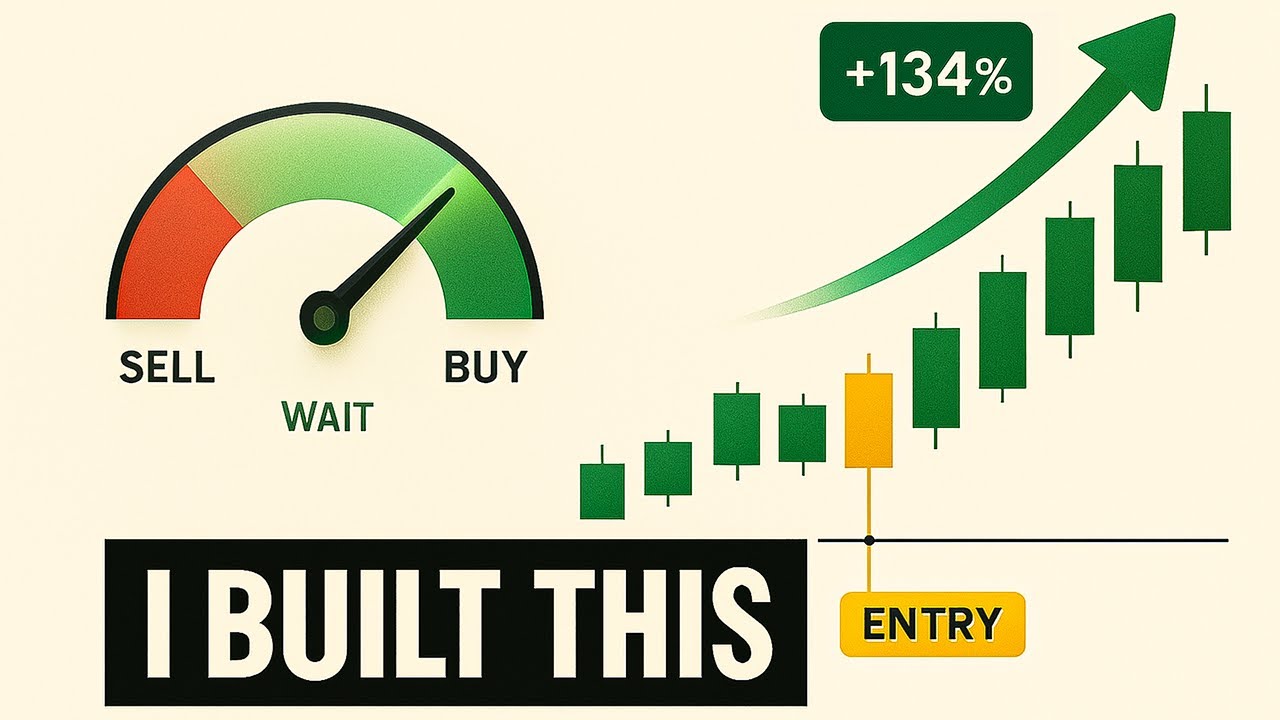
The "2-Level" Signal Hiding on Every Chart | Simple 50 EMA Trading Strategy

The "2-Level" Signal Hiding on Every Chart | Simple 50 EMA Trading Strategy

Machine-readable: Markdown · JSON API · Site index
Поделиться Telegram VK Бот
Транскрипт Скачать .md
Анализ с AI

Оглавление (4 сегментов)

Segment 1 (00:00 - 05:00)

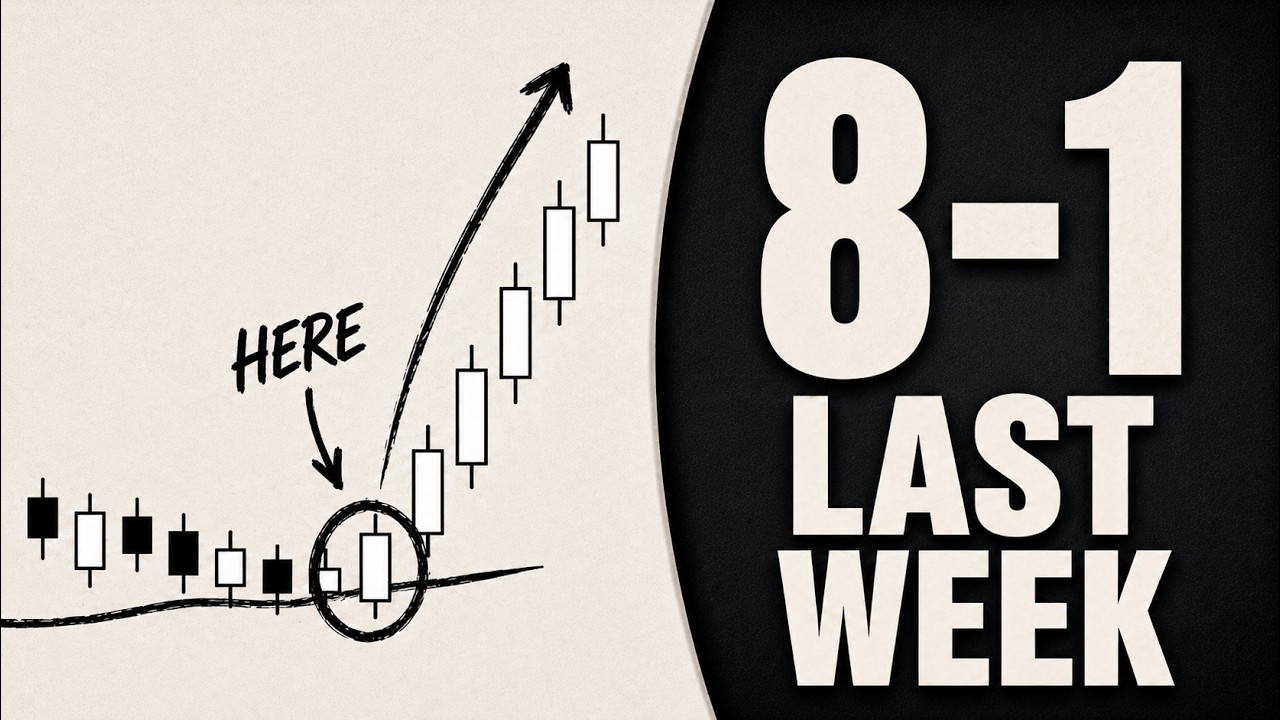
This is what beginner traders think a professional chart looks like. And this... is what a professional chart actually looks like. The pros don't use chaos, they use confluence…a simple system where one static level and one dynamic one meet, to create a trading 'sweet spot'. Today I'm giving you the entire system… The Two-Level Rule So let me show you something that's going to change how you trade forever. Remember this: price only respects two things in this market. Just two. Static levels that never move, and dynamic levels that flow with price. That's it. Everything else is noise designed to confuse you. Think about what's really happening behind these candles. Every move you see is either bouncing off a level from the past… that's your static support and resistance. Or is riding along a moving barrier that shifts with the trend…that's your dynamic level. The market is just ping-ponging between these two forces constantly. So here's the mental shift that changes everything. Stop looking for complex patterns. Start looking for where these two forces meet. When a static level that's been tested multiple times crosses paths with a dynamic moving average, you get what I call a confluence zone. This is where the magic happens. The technique is dead simple. You mark your horizontal levels where price has bounced before. Then you add one moving average that flows with the trend. When these two intersect, you have a zone where institutional traders are watching. And suddenly you can see exactly where price has to make a decision. No confusion. No conflicting signals. Just clean, obvious zones where something has to happen. You just learned the foundation that most beginners never discover. How to Identify Your Static Levels Now let's talk about finding the levels that actually matter. Not every horizontal line on your chart is worth trading. Most of them are just noise. You need to find the levels where real money has changed hands. Here's the touch test. Look for levels where price has bounced at least one before. Each time price hits a level and reverses, it's like the market is voting. This level has power. Also, pay special attention to round numbers. These psychological levels work because human psychology doesn't change. Traders place orders at these obvious numbers, creating natural support and resistance. But here's what most people get wrong. They think a level has to be exact. They draw a line at one level and expect price to bounce to the pip. That's not how markets work. Think zones, not lines. Give your level some breathing room. Maybe 5 to 10 pips above and below. And here's a key point about timing. Recent levels carry more weight than ancient history. A level that worked yesterday is more relevant than one from last week. The market has memory, but it's not perfect memory. Don't mark every swing high and low on your chart. Find the most recent 3 or 4 levels that really stand out. The ones where you can see clear rejections. That's how you find levels that actually matter. Choosing the Right Moving Average Let's talk about your dynamic level. This is the line that's going to flow with the trend and give you context for every trade. I'm going to save you years of testing different moving averages. Use the 50 EMA. That's it. The 50 exponential moving average is your best friend. Why 50? It's fast enough to catch trend changes but slow enough to filter out noise. It responds to price movements quickly without whipsawing you to death. For this strategy, we want this faster response. Here's how to read your moving average. Look at the angle. If it's pointing up steeply, you've got a strong uptrend. Price should bounce when it touches this line. If it's pointing down steeply, strong downtrend. Look for short opportunities when price touches. If the moving average is flat, you're in a range. The trend is weak or nonexistent. Static levels become more important in these conditions. One practical tip - make your moving average stand out visually. You want to see it clearly when you're scanning charts. This line is going to guide most of your trading decisions.

Segment 2 (05:00 - 10:00)

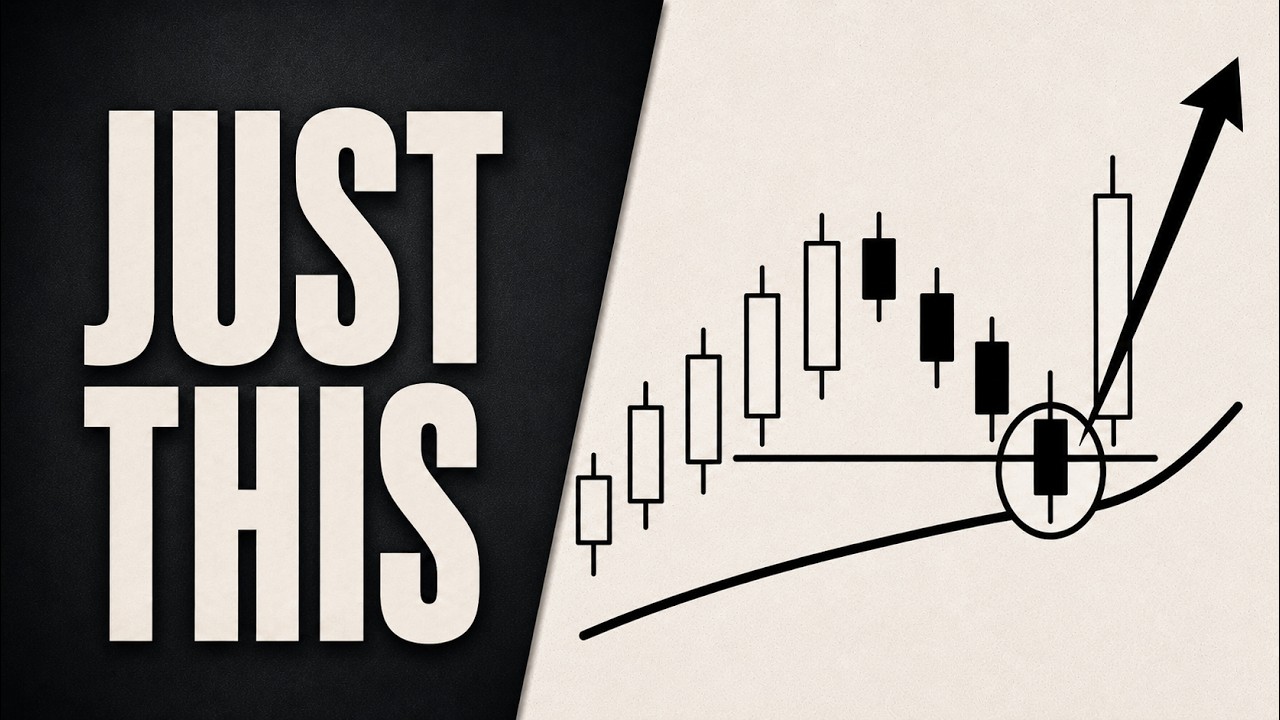
The Confluence Sweet Spot Now we get to the magic moment. When your static level and your moving average come together. Perfect confluence happens when these two levels intersect within about 10 pips of each other. Picture this - price is falling toward your support level, and right at that same spot, your 50 EMA is providing dynamic support. Two reasons for price to bounce instead of one. But you don't need perfect alignment to make money. Near-miss zones work beautifully too. If your static level and moving average are within 15 to 20 pips of each other, you still have a tradable confluence zone. Here's the key rule for direction. You only trade bounces in the direction of your moving average slope. If the line is angled up, you only look for buy opportunities at confluence support. If it's angled down, you only look for sell opportunities at confluence resistance. When price approaches your confluence zone, watch for the rejection signal. You want to see price "kiss and bounce. " It touches the zone and immediately reverses. Like it hit an invisible wall. Sometimes price will poke through the zone slightly before bouncing. That's normal. Remember, we're thinking in zones, not exact lines. A small breach doesn't invalidate the level. Entry Rules (Only Trade the Bounce) Let's get precise about when and how to enter these trades. First, price has to come to your confluence zone. You can't chase price to the zone. You have to let it come to you. Once price reaches your confluence area, you wait for the bounce confirmation. You need to see price reject the zone and start moving away from it. A quick touch and reversal is what you're looking for. Here's your entry rule. You enter after a candle closes away from the confluence zone. Not when it touches. Not when it's still inside the zone. After a full candle closes in your favor. This confirmation candle eliminates most of the false signals. It proves that the bounce is real, not just a temporary pause. Direction is crucial. At support confluence zones, you only buy. At resistance sell. Never try to pick tops in an uptrend or catch falling knives in a downtrend. For every trade, your stop loss goes just outside the confluence zone. For a buy, place it 10 pips below support. For a sell, 10 pips above resistance. This is your safety net. You never trade without it. And you target double the amount you risked. And here's what separates this strategy from others - you only trade bounces. Never breakouts. If price breaks through your confluence zone, you do nothing. You wait for the next setup. Breakout trading requires different skills and different risk management. We're bounce traders. We profit from zones holding, not from zones breaking. Your entry should feel natural. When you see the setup forming, when price approaches confluence, when you get that bounce confirmation - it should feel obvious. If you're forcing the trade or second-guessing yourself, it's probably not the right setup. “Perfect Confluence” Trade Let me show you what a textbook confluence setup looks like in action. We've got a clear support level here, former resistance. It’s a strong static level. Now watch what happens. Price is trending higher, and our 50 EMA is angled up, providing dynamic support. As price pulls back, the line starts converging with our static support level. Perfect alignment. This is confluence at its finest. Price approaches the zone from above…it touches the confluence area and immediately rejects higher. Look at that bounce candle - strong body, small lower wick. The market is showing respect for this zone. Entry comes on the next candle after we get confirmation. This is what happens when multiple support factors align. The probability of success goes way up. The institutions see the same confluence you see. They're placing orders in the same area. These perfect confluence trades like this don't come every hour. But when they do, they tend to work beautifully.

Segment 3 (10:00 - 15:00)

“Near-Miss” Trade Now, you don't need perfect alignment to make money. Here's Pound Yen on the 4-hour chart. We have a key level here - you can see a previous support, turning into resistance. So clear static level. The moving average is angled down, showing the downtrend. But notice, the moving average is about 20 pips below our resistance level. Not perfect confluence, but close enough. Next, price rallies into this zone and starts to reverse. The rejection isn't as sharp as our perfect confluence example, but it's still clear. Now you might ask, why did this work even without perfect alignment? Because the market was seeing the same resistance zone we were. The static level plus the nearby moving average created enough selling pressure. Zone thinking is crucial for this strategy. Don't get hung up on exact prices. Look for areas where multiple support or resistance factors cluster together. Near-miss setups like this actually outnumber perfect confluence trades. If you only waited for perfect alignment, you'd miss a lot of profitable opportunities. Strong Trend Bounce Now let me show you confluence in a strong trending market. This is where the strategy really shines. Dow Jones Index, 1-hour chart. Clear uptrend with a steep moving average angle. This line is acting like a perfect trend line, supporting every pullback. Price pulls back to test the line. At the same time, we have minor support from a previous swing high right in that area. Not a major level, but enough to create confluence. Watch what happens. Price barely touches the confluence area before exploding higher. The bounce is immediate and powerful. No hesitation, no false moves. Entry comes on the next candle after that strong rejection. Price closed well above the moving average, confirming the bounce. But more importantly, this was just one of the similar bounces during this trend. Strong trends offer multiple confluence opportunities. Each time price pulls back to test the moving average near a minor support area, you get another high-probability setup. The key difference in trending markets is speed. The bounces happen faster and move further. The trend momentum carries price away from confluence zones quickly. You have to be ready to act when these setups appear. This is why confluence trading works so well. You're not trying to predict where trends will start or end. You're simply riding the pullbacks within existing trends. The Failed Trade Now let me show you what happens when confluence doesn't work. Because even the best setups fail sometimes, and you need to know how to handle it. Euro Yen, 1-hour chart. Beautiful setup forming. Previous resistance turned into a strong support. The 50 moving average angling up and converging right at that support level. Perfect confluence. Price approaches from above, touches the zone, and... keeps falling. No bounce. No respect for the confluence. Price slices right through both the static support and the dynamic support like they weren't even there. You will get those trades. Here's what I learned from many failed trades, which initially looked like perfect signals. Sometimes large institutional orders are placed beyond your levels. When a big bank decides to dump a large position, your technical levels won't stop them. And sometimes, you just picked the wrong level. Maybe that support wasn't as strong as you thought. Maybe the confluence wasn't as significant as it appeared. And that's the game…you don't need every trade to work. You just need the winners to be bigger than the losers. But the key lesson is to never chase a failed trade. When price breaks through your confluence zone, you accept the loss and wait for the next opportunity. Don't try to "fix" the trade by moving your stop or adding to the position. When the setup fails, it fails. And you move on. SYSTEM INTEGRATION Let's lock this in. You now have the ability to identify the only two levels that matter, static and dynamic. You have a simple system for marking the strongest zones on any chart. And the exact entry rules that keep you out of bad trades.

Segment 4 (15:00 - 15:00)

You now see the markets through the lens of confluence, and that changes everything.

Другие видео автора — The Secret Mindset

Ctrl+V

Экстракт Знаний в Telegram

Экстракты и дистилляты из лучших YouTube-каналов — сразу после публикации.

Подписаться

Дайджест Экстрактов

Лучшие методички за неделю — каждый понедельник