If you do not understand your buyer’s real problem, your solution will miss the mark. In this webinar, you’ll learn how to ask better discovery questions, diagnose the main issue, and align your solution to what buyers actually need.
If you are a B2B seller, sales leader, or enablement professional dealing with shallow discovery conversations or misaligned proposals, this session explains why many discovery approaches fall short and what top sellers do differently.
Buyers rarely present the full problem upfront. They often describe symptoms, incomplete information, or the solution they think they need. Without the right discovery approach, sellers miss the underlying issue and struggle to connect their solution to what actually matters to the buyer.
In this webinar replay, you’ll learn how to:
• Move beyond surface-level discovery
• Use data and insights to guide more productive buyer conversations
• Ask questions that expand urgency and reveal business impact
• Align your solution to the actual problems buyers need to solve
Chapters
00:00 – Introduction: The Swing Cartoon
02:22 – Check-In: How Sellers Are Doing with Aligning Solutions to Needs
05:48 – The Importance of Buyer Feedback
10:15 – The Great 8 Framework Overview
11:52 – The Importance of the Problem Statement
22:41 – Understanding Unconsidered Needs
25:23 – The Data Insight Question (DIQ) Approach
26:18 – The Commodity Trap
31:24 – Problem-Minded Questions
43:38 – Constructing a Data Insight Question
50:31 – Final Thoughts
Resources
Align Solution to Needs Checklist: https://corporatevisions.com/resource...
Chase Problems, Chart Success E-Book: https://corporatevisions.com/resource...
When “Solution Fit” Fails, Nothing Else Works Winsight: https://corporatevisions.com/resource...
Learn more about Corporate Visions: https://corporatevisions.com/
Hosts
Doug Hutton, SVP of Sales at Corporate Visions, leads all post-sale teams for exceptional delivery of the company’s science-backed messaging, content, and skills. Each year, his Customer Success and Consulting Delivery teams orchestrate the customer experience to help 250+ B2B commercial organizations have more successful commercial conversations with prospects and customers. Doug has authored numerous research reports, thought leadership papers, and is co-author of The Expansion Sale. / douglashutton
Tim Riesterer, Chief Strategy Officer at Corporate Visions, is the sought after expert on evidence-based revenue growth using counterintuitive approaches. Known for his candid thought leadership and engaging keynotes, he’s spent decades testing and refining go-to-market strategies that put buyers squarely at the center. Tim is the author of four insightful books, including Customer Message Management, Conversations that Win the Complex Sale, The Three Value Conversations, and The Expansion Sale. / tim-riesterer
Оглавление (11 сегментов)
Introduction: The Swing Cartoon
Awesome. Thank you so much, Caroline. Appreciate the introductions. Joined here by my uh colleague Tim Reester here this morning. Uh and you all are here, I imagine, to learn more about aligning solution to needs. Uh for those of you who have been uh strong followers of the Tim and Doug show over the past five, six months, you'll know that this is webinar six uh of a series of nine around these critical selling skills that buyers tell us are most important to their decisions. But as I was prepping for this webinar, aligning solutions to needs, honestly, the first thing that came to mind is probably a cartoon that many of you have seen before used in an entirely different context. But uh drop in the chat the first time you might have seen this cartoon. The cartoon where you try I see the smiley face of the emojis already coming through. Uh because for those of you who have been in project management or design or engineering and perhaps sales as well through the years, you've seen this cartoon before. You know how it starts. You know how the customer explains what they want, what they say their needs are, how that rather nebulous thing makes its way through it. I'm a particular fan of how the business consultant describes it over here in frame six. But ultimately though in the context of aligning solution to needs where my mind went for the tire swing cartoon is how can sellers get from a first discovery call where the client might be explaining it like in frame one but quickly align solution to needs to get to an understanding that frame 12 down here is really what is needed and cut out as quickly as possible. possible, all of the mumbo jumbo in the middle and get from need to solution alignment in as fast a manner as possible. Because again, this isn't just a design and engineering and project management cartoon. This actually probably describes a lot of sales engagements right now. A lot of different buyers, folks involved, new people involved, different folks who have a different idea of what that tire swing should actually look like. And it's your job as a sales professional to understand that need and align the right
Check-In: How Sellers Are Doing with Aligning Solutions to Needs
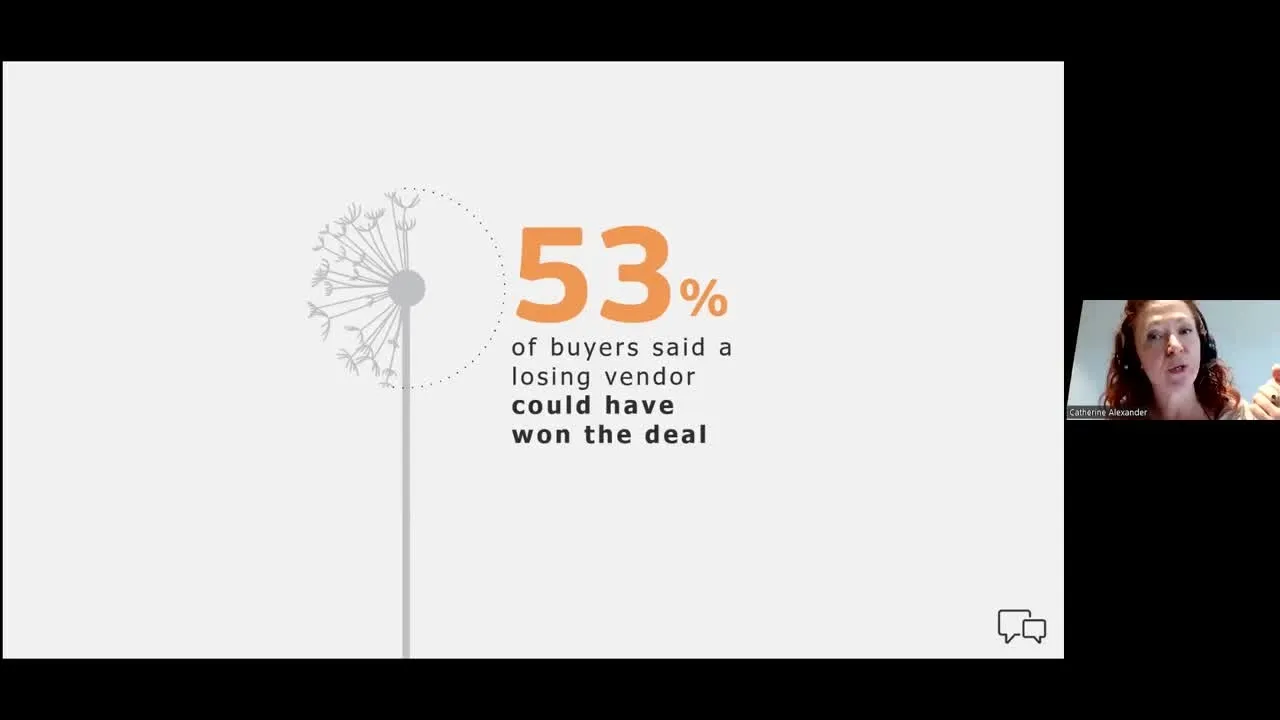
solution to it. But let's check in on how well sellers are actually doing in that regard. And the answer is not as well as we think. Because for those of you who have been tracking uh the Tim and Doug show over the last uh several months, you know this stat by heart at this point. 53% of buyers based on 20 plus years of buyer insight and feedback have said that a losing vendor could have won the deal if not for missteps in the sales experience of which one of those very significant missteps is a complete lack of alignment between solution and need. And unfortunately though, the question then is how often do sellers actually know that misalignment exists? Well, again, if you look at that same data, you'll find that in 50% of opportunities, the reason a seller gives for why they won or lost a deal is different than the reason why the buyer gives for why that seller won or lost that deal. If you were to look at some recent research from Gartner, they'd posit that number could be as high as 70%. So the seller might be saying actually we lost on price or maybe we lost on product when in fact your buyers might be saying actually we just did not get a solution that was aligned with our needs. And in fact, buyers actually say some pretty interesting things when you listen to them about this topic because the most common things that they say, there are three of which alignment of solution with needs is one of them. The first thing they say that sticks out like a sore thumb is that 79% of buyers say that sellers presented little or no competitive difference. Again, for sellers on the call today, I'm sorry to tell you, most of your buyers do not perceive you as different from your competitor sellers at other accounts. And for those of you where this is a big deal for your organization in 2024, check out the December webinar that Tim and I did on this topic specifically. It shows you how to actually stick out in a crowd where again nearly eight out of 10 buyers say all of you kind of look alike. But by a factor of three, the single most cited misstep is why we're having this webinar today, folks. Because it is poor needs discovery that then leads to a complete lack of solution alignment in response. By a factor of three over any other cited reason why sellers fall down in the sales experience is because of poor needs discovery and then lack of alignment in response. And by the time you leave here today, you are going to see some key things that you likely need to be doing differently to achieve that great needs discovery and alignment in response. The last I hate to tell you folks is not so much a seller's skill, but more so just being great at the foundational basics. You be it's kind of scary to hear the number of buyers who say that sellers just don't follow up in a timely fashion and just don't fulfill requests in a timely fashion. But that's the third biggest area that buyers site. But again, I want to come back to this one here. If by a
The Importance of Buyer Feedback
factor of three buyers are saying that poor needs discovery and lack of alignment in response is the biggest reason why sellers are losing deals, then the question becomes are sellers actually hearing that directly from their buyers. Is that feedback of which we have here at corporate visions 100,000 plus data points over 20 years. Are sellers actually hearing that feedback and then doing something different about it? And the answer to this question, unfortunately for too many sellers, is no. And here's how we know that. Then I'll uh bring Tim into this conversation because I know this is one of his favorite statistics. We ran a study with our partners uh down at Florida State University, Dr. left Bonnie and we took a look in 2022 and 2023 at 7,000 sellers for whom buyers had provided insight on their deals. One group of sellers that insight was not shared with them in either 2022 or 2023. And for that group, I you all on the call probably know this better than we do. 2023 was not great when it came to win rate. But if you were a seller that got no feedback from your buyers in 2022 and 2023, your win rate on average was down 22%. But in the study, we were able to find a group, a group that did not receive buyer feedback in 2022, but did 2023 from at least three deals. Three seem to be the magic number. Now, yes, you're probably looking at it and say, "Yeah, but that win rate also went down. " Yes, but it didn't go down by nearly as much. In fact, simply by providing back insight from buyers on three or more deals led to a 40% better win rate for those sellers. And so, again, that sets the context for our time here today. And Tim, would love to bring you into the conversation. I know there's a big area of study for you. would love your thoughts on what this tells us about the need for buyer feedback as well as that true gap between needs discovery and solution alignment. — Yeah. And I'm going to tip our hand for some brand new research that we're going to share at our conference um called digital now revenue summit. People can look it up. It's in April in Chicago. And we got brand new feedback coming from Dr. Lebanoni on sales coaching. Uh and what he was able to discover is that customer feedback is better received by sellers in terms of their willingness to change a behavior significantly higher than feedback from managers and the manager's opinion or peers and peer-driven opinion and feedback. So customer feedback has some magic uh form sort of something in it that causes a buyer to self-reflect and consider uh updating their skills. Um and there's a previous slide what you saw is that by a factor of 3x aligning solutions to business needs is the one that buyers can observe and they can report back on as being predictive of their willingness to choose you or your competitor. And I marvel at that because if there's one thing for the last 30 years that we've tried to tell and teach buyers, right, all of you is spin selling. Like that's alignment of solution to need. Customer centric selling, solution selling, strategic selling, medic, medsick, whatever it is. Like you name it. Like this is what people have been training on for like 20 to 30 years. And buyers are like you still aren't getting this right most of the time. uh compared to any other experience that I'm having. And so um one that's amazing. Two, the fact is that buyers can observe it and they can call it out. And now I guess three is can it be fixed? And that's the interesting thing. If it's a product problem or a pricing problem, your product team has to go back to the road map and they got to figure out how to fix that. But this is something that can be fixed like now. And this can change win rates now. And we're going to show you by how significantly they can this can affect win rates in the next set of data. And again, I want to pick up on two
The Great 8 Framework Overview
terms that Tim just said there in that response. One, observable and coachable. So the key in your collection of buyer feedback and sharing that insight back to sellers, are you collecting data on skills that are observable by the buyer that the buyer can actually pass judgment on whether or not the seller did it? And then to Tim's point just there, can indeed that skill be improved? Can you coach to it? Can you train make them better in the moment? And through our research here at corporate visions and for those of you who've been following along in this series, you know that there are eight of these observable coachable skills that have a direct correlation with win rate. Provide expert insights being the first align solution to needs and we'll talk much more about that here across the balance of the call. demonstrating clear differentiation. That was our December topic and it's always back to how do you differentiate yourself in a world where buyers 79% of buyers say actually you're not different than anybody else I talk to? Articulate meaningful value. Are you positioning value in the buyer's terms? Help justify decisions. This is the number one skill largest gap in seller performance between wins and losses. Negotiate creatively, ever more important in a world of tighter budgets and more stakeholders. Deliver compelling communications. And last but not least, that skill of just are you doing the basics? Are you responding to concerns and resolving them as quickly as you can. But you joined us here today
The Importance of the Problem Statement
to learn more about solution to needs and going to lead off why this is so important. But before I do so, I'd love to get the chat box going a little bit before I flash up this next data point. So, as you think about aligning solution to needs, that's all about aligning between the customer and the seller the problem that you believe needs to be solved. And I'd be interested in the group's perspective before I share any data. In what percentage of deals do you believe that your sellers and your customers are aligned on the problem to be solved? Drop a number in the chat from 0 to 100. What in what percentage of your deals do you believe your customer and your seller are aligned on the problem that needs to be solved? I am uh and folks can make sure you're chatting it to everyone, not just hosts and panelists. — I appreciate the humility that this group has so far. I appreciate the humility. We're not getting that high. I also appreciate the specificity of numbers like 18%. — Yeah, but it's between 2% and 50 right now, I think, is the range. But — indeed, 2030s are — mid I'd say mid30s is where we're landing. So I have more humility in this group than what our data actually shows. Um but on average the databacked answer from that from our research the data backed answer is that average across all deals wins losses no decision the average is 45. 5. 45. 5% of the time buyer and seller are aligned on what the problem is that they are trying to solve. Folks, to Tim's comment earlier, this is not great. And it is then no wonder that buyers site a line solution to needs 3x more than any other factor. If in less than half of your deals, there is indeed a alignment and agreement on the problem to be solved. That data point is sketchy in and of itself. Less than half the time we're aligned. But this is where the distinction really comes in. And you saw in the webinar title, 3x more in wins. Because in losses, folks, in losses, sellers are only aligned with their buyers 23% of the time. It is no wonder then that those deals end up more in losses than wins. But when you do win, if you look just at wins, there's your 3x. Just shy of 3x. 3x would be 69, I suppose. But in 68% of wins, there is agreement between your customer and your seller on the problem statement. What is the problem that you are collectively trying to solve? Why are you even in conversation with that buyer? A nearly 3x difference between losses and wins. So what does this tell you? That tells you that aligning solution to need starts way before your solution even comes into the picture. If you are not aligned on the problem itself before you even get to solution, it's no wonder then that the solution is not aligned to need if there's no agreement upfront as to what that problem actually is. So their first big takeaway is that successful sellers get clarity on their buyer's problem first and foremost before solution even enters the picture. But then the question becomes well how do you do that? How do you actually drive agreement on the problem statement? How do you actually get them to agree yes these are my needs. this is my problem and you and I are standing side by side solving that problem together. Well, unfortunately, too many sellers, as you can see from that data, don't do that exceptionally well and get caught in a commodity trap. Because for those of you who have joined us in this series, you will know that this is actually the third time. The number three plays a large role in today's webinar, but this is the third time that we are sharing this graphic because this underpins why all those methodologies that Tim mentioned aren't working. Because if your sellers are out there in the field, field asking 20 questions discovery and in response are getting some basic answers from your buyers as to what they believe their needs are. and then mapping those stated needs to your capabilities. Well, guess what folks? Every other sales professional is doing the same thing. They are understanding the identified needs that a buyer says in that 20 questions discovery. They are mapping those to their capabilities. And with all due respect to all the great companies I know we've got on this webinar, many of you sell pretty darn similar things. And again, remember 79% of buyers are reporting they are seeing no difference. And this is why difference because most every seller is coming to them asking them what their problem is and then going right to solution mapping without digging deeper without uncovering what the real unstated problem is beneath those stated needs. And that leads to a commoditized conversation. It leads to a conversation based on price. And then it's no wonder that more deals end up in losses. And in those losses, the buyer said, "Actually, I was solving a different problem than the one that the seller came back to me with. " So, what do what do sellers instinctually do instead? Those sellers instinctually say, "Well, I know that my organization does do some things uniquely well, better than anybody else. " And so, they come out here to the right on the x- axis and say, "We have some unique capabilities. I know we can stand out from the crowd if we focus on those unique capabilities. What's the challenge there? Well, the challenge there is what does your customer hear? Your customer hears more cost, more complexity, greater risk, things I didn't ask for. And so, one of two things happen. They ask you or seller. They say, "I like those things, but I don't want to pay more for them. " Or, "I didn't ask for those things. Lower my price. " and you're right back where you started. You didn't align solution to needs because you just went right to your solution first and neglected the needs altogether. So what is the one and only path to get the best alignment of solution to need? You must and this is why you've seen this 3X if you've been following this series. You must identify unconsidered needs. What are those problems, opportunities, risks that your buyer didn't know they had? They may have identified some things, but what should they be thinking about differently? What is a problem, opportunity, or risk they did not know they had? And then, as you can see by the lines on the screen, how do you map those then to your unique differentiators? Then you're solving two problems in one, folks. You're solving the problem of getting great problem statement alignment because you are laying out that problem and getting agreement on what it is and you are aligning the right solution to that because you've given them a reason to care. You have created context between the problem and the need you are laying out and the solution that you are trying to solve. Not only that, you're driving urgency in that as well. I'm always hesit I'm always a little bit hesitant to deliver this whiteboard when Tim is on the phone because I know he delivers it better than I do. But Tim, I'd love your uh I'd love your thoughts on this and just how foundational this is to getting alignment of solution to need, but also just getting that alignment on what the problem is to begin with. — Yeah, I think um Art had a good question in here too that I just answered, but I'll um in case anybody's not following the chat. Um he said, "Well, it appears like you got alignment when you identified their needs or confirmed some needs with them, but clearly what happened is you didn't do sufficient discovery. " And so I pointed out that we have another piece of data from the same study that we showed earlier that the problem statement can change three plus times in a successful uh in a successful sales cycle which means that the winner is pushing that problem statement around with the customer really making sure that it is absolutely right. It is grounded. It is solid and then starts building a solution. I think what happens too often in traditional discovery is people go in with a solution alignment mindset as opposed to a problem statement agreement or alignment mindset. And that's where you go too quickly from the the first answers that come at face value when you ask your vanilla discovery questions. And what we're talking about here is you got to poke beneath the surface cuz the real problem is probably hidden by the thing that they're seeing. And and the problem is that uh that that's not identified. And if somebody else gets there after, you know, the 3 point something times that problem statements change, they're going to win this because they got there to the problem statement alignment. and we're just too quick to try and ask a bunch of solution-minded questions because well, all we really want to do is say, "I got something for that. " Um, so the level of patience and perseverance with problem statement alignment, and we're about to show you how to do it. Um, is — we're not going to leave you hanging. — No. So, the second half of this is all answers. — This is problem minded. So, we took 30 minutes to explain the problem of problem minded. — It gets very meta very fast. Here comes the answer on how to do it. — There you go. Well, so one of the
Understanding Unconsidered Needs
questions, how do you identify these unconsidered needs? It's a excellent question came up in chat and it always comes up. It's important to understand the types of these unconsidered needs. Basically, think of these as types of problems that you could align on. The first is undervalued. And what do we mean by this? This is a time where your buyer actually probably knows that they do have a problem, but they are wildly undervaluing what it will take to solve it. So, they are actually saying, "Yeah, I get it's a problem. I've tried it before, but I actually don't think it would get me that much if I did it differently. " Well, you know from your experience, many sales pursuits, etc., that they are actually undervaluing solving that problem. The second is unmet. Similar in kind to undervalued, but an unmet need is again your buyer may or may not know it exists, but they've never even thought that there is a solution for it. They're doing a huge workaround to get at their answer in their organization, but this is an unmet need. Yeah, the need's there. You've maybe illuminated it for them, and now because it is unmet, they're like, man, I need to solve that. That's a big problem. I will admit that it is unlikely in today's buying environment. You are bringing a truly unknown need to your buyer. Most of your buyers, especially at the executive level, are well-versed in your products and solutions or let's call it the market's products and solutions to a given problem. So, it's unlikely that you are here. Now, maybe you've got some amazing new widget that actually does solve an unknown need, but know that you are more likely to be living in the undervalued or unmet spaces. And each of those can be framed as a problem to align on. But then the question becomes again, how do you do it? So just follow the thinking so far. One buyers say by a factor of 3x over any other that alignment of solution to needs is the biggest gap. Well, why is it the biggest gap? Because our research shows that actually sellers and buyers are not very often aligned on the problem. And why is that? In part because sellers aren't digging deep enough. They're not taking a problem-minded approach. They aren't illuminating those unconsidered needs. But even when you do all of that, unless you are engaging the buyer in the right conversation, you will not get all the way there. So several years ago, one
The Data Insight Question (DIQ) Approach
of our flagship pieces of research was on how best do you engage a buyer in conversation to increase the persuasiveness of your argument? How do you get the buyer to buy in to the problem? And the model that revealed itself through that research was data insight question or for short DIQ. It's the conversation technique that everyone should be deploying coming out of this webinar today and it is both simple and difficult at the same time because it requires that you start your conversation and know in advance a piece of relevant data. And what do we mean by that? a piece of data from an external factor that's out of your buyer's control but important to their business. And by external factor, think oil
The Commodity Trap
prices, inflation, shipping lanes in the Mediterranean, things that your buyer can't control, but that impact their business. You share that piece of data first, then you share an insight. What does that piece of data mean? Why should they care about that piece of data? And how does it again feed into that problem they didn't know they have? that unconsidered need that data reveals. Then and only then do you get to the question. Notice folks that you're not leading with questions, you're landing with questions. Because in our research with Dr. Zormula from Stanford at the time. When you frame your dialogue in this fashion, data then insight then question, you get a 14% increase in the persuasiveness of your argument. Not only that, because you've asked a provocative problem-minded question, you have actually gotten the buyer to start to buy in to the problem that you are laying out. Little bit of mental jiu-jitsu there. Um, but before we go into what these questions are in a lot of different areas that go into this problem minded Tim, I saw you turn the count the uh the camera back on. So, I know you've got a comment here as well. — That's my technique to let you something. Yeah. — So, um I think just really pausing making sure you get a picture of this technique. Again, the data has continued to be substantiated in our follow on neuroscience studies. Um, and uh, I want to answer Larry's question here, Doug. How do you know if there is something is a problem before you ask? This is what's interesting about data and insight. Um, is that you are bringing to the table, things that you are seeing at companies like them. What I always say is that the buyer you're talking to is mostly myopically and parochially just focused on their own business. When you walk in the door, you have one thing that is in your on your side and to your advantage that they know, but often sellers ignore this. You see more people who look like them than they do. And when you total up what you've seen, you create what's effective effectively and affectionately known as a benchmark or a B, you know, like you understand and see things at many other organizations like them. So often the data you share is like here's what we're seeing at other companies like you big number and they're like whoa that's a bigger number than I was expecting and then the insight is and here's why we're seeing it here's the things that go neglected went unseen here's the things they underestimated and you share that insight and it's not a sales pitch at that point that's why we call it insight the data hangs a high number um the insight says we know what what's going on here. And the underlying assumption is because we see more people like you than you do. It's just what we do. So now you're you're using a benchmark to stoke their voyerism. They lean in. Wow. I want to know what others like me are doing. And you are now all of a sudden kind of in the driver's seat on initiating the unconsidered need. Like what we're talking about here with the data and the insight is that they just don't appreciate the size or speed of the problem, the data, and they don't fully understand what's causing it, the insight. And now with the question, you're transferring ownership there, and the person's going to try that on. They're going to say, "I wonder how that's like is that how's that going in our company? " And you do that. You stimulate that by asking the right question, the provocative problem-minded question. And we're going to show you a bunch of examples of this. Um, but I just wanted to be clear because Larry's um, question was precient. How do you know what their problem is? Aren't they supposed to tell you? The reality is that you see more people who look like them than they do. They actually are expecting you to add that value. What happens is most sales people show up and they don't deliver that value because of the benal um, questions they ask and the vanilla answers they give. And so this is the opportunity right here. — And one of the questions I saw in chat as well, which is a critical one, as more buyers get added to the mix, you're probably going to repeat this motion a lot because folks may have a different understanding of the problem. Folks may actually identify different things. That's why to Tim's earlier point, that problem statement might change 3x or more across the sales cycle. But unless you are continuing to bring that data and insight along the way, you might land on just one problem um that isn't actually defined for the entirety. But the lynch pin to the DIQ model, they are all important, don't get me wrong, but without the right questions, and again backed up by the neuroscience research of Dr. Carmen Simon, without the question being right, you have you risk the conversation going off the rail. So when we talk about what makes
Problem-Minded Questions
for a provocative problem-minded question, we're talking about four things of which provocative is one. But the question must be relevant. Well, no duh, Doug, but it's got to be relevant. It has to be in the scope of the conversation. It is buyer focused. This is not a question about your solution. It's a question about their world digging in and it's actionoriented. Is it actually progressing the motion of the sale forward? So think about the questions you ask. Too many we see are yes no in nature. They allow a they allow the buyer to get out of the conversation quickly. So you need to expand on them and in the research around again what's the whole goal of this whole goal is a line solution to needs but you've got to be aligned first on the problem to be solved. And so in the research that we did with Dr. Bonnie, around this there's a specific group of questions here, problemed questions that fall into four distinct categories. And what I'd suggest to folks here across the next few slides, either do one of two things. Grab a couple screen captures or wait for the deck to come out tomorrow and then liberally steal the questions that are in the deck that you'll see on screen here in a few moments. But the first category of questions, think of them as silent killer questions. Trying to dig deep into the buyer's organization around what are those things that are really go unsaid but maybe silent killers. The second root cause questions to Tim to Tim's answer for one of the chat questions earlier is that surface level need that the buyer articulated at the beginning really what's going on or is it that Harrison Ford movie what lies beneath? The third pain radiation questions how can you make this an even bigger problem in their minds based on the questions you asked. And last, solution justification. So to that other great eight skill of justifying the business decision, how can you frame questions that help to justify your solution? But let's take a look at the first silent killer questions. Just a couple examples here. But note, just take a quick read. I'm not going to read them out loud, but take a quick note here of the open-endedness of the question. how perhaps you could pick a piece of data and insight to tack on to the beginning of them. But these are specific questions to drill into problem alignment and awareness. Again, grab a screen capture here. Wait for the deck to come out tomorrow. But these are questions all around building alignment and awareness of the problem, specifically around those silent killers. What's going unsaid? And again, to Tim's point a moment ago, what have you seen as a seller across your book of 10, 50, 100 accounts that buyer, you know, doesn't know because all of your other buyers didn't know until you brought it to them as well. — So, I'm answering some questions here, Doug, real quick. — Please go ahead. — And they're good questions and uh a couple of them uh have come up a couple times. and how do you customize these with the different CXOs you need to cover in the selling process? — And um and so I'm interested in your answer, Doug, — but one of the things I say is look at this list. Your job in the buying selling process is to facilitate a decision and your job is to try and generate a consensus. And there's some old CEB research that backs this up too that says you get a lower quality deal or outcome if you essentially micro segment your discovery and even your solution to persona by persona by persona. I call that the tin cupping discovery. And now you've got all of these influencers and all of their distinct issues and you get a lower probability of a win and a lower quality outcome because they that's not gaining consensus. You're not helping them find alignment. What you're trying to do with these questions here is if you look at them, they are meaningful to every decider. And what you're trying to do is get all of the deciders to a mutual decision. And I believe that we have over persona not in our marketing because you got to attract attention but if we over persona in discovery and then ultimately solution mapping to needs like you get a very complicated map that then everybody's arguing and in their neutral corners and you have not done the fundamental job. What you need to do is guide and facilitate a consensus driven buying process. These questions are universally applicable to every decider and give you a much better chance of getting what everybody is shooting for here, which is problem statement, alignment, and agreement. That's your job, not tin cupping discovery. Well, and that that's where my answer was going to go, Tim, is again, let's go back to that foundational data piece, which to my mind was one of the more startling pieces of data we had come out within a while, which is in losses only 23% of the time was their problem statement alignment and agreement. And so if you take a very heavy persona-based approach, it is possible that you will have four, five, six different versions of the problem and there will not be alignment and thus more likely that you lose. And so yes, there may be and there may be especially a CIO buyer, a CFO buyer, um engineering buyer that do have to come together to make the decision to go with you over everybody else. But if you haven't facilitated their agreement and alignment on what the problem is, illuminated that unconsidered need and then driven it to consensus with the right questions, the data says you are more likely to lose than win. But I want to the next batch of questions all around root causes goes right to the question that Tim said before. You likely know the answer to these based on your own work with all of your book of business and clients. How do you get again a new buyer to buy into that to compare themselves to everybody else and to find their own root cause? And then ultimately, and here's the best part, you get them to agree that actually they don't look like the benchmark that you just created. They are far from it. But again the a benchmark question a root cause question does require that you have done some work around the data and insight before the question. Otherwise you're asking them just a generic question which they have no sense for where they compare. And again what's the goal of the question? Get the buyer to opt into the problem you want without the data and insight that sets that benchmark to begin with. The question kind of just lays there. I'm most a fan of the pain radiation questions. And this gets to I think to the persona question as well, Tim. Pain radiation questions is twofold. One, make the pain bigger such that you have to solve it. If you don't solve it, you're doing a disservice to the company. But also think about pain radiation, if you will, moving from one function to another function. there's others that are impacted by the problem. And this is a lot of what um a lot I would say Tim, our tech buyers and our tech clients are doing right now where they've lived in a technical sale with technical buyers, but now you've got the CFO sniffing around. You've got maybe the CMO legal sniffing around when it comes to AI. And if you aren't radiating the pain beyond that one technical buyer, they're all going to come in and not feel any pain about the problem that you're trying to sell for. But this is this to my mind is a critical area of missed questions and of missed alignment because they actually don't grow the pain of the need which would then yield a bigger solution. Yeah, this answers I agree for the question that was asked a little bit earlier, but it also if you see the bullet point number two, many of our existing clients have found in each of these you will see that idea of bringing something to the table that fits the DI and then this Q method, right? For many of our existing clients, I found ideally you would have shared a little data about what our clients have found. you would have shared some insight and then ask like hey other clients that we've worked with who have expressed this problem um have found that it affects these other groups as well and it expounds the problem by 2x or whatever it the data would be on that. So what you're seeing here in each of these questions is these are different types of questions that you can land your DI with and in every case it's driving towards alignment and um and the idea of pain radiation being able to galvanize the deciders I think that's excellent but it also creates a problem that's big enough to solve and anymore these days um having go through the pain of change and and put the budget aside for it pain radiation questions are absolutely essential and often overlooked um when it comes to making this um uh making the business case later on. — And to the business case point, your solution justification questions last up. Um and admittedly, they are last here for a reason. These are not the ones you're going to start with. These are going to be the ones that you land on after you've driven alignment, after you've driven size and scope of problem, so that you can figure out for those buyers that what are they going to need to see so that when you properly align your solution to the needs you've uncovered, the problem statement you've agreed on, how are they going to go about justifying that purchase? Um, and again to what we've seen in the data across the past six months, the ability to justify, the ability to justify a purchase is the number one seller gap in wins versus losses. Excellent in wins, absolutely abysmal in losses as reported by buyers. And so don't in your pursuit of problem statement alignment, highlighting unconsidered needs, this is a necessary next step. you will be called upon to justify the purchase. You have to know the right answers to these questions as well. — But I think the these are totally different solution questions than you get with traditional vanilla discovery. Um because they quickly dive into the capabilities of your solution as opposed to how have they thought about solving the problem, paying for the problem, and explaining to the company why they want to put their necks on the line for this decision. And these are the kinds of questions you have to ask to get that kind of um fodder and fuel when you go back with a proposal. Um there was a question here, Doug, that was asked. It came just to the panelists um uh from Stephanie. Would you follow the same I just bring this up because you and I love the we love the retention where this is going. — She said, "Would you follow the same approach to stress the risk of leaving in order to support uh retention renewal conversations? " And um what we will always say about retention and renewal conversations is you are their current status quo bias and people don't want to leave their status quo bias. Anytime you can introduce a potential risk associated with leaving, they will that risk will be magnified many times because people really don't want to change to begin with and they're just looking for a couple good excuses like, "Yeah, yeah, I'm afraid of the dark. I don't want to make that change. " And so I think some of these uh are um uh would be very helpful in that case. I'm keeping an eye on the time, Doug. And I know we got — we got a couple more things. We'll hit the top of the hour. Uh hour nicely. But the
Constructing a Data Insight Question
the construction of DIQ, we hit on this a little bit earlier, but I think it's incredibly important. You know already that to deliver DIQ goes on this slide, left to right. But think about constructing it because actually a lot of sellers don't give much thought to how they're going to construct. They think of I have a list of questions to ask. I shall ask them. But actually in constructing a great DIQ, you actually want to think backwards from the answer you want. want because that's going to drive the question you build. And ultimately then the data and insight that is needed to provide that question. So from a building it perspective, you want to build it backwards from the answer. You want again the answer. What's the answer? You're trying to drive problem statement alignment. You want them to get the buy in to the unconsidered need that you are laying out. But then as you heard already, actually delivering it obviously goes from left to right. Data and insight first. Then your question, then you get the answer, which done well, open-ended, great discussion, leads you to follow-up questions. Maybe they bought into your problem. Great. Where does that then go? Maybe they didn't buy into the problem or perhaps that isn't their problem. Great. Where does the conversation go from there? But this is also about prep. How are you preparing for this? This is not a show up to the discovery call with your list of questions. This is I've seen a lot of these before. How am I engineering this conversation in such a way where I am getting great insight from the client because I am delivering insight to them? Heard one of our consultants talk about it is you got to put a deposit in the bank before you take something back out. And that's exactly what's happening here. The deposit is the data and insight. And because you've given that deposit, they you ask a great question, you are getting great insight about the buy and return that enables you to align on what the problem is. And again, the four key areas to explore silent killers, root cause, pain radiation, and solution justification. Build backwards, deliver it forwards, use those question types, and you've got a great approach. Why is it so powerful? Again, just some human mechanisms here that u that buyer psychology has. One, it leverages that reciprocity. You give them something an insight, they're more willing to give it to you back in return. And you're also anchoring the buyer. Your unconsidered need is shaping their thinking on what the problem should be and where the alignment should come. Because you're sharing things that other companies have done, it does give them permission to be a bit more open about their problems, about where they go. Uh there I was chatting with one of our uh one of our executive consultants and he made the good point that you can never call your prospect's baby ugly, but you can show them another baby over there that looks an awful lot like theirs. And that's kind of what you're doing here, giving them the permission to be okay with it. And again, providing the data and insight before the question builds up trust in the buyer as well. — I'll just add a couple words here. It leverages reciprocity and voyerism. Like people are un just unnaturally curious about what others are up to and you are stoking that and that's okay. You're just you're feeding that but it's real. The idea of anchoring the buyer is that when you give them that data that that's a high number, they have permission, that's the second part here, to admit that they are broken, but they can say, "But at least I'm better than these others. " And and uh but the idea is that anchoring will they will give you a number that maybe isn't as high as the number you gave them, but it is because you anchored it high. that's a meaningful number for them and worthy of continuing to figure out. They're like, "Yeah, well, you know, that isn't an 80% problem, but I wouldn't doubt if it's a 65% problem. Well, is that a big enough deal? What would that look like? And we should continue to probably talk, right? " So, it gives them permission to be broken but better. And that keeps the conversation going. And the feelings of trust are simply this. I know you've seen this before and I want to work with somebody who's seen this before because you know how it ends and you know what it takes to get there and you don't want to be feeling create any feeling that you are like figuring this out with them for the very first time. There was a question that came from David that said don't ever is it true that you should never ask a question you don't know the answer to and I you know that's clever. Um but I would say in this case in DIQ the idea is you are sharing the answer upfront that you have seen with others. So the question is really how's it going for you and uh you don't know how it's going for them but you've seen it so many times that they are like um yeah you know I maybe thought I was okay but now I'm rethinking that. And so I would say that you are you know the answers you have the answer guide. You're the teacher. you got the answers because you've seen more people like them than they have. And that's really the this that's where the smart discovery that we're talking about comes from. We are 51 minutes into a call around aligning solution to needs and we have probably spent two of those minutes talking about solutions and 49 of them talking about needs because ultimately that's the foundation. You all on the webinar today, I imagine you all know your solutions quite well. You probably know the products you sell, the services you sell, and where they are best fit for your clients in your market. But the data tells us, again, to come back to the first data point we shared, the data tells us that unfortunately, you may know your solutions well, but unfortunately, you don't know your customer's problems as well as you should. And in fact, and in 20 only in 23% of losses was there that problem statement agreement between your sellers, perhaps you personally, and your customer. But again, 3x that number in wins 68% of the time. Heck, even here, there's room to improve. But 68% of wins have that problem statement alignment, which is why we've dwelt for those 50 minutes on how you get better on that motion. Because once you've got that problem statement agreement, you're going to be it's going to be so much easier to align your solution to it and your buyer will feel so much more confident in the solution that you're putting in front of them. Because ultimately, again, back to
Final Thoughts
where we started, how the customer explained it the first time through probably not exactly what they need, but you're going to use problem statement alignment. unconsidered needs, and you're going to go with data insight question to more quickly get to exactly what the customer truly needs to solve the problem that they have along the way. Tim, closing thoughts from you. Yeah, I'm going to go back to David's point about asking a question about a problem that you do or don't know the answer to. What I'm going to say is you need to know when you do a D and an I and ask the Q that if they need some help, it is a problem you can solve. — Yes. — So, should have said that up front. — Yeah. the the idea of Steven Cvy, God bless him, uh begin with the end in mind is so important here that you are basically facilitating and guiding a discussion and ultimately that leads to a decision to solve problems that you can do in ideally a distinct sort of way. Um, so I would offer that aligning solution to needs is absolutely as um uh as as you have to persevere like we discussed here and you have to be problemed but you got to know where you're going and uh because if you just expose a bunch of problems and just go, "Yeah, I got nothing for that. Sucks for you. " Then you're not a consultative seller. Then you're just a jerk. So that's my closing notes and you're just a jerk. We appreciate everybody coming out uh to the webinars uh as always. Uh and again this is one in a series in that great eight if you will. If there's another one that is most problematic for you. We've got the webinar topics, the ebook topics on them as well. We'd be glad to help. Tim referenced a couple new pieces of research that are going to be coming out uh at our client event, client summit here on April 2nd through 4th digital now uh outside of Chicago. We'd be happy to join you. We'll make sure that our marketing team drops a little uh nugget into the follow-up email for that as well. Tim will be there. I will be there. And of course, happy to connect uh on LinkedIn or via email at any point as well. But Tim, thanks as always. This is fun. I love this. And we will uh we will chat with everybody soon. — Thanks everybody. appreciate your time today. Really, it's an honor. Thanks. — Take care. Bye-bye.