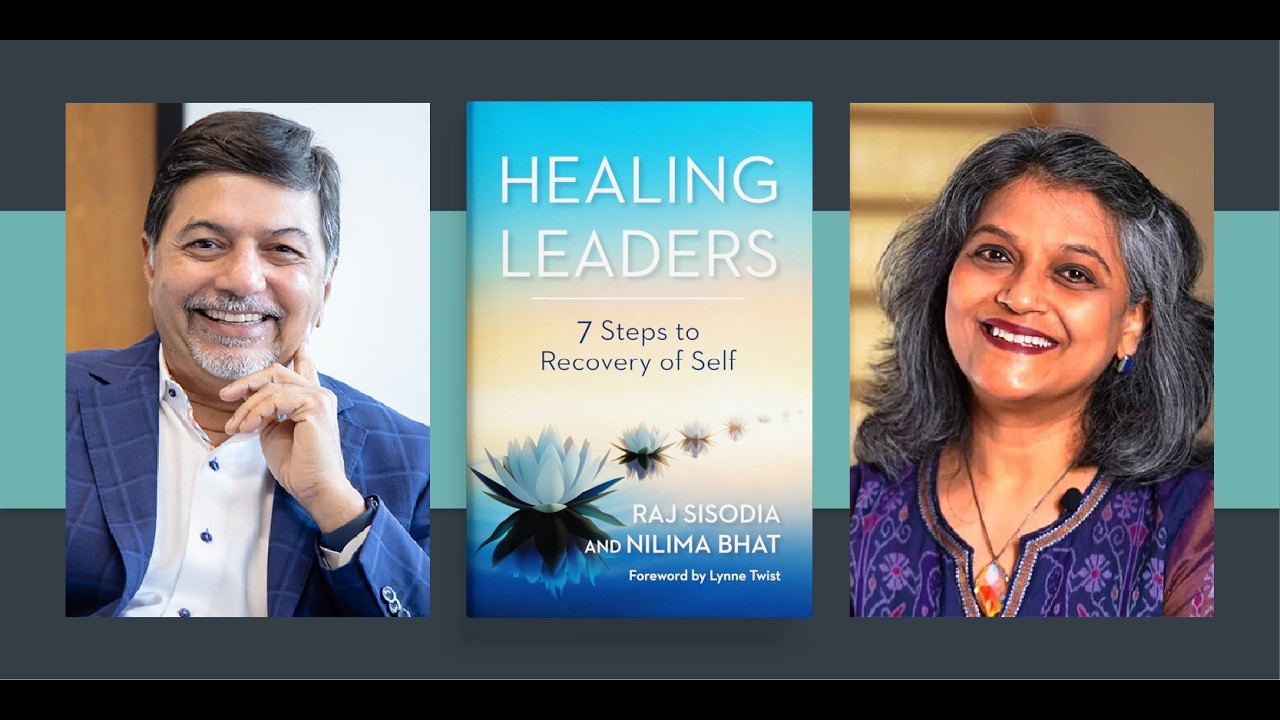
Podcast: Raj Sisodia and Nilima Bhat on Shakti Leadership
21:11

Podcast: Raj Sisodia and Nilima Bhat on Shakti Leadership

Barry-Wehmiller 05.03.2026 38 просмотров

Machine-readable: Markdown · JSON API · Site index

Поделиться Telegram VK Бот
Транскрипт Скачать .md
Анализ с AI
Описание видео
Our last episode featured an interview with Raj Sisodia and Nilima Bhat on their new book, Healing Leaders: 7 Steps to Recovery of Self. In that discussion, we talk about their previous book collaboration, Shakti Leadership: Embracing Feminine and Masculine Power in Business. To compliment the discussion of Healing Leaders, we're going to re-release a podcast episode from 2016 where Raj and Nilima talk about Shakti Leadership in more depth. Raj once said, “Vulnerability is not a liability, it’s an ability. He was speaking about the benefits of bringing both the masculine and feminine sides of our psyche that exists inside every one of us to our leadership every day. Moving from leadership that is about acquiring power to leadership that nurtures and inspires people. We at Barry-Wehmiller have long believed that there’s room for emotion and caring in business. And that's why these two conversations with our friends Raj and Nilima are important insights into how leaders can bring those attributes into their stewardship of those within their span of care.
Оглавление (5 сегментов)

Segment 1 (00:00 - 05:00)

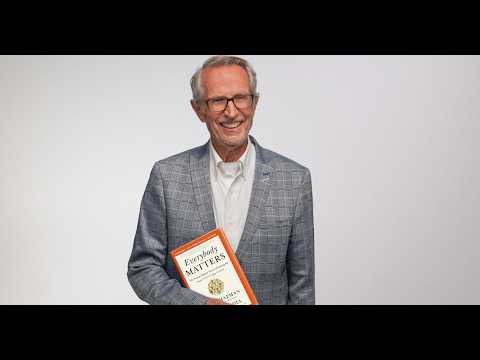
The way we lead impacts the way people live. This world needs truly human leadership. I'm Brent Stewart, your host. Thanks for listening. This podcast is an outreach of Barry Waymiller. You can connect with us on Facebook, LinkedIn, Instagram, and Twitter at Barry Waymiller. And find our podcast, articles, and videos at truly humanleership. com. You're listening to a truly human leadership podcast refresher where we reshare insight from podcast episodes from the past. Raj Codia is a familiar name to listeners. Not only was Raj the co-author of our CEO Bob Chapman's book Everybody Matters: The Extraordinary Power of Caring for Your People Like Family, he also co-authored two editions of Firms of Endearment as well as conscious capitalism by John Mackey, the CEO of Whole Foods. Raj was also the co-founder of conscious capitalism that organization and movement. Raj has recently released a new book written with author Nieabot. It's called Shakti leadership embracing feminine and masculine power in business. In this book, Raj and Nimma take a deep dive into many of the things we believe at Barry Way Miller, including how emotion and caring have a place in business. Raj and Nilima recently held a number of launch events for Shockti leadership in India. On this week's episode, we'd like to feature an edited version of their remarks from one of those events. So conscious capitalism is I think it's fair to describe it as a movement. It's a different philosophy of business from the traditional dominant narrative that exists out there which really emerged I think in the US and really got kind of hardwired especially in the 70s that the purpose of business is solely to maximize profits. You know Milton Friedman said it's as long as you stay within the law that's the only thing that you should be concerned about and everything else is extraneous in fact even a distraction. We believe that that's a very narrow way of thinking about business. So businesses should in fact strive to have a higher purpose. So having a higher purpose really animates a business, gives it that reason for being, gives people a reason to get up and come to work that goes beyond just earning a paycheck, but it's really about making a difference and leaving a legacy. The second is the idea that businesses need to strive to consciously create value for all their stakeholders. If you just focus on the shareholders and you make everybody else a means to that end, that ultimately reduces the vitality of the whole system. Everybody's interconnected and interdependent. The well-being of customers, suppliers, investors, communities, uh the environment, etc. is all intimately connected together. So, if you are trading off the well-being of some for the wellbeing of others, eventually you destroy the health uh of the whole. The third is that we need leaders who actually care about the purpose and care about people ahead of power and personal enrichment. Right? And these are leaders who mentor, motivate, develop, inspire. They're not about carrots and sticks. They're not really command and control. And I think they truly do embody what we talk about in chaki leadership, a blend of masculine and feminine along with other aspects of being whole. And lastly, culture. So conscious businesses are built upon love and care in addition to self-interest. They're not just about self-interest. And traditional businesses have a lot of fear and stress in them, which is why heart attacks are highest on Monday morning. 88% of Americans feel they work for a company that doesn't care about them as human beings. You know, there's lots and lots of statistics that show how toxic the world of business has become. It doesn't have to be that way. And conscious capitalism presents an alternative view of how businesses can be agents of flourishing and beauty and spread uh goodness in the world while at the same time they also actually thrive in traditional terms as well. In fact, they outperform quite significantly financially. But they also create many other kinds of wealth. It's intellectual capital. It's social capital. It's the emotional well-being. It's spiritual well-being having meaning and purpose. It's physical well-being. It's the impact on the environment, impact on the culture. All of them can be positive if you approach it with the right consciousness. — So, Raj, I know you've talked about all the benefits of conscious capitalism, but I want you to state clearly from your research uh the financial benefit as well, — even though that's not why we do it. — Yeah. So you know creating wealth is important. I do want to emphasize that you know profits are a social good right if you don't have profits you don't have taxes you don't have money to pay for infrastructure you don't have you know essentially all the work that we provide services we provide for citizens ultimately derive from some profit-making business that's able to generate that economic surplus. So it's important to be profitable. It's socially irresponsible not to be profitable. You're using society's scarce resources and businesses need to generate a surplus from that. Business has to be the ultimate win-win game. But it matters a great deal how you make that money because you can make that money by squeezing your employees and

Segment 2 (05:00 - 10:00)

destroying and damaging their health. You can destroy the ecosystem around you, right? You can essentially do great damage to the futures of our children and grandchildren. Or you can do it in a way as I said which simultaneously creates many kinds as many as eight kinds of wealth. It's interesting the paradox of this. These companies are not maximizing profits. That's not their purpose. And yet in my research in firms of endearment, we found companies that fit this profile outperform the market in that case by a 9:1 ratio over a 10-year period. A,025% returns over the market S& P 500 being up about 125% in that time period. Right? So again, it's like your happiness. Victor Frankle said happiness cannot be pursued. Happiness ensues. It is the outcome of living a life of meaning and purpose. Profits too cannot be pursued. Profits ensue. They're the outcome of building a business on higher purpose and on love and care. And when you do that, when you become part of the healing of the world and not part of the hurting, then extraordinary returns of many kinds uh result from that. So I think this is not a trade-off. This is not saying that let's settle to make less money and do less harm. This is about saying let's do multiple kinds of good. Let's figure out how to do business with a spectrum of positive effects and it can be done. It exists. Therefore, it must be possible and it does exist — and that's what your research shows — and others as well. It's not just my research. I mean there's many other you know dozens and dozens of studies that are confirming this and it's really it's common sense if you think about it. You know employee engagement worldwide according to Gallup is 13%. Which means 87% of people work in jobs that they don't care about what they're doing. Now think about if you take that up to 80%. Of people who care and are passionate about what they're doing. It's ultimately all about human energy. It's human creativity. It's human caring. And these companies are able to liberate extraordinary amounts of that. And that has to result in superior performance over time. And it does. — So the kind of the elephant in the room and the you know the undiscussible question. It's all very well to talk about these wonderful ideals but would there be you know voices in the head in this room going you know this is India it's such an unconscious system we are a part of there's all the corruption you know you don't get past anything with so much bureaucracy and you know we we want to do good but we are stuck in so many ways — yeah I think you know that's I mean I know there's legitimacy to that argument but I also believe it's copout. It's really shrinking from our responsibility as business leaders. Businesses have the opportunity and I believe the responsibility to transform that system. We're not act we're not passive victims. You know, we need to operate as creators and not as victims in this mode. And businesses individually as well as collectively have tremendous power to actually start to alter that system that we're all part of. And we actually have to take a leadership role in that. you know of the three sectors of society, business, government and nonprofits. I think ultimately in free societies, private enterprise has to play a leading role. The government is there to create the conditions and of course to provide a safety net and provide infrastructure and nonprofits obviously play a role in areas where there's not a business model that can operate. But the vast majority of human needs should be met by private enterprises in a manner that generates surplus so that it becomes sustainable and scalable. So businesses have to step up to that larger role in the world and not you know passively accept that this is the way things are and therefore we cannot operate in this way. I think we have the opportunity to actually change that system if we have that intention to do so. — That's where Shaki leadership may come in. — Yeah. So let's let me let's we're going to switch roles now. uh you know I met Nimma at that conference we did in the Taj in uh in Bombay in 2010 and we had a group called the Chittasanga the consciousness collaborator several of the members of which are present over here and since that time you know we've had this journey of growing and learning about this way of being and in business and one of the things that we had observed and I had observed through firms of endearment is that these companies really did embody a lot of what we would traditionally term feminine values nurturing caring and compassion and actually using words like love, can we build a business on love etc. This is not the kind of language that has been associated with business. So this idea was there in the backdrop and then Nimma had been working uh in the realm of Shaki and writing a column for DNA uh on Shaki speaks and so forth. So we started to coales some thoughts around this. So let me ask you Nimma, what is this whole idea of Shaki and what does it have to do with leadership? So shaky is the ev evolutionary force and fuel of uh of everything and uh it's inside each of us. Now when we were talking about leadership I realized that

Segment 3 (10:00 - 15:00)

leadership is essentially the exercise of power to get anything done you need to have power. Most of us have been socialized into privilegebased power right can I get to be the top of the pyramid? Can I become CEO? you know if I if I'm male I have more power than a female that's why parents many parents in India want a boy child and not a girl child so we have started investing power vesting power with all kinds of privileges when we are like fish dying of thirst swimming in a sea of water and I realized leadership is about power to get to the outcome you want conscious leadership then would be about achieving conscious outcomes that are not just for self agenda but are meant for the greater good. So if you're talking conscious capitalism and conscious leadership, we have to bring into the dialogue the idea of Shaki that you need a power base which is not our same old power base based on the power you get from your privilege and your position. — So as we write in the book, it's power with and not power over. in order for the leader to be powerful, they don't have to extract it from those who they lead, but they actually empower everybody even more as they channel all of that energy. The other way that I have thought about it is that, you know, this is the there's a purpose to evolution and the world and the universe are moving in a certain direction. There's a trajectory to that and it's moving towards higher levels of mutuality and goodness and truth and beauty and embrace. I mean you just look at the way human uh history has evolved and you look at the evolution of the universe as well and to the extent that we as individuals as leaders and organizations can be agents of that then we're tapping into that which needs to emerge we are agents of unfold and therefore there's infinite power behind that. Right. Yes. Whereas if you're trying to go against that or trying to do something purely for self you know a leader who's all about their own motives and using other people that's a that's not a leader that's a tyrant and that would not be a shaky leader so now we have a framework could you describe shaky leadership as a as a model of leadership what are some of the elements of that — sure so as you know it took years and years to arrive at this model and somewhere perhaps I was many people asked me before we started how long did it take you to write the book and I said it's like I was pregnant with it for so long that when the time came it just came out very quickly so it's taken years to arrive at a simplicity on the other side of complexity and what is the simple model that is on offer in this book if you want to be a Shaki based leader a conscious leader the first is you've got to have the five elements the panchaba okay the five elements of shaki leadership first is you've got to have presence is a state where you have stepped back from your ego your fear based ego. Presence is a state where you have nothing to defend, nothing to promote, nothing to fear and you're fully available to this now moment. Okay? And you're when you're in presence, you access the second element which is the power of presence which is shaky which is like this fabulous river the entanga that's just flowing through you anyway becomes available to you from that shi the other three elements are now possible for you to cultivate and develop. The first and this comes from the chittasanga model. The first is wholeness. Can you become whole psychologically whole as a leader? What does that mean? You have a masculine side. You also have a feminine side. Why would you operate from half your power when you can put together these two halves and become a whole person. We have the idea of the aranarishwar, right? How do we get to that psychological state inside ourselves? I also talk about the wise fool of tough love. Can you become your own parent and your own child? Can you be wise like the parent would be? And do you also know when to lighten up and be foolish and play and enjoy and be imaginative and not take yourself so seriously? Right? So wholeness is that holy family reunion inside yourself, your parent, your child, your inner man, your inner woman all come together. What is flexibility? The fourth element. Flexibility flexing is well known in all leadership models that you are not stuck in one mode. Right? Maybe you prefer your masculine style of leadership, but flexibility would mean that you know how to flex to the feminine and draw from it when the situation demands and vice versa. The last piece which is the fifth element is called congruence. Congruence very simply is you may be whole, you may be flexible, you're present, you're moving with your shaky but where are you going with all that right? Congruence is are you on purpose? Do you know your luxure? Do you have a higher purpose beyond self? So five elements of Shakti leadership and we put a circle around that and that is the circle for the hero's journey. I

Segment 4 (15:00 - 20:00)

don't know how many are familiar with Joseph Campbell's work hero's journey. A show of hands. Okay. Wonderful. uh highly recommend this life-changing book where we draw this model from that in order to come into your power to become a whole person and enter into all these elements I just described they're not going to be handed to you on the platter you're going to have to make a journey and the journey will require for you to die in some way to let go some old ways of being you're going to be challenged there will be a crisis you'll undergo trauma you'll have to face your worst fear the one thing you don't want to do, you're going to have to face that. You face your fear and you unlock your shi that was sitting there. On the other side of that is your transformation and now you have found a gift because you have come into a power you didn't know you had and that gift you bring back to the world and your leadership. So that in a nutshell the five elements of lead uh shaki leadership presence power wholeness flexibility congruence and the journey you're going to have to make the heroic journey to come into your fullness. It's not going power is to be earned. — Yeah. I know I think there's a lot of uh evidence that's coming out that shows the rise of feminine values. If you think about the last few centuries the 19th century was about the end of slavery. The United States had a civil war. Many other countries ended slavery in that time. The 20th century was about the end of totalitarianism, communist dictatorships right around the world. The 21st century will be about we believe the end of the sidelining and the repressing of the feminine not just of women but feminine energy, feminine values generally. And a lot of research is starting to show this shift in a dramatic way. So there was a book called the Athena doctrine which was subtitled how women and men who think like them will rule the future or will lead the future and it was based on empirical work of 60,000 interviews around the world. 30,000 people were asked to define masculine and feminine because it is a matter of language sometimes what we label as masculine feminine. And then 30,000 people were asked to define the qualities of good leadership. They were asked to define what does it mean to be ethical and moral. you know what are the requirements for happiness and in each case what they found was that which is considered feminine correlates very strongly with good leadership it also correlates with greater happiness and morality. So we're starting to see now after countless millennia of domination of one side of the human psyche, right? The masculine side, domination, aggression, competition, winning results at all costs. That has led to a huge amount of material progress, but also extraordinary amounts of suffering and pain in the world. And it doesn't have to be that way. And there's lots of indications that we are coming out of that. uh if you look at human history just in the last 100 years you know until 1946 European nations fought 1200 wars in 600 years there were two wars every year on average since 1946 there have been zero right so we are moving away from that world we're actually living in the most peaceful time in human history fewer people are experiencing violence murder you know death by terrorists or death in wars it's down by 90 95 even 99%. We don't realize that because of the headlines. As Bill Clinton said, don't mistake the headlines for the trend lines. The trend lines are generally moving towards greater peace, greater cooperation, right? All of the kinds of things that we now associate or we traditionally associate with the rise of more feminine values. So, I think there's a great deal to be optimistic about. This is the century in which women finally are able to step up to their role as equal partners. obviously in the uh you know in the human journey and a big part of that is access to education. You know women outnumber men in college everywhere in the world except South Asia and subsaharan Africa. It's 58% across all industrialized countries. 58% of college students are women and they get higher grades and they graduate at a higher rate. So every white collar profession will be dominated by women in years to come. We'll see women in leadership in every realm. It's already happened in multiple fields and when you have strength in numbers you know we get away from the old idea the only women who could succeed in the old world if you go back and look at 20 years ago you know we had Margaret Thatcher who was the iron lady and Goldmayer who was the original iron lady and Indra Gandhi here in India who was known as the only man in her cabinet right the only way women succeeded was by being more aggressive more dominating more ruthless than men and today when we have more women coming up they are able to actually lead authentically And also men have permission to bring out that side. You know, one of the

Segment 5 (20:00 - 21:00)

beautiful phrases that I learned from Nilma is vulnerability is not a liability. It's an ability. And we suppress vulnerability so dramatically, right? We teach little boys you cannot cry, right? I mean, man up. You know, it's a very harmful thing that we can tell little people, you know, not to actually be human to be able to express emotion. So, I think we're really moving forward into a time when all of these human qualities will be able to be expressed by men and women alike. And I think it's a wonderful time. Don't forget to find us and connect on Facebook, LinkedIn, Instagram, Twitter, Barry Waymiller. And you can find more podcasts, articles, and videos at truly humanleership. com. I'm Brent Stewart. Thanks for listening.

Другие видео автора — Barry-Wehmiller

Ctrl+V

Экстракт Знаний в Telegram

Экстракты и дистилляты из лучших YouTube-каналов — сразу после публикации.

Подписаться

Дайджест Экстрактов

Лучшие методички за неделю — каждый понедельник