Podcast: Healing Leaders w/ Raj Sisodia and Nilima Bhat
41:07

Podcast: Healing Leaders w/ Raj Sisodia and Nilima Bhat

Barry-Wehmiller 19.02.2026 103 просмотров 1 лайков

Machine-readable: Markdown · JSON API · Site index

Поделиться Telegram VK Бот
Транскрипт Скачать .md
Анализ с AI
Описание видео
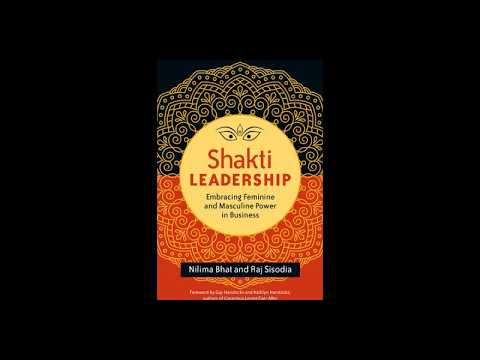
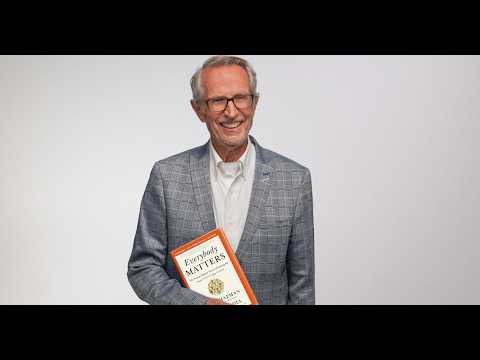
Raj Sisodia is the co-founder of Conscious Capitalism and, with BW Chairman Bob Chapman, the co-writer of Everybody Matters: The Extraordinary Power of Caring for Your People Like Family. Raj is a frequent guest on this podcast. For one, he’s a very insightful friend and secondly, he’s a prolific writer. Raj has co-authored a new book, Healing Leaders: 7 Steps to Recovery of Self with his friend and fellow conscious leader, Nilima Bhat. Nilima is a pioneer in integrating Indian wisdom traditions with modern leadership practice, she has trained leaders at organizations such as Microsoft, Etsy, and Tata. Nilima and Raj previously co-authored the book Shakti Leadership, which took a transformative look at the notion of power and business and how leaders can balance all of their inherent traits to lead with their whole self. As you’ll hear on this podcast, Healing Leaders continues that journey. But it isn’t just another leadership book—it’s a spiritual and emotional roadmap for reclaiming your humanity in a world that asks you to perform, produce, and pretend. You can find out more about the book and get your copy at rajsisodia.com.
Оглавление (9 сегментов)

Segment 1 (00:00 - 05:00)

The way we lead impacts the way people live. This world needs truly human leadership. — Well, I would complete that circle that the way you live impacts the way you lead and that will then impact the people who you lead. So with the way you live as in are you living in a way that you're exploring your own life and your own being and understanding yourself at a deep level? Are you being you know have that self-awareness, self-reflection? Are you working on yourself regularly? If you're not doing all of that and if you're simply just showing up, then you're going to lead in a way that is not sensitive, is not tuned in to what is needed for, you know, in the world. I'm Brent Stewart, your host. Thanks for listening. This podcast is an outreach of Barry Wayiller. You can find us on Facebook, LinkedIn, Instagram, threads, and blue sky at Barry Waymiller. And find our podcast articles and videos at trulyhumleershership. com. Raj Codia is a frequent guest on this podcast. You know him as the co-founder of conscious capitalism and with Barry we Miller chairman Bob Chapman he's the co-writer of everybody matters the extraordinary power of caring for your people like family. Raj is a very insightful friend and he's a very prolific writer and he's co-authored a new book healing leaders seven steps to recovery of self with his friend and fellow conscious leader N Lima bot. N Lima is a pioneer in integrating Indian wisdom traditions with modern leadership practice. She's trained leaders at organizations such as Microsoft and Etsy. And Al Lima and Raj previously co-authored the book Shockti leadership which took a transformative look at the notion of power and business and how leaders can balance all of their inherent traits to lead with their whole self. As you'll hear on this podcast, Healing Leaders continues that journey. But it isn't just another leadership book. It's a spiritual and emotional roadmap for reclaiming your humanity and a world that asks you to perform, produce, and pretend. You can find out more about the book and get your copy at rajazodia. com. And on today's podcast, Raj and Lima join us for a conversation about healing leaders. But we start off by taking a step back for Nimma to reintroduce the concept of shockti leadership. Raj and I met in 2010 I think February at the Taj Hotel in Mumbai and uh they brought conscious capitalism to India effectively with that conference and uh I was a facilitator in conscious leadership and Indic knowledge systems bringing ancient wisdom into modern leadership etc. And I remember saying to Raj, I said if capitalism is the genius of uh America, consciousness India. And so conscious capitalism has to bring the genius of India around consciousness to capitalism. And specifically the idea of conscious leadership that's one of which is one of the four tenets of uh conscious capitalism along with you know higher purpose and conscious cultures and stakeholder integration. It's all hinged around creating conscious leaders who can then build out the other three tenets and um so I said you want to create conscious leaders. Let's bring the idea of shaki to the theme of conscious leadership because leadership is about power exercising power to get things done or getting into power and I said there is this idea called shaki and it's about the innate power of existence there is unlimited infinite supply of it and why are we fighting each other when we can plug into source but we should know how to plug into the source. So and basically you come into your full power when you can balance your healthy masculine and your healthy feminine energy and that is really where fati leadership uh is embedded. That's the core of shaky leadership. What is healthy masculine which is your Shiva principle which is pure consciousness, stillness, the ability to anchor the creative force of Shaki, the feminine principle. You know Shaki without Shiva is chaos but Shiva without Shaki is sterile. So what's the healthy masculine in leadership you know expressed through human beings and not just as cosmic principles right so — that's really we brought it down to very actionable uh frameworks and tools — Raj when you and I had a conversation about your uh your last book you framed a lot of your writing as a journey that kind of built on one another as it went along. It was almost in alignment with your personal development as well. How

Segment 2 (05:00 - 10:00)

does this book fit into that alignment in into that journey? Yeah, I think uh you're right to notice that pattern, Brent, because it is going from the macro to the micro in some way from the system, the organization, capitalism to the leader and it's going from the outer to the inner where we talk a lot about what are the kinds of things that we expect leaders to do in in companies and how they should show up. But what is the source of all of that is inside. You know, I've realized with my own maturation and my own healing journey is that ultimately if you don't start there, if you do not heal from the inside out, that ultimately everything that you do will be a facade, will be you're acting at something. But it is not deeply authentic because it's not coming from that place of cohesion and wholeness and healing within you. And so part of my own journey in the last six seven years has been to explore those uh things within myself. What needed to be healed? What have I not paid attention to? What have I swept under the rug? Uh what remains incomplete? And going back and rebuilding that from the inside out. And that's really the you know this book healing leaders is the next step in that. The awakened journey was my own story of uh how I had arrived at many of these things. But now healing readers presents a framework a sevenstep journey that applies to anybody. — So did this book come out of your last book Raj? Because your last book was a very personal set of writing. — I don't wouldn't say it came out of it but they were parallel processes because what happened in 2018 the year I turned 60 is that was kind of my year of conscious awakening is how I think about it. uh I was actively now focusing on my own healing and my own uh exploring my own life and what lessons I had learned. And as part of that I had a number of experiences that year including going to the Himalayas uh with Nilima and a group of uh fellow travelers on the Shaki spiritual journeys. Um I had a uh trip to the Amazon rainforest with Linwist on the Patch Mama Alliance. I worked with a coach and I also went on a silent retreat and that's where I received these seven steps. They came to me in those four days of silence along with lots of supporting ideas. I had about 45 pages of notes in those four days. And so I kept that aside for a while and then three or four years ago when I were together we were talking about things and we talked about those steps and I said, "Wow, we should do something more with those. " And so that then became a three-day workshop which then became this book. — Raj, you talked just a second ago about how these seven steps came to you. Can you talk a little bit about that and what these seven steps are to healing? — Sure. So, as I mentioned, I was at a silent retreat uh a place called Peace Village in upstate New York in July of 2018. And it was about 4 days. We went there. Initially there was some interaction there were group of 35 people like Peter Sangi and David Cooper Ryder and many others. Uh and then we had this days of silence and then at the end again we came together in a circle. But it was very powerful being in a community but in silence and in those days of being in nature walking around with a journal. I started receiving all these downloads and captured them. And the seven steps that came to me roughly in that order at the time and we can talk about each of them if you like. The first one being know yourself that it all begins with self-nowledge. If you are to lead an authentic life, you first have to know who you are. And what does that mean? At what level do you know yourself? Not just surface level identities, but really going down into your essence and your values and uh and your true self. The next step is to love yourself. Because a lot of people even if they know themselves to some degree they actually the more they know the less they like in many cases. And how do you get to that place not only of self-acceptance but self-compassion and self forgiveness and ultimately self-love? And then the third step is to be yourself. Once you know yourself and love yourself, how can you be fully that being into the world? that that's what you're called to manifest is to be a full version of yourself in the world. And then the next word uh next step is uh to choose yourself which is to say that don't look back at your life and feel like a victim of it. There are challenging things that happened to all of us in our lives. We may not have had the ideal parents. We might have had difficult circumstances growing up and many of us tend to look back at them and look back at that and say why me? Why? Why did I have to suffer all of that? And the realization that actually all of that goes there to shape you and all those experiences were meant to serve

Segment 3 (10:00 - 15:00)

you in some way if you look at them in the right way. So you can't change your past. You might as well choose it. So that's the idea of empowering yourself by becoming a learner based upon your own life lessons. The curriculum that you came here with everything that happened to you and all the people who came into your life. So choosing your past, choosing your present, living with gratitude, and choosing your future, which is saying yes to that call for adventure, the the call for growth, which is the hero's journey. You have to if you don't say yes to that, you're saying no to your own future, basically. So that's choose yourself. And then the next one is express yourself, which now gets into okay, now that you've said yes to life, what is that specific purpose that you are here to fulfill? And that's the expression the full expression of your being into this world. What is the gift that you are carrying and that you went through the hero's journey to create and how is that serving something deeper in the world. So that's express yourself and then the next step is complete yourself which is basically the message of shaki leadership which is become whole which is the masculine feminine but we've also added the elder and the child energy in that mix. So it's all four energies. So that in Nimma's beautiful phrase and you become a wise fool of tough love. You have all the wisdom of the elder, you've got all the playfulness and joy and creativity of the child and you have the toughness of the masculine and you've got the unconditional love of the feminine all within you regardless of gender. And then the last step is heal yourself, which is primarily about recognizing your psychological wounds and traumas that you're carrying and that you have not acknowledged. And how can you then reveal them and feel them and begin to heal them so that you can show up as a healed leader who can then spread healing and love in the world rather than be reactive and get h you know amda hijacks based upon external circumstances and you don't even know why you're acting and um saying the things that you do. So that's the seven steps basically in a nutshell. — How many of these are reminders to you? Are they all reminders to you all the time? I think they are. I think there's none of them are one and done that you focus on know yourself for a week and then you're done. Uh that you will keep coming back to these. There are layers of yourself that you will discover over time. So we liken this not to a a circle that you complete once but kind of an upward spiral. You keep going through these steps and then you may come back and know yourself again at a deeper level and you may discover something else that you need to do in order to love an aspect of yourself that you had previously denied etc. So all of those steps I think have a lot of depth to them and there will be a continuous journey over time. Some of them may require more attention from you at different times than others, but all of them are going to be ongoing projects in a way. — Nol Lima, you had talked about in the book the concept of a wounded healer. Could you talk a little bit about that and how that relates to coming into this book and writing about healing leaders? So the wounded healer um I think it also comes through the Yungian uh you know body of work that the best healers or therapists are people who have made the journey themselves into their own darkness into their own pain into their own wound and uh and come out of it on the other side. And so they carry the a little bit of a scar of that and that keeps them real, that keeps them authentic, that keeps them vulnerable and open to other people's pain. And versus sitting on some sort of a elevated pedestal and looking down at the client and looking at them as a broken person, they meet them as equals like, you know, I've been broken too. I made the journey. I just maybe I'm just one or two steps ahead of you. Right? So I empathize. I get it. I know where you've been. I can empathize. Right? So uh having made a similar journey. No two journeys are the same. So that's the idea of the wounded healer that some of the best healers are those who have made that journey and that perfectly maps onto the hero journey, right? like the hero brings back an elixir and that elixir is what the therapist is giving their client, right? Uh what a healer is giving. So, and using the same metaphor then is there someone like a wounded leader meaning instead of the leader uh this is again the Bnee Brown work around the best leaders are those who know how to be authentic and vulnerable versus those who put on a mask and act like they've got it all together. So the wounded leader is someone who has been wounded, made the journey to face that wound

Segment 4 (15:00 - 20:00)

heal that wound and come back out and therefore holds the capacity to hold others uh in their woundedness and help them to their healing. Right now of course you do not expect a leader to be a therapist, but certainly we're talking about leaders as coaches. So u that's a good thing to have. So if a leader sees themselves as a coach if they can spot for where is something that perhaps is wounded in the person they are leading uh and how do you then compassionately coach them, mentor them sometimes if needed to go get therapy outside, you know, support them in getting that if needed. So yeah, you know, this book is not about uh replacing u medical help or uh professional help, but it's certainly going to help leaders spot where medical or professional help may be needed uh in for them or for others and then be able to compassionately support — in the leaders that you encounter. I don't want to be too triton and say uh how many of them need to look inward, but when you encounter a leader in a lot of the work that you do, how obvious is it that they need to do some work to heal themselves that they're not looking inward at themselves? — You know, unfortunately, conscious leaders are a minority, a rarity. Most leaders out there uh have just done it the usual way and uh are playing the traditional power over games. But those leaders whose um current strategies no longer work and they really find themselves in some sort of a crisis either a health crisis or a relationship crisis. They're the ones who come to coaching and then they discover, oh, I need to do some self inquiry and um that is where they realize you know there's no getting around the inner work. — So how many have I met? I have met a few I'm glad to say and some that you see more publicly right. So for example when I think of a Jinda Ardurn the uh former prime minister of New Zealand she was someone I deeply admired you know the way she handled uh the crisis when there was a shootout in um one of their places of worship. It was incredible how she did not allow herself to get polarized. She did not let the community uh and society get polarized and uh that was incredible. there was very high order uh leadership. So as opposed to what we are seeing in the world right now um a lot of hyper masculine toxic masculine leadership among world leaders I don't need to name them but even if you just say you know just use the criteria saying if healthy masculine is you know strength and confidence and clarity and discernment and um unhealthy masculine is power hungry, spiritually empty and uh aggression. Right there you can see who's displaying uh which behaviors, right? Um and you know who's displaying healthy feminine compassion, caring, sharing, empathy, gentleness, kindness and you know versus manipulation or uh smothering or yeah neediness, right? Which is the unhealthy feminine. So instead of naming them as individuals, I just give people the framework and say here's what healthy feminine looks like, here's what healthy masculine looks like, and here's what unhealthy feminine and masculine look like. And you decide, you know, uh who is the leader out there and um do they operate above the line in the healthy quadrants or do they fall below the line largely in the unhealthy quadrants? So — it sounds to me like what you guys wrote about in shockti leadership does there's a straight line between that and the damage that has is going on in the lives of leaders that leads to needing to be healed. Do you see that in Lima — completely? The uh unfortunately it's unhealed leaders who end up in power because the system is set up for unhealthy power games. Um you know and that's how it works. Um so

Segment 5 (20:00 - 25:00)

literally how are you going to change the world? It's like one leader at a time, one community at a time uh until we get some get to some sort of a tipping point, right? So uh yeah the answer is heal you know I think this is Raj's line like hurt people I don't know if it is yours or someone you interviewed Raj hurt people and therefore healed people heal people so until the leader does the inner work of healing their own trauma they will end up projecting it out into the world and I mean their pain is what they will continue to transmit so I think it's a Richard Roar line which says um pain that is not um transformed is transferred. a battle phasing perhaps — Raj you know when we were talking about your journey in term your writing journey and kind of looking outward to looking inward you were probably a wounded healer at some point in time and there may be a line from a book that you'd written called the healing organization to healing leaders could you talk about that line from the healing organization to healing leaders — yes so in one way it's directly connected uh when I was writing the healing organization it was 2019 I'm sorry 2018 that was the book came out in 2019 so that was my year to actually do the writing and that was also as I said the year I turned 60 and I was thinking about and reflecting on that milestone but meanwhile I was fully occupied with the next project and I was full steam ahead without taking any break in fact the entire summer was blocked out for writing retreats And then four women basically asked me the same question and stopped me in my tracks. Nimma was one of them that you're writing a book about healing but what about your own healing? Don't you have to work on your own healing if you're going to write a book about healing? And my initial response was I don't have time for that because I have a deadline. October 5th is when that book was due. But fortunately I had the wisdom to listen to them and I I delayed the book by five months and I said yes to going to the Himalayas and those other things that I mentioned going to the rainforest, the silent retreat etc. and spend a lot of time uh in nature by myself as well. And so ultimately that then led to the process of me discovering a lot of these things those seven steps which came to me in an idea form but then I started to apply them to my life and then as I worked on my own memoir over the succeeding two or three years many of those became quite tangible for me and the need for that and many of the traumas that I had either minimized or I had completely erased. Interestingly, the most significant trauma in my life I had completely erased. Not consciously, we don't do that consciously, but it is it's called disassociative amnesia. That when something is so painful that it's hard for you to live with that memory, your body essentially erases that memory, but it's still your mind buried in your body somewhere. You know, as I say, the body keeps the score, right? So, these traumas were in me, and I hadn't done anything about them. I had basically said the past is the past and it's done and now let's just move forward but you cannot really move forward until you heal the past and that's the power of this moment in this present moment you have the ability not only to heal what's happening right now but to heal the past through some version of what Nimma also does a lot of work in the truth and reconciliation you have to face up to the truth of what happened in the past bring that out first into the open and then do what it is needed in order to reconcile in order to find peace with that. So that was really the direct thread between those healing organizations. You cannot have a healing organization if you have a leader who hasn't worked on their own healing and it's that's an ongoing process. So the more they work on their own healing and the more they heal the more their organization will become a place of healing as well. And again that's same thing with consciousness right the organization can only rise to the level of consciousness of its leader and likewise it can only rise to the level of healing of its leader so that it can then bring those qualities into the lived experience of everybody in that company. So that was the connection between the two. I'm all about drawing lines between your work today, Raj. And uh there's another book of yours that uh I'm fairly familiar with uh called Everybody Matters. And uh there's a line that's kind of the theme of that book that says the way we lead impacts the way people live. How important is what you were talking about, what you are all are talking about in healing leaders important to that principle?

Segment 6 (25:00 - 30:00)

Well, I would complete that circle that the way you live impacts the way you lead and that will then impact the people who you lead. So with the way you live as in are you living in a way that you're exploring your own life and your own being and understanding yourself at a deep level? Are you being you know have that self-awareness, self-reflection? Are you working on yourself regularly? And if you're not doing all of that and if you're simply just showing up then you're going to lead in a way that is not sensitive. It's not tuned in to what is needed in the world. And so I would say that is the connection. And as I think about Bob's journey in many ways, you know, Bob went through his own healing. Bob had a challenging childhood in some ways. He had a challenging young adulthood with his father dying suddenly. And then he went on for a couple of decades without paying any attention to those things. But then he started working on himself. First it was as a parent, as a father. He was taking those YPO parenting classes and that started opening up something inside him, awakening something and making him more conscious as a parent and that then started to show up in his leadership and then of course all of those epiphies that he had, they were part of his healing and those hero's journey as well. Ed Salmon was one of his teachers in somewhere at the pastor in St. Louis. So I think all of us have that narrative somewhere in the background and that's how Bob is then able to show up as a very different kind of human and a different kind of leader who genuinely cares doesn't pretend to care. He genuinely cares for the people because he's been there he's experienced that pain that uh that he's seeing in others. Now, Lima Raj was just talking a little bit ago about his stubbornness in terms of how he had a deadline and he couldn't uh look past that deadline and fortunately enough he had people like you in his life to uh kind of help him to look past that. How hard is it for leaders to look past the expectations that they have in their lives to look within themselves? you know, if your uh strategies are working, then uh it's even harder. You know, why would you change it or fix it if it ain't broke, right? So, it requires some sort of a whack from the universe that forces you then to look within and make the change. I meet too many people who are just too scared to face themselves or to go within. It's like the wound the minute you think you're going to touch that wound, it's like you get a sharp burn, you know, and you just kind of recoil and then like don't want to go there again. And um that's how it is for most people. Uh it takes a pretty significant crisis. Rarely do people grow from uh a place of joy and willingness. There is a slide we used to show you know about this baby crying and it says um the only person who who likes a change is a wet baby right so it's not comfortable changing and um I also wanted to add that you know it it's a lifetime's work I I would love for one book to you know deliver a transformation but um it's a lifetime's work. I began my journey and it's a psychosspiritual journey. So if you're just following a spiritual path, it may not transform you. If you're only following a psychological therapeutic path, it may not transform you. You need both. You need psychology and the spirituality. So the journey is psychosspiritual. And I think mine began in 1998 when I had a existential crisis at work where overnight I went from feeling like this star who could do no wrong to a complete failure and of course it was linked to some sort of a power object that I had bought a Tibetan hanka and you don't later on you join the dots when you discover the mythic quest through Campbell and like oh these are not just objects that you by you know as investments on the wall. They bring energy and forces with them that will set your life um on fire. So the journey began the questioning of who am I? Where does my success come from? What is the identity I wish to carry? What no longer serves me? Uh what is my purpose? Have I started living it yet? If not, why not? um what's you know what are the parts of me that I left behind as I went down one road how do I come back and reclaim those lost parts so it was it takes it's taken years and years and I'll be 60 this year and my journey began at

Segment 7 (30:00 - 35:00)

32 — so uh these three books have come out of many years of lived experience and practice and some more practice ice and yet more practice and sometimes you know of course frameworks are great uh you can read a book and that's great but it can penetrate till here okay but for it to go all the way down and be embodied right down to your visceral self uh for me it was yoga you know I came to yoga and integrating the body the breath the mind and so there's a lot inner transformation that can happen without your cognition actually. And very often those processes that are profoundly somatic or psychospiritual beyond just a mental understanding of frameworks those are the true transformational processes and they take time they take years and they take practice. — What do you think it takes for leaders to get there to do that work? What does it take for them to get there and and take those steps and do the seven steps that you guys have written about? — Sometimes it takes a crisis. — Often Yeah. And uh — like you said, it doesn't come out of moments of joy often. — Yeah. M but then if you have had a few wacks and now you realize you know what the the maturity comes in and you realize hey you know I seem to have growth spurts uh through crisis and do I have to wait for my next crisis or can I actually consciously evolve myself and that is a body that is a little map I have added to the hero journey framework saying you can journey consciously but This requires being very self-aware, being very aware of the context you live in. And if it starts feeling a bit too comfortable, a bit too same old same old, right? You have to check in with yourself and say change is imminent. Can I now choose to dissolve some identity? Can I choose to release some old part of myself? What do I need to engage so that some unrealized potential can get activated? some new juice, some new shaky, you know, that was potential is now released into my life to get past the aridity, the dryness, the wasteland that my life seems to be in. Even though on the surface everything looks amazing. Now, if you can give yourself to the conscious hero journey, uh then you don't wait for a crisis, then a crisis need not happen. You choose it. — And I would add to that, Brent, that having a coach is very important. I think every leader should have a coach who's not only helping them with current challenges but also helping them grow constantly pushing them towards growth and that nudge I think is often needed. We need somebody who's seeing a bigger picture than we are. And one of the other things in addition to having a guide, mentor, coach is putting yourself into what we would call disequilibriating experiences. getting out of your comfort zone, doing something completely different, whether it's going in nature on a week's long hike or whether it's spending some time in a slum or whatever it might be, something different that forces you then to look at life in a different way. I think too many leaders are in a cocoon and they're doing the same things constantly and they're hearing only people who say yes to them for everything. So I think we need that as leaders and of course every leader should be a learner first and foremost. So every leader should be reading books all the time. There's so much, you know, we live at a time when we have access to all of the wisdom that the this world has ever created is at our fingertips with a technology like AI that can teach it to us in a way that is very accessible to us. So there's no reason why any of us should live in ignorance or not be growing and learning all the time. As a leader, you owe it not only to yourself, but to everybody whose lives you life you touch that you love and lead. You have to continue to grow yourself. — Yeah. You know, Raj, we were talking earlier before we started recording about uh you're in the middle of teaching right now uh in Mexico. You know, listening to both of you, your journeys of realization came later on in your journeys. Um Raj, how are you able to how are you trying to communicate the need for looking inward to your students when they're starting their journey and they're what they're ready to run hard? They're really ready to go at it. How are you trying to communicate to

Segment 8 (35:00 - 40:00)

them that there there's a different piece that they need to incorporate as they take off? — For us human beings, we have the ability to learn from other people's experiences. We don't have to learn everything firsthand. That's one of the things that differentiates us. And so for somebody at a earlier stage in life to be able to gain perspective and see things that normally might take them 10 20 years to realize but somebody can give them a in a way a shortcut to get that realization I think can be very helpful. Now some things you have to go through and experience. Some things you cannot go around but other things you can learn and so I've been able to share with students as young as 20 21 years old these seven steps and I said this will help you it'll help avoid a lot of unnecessary suffering. There's some suffering that you have to go through in life and that's part of your growth but there's a lot of suffering that is self-inflicted and doesn't lead to any growth. it's just uh just painful and that you can avoid a lot of that. And then the other thing that I talked to them about it, you know, fast forwarding all the way to the end of your life, how are you going to look back on this life? And what kind of an impact will you leave behind? And how are people going to feel — when you leave? And that was a very stark message that came to me when my parents died within four months of each other. And the difference was so dramatic in terms of how people felt in the moment when they passed away. with my father. There was actually nobody cried when my father died and there was almost a sense of relief for some people because he was pretty hard on many people. When my mother died there was a tremendous outpouring of grief and so much gratitude that we had her for as long as we did. And so that said, how do you want people to feel at the end of your life? You want them to feel grief or relief? And how are you going to live today so that indeed people will feel a deep sense of grief when you're gone from this life and also as a leader what happens when some leaders step aside there's celebrations oh he's finally gone right uh you know do you want that to be your legacy or do you want people actually say wow that was a wonderful leader that we had so these realizations I think these are all seeds that we plant um They may or may not germinate right away. Right. I see my job as really to be out there planting seeds in people regardless of how old they are. They could be, you know, I might be with a 20-year-old in the morning and the 65year-old CEO in the evening. Uh but it's all the same. You're planting seeds and they may germinate immediately or they might take years. They may lie dormant but they're in there and all it takes is a little water to fall and then suddenly you see those seeds start germinating. So that's all I think we can do is uh convey these ideas, convey these messages, teach the way that we what we have learned and I think that that'll show up in people's lives as intended when they need it. — How much of an impact do you see the book having on leaders if they really did take it to heart? — I really believe this is a map to enlightenment. you know, it's got everything. It's complete. And if people genuinely sincerely followed the steps and work them through to the end, there's no reason to really arrive in what's called freedom, fulfillment, awakening, enlightenment, right? Embodiment, enolment. this this is the map to get you there. uh is you know it's about doing the work but the map itself is complete — and you know we don't take pride of authorship in these steps because they came as a gift and I think there's power when something comes in that way as opposed to you sit down and brainstorm a bunch of things and each of them is there's got there's a deep wisdom tradition behind each of those steps it's not they're not new many of them are not new to the world but we have put them together in a certain way uh that makes a lot of sense I do Every human being needs to go be on that journey and go through all of those seven steps in some way. And if you can do it consciously, you're going to save yourself a lot of pain and heartache, heartache. And you're going to save other people a lot of pain and suffering as well if you do that. I advocate for people to set aside a certain amount of time. It's part of loving yourself is taking care of yourself and evolving yourself. So if at all possible and many people have this freedom but they don't exercise it can you set aside 10% of your year or maybe 5% of your year you know do two or 3 weeks on personal growth and doing this kind of work and being on retreats and

Segment 9 (40:00 - 41:00)

taking care of your body etc. uh if we have that because that's the best investment that you can make better than anything else. invest in yourself. 10% would be ideal, but even 5% of your year and 5% of your day into that. Don't forget you can get your copy of Healing Leaders, Seven Steps to Recovery of Self at Rajzodia. com. And also find us and connect on Facebook, LinkedIn, Instagram, threads, and blue sky at Barry Wayimiller. And you'll find more podcasts, articles, and videos at truly humanleership. com. I'm Brent Stewart. Thanks for listening.

Другие видео автора — Barry-Wehmiller

Ctrl+V

Экстракт Знаний в Telegram

Экстракты и дистилляты из лучших YouTube-каналов — сразу после публикации.

Подписаться

Дайджест Экстрактов

Лучшие методички за неделю — каждый понедельник