How do we know if the Universe is flat or not? #shorts
Machine-readable: Markdown · JSON API · Site index
Описание видео
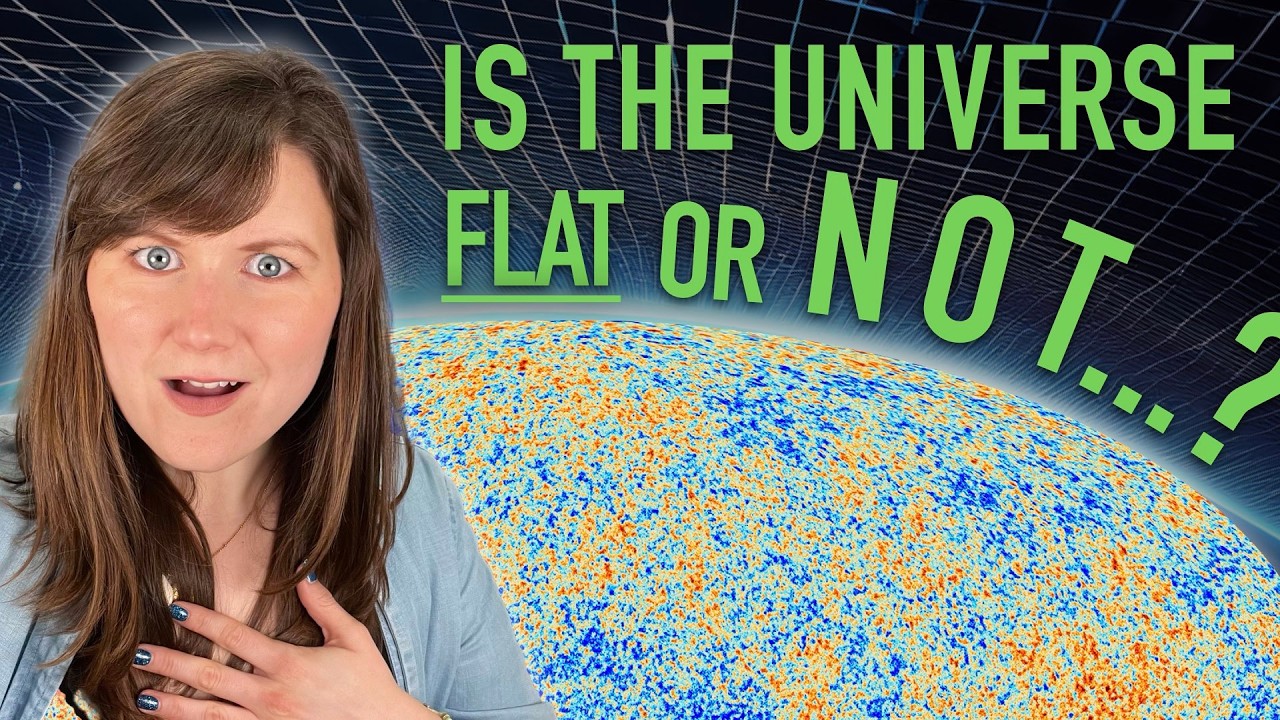
The geometry of the universe is a direct fingerprint of the physics that shaped it in the very first moments after the Big Bang. Specifically, it's a test of something known as inflation, an unimaginable burst of expansion in the Universe's first fraction of a second of its life, which took something smaller than an atom and stretched it to the size of a melon in less time than it takes light to cross a single proton. If inflation happened, like our best model of the Universe predicts it did, then that expansion should have stretched the Universe flat. It should have given the universe a flat geometry.
Inflation underpins our explanation for why the universe looks the same in every direction, why it's so smooth, and why structure formed the way it did. So our best model of the Universe is just one big house of cards with inflation of the things propping it up. Take inflation away and everything unravels. This is why cosmologists care so much about whether the Universe’s is flat or not.
#shorts #astronomy #astrophysics
Video filmed on a Sony ⍺7 IV
Video edited by Martino Gasparrini: martino.freelance@gmail.com
Video produced by Marina Hui & Dr Becky Smethurst
---
📚 My book, "A Brief History of Black Holes", out NOW in hardback, paperback, e-book and audiobook (which I narrated myself!): http://lnk.to/DrBecky
---
👕 My merch, including JWST designs, are available here (with worldwide shipping!): https://dr-becky.teemill.com/
---
🎧 Royal Astronomical Society Podcast that I co-host: podfollow.com/supermassive
---
🔔 Don't forget to subscribe and click the little bell icon to be notified when I post a new video!
---
👩🏽💻 I'm Dr. Becky Smethurst, an astrophysicist at the University of Oxford. I love making videos about science with an unnatural level of enthusiasm. I like to focus on how we know things, not just what we know. And especially, the things we still don't know. If you've ever wondered about something in space and couldn't find an answer online - you can ask me! My day job is to do research into how supermassive black holes can affect the galaxies that they live in. In particular, I look at whether the energy output from the disk of material orbiting around a growing supermassive black hole can stop a galaxy from forming stars.
http://drbecky.uk.com