Our two new books... STORY QUESTIONS is currently 10% off! - https://payhip.com/b/ZTvq9
and 17 Steps To Writing A Great Main Character - https://payhip.com/b/kCZGd
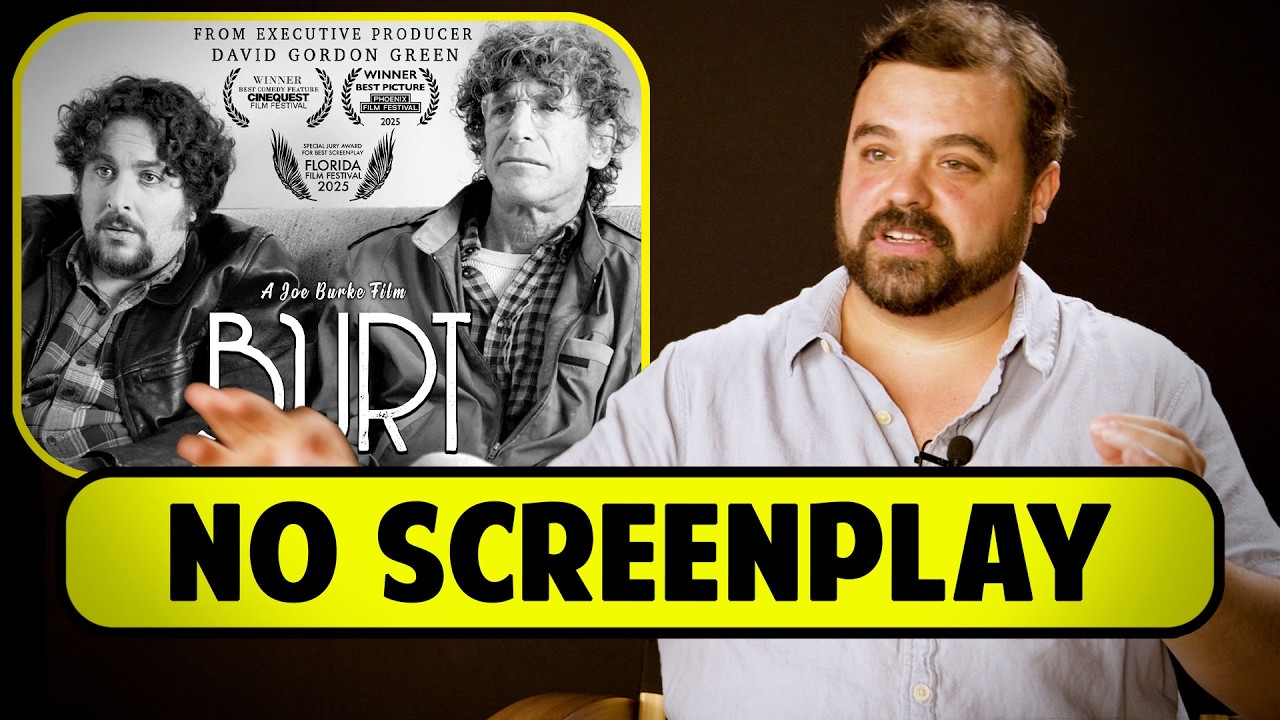
Joe Burke is an indie filmmaker and actor best known for his new award-winning movie Burt, Four Dogs, Another Cancer Movie, House Sitting and more. As an actor, he has appeared in numerous national commercials and television shows, including Freeform’s Good Trouble, and the critically acclaimed Showtime series Ray Donovan, acting opposite Academy Award winner Jon Voight.
Originally from Toledo, Ohio, Burke moved to Chicago after high school to study filmmaking and theater at Columbia College Chicago. He later relocated to Los Angeles, where he earned his MFA in Directing from the prestigious American Film Institute (AFI).
MORE VIDEOS WITH JOE BURKE
https://tinyurl.com/37m4xvfc
Founded in 1992 by Jerry Sherlock, the New York Film Academy (NYFA) provides an accessible, hands-on education in filmmaking, media, and the performing arts. With a mission to make the film industry more accessible to all, NYFA empowers students from diverse backgrounds to tell powerful stories through a project-based, immersive curriculum. Students work closely with industry professionals, gaining invaluable mentorship and real-world experience while building creative, technical, and collaborative skills. NYFA's global community includes students from over 160 countries, fostering a network of passionate storytellers. From day one, students dive into creating projects that refine their craft and prepare them for successful careers. With a focus on practical experience and individualized support, NYFA equips students with the tools and confidence to excel in the competitive world of filmmaking and the arts.
CONNECT WITH NYFA
https://www.nyfa.edu
https://www.nyfa.edu/location/nyfa-los-angeles
MORE VIDEOS LIKE THIS
40 Year Old Filmmaker Gives Advice To His 20 Year Old Self - https://youtu.be/J739sZfJuYE
Learning Screenplay Story Structure - https://youtu.be/iywvNIWKbPI
Filmmaking: How Bad Do You Want It - https://youtu.be/lcn7D2DRtPU
42 Ways To Avoid Writing A Boring Screenplay - https://youtu.be/OBvusf6vn-0
CONNECT WITH FILM COURAGE
http://www.FilmCourage.com
http://twitter.com/#!/FilmCourage
https://www.facebook.com/filmcourage
https://www.instagram.com/filmcourage
http://filmcourage.tumblr.com
http://pinterest.com/filmcourage
SUBSCRIBE TO THE FILM COURAGE YOUTUBE CHANNEL
http://bit.ly/18DPN37
PERSONALLY SPONSOR FILM COURAGE
https://ko-fi.com/filmcourage
SUPPORT FILM COURAGE BY BECOMING A MEMBER
https://www.youtube.com/channel/UCs8o1mdWAfefJkdBg632_tg/join
LISTEN TO THE FILM COURAGE PODCAST
https://soundcloud.com/filmcourage-com
(Affiliates)
►BOOKS WE RECOMMEND:
STORY QUESTIONS: How To Unlock Your Story One Question At A Time
https://payhip.com/b/ZTvq9
THE NUTSHELL TECHNIQUE: Crack the Secret of Successful Screenwriting https://amzn.to/2X3Vx5F
THE STORY SOLUTION: 23 Actions All Great Heroes Must Take
http://amzn.to/2gYsuMf
SAVE THE CAT! The Last Book on Screenwriting You'll Ever Need
https://amzn.to/3dNg2HQ
THE ANATOMY OF STORY: 22 Steps To Becoming A Master Storyteller
http://amzn.to/2h6W3va
THE ART OF DRAMATIC WRITING - Lajos Egri
https://amzn.to/3jh3b5f
►FILMMAKER STARTER KIT
BLACKMAGIC Design Pocket Cinema Camera 4K - https://amzn.to/4gDU0s9
ZOOM H4essential 4-Track Handy Recorder - https://amzn.to/3TIon6X
SENNHEISER Professional Shotgun Microphone - https://amzn.to/3TEnLiE
NEEWER CB300B 320W LED Video Light - https://amzn.to/3XEMK6F
NEEWER 160 LED CN-160 Dimmable Ultra High Power - https://amzn.to/3XX57VK
►WE USE THIS CAMERA (B&H) – https://buff.ly/3rWqrra
►WE USE THIS SOUND RECORDER (AMAZON) – http://amzn.to/2tbFlM9
►Stuff we use:
LENS - Most people ask us what camera we use, no one ever asks about the lens which filmmakers always tell us is more important. This lens was a big investment for us and one we wish we could have made sooner. Started using this lens at the end of 2013 - http://amzn.to/2tbtmOq
Audio Recorder - If we had to do it all over again, this is probably the first item we would have bought - https://amzn.to/3WEuz0k
LIGHTS - Although we like to use as much natural light as we can, we often enhance the lighting with this small portable light. We have two of them and they have saved us a number of times - http://amzn.to/2u5UnHv
*Disclaimer: This video and description contains affiliate links, which means that if you click on one of the product links, we’ll receive a small commission. This helps support the channel and allows us to continue to make videos like this. Thank you for your support!
#filmmakers #producer #filmmaking
Оглавление (5 сегментов)
Segment 1 (00:00 - 05:00)
You wrote an extensive 45-page outline for your first feature 4 Dogs, and then you wrote a 30-page outline for your second feature Bert. Can you teach us about your outlining process? Yeah, yeah. Um so yeah, my first two features 4 Dogs and Bert were done very similarly. It's essentially me and my buddy Oliver Cooper, who I write and produce these movies with, and we're dear friends growing up in Ohio, and anyways, we work together a bunch. We love this idea of sort of incorporating sort of real people mixed with professional actors, and kind of creating this sort of personal world that we build, and it's always sort of inspired by the real person at first. So, for example, 4 Dogs, that was my first feature, Oliver was living with his aunt. Uh he just moved to LA a year prior, and his aunt Becca, Rebecca Goldstein, and her four dogs in this house in Encino where she grew up, and we just had this epiphany of like, there's a movie here. There's a really beautiful, heartfelt movie, and to capture his real-life aunt and their relationship at this moment in this time. Oliver had a big movie that he had shot for Warner Brothers called Project X. Crazy story, his first audition in his life, books this lead role, first audition ever, books the lead role for Warner Brothers movie. They had shot it, Todd Phillips produced it, and had not come out yet. It was delayed 1 year to come out. So, we had 1 year of basically this little window of time to capture Oliver before he kind of maybe had a little bit of a skyrocket career. And I wanted to capture this innocence. So, we had this idea to shoot this movie with him and his aunt Becca, but we didn't want to overly script it. We wanted to keep it loose in the sense that, you know, Becca, his aunt, was not an actress, and so there there's a lot of factors that we just like, all right, let's figure out the movie, but let's keep it loose enough that we can kind of let it be its thing. And Bert, very similarly, um was a movie that this guy Bert Burger, singer-songwriter, I met at a restaurant in Malibu years ago playing music table to table, and fell in love with this guy over the years, got to know him, and like eventually, I was just like, me and Oliver was like, we got to make a movie with this guy Bert. He's just like, his optimism, his beautiful soul, his music, everything about this guy was like, this person is special, he's a rare type of person, and uh we brought him into a into our world and on a short film first, and that went really well, and then we kind of got to know him more and more, and I got to sit down with him every 6 you know, 3 to 6 months, and for like 5 years hang out with them, and like eventually we got to a point where we were like, we got to make a movie. And so, the writing process with Bert as well is like, you know, his roommate uh Steven uh Levy and Bert, these two guys who live together for real in this house were the main characters mixed with Oliver, who's a professional actor playing Bert's son in the movie. And so, we again didn't that want to have too much dialogue sort of scripted for these guys to learn. We wanted to kind of know all the beats of the movie, so me and Oliver and our my cinematographer Daniel uh Kenji Levin knew exactly what we had to do, but we never had Bert and Steve read the outline, they never saw the script, they never saw anything. Same with Becca on 4 Dogs. We never had the people who were bringing into the fold read anything, cuz we didn't want them to we don't want to influence them too much. We want them to kind of be themselves in an environment that I guess you could just use the word, you know, sort of manipulate or whatever in terms of like as a director does, just like kind of create a world where they succeed. And so, uh me and Oliver knowing the story beats and everything that we needed to get, we were able to kind of set it up in a way where all they had to do was sort of take my direction and be themselves, and it would work. And so, it's also like, I don't know, I mean, there's a there's a magic to it. I mean, I I've written many scripts. I have a couple scripts I'm writing now that like, you know, 100-page screenplay, word for word, I love to make it, would be great. But there's something really magical about also having this um process where we're living off this outline with these real people and kind of pivoting and letting the journey of the filmmaking process sort of have a bigger role in the process than you may normally have on like a more scripted thing. Um but also, I'm a big stickler on beats, especially on Bert. I was like, you know, my first feature 4 Dogs, that was years ago, a little looser, more voyeuristic, kind of a little quieter of a movie. But Bert's a very plot-driven film, actually, as you know, you saw it. And so, there was very specific beats and storylines that we had to make sure happened. Um so, I'm a big stickler on beats. If we have the beats, we know exactly what the scene's about and how it helps move the story forward, everything else can be kind of this nuanced texture from the actors sort of I don't want to say improvising fully, cuz it's you know, we're it's partially improvised, but like it's also conversations that we've had with them offscreen already that we're like, hey Bert, remember that conversation about, you know, what's it like to get older? He's like, oh, you you you you you pee more often. I'm like, yeah, we're going to have that conversation in this scene now. And so, like he's like, got it. And so, like it's sort of like it's this weird thing where we're kind of like capturing the beauty of these actual people while also bringing them into like a narrative movie. It's interesting. How do you actually come up with the beats? Yeah, that's great. So, the best way to answer this process of this and I'll talk about Bert specifically, cuz that's the most recent one that I feel like is a little bit more specific in the plot points. Um I'm basically with Oliver on this one, we're basically writing the script in like a Word document. So, it's not a final draft document, we're not writing every line of dialogue, but we are writing every beat. So, when you write a screenplay as you know, like I mean, every scene is there's beats all
Segment 2 (05:00 - 10:00)
over the place, right? And so, you can't write a good screenplay if you don't hit the beats in the right place, and yada yada. So, we're doing that work. I mean, we spent, you know, we had a couple different versions of what this movie's going to be, so I wrote one version of this and this. And like, you know, these are very rich outlines. I mean, the only thing that's sort of missing is I'm not taking the outline and then transcribing it into a final draft form over the next couple days. Like, I could do that with these. So, it's like it's that detailed, but it also takes away a little pressure on me of having to like make the script just read perfectly. You know, no one's reading this but me and Oliver and our cinematographer, so I don't have to present this to the studio, even the actors. They're not reading it. So, as long as I understand the story beats of the scene, and when I say beats, I mean, I have to know what the scenes are. I have to know, you know, it's like anyone who's writing anything. You have to just know the emotional throughline, you have to know the setups and payoffs, where the movie starts, where the movie ends, uh you know, the midpoint, the break into two, you know, the bad guys close in, the catalyst, the da da. I mean, it's all there, you know? You know, the save the cat stuff, right? Which I love, right? It's like it's all there, it's just done in a way where, frankly, I can move a little quicker, cuz I don't have to worry about polishing the screenplay to look gorgeous, when really it's like, okay, it's it's I know the beats. I got everything here. It's our map, it's our blueprint, it's our road map. We can make this movie. If we're on set tomorrow, we would do a good job, cuz it's all figured out. And that and that's the part where we're like, okay, it's figured out, let's go, as opposed to, all right, it's figured out, now let's just write the drafts and get all the little dialogue perfect, feedback and notes and this and that, and that's a whole 'nother maybe year or two of your time, I don't know. So, we don't we avoid that part, just do this part, and then run. Why don't you like to write the full script? Um I do like writing full scripts. In this partic- in these particular cases, I the reason why I really don't when I'm working with uh sort of these non-actors, if you will, uh it's just cuz like um it's sort of not necessary. It feels like it's almost like work that like just doesn't it's not going to add much more it may actually take away. away because now I'm kind of focusing on maybe uh how the script is presented in a final draft format and thinking about lines that these guys would maybe say, and I probably get pretty close to writing good stuff for them, but then it requires it's like, okay, if I'm going to have a full script, then I have to give them the script. They have to see the lines, they have to learn the lines. Now they have to think and and and now they're not just being themselves. Like, the magic that I'm trying to capture is a little gone, because maybe, you know, let me take a step back. There's no reason for me to write a full script if we're not going to use it, right? So, if I'm not planning on actually giving them a script to actually learn lines and read and digest, and then, you know, deliver the lines on set, if I'm not planning to have that be the approach, then there's no reason to do that work, you know? My time is more spent uh maybe doing rehearsals, doing whatever else I have you know, there's a million you know, also on these micro-budget films, I'm doing the makeup, I'm doing the production design, I'm the AD, I'm doing call sheets. I mean, it was literally a three-person crew number. It was me, my cinematographer Daniel Kenji Levin, and Rob Spencer, sound guy. That was it for the whole 7-day shoot. And then of course, Oliver and I producing it, Oliver acting. But so, it's just um yeah. Hopefully that makes sense. And going back to what we talked about in the previous segment about how so much of Hollywood is waiting, Yeah. and so, that would just bog it down. And uh if for anybody who sees the film, the dialogue is supernatural, and you know, I don't want to give too much away, but — and also, one trick on Bert, and people ask, you know, how were we able to shoot a feature film in 7 days like this, the [clears throat] secret sauce was two cameras, right? We just borrowed cameras from our friends, but we had two cameras rolling on all the conversations, cross-shooting. So, we have a camera on Bert, and Oliver, or whoever the two characters are in the scene. And so, when they're delivering this when they're having this conversation, we're shooting both angles at the same time. I edit all my own films. I love editing, it's my favorite part of the process, so I can take that footage, and I can build the scenes in post, which I did a lot with this. And so, having the two cameras allowed us to kind of keep the natural dialogue. And Oliver, who's acting in the scene with these guys, one of the writers as well, knows the mission, right? So, if Oliver's here, he already knows what we have to get out of the scene, he can sort of say a line that might tee Bert up or Steve up, or whoever's in the scene with you know, he knows the mission. He knows what we have to he knows what kind of reaction we have to get out of this. And also, and Oliver would say this on set, he's like, Joe, you're kind of like the third actor in the scene with us, cuz I'm behind the camera sometimes saying, hey Bert, you know, say this. Repeat after me, say this. And uh you know, there's a beauty in working with actors who are so free, or someone who's just like, yeah, sure, no problem. I'll say whatever you want. And it's just like, it's I I I I I can't imagine, you know, there's some actors like, I'm not saying that. My character would never say that. And it's like, all right, and then we got you know, and that's fine. I respect I work that way, too, but like there's something really nice about someone just like so joyful and ready to just do it. Let's just have some fun. Let's have options. Like, one more thing I'll say on the editing is like, I love having options. I don't like overshooting, that's a different thing, but I like having options. If that camera's rolling, right, I'll give Bert an idea of like, hey, Bert, give me like say this line. Say this one. Great, now I got three options, and cut. Great, in about 10 seconds, I have three options I can use in the editing room to kind of again build the scene in post to figure out
Segment 3 (10:00 - 15:00)
what makes the most sense. Because of the nature that we're making this movie, there's still a little flexibility in designing the full structure in the editing room. So, as opposed to maybe your earlier question of like, why not write the full script? The edit is the full script, right? It's sort of like the editing of this style of filmmaking, the edit becomes that final script. And I know it's most movies, but really in this particular case cuz you are you got these building blocks that you kind of are moving around, and then you can kind of craft these sort of performances that are half improvised, half scripted, but all the beats are there. Okay, so that makes sense cuz you're talking about building it in post, and I'm thinking of the cliché, you can fix it in post, which you can't always do. — Right. So, that that's like a different way of looking at it. It is you're building it, not fixing it. Okay. I like to call it building movies. I like to build a movie, you know? And my dear friend Dustin Bowser, filmmaker friend of mine, he's big in post as well. Like, we we refer to it as building a movie, where it's like you have all the pieces, you're in the editing room, and now it's like, you know, you it's like building a house, right? You got you got the bricks and the concrete and the this and the that and the that. And let's put it together. And I mean, obviously a house you have a blueprint, but like I never built a house, so maybe it's like exactly what we're Fair enough. Maybe that doesn't quite work. But like, I look at it as building a movie. I really do. And I love that process, and I like uh and I like flexibility in that. I really do. I like a little bit of like, you know, for I love the music in Bert, the score, the our composer, uh Tim Rutili, who did a wonderful job, all live instruments, brought us, you know, his his musicians in, and you know, trumpet and all this stuff, beautiful music. But like, discovering what the score is even going to be before I even hired him onto the project of like building this movie in post in the editing room, aka my bedroom, and and cutting this movie, and like using some temp tracks, some other stuff, and kind of realizing, oh, I can actually have a music cue here, and I can have something here. Oh, and this and and the and the score really shaped this movie for me. And then when I presented to Tim, then he watched it, and fell in love with it, and like we kind of ran with, you know, sort of like really embracing a lot of music in this movie that became another character. It's just like that even that came across in the process of editing and building the movie in the post-editing room a little bit more than I had anticipated. So, that's like one example. Can you name any other filmmakers who only outline and never write a full screenplay? Can I name some filmmakers who only outline? Um nothing's coming to mind right I'm sure I could think about it. Um who only outline. I mean, I have some people who are like big in the improv and it's different what I'm doing. They're actually doing like real like improv, like a friend of a friend who's overseas. His whole thing is like he gathers a collective of actors, they come together for like 7 to 10 days where he lives, and they kind of like one day at a time figure out a movie. And it's really not scripted, but it's fun for them, and he's had some success. And when you work that way, sometimes you'll have one like, wow, this actually worked, and it plays South by, and it does great. And then you have some that's like they don't even get finished cuz it's like, you know, after the week they're like, yeah, it wasn't it's not really a movie. It's sort of like a bunch of scenes, but what's the through line? And maybe they move on. They're not overly expensive, and so and it's not really time-consuming, so he can kind of get away with that. That's like one example of someone I know. But in terms of like sort of this 30-page outline, I mean, I bet there are. I'm sure there's a lot of actors a lot of directors who do work this way, but I'm trying to think of a I can't think of a name right now. Okay, fair enough. How much conflict do you write into your outlines? A lot. I write a lot of conflict in my outlines. Um I want every scene to have conflict. Even if it's like, you know, a guy going to the bathroom, and he goes to reach for the toilet paper, and it's empty. Oh, you know? It's like I want always there's got to be something, something that kind of gives the character a little struggle of some kind, right? That's ideal. Obviously, not every single scene is going to have anything crazy like that. But yeah, I think that you want to have conflict from characters, a character start one scene here, and end the scene here, even if it's like, you know, they wake up and stretch, and then slowly get out of bed, and step on the dog's toy, and hurt their foot, and walk to the bathroom, right? Just whatever it is, right? It's just a little something, beginning, middle, and end. Every scene, every moment should really have a beginning, middle, and end. Obviously, the major scenes will, of course. And that is conflict, right? It's a character struggling to kind of accomplish a goal or kind of come against some obstacles. So, always looking for that, even if it's the smallest thing like, you know, turn on the sink too hard, and the water splashes up, and you got to turn it off, and you know, wipe it off, and then walk out. It's just like a little something. Obviously, I lean towards comedy, but my comedy comes from a truthfulness and a groundedness, so I love humor, but I never want it to be silly to unrealistic point, right? It's funny because it's true, right? Always playing that role. It's funny because it's true. And so, but with the with that mentality, that's where we always put a little conflict at the smaller levels, and then the bigger levels, like real conflict of characters with difference of opinion or different objectives. At one point in the film, you have a trailer park. Where did you find that trailer park?
Segment 4 (15:00 - 20:00)
What we did for the trailer in the movie Bert is we were thinking how we we wanted to have the one of the characters live in a trailer. Tiny little budget. Albert had the brilliant idea, let's go on Craigslist and go to trailers for rent. And so, we found a trailer park that was running a trailer. We called the woman who runs the facility. We're like, hey, we're not looking to rent a trailer, but we're wondering if we could maybe just pay some money for one day just to film at a trailer at your property. She's like, well, drive out here. So, we drove out to El Monte, and uh we got there, and the one place that she was renting actually was sort of this like actually wasn't a trailer property. It was like a little house on the property. And it was empty, and it was fine, but it wasn't what we wanted. We wanted to have like a Airstream trailer. And so, we're like, we're actually looking for this. And she's like, you know what? There's someone Maybe Donna in the back would be interested. So, she We walked back there, and she's like, "Hey, Donna! " And you hear this little voice, "Yeah? " "These two guys want to make a movie in your trailer. " "Okay. " And so, she pops out, and she's this wonderful, lovely little woman. And we're like, "Hey. " We introduce ourselves. She's like, "Yeah, no problem. " And so, like we decided She's like, "Let us shoot there. " We paid her a little bit of money. She's like, "All I want, you know, a little bit of money, that's fine. We'll give you a little bit of money. " She's like, "And bring me some DVDs cuz I want to watch some movies. " Cuz she has a big screen TV in her place with a bunch of DVDs. So, we're like, "Deal. " So, we brought her like, you know, whatever, 25 DVDs that we own that we don't you know, I don't watch anymore. So, here's some here's a bunch of DVDs. And I go, "Donna, if you don't mind, would you mind being in the movie, too? " She's like, "Sure. " And so, she plays the landlord. If you For those of you who have seen Bert or watched Bert, she plays the landlord in this one scene. And she's wonderful. — Wonderful. I love it. — She brings She She's actually in the trailer as well if you watch the trailer. And so, anyways, it was those little things where we had to get creative in how to shoot this little movie, and incorporate everyone involved. And I'll give you If I may, give you one more quick little story about Bert. One of the opening scenes, the first scene we shot of the whole movie, actually on production day, scene one, Bert's neighbor, a guy named Mikey, was on his bike riding by the house. Yes. And we're like, "Who's that? " "Oh, that's Mikey. " "Does he want to be in the movie? " "I'll ask him. " And that's my Bert impression. And so, Bert goes over and talks to Mikey. He's like, he said no. And my buddy Albert's like, "No, this guy's got to be in the movie. He's too good. " So, we're like, "Hey, man, we're making this movie to honor Bert's life. It'll take 10 minutes of your time. Would you mind just one scene? " He's like, "Sure, why not? " So, he signed the active release form. We're like, "Okay, start there, ride your bike up, and just say, 'Hey, Bert. '" He's going to introduce you to his son. And we shot this little scene in like 15 minutes. And you know, got the wide shot, single single, that was it. And it's a part of the trailer. It's one of my favorite scenes in the movie. And it just elevated the whole thing, and it was the first day of shooting. And it was like those little magical moments that we wanted to be able to capture. And that, back to the script stuff, which is why I don't need to write the full script because the full script's actually not the road map for this type of project. The outline with all the beats is this road map for this type of project cuz it allows us to easily incorporate these great little movie magic moments that pop up in our routine. And and then it That's where the magic is for this style of filmmaking. Do you think if you wrote the entire script, it would actually make the story worse? If I wrote the entire script, would it make the story worse? That's an interesting thought. Um I don't want to say it would make the story worse cuz I feel like that doesn't feel like it rings for me. It could make the um process a little more make like the magic less available, the magic that we're trying to capture on set less available if we are kind of living off this specific 100-page professional screenplay uh word for word, line for line, so to speak. Because then we start having conversations about, well, this script says this, but we're saying that and it's [clears throat] like then we start kind of like figuring out like it's just going to take up some real precious time. Again, we're making this movie in 7 days, right? 7 days to shoot a feature, three-person crew, we don't have time to waste. And so, I don't think that we have I think it would not make the story worse, but I don't think it will add a lot in this particular type of process like I'm saying. So, we'll find out. We'll find out in the next one. I might maybe write, you know, we'll find out, but Well, the dialogue was so natural, and so, I don't know if that, you know, lends itself to keeping it loose, but The way Bert and Steve speak in real life is so great and wonderful and entertaining. And the you know, I I like acting like you know, talking like Bert because Bert is just such a beautiful person. And like he just he talks in such a poetic uh cool, chill way. He's got this vibe. He, you know, he moved to LA in 1977. He, you know, smokes pot and plays guitar. And he's just that guy. And he's just set such a beautiful optimism to life. And like I never want to put words in his mouth that are supposed to be words from his heart. The words I put into his mouth were words that kind of were more to help drive the story forward when necessary. But in terms of like getting to you know, it's like, you know, partially it has the DNA of a documentary in the sense that like we want to capture these real people in their actual house. That's the part that's like super real. And then we're making the narrative stuff on the side. So, I didn't want to do anything to influence the magic or the spirit of these real people. Uh it was my goal to make sure that they came across
Segment 5 (20:00 - 20:00)
as authentically themselves and real as we could. And so, that a lot That's the process for this one. Sure. I don't know them personally, but to me it came across that way. So, you did an excellent job. — They're They're mannerisms and their lines and their chemistry. Again, Bert and Steve, real-life roommates for 12 years in this like absolutely beautiful, insane, real-life odd couple mentality. Uh I'm not going to mess with that. Thank you for watching the video all the way to the end. Here is a complimentary question from our book story questions.