scale. So how exactly do we build this? Now let's start off with stage one which is traffic the ads in particular. Now what exactly are we building? They're meta ads. So, Facebook or Instagram ads being the easiest platform to start advertising on and the highest conversion. And these are short form videos or static images. You'll see this is a static image here that I generated myself with AI. The tool we use is Claude to go ahead and write prompts or scripts for video. We use Higsfield to go ahead and actually generate the creative. I'll show you in a second. And then if you are a beginner, you can use Canva if you want to get some really fast statics as well. Um, but I would broadly recommend writing a prompt of Claude and then using Higsfield. Now, any great ad has four components. Number one, we have the hook, which is this text we got here. Keep more of what you earn. This is a dummy ad for a tax planning business. That's going to hook your attention. Yes, I want to keep more of what I earn. We then have the offer itself. We've got keep 10K plus more of what you can earn. And then we have proof. Now, we don't have proof on this ad specifically, but broadly, I would recommend having like five stars or some kind of testimonial, maybe even in the copy itself, but certainly in a video, we need to have proof. And then finally, we have our call to action. So book your free review. And so it's all very congruent. It needs to feel like one congruent process that we are taking people through if we want to get them to convert because the creative decides who stops scrolling and then clicks through. Okay? So the creative is what we use in order to reach the right person and get them to take the action we want them to take. So let's go ahead and create something like this. I'm going to go over to Claude to create the prompt. First of all, I'd like you to create a really simple prompt for a meta ad. And this prompt is going to go on Nano Banana Pro on an image ad. And this is for a tax planning business. The offer is a free tax consultation. And I think the headline should be keep more of what you earn. And I'm thinking maybe it should be a woman in a nice casual home office um on the image itself and not too much text on screen. And maybe we can have a fivestar proof signal somewhere on this adequate. So, we're keeping that very conversational. We'll let Claude go ahead and create this for us. Okay. Over time, systems are just going to get better to just allow us to have these kind of human interfaces, these humanbased prompting, and then it's just going to give us the best output. But for now, I like to make sure that we have some kind of middleman, I suppose, doing this prompt. Let's just actually make this a little bit bigger whilst I'm doing this. Then, we're going to go over to Higsfield. You can see on Higsfield we've got images, we've got videos, we can use all the latest models. It's kind of an allin-one. It's what we use our agency, affluent. co. I'm going to paste this here. Hit generate. And I'll put links in the description to all the tools that we go through today. It's going to go ahead and generate these ads. So, here we go. That is not bad at all. Book your free tax consultation. We got this the five stars there. We've got a very realistic woman looking there. You would not tell the difference between this woman and a photo that you've actually gone ahead and taken. Now, I think the brand fonts could be a little bit better. We'd play around with this would make it a little bit sexier, but for a what was that? 30 second job, that is not too bad at all. And so, that's the kind of creative we are looking to put spend behind in order to generate revenue for our clients. Now, we of course would want to generate videos as well. If we did in Hicksfield, we would go up to video. We'd hit create video and we can even create a UGC, which is user generated content. It's talking head content. It is almost inseparable the quality difference between AI and human right now and that is why we use it an awful lot across the business at the moment with every single client we work with. Now stage two is the funnel, the landing page itself. Yes, we can use AI to do this as well. We are building a landing page that matches the ad and captures the leads details. So we're driving traffic through to the landing page. We're getting their details and the tools I recommend go high level for ultimate ease right now especially for beginners or claude code for advanced users. The framework is we're going to have three sections on this landing page. We're going to have the hero section, which is what we see right here, which has the headline calling out the offer, the call to action, and so on. And then we have our proof segment with all of our case studies that we've got to back up that. And then finally, we have a call to action underneath that as well. We might even have an additional call to action section depending on how complex the offer actually is. Let me show you how easy it is to generate landing pages right now. Now, so if we go over to go high levels new AI studio, I would like you to generate a simple landing page for a tax planning business, a tax advisory with the headline, keep more of what you earn. And the call to action is going to be a free tax assessment. I want three sections. Number one, the hero section. Number two, the proof section with case studies. And number three, the or call to action just underneath that. Great. we send. I'm actually going to let high level go ahead and do this. What we're going to do is we're going to move on because it will take, you know, I'm finding on the system at the moment probably up to five minutes in order for it to go ahead and generate this. And so, for now, we're going to move on and we're going to go on to stage three and we will come back to the funnel in a moment. Stage three is AI appointment setting. Now, what we're building is an AI that contacts every lead within seconds and it qualifies them and books them onto the call. The tool we use for that is a pointwise which is the AI appointment setting software which I own. I actually invested in it over a year ago. Became a co-founder of the business after using it a ton myself. Beforehand we had the pain of hiring human appointment setters who were really slow. Humans have to sleep. But leads are 10 times less likely to convert if not contacted within 8 minutes. And so now when we move over to AI, we get the benefit of speed to lead. We can contact every single lead. We can qualify at mass. And so we can squeeze the juice out of every single person that is coming onto the funnel. And so we can reach out to them on WhatsApp, Facebook, Instagram, SMS, whatever platforms we have access to, whatever information we have collected on that landing page, we can reach out to that prospect there and we can send multimedia and so on as well being voice notes in the voice of us or our client as well. Now the final stage, stage four is backend systems. Now once we have actually built the front end okay we've got leads coming through we've got the funnel we have AI appointment setting converting those leads we want to then look at what else we can do to build infrastructure for the clients we are working with so this is the infrastructure that runs once the front end is producing results first we have a CRM so we track every single lead we have every conversation every single stage we understand okay has someone opted in have they been contacted have they booked in a meeting with the client have they converted so we can track that pipeline and we do that again on go high level. We also have reporting. So the client needs to see all of the numbers on the back end. We again can do that in high level but there will be very industry specific metrics that certain industries will want to understand that others won't. And so to do that we can go ahead and build a simple dashboard on clawed code. We can rustle one of those up in very limited time. And then we have reactivation flows as well. So we can reactivate old leads that went cold by reaching out to them on a pointwise. So, not everybody who opts into a funnel is going to go ahead and take the action you want them to take. That is just the reality of sales. And so, what we can do is we can reach out to old leads who opted in maybe a month ago. And we can throw them a brand new offer to see if that would entice them to convert. And we can do that. We can deliver that through a pointwise. We automatically follow up those leads as well. So, we're squeezing the juice out of this. We want to maximize the amount of money that we are making for our clients because they are spending money in order to acquire these leads. And so, we want to ensure that we are squeezing the funnel. Okay. Now, this is where we expand the scope and we build AI infrastructure. Once the system has proved itself, we're not just limited to, you know, the CRM, the reporting, the reactivation. We can start thinking about building maybe an AI operating system for our clients. When we build the trust for a market and they want to work with us for a very long time and already have done, we start understanding their problems, their pains, wants, needs, and desires and we can start building systems that make our companies more efficient across the board. We solve their problems one by one. We help them become AI enabled and hence they stay with us for a very long time because we're the person, you're the person that took them from the dark ages to the new era that they live in and you rid them of the FOMO, okay? And the fear that they have that AI is coming to change their industry dramatically, which it ultimately is. Is this funnel created yet? Has it been generated? Not just yet. We're designing the AI system, the design system. We are creating components. Well, we will come back to it and we'll move on to now. Who
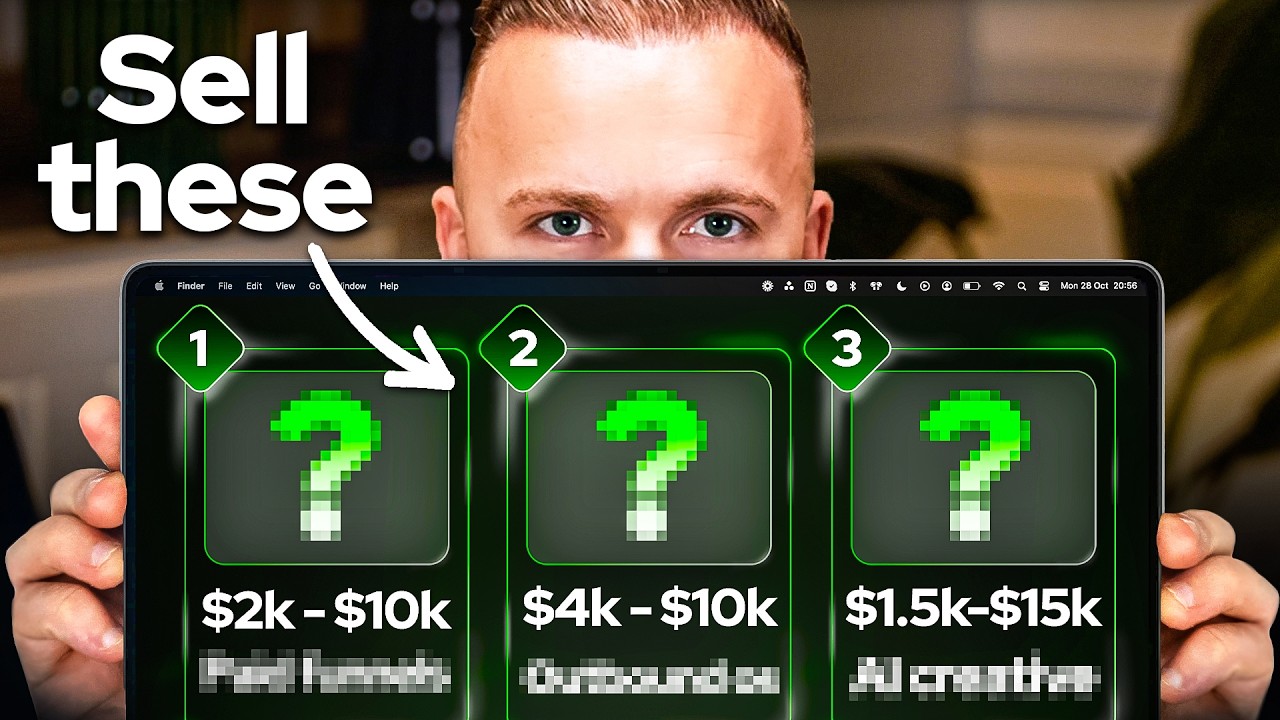
are we actually going to sell this stuff to? Who are we going to sell the system to? Who buys this system? Any business that needs more customers and has the money to pay for them? Okay, so they have to be established. As a general rule of thumb, anything from two to 10 employees is a great place to start. So, if you're watching this, you're a complete beginner, start off there. If you're more experienced, you can go for the bigger companies. They need to be small enough to need you, but big enough to pay for you. Okay? Now, if you are, you know, you think that you could just jump in and start working with corporate companies as a complete beginner, you're just you're in the wrong place. You're not going to be able to do that at all. build enough trust with someone unless you've got an unfair advantage of the with the industry. You got to work with small enough businesses that have enough money to pay you in the first place. So, minimum revenue $20,000 a month. Below that, they simply cannot afford you. Now, the signal would be that they are suitable. Maybe they're already spending money on ads, okay? Or aware that they should be. they're trying proactively to market. They're demonstrating that they actually want to grow. The best niches would be professional services. So, we have like those tax advisors, we've got accountants, we've got financial services, we've got law services, insurance services. Professional services are high ticket. They're very used to paying for leads. It works very well. High ticket services as well. And so, we do have, you know, for example, we're not limited to any of these niches I'm mentioning right now. Let's say home services. is we don't want to work with the oneman bands but we do ultra premium let's say home automation companies or kitchen remodeling companies but the guys that do a high ticket and are more established have multilocations also online businesses coaches SAS companies e-commerce businesses these are harder to get into as a complete beginner so broadly speaking I would start with the professional services high ticket services first and then you can earn your way up to online businesses but ultimately they want to be higher ticket businesses that have the desire to grow which most companies to do. Now, if you are unsure on where to start, you don't have an unfair advantage, then start off scatter gun, okay? And that means we work with anyone who fits, we get case studies first of all, because case studies are worth more than any kind of revenue. We specialize then once we know who we get results for. But it is very important that we are aiming to specialize to niche down in our business because if we don't niche down, we're never going to be able to go deep enough with any one industry to be able to build infrastructure to be able to build something truly worth a lot of money. These are kind of the services, the systems that get you started and embedded in an industry and then you start building infrastructure which is worth a lot of money that you can then sell your company for and you can build enterprise value in the future. Now, how do we package the offer itself? We have to sell the outcome and not the mechanics. The six-pack and not the situps. Most people when they're trying to sell a system like this will say, "We are going to run your Facebook ads. We're going to generate ads with AI and we're going to deny your landing page. No, that's all the mechanics. They don't give a about that. They care about what happens on the other side. We're generating more customers and ultimately generating more revenue. Sell them the six-pack and not the situps. So, the formula for a very basic offer would be we help this niche get this specific outcome using AI systems, using our AI lead generation system or our paid funnel system. For example, we help tax advisors get between 10 and 20 tax consultants a month using our AI lead generation system. So, it'll be a very simple offer that you would go for. But note that I'm talking about a spectrum here. Don't talk about a specific result that you can get for a client unless you've worked with them for a very long time. Because the more specific you are, that number is going to dictate who wants to work with you. The numbers too low, the big guys won't want to work with you. Number's too high, you know, you're going to be pricing marking yourself out of the market. Okay? We have to speak their language. So think about the terminology they use but they might not use the terminology leads. They might use contracts and so on. So speak their language so they you they know that you understand them. Trigger the emotion. Okay. Speak to a goal. Maybe it's becoming a market leader and then keep the mechanism vague enough to invite a conversation. AI lead generation is like well we can kind of guess what we think that's going to be but they don't know that there's ads involved that there's funnels involved. as AI appointment setting and we don't want them to we want there to be enough intrigue for them to say yes let's have a meeting with you and I am going to touch on shortly how you can actually secure meetings how do we price this there's three ways to sell this system you're going to pick based on your experience and the client's appetite now the first one which is where most people start is the ongoing retainer and so for a complete beginner who hasn't sold this system before you're looking at between $500 on the low end to $3,000 a month now of course $500 is not a lot of money. But I cannot understate this enough. Money isn't your priority when you're first starting off. It's case studies. It's proof that you can do this. And you leverage that proof in order to get people to pay you more money. Get closer to that 3K a month. When you're more established, you got case studies, you got proof. You can charge between 3 and 8K a month. Now, the maths, 10 clients at 1K, even 1K a month as a beginner is 120,000 a year in reoccurring revenue from just 10 deals. Although, you're not going to be aiming for this because you got a full comprehensive system. you're going to be charging between 2 and 3K when you've got the proof in order to do that. And the proof being we've generated X results for people. So the contrast between how much money you're making your clients and how much they're paying you is big. Okay? And then they can rationalize that decision. No one wants to pay 2K if they don't think they're even going to earn that money back. But when you've got proof that you can get it to them, it's very easy to sell someone at that rate. Now, the next thing that we do beyond retainers is a fixedterm license. So you run the system for a fixed window. You get paid more money up front. You get this one upfront payment. The client gets the results, but they don't keep the system. It's your system to keep just like it is with the retainer. Now the use case is for clients who want proof before committing to a retainer with you. Okay? So typically this would be like 15k for three months. And so it's kind of like charging for three months of a retainer but just all in one lump sum. So you get the security that the client is staying with you for that time period, but also the client knows exactly what they're getting in that time period as well. Now these two pricing strategies to fix the fixedterm license and the build and hand over I would only recommend once you've got at least three to five case studies, goods case studies in the business. So you can even warrant going ahead and pitching someone on 15K. Now next we have the build and handover. These are oneoff project fees. You build the system in the client's account and you hand over the key. So you build the AI system that can run this entire infrastructure automatically and then they own it forever. There is no ongoing revenue from that client. You build it once, you give it to them. Now the use case is for experienced operators with bigger clients who want to who their clients want to own the asset. So maybe you're working with online fitness coaches or SAS companies or e-commerce companies. The kind of digital businesses that exist out there will usually want to keep the system for themselves. At least the larger guys will. And so you can charge between 30 and 50k one off to install these systems into businesses. Some people will charge an awful lot more than this. You know, you've seen me with those retainers I showed you earlier charging up to $100,000. That's not to hand over the system. That is for an ongoing retainer with a performance model on top of that where we take a slice of the results that we actually get for our clients. If we were to hand over that system, we would charge multiple hundreds of thousands to those clients that are already paying us 50k plus per month. Okay? So, we lead with the retainer and the other two are plays that you layer in once you have proof. Do not try and run before you can walk. And that is who we sell it to and how we price it. Have we got this funnel? Yes, we do. I was about to say no, we don't. We do. Here we are. Look at this. So, this is a really simple funnel. Obviously, we've gone for kind of a white design is very clean, though. Very, very clean. Keep more of what you earn. You get your free tax assessment, see case studies. We've got the proof there. Trust by 500 business owners. Average savings. Look at that. We've got a nice kind of bit of a stock image. We can change that. Real clients, real savings. We've got the case studies that we said and the results that they've generated. Ready to stop overpaying. Here we've got our lead form. This landing page was generated from one simple prompt that I sent on a voice note. And you know, as we've continued with this training, it's gone ahead and done that for us. We can go ahead and we can publish that. We can edit this. We can go back to the prompt and we can say, "Hey, I don't like the color scheme. Can you make it dark mode? " etc., etc. We no longer need any web development experience to be able to create beautiful landing pages that convert well because we've kept it simple. Just have the hero section, have the proof, and then have the call to action. You don't need anything else. People way over complicate landing pages. Okay. So, how do we actually go