Fraudulent A.I. Company Fools New York Times
10:49

Fraudulent A.I. Company Fools New York Times

Wall Street Millennial 05.05.2026 63 830 просмотров 2 953 лайков

Machine-readable: Markdown · JSON API · Site index

Поделиться Telegram VK Бот
Транскрипт Скачать .md
Анализ с AI
Описание видео
Check out our second channel Broken Business Models: https://www.youtube.com/@UCQUOscigSQWCVG8m-ZC8wiw In this video we analyze the telehealth company Medvi which claims to have just two employees. Follow us on Twitter / X: https://x.com/wallstreetmil For inquires related to Differentiated Analytics email us at: founder@differentiatedanalytics.com Check out our second channel Broken Business Models where we discuss unusual or otherwise suspect businesses that may be unviable: / @brokenbusinessmodels For business inquires: Mary@creatormanager.co For other inquiries: Wallstreetmillennial@gmail.com All materials in these videos are used for educational purposes and fall within the guidelines of fair use. No copyright infringement intended. If you are or represent the copyright owner of materials used in this video and have a problem with the use of said material, please send me an email, wallstreetmillennial.com, and we can sort it out. –––––––––––––––––––––––––––––– Buddha by Kontekst / kontekstmusic Creative Commons — Attribution-ShareAlike 3.0 Unported — CC BY-SA 3.0 Free Download / Stream: http://bit.ly/2Pe7mBN Music promoted by Audio Library • Buddha – Kontekst (No Copyright Music) –––––––––––––––––––––––––––––– #wallstreetmillennial 0:00 - 2:01 Intro 2:02 - 6:26 Medvi 6:27 - 9:38 Fraud 9:39 Big L For New York Times
Оглавление (4 сегментов)

2:01 Intro

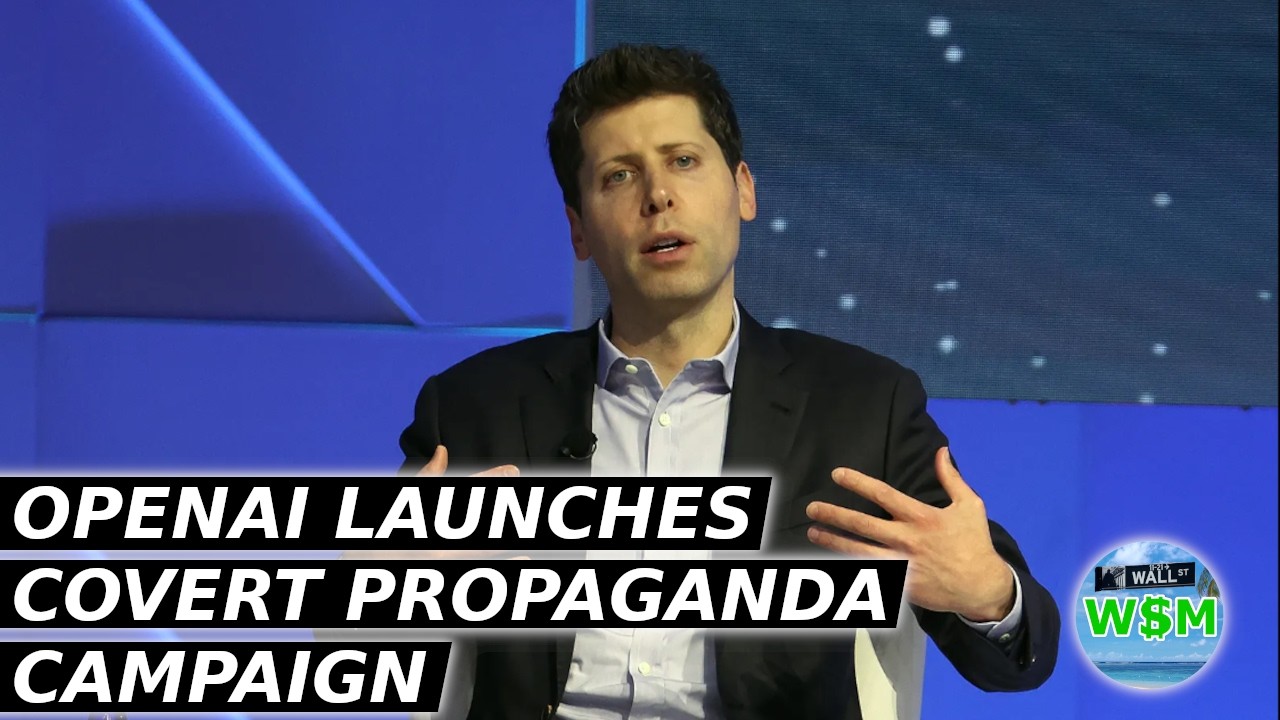
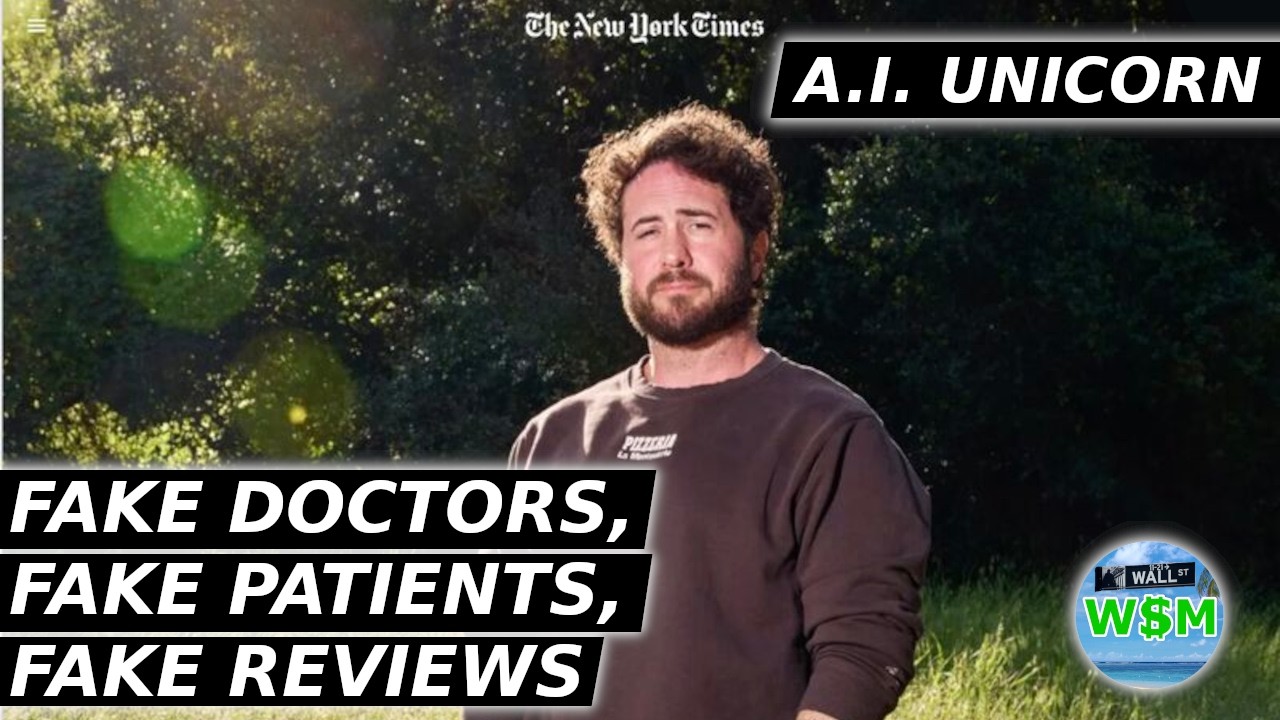
For the past four years, AI executives have been talking about how their technology will soon displace all white collar jobs. They need the investing public to believe this narrative as that's the only way to justify their massive valuations in data center spending. Sam Alman, in particular, has been one of the most vocal of this crowd. He's gone so far as to say that in the future there will be billion-dollar companies that have no employees because AI will do all of the work. In August of 2025, he talked about this in a podcast interview. I think it is probably possible now to start a company that is a oneperson company that will go on to be worth like more than a billion dollars and more importantly than that deliver an amazing product and service to the world. And that is like a crazy thing. You have access to tools that can let you do what used to take teams of hundreds and you just have to like you know learn how to use these tools and come up with a great idea and it's like quite amazing. — So as of 2025 AI is so powerful that one person using AI can do the work of hundreds of people. Alman also claims that the capabilities of his AI is increasing exponentially. So in 2026 it should be even better. As of the end of 2025, OpenAI had 4,000 employees. In 2026 they plan to double their headcount to 8,000. So much for AI replacing jobs. But the idea of a1 billion dollar unicorn has not yet died. In April 2026, the New York Times published a fawning article about a man named Matthew Gallagher who founded a company called Medvy. Medv has no employees besides Gallagher himself and his brother. According to the New York Times, the company is on track to generate $1. 8 billion of revenue this year. This story generated breathless coverage in the media with people talking about how AI will soon revolutionize entrepreneurship in the entire economy. There's only one problem. Medv appears to be a fraud which is likely to be shut down by the FDA. In this video, we will expose the real story of Medv.

6:26 Medvi

In 2025, Medv generated $41 million of revenue. In 2026 is on track to generate $1. 8 billion. It's not exactly clear how the New York Times came up with the 1. 8 8 billion number. But even if we use the $400 million from 2025, that's still a lot of money. So, what exactly is Medv and how was it able to generate so much revenue with no employees? Medv claims to be a tellahalth company, but it's really more of an affiliate marketing company. They have a website where they sell GLP-1 weight loss drugs. The first GLP-1 drug was Ompic, which was approved as a diabetes medication in 2017. It was developed by the pharmaceutical giant Novo Nordisk. In or around 2020, people started to realize that it also caused weight loss as a side effect. So, people without diabetes started using it as a weight loss drug. In 2021, Novo Nordisk released Wiggoi, which is the same thing as Ompic except that it's specifically approved for weight loss. In 2023, Eli Liy released Zepbound. Zebound is chemically different from Wiggoi, but it is also GLP1 and is very similar in its effect. In 2022, GLP once went viral on social media with many people sharing their dramatic weight loss results. Demand for Osmpic, WGOI, and later Zepbound skyrocketed. Novo Nordisk and Eli Liy were not able to keep up with demand. So, the FDA declared a shortage of GLP1s. When there's a shortage of a drug, independenties are allowed to make and sell generic versions of it. This is called compounding. Medv primarily sells generic compounded GP1s. But Medv is not a compounding pharmacy. They do not make the GLP1s on their own. They partner with two external compoundingies, Care Validate and Open Loop. Here's how it works. MedB runs paid advertising campaigns on social media and various websites. When a consumer clicks on the ad, it takes them to the Medv website. If the consumer purchases a GLP1, the payment is received by Medv. Medvy then pays one of the compoundingies. The compoundingies employ doctors who write a prescription for the consumer. These prescriptions are little more than rubber stamps. Then the compounding pharmacy ships the GLP1 to the consumer's home. Medv never has physical possession of the drugs. They do not have any distribution centers or anything like that. Medv effectively acts as a marketing agent for the compoundingies. Over the past few years, Novo, Nordisk, and Eli Liy have ramped up their production of WGO and Zepbound. In early 2025, the FDA announced that the GLP-1 shortage was over. This means that compoundingies are no longer allowed to sell generic GLP1s. For reasons that are difficult to understand, the FDA has dragged its feet in terms of enforcing this. To this day, many compoundingies continue to illegally sell generic non-FDA approved GLP1s. You can still buy compounded GLP1s from Medv's website today. The New York Times article claims that Matthew Gallagher created Medv with no employees except for himself and his brother. But this is not true. Gallagher tried to make the Medv website using AI tools including ChatGBT and Claude. However, the AI was not able to do this completely on its own. Gallagher hired not one but two software engineers to build and maintain the website. These software engineers are independent contractors, not full-time employees. We don't know how many hours these contractors work. Medv has an AI powered chatbot that handles customer support, but the customer support bot is faulty and often requires human intervention to handle customer complaints and inquiries. At first, Matthew Gallagher himself worked as a customer support agent. As the business grew, he couldn't handle all the customer inquiries on his own. So, he hired his brother to be a full-time customer support representative. But even this wasn't enough. So, he hired seven independent contractors to work as customer support agents. With all those caveats aside, Gallagher relied heavily on AI to create Medv. If you scroll through the homepage, you'll see many pictures of smiling and athletic models. They're supposed to represent customers who use Medvy's weight loss products. The problem is all of these pictures are fake. Not a single one is real. For example, take a look at this woman wearing wired earbuds. The wire on her left earbud wraps around behind her neck, but the wire on her right earbud goes down and disappears into her necklace. This is a fake AI generated image. Using AI to create stock footage of your website homepage might seem harmless, but this is just the tip of the iceberg in terms of Medby's deceptive and probably illegal business practices.

9:38 Fraud

In May of 2025, just a few months after Medv was launched, the technology focused publication Futurism published a damning expose about the company. They found that Medv systematically used deceptive marketing practices to convince consumers to purchase weight loss products of questionable efficacy. Remember that Medv uses digital advertising to land substantially all of its sales. This is an example of one of their ads which was shown on a news website. It says, "Get Ozmpic, WGOI, or Mangaro at a low price. The change we've all been waiting for. Sometimes you have to see it to believe it. " The ad contained a clearly AI generated image of an Osmpic package. But Medv was not selling Ompic. They were selling a compounded non-FDA approved generic GLP1. But this is not even the most egregious example of Medby's deceptive advertising tactics. They posted advertisements with before and after photos of purported customers. Michael P lost 45 lbs, increased his muscle mass by 17%, and experienced a 55% sleep improvement after using Medby's weight loss medication for 5 months. The problem is Michael P doesn't exist. In 2017, a Reddit user posted a weight loss transformation photo. He didn't use any weight loss medication. He quit drinking and went on a rigorous diet and exercise routine. Medvi took this image from Reddit and used AI to change his facial features. That's how they created the fake customer, Michael P. To be clear, this is illegal, but it gets worse. On Medby's website, they had pictures of purported doctors. These doctors would supposedly write a prescription for you and help manage your weight loss treatment. One of these doctors was Ana Lisa Carr. Ana Lisa Carr is indeed a real doctor, and this is a real picture of her. The problem is Medv does not employ any doctors. Not a single one. Dr. Carr does not work for Medvy. She's probably never even heard of Medv. Medvy downloaded a picture of her from LinkedIn and stole her identity. In the beginning, Gallagher placed Bloomberg and New York Times logos on the Medv website. He has since removed them. He did this to give the false impression that Medv had been featured by these mainstream media outlets when in fact it had not. This was done to deceive customers into thinking that Medv was more established and recognized than it actually was. MedveV's advertising practices are highly deceptive and unethical. But what about the products themselves? One of the compoundingies Medv partners with is called Open Loop. Openloop is currently facing a civil lawsuit alleging that their weight loss pills are snake oil that don't work. That's the problem with generic compoundingies. They're not FDA approved and face minimal regulation. So there's no guarantee that their products will actually work. Gallagher orchestrated a highly sophisticated fraud. Their advertisements lead customers to believe that Medv is an established company that employs real doctors and sells FDA approved weight loss medications with a long track record of satisfied customers. In reality, it's a brand new startup with very little operating history that sells compounded medications which allegedly don't even work. In February of 2025, the FDA sent a warning letter to Medv telling them to stop deceiving customers on its website. So, at least the FDA knows about Medv. It's very possible that the FDA will take enforcement actions against the company soon. I'm honestly surprised they haven't done so already.

Big L For New York Times

already. The entire narrative of the New York Times article is false. They said that Medv is a $ 1. 8 billion company. They never actually made $1. 8 billion. They generated $400 million in 2025. Maybe they could make $1. 8 billion in 2026, but they could be shut down by the FDA any day. The New York Times says they have two employees, but they have nine contractors. For all we know, these contractors could be working more than 40 hours per week. So, it's really an 11 person company, not a twoperson company. And the only reason Medvy was able to generate so much revenue is through deceptive advertising practices. The biggest takeaway from this story is how worthless the New York Times is. They don't do investigative journalism. They just interview people and mindlessly regurgitate whatever narrative they are told. Futurism is much smaller than the New York Times and has a tiny budget in comparison. Yet, they were able to expose Medv almost a year before the New York Times published its fawning puff piece about the company. All right, guys, that wraps it up for this video. What do you think about Medv? Let us know in the comments section below. As always, thank you so much for watching and we'll see you in the next one. Wall Street Millennial signing

Другие видео автора — Wall Street Millennial

Ctrl+V

Экстракт Знаний в Telegram

Экстракты и дистилляты из лучших YouTube-каналов — сразу после публикации.

Подписаться

Дайджест Экстрактов

Лучшие методички за неделю — каждый понедельник