Sign up free to my email group and get my FREE stocks and shares ISA Spreadsheet:
https://tobynewbatt.com/best-stocks-shares-isa-spreadsheet
*The Investing Apps I Use*
💸 - Trading 212
https://www.trading212.com/join/TOBY
To get free fractional shares worth up to 100 EUR/GBP, you can open an account with Trading 212 through this link .
*Terms Apply. Capital at risk. Affiliate Link.*
💸 - Lightyear
http://lightyear.com/tobynewbatt
Use TOBY to get between £10 and £100 in a fractional share or ETF in your General Investment Account. See full T&Cs at lightyear.com/tobynewbatt. Capital at risk. Promotional terms apply.
💸 - Freetrade
https://bit.ly/Freetrade-Toby
Get a free share worth between £10-£100 for signing up and depositing at least £50. Terms Apply. Capital At Risk.
*//My Favourite Bank Account for Personal and Business*
💸 - Join Monzo and get up to £50 free
https://join.monzo.com/c/th4zbyy
*//Want to speak with me 1:1?*
Email me here with your needs and we can book a 1hr 1:1 call.
toby@tobynewbatt.com
Disclaimer: This information is not investment advice. Do your own research. When investing, your capital is at risk and you may get back less than invested. Past performance doesn’t guarantee future results.
Disclaimer: Some links are sponsored affiliate links and I will receive a small commission if you use them at no additional cost to you. Thank you.
Оглавление (3 сегментов)
Segment 1 (00:00 - 05:00)
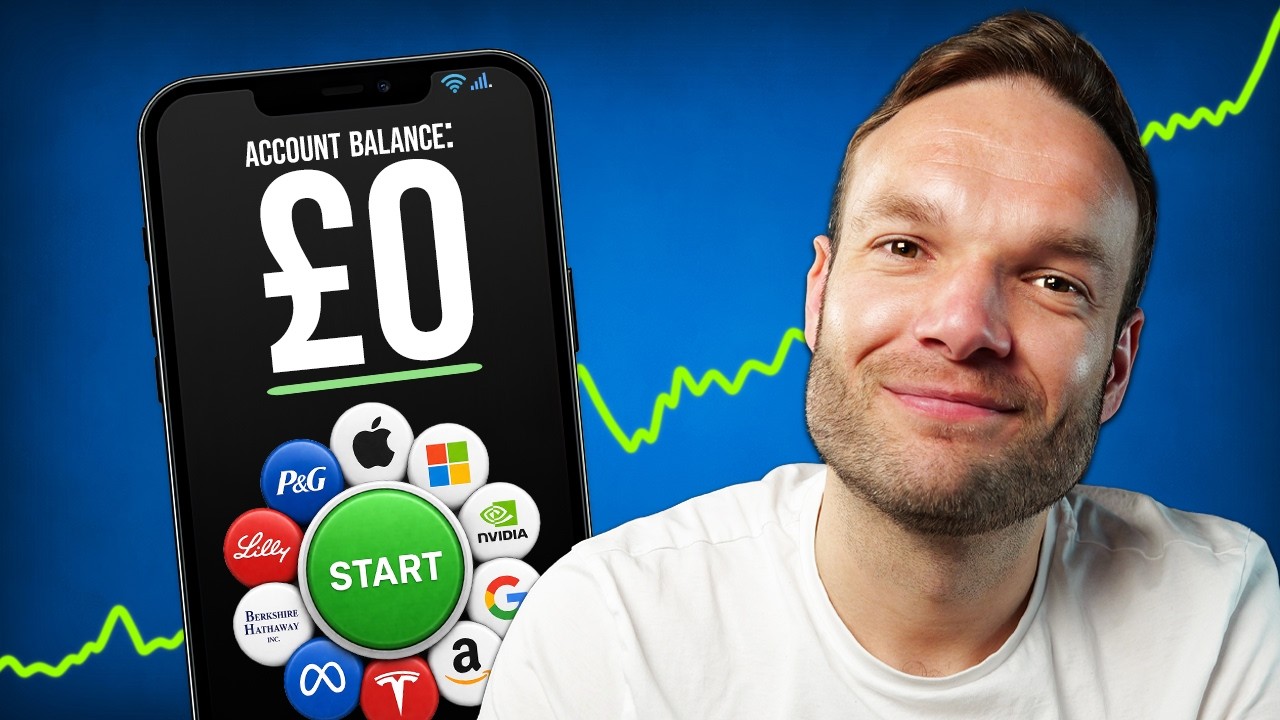
I've been investing for more than 10 years now and over that time I've managed to invest hundreds of thousands of pounds across multiple accounts and I've also shared a big part of that journey here on YouTube with my regular investing portfolio updates. But what if all of that was to disappear tomorrow? Everything resets to zero and I had to start all over again. Well, let me take you through exactly what I would do, what I would be thinking, and what I would choose to invest in. Okay, first off, I'd have a little cry and be very sad if you took all of my investing accounts away from me. They took a long time to build. But once I got over that, the first thing I'd be doing is making a bit of a plan. You see, starting out investing can be quite tricky, and there's loads of little things that can trip you up or make you confused along the way. Also, this isn't something that you can just do once and forget about. Investing is a long-term thing and ideally something that you do for your whole life. In order to be successful, I think you need to at least have some idea of what you're trying to achieve before you start. So, with that in mind, here's the kind of things I'd be thinking about. First off, I'd put investing to one side for a second and make sure that I was ready in all other areas of my financial life. You see, as much as I'd be raring to go and wanting to invest this money, it might be better spent elsewhere. And when I've got my investor hat on, what I'm really thinking about is where is best to put this money to get the best returns. Sometimes that answer isn't always going to be invested in the stock market. For example, if you had any highinterest debt, credit cards, maybe store cards with interest rates of 15, 20% or even higher, I'd be paying all of those off first. Remember that paying off a debt with a 20% annual interest rate would be the same as making 20% on your stock market investments, except the debt is a guaranteed result, whereas the stock market is always unknown. Also, I'd be making sure that from the moment I put this 100 pounds in to get started, I wouldn't need to pull it out. And the only way I can do that would be to make sure that I don't need this money. You might have heard this before, but it's always worth having some kind of emergency fund before you start investing. That way, if you had an expense that you weren't expecting, you don't have to dip into your investments and you can pay it another way. The advice out there tends to be something like 3 to six months of your living expenses in savings before you invest. But honestly, this is something that's personal to you. The main point is just to make sure that you don't touch your investments as they need to be there for a very long time. So only once these points are covered cuz I then really get the investing process underway. I still need a plan though. So I always think it's worth spending a bit of time figuring out what you're trying to do. You might want to invest for early retirement, for financial freedom, or even to save up for a house deposit. Whatever it is, at least give that some thought. Otherwise, you'll be doing this for no reason. and when times get tough, you'll probably just give it up. Right, once I've got my plan together, I can then start the process of making sure that I use the right type of account to invest my money. Getting this part right is going to make a huge difference to what you end up making. And it's especially important if you don't want to end up forking out thousands of pounds in taxes. Broadly speaking, you've got several types of investing accounts in the UK that you can actually choose from. You've got regular investing accounts, often called general accounts. You've got pensions, and then you've got ISAs. Without going into loads of detail like I've done in lots of other videos, the account I'm going to focus on will be the ISER. Now, specifically the stocks and shares ISA. Now, the reason for this all comes down to taxes. Inside a stocks and shares Iser, anything you make in profits from your investments is completely tax-free. There's absolutely nothing to pay, nothing to declare or worry about. And it's completely up to you when you take your money out and how long you invest for. When I started investing, I had no idea about the different investing accounts. And I remember thinking that this would be fine. It was only a few years later when I actually realized that I should have been using an ISA to protect myself from any taxes the whole time. Lots of people in the UK have never opened a socks and shares Iser, but most people know what a cash ISER is. The basic rules are still the same, like the fact that you get £20,000 a year as an allowance that you can put into your ISIS in total. There's no limit to what you can grow your account to and it doesn't matter how much you earn or what your age is. Every adult in the UK gets treated the same. I've gone into a lot more detail in other videos which you can watch afterwards, specifically talking about the socks and chairs ISA. I'll make sure to leave a link for you at the end of this video. Anyway, like I was saying, using the right account is really important and this way if we end up with a really big investing portfolio in many years time, we won't have to worry about any taxes. As a quick side note, it is worth saying that your workplace pension is another area that is extremely important to focus on. In the UK, most of you will be paying into a pension every month or whatever you get paid. And your employer will also be contributing money too. I'd say that as well as investing money inside an ISA, it's always worth making sure that you're making the most out of your pension as well. Some employers will match the money that you put in up to a more generous limit, and this is going to be the best bang for your buck you'll ever get. For the details, you'd need to ask your employer about how they operate their pension, as everyone will
Segment 2 (05:00 - 10:00)
be slightly different. But it's always worth making sure you know what's going on, as most people never even bother looking into it. Anyway, as we've now decided that we'll make the most of our stocks and shares Iser, the next step is to actually find a company that offers the stocks and shares Iser, so we can open one. Just like bank accounts, there are loads of choices out there when it comes to this account. But not every stocks and shares Iser is the same. Luckily though, even though I might be starting again with £100, I've been lucky enough to try a lot of different accounts and spend a lot of time comparing providers during my many years of investing. There's quite a few good options out there at the moment, and I recently did a video comparing the best stocks and chairs ISO providers this year. I'll make sure to leave a link at the end of this video. Also, to help you with your own research, I've put together a handy spreadsheet where you can compare the different providers and see what features they offer. This is also a place where I keep all the latest sign up offers too, as there's often free shares or free cash up for grabs for getting a new account open. If you want to grab that, you can scan the link on screen now and just pop your email in or follow the link in the description below and I'll send it straight over. Anyway, one of the providers that I often talk about and a place that I have one of my own stocks and shares is Trading 212. One of the best things about this platform is that it's got super low fees and you can invest from as little as£1. There's almost every investment you could want and there's no fees to open an account or hold your investments here, which is something I wish I had when I first started. Also, there's a great offer on if you are a new customer and want to open a new socks and shares is you can get a free fractional share worth all the way up to £100. Just sign up, create an account, and deposit at least £1 and that's it. You can either use the link or just use the code Toby in the promo code section of the app, which you can find by pressing the three buttons and scrolling down over here. Right, as soon as my account is open and I've got a lovely new socks and shares Iser, the next biggest thing to do would be to choose the right investment. Now, at this point, it's really important to say that what you choose to invest in is totally up to you. I'm not a financial adviser, and my situation might be completely different to yours. Also, we've got no idea what the future holds. So, when you invest any money at all, there is no guarantee about what you might end up with. Just because something happened in the past, that doesn't mean that it has to continue moving forward. With that said though, there are some good general rules when you're looking to choose something to invest in, especially for the first time. Firstly, it's important to say that if you invest in any individual company and nothing else, that would be considered a very high-risisk investment. You're betting on that single company in one single industry to end up doing really well. And sure, you could end up finding the next Apple or Nvidia, but the reality is that most companies end up failing in the long term. And for every Apple or Nvidia, there are hundreds, if not thousands of companies that didn't end up getting there. When I first started investing, I assumed that to be a good investor, you had trader. Someone who would pick the right stocks and troll through all of the financial data as if that would somehow tell you something about the future. I can tell you today that doing that as a regular person is a total Mug's game and something with a very high rate of failure. The last thing you want to worry about as someone with a job, a family, and many other things to focus on is your investing. In an ideal world, you'd want to be able to set up your investing and get back to focusing on the things that actually matter. It took me a few years to discover this, but there is a very simple way to get a very well- diversified portfolio without having to worry about all the company financials and picking stocks. It turns out it's a way that has actually beaten the majority of the professionals out there over the long term. Here's where index funds come in, which is a type of investment I wish I'd known about as soon as I started because to be honest, I probably have even more now if I just stuck with them from the beginning. An index fund is a type of investment that pulls together lots of investors money and invest in lots of different companies from all over the world. This list of companies is usually arranged in order of the company size. So the bigger the company, the more of your money gets invested into it. This means that if you were to invest in something like a global index fund, right now at least the list would look something like this. For every 100 pounds you invested, Nvidia would get the most money, followed by Apple, Microsoft, Amazon, etc. Now, over the years, this list would change as some companies get bigger and others fall down. But the idea would be that even if one company were to go completely bankrupt, you're protected because you own many hundreds of companies inside this fund. For me at least, I like to have a global index as the base of my investing portfolio. And after that, you can add in different things or tweak it depending on the rest of your investing goals. Over the long term, you would then hope that this investment would grow, but in the short term, anything can happen. Another reason this strategy works for me is that if I were to do something like try and pick individual stocks and keep trying to manage them over the years, I just find that it takes up way too much time and causes a lot of stress. I found that it's easy to get very overconfident when it comes to investing and assume that because you pick some stocks that went up in price that you're somehow the next Warren Buffett. The facts are that most retail investors underperform the market by a long margin and will probably continue to do so. So, for me at least, I think that if you stick with a very simple investment like a global
Segment 3 (10:00 - 14:00)
index fund as the core of your investing portfolio, I'm more than happy with that. As always, what you do is up to you. Okay, now that I've said I want to invest in a global index fund, you might think that I just click a couple of buttons on the global index options and I'm done. Unfortunately, it's always a bit more complicated than that as there are loads of index funds on the market. It's a bit like walking into a supermarket and saying, "I want to buy a tin of beans. " Well, that sounds fine, but there's loads to choose from. You got different brands, different sizes, reduced salt, multiacks, and even some with sausages in as well. Can't believe they make those. Now, while I can't choose the right investment for you, let me show you a few options that might be suitable. Here are several different global index funds that you can invest in on most good investing platforms. Feel free to pause or go back if you need to. I'm going to search for this one here now. And this is where I'd make my first investment with my £100. From this point, there would be nothing else I need to do. But I might also want to set up something like a regular investing plan where I can set up this amount of money to leave my account every month or every time I get paid. Depending on what investing app or platform you use, this might be set up in a different way. So, it's worth trying to figure out that part out yourself, but it's normally pretty easy. I think the hardest part of all of this is going to be what comes next because as someone who's been investing for years, I know that this part is just the beginning and investing is all about the longer term. You see, even if you invest £10,000 here rather than just £100, it's not like you're suddenly going to become a millionaire overnight, the compounding of your money is going to take a very long time, and you'll need to stay dedicated over the years. Even if the stock market gives you a return of 20% in a year, that will only turn £100 into £120. That's a few extra tins of beans you might be able to buy, but it's not exactly going to change your life. So, here's where my experience comes in and what I'd be doing next. after my first 100 pound, 200 pound,£500, or whatever amount you've just put in. This investing thing is all about doing it over and over again as consistently as you can for as long as you can. So, this means that you'll want to make sure you invest regularly over the long term, whether that's every time you get paid or over some other kind of time scale. Once you start to do this, then you can really start to see the numbers work in your favor. And over many years, you might even find that the growth from your own investments start overtaking the money that you've just put in. Let me just show you an example to see how long this might take. If we can invest £100 a month into a global index fund, which returns 9% a year for the next 20 years, we'll end up with an investing account worth just under £65,000. Of that amount, over £40,000 has come from the gains on our investments. If you can increase your investments over time or even invest a bit more, then you can really take things to the next level. If you can invest £200 a month over the same period, you'd end up with almost £130,000. And if you can take it all the way to something like £500 a month, then you can get over £324,000. And while these are great examples, remember that anything can happen when you invest. And putting money into your account when the market is going through a tough time is always easier said than done. This is why I reckon that the hardest part about investing isn't the getting started part. It's the sticking with it over the long run. And it's why I put so much stress on making sure that you're in a good place before you even begin. You have to try and remove as much stress as possible and take away all of the decision-m because there will always be a reason not to invest. Think about what we've just been through as I'm making this video. The Iran war has been going on. The straight of Hormuz has been blocked. The stock market went through a period where it dropped almost 10% at one point. And lots of people were calling for far worse times ahead. And then all of a sudden, the market's had a 10day winning streak and is about to hit a new all-time high. It's always going to be crazy both on the way up and on the way down. The point I wanted to make was that you have to be ready for the ride in the stock market no matter what happens. And as someone who's been doing this for a long time, that would be one of the points I would keep saying to people over and over again. Be ready for the volatility, but just accept that this is normal and part of the market. You'll feel amazing on the way up when your accounts are green, but then you'll also feel even worse if you start and see red and things head down. I've learned to completely ignore those changes as it's not at all relevant to my plan. I'm only interested in the long run and I have no interest on what happens to the markets on any given day. Easier said than done, but once you can think like that, investing becomes so much easier. Anyway, I hope you found the video useful. If you need some more help, here's where I would go next. Firstly, if you want a bit more of a guide to investing as a beginner, you can start here. Or if you want a comparison video on the best stocks and shares ISO accounts, my latest video is this one over here. Otherwise, if you're just looking for some help on finding the best ETFs like the ones I mentioned in this video, you can find that video also on screen now on one of my fingers. Anyway, I'll see you in the next video.