The Big Business Buying Up America’s Hockey Rinks | WSJ
17:01

The Big Business Buying Up America’s Hockey Rinks | WSJ

The Wall Street Journal 14.05.2026 26 809 просмотров 518 лайков

Machine-readable: Markdown · JSON API · Site index

Поделиться Telegram VK Бот
Транскрипт Скачать .md
Анализ с AI
Описание видео
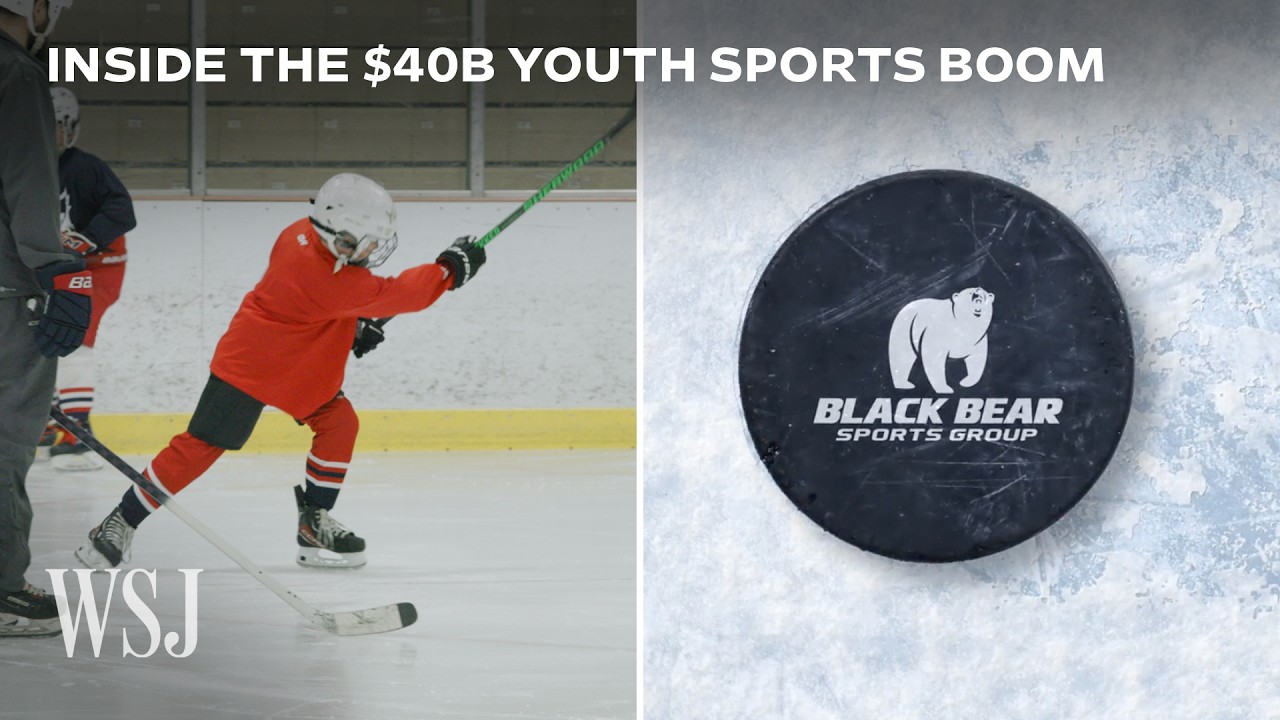
Hockey rinks are notoriously difficult businesses. They’re expensive to operate, and tend to only last about 25 years before running into major mechanical issues. And yet Black Bear Sports Group has spent the past decade buying them up, building both an empire of hockey real estate and a much broader—and lucrative—youth hockey business. Today, Black Bear is the largest owner-operator of hockey rinks in the country—it now runs almost 50 across 12 states. The company says its business model is helping save rinks and grow the sport of hockey, but its rapid expansion is also making lots of enemies. WSJ explores what happens when a for-profit company changes a world that’s traditionally been run by non-profits and community-led organizations. Chapters: 0:00 What Is Black Bear Sports Group? 1:50 Making money off more than just the ice 3:28 A local hockey association loses its home 6:25 Families adjust to a more expensive game 8:42 The big business of youth sports 9:57 Where does the money come from? 12:20 What happens to local organizations? 15:01 The Michigan Attorney General gets involved #Sports #Business #WSJ
Оглавление (8 сегментов)

What Is Black Bear Sports Group?

- This is like a mezzanine area. This is just a storage room here. This is a concrete floor. This is in an ideal position. This is the ice plant here. This is a snow melt pit. - Not to be confused with a jacuzzi. - I wouldn't advise it. - It's disgusting. So where are we right now? - Bigby Coffee Ice Cube Kalamazoo, which is a new naming rights agreement that we got in place for this arena. We've been working a couple of months now on designing the branding and some of the ways that we wanna reposition the facility cosmetically. - Scott Branovan runs sales and marketing for a company called Black Bear Sports Group. They buy hockey rinks. - Over the years, they're usually private owners are suffering financial losses over a long period of time, and then they're faced with major capital repairs and so that's usually when they're looking for an exit strategy. - Black Bear bought this rink last year for three and a half million dollars. They expect to spend another two million on repairs before it reopens later this summer. - This is the header trench that's being completely redone. The tubing, there were a lot of leaks. There was deterioration. In Michigan here, we went from a few rinks a few years ago and we're already up to nine and we hope to continue to find good opportunities in Michigan to save rinks. - Black Bear isn't just buying up rinks in Michigan. It's the largest owner operator of hockey rinks in the country. The company has purchased almost 50 across the Northeast, Mid-Atlantic and Midwest since it was founded in 2015.

Making money off more than just the ice

Hockey rinks are kind of like famously crappy businesses. Like that's no secret. I'm just wondering like, what does Black Bear see? 'Cause clearly it sees something that others don't or haven't figured out. - By and large, you're either a programmer or you're a renter in terms of the way that you approach maximizing the income opportunities. A renter is where you rent ice to high schools, colleges, youth hockey, figure skating groups, and you don't essentially do any internal programming on your own. We find that that's limiting. - Instead of just renting out ice, Black Bear is using its real estate to capitalize on the broader and much more lucrative business of youth sports. It runs its own youth hockey clubs, tournaments and clinics. It gets kickbacks from a uniform store that makes its jerseys. It also has its own in-house subscription based streaming service, which can cost as much as $37 a month. In Michigan, Black Bear has a major sponsorship deal with Bigby Coffee, a local chain whose branding is now a central part of many of its arenas and clubs. - Sponsorship is a big part of what we do. So very similar to pro sports. You know, you're looking for a way to monetize the abundance of foot traffic that we have going through the arenas. - Black Bear says its vertically integrated business model is saving rinks and growing the sport. But here in Michigan where youth hockey has traditionally been run by local community led organizations, the for-profit company is also breeding resentment.

A local hockey association loses its home

The Kalamazoo Optimist Hockey Association, or KOHA, as people here call it, has been around for 60 years. The nonprofit is one of several across the state that are responsible for running local youth hockey programs. They're mostly led by people like Matt Kakabeeke. - I'm born and raised in Kalamazoo, grew up in the club. I played my youth hockey at KOHA, played high school here locally. Five years ago, I had the opportunity to transition roles to the executive director of KOHA. - KOHA used to operate out of Wings West Ice Arena, the same facility that Black Bear is now getting ready to reopen. - That was our home, our office was there. Our staff had a locker room there. We had all of our storage facility. - Now, KOHA's headquartered here, it's renting ice at other nearby rings. What happened? Why are you no longer at Wings West? - Wings West had a mechanical failure and the ownership group decided that they were no longer willing to invest in the facility, and 30 days later we were advised that it was sold to Black Bear Sports Group. - So to move out? - We were evicted. We were evicted by Black Bear Sports Group. - Black Bear sent KOHA a notice to vacate this past March, setting a need to maximize all available revenue streams. - They wanted control over parts of our program that we just weren't willing to give them control over. They demanded that we rebrand and become a Bigby program. We would have to rebrand our entire club. buy all of our jerseys and all of our soft goods through a Black Bear appointed vendor out on the East Coast. We've dealt with two hockey shops in the Kalamazoo community for 50 plus years, and that's hundreds of thousands of dollars that two local families would miss out on. They canceled the next meeting and then we never heard from them again. We just received a letter in the mail or via email that we had 30 days to vacate the premises. - Black Bear says talks broke down because KOHA wasn't willing to change how it operated. Black Bear specifically pointed to the association's compensation structure, which itcalled aberrant and unviable. Unlike most hockey associations, which are entirely or almost entirely volunteer run, KOHA pays its coaches, directors, and other staff for their time. Public filings show that it reported almost $380,000 in compensation last year, but it's unclear why this would affect Black Bear's decision to work with KOHA and Kakabeeke says Black Bear didn't even bring up the pay structure until it sent the notice to vacate, months after negotiations fell apart. - We're very fortunate that we have options and opportunities. We had other rinks in town that were able to absorb us and help us and our community rallied behind us. - You say you're very fortunate, why? Because others don't necessarily have that? - Correct.

Families adjust to a more expensive game

- Dan and Amanda Adams' lives revolve around youth hockey. When they aren't working, they're usually taking their kids to practices, games and tournaments or volunteering as coaches. How frequently are you doing something related to hockey? - How many hours are there in a day? - We are pretty much at an ice rink about seven days a week, sometimes for multiple hours. - Up until recently, the hockey program at their local rink was run by the Chelsea Hockey Association, a volunteer led nonprofit that's been around since Dan and Amanda were young. - I went to school with a lot of the board members. You were coached by one - There's so many coaches that we've gotten to know over the years in Chelsea that, or even people we grew up with playing that they're part of the association now too. - And we know they care. It's not just about the players itself, it's about the community as well. - What does the association do now? - We don't know. - Last year the rink was sold to Black Bear, who has since stopped renting ice to the association. It now runs the hockey program itself. - We had no idea what was gonna happen, what could happen, what they were planning on doing or anything. - So what ends up changing or what has changed? - The prices of the ice. They increased significantly this past spring and then for the fall, we already got the price increase for that. - Last year, the 12 and under fall house league season costs $2,000. This year, Dan and Amanda will pay more than 2,500. In Chelsea, many of the teams have also been rebranded to include Bigby in their names. How does the community feel about Black Bear owning the rink? Do you have a sense? - They're not happy. - And we've heard that from people at other rinks too. So we're not the only ones. - Black Bear says complaints about its business are coming from a vocal minority and that the changes it's making are helping save rinks like the one in Chelsea, which Black Bear says was losing money before it got involved.

The big business of youth sports

Black Bear's rapid expansion is part of a broader trend across all youth sports, where private investors are tapping into parents' willingness to spend large sums on their kids. Families spend $40 billion a year on organized sports according to the Aspen Institute. - Welcome everyone, thanks for joining us here. - This week, a group of legislators, including Senator Chris Murphy, held a press conference to introduce a bill that would ban private equity from investing in youth sports. Murphy specifically invoked his son's experience with Black Bear. - They don't just own the league, they own many of the rinks that the games are played in. Black Bear ownership's roots are in private equity. They see my son's hockey experience as a chance to make a massive amount of money. They aren't trying to optimize the kids' experience or the family's experience. They are using youth sports to get rich. - In a written statement, Black Bear said we look forward to engaging with lawmakers and sharing all the ways we're growing youth hockey at four times the national rate, providing free and low cost programs and letting more kids play by saving and revitalizing ice rinks.

Where does the money come from?

Black Bear is private equity backed, but it isn't actually a private equity firm. It's a subsidiary of an investment company called Blackstreet Capital Holdings. They were both founded by the same person. Murray Gunty. Where does the money come from that is used, to buy and run these rings? - Murray Gunty and I'm not really at liberty, nor do I really know exactly, you know, where he accumulates the funding. But I can tell you this, that when it comes to being able to close very quickly to acquire a rink in an emergent situation, they're never subject to financing, which I think is a big part of the strategy where you're nimble enough and you can move quickly enough. - Why do people think that it is a private equity firm? - There really hasn't been a company in this industry that has acquired and operated this amount of arenas, you know, throughout the country. And so that rapid growth, I think can sometimes be misunderstood. - Last year, Black Bear hired a crisis PR firm and tweaked the way it speaks about its business. The company's landing page used to talk about investing in youth sports. Now it talks about saving them. As of this past March, Black Bear's website also no longer mentions its relationship to Blackstreet Capital. Blackstreet also used to list Black Bear as a subsidiary. Now, that page is gone too. - There's a false narrative that we buy arenas and we raise the price right away and make it less affordable to play. Our Youth hockey club volume is up 9%. The industry average is about 2%. So we couldn't grow at those rates if our programming wasn't affordable. - But the question isn't is it affordable? Is it more expensive than it was before you purchased the rinks, right, or operated the clubs? - Not in all cases. I think, you know, we do an evaluation of the market in every instance. We're not raising prices anywhere to an absorbent level. - Black Bear says it's introduced thousands of kids to the sport through its entry level program called Take a Shot at Hockey, which is free for four to nine year olds. Something it says local nonprofits can't offer.

What happens to local organizations?

How do you decide if you want to work with an existing youth club association or if you wanna assume control yourself? - If there isn't a model in place that we can see where growth can be realized, then that's when we have to really look, you know, seriously at changing that dynamic. We have many relationships with volunteer led 501C3 youth hockey organizations that we work really well together and we're able to grow the game together and they run good organizations. They have good coaching. - Here in Michigan, which ones? - The biggest one here in Michigan would be in our Brighton facility. The youth hockey group there is called Kensington Valley. And we feel really confident with them that we're gonna be able to, you know, synergistically grow the game together and make sure that we have, you know, a sustainable model for that facility for years to come. - It's my understanding that Black Bear Sports Group offered almost no money to take over the association. Is that not true? I believe it was a dollar. - Yeah, well, the youth hockey club there had one paid employee. The rest were volunteers. There was some changeover of the board there and so there was a suggestion from the one paid volunteer that they would like to investigate the opportunity for maybe Black Bear to take the club over and operate it with our professional staff and move it forward from there. But that wasn't anything that we asked for. - Michelle Christ, Kensington Valley Hockey Association's executive director and only paid employee disputes Branovan's narrative. She told The Wall Street Journal that Black Bear suggested that it would be able to save families money by running the hockey program itself. So she asked for a breakdown of how this would work. She says there was no follow-up until months later when Black Bear offered to buy the association for a dollar. Back in Kalamazoo, Black Bear recently applied to start its own association. Last month, the request was approved by USA hockey state affiliates. Are you worried about the new association? - I'd be lying if I didn't say we were worried about it. I just, I don't wanna lose any families. I want KOHA remains strong and vibrant. It's just a frustrating experience where you're not actually competing against local communities anymore. You're competing against, you know, this Bigby team in Lansing or that Bigby team in Ann Arbor or this Bigby team here. It's becoming this league that's controlled by Black Bear Sports sponsored by Bigby.

The Michigan Attorney General gets involved

- What is it that is upsetting about that to you and others here? - Well, for us, sports is becoming, youth hockey's becoming a big business and it's just, it's disappointing. - What recourse do you have? I mean, is there anything you can do? - We've been writing letters to state representatives, the Attorney General's office. We've been in contact with them as well. - Have you gotten a response? - Yeah, yeah. I've had a conversation with the Assistant Attorney General on the phone and just email correspondence with them. - This past April, Amanda received a letter from the Michigan Attorney General's Office stating that its Corporate Oversight division is quote, reviewing potential anti-competitive and unfair trade practices related to Black Bear Sports Group. The letter included a detailed questionnaire and asked that it be shared with other parents and organizations. In a statement to The Wall Street Journal, the AG's Office confirmed that it is looking into Black Bear quote, out of concern for the risk of consumer harm, including higher prices and reduced service quality that can arise from diminished access to community and recreational services. Black Bear told us it's engaging with the AG's Office and that it's eager to quote, showcase how our work to save rinks and grow the game of hockey benefits Michigan families and their communities. - We have a good program at a good price. We invest a lot to grow the game and so we feel like we couldn't experience that kind of growth if we weren't competitive. I mean, there are rinks that are gonna close unless we can come in there and acquire 'em and infuse the capital needed to bring the equipment up to speed and put our operating model in place so we can grow sustainably over time.

Другие видео автора — The Wall Street Journal

Ctrl+V

Экстракт Знаний в Telegram

Экстракты и дистилляты из лучших YouTube-каналов — сразу после публикации.

Подписаться

Дайджест Экстрактов

Лучшие методички за неделю — каждый понедельник