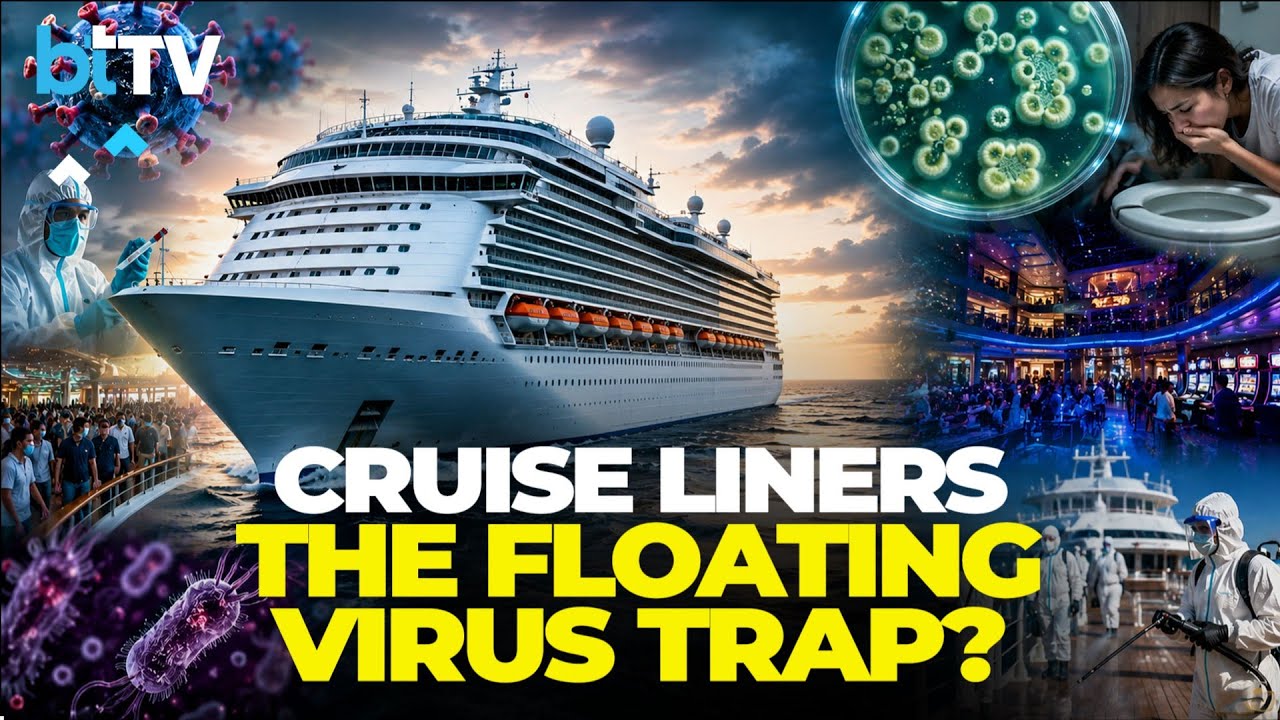
Why Do Cruise Ships Turn Into Deadly Infection Hotspots? Sneha Mordani Breaks Down The Science!
5:07

Why Do Cruise Ships Turn Into Deadly Infection Hotspots? Sneha Mordani Breaks Down The Science!

Business Today 17.05.2026 278 просмотров 10 лайков

Machine-readable: Markdown · JSON API · Site index

Поделиться Telegram VK Бот
Транскрипт Скачать .md
Анализ с AI
Описание видео
From COVID-19 to Norovirus, Hantavirus to the infamous Legionnaires’ disease outbreaks — why do cruise ships repeatedly become hotspots for deadly infections? In this detailed explainer, Sneha Mordani, India Today breaks down the science behind why outbreaks spread so rapidly onboard luxury cruise liners. Packed dining halls, shared ventilation systems, crowded entertainment zones, buffet counters, elevators, casinos, and passengers arriving from across the globe — cruise ships combine all the perfect conditions for viruses and bacteria to spread fast. The video revisits some of the world’s most infamous cruise outbreaks, including the Diamond Princess COVID outbreak, Ruby Princess infections, Explorer of the Seas Norovirus crisis, and the latest Caribbean cruise health scares. Are cruise ships unsafe? Or are they simply uniquely vulnerable floating cities? Watch this special report to understand the hidden risks behind luxury sea travel and how the cruise industry is fighting back with upgraded sanitation, onboard testing, isolation protocols, and air filtration systems. Stay tuned for more in-depth explainers, global health stories, and international news coverage by Business Today. Don’t forget to Like, Share & Subscribe to Business Today for more exclusive explainers and breaking news updates! #CruiseShip #Norovirus #COVID19 #Hantavirus #DiamondPrincess #CruiseOutbreak #SnehaMordani #IndiaToday #HealthExplainer #BusinessToday ----------------------- Thank You for watching! Do not forget to Like | Comment | Share ----------------------- About the channel Watch us for the best news and views on business, stock markets, crypto currencies, consumer technology, the world of real estate, bullion, automobiles, start-ups and unicorns and personal finance. Business Today TV will also bring you all you need to know about mutual funds, insurance, loans and pension plans among others. Follow us at: Website: https://www.businesstoday.in WhatsApp: whatsapp.com/channel/0029Va4Hd309hXFCqY62yD2I Facebook: https://www.facebook.com/BusinessToday X: https://twitter.com/business_today Instagram: https://www.instagram.com/business_today/

Оглавление (2 сегментов)

Segment 1 (00:00 - 05:00)

From COVID to norovirus to hantavirus to the historical Legionnaires in the 1970s, what do outbreaks have in common? This. Let's tell you a little about historical outbreaks. Explorer of the Seas, where a norovirus outbreak happened in January 2014. 6,000 people on board were infected with norovirus on this one. Oasis of the Seas, where again there was a norovirus outbreak in the month of January 2019. Close to 300 people were ill. Diamond Princess, where the COVID-19 outbreak happened in the month of February 2020. Ruby Princess, where a COVID-19 outbreak happened again in the month of March 2020. 900 people were infected. As far as the Grand Princess is concerned, it saw a COVID-19 outbreak in the month of March again 2020. 700 people were infected. Now, the norovirus outbreak in the Caribbean cruise ship amid the hantavirus outbreak on board the MV Honduras. Historically, Legionnaires disease outbreaks in cruise ships are multiple international incidents of respiratory illnesses caused by bacterium Legionella pneumophila. The list is really endless. So, why are these outbreaks really so common on board these cruise ships? Well, a cruise ship is a floating city wrapped in steel and surrounded by water. The same things that make it magical, thousands of people eating together, dancing shoulder-to-shoulder, touching the same railings while watching the sea glitter under moonlight, also make it unusually good at spreading infections. Here's why outbreaks happen so often on cruise ships. Dense crowds and shared spaces with cruise ships packing thousands of passengers and crew into restaurants, elevators, theaters, pools, casinos, narrow hallways, — viruses just love that proximity. One infected person can brush against dozens of people in a single breakfast line. It's like sparks landing in a dry forest. The environment itself helps the fire travel. Then closed ventilation and shared air. Modern cruise ships have sophisticated ventilation systems which have improved after COVID-19, but indoor entertainment venues, cabins, dining areas still mean — many people share recirculated air for long periods. Respiratory viruses spread especially well when ventilation is imperfect. People spend hours indoors and passengers come from many countries carrying different strains. A cruise ship can unintentionally become a mixing bowl relief of pathogens from around the world. Constant surface contact. Well, think about how many hands touch these railings, utensils, elevator buttons, slot machines, stairs, etc., etc. Passenger turnover from many regions. If cruises continuously gather people from airports, hotels, buses, ports across multiple countries, — that means infections board the ship before anyone realizes that they're sick. Some diseases spread before symptoms appear. A passenger can actually feel perfectly healthy but already contagious. Delayed medical isolation. Well, even though cruise ships have medical facilities, they aren't full-scale hospitals. Early symptoms can look harmless. One may think that he or she is just suffering from motion sickness, seasickness, a cold, or something they ate. By the time the pattern becomes obvious, hundreds of close contacts may already exist and be at risk. A single sick passenger can trigger a ship wide sanitation emergency. So, are cruises unsafe? Not necessarily. The industry has improved dramatically since the early days of the COVID-19 pandemic. Enhanced sanitation upgradation, air filtration on board, testing capabilities, isolation cabins, outbreak surveillance protocols, all of these things are making things better — for passengers on board a luxury cruise ship. Organizations like the Center for Disease Control and Prevention monitor cruise sanitation and outbreak reporting closely. But cruise ships remain environments where contagious diseases can spread faster than in many ordinary settings. — If you like the video, do like, comment

Segment 2 (05:00 - 05:00)

share, and subscribe.

Другие видео автора — Business Today

Ctrl+V

Экстракт Знаний в Telegram

Экстракты и дистилляты из лучших YouTube-каналов — сразу после публикации.

Подписаться

Дайджест Экстрактов

Лучшие методички за неделю — каждый понедельник