Few people have a broader view of what business leaders around the world are navigating today than Bob Sternfels. As McKinsey’s global managing partner during our centennial year—and at a moment of profound reimagination and transformation for organizations everywhere—he has a unique global perspective on what’s top of mind for leaders and why this is a moment for organizations to move forward.
In this McKinsey Unpacked webcast, Bob will share how leaders are thinking about this moment, how they stay ahead of significant change, and what role the next generation of leaders can play in helping shape the future.
He will also discuss what a century of advising top institutions has taught us about leadership and judgment, what he is hearing from CEOs around the world and what it means for the future, and the qualities we look for in the next generation of leaders.
More episodes can be found on our McKinsey Unpacked platform.
Subscribe to our channel: http://mck.co/YouTube
Subscribe to our newsletters: http://mck.co/Subscribe
***Find us on***
Facebook: http://mck.co/Facebook
Twitter: http://mck.co/Twitter
LinkedIn: http://mck.co/LinkedIn
Instagram: http://mck.co/Instagram
Оглавление (9 сегментов)
Segment 1 (00:00 - 05:00)
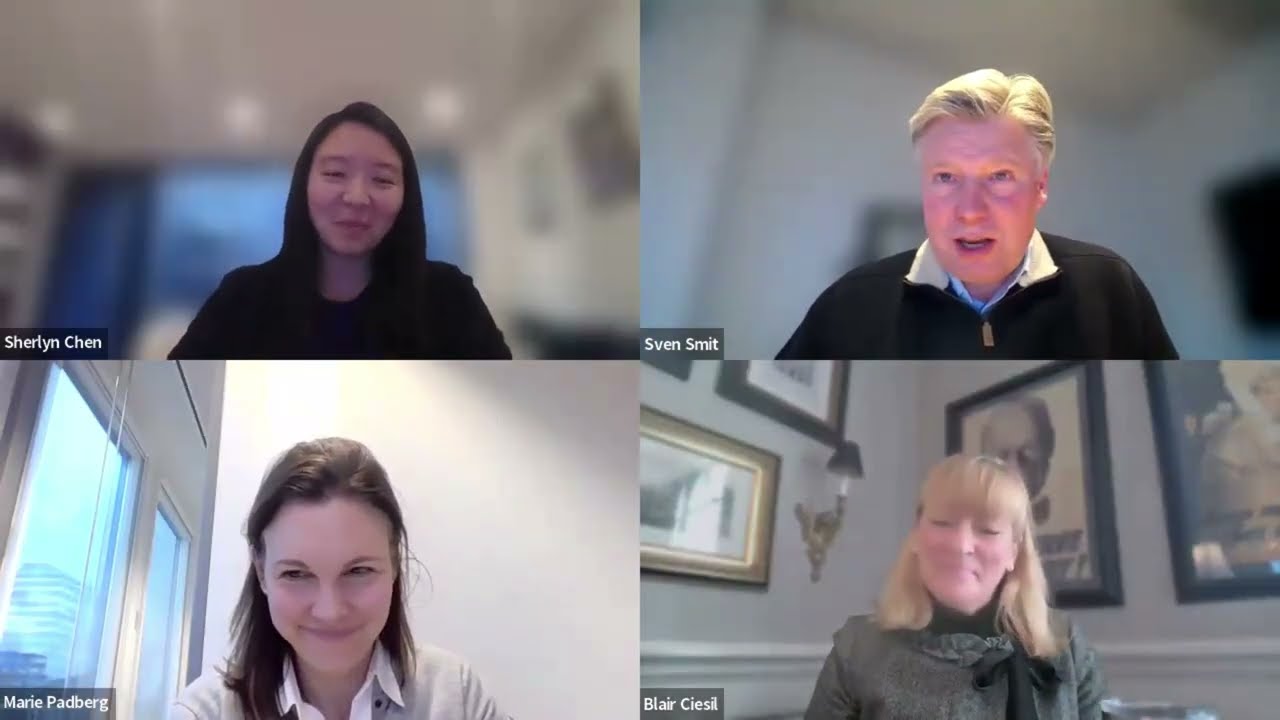
Welcome. Ready? Give us a second. Join and enjoy the music. — We're not dancing today. — There you go. No dancing. — Trying to spare our audience. — Exactly. For that reason. I think the music is getting shorter and shorter, Marie, the more that you Bobing was not good. — Exactly. They're like, "No, please. " — Welcome. — Welcome to Mackenzie Unpacked. For those of you who are joining for the first time, I'm Marie — and I am Blair. And together we have the great joy to co-lead our global talent attraction teams around the world. We started this series about a year and a half ago, which is hard to believe, Marie, that they've let us do it this long, but we were really committed to giving candidates around the world an insidider glimpse into what it's really like uh to work and live and thrive at our firm. So, think of this as your backstage to the people and experiences that shape each of us as McKenzie professionals that often doesn't make it to the outside world. So, we're extra excited today. Uh, we have a very special guest for you. But before we dive in, if you have not watched a Mackenzie Unpacked episode, you can go back. We have all of the previous episodes on our website. You can search by topic. So, if there are particular things you're interested in learning, give it a whirl and give us some feedback. So, Marie, what do we have on the docket for today? I know we're eager to dive in. — Exactly. Today is extra special. So, we are going to go uh to dive straight in and we are extremely fortunate to be joined by our guest today, Bob Sternfelds. For those of you who don't know, Bob is Mckenzie's global managing partner. Hi, Bob. — Hi, Bob. — Hey, good to see you, too. I like the uh I like the intro music. — Yes, — they really have cut us off. We were dancing earlier and I think that we've gotten the hook, which is great. — It's gotten shorter and shorter. Definitely. — Exactly. For good reason. — Wow. It's good to be with you guys. — Well, thanks for joining us. — Yeah. So, Bob is our global managing partner, which means he leads our firm in advancing our dual mission, which is on the one hand, of course, delivering substantial performance improvements for our clients, but then equally important, fostering a culture that attracts, excites, and retains exceptional people around the world. He studied economics and history at Stanford and economics and politics and philosophy at Oxford, where you also were a road scholar. Uh Bob, you joined our San Francisco office but have spent I think it was five years in our Johannesburg office as well. Today you adise leaders around the world and you serve on several global boards and councils and outside of McKenzie I think I would have a very hard time keeping up with you Bob. You're an active cyclist and overall lead a very active life. I think you regularly take your colleagues on sports missions when they come and visit and spend time with you. — Some don't really like that but uh So well — and you uh the proud husband of Ash and you have three kids. So we are so thrilled to have you join us today on Unpacked Ropes. Thank you for taking — it's good to spend some time with you too. — Well, it is always wonderful to get you on Terara Firmer that we managed to grab you somewhere between your world travels. Uh we're going to cover a bunch of topics today, Bob, that we know you're passionate uh and have spoken about not only to CEOs and leaders around the world, but frankly to our own colleagues and even to candidates. Um but we wanted to warm you up a little bit to get you started for the show. Uh so you may good luck. Here we go. Uh you may recall that a couple months ago we hosted Anna Wintor who um for those of you who don't know she's a world fashion icon, longtime editor of Vogue magazine as part of our hundredyear celebration which we'll talk a little bit about uh and get Bob's perspective on. But um our wonderful New York office managing partner Yael interviewed her um and they kicked things off with something that Marie and I thought was pretty cool. It was a rapidfire round of questions to get to know Anna Winter before they dove into the meat of the topic. So Bob, we're going to try that with you of your game. Are — you guys go from Anna at Vogue to me? — We did adjust the questions a bit. Bob, — we did for the audience. If you don't find something between the two of us, that's a pretty wide spectrum. So — yeah, we will not focus on shoulder pads, whether they're back, not back, those kind of — You can focus on the shine on my forehead here, you know, uncool shirt that I'm wearing. Right. So — it's perfect. Again, it's more the structure that we were going for, less the content. I think you're going to do. — All right. Are you ready? 10 questions to get to know Bob Sternfills. — Okay. — Ready? — Yeah. — All right. Great. Uh first question for me, early bird or night owl? — Oh, definitely early bird. I knew that. Okay. Based on emails.
Segment 2 (05:00 - 10:00)
— How many of you have gotten notes or calls from me? YOU — THAT'S EXACTLY RIGHT. TO WAKE UP. If you're on the East Coast, you're like, "Where in the world is Bob? " Holy cow. He's in my time zone. — I'm living your life today, Bob. I was just telling Blair earlier, I'm in Chicago and still on European time zone. So, at 9:00 after 4 a. m. wake up, I feel like I've conquered the world already. — Exactly. — Yeah. Exactly. Second one. Last thing you do before you go to bed? Uh, read a physical book. — Love that. I tell that to my children. — Side question. What book is the current book you're reading — right now? Um, I am reading something. It's a bit esoteric on David S. Terry. So, uh, he was a the chief justice of California Supreme Court around the 1850s or so. And what makes him interesting is he was he participated in the last duel in California where he killed a US Senator Brick. Uh and um yeah, I find that kind of interesting. So that's what I'm reading about right now. — All right. We are now adding a question on any duels you've gotten into with world leaders. — Exactly. I'm sure there's better ways to solve conflict now nowadays. — Exactly. Um all right. Micro habits. We talk about that a lot. What is a habit or a routine that for you has had a really big impact, Bob? — Uh, got to work out every morning. — Workout every morning. — Yeah. For me, part of it is physical. You know, I'm we're in 70 countries around the world and um I do my best to be present uh in uh as many as I can over the course of a year. So, it means traveling, crossing time zones. And so part of it is that helps me reset, get over jet-lagged, but part of it is mental. Uh that I find it in many ways is meditative and it's a chance just to clear the mind, not be thinking about all the things of the day and I come back much more refreshed for the day and I can control a workout in the morning where I can't really at the end of the day. And so that's one of my musthaves. — One of your anchors. I love it. Marie, did was that part of your morning routine? just to put you on. — I was I did it at the gym this morning at 5 a. m. Well done crowd, which is normally not a time I would normally do that. — Uh Bob, what is something you've never that you've never done but always wanted to do? — Um go to Antarctica. — Ah — yeah. So, um I read uh — um Shackleton when I was in South Africa a long time ago and uh kind of got hooked on it and um would love to do that at some stage and Ash would love to do it too. Um you know, we've uh we've kind of gone to a lot of different parts of the world. We don't have an office there, so uh it hasn't been on the list — the last couple years. Yeah. Yet. But uh no, I'd love to see it. and actually you know our commitment um around sustainability has also been one of the real anchors for me and I'd like to you know see some of the impact and how fast things are accelerating and uh are there things more that we can be doing on the sustainability front. — I love it. I actually love to know it surprises me that there is a place you have not been in this broadwide world of honor. So that uh that's kind of an inspiration that they're — Well, there's this app called Bin BN where keep track of like where you've been in the world. And foolishly my 21-year-old challenged me to this and I'm like, "Dude, there is no way you're going to beat me on this one. " So right now it's like a 2:1 ratio. So his goal is to get to more countries than me at some stage. As a parent, it's always a unique joy to be beating your kids at something. So, I support that wholeheartedly. — Fewer and fewer things these days. — That's right. Well, that's an age thing. Uh Bob, where do you do your best thinking? — Um actually on an airplane. Um because I well I I'm on an airplane a lot, but I don't do — uh um McKenzie work, if you will, tactical stuff. Uh I try not to watch movies, try not to eat that much. Um certainly don't drink. And what it allows me to do is a bit of the step back time. And oddly, it's some of the flights when it's a really long flight and the Wi-Fi doesn't work or gets cancelled that I tend to do my best thinking because it's a chance. — That's a gift. That's right. — Chance to think ahead. And uh so I try and do the longer term, bigger idea thinking when I'm on a long haul flight. — Next one. Taking notes during a meeting. Yes or no? — Taking notes. Oh, yeah. See, uh I'm about to go see a client — and paper based cuz I've one
Segment 3 (10:00 - 15:00)
— I just think it um it helps with recall. Two is it um it actually signals that you're engaged and listening and I think more the old school this rather than this because they know you're not doing something else, right? And you're kind of focused on them. So, um, yep. I, uh, I definitely take notes and, uh, um, kind of do it in an old school way. — I love that. I, I would argue most of us do. I think if you, if you're in a McKenzie room, chances are you see folks with good oldfashioned analog pen and paper. Uh, and I think that's why we also like the whiteboard, right? We like to viscerally see what we're thinking and be able to move things around. — Totally. — Um, I was going to ask you how you spend your time on airplanes, but you've already answered that it's um, incredibly productively. I'll ask you this. Do you know average number of flights you took last year? Roughly, — I know the number of actual flight hours. Um, let's kind of frame it that way. I used to be a pilot um for fun before um I — in all your spare time. We get it. — Mackenzie doesn't let me fly anymore. Um but uh um but I do about a thousand flight hours a year. Um, and to put it in contrast, a 10-year pilot on any of the major airlines, you know, probably does 300. So, uh, just to give you a sense of the, uh, yeah, the amount of time on an airline. That's not that's maybe not something to aspire to, but I'm on a I'm on an airplane a lot. — It's amazing. What's the best professional advice you've ever gotten? — Well, you guys probably aren't going to like this one. Uh, to ignore the advice you get. And — oh that's interesting. Okay. — Look, I um I think and I think in particular in a McKenzie context, you know, we've got this mantra of um of make your own McKenzie and uh it's kind of rooted in the idea of um of self- authorship of — are you defining what you want to do rather than trying to prove yourself to somebody else. And the reason I believe so strongly on this first is just factual that um and you guys have helped enormously on this over the last several years, but we over our hundred years and I know we'll talk more about this. We're turning we're this our hundth year. Um — we've attracted amazing people. Um and whether they've stayed in McKenzie or gone to do something else, they have become amazing leaders and we've been recognized for many years um as the world's leadership factory. and we want to continue to be so. But when you peel under why some of it is the experience you get and step up and and more challenge and constant renewal and all this feedback and everything, but a big chunk of it also is taking control of your professional journey. And I think what happens um when you get professional advice, it's often well intended. — Yep. But it's rooted in the context of the individuals who are giving it. And that should be an input, but you shouldn't be controlled by it because I think realizing that their reality is different than your reality um is the real unlock. And I'll, you know, I'll make it personal for me. Um, so when I was at about the 18th month mark in McKenzie, um, in 1920, um, no, just kidding. Uh, — you're about 25, so that's okay. — We started in 26, so it couldn't have been, but um, — exactly. Uh I was a senior associate and it was the height of the dotcom boom on the west coast and um I went into the office manager uh because we had just opened our first office in Africa in Johannesburg and I said um look they're looking for people to move. I'd like to go. And uh and he said, "Bob, do you realize I have nearly a thousand inbound requests right now from associates from around the world wanting to come to Silicon Valley because this is the heart of where everything's happening? — You will be the first outbound request. " — Uh and you want to go to Africa, right? You know, are you sure this is what you want to do? And I said, "Yeah, I think so. What do you think about it? " And he said, "Look, I think this is going to be the dumbest thing you've ever done. " Um but — he said, "Don't make how you really feel. " you know, a he didn't say no and uh b it was one of those moments of do you do what you want to do versus what you think you should do. And um and so I set out um Ash and I went we were supposed to stay for a year. We spent about seven years in South Africa helped build the offices around and it was some of the most transformational time for both of us individually and together as a couple that we've ever had. And uh you know and I think
Segment 4 (15:00 - 20:00)
about if I would have accepted that advice, it would have been the wrong advice. And I'll just give one other piece. You know, I came back to the West Coast then after the do crash and Ash's dad was having some health issues and so we decided to come back. it wasn't a great time to come back to the west coast particularly while South Africa was booming but we did and I had built up some expertise in operations and uh but the west coast at the time was mainly tech and strategy work — and I was doing operations in capital intensive industries and um you know several of the most senior partners said look this is not what we do here um I don't think you're going to be successful doing it you should transition to become a tech strategy guy and Um, and I didn't I stayed part of our operations practice. I was embraced by a whole bunch of folks from the Midwest. Um, and built out a career doing operations work. And again, if I would have listened to him at the time, I think I wouldn't have been fully satisfied. And so, I know it sounds crazy, but I, you know, don't not listen, but listen to it and then take the context and figure out what you want to do. Don't be slave to the advice that you're actually being given. — I think that's radical intuition. — Super powerful. I love it. — I'm sure a whole bunch of Mackenzie senior partners are going to hate me right now. But um — well, and I was just thinking I'm glad my I hope my children aren't watching right now, Bob. Otherwise, I'd be a real problem. — I think mine have fully embraced that advice. And in fact, — little guy who I was counseling to go get a job because he's a senior in college a couple months back. He's like, "Dad, I saw you on something and you said that the best professional advice you got was to ignore professional advice. " Well, guess what I'm doing right now? — Dude, really? LIKE — REALLY? I'M HAPPY YOU HEARD that one. — Yeah. First time he quoted me ever, but there you go. — That's where you have to say, "Remember the word context, friend. Remember the word context. " — Well, let's maybe dive in, Bob. Uh, thank you for that. You're a good sport for putting up with the rapid fire get to know you. But — yeah, um maybe first question is what does it mean to be GMP of McKenzie? What do you actually do all day? And I know no one day of yours is the same, but — if you had to characterize — Yeah. you know, it's it's really interesting and I think it's a I've been doing this for about five years and um I think it's still a process of continuous learning because um you know on the one hand the wonderful thing about our firm which continues to operate as a private uh global partnership is that um we really strive wherever we can to um root out and eliminate hier hierarchy uh you know to have more autonomy in our team rooms to solve problems how we want to do them to give people the autonomy to go innovate on new things you know we talk about this idea that you don't really have a boss in McKenzie um — and you know that translates through to a large part of why unlike some of our competitors you know who use the term CEO we don't Right? We use the term GMP, global managing partner. And part of that is this idea of fellow partner — um to honor that we never want to be too top down. We don't controlling. And so a big chunk of my mindset and then we'll get to what I actually do, you know, is about how do we make sure that the partnership continues to work as a partnership and um and that has an aspect of subsidiarity, right? That the only we talk about the only hierarchy we have is the hierarchy of ideas. Well, if you're a new joiner in a team room, how do we create an environment where you feel comfortable venturing that idea and how do we — how do we flatten the firm? and so I'm obsessed with that on the one hand and very conscious and I've learned this over time of there can be only a few things where you can really be top down. Now on the other side there's the recognition that um we are a very large institution uh you know over 40,000 colleagues that 140 locations that operate in close to 70 countries and the world's a freaking complicated place and uh you know you got to make sure that your colleagues when something happens across the GCC and Israel are all safe and how do you make sure that you can jump in um you know when Russia invades Ukraine and you have an office in Kiev, um when a pandemic happens and you get access to um vaccines and how do you make sure that folks in some countries
Segment 5 (20:00 - 25:00)
where that's not available, you can get to them. And those types of situations are the few moments where you do need to be more I'll use the word and it's very anticultural, but it has to happen from time to time executive like and you don't have time to delegate it and somebody needs to make the call. And so what I try and look to in those moments is um how do we stay true to our values? How do we tend to take a longer term view because we're private on issues like this and realize that I'll make few of those decisions that you make them in the true stewardship sense of the of the firm. And so I think the role has a t this kind of dichotomy between those two things where the vast majority is in the first camp but there are moments where you need to lead and you know what that means then physically for a dayto-day there are the normal things that you would imagine a leader in any large institution has to do. we have a board and um you know we have quarterly board meetings and I have a top team and we meet once a month and um you know you need to in some ways make sure that the firm quote unquote runs but where I then spend my time is out there. Um I um I travel to our offices constantly. I just finished a trip in Asia which was China, Vietnam, uh Sri Lanka and India. um got back on Friday and I'm on the east coast of the US this week and when I'm there it's both meeting with our clients and just listening to them. How we doing? What are the issues that are on your mind? What can we do better is a question I love to ask. Uh and then spending time with our people. I try and do town halls uh whenever I can. I've got one coming up later today. I like to spend time with some of our youngest colleagues to teach me. So, one of the things I've been doing lately is I do an hour every week with some of our newest business analysts. Usually freaks out the office manager, whoever it is, Bob, why do you want to do this? And how do they need to get prepared? I'm like, no, they don't need to prepare. And all I ask is, um, — show me how you do your work — and show you because the rate of technology change is happening so fast that I think there can be some reverse mentoring in this. And um, and every week I learn something new. So, those are just some of the practical aspects of how that translates in terms of what I do in my time, you know, week to week. — I love that. And there are a bunch of themes we're going to pick up. You there's a lot in there that we're going to try and tease out in uh in a couple places, but that's um — tease away. — Never a dull moment, right? There you go. Let's maybe start on reflecting on our 100 years because uh that is a big milestone for any organization also for us this year that we are reaching our centennial year. We were um founded 100 years ago actually here in Chicago. So that is a special time and you already ted a bit on some of the things that have allowed us to thrive over a century and I think the core foundation of our partnership is an very important aspect on this. How do you see this legacy shaping up for the next hundred years and how do you also see our position in the world where challenges are becoming increasingly complex? You already touched on uh geopolitics, you touched on sustainability, you touched on AI. What makes you confident that we are well positioned to thrive also as a as an organization helping um solve some of these challenges in the next hundred years? You know, it's a great question, uh, Marie, and and, um, as I reflect on a 100 and everyone knows that it's getting harder and harder, uh, to make it to 100 years from any institution and and, um, you know, we're the first in our profession to do this because we kind of founded the profession and I think it presents a really unique opportunity. And the first thing that comes to my mind is um you know this is less about a celebration and I'm all for celebrations and you know and life's too short. Why not have a good time? You know you can choose how you want to be. I think but it's more a moment to say thanks. Uh I think it's a moment and I take this in every client I meet to say look our hundth is a chance for us to thank you because if it wasn't for you we wouldn't be here. And it's a chance to thank the people that came before us who helped build the institution that all of us who are still here or about to join are inheriting. And um and so the first word that kind of comes to my mind is gratitude. And um I think in general the world could use more of it. And I think it's an opportunity for us to be grateful. Um the second is reflection. And um it's interesting. So, you know, I I told you I like to read and um we have a firm archivist who sends me things
Segment 6 (25:00 - 30:00)
regularly on our um firm history, which I love and I love learning about our firm and you know, everyone will have different interpretations as they study our hundred years. But, um there's so many different wonderful events and how did people respond and how did we get here? And then Marie to your point, we look forward, how do we feel about things? But there's kind of two big ideas if I boil my own interpretation down. On the one hand, the history of our firm is one of constant reinvention. — And I think it's one of the things that has allowed us to remain preeminent for a hundred years. every generation reinvented or changed the firm in some way. And um I'll just give you some examples that'll seem crazy, but at the time they were pretty substantial. Um so if you followed our history, James O McKenzie founded it. He didn't he actually died fairly young. And so the real modern architect of our firm was a guy named Marvin Bower who took over a bit later from James. — And when Marvin took over as GMP I don't even know if you guys know this. Do you know the average age I'll probably get fired for this now in the US, but the average age but it's vintage so I can say it. Do you know the average age of a new hire when Marvin took over his GMP? — 30. — Yeah. 35 40 — experience higher. — 55. — Okay. — Yes. — Wow. — I'd be a new young spring team. — Sign me up. That sounds pretty good. — But the model was at the time hire ex CEOs at that time kind of old white American guys uh you know to council current CEOs. and Marvin came up with this idea that said, 'You know what, because he was a law background, I think we could teach this profession rather than you inherit these skills and then join us that this could be an apprenticeship. — Uh, and I learned that in the law and I think we could apply it to management consulting. And so he had this revolutionary idea at the time that um we'll go to Harvard Business School, which is the first place, and we'll hire people straight out of business school and teach them this. And we were the first ones to do this. And it was gamechanging. I mean you think about the evolution of our people model and kind of many iterations after that and uh but that started a trend you know a second one was — a huge debate that schismed the firm at the time in the early 50s after the war of is this an American profession or could this be global — and we then pioneered an office in Europe to prove that this could actually be a global profession not just a US thing. Um, fast forward again, you know, in the late '7s, early 80s, the work that we did was strategy and organization. And there were some pioneers, and I'm thankful for this because this was part of my tradition that said, you know, we could do more. We could do operations work, — technology work, we could actually help our clients with growth, which gave way to the growth sales and marketing practice. And so, we built out more capabilities. You jump to today and it's we're doing partnership arrangements with clients versus advisory. We're helping with AI transformation. You guys are like, — well, I'm sure we'll get into this, but the reason I kind of highlight this trend is I think the reason I feel so positive is that every generation inherits this opportunity and maybe obligation to reinvent McKenzie yet again. — Love that. — And uh and I think that is not for my generation. It's for our younger hires coming in to say, okay, in the context of everything that's going on the world, how do you want to reinvent our firm? And I think if you keep hiring the best people, I like the odds of the best people figuring out a pretty good reinvention story. So that's kind of one big theme. The other, which is just boiled down to two, is okay, so if the firm changes every generation equally, it doesn't change. And you know may seem like you know paradoxical but what I also found was roughly about every generation the firm found a way to recommmit to our values. — Mhm. — And this is then the thread that hasn't changed that much in a hundred years. And there have been modern interpretations to it and continual modern interpretation. And I'll take one which is you know our strong belief in a diverse meritocracy that we do believe that bringing a wider and wider set of folks in but that no one gets a hall pass and everyone has a meritocracy is one of our core beliefs. Well, when I joined, I was a diverse hireer, right? hireer because 80 plus% of our hires were MBAs and I didn't have an
Segment 7 (30:00 - 35:00)
MBA. — You know, today that's 19% of our hires. And what diverse is technology, it's gender, it's affinity, D, but we're still living into that, but we just reinterpret it. You know, similarly that, and you've heard me through this, I didn't say an industry, I didn't say a business. I constantly use the word profession. that we reaffirm that we're a profession, not a business. And the idea there is we put our clients interests first. That if client impact works, everything else take care of itself. And then the last part is the how, which is one global firm. We've always talked about a one firm mindset and that um we will push back against all the forces and this isn't the only time we've had forces look to dividing um but it is acute that we'll push back on that and operate as one firm and why because our clients continually ask for that. They want best known method from anywhere in the world. And equally our talent does our talent wants to spend. They want to be part of something small. big. Right? And part of something big may also mean mobility and a chance to see the world and work in different places. — So that may be the other side to it is if every generation reinvents the firm, every generation also recommits to our values. And it's why I feel so excited, Maria, about entering our second century because I think we're going to try and live into those two things. — Bob, I love that. Uh, you know, I what I hear in this tension between reinvention and recommmitment is there's got to be some common threads. I would argue I heard many that you say we our values is one of those threads. Our commitment to being a global firm is one of those threads. The diverse meritocracy that we commit to every day. Um, Marie and I spend a lot of time obviously talking to candidates. That is our day job. And the question I think we get most often is what does McKenzie look for? What is that common thread of qualities in a McKenzie person? And of course we struggle and say well there is no one Mckenzie person. But I think in the spirit of what you just said around recommitting to our firm, our values, the sameness even as we are difference, what in your mind are some of the things that you see as critical and important to being a thriving contributing member of this firm and our society? — And maybe just to add to that, Bob, before you dive in, how do you see that maybe evolve as AI is — shaping what we do and how we do it? — See, Bob, there are no easy questions here. We're going to give you hard two parters because you can take it. We saw in the rapid fire. You can take it, man. You passed the test. — You know, after you've testified before the House and the Senate, like — this is all good, right? — We're a layup. We'll take it. You know, I might start with a the kind of foundation to the question, which is, you know, what are some of these things that we continue to strive to recommmit to? Because I think that then gets to well what are some of the attributes that make you successful and you know and there are many in our values but — I kind of come back to three time and time again. Um the first is this idea that distinctiveness is our true north. Um and that our objective function is not to be the biggest. Uh it's not to grow at all costs. It's not to do every kind of project with a client. It's to do the hardest stuff, the most distinctive stuff, the things that a client would look and say, you know, that's an only Mckenzie problem to solve. And um and that takes a certain mindset, you know, it takes a mindset of relishing the complicated, uh of relishing a bit of I'm uncertain if we're going to really land this thing together with a client. um also a fortitude that just says look maybe we're not the right people for this problem. Maybe either you can do this yourself or you can do it with somebody else because we want to preserve a certain space uh this distinctive space. So that's kind of one attribute ring your mind. The second and you both have been really helpful in this is look we have a culture of unrivaled development. the reason why we remain the world's leadership factory is um you know and I know these terms get outdated and stuff but I keep coming back to it is we have a culture of tough love um that um McKenzie is not easy to get a lot of feedback um it's not going to be sugarcoated um but it'll be rooted with a sponsor you know somebody who has your back which is why it's tough but it's also love and um And if that appeals this idea that I'm always looking for edge, I actually want this feedback because I know it's going to make me better. And that doesn't appeal to everybody that is this mindset. Um uh it's almost like an elite athletes
Segment 8 (35:00 - 40:00)
mindset, right? You want to break down every performance. You want to look for better. You got to coach, right? Etc. Why? Because you want to continue to be better. Second attribute. And then the third is that you like this model of operating as one global firm, right? In a time of you like understanding, hey, was there a really interesting innovation that went on in Bogota that I could bring to my client in Marseilles and I like the fact that I want to reach out around the world and mix and match and actually be part of a really diverse community. And so you kind of say those are some of the kind of things that we're going to do in terms of how we operate. So then you look for attributes and you know where I kind of come re is some of this changes in the context of AI and some of it doesn't. And I'll kind of double click a bit on this but you know one is I think we are you got to be resilient. Uh you know what we do is tough and I don't want to sugarcoat that either. Um, and there'll be tough client situations, there'll be crazy problems, and you will get things wrong. And I think what we're looking for is do you have the ability to get back up once you get knocked down? Uh, and so I think resilience is one of the key attributes. Um, being able to work with others uh becomes another key skill. We're not independent contributors. Uh, we work in teams with ourselves. We work with clients. uh and this ability not only to work with others but to help others aspire and believe in an aspiration right to set a higher bar which by the way Mar is a uniquely human characteristic that will be AI proof as you think about the world going forward right — I love that — um you know and then I would say the last one is this um I'd say almost uh affinity not just ability but affinity meaning a desire um that you get excited by continuous learning that you're a mindset of I want to keep learning new things I want to reinvent myself personally um I like we talk about McKenzie as a series of missions I like taking on new missions and renewal um because I think McKenzie works really well when you can turn to yourself and say I'm learning more here than anywhere else in the Yeah. — And if it gets static or boring, I think the model breaks down. Um, and my sense is all of those attributes um, in many ways are AI proof. And I think what it means though is maybe the other side to your question, Marie, is so what does it mean we maybe focus less on? And — I think going forward we focus less on what degree or credential you had. um because quite frankly the value of that credential for us the half-life of it gets shorter and shorter because you will learn faster and faster as we go in. So for folks listening out there watching us I would say don't think oh I studied this or I I'm in this particular industry and therefore it's not relevant to McKenzie right now. I want to get a word out like any background is relevant because we're looking at some of the underlying characteristics. Um I think the second thing that becomes really exciting is um we want to arm and we are arming people who come in with um tools to make them superhuman. And this idea of saying I want to reset what is possible. the impact boundary. Yeah. — Um there was a former CEO who used to be a Mackenzie partner talked about, you know, great Mckenzie work used to deliver a 10 times return on fees. I think what we're tripping into is now a 100 times return. — Um and so what I'm looking for people who come in is can you set a higher aspiration for what we do now that you're armed with these wonderful AI tools? And maybe the last one, Marie, just my own personal thing. Um, I think there's going to be a real premium on true novel creativity — and as more inference and synthesis becomes almost automatic, how do you make orthogonal leaps? How do you use that to say, "Okay, that's table stakes. Now AI has taken us this far. Now it's my time to get creative and go beyond AI. " And I think we're going to start looking more at novel creativity, which actually takes us back to what I talked about earlier, a much wider set of backgrounds that folks might have said, you know, I didn't think I had a shot at McKenzie. You know, I love to get the word out. Anybody's got a shot at McKenzie, you know, provided that you have some of these underlying characteristics. And um
Segment 9 (40:00 - 42:00)
so that just maybe my take on the that whole question. — Yeah, — I love that. And when we talk about AI, Bob, you mentioned in your travels, you meet with world leaders and CEOs weekly, if not daily, I would assume. — If you've talked to them about the opportunity, what are some of the things that excite them the most about it? — Um, and then I got to wrap up, guys. I'm sorry. Minute and a half here. I don't know if that's a minute and a half question, but uh um uh sorry, I've got a client that I need to go to. Um — yes, very good. — A good thing. That's a good thing. — Look, um I would summarize it as the following. uh people see the enormous potential of AI um but are struggling to figure out um how do you really reimagine uh a large enterprise and I'm focusing on large enterprise that it's hard that it's um it's as much the organizational design um as it is the technology and then if I double click underneath that I think there's a worry and you know this is maybe where Mackenzie can play a unique role. How much of this as you implement it is around productivity to make the business more efficient versus growth which are creating new opportunities that will actually add and I think there's a creeping worry right now that unless we lean into this we one will be slow to implement and we won't reimagine the companies but then in those who do we might index too much on productivity versus growth and I think the real key for society here is leaning AI into growth and creating new things so that it's less disruptive in the transition. — Bob, thank you. We have been so lucky to have you for the last 45 minutes. Uh, — this has been a treat. — I think it's been gold. I'm taking away so much, including in my notes, by the way. Bob's not kidding. We are an analog place. We like recording good ideas. Ignore the advice you've gotten. I think that's uh that's pretty brilliant. Um, distinctiveness is our true north and this tension between reinvention and recommmitment and the thread between it is pretty exciting. So, Bob, thank you so much for joining us. This has been uh this has been an incredibly cool moment uh moment to get nail you down for a bit to get some of your wisdom. — I love spending time with both of you and for everybody watching. Um if this doesn't open the aperture that says, "Hey, you know, maybe this sounds interesting," then um uh you know, then I probably did something wrong. Um, but explore it, right? Explore it. So, been good to uh good to talk to everybody. — Good to see you, Bob. Thanks so much. — All right. Bye. — Bye.