Automating Neurosurgery with Robotics | Neuralink
4:11

Automating Neurosurgery with Robotics | Neuralink

Neuralink 29.04.2026 388 665 просмотров 13 249 лайков

Machine-readable: Markdown · JSON API · Site index

Поделиться Telegram VK Бот
Транскрипт Скачать .md
Анализ с AI
Описание видео
We’ve built a surgical robot to automate key steps in the process of receiving a Neuralink implant to promote safety, reliability, and scalability. Learn more about the role of the robot and its future potential from the engineers helping develop it. Note: Neuralink devices are investigational and not FDA approved. This video features voluntary clinical trial participants sharing their personal experiences, which may not reflect all participants or future outcomes.
Оглавление (1 сегментов)

Segment 1 (00:00 - 04:00)

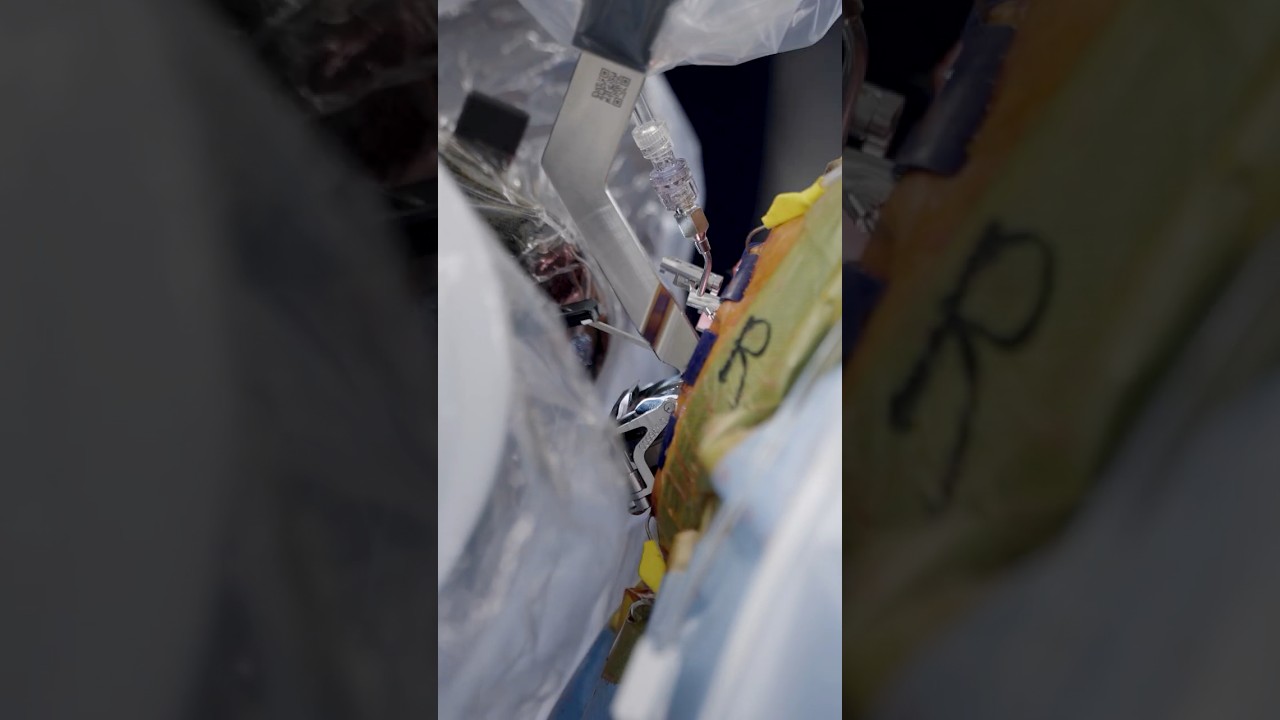
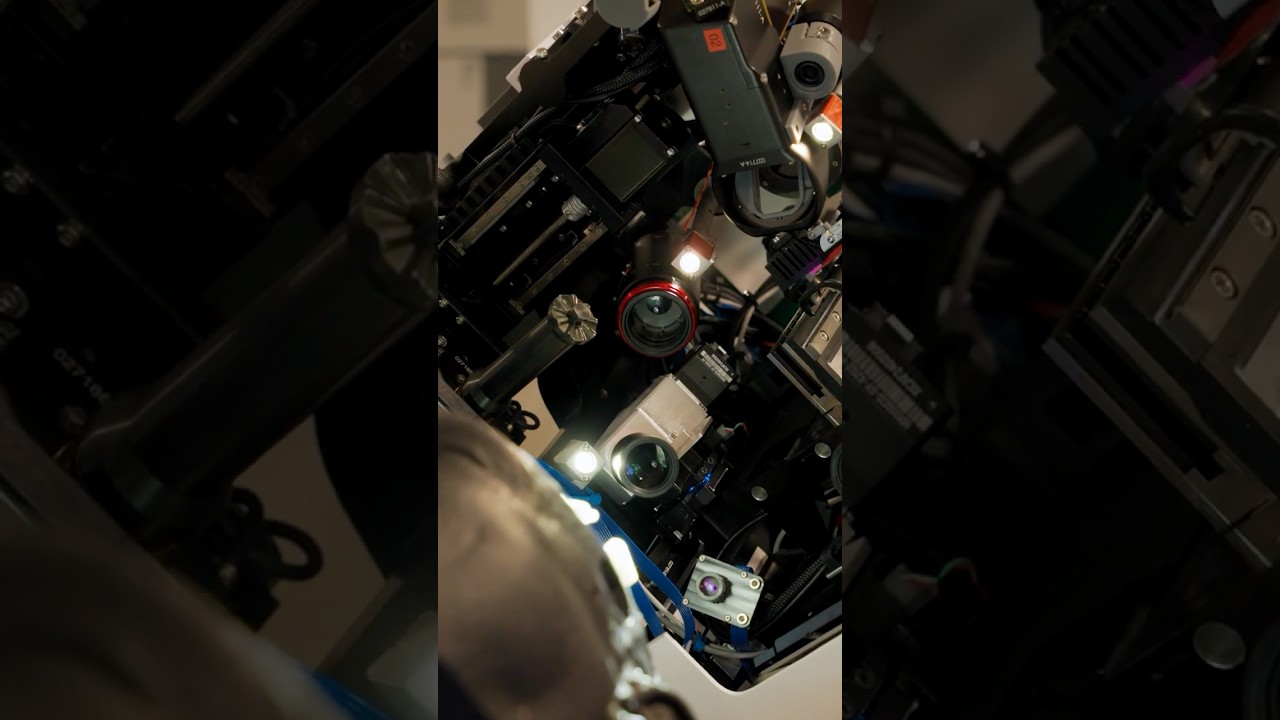
Neuralink exists to bridge the gap between humans and computers. And we've developed a robotic surgery process to deliver this groundbreaking technology to as many people as quickly as possible. Here at Neuralink, the robot is critical to our surgical process. After the surgeon has created the opening in the skull and lined up the brain to the robot, the robot's role is to grab threads off the implant and insert them into the brain. The reason we need a surgical robot is these thin, flexible electrodes are almost impossible for a surgeon to place one by one. Imagine placing a single strand of hair into jello, and then having to do that hundreds of times. In the early days, This was like very much a research project, and we didn't really have much focus on usability or mass production. We went through many, many iteration cycles, improving the actuators, the optics, the needle design, and eventually we got to a point where we were internally convinced that this had some major legs to it, and we could go to our first human surgery. After our first successful surgery, it was a huge weight off our shoulders. It was like, all right, it worked for one person. How can we bring it to thousands or millions more people in the future? We are constantly learning new things. We always look at what could be better about this robot. Nobody actually goes to engineering school trying to make 5% improvements to a product. We all studied this so that we could make the 10x jump. And when you start thinking about how do you make a product 10x better, your solution space opens up entirely. This next generation of the robot is faster, it's easier to use, and it's more scalable. This is really exciting for us, because it allows us to reach more people, into more regions of the brain, across the world. The components here are the NC which is where the needle is. There's the implant that's held on by the implant holder. There's the implant arm. And one interesting thing about the implant arm this is a previous generation implant arm. And so we shrunk this whole thing down to this, which is huge achievement. Then there's other components like the sensors. We've got cameras over here. There's in total eight cameras. There's a OCT system which stands for optical coherence tomography. This sensor allows us to see through the surface. So this robot has to move in five axes to reach all the regions of the brain. So if you imagine the craniectomy has to be here, but for a different region in the brain the craniectomy might be here, so the robot has to adapt to that. It's important to reach more regions of the brain, because every problem has a specific location in your brain. If you want to solve motor problems, it's a different region. If you want to solve vision problems, it's a different region. We're never going to stop iterating. making progress. We want to solve every problem that originates in the brain. Long term, we’re looking at ways to increase the depth and accessibility of the robot, and then also continuing to streamline the surgical process. This is an exciting paradigm shift in how humans approach medicine. We're taking engineering principles and applying it to a field that historically has not had them applied. How do you make a specific step more repeatable, more reliable, faster? When you think about the future of the surgery, you have to think about the whole door-to-door experience. The robot is one part of that experience. We have to think from first principles, how to solve each step and how to combine them together to provide an amazing experience that compares to Lasik surgery. We know that this approach works, now we get to the exciting part. How do we build the best product off of that base architecture? The robot itself is not in its final form. We want to go faster, we want the threads to go deeper, and help thousands more people. I think we're going to look back and our grandchildren are going to think it was crazy that somebody could get in a motorcycle accident and never walk again. That's what we're working towards here. And it's all going to be because this robot was able to insert threads that no human could imagine doing on their own.

Другие видео автора — Neuralink

Ctrl+V

Экстракт Знаний в Telegram

Экстракты и дистилляты из лучших YouTube-каналов — сразу после публикации.

Подписаться

Дайджест Экстрактов

Лучшие методички за неделю — каждый понедельник