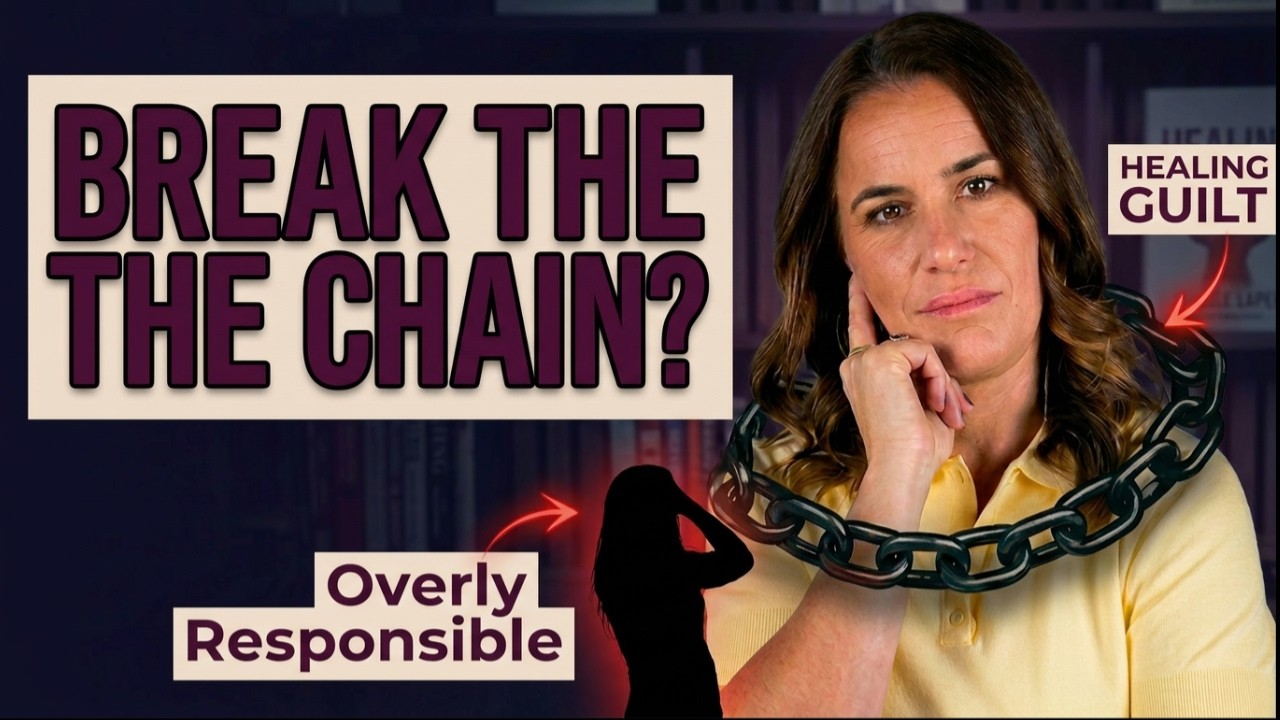
The Invisible Guilt: How Narcissistic Fathers Damage Their Daughters
8:47

The Invisible Guilt: How Narcissistic Fathers Damage Their Daughters

The Holistic Psychologist 16.05.2026 17 717 просмотров 1 272 лайков

Machine-readable: Markdown · JSON API · Site index

Поделиться Telegram VK Бот
Транскрипт Скачать .md
Анализ с AI
Описание видео
Do you still feel guilty even when you did nothing wrong? If you grew up with a narcissistic parent, guilt wasn't something you felt occasionally. It was built into you. You learned early that love was conditional, that your worth was tied to managing someone else's emotions and that responsibility for everyone around you was yours to carry. This isn't a character flaw. It's a survival response that started in childhood and never got the memo that you're safe now. In this video, Dr. Nicole LePera breaks down: •Why daughters of narcissistic fathers carry a specific kind of invisible guilt — and where it actually comes from •How feeling responsible for everyone around you is a direct result of conditional love in childhood •The core foundation that was supposed to teach you what love is — and what happens when that foundation is built on compliance instead of connection •Why the guilt "never goes away" — and what it actually takes to begin releasing it Keypoints: The Guilt That Never Goes Away: Narcissistic Parent Survivors 0:00 Why you feel responsible for everyone 0:15 Daughters of narcissistic fathers 0:41 Core foundation for love 0:52 what is a narcissistic father? 1:22 Narcissism on a spectrum 1:31 Earn love 2:25 Abandonment wound 2:38 The caretaker 3:00 Parentification 3:20 Problems weren't yours 3:30 Triangulation 4:32 Self Worth 5:29 Eggshells 6:25 Pity 7:22 What you needed 7:37 Anxiety 8:09 SelfHealers Circle 8:37 Reflection __________________________________ 📖 Order my new book Reparenting The Inner Child: https://www.amazon.com/dp/1250393132 🔒: Join my private SelfHealers Circle community spaces are limited: ENROLL now: https://selfhealerscircle.com 📚: Order my previous books: https://theholisticpsychologist.com/b... "How To Be The Love You Self" | "How to Meet Yourself" | "How to Do the Work" 🎁 Get my FREE Relationship Future Self Journal: https://theholisticpsychologist.com/r... ____________________________________ 📲 Let's stay connected: Instagram ➤ / the.holistic.psychologist TikTok ➤ / theholisticpsychologist Facebook ➤ / theholisticpsychologist X ➤ / Theholisticpsyc #narcissisticparents #covertnarcissism #narcissism #narcissist #nervoussystemhealing
Оглавление (18 сегментов)

Why you feel responsible for everyone

Hi everyone, Dr. Nicole LePera, the Holistic Psychologist here. And today, I'm going to talk about why you feel responsible for everyone if you're a daughter of a narcissistic father. Now, there is so much information about the daughters of narcissistic mothers, but there's much less information out there

Daughters of narcissistic fathers

about the daughters of narcissistic fathers. And if you follow my work, you know I talk a lot about the importance of a father figure. And by father figure, I don't just mean a father who's present in your life, because let's face it, fathers can be physically present, but emotionally absent. I'm talking about fathers who are actively emotionally present. For a daughter, fathers set the core foundation for not only how she loves others, but for also what she accepts in love herself. And

Core foundation for love

narcissistic fathers give a dysfunctional foundation of what a relationship is and how women are meant to be treated. So first, what's a narcissistic father? It is someone who's

what is a narcissistic father?

extremely emotionally immature and usually has some form of severe arrested development. They truly don't know how to communicate, how to express their feelings, or even how to consider other people. And in more extreme cases, they can see their partners and even children as a burden. Or they see them as something to weaponize or to control. Now, the impact on us will all depend on how many of these narcissistic traits that your father has. Narcissism, in my opinion, exists on a spectrum. But all these traits that we're going to talk

Narcissism on a spectrum

about will usually apply if you have a narcissistic father. So now, let's talk about the dysfunctional love standard that a narcissistic father sets. With a

Earn love

dysfunctional father, you usually end up feeling like you have to earn love. If your father gives love conditionally, whether it's based on performance, compliance, or even his mood, you end up learning that love isn't freely given. It's actually a reward. And this is where you start to overwork for love. And if you're thinking that this sounds familiar, it's probably because you might do it or feel it in your relationship. You still believe that you need to work for love. Or you probably still find or try to change partners who are emotionally unavailable if you have a narcissistic father. Being chosen ends up feeling more valuable than being respected, and this is a big one. You've probably been in dysfunctional relationships where people might have asked you why you even stayed, and that's because you're used to staying with someone who doesn't really give you approval. You don't think about, or at least not consciously, "Okay, I'm not getting my needs met here. I'm not being respected. " because you have such a

Abandonment wound

strong abandonment wound from your narcissistic father. Instead, regardless of how you're treated, it becomes, "How can I get this person to stay or not to leave? " Related to that one, if you've had a narcissistic father, you usually

The caretaker

end up taking care of other people's needs. A common dynamic with narcissistic fathers is that they overly rely on their daughters. And I've worked with a lot of people who have heard so many bad things about their mother from their father. Or they became their father's therapist. Or maybe when they saw their parents get divorced, their dad was so emotionally wrecked from the divorce that they felt

Parentification

like they had to encourage him, even parent him. And this is called parentification. And people who grow up parentified tend to be attracted to partners who are irresponsible and who are seeking caretaking. It's a familiar pattern for you because you know that role so well. If you've had a narcissistic father then, you often end

Problems weren't yours

up getting pulled into other people's problems. And this one is really important and it goes right along with parentification. If you grew up with a narcissistic father, you probably experienced triangulation.

Triangulation

Triangulation is where someone uses a third person to pull them on their side or to do something on their behalf. With a narcissistic father, this can look like him telling you to hide something from your mother, saying, "Don't tell mom. " Or it can be him telling you to convince your mother of something. And sometimes triangulation involves boundary violations where your narcissistic father is telling you inappropriate things about his relationship with your mom, maybe about their sex life, or how your mom makes him feel unloved. And this does serious damage because it creates a lot of conflict and confusion in you. First, because you're too young to developmentally understand any of these adult issues. And it puts you in the middle of your parents issues, which can create a lot of anxiety. With healthy parents, a child's needs come first. With narcissistic parents, there's almost always a clear disconnection that they even have a child. Narcissistic fathers will talk to their daughters like she's a peer or another adult without any awareness of the consequences that might have on her. As a result of all that, if you had a

Self Worth

narcissistic father, you usually end up struggling to feel good about yourself. A lot of narcissistic fathers are extremely immature. They make fun of their children. They make comments about their bodies. Or they mock their wives in some way. Now, of course, this might feel harmless at the time, but your parents are truly meant to affirm the good in you. They're supposed to be your sense of support and care. And these jokes can really have long-term damage around how you see yourself and your body. One of the most common things that I see from this is an inability to accept compliments. As an adult, when someone compliments you, it can feel really awkward. And you might even end up saying things like, "Oh, yeah, it's not that great. I'm not that great. It's not that nice. " Sometimes I even see people who just become really sarcastic. Ultimately, this is a sign that you might not be comfortable in your own skin. Growing up with a narcissistic father, the whole intention of the house becomes, "Don't upset dad. " Or when he's upset, let your father be. This moodiness is extremely common in

Eggshells

narcissistic fathers. Because remember, they don't know how to cope with their own emotions. And without emotional regulation, they often end up escaping to their chair, to the basement, or spend most of their time alone. Now, of course, all of us need healthy time alone. But any of you who grew up with a narcissistic father probably understand that this is less about getting alone time to decompress and more about emotional neglect. And on a deeper level, you're actually seeing your mother get breadcrumbs from her partner. And a part of you learns that it's okay to accept not getting your needs met. You don't see your father showing consideration for your mother, taking her out on dates once in a while, or really doing things to make her life easier. You actually see the opposite, which is your mother doing all she can to make your father's life easier. Almost all daughters of narcissistic fathers end up feeling one common feeling, and that feeling is pity. Take a look at this checklist to see if you felt any or all of these

Pity

things about your dad. One, did you feel like your dad couldn't take care of himself? Two, did you feel like your dad wanted to be a better parent but didn't know how? Three, did you feel like your mom was at fault or that she should have done better? Four, did you feel like your dad didn't mean to lose his temper when he did? Five, did you feel like your dad's drinking or harmful behaviors were caused by the family? Six, did you feel like your dad had no control at all over his life? Seven, did you feel like your dad never caught a break? And eight, did you feel like your dad's struggles with money made him unhappy? Now, pity is a common end result of having a narcissistic parent because they've conditioned you to believe that they're always a victim of circumstance, and you've always been conditioned to excuse them. Probably from your mother who had no choice, and probably because he always had a steady line of excuses. So, over time, you end up feeling like your father is someone who truly can't catch a break, and that you have to give up parts of yourself and your life to help him. And what a daughter needs most in her life is a male figure who's

What you needed

responsible, hard working, and has integrity. Instead of feeling pity, what she really needs is to feel protected and cared for by her father. But the narcissistic daughter just doesn't get that. She gets feelings of guilt and almost always anxiety because anxiety is the end result of growing up in this

Anxiety

type of family system where you up taking on way more than you were meant to, and becoming way more mature for your age. So, if you've grown up with a narcissistic father, the first thing I want to tell you is that there is absolutely hope for you. Just by learning more about your father, you're already starting the healing process. You can now learn clear boundaries and have a higher expectations in your own relationships. I've seen many daughters of narcissistic fathers end up in healthy and connected relationships. If you want to work through this, my membership Self Healer Circle is dedicating a whole month of healing to

SelfHealers Circle

covert narcissism. You can become a member for just $26 a month, and have access to group therapy, workshops, and so much content that will completely guide you on your own healing journey. I hope you found this helpful, and I hope you know that you've always deserved better. You were never meant to earn love, to manage someone else's emotions, or to carry what wasn't yours. What you needed was safety, consistency, and care. And it's not too late to give it to yourself now. For those of you listening, I would love to hear from

Reflection

you. Which pattern from your relationships with your father do you see showing up most in your relationships today? Leave it in the comments below, and as always, thank you for listening.

Другие видео автора — The Holistic Psychologist

Ctrl+V

Экстракт Знаний в Telegram

Экстракты и дистилляты из лучших YouTube-каналов — сразу после публикации.

Подписаться

Дайджест Экстрактов

Лучшие методички за неделю — каждый понедельник