You probably suck at games but are being lied to, but how exactly do games implement difficulty sliders in games based on your skill?
Check out my next unhinged video:
https://youtu.be/QuBpfNX8HIk
Wishlist my hardcore precision platformer:
https://store.steampowered.com/app/2862470/BUMBI/
Get my games:
https://store.steampowered.com/app/2978180/Desktop_Cat_Cafe/?utm_analytics=YouTube
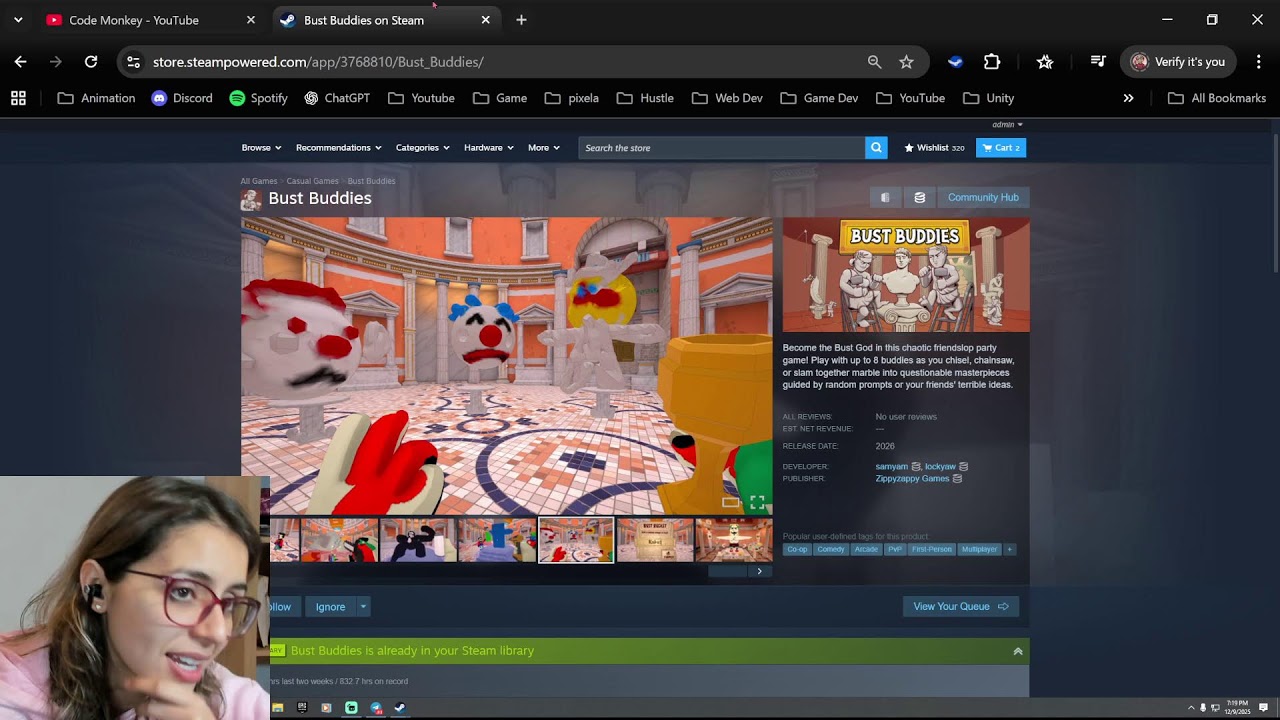
https://store.steampowered.com/app/3768810/Bust_Buddies/?utm_analytics=YouTube
Most games help you in the background, whether that be through coyote time or input buffering, rubber banding, or the more notorious method Dynamic Difficulty Adjustment or DDA. In this video I explore various methods companies like Nintendo, EA, Capcom, and Valve use to keep you hooked on their games.
Sign up for my awesome newsletter + all my links:
https://samyam.dev/
Join the free discord https://discord.gg/pRPNyACWdQ
@ContextSensitive Background music
*Correction - Maddy Thorson
#gaming #steam #valve
When I was 12 years old, I believed myself to be god tier at Call of Duty. I'd always be in first place sniping noobs across the map, and I even started my own clan to make cringy edits that no one would see. But what I didn't know was that I was the one being played the entire time. You see, most games make you think you're smarter than you actually are. And there's a really smart reason why they do it. And once you know it, you won't let any game take you for granted ever again. So, let's dissect some of your favorite titles you didn't know were lying to you. You might need some therapy after this and look at some of the ways they control their difficulty based on your skill level. And the third one is so sneaky even I didn't see it coming. And it's the reason EA got sued. Well, one of the many, many reasons they got sued. Let's get into it. In pretty much every game where you control a character, you may have noticed something super subtle while jumping around. I noticed it myself when I was making my own tough platformer game when I kept dying at every other jump. It's not a skill issue, guys. It's called Coyote Time, and yes, it is named after this guy right here. It's basically a little buffer that the game gives you to jump after you've left the platform. And usually it's about five to six frames long or 83 to 100 milliseconds to do so. Uhhuh. But it works both ways as input buffering also lets you press a jump button before actually reaching the ground. So once you reach it, it can jump automatically. It's kind of like laughing at a meme before you finished reading it or how I laugh at my own jokes. I think games like Celeste, Hollow Knight, and Super Meat Boy all use this trick. And this way you can easily time hard jumps. Otherwise, players would get very frustrated and not the fun kind. This is not the fun kind. So, all of those precision platformers aren't as precise as you think. Oh, but the next trick is called rubber banding. But no. Oh my god. But no, it's not an actual rubber band. It's a much stretchier subject than that. In fact, unbelievable to no one, Nintendo is the main culprit of rigging your childhood, specifically with Mario Kart. You know that feeling of being first place so far away from every other scrub that there's no possible way you could lose until you get blue shelled and then red shelled and then green shelled and heck, you might as well collect the whole rainbow at this point because now you're in last place and you were the sucker all along. Well, Nintendo actually does this on purpose to snap your confidence in half. I'm not going to snap this. You see, every item in the game has a different probability. And the further you are away from the front, the better items you always seem to get. But that's not all because researchers, yes, Mario Kart researchers, nobody told me about this at the job fair, uncovered that the actual NPCs themselves physically speed up or slow down depending on how far away you are from them. They ran emulator scripts on Super Mario Kart and found that the AI completed the race 20 second faster if you were in first place versus last. And you can get a lot and done in 20 seconds allegedly. But why does Nintendo do this if it's the source of so much frustration and broken friendships? Well, it's simple. It's so the game stays fun and competitive for everyone at the table. Even for your little cousin that keeps falling off the sides. It's better for you, though. Nintendo wants to keep you at that sweet spot between winning and losing, giving you just enough hope that you'll say, "Just win more time. One more time, please. " So, while Nintendo wants you to have fun, EA has a very different reason for doing the same thing. For years, FIFA players, yes, they exist, would complain about the momentum of the game. Your star athlete would be about to shoot the winning goal and then he fumbles and suddenly your shots start missing like crazy. Now, while EA denied having anything to do with this, and I know it's kind of hard to read this, I need a better projector. In 2016, they conveniently filed a public patent describing a system to automatically adjust the difficulty of the game, a system called DDA, or dynamic difficulty adjustment. There we go. But while they claim not to have used it in game, what's the exact system they're hiding? Well, the patent describes four subsystems working in harmony until the Fire Nation. Okay, I'll stop. And for this guys, we need to bring out the big pointer for big points. The first one sets the rules. Think of it like a hidden settings menu. It decides how hard the game should be based on your performance. The second one would group you with other FIFA players. Yes, they still exist. Who behave similarly to you and not by skill, if that's even a thing in FIFA, but by your spending habits and playing patterns. Are you a grinder, a spender, or a quitter? EA knows all. The second to last one is kind of creepy. It would predict
Segment 2 (05:00 - 10:00)
how long you're going to keep playing the game before you rage quit or have better stuff to do. Low bar, I know. So, it allegedly changes the game to keep you hooked longer than you normally would. It's kind of like a casino that locks the exits right before you're about to leave. Or that one church. And the fourth subsystem, I'm holding up a four inside here. You just can't see it. Or maybe I'm lying. It's the brain behind the brun. Every time you play the game, allegedly, you give it more data so it becomes better at predicting and manipulating you. So, you end up thinking you're actually better than the game, but the game is just getting better at you. Allegedly. Everything is allegedly here. Players claim that EA deliberately made their teams weaker to push them into buying more card packs. If that's not pay to win, I don't know what is. So, of course, they got mega sued in 2020, but they ended up open sourcing their code to the plaintiffs and the lawsuit was dropped. But nobody fully believes them cuz it's EA. Come on. I guess that's what happens when you're the boy who cried wolf. Except the wolf is a patent filed in your own name. NDA wasn't alone. Activision, another very non-greedy company, filed a similar patent for their multiplayer matchmaking system that would pair you with other suckers who spent their hard-earned cash on the game, making you want to own that gold shiny digital gun. But that's a whole another video. Now, EA does this to help you reach the ultimate flow state, the sweet spot between boredom and frustration or anxiety. It's a state I reached while writing this big, beautiful script. Yeah, I'm about that. I'm about that. Now, in the 70s, a psychologist named this, I am not going to attempt to pronounce this, discovered it after being fascinated with artists who would just seem to get lost in the sauce after completing their masterpieces. It's a magic zone where you completely lose track of time, even forgetting to eat because you're so engrossed in the activity that you're doing. Look at that focus. Pure focus. On the flip side, these other two psychologists coined the term loss aversion where losing feels twice as good as winning. So EA of course takes advantage of this by introducing a losing streak after you were winning. So, it feels doubly painful and you want to do anything you can to restore your former glory, even if it means paying hundreds of dollars to form the perfect team. He's very happy with that card pack. Are you winning, son? But here's the ironic part. EA didn't even invent this system. Instead, they just found a way to monetize it because Capcom got there first. Unlike EA, Capcom wasn't doing it for the money. They just wanted everyone to hear what are you buying one last time. And to complete the full story of Resident Evil 4, of course, not quitting when the going gets tough. To accomplish this, they created an internal score called game rank. A scale from 1 to 10 that tracks your accuracy, damage taken, deaths, and how many items you burn through. What do you think your rating would be? I'm a 10 out of 10. So, the better you play, the higher your score and the more difficult the enemies get, becoming more aggressive, dealing damage, and spawning more of them. And vice versa, if you suck, there's only going to be a few scattered throughout the map that's probably going to run away scared when they see you coming near them. One perfect example of this is the crossbow archers in the castle's water room. These guys only appear if you perform well enough in the previous section. Honestly, maybe being bad at games was the meta all along. And here's the surprising part. Capcom didn't tell anyone that this system existed. It's not even in the patch notes. Instead, some nerds found it while digging through the code. Curiosity, in fact, did not kill the cat. They exploited it by intentionally taking damage and dying early in game to make the lighter section enemies easier to kill. But instead of doing the usual AAA switch up and patching it, Capcom decided to keep it as a Hallmark system on how to keep your game alive for many years to come after launch. Now, you may be feeling a little betrayed right now. The games you loved were lying to you this whole time. But I want you to remember this feeling because we'll come back to it in a little bit. This is you, by the way. But first, what if a studio did all of this, but instead of lying about it, they advertised it? Well, Valve, yes, this guy did exactly that with Left for Dead, one of the best co-op shooters to ever exist. Hands down. Hands down. Instead of calling it a difficulty system, he branded it as an AI director back when AI was cool. Just like a film director deciding when to build tension and when to give the audience a breather, it's basically a big brother that's always watching you and your friends play and getting smoked constantly cuz one of y'all always
Segment 3 (10:00 - 15:00)
got to keep running off like what are y'all doing? The big director does this in four stages. And for this we need to bring out the big pointer. First we have that buildup when you hear that terrifying sound and you hear the horde of enemies coming to mass mob you. Then you have the peak when you're in the sauce fighting for your life, running out of ammo and on the last matted pack. And then the fadeoff or the spawning of the enemies kind of slows down and those little suckers start to die off and then the silence that comes after the calm before the storm. And don't you think that the big director isn't paying attention to all of this? If your team's health is critically low, that means you suck. But you're going to start finding painkillers in some really random places. And you might think, "Wow, these zombies really have kind of a drug addiction at this point because this isn't normal. " It treats the team as a single unit. So technically, when you die, it's everyone's fault. And it manages everyone's stress levels. So if you just got mobbed three times in a row, your possibility to get mobbed a fourth time is much lower. But your buddy over there who's been coasting and cruising the whole time should start sleeping with one eye open. But Left 4 Dead isn't the only one pulling the strings in the background. Naughty Dog uses a similar system in The Last of Us, and they just so happened to be about zombies as well to adjust their aggression, their damage, and the availability of items. As if the clickers needed any help with that, but okay. Now, EA, Capcom, and Valve have all used the same system, but Left 4 Dead had a good feeling associated with it because Valve was transparent about it. Who knew that communication would be the key to a successful relationship? But while Left 4 Dead reacts to you, Forza does something completely different. It learns how you race over time and even races against you while you're offline or asleep or both. And that's some really cyberpunk stuff right there. They create a drivear and yeah, that's a name trained on neural networks on millions of real player laps and races in other players games earning you credits while you sleep. Now, that's what I call making your money work for you. It even picks up on your bad habits. So, if you cut corners or break late, then you should have your license suspended for the safety of the general populace. Now, every system we've looked at so far. Mario Kart, Resident Evil, and Left 4 Dead, they all have something in common. They decide how hard the game should be. But there is one studio that refused to make that decision entirely and instead lets the player suffer. Very Darwinist of them. Is that how I say that word? Darwinist. Dark Souls. You're either good or you're not. You get no difficulty settings, no adaptive AI, and nothing that would make you feel good about yourself. In Miyazaki's own words, and no, not the Studio Gibli one. I got confused, too. If we really wanted the whole world to play the game, we could just crank the difficulty down. turning down the difficulty would strip the game of that joy, which in my eyes would break the game itself. In other words, he's probably a little bit of the sadist in a way, with all due respect. All jokes aside, he really frames it as fairness because everyone has the same opportunity from the start, except that one guy who played it with one hand. That's just insane. But if you think about it, real life, you don't start with the same opportunities. On the flip side, you have games with infinite menus and a ton of accessibility settings. With Celeste, one of the hardest platformers that was ever made, you have a full assist mode. You can slow down the game, give yourself invincibility, and even award yourself with some extra dashes. The developer, *Maddy Thorson, said, "Ultimately, we want to empower the player and give them a good experience, and sometimes that means letting go. Sometimes accessibility and difficulty aren't mutually exclusive. And I am losing my voice a little bit here. This does pose an interesting question though. Is dynamic difficulty even ethical? If a game is always softening the blow for you, will you ever grow? I mean, real life doesn't soften the punches punches. It's kind of like using chat GPT. At some point, we're not even going to be able to think for ourselves if we just keep relying on these external systems to do the thinking for us. So maybe the game beating you is the point. In my opinion, it doesn't really matter unless you do what EA did. Obviously, make the game you want to make. And if people are going to complain, then let them. Too bad. Wmp. There's always going to be people complaining. Heck, just look at some of the comments below. Yeah, I'm calling you guys out. Players will always find fault with something. Is it manipulative to them? Maybe. Does it matter if they're having fun? I don't think so. So, while most of your favorite games were lying to you, some of them were lying to help you. A little white lie. It's kind of like when you promise your great granny on her deathbed that you're going to get married within a year. And if you want to keep learning how games work,
Segment 4 (15:00 - 15:00)
I have two splendid videos right here. And oh my, and you should wishlist my platformer with no difficulty settings. It's down below. Boom. Bye. What are these two?