Proving Äiwoo is Oceanic was hard: why it took linguists decades to recognize a non-Papuan language
17:06

Proving Äiwoo is Oceanic was hard: why it took linguists decades to recognize a non-Papuan language

NativLang 29.05.2026 47 583 просмотров 2 917 лайков

Machine-readable: Markdown · JSON API · Site index

Поделиться Telegram VK Бот
Транскрипт Скачать .md
Анализ с AI
Описание видео
This language is spoken along a remote reef in the Pacific Ocean, far from the nearest continent and from its nation's capital. Here's why "Reefs", along with a few standout languages one island over, were challenging to classify. My sources: https://docs.google.com/document/d/112CCpbi48_YsVN_id22iyxnPvF7se6fTK7qJyodzd0s/ Subscribe for more: https://www.youtube.com/subscription_center?add_user=NativLang Patronize me per creation: https://www.patreon.com/NativLang Tip me once: https://www.ko-fi.com/NativLang ~ Shortly and sweetly ~ First, we meet the languages of the Reef Islands and Santa Cruz islands. Then, a short history of outsiders trying to understand these "difficult exceptional languages" with their "Consonants and Vowels varying continually" leads us to a 1978 debate over the language family. Are they Papuan at their heart but with Oceanic influence? Or Oceanic to their core? Archaeological and linguistic studies converge on a picture of the backstory. Contacts over time show up in the vocabulary. Finally, sound changes end up being a major reason. Syncope, truncation, lenition and vowel changes conceal the original Oceanic shapes of the words. Rewinding these, for all their changes, we can see how the languages managed to preserve two key properties of the old Oceanic pronunciation. Thank you for watching my animation about the Temotu group of Oceanic languages! (Credits: art, narration and music by NativLang, but please see my sources document above for details) Background study for this video reminded me to relink groups to support (from my previous Langriculture project): https://docs.google.com/document/d/1ywiOfzN5FZt2sh7s3V8EfCB54vUoHg4iA1VevAxgZeU/edit?tab=t.0#heading=h.8iwaseaw0ce6

Оглавление (4 сегментов)

Segment 1 (00:00 - 05:00)

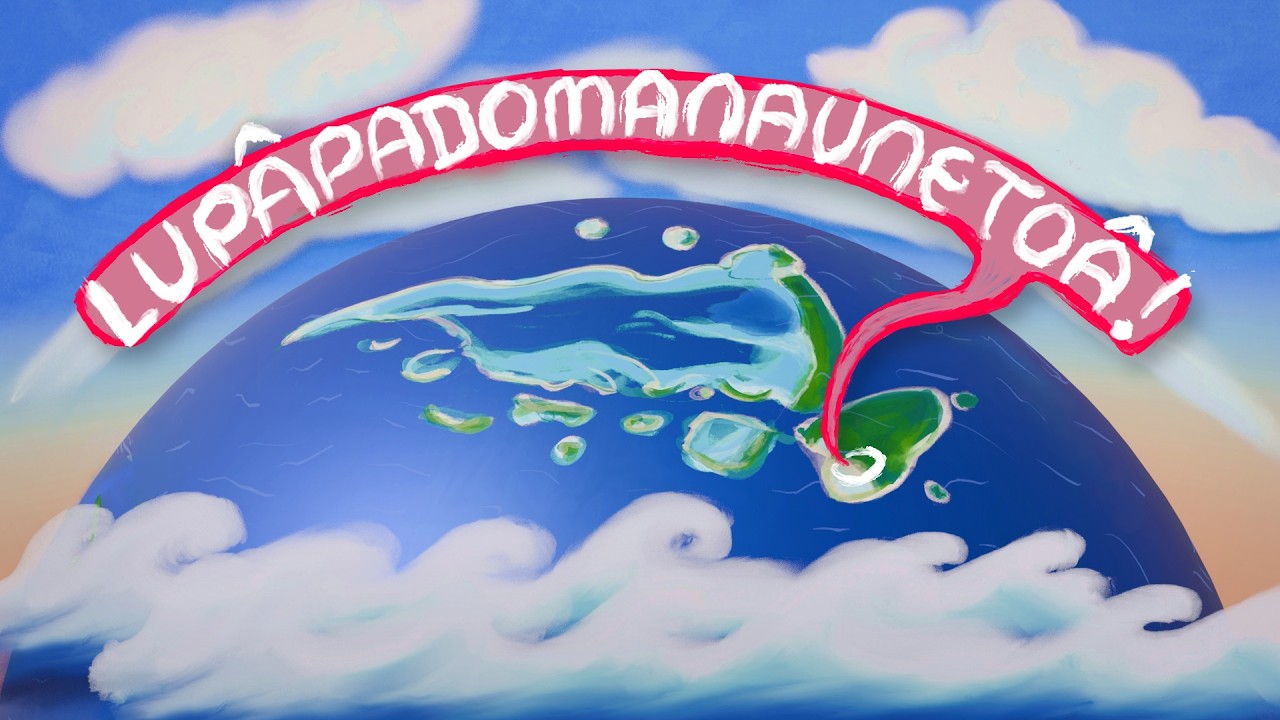
There's a language heard along a reef out in the open Pacific. Despite being located on the imperent fringes, it's one I've come across repeatedly while animating other linguistic tales. Part of a small group of languages actually that stand out from their surrounding oceanic neighbors in ways that made them tricky to classify. As it has been more than a century since outsiders first labeled it difficult. And as Pacific language experts were thrown off for decades, I've got to ask, whose language is it anyway? And what made it so tough to place? In the southwest of the Pacific, just beyond the ring of fire, there rises a crest of land that then ribbons out over a great reef and on toward the active volcano Tinakula. These are named fittingly the reef islands. The languages spoken here besides pigeon and less English, back to them later, are two. Some speak to Leoa vayako. Long ago recognized to be Polynesian. Called an outlier. It falls outside the contiguous triangle of Polynesian languages. But like most Pacific island tongues, it is securely and indisputably among the oceanic Aranesian languages. I mean, check out the crab claw sail. Without a doubt oceanic. The same cannot be said of the more widely spoken language rooted in this place. One traditionally called our language but written about under the coined name a reef language or reefs. Quite unlike viaotomaku awol would cause confusion that had landed in the center of hand ringing and debate. On one hand, its sounds and structures seem at a glance at least vaguely oceanic. Then again, among the many small roots and aixes, element after tiny element bears no obvious resemblance to oceanic. Actually, you know what? We could be here all day listing features throughout this video. Let me set up two through lines for us to track and to keep our canoe life and our journey smooth. Nouns and verbs. big verbs, very big verbs with complexes of stuck on parts like this one. And nouns, they so often have an initial n plus vowel and so on tacked onto a short root or they instead start with a t plus vowel. If this tongue is anomalous, it's not alone. The Reef Islands lie near Nendo, the largest of the Santa Cruz Islands. Santa Cruz. Does that not sound oceanic to you either? Okay, then I'll just jot a note here somewhere. Back to that in three sentences. First, know that these islands chain onward to Utupa and Vanikoro. The five languages of Nendo North, four from Nendo and Reefs being the fifth, all share in these standout features. Thus, they were grouped as the reef's Santa Cruz languages. That Spanish name comes from a ditched colonization effort in the 1500s after one ship didn't quite make it past the volcano and the expedition's leader perished on Mendor. But who knows the Pacific knows that outsider study of language starts with a mission, literally. And so it was here. In the late 1800s, missionizing Anglican reverends passed notes to each other and ended up giving outside observers rough draft sketches of these difficult exceptional languages with their consonants and vowels varying continually. You maybe have already noticed some extra vowel symbols. Well, the typical oceanic system, including in Vayakoto, has five vowels. These diiocritics help keep track of the richer reef's Santa Cruz vowel inventory. It'd be the better part of a century before an Australian linguist gathered up detailed examples of words and sounds and grammar and then a French linguist worked with a speaker from Teotono to check and expand on dialectal details. At the end of her sketch, she ventures a little concluding remark that ripples into our debate. We choose instead to connect the dialect to other identifiably oceanic languages. Contra instead. Instead of what? That's the challenge. The question is taken up in two backtoback papers with opposing views. The Australian who came in with the data dangles before us

Segment 2 (05:00 - 10:00)

features that stick out sorely. Though half of the words do seem oceanic for ostensibly oceanic languages these are highly apparent. He says I have a long list I've documented many points from this rare sound IPA charts refuse to acknowledge to well those nouns and verbs. So nouns prefixed with a n and then a vowel seem to contain an intricate noun class system. Separately, there are up to four different grammatical gender markers. And those verbs, yes, those verbs are so very elaborate, clumped complexes of little slots. It's all reminiscent of old grammatical features to the west. To the west, where languages are Papuan. So he says, "My position favors a takeover scenario. Originally Papoan speakers of Reef's Santa Cruz languages underwent layers of intense influence but never abandoned their language only adapted it mixing in words and structures but all along keeping a fingerprint that is not accounted for by old family tree models of language. Instead of focusing on oceanic, we should tie them to the Papua sphere and in fact bestow on them the honor of anchoring its easternmost edge. Versus this, the pro oceanic position admits to being more modest, speculative even. These languages are unique enough that I don't know how to draw a straight line to them. But it's a bad habit to label aspects of Pacific cultures we can't pin down Papuan. The way their features work and what they mean feels so familiarly oceanic at every turn. I can't prove it. And yet I expect vindication because I think I find parallels to each supposedly Papoan point within Oceanic itself. So working idea reefs Santa Cruz languages are directly oceanic but they changed over a long period and along the way they took on layers of indirect influence. terms of debate set, references to it undulated out in mentions of mentions until I met it cited in the 2000s with acknowledgment that it is unsettled or maybe was. Well, how do you best the guy who collected the words? Go back, collect more words. At the very moment I was on the other side of the Pacific reading quotes, throwing up hands at the matter, little did I know archaeologists were puzzling out the long history of settlement here while a linguist was setting off to work with a speakers. Their destination is today's Teotu province, the most remote part of Solomon Islands. To our eyes on a map, remote, but and people in the field can remind me where I got this. For oceanic peoples, all this water looks like bridges, not barriers. And that's our Papuisphere's first big snag. Well, prevailing winds and obsidian trade might have suggested a slow Papuan drift through central Solomon Islands to someone writing in the 1970s. Archaeological finds like this stamped pottery point back to an early proto oceanic culture some 2,000 km north skipping or leapfrogging Solomon Islands altogether to arrive in Teamu as early as 3,200 years ago. This paralleled the picture emerging from the renewed linguistic attention that menagerie of noun genders and classes. Actually, they're more like possessive and nominalizing elements with analogous structures in Musau 2,000 km to the northn northwest. The verbs that' take another paper. So, let's read it. Okay. another paper or three after which you'll find that the complex verb complex cuts and breaks into pieces full of neat oceanic parallels. A standout example is cut and break verbs. Exactly the sort of thing you find in pop linguistic lists of did you know in this language there's a whole specialized grammar dedicated to ways of breaking things. A complex event like cutting and breaking packs into one word, standing on and snapping, tapping and cracking open and such. Each of the two elements may take a unique shape. Some never even appear independently like simpler elements remaining stuck inside the double event. If complex verbs were placed on a cut and break scale from serialized verbs to

Segment 3 (10:00 - 15:00)

whittle down grammatical affixes, well then guess what? Again, plenty of oceanic parallels. With study, the core features were looking familiarly relatable, as in relatable to a family. reefs to Santa Cruz, then more distantly to the languages of Utupa and Vanikoro, south to the home of the one remaining speaker of Tanma. Best anyone can tell, these are three separate Teotu subgroups, and Teotu is itself a tople oceanic group. Put historically, over those 3,200 years, these languages developed on their own. On their own, but not in isolation. And understanding that takes layers of understanding outside contacts. Let's work backwards. So, the Lumlom airport opened in 2018. And flights connecting to the capital are on Thursdays. Whoever's lived in or traveled the Pacific knows this one. Often it's not when's your flight, it's what day of the week or month does the ship or plane come in. Solomon Islands is part of a large pigeon speaking stretch of the Pacific and connected to the wide world of English. Already those 1970s papers drew attention to a borrowed English word heard on Nendo. I'm going to try and pronounce this. No. Noah. Any guesses which English word is in here? H. We'll lop off the part that's in front. Got it now. W. It's the word work. Fittingly one of the three postc colonial buckets of influence. Mission and church, government, wage, labor, and western good consumption. The language of these things isn't the vernacular. It's English that looms over the high levels of society or all that's out there. And increasingly there's the language this awo word comes from. Custom is borrowed from pigeon for talking about the traditional old ways. Pigeon influence comes through school and Solomon Islands culture, but it's increasingly local, including in homes where parents don't share another language. It's what people speak today inside here. Dating to before English and pigeon, there's this noun we've seen multiple times. Besides so many Nouns, there's sometimes a different fused article spottable on the front. To speakers of Polynesian languages, hi. These are transparently two words. The island, the flatfish, the turtle. Ao adopted t article together with 10 nouns. Though the word for dog was barred without it. It's ki and not what would the proceduli instead of popin speakers taking on oceanic and completely. It sounds like oceanic speakers slowly incorporating layers of influence. For a while when kids would go off to school or family members leave for the capital on goal canal one local British shop owner let people use his personal email inbox. But nowadays, maybe that's so reefs 2012. Anyhow, for such an apparently remote location, that constant linguistic contact is only a piece of what made the Reef Santa Cruz group so hard to classify. The biggest reasons were lurking behind the noun and verb complexity. I keep bringing up the sound, the rhythm of the language, and the way it changed. And surprisingly, a key way it didn't. It reveals itself when well, let's look back at all those non nouns and do a little anatomy. Take off that initial n syllable once more. And let's look at those few sounds we're left with. Four if we're lucky. Often enough, just three or two. Not much to work with, honestly. But run the comparisons methodically with the rest of oceanic. meaning all the while you're also refining all of your oceanic comparisons from the other sides and four patterns emerge. One, in the middle of those dollops of sounds, vowels between consonants look like at some point they collapsed in on themselves. An example of syncopy. Two, what's left often seems like truncated forms of old proto oceanic words that were once longer as if they've been eroded away at the ends. Three, consonant sounds grew weaker, softened, a process called linen.

Segment 4 (15:00 - 17:00)

Four, hello, you've already met the vowels. They were changing, though I'd still like a detailed followup on the hows and wise. Thank you. shrinking inner syllables, crumbling endings, weakening consonants, shifting vowels. Ask your local phenologist. These are hardly unique processes, but they combined here to hide what had originally triggered this cascade of change. Sometimes it looks like the start of a word is being kept. Other times it's the end. And it's not random. Instead, the outcome seems very sensitive to what was long ago the stressed syllable and whether or not the original root ended in a consonant. Reef's Santa Cruz languages then set out applying the changes until roots ended up condensed and tricky to recognize, all the while still respecting the procity, these old rhythmic properties of the syllables. In a way, this left them with highly divergent and yet oddly preserved roots. Putting those roots back together into their words, which then get bound up into the complexes we've seen that distinguished how they're used today, and we can see why they took decades of work to recognize. In the end, the hypothetical far edge of the Papua sphere was never Papuen at all, but a unique top level of oceanic, the Teotu group. Thank you for joining me. On the way out, please check my pages full of sources and appreciate my supportive patrons with me. I pour much time into creating these by hand, crafting every piece from the art to the music you hear now and then. Okay, that out there. Stick around and subscribe to keep paddling with me through the waters of our world full of languages and cultures.

Другие видео автора — NativLang

Ctrl+V

Экстракт Знаний в Telegram

Экстракты и дистилляты из лучших YouTube-каналов — сразу после публикации.

Подписаться

Дайджест Экстрактов

Лучшие методички за неделю — каждый понедельник