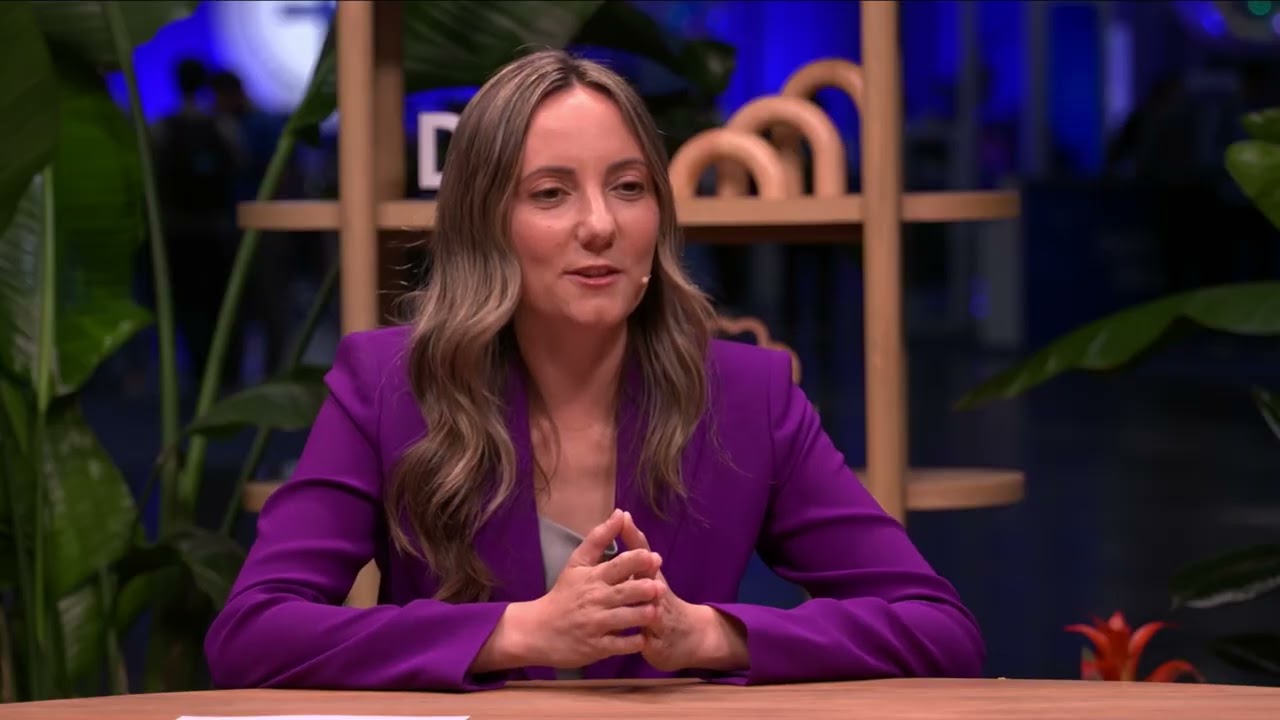
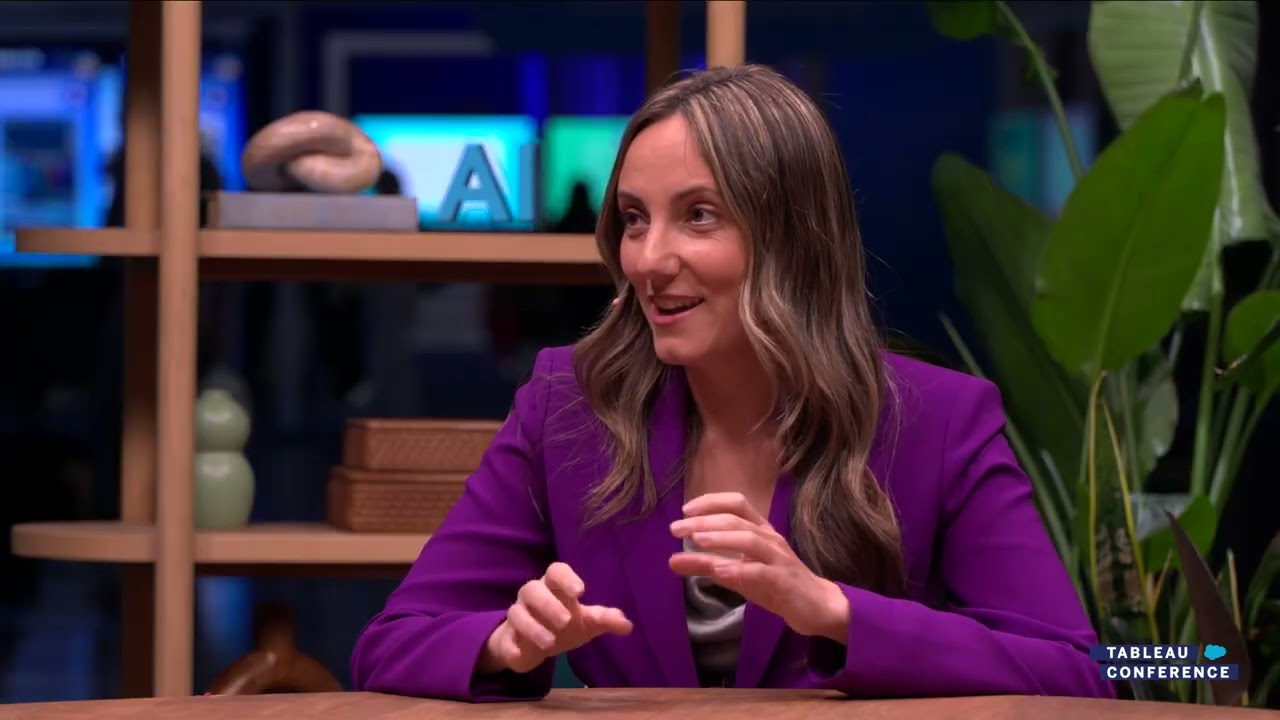
Join this conversation with Arun Dev, VP of Product Management for Equinix Fabric and Interconnection, about how Equinix is turning interconnection from a passive utility into an intelligent, adaptive layer for AI. We get into Fabric Intelligence, why geo zones and digital sovereignty have become boardroom AI governance issues, and what it takes to place and move data responsibly across hybrid and multicloud environments.
Оглавление (7 сегментов)
Segment 1 (00:00 - 05:00)
All right, hello everybody. This is Kate Tashny from the Data Cated Show. I am super excited that we have a conversation today with Equinix. We're going to talk to Arun Dev who is the VP of Product Management Equinix Fabric and Interconnection. That's a mouthful. I can't wait to hear what he actually does. And we're going to talk about Fabric Intelligence. Geo Zones and Digital Sovereignty. I cannot wait to talk to Arun. So Arun, hello and welcome to the Data Cated Show. — Hello Kate, how are you? — I'm doing fantastic. It's a beautiful day in May. It's a beautiful week ahead and I can't wait to have this conversation with you. So, first question is um your title is quite a mouthful. So I wanted to know what do you actually do and what are you responsible for at Equinix? — Uh I lead I get the privilege to lead product strategy management for our Equinix Fabric and the broader interconnection business. The short version Kate is if you an enterprise moving data between clouds, connecting to AI providers, or trying to enforce where your data can go, my team builds the platform that makes it possible. — Mhm. — Equinix Fabric is think of it as a software-defined interconnection layer that sits underneath a huge portion of the world's enterprise cloud connectivity. My job at Equinix is making sure the platform is evolving fast enough, we're innovating fast enough to meet what AI is doing to infrastructure needs, which right now is substantial. — Yes, ab- absolutely. And you know, I've always known Equinix was important, but I think since Agentic AI came out, it's importance level just shot up, right? So I'd love to hear your thoughts on why is it even more important now in the realm of Agentic AI? — Absolutely. So Equinix as most of you viewers are familiar is a digital infrastructure company. And the way I think about it is let's talk about AI first before I talk a little bit about the relevance of Equinix. AI doesn't run in one place. It runs across multiple public clouds. It runs across data centers. It runs across private clouds. Across ecosystem partners. AI's constantly moving data. It's calling services. It's making decisions at machine speed. Now, what Equinix enables is the interconnected foundation that makes all of this possible. Equinix operates 280 data centers across 77 metros worldwide. Inside one of those facilities, thousands of enterprises, cloud providers, AI model companies, network operators, all interconnect. Now, the density here really matters enormously for AI. The closer the AI workloads are to the data they need, and the closer they are to the cloud services that they depend on, the faster and more reliable they are. Now, Kate, the old model was thick a cloud, run everything there. — Mhm. — In the world of agenic, AI, you need compute from one place, data's from a different location, there's a specialized model that runs at somewhere else, and it all needs to coordinate in milliseconds. And Equinix is the place where all of this comes together. — Beautiful. So, how many data centers would you say there are? — We operate 280 data centers. We continue to build out 77 metros, and if my memory serves me right, 37 countries. — Wow. That's a lot. — large portion of the world's population are milliseconds away from one of our locations. — Very cool. Well, you know, everyone, as I was preparing to have this conversation with you, uh you know, I was looking up Equinix, and the term geozones kept coming up. So, I wanted to ask in your words, what are geo zones and why do they actually matter so much? — Uh I'd love to talk about geo zones. Maybe start with the technical description and I'll actually talk a little bit about the problem that it solves. Well, we look at fabric geo zones as a first network level sovereignty enforcement layer. You know, that operates across clouds and providers. It's built natively into Equinix Fabric. Let me step back. What problem does it solve? Networks were designed to prioritize availability and performance. When there's congestion, when there's an outage, your network automatically reroutes traffic. That's a fantastic feature that has served us well for years. But, what's changed now is if you're a regulated enterprise, that automatic rerouting may have just moved your data, whether it's your patient data, financial transaction data, across a boundary or a border you're legally prohibited from crossing. — Mhm. — The network did its job. It kept provided the availability, provided the performance
Segment 2 (05:00 - 10:00)
performance, but it created a compliance event at the same time. So, what geo done geo zones does is it eliminates risk by keeping data within defined geographic boundaries. The enforcement as I mentioned is done at the network layer itself. Traffic either flows along compliant paths or it's blocked. Full stop. That's a fundamentally different level of control that than anything you can configure inside a single cloud. Now, from an Equinix perspective, we've expanded geo zones globally. It's available in five continents. It's available in Australia, Brazil, Canada, Japan, Switzerland, the UK, the US, and EU availability is coming in June of this year. — June is like tomorrow. So, that's awesome. That's good to know. You know, as you're describing this, Arun, I'm actually picturing an airplane. So, it's almost like the data lives in an airplane and then, you know, sometimes you're sitting in an airplane they said there's a hurricane in the state, so we have to take a detour and land somewhere else. So, what you're telling me is Equinix will prevent that sort of illegal landing of that data in another jurisdiction where you're not supposed to land. — That's a great example. The way I would think about it is like you're you file the flight plan, you're planning to go from A to B and this is your flight plan says that you have to stay within uh this path and then, as you said, there's a weather event. — Yeah. — And what it will prevent is we you cannot fly over, let's say, a war zone. Because the regulation says you cannot be over a war zone, whether it's in a part of the world where, you know, there's an active war going on. And the regulation says you can't. So, that's Think of it in some similarly is we will still we'll either get you to your destination — Mhm. — [clears throat] — being compliant or we will block that path from a network perspective. Now, it's a different story when you're in a plane, so it's uh — Yeah, obviously it's not the exact same thing. Yes. — Yes, but it's very close to what you just described. — Right. So, you mentioned regulated industries, so, you know, we're thinking banks, we're thinking hospitals, and they very much have these rules where you can't share specific data across different either regions or just outside of enterprise buildings, right? So, talk about how Equinix actually helps those regulated industries. — Absolutely. Let's use some real examples. If you've got a European bank that runs real-time transactions across multiple clouds today, during normal network operation, everything is fine. But there's an outage. — Mhm. — And the network, the way it's designed today, it automatically fails over and in doing so, it routes that EU customer traffic through the UK or through Switzerland that is a compliance violation. And in this increasingly complex geopolitical world you don't think about things like oh the European Union traffic now left the European Union to go to the UK and it came back into the European Union. Similarly on let's take a hospital system patient data AI inference data for compliance and and compliance [clears throat] and sovereignty reasons needs to stay within a defined jurisdiction. Especially when it's across these hybrid environments. A government agency may have a need sovereign AI with data confined a national geo boundary will apply specific rules. And each of the countries have their own for GDPR you got LGPD in Brazil you got APRA in Australia and as a result of that is we're able to apply compliance at the network layer. This is done natively in Equinix Fabric. It's not a software policy that we add and it's more robust than what a cloud provider can offer. You can control what happens inside the environment but not across the full path that your data travels. — And you know follow up question on that why is it important that it's built at the network layer or that it's natively built in? Why can't we just put it on top of another system? — Uh got it. So the let me take a real example for that is what Kate um this is a quote that I've had which is like sovereignty can't be a setting you can configure inside a single cloud and I want to talk a little bit about that. And when you look at like data residency settings inside a cloud provider you're relying on the provider to own of that settings. Traffic that stays within that environment, this works great. We have several customers that rely on the sovereign cloud capabilities. The moment that data needs to leave that sovereign cloud to go to a branch office or a different cloud provider, — Mhm. — what you see is the cloud level settings often don't offer you that level of
Segment 3 (10:00 - 15:00)
protection. — Mhm. — Most enterprises today are multi-cloud. Their data does not live in one place. It's constantly on the move between clouds and data centers, AI providers, on-prem infrastructure. So, back to the single cloud example, a sovereignty setting in cloud A doesn't follow that when data moves to cloud B or when it traverses a network connection between the two, that setting doesn't apply. — Mhm. — And what Fabric your Zones offers is enforcing that sovereignty at the network layer across the clouds, across each of the providers, and in every path simultaneously. And it's a property of how the network itself routes traffic and not a policy that lives inside one environment. And if you think about global enterprises that are now operating across multiple regulatory regimes, uh talked a little bit about GDPR, LGPD, APRA, they need exactly this level of like cross-cutting enforcement. You can't get that from a single cloud. — And is it only the regulated industries that should care about this or is it everybody? — Uh we live in an increasingly complex geopolitical world. We've had providers that would come in and ask for this set of capabilities even though they're not required by their local regulations. And sovereignty is a topic that is top of mind. Sakid, I typically uh speak to about 50 to 60 customers a quarter. Earlier this year, I was in Sydney to meet with our financial services customers at our advisory board. Sovereignty was one of the hottest topics in the room. And when I asked them saying, "What are the specific Australian sovereignty rules for traffic stay in Australia? " And they said there are no rules. — Oh. — But they're already thinking ahead to say is at some point, you know, or for internal reasons, they want to keep traffic within a certain region. They're thinking ahead. And this conversation repeats itself. Um I talked to customers in Canada. the EU. The EU is an interesting um area for us. And one of the questions that I've gotten is uh "Can I send traffic to the UK? " And the answer is no. — Hm. — "Can I send traffic to Switzerland? And so we've had to re-architect our network as well because our failure paths typically from Switzerland go through Switzerland or go through the E from Dublin, they go over the UK. So in this scenario, we've had to think through these the geographical boundaries and where traffic can go go. So from Italy, we have to find paths that do not enter Switzerland. — Wow. — Right from a geo boundary perspective. So yeah, non-regulated industries, it is top of mind and the complexity grows every day just of with what's going on in the world. — Well, how do you think this impacts reliability, right? Because if you can't funnel traffic to let's say Switzerland, but that would be more efficient. Like how how do you guys deal with that? — Uh it is a it's as I mentioned, we've had to do this at the network layer. It's significant investment to ensure we have the same SLA, the same level of capabilities. And so historically, when we've had, let's say, from I would take Milan, I would have three paths into Frankfurt. One of them goes through Switzerland. and the other two paths may go through EU countries. Now, we've had to get a third path in addition to those three paths, but we will not send any traffic onto the Switzerland path. And you'll still have the same level of resiliency. So, we've had to make the investments. And in some markets, it's a little bit more challenging because you don't think about, for example, the UK sits between Ireland and the rest of Europe. — Mhm. — And for resiliency reasons, some of those paths will go through the UK. So, now you have you look for pathways outside of it to make sure you're offering the same level of resiliency. Now, our customers are enterprises. Their expectation is the network stays up, it's reliable, it is uh — All the time. Yes. — time. The SLA that we offer, that we guarantee that SLA. So, it's a it's required a level of investment from us, and we're meeting our customers uh based on the needs that they have. — Mhm. Awesome. Well, thank you so much for that thorough explanation. The other thing I wanted to get into was Fabric Intelligence. So, I saw there was a recent announcement that there's something called Fabric Intelligence. I feel like keeping up with even just the names of all these um things that companies announce is already a full-time job. But, tell my audience, what is this, and what can customers do with Fabric Intelligence today that they couldn't do before? — I'm very passionate about this. The question is, how much time do you have? — So, I'll I'll hit some of the highlights on Fabric Intelligence. In Fabric Intelligence is Equinix's AI-native operation layer
Segment 4 (15:00 - 20:00)
that we built on top of Equinix Fabric. — Yeah. — The core idea, Kate, is your workloads need a network that's as intelligent and as adaptive as the agents themselves. — Mhm. — Especially in the age of AI. Now, legacy network operations was manual configuration, long deployment cycles, you had teams of specialist. They can't keep pace with the AI workloads. So, Fabric Intelligence has four components. The first one is the super agent. It's an AI super agent that lets customers autonomously manage their working environments. You can design, set up, operate your capabilities using the super agent. The best part is you can use natural language. One of my favorite things to show is the ability to set up a cloud router and cloud connectivity in a matter of seconds from cloud with a single prompt. — That's impressive. — That would have taken me seven screens in the UI to go click through, ask these questions, figure this out. Now it's a single prompt. And what this does is democratizes access to a larger group of people, and not just the network specialist. — Mhm. — And as you mentioned, Equinix has announced our version of intelligence, then you've got I would say the cloud providers have their version of intelligence, you have other providers, and what ends up for the person that's actually running and designing this infrastructure is is overload. — Mhm. — And when you have a natural language interface, you can talk to and ask it saying is, can you help me set this up? It asks the right questions. And more importantly, we'll talk a little bit about the super agent in a bit. There's a few other capabilities. One uh is the managed MCP server. — Okay. — Uh since MCP has gotten really popular, we've had a managed MCP server that allows, whether it's your favorite tool cloud code or using OpenAI Codex, VS Code, Cursor, the network becomes fully programmable from within your environment. So, we envision a future where the people that are designing, building, operating the network will not leave their favorite tool of choice, whether it's Cursor, VS Code, or Copilot. — Mhm. — They will no longer have to log into our portal or a different vendor's portal, manage each independently. You would stay in the experience you're in. And that could be Cloud, it could be Codex, and you would manage the entire infrastructure from there. The third component is that application connect. It's a private dedicated connectivity marketplace. It lets enterprises securely connect AI service providers for inference, training, storage, and security without exposing sensitive data to the public internet. — Mhm. — It's really how you build and deploy AI applications safely. And lastly, in the age of AI, the last one is Fabric Insights, which is network observability. — Mhm. — and monitoring. It's AI-powered network monitoring that analyzes real-time telemetry, predicts anomalies, helps manage network health. And it integrates directly with the systems of choice that our customers use, whether it's Splunk or Datadog, PagerDuty, Slack. You can send events into it. — Okay. — In the age of agents as well, knowing what the network what's happening on the network is vitally important. — So, essentially, I can get a Slack message from an observability saying, "Hey, the network is experiencing this issue. " And I no longer have to log in or be an expert to understand what's happening. — Exactly. And what you could do with that Slack message is you could ask the Slack message at that point to say is, "Can you diagnose this issue? " And as I mentioned, we've integrated Slack into our MCP server, so you will not leave Slack once you get that Slack message. — Mhm. — [clears throat] — So, while you're talking to your colleagues, you're still going to be diagnosing the network and the super agent behind the scenes because what Slack does it connects to our MCP server to our super agent. You can diagnose what's happening and you can ask the super agent to address the issue for you or pull up the specific things that you want to see. So, you're not logging into a device, portal, you're not leaving Slack. — And are all of these things something that's going to be available later or is everything already available today? — available in preview. — Okay. — And what we've exposed it is to several we have several customers already using this. We'll have a broader general availability later this year. — Amazing. So, just to recap the four things you mentioned that make up fabric intelligence was the super agent, the
Segment 5 (20:00 - 25:00)
MCP server, fabric application connect, and insights. And I wanted to go a bit further into super agent. Uh it just sounded really interesting for me personally. Love the name by the way, it's like "Ooh, super agent. " Um but I wanted to get into, you know, how is this like a chatbot or is this beyond the chatbot? — Uh super agent started life as a chatbot in the early days. And a chatbot just answers questions. Super agent where if you asked it a question it would have given information. And the interaction used to end there. But is well, what our super agent does now really takes action. It actually goes and does things in the environment based on what the user is asking. The super agent doesn't just tell you how to configure a network connection, it'll actually go in and configure it for you. It doesn't describe what an anomaly looks like, it identifies it. Back to our Slack conversation, it identified the anomaly, it recommends a response. It wants to ask you today. Do you want to take Kate? We've noticed this, action? And it'll if you give it the right permissions and authorization, it will implement it. It'll have a compliance record in your Splunk database to say, I took action based on this feedback. But it remembers, it's going to ask you a question saying, "Kate, if I see this a week from now at 2:00 a. m. on a Sunday, do you want me to take action? " And so, it's more than a chatbot, it is an intelligent agent that acts on your behalf. — My answer would be yes, please. Sunday 2:00 a. m., I am absolutely asleep. So, — as long as it knows what it's doing, it has the right context, um, and has the ability to take action, please, go for it. — I've got I've got a great example I want to share. So, we had a customer that talked about it took them a while to figure out what was happening. And they said, "Every Friday late afternoon, East Coast, really late early evening, uh, their network systems would alert saying, 'Hey, capacity is, uh, is short between the APAC route between the US and Japan. ' And they saw and then they would get in, they would see the issue, then they would go create the capacity, and then what they noticed is like, uh, Sunday evening, it would go down, then they'd go back in and manually address it, bring it back down. It took them a bit to figure out that one of the games that they supported on their platform was extremely popular with school kids in Japan. — Okay. — only allowed to play the games starting Saturday morning through Sunday evening. So, if you correlate back to the US, they were seeing this on Friday nights, and then it was going late into the nights, and this was becoming a repeated thing on Friday nights. And what the super agent can do in this scenario is it can detect it and say, "Your capacity Your You're near your capacity at 10 gig. Here's a sort of recommended action. I can upgrade it to 100 gig dynamically. So, our fabric allows you to scale uh any you know across sizes. — Mhm. — And come Monday or late Sunday night when it notices that the traffic patterns have dropped, the agent will let you know, "I just dropped. Do I drop back because there's a price difference between the 10 and the 100? " — just going to ask, "What are the financial implications of this? " — between the 10 and the 100. Now, if you leave it at 100, look, it's going to you know, it's going to result in a pretty large bill. But the right thing for the customer is to then do like bring it back down. But the agent can ask you as well to say is if I see this behavior, — Mhm. — do you want me to take action? — That's really powerful. — what? The next Friday, the person that's sitting there is unaware that yes, the network started to get full. Super agent helped it scale up. Sunday night when the school kids in Japan stop playing, starts to drop traffic back. Yeah. — I love this example. Um yeah, thank you for sharing that. I um I'm starting to think that agents can do a lot more than people think they can. So, who actually uncovered this trend with the kids in Japan? Is that Was that an agent too or was this a human who uncovered this insight? — I We heard this from the customer. It was a sub customer. — customer? Hold — It was a human customer. It was a sub customer and they kind of detected this. We've seen this with others as well. In the fall, we were noticing a pattern where every Friday there was like the there was the customer that increased capacity. Either Monday or Tuesday, it went down and then we figured out they were streaming a large uh sports league in the US. And then the pattern made sense to us like, "Oh, we get it. Friday through Monday. " And then they go back uh down, but it's yes. Still humans. — Okay. Um so, I also wanted to talk about the combination of geo zones and fabric intelligence. So, how do they work together to actually help keep data
Segment 6 (25:00 - 30:00)
where it belongs, especially sensitive data? — They are soft com- complementary sides of the same problem. I look at geo zones as defining the rules where data is and isn't allowed to go. — Okay. — Get enforced at the network layer. Fabric intelligence now manages the complexity operating that system at scale automatically. And they're both necessary. As customers deploy more AI, more data movement becomes constant at machine speed. Agents are calling services, they're moving data, coordinating across environments without human intervention. You can't have a network engineer review every single routing decision at that velocity. And that's why geo zones enforces all of the automated machine speed data movement, ensuring it stays within the geographic and regulated boundary that the customers define, even during failover events. — Mhm. — Fabric intelligence, we talked about super agent and insight, give you visibility and automation to orchestrate this complex environment without requiring constant human oversight. So, Kate, what you get is together, you get an AI infrastructure that can move at the speed AI demands while maintaining the compliance guarantees that regulated enterprises require. The two things used to be in tension, they don't have to be. — Mhm. They have They work together at this point. Okay, great. So, Arun, it's time for us to talk about the future. Take out your crystal ball or whatever you've got. So, I wanted to get your thoughts, right? The IDC predicts that the number of actively deployed AI agents worldwide will exceed 1 billion by 2029. That's in like 3 years. How do you think this will further impact infrastructure needs and how can Equinix help? — We live in an exciting time in the age of AI. A billion agents is a billion entities. And each of those entities is going to be making requests. They're going to be moving data, calling services, coordinating with other agents, all at machine speed, all simultaneously. And the infrastructure implications are significant. So, three things. First, latency matters more than ever. When an agent is running a multi-step workflow that in involves dozens of service calls, every millisecond of network latency compounds infrastructure that needs to be needs to place compute close to the data, close to services, close to the ecosystems the agents depends on. Second, the volume of cross-cloud, cross-provider data movement will be orders of magnitude higher than today. — Mhm. — Third, compliance and sovereignty stakes grow with the scale. More agents, more data movement, more jurisdictions, more regulatory risk. Now, how is Equinix positioned for this? Uh we talked about this a little bit at the beginning of the uh conversation where we have a global footprint of 280 data centers in 77 metros. We have a large ecosystem density with our clouds and AI providers already interconnecting on in our environments. Fabric intelligence offers the automated orchestration, geo zones gives you sovereignty enforcement, and that's the infrastructure foundation that's needed for a world where we expect to see a billion agents in 2029. — [snorts] — That's a lot of agents. So, uh quick recap. So, latency matters, volume cross-cloud is going to go up, I don't know how many, tenfold, hundredfold, whatever that number might be. And um I guess you have advice as a number three for companies to be more proactive because they should expect more compliance and regulations to just keep coming out as things keep progressing. — That is correct. — Okay, well, exciting times for sure and I know you know Cisco Live is happening this week. I know Equinix has a presence, a booth, you're on a panel. Talk to us about what people can expect if they're attending Cisco Live. What can they expect from your session, from your booth and talk a bit about what Equinix and Cisco are building together. — Absolutely. So this is a big week for all of us. We Equinix has a large presence at Cisco Live in Las Vegas this week. What we're building together reflects a shift in enterprise networking. The question enterprises are asking is how do I connect my users, my branch offices, my multi-cloud environments through a single architecture that delivers consistent performance, security and policy. — Mhm. — Our latest collaboration is with Cisco Meraki vMX on network our Equinix Network Edge. It's available in preview. And what does it do for customers? It brings Meraki's cloud-managed SD-WAN capabilities directly onto the Equinix interconnection environment. So for customers instead of stitching together VPN tunnels and managing separate appliances for clouds and enterprises, they can deploy a
Segment 7 (30:00 - 33:00)
virtual instance on our network edge in minutes. — Mhm. — That connects them simultaneously to the major cloud providers, the neo cloud providers over Equinix Fabric. Deployment that used to take weeks or months can happen in minutes. They're we talked a little bit about SLA, completely private network and for regulated industries there's an air gap deployment as well without public LAN exposure. Cisco Neither Cisco nor Equinix are tied to any single cloud provider so enterprises get genuine cloud agnostic connectivity. They can connect to the clouds and the app providers that they need. — Mhm. — Now from personally for me, uh I'm excited to meet both customers and be part of a panel. I have a session on Tuesday afternoon with Network Chuck. Uh we also have Steve Olson from Home Depot talking about how AI is impacting our network infrastructure. We expect it to be a super interactive session. So, if your audience are going to be at Cisco Live, we'd love to see them on Tuesday afternoon at the uh on the panel session with Network Chuck. — Amazing. Well, Aruna, final question for you. For those who may not make it to Las Vegas, believe it or not that everyone's going to be there. You know, might feel like it. Everyone in their world is going, right? Uh but if they want to explore Equinix, if they have follow-up questions, or uh you know, if they want to reach out to you personally, where's the best place to do that? — learn about Equinix is equinix. com. They can learn about Fabric, Fabric Intelligence, Geo Zones. Uh whether you need a free trial, you want to get hands-on, it's the best place to learn about us. You could ask your favorite uh LLM, and it will talk to our website and give you that option as well. Now, for any of your listeners that are going to be at Cisco Live, uh let's have them stop by the Equinix booth. Uh we have experts on the ground. They can talk a little bit about multi-cloud connectivity, generative AI infrastructure, uh sovereignty, show you live demo, talk a little bit about the problems that you're looking to solve. If folks are interested in connecting with me, um LinkedIn is the best way to reach me. I will also be uh stopping by the booth uh several times during the show. And so, we're excited. We we'd love to share a little bit about how we're helping customers in this increasingly interconnected uh world of AI. — You know, Aruna, just one quick thing. I've done this show hundreds, probably thousands of times, and I usually end with where can people go to learn more? This is the first time somebody said to ask an LLM and I love it. We're finally there. Ask Claude, ask chat GPT, right? There's no more search for us. So I love that. But thank you so much for your time here and have fun at at Cisco Live and I hope everybody who's attending will stop by your session, watch your session and stop by the booth to learn more. Kate, thank you for your time today. I really enjoyed the conversation. Thank you. All right. See everybody online. Bye.